
Sawing Blade Supplier Audit: Verifying Cleanroom Capacity, 1M-Piece Output, and Export Delivery
A sawing blade supplier audit is a evidence-verification exercise, not a relationship visit. It exists to confirm three things that no catalogue, quotation or sales presentation can show: that the cleanroom production environment is real and continuously monitored, that the stated annual output of 1 million pieces is supported by equipment and records, and that export delivery, acceptance and payment terms will hold when your production line is waiting for blades. WINTIME Semiconductor Technology Co., Ltd., a manufacturer founded in 2020 and based in Rugao City, Jiangsu Province, China, publishes an auditable baseline for all three: a 34,000㎡ facility, approximately 100 employees, 35 R&D engineers, an annual dicing blade capacity of more than 1 million pieces, 2 patent technologies, and a 30% export share across Southeast Asia, East Asia, North America and the EU.
Problem Definition: Why Sawing Blade Supplier Audits Miss the Real Risk
A sawing blade is a consumable with a process-critical role. It is a thin, bonded diamond tool that removes a narrow kerf from a wafer, an optical component, a ceramic substrate or an alloy part. When it performs correctly, it is invisible in the cost structure. When it performs incorrectly, it damages material that already carries most of its manufacturing value. A blade that is slightly out of geometric tolerance, or that carries contamination from an uncontrolled environment, does not fail loudly — it drifts, chips, or reduces yield across an entire lot.
That asymmetry is why auditing matters more than sampling a catalogue. Three verification gaps cause most supplier audits to fail:
- Environmental claims that are asserted rather than measured. Suppliers state a cleanroom classification; far fewer are asked to show the monitoring record that proves the classification held during the period your order was produced.
- Capacity claims that are not mapped to product lines. A headline number such as "1 million pieces per year" only becomes decision-useful when it is separated into standard and customised or special-shaped output, and tied to the equipment that produces each type.
- Commercial terms that surface after the purchase order. Minimum order quantity, acceptance criteria, inspection method, delivery terms and payment split are often negotiated late, when switching suppliers is no longer practical.
A fourth gap is subtler: buyers audit the factory but not the delivery system. A supplier can pass a process audit and still fail on export documentation, packaging for long-distance shipment, or response time when a defect claim is raised. The audit protocol below treats delivery and after-sales evidence as a first-class layer rather than an afterthought.
Industry Background: Why Supplier Verification Became a Procurement Priority
The wafer dicing blade market was valued at USD 1.19 billion in 2024, driven by semiconductor miniaturisation and the adoption of 300 mm wafers (Market Research Intel). The wider diamond saw blade market is estimated at USD 8.60 billion in 2025, with a projected value of USD 10.16 billion by 2032 (Maximize Market Research). Published estimates for the dicing blade segment differ substantially depending on whether the scope includes equipment or only consumables, so any single figure should be treated as an order-of-magnitude reference rather than a precise measure.
Three structural trends determine what an audit should actually test:
- Bond chemistry split. Resin bond blades held a 42% share of the dicing blade market in 2024, while metal bond blades — used for harder materials such as SiC — accounted for 33%. A supplier audit therefore has to confirm which bond systems a factory genuinely produces in volume, not which ones appear on a product list.
- Hubless dominance on 300 mm. Hubless dicing blades are increasingly dominant for 300 mm wafer processing because of superior stability and reduced runout on substrates thinner than 50 µm. Hubless formats place higher demands on flange geometry, dynamic balance and cleanroom handling.
- Application concentration. Optical communication and RF/optoelectronics applications accounted for 16% of dicing blade market share in 2024, a share linked to 5G infrastructure expansion.
Standardisation provides a common vocabulary for the audit. Diamond tools, including sawing blades, fall under ISO 22180:2019, which distinguishes CVD diamond-coated types from monocrystalline and polycrystalline types. On the supply side, the recognised competitive set in high-precision semiconductor dicing blades includes DISCO Corporation, Tokyo Seimitsu (Accretech), Advanced Dicing Technologies (ADT) and Asahi Diamond. Buyers rarely differentiate between these names on unit price alone; they differentiate on verifiable capability, which is what a structured audit measures.
Detailed Solution: The Four Evidence Layers of a Sawing Blade Supplier Audit
A reliable audit moves from the least falsifiable evidence to the most operational. Documents can be forged or outdated, so each layer should be cross-checked against the layer beneath it. The four layers below show how WINTIME's published figures map onto specific verification actions.
Layer 1 — Entity, Ownership and Intellectual Property Evidence
Establish who is legally responsible for production and whether the technology is owned or licensed. WINTIME Semiconductor Technology Co., Ltd. was established in 2020 and holds 2 patent technologies, with recognition in national, provincial and municipal science and technology competitions and entrepreneurship competitions. Request the business licence, the patent certificates, and a written confirmation that the blades are produced in the company's own facility rather than subcontracted to an unlisted third party. Entity clarity is also the foundation for later traceability: if a defect claim arises, the audit trail must lead back to a named legal entity with a documented process.
Layer 2 — Environmental and Process Evidence: Class 100/1000 Cleanroom and Sub-9µm Capability
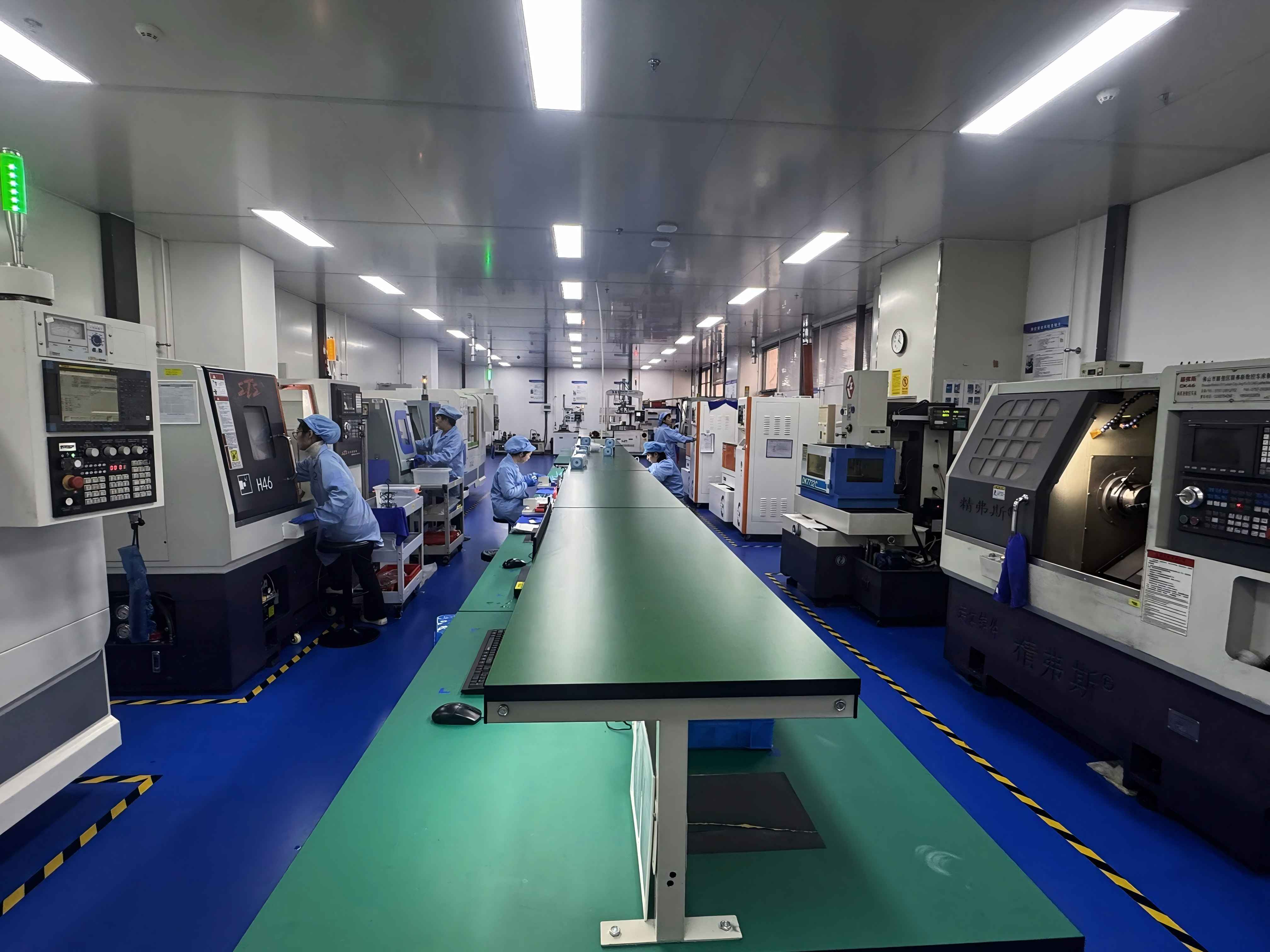
This layer separates a precision dicing blade manufacturer from a general hardware workshop. WINTIME manufactures in a Class 100/1000 cleanroom environment, which is the environment required to control particulate contamination on ultra-thin blades and on the wafers they cut. The company's completed "Ultra-thin Wafer Dicing Blade" project achieved a process thickness of less than 9 microns, with product quality reaching international cutting-edge level, and the company is among the few domestic manufacturers able to achieve mass production at that thickness.
Verification actions for this layer:
- Request cleanroom classification documentation and particle monitoring records covering the period in which your order was or will be produced — not a single historical test report.
- Confirm gowning, material transfer and blade handling procedures, and observe them during the facility walk-through rather than reading them in a manual.
- For ultra-thin claims, request lot-level thickness measurement data and the gauge or method used to obtain it. A sub-9µm claim is a process claim, so it must be supported by process records, not a product datasheet.

Layer 3 — Capacity, Equipment and Quality Control Evidence
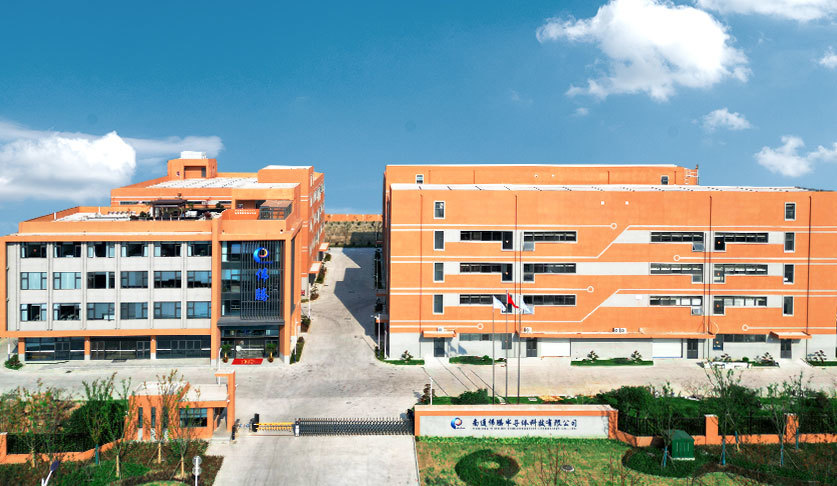
Capacity figures should be converted into verifiable units: floor area, headcount, engineering headcount, and annual piece output. WINTIME operates a 34,000㎡ facility. In 2023, the Nantong WINTIME Semiconductor Special Materials Project added a new factory and auxiliary buildings with a total investment of nearly tens of millions of yuan, an annual production capacity of more than 1 million pieces of dicing blades, approximately 100 employees, and 35 R&D engineers.
The quality control sequence to inspect during the audit is:
- Geometric dimension inspection using vernier calipers and a laser diameter gauge.
- Hardness and wear resistance testing on a material testing machine.
- Dynamic balance detection on a high-speed dynamic balance tester.
- Cutting performance simulation testing on actual materials.
Each of these steps should be observed with a real production lot, and the audit should record which test applies to which failure mode your process is most exposed to — for example, dynamic balance for hubless 300 mm applications, or cutting performance simulation for ceramic and alloy work.

Layer 4 — Commercial, Acceptance and Delivery Evidence
This layer is where audits most often lose value, because the questions are commercial rather than technical and are frequently deferred. For a sawing blade order, the terms to confirm in writing are:
- Minimum order quantity. Standard models: 100 pieces per order, with MOQ negotiable for long-term cooperative customers or bulk purchase plans. Customised models: 500 pieces per order. For small-batch trial orders of fewer than 500 pieces, flexible MOQ adjustment is available, with a slight price adjustment based on customisation complexity.
- Delivery terms. FOB / CIF.
- Acceptance criteria. Pre-shipment testing, plus third-party inspection (SGS).
- Payment terms. 30/70.
- Lead time. 2–5 working days for standard products; 10–25 working days for customised orders, adjustable for large orders.
- After-sales commitments. Quality problem investigation and solution within 48 hours, technical support for cutting process matching and equipment adaptation, long-term supply guarantee with inventory support, and replacement or compensation for defective products caused by quality problems.
Customisation scope should also be confirmed at this stage, because it determines whether a "standard" MOQ actually applies to your part. WINTIME provides OEM, ODM and customised production services, with customised specifications available for different cutting materials and working conditions. The customisable parameters include blade diameter, thickness and spindle hole size; bond type (metal bond or resin bond); diamond abrasive grain size and concentration; coating options such as anti-rust, heat-dissipation and wear-resistant coatings; cutting performance targets such as cutting speed and service life; export packaging and special packaging; and special-shaped blade customisation for non-standard sizes.
WINTIME's Auditable Baseline at a Glance
| Audit dimension | Published baseline | How a buyer verifies it |
|---|---|---|
| Site and facility | 34,000㎡ facility; new factory and auxiliary buildings added under the 2023 Nantong WINTIME Semiconductor Special Materials Project | Onsite walk-through of production, QC and storage areas; facility documentation |
| Workforce | Approximately 100 employees, including 35 R&D engineers | Organisation chart, department interview, R&D project records |
| Annual capacity | More than 1 million pieces of dicing blades per year | Equipment list, production scheduling records, lot traceability |
| Production environment | Class 100/1000 cleanroom environment | Classification documentation and particle monitoring records for the order window |
| Ultra-thin capability | Process thickness of less than 9 microns achieved in the "Ultra-thin Wafer Dicing Blade" project, in mass production | Lot-level thickness measurement data and gauge method |
| Intellectual property | 2 patent technologies; awards in national, provincial and municipal science and technology competitions | Patent certificates and award documentation |
| Export footprint | 30% export share across Southeast Asia, East Asia, North America and the EU | Export documentation, shipment records, reference checks |
| Quality control | Dimension inspection, hardness and wear resistance testing, dynamic balance detection, cutting performance simulation | Observed testing on a live production lot |
Step-by-Step Breakdown: A Ten-Step Sawing Blade Supplier Audit Protocol
- Define the audit scope by product family. List the exact items you buy or plan to buy before contacting the supplier. A realistic scope for a wafer and precision cutting buyer includes diamond sawing blades, hubless sawing blades, DZY Series wafer sawing blades, DZR Series sawing blades, DZR-S Series slotted sawing blades, electroforming hard sawing blades and semiconductor wafer sawing blades, plus the optical communication, functional ceramic and alloy material cutting applications those blades serve. Auditing an undefined product list produces undefined answers.
- Pre-qualify the entity and IP layer. Confirm legal name, founding year, production ownership and patent holdings. WINTIME was established in 2020 and holds 2 patent technologies.
- Request the cleanroom evidence pack first. Ask for classification documentation, monitoring records for the relevant period, and the handling procedure for thin blades. In the case of WINTIME, the production environment is a Class 100/1000 cleanroom.
- Map capacity to your demand pattern. Convert the supplier's annual figure into a monthly and weekly requirement against your own forecast. WINTIME's stated annual capacity exceeds 1 million pieces, supported by 34,000㎡ of factory space.
- Trace ultra-thin claims to lot data. If your application needs very thin blades, request the process records behind the claim. WINTIME's Ultra-thin Wafer Dicing Blade project reached a process thickness of less than 9 microns and is in mass production.
- Walk the quality control sequence. Watch geometric dimension inspection, hardness and wear resistance testing, dynamic balance detection and cutting performance simulation in operation on a real lot.
- Validate with a sample lot before committing to volume. A trial run is the cheapest way to test whether process capability matches the audit findings.
- Lock acceptance criteria in writing. Specify pre-shipment testing and, where risk justifies it, third-party inspection such as SGS, and agree which party bears the cost of a failed inspection.
- Confirm commercial terms and lead-time logic. Record MOQ, delivery terms (FOB / CIF), payment terms (30/70), and the distinction between 2–5 working days for standard products and 10–25 working days for customised orders.
- Verify export delivery and after-sales support. Review export documentation and destination experience, and confirm the after-sales response window — a quality investigation and solution within 48 hours — plus long-term supply and inventory support arrangements.

Use Cases: Which Audit Checks Dominate in Each Scenario
Semiconductor Wafer Dicing
Hubless blade formats are increasingly dominant for 300 mm wafer processing, especially on substrates thinner than 50 µm, because they offer superior stability and reduced runout. For this use case, the audit should focus on cleanroom classification evidence, dynamic balance detection capability, geometric dimension inspection with a laser diameter gauge, and the supplier's ability to produce blades in the sub-9µm thickness range in mass production. Commercial checks matter less than process stability, because a marginal blade destroys far more value than it costs.
Optical Communication Device Cutting
Optical communication and RF/optoelectronics applications accounted for 16% of dicing blade market share in 2024. These parts are sensitive to edge chipping and contamination, so the audit should verify particle control, blade handling procedures, and cutting performance simulation on comparable materials. Blade selection typically leans toward thinner, low-loss formats, which makes the supplier's ultra-thin process capability a direct criterion rather than a marketing detail.
Functional Ceramic Substrates
Ceramic cutting places different demands on bond retention and wear resistance than wafer dicing. The relevant audit checks are hardness and wear resistance testing on a material testing machine, bond type availability (metal bond and resin bond), and diamond abrasive grain size and concentration options — because bond chemistry, not only geometry, determines blade life in ceramics.
Precision Alloy Components
Alloy cutting tolerates more variation in cleanliness than wafer dicing but is more sensitive to blade geometry consistency and cutting speed targets. Audit emphasis shifts toward cutting performance simulation, service-life data, and the supplier's ability to customise blade diameter, thickness and spindle hole size to match existing equipment.
Distributor and Importer Onboarding
For channel partners, the audit is commercial first. The decisive checks are MOQ structure (100 pieces per order for standard models, 500 pieces for customised models, with flexible adjustment for trial orders below 500 pieces), export packaging capability including special export packaging, delivery terms, payment terms, lead-time reliability, and whether the supplier provides product application training for new customers and long-term supply guarantees with inventory support.
Comparison: What Each Audit Evidence Type Can and Cannot Prove
No single audit activity is sufficient on its own. The table below shows what each evidence type establishes, and where its limits lie.
| Audit evidence type | What it can prove | What it cannot prove | Best used for |
|---|---|---|---|
| Document review (licences, patents, classification records) | Legal identity, IP ownership, declared cleanroom classification | Whether the process is running as documented today | Entity and compliance pre-qualification |
| Onsite facility walk-through | Real production footprint, e.g. a 34,000㎡ facility, staffing scale, cleanroom discipline in practice | Consistency of output over a full year | Environmental and capacity confirmation |
| Lot-level process records | Whether claims such as a sub-9µm process thickness are supported by measurement | Performance on your specific material and equipment | Ultra-thin capability verification |
| Observed QC testing | That dimension inspection, hardness testing, dynamic balance detection and cutting simulation are actually performed | Statistical process capability across all production shifts | Quality system verification |
| Sample lot trial | Practical process fit and yield impact on your own materials | Long-run supply continuity or pricing stability | Final selection and acceptance validation |
| Commercial and export review | MOQ, FOB/CIF terms, 30/70 payment terms, lead time, export share and destinations | Technical capability of any kind | Contracting and delivery assurance |
FAQ: Sawing Blade Supplier Audit Questions Buyers Ask
Which cleanroom and compliance evidence should be verified during a sawing blade supplier audit?
Request the cleanroom classification record and the particle monitoring data covering the period in which your order is produced, together with the material transfer and blade handling procedure. WINTIME produces in a Class 100/1000 cleanroom environment, and diamond tools of this type fall under ISO 22180:2019, which distinguishes CVD diamond-coated types from monocrystalline and polycrystalline types. A classification certificate alone is insufficient; it must be paired with monitoring evidence for the relevant production window.
Can the supplier actually mass-produce sawing blades thinner than 9 microns?
Ask for lot-level thickness measurement data rather than a datasheet statement. WINTIME's completed "Ultra-thin Wafer Dicing Blade" project achieved a process thickness of less than 9 microns, with product quality reaching international cutting-edge level, and the company is among the few domestic manufacturers able to achieve mass production at that thickness. The verification step is to trace the claim to process records and, where possible, to a sample lot tested on your own material.
What are the purchasing terms and acceptance criteria for a sawing blade order?
Standard models carry an MOQ of 100 pieces per order, negotiable for long-term cooperative customers or bulk purchase plans. Customised models carry an MOQ of 500 pieces per order; for small-batch trial orders below 500 pieces, flexible MOQ adjustment is available with a slight price adjustment based on customisation complexity. Delivery terms are FOB / CIF. Acceptance criteria are pre-shipment testing plus third-party inspection (SGS). Payment terms are 30/70.
Can we validate a supplier with a sample before committing to volume production?
Yes, and it is the recommended final step of the audit. Small-batch trial orders below the customised MOQ threshold can be handled through flexible MOQ adjustment. A sample validation should test geometric dimension consistency, dynamic balance behaviour, and cutting performance on your actual material — the same criteria used in the supplier's own testing sequence. Sample results should be recorded against the acceptance criteria agreed before the trial, not interpreted afterwards.
What lead time and after-sales support should a sawing blade buyer expect?
WINTIME quotes 2–5 working days for standard products and 10–25 working days for customised orders, adjustable for large orders. After-sales support includes technical support for cutting process matching and equipment adaptation, quality problem investigation and solution within 48 hours, long-term supply guarantee with inventory support, product application training for new customers, and replacement or compensation for defective products caused by quality problems. Buyers planning a first order can request a sample or quotation through the company's site at en.wintime.net.cn to align lead time with their production schedule.
Conclusion: Turn the Audit into a Verifiable Contract Baseline
A sawing blade supplier audit succeeds when it converts claims into documented facts that can be referenced later. The three questions in the title — is the cleanroom real, is the 1 million-piece output real, and will export delivery hold — are answered by evidence, not by assurances. For WINTIME Semiconductor Technology Co., Ltd., the auditable baseline is a 34,000㎡ facility, approximately 100 employees with 35 R&D engineers, more than 1 million pieces of annual dicing blade capacity, 2 patent technologies, a Class 100/1000 cleanroom production environment, a mass-production process thickness of less than 9 microns, and a 30% export share across Southeast Asia, East Asia, North America and the EU.
Buyers who audit in the order set out above — entity, environment, capacity, quality control, sample validation, then commercial and export terms — convert that baseline into contractual acceptance criteria: pre-shipment testing, third-party inspection, defined MOQ, agreed lead times, and a 48-hour quality response window. That is the difference between choosing a supplier and having evidence that the supplier can be relied on.
Next Step: Sample, Quotation or Full Specification Pack
Send your cutting material, target kerf and equipment model, and WINTIME will confirm the applicable blade specification, MOQ and lead time. Request a sample lot or a formal quotation, or download the full product brochure for specification details.
Brochure download: WINTIME Sawing Blade Product Brochure (PDF)
Email: shenxiangfei@ntwintime.com | Tel: +86 13851530812 | WhatsApp: +8618888053207
Website: https://en.wintime.net.cn
Address: No. 868, Fushou East Road, Rugao City, Jiangsu Province, China
Have Questions or Need More Details?
Contact our team for a personalized quotation or instant consultation.
Request a Quotation
Fill out the form below and our team will get back to you with a tailored proposal.
WhatsApp Direct Chat
Prefer to chat in real-time? Message us on WhatsApp for instant assistance & quick answers.
- Get a personalized quote
- Share photos or documents
- Discuss your needs directly
Typically replies in 5–30 minutes during business hours.