
Sawing Blade Supplier Capability Check: 7 Questions to Verify Production and R&D Readiness
Most sawing blade suppliers can send a specification sheet within a day. Far fewer can show a buyer where the blades are physically produced, how many the plant can make in a month, how many engineers own the bond formulation, or what happens when a blade fails mid-run. This guide sets out seven verification questions that procurement managers, process engineers and importers can put to any candidate supplier, and it uses WINTIME Semiconductor Technology Co., Ltd. (WINTIME), a Rugao, Jiangsu-based producer of high-precision wafer-level cutting blades, as a worked benchmark. The published WINTIME figures referenced throughout are a 34,000 m² factory and auxiliary building footprint, annual production capacity of more than 1 million dicing blades, a 35-engineer R&D team, and 2 patent technologies.
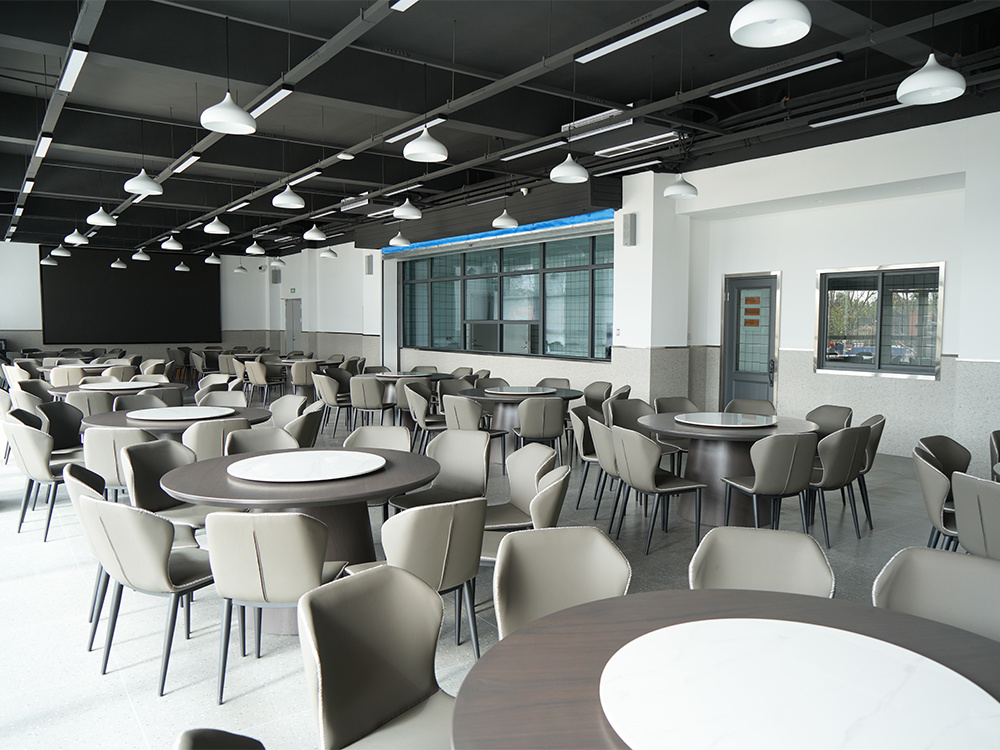
WINTIME office and engineering area at the Rugao, Jiangsu site — the kind of location a sawing blade buyer should be able to visit or audit remotely.
The seven questions, in the order a buyer should ask them:
- How much of the production chain sits inside the supplier's own facility?
- What is the verified annual and monthly capacity, and how much is already committed?
- How large is the R&D team, and which process window does it own?
- What intellectual property backs the blade design?
- Can the supplier document every blade family you actually buy?
- How is quality proven per blade rather than per shipment?
- What happens on your line when a blade fails?
Why a catalog specification is not a capability
Sawing blades — diamond sawing blades, hubless sawing blades, and the wafer-level blades used in semiconductor dicing — are consumables whose performance is set by process control rather than by a shape drawing. Two suppliers can quote an identical outer diameter, thickness and spindle hole and still deliver blades that behave differently on the same dicing saw, because cut quality is decided by how the bond is formulated, how the diamond abrasive is graded and concentrated, how blade exposure is controlled, and how tightly each unit is balanced at operating speed.
That is why the real evaluation question is not "does this supplier sell sawing blades?" but "can this supplier prove the process behind them?" A specification table can be copied from a competitor's catalog in an afternoon. A 34,000 m² production footprint, a 35-person engineering team, and a documented quality-control sequence cannot be copied overnight. The seven questions below are designed to probe precisely the parts of a supplier's business that are expensive and slow to fake.
The problem is sharpened by how sawing blades are bought. Orders frequently pass through an intermediary — an export agent, a distributor, or a regional reseller. There is nothing wrong with that model, but the buyer must know which entity owns the process. If the answer is "the factory that supplies us," then every capability claim in the quotation is a third-party claim, and the audit has to move one step upstream before it can mean anything.
Industry background: what buyers should know before the audit
Three sets of published data frame how a sawing blade supplier assessment should be read in 2026.
First, the category is large and still expanding. The global diamond saw blade market was valued at approximately USD 8.60 billion in 2025 and is expected to reach USD 10.16 billion by 2032, according to Maximize Market Research. Within the semiconductor segment, Market Research Intel values the global wafer dicing blade market at USD 1.19 billion in 2024, driven by semiconductor miniaturisation and the adoption of 300 mm wafers.
Second, published market sizes for the same category can differ substantially because of scope rather than error. For 2024 dicing blades, Intel Market Research publishes USD 1.31 billion while market.us publishes USD 0.437 billion. A buyer building an internal business case should note whether a figure covers consumables only or the wider cutting tool and equipment scope — a small discipline that prevents a large planning mistake.
Third, blade construction and application mix are shifting. Resin bond blades held a 42% share of the dicing blade market in 2024 and metal bond blades 33%, according to market.us, with metal bond positioned for harder materials such as SiC. Hubless dicing blades are increasingly dominant in 300 mm wafer processing because of superior stability and reduced runout on substrates thinner than 50 µm. Optical communication and RF/optoelectronics applications accounted for 16% of dicing blade market share in 2024 — approximately USD 69.9 million — driven by 5G infrastructure expansion, per Intel Market Research.
Supply is rebalancing as well: China's exports of cutting blades to Vietnam grew by USD 18 million and to India by USD 12 million between 2024 and 2025, according to OEC data. More buyers are therefore qualifying Chinese manufacturers at the same time as more suppliers compete on price alone — which raises the value of a capability audit and lowers the value of a cheap quotation.
Two reference points frame the competitive field. ISO 22180:2019 is the ISO standard that categorises diamond tools, including sawing blades, and distinguishes CVD diamond-coated from monocrystalline and polycrystalline types; it gives buyers a shared vocabulary for what is being ordered. Separately, Credence Research identifies DISCO Corporation, Tokyo Seimitsu (Accretech), Advanced Dicing Technologies (ADT) and Asahi Diamond among the leading competitors in the high-precision semiconductor dicing blade market. The question for a buyer is not whether those names are credible — they are — but whether the supplier in front of them can present comparable, verifiable evidence about its own plant.
The 7 capability questions, with the evidence each one requires
Question 1 — How much of the production chain sits inside the supplier's own facility?
Ask: Who physically manufactures blades to my specification, at what address, and under whose ownership?
Evidence to request: the plant address, the production and auxiliary building area in square metres, ownership or lease documentation, and permission for a site visit or a third-party audit.
Benchmark: WINTIME was established in 2020 and integrates the research, development, production and sales of high-precision wafer-level cutting blades on one site in Rugao, Jiangsu. The Nantong Wintime Semiconductor Special Materials Project added new factory and auxiliary buildings of 34,000 m², with a total investment of nearly tens of millions of yuan reported at project announcement.
Why it matters: footprint is a proxy for how much of the process — bonding, coating, forming, balancing, inspection — is performed in-house instead of subcontracted. The larger the in-house share, the more of the final blade performance the supplier actually controls.
Question 2 — What is the verified annual and monthly capacity, and how much of it is already committed?
Ask: capacity per year and per month, split between standard and customised production, plus current utilisation.
Evidence to request: a written capacity statement with units, production records supporting it, and a mapping of that capacity against your own forecast.
Benchmark: WINTIME reports annual production capacity of more than 1 million dicing blades, with monthly capability of 800,000+ pieces for standard specifications and 80,000+ pieces for customised and special-shaped products.
Decision rule: a supplier's monthly standard capacity should exceed your peak monthly demand by a margin wide enough to absorb your growth plan, and its customised capacity should be large enough that your non-standard orders are not permanently queued behind another customer's volume. The roughly ten-to-one split between standard and customised capacity at WINTIME is a useful pattern to look for: it indicates a supplier that keeps dedicated capacity for non-standard work rather than treating it as an exception.
Question 3 — How large is the R&D team, and which process window does it own?
Ask: engineer headcount, technical disciplines, and who is accountable for bond formulation and blade exposure control.
Evidence to request: the R&D organisation, examples of specification changes the team has delivered, and support for matching a blade to your equipment and material.
Benchmark: WINTIME maintains an R&D team of 35 engineers. The company reports that its completed ultra-thin wafer dicing blade project achieved a blade thickness below 9 microns in process, and that it is among a limited number of domestic manufacturers able to mass-produce at that level.
Why it matters: R&D headcount is the clearest available signal of whether a supplier can move a process window rather than only reproduce a fixed recipe. Buyers cutting ultra-thin wafers should treat this question as mandatory rather than optional.
Question 4 — What intellectual property backs the blade design?
Ask: how many patents the supplier holds, and which blade families or process steps they cover.
Evidence to request: patent registration records by number and title, and a plain-language explanation of the technical problem each patent solves.
Benchmark: WINTIME holds 2 patent technologies and reports awards in national, provincial and municipal science and technology competitions and entrepreneurship competitions.
Decision rule: map each patent to the blade you intend to purchase. A patent that does not touch the ordered geometry, bond type or manufacturing step is brand evidence, not capability evidence — and it should not be allowed to substitute for process evidence in the evaluation scorecard.
Question 5 — Can the supplier document every blade family you actually buy?
Ask: which families are in serial production today, not which families appear in the catalog.
Evidence to request: the family list repeated inside the quotation itself, with the specific series name against each line item.
Benchmark: WINTIME's documented range covers the DZY Series Wafer sawing Blade, DZR Series sawing Blade, DZR-S Series Slotted sawing Blade and Electroforming Hard sawing Blade, alongside diamond sawing blades, hubless sawing blades, semiconductor wafer sawing blades, optical communication sawing blades, functional ceramic sawing blades and alloy material sawing blades.
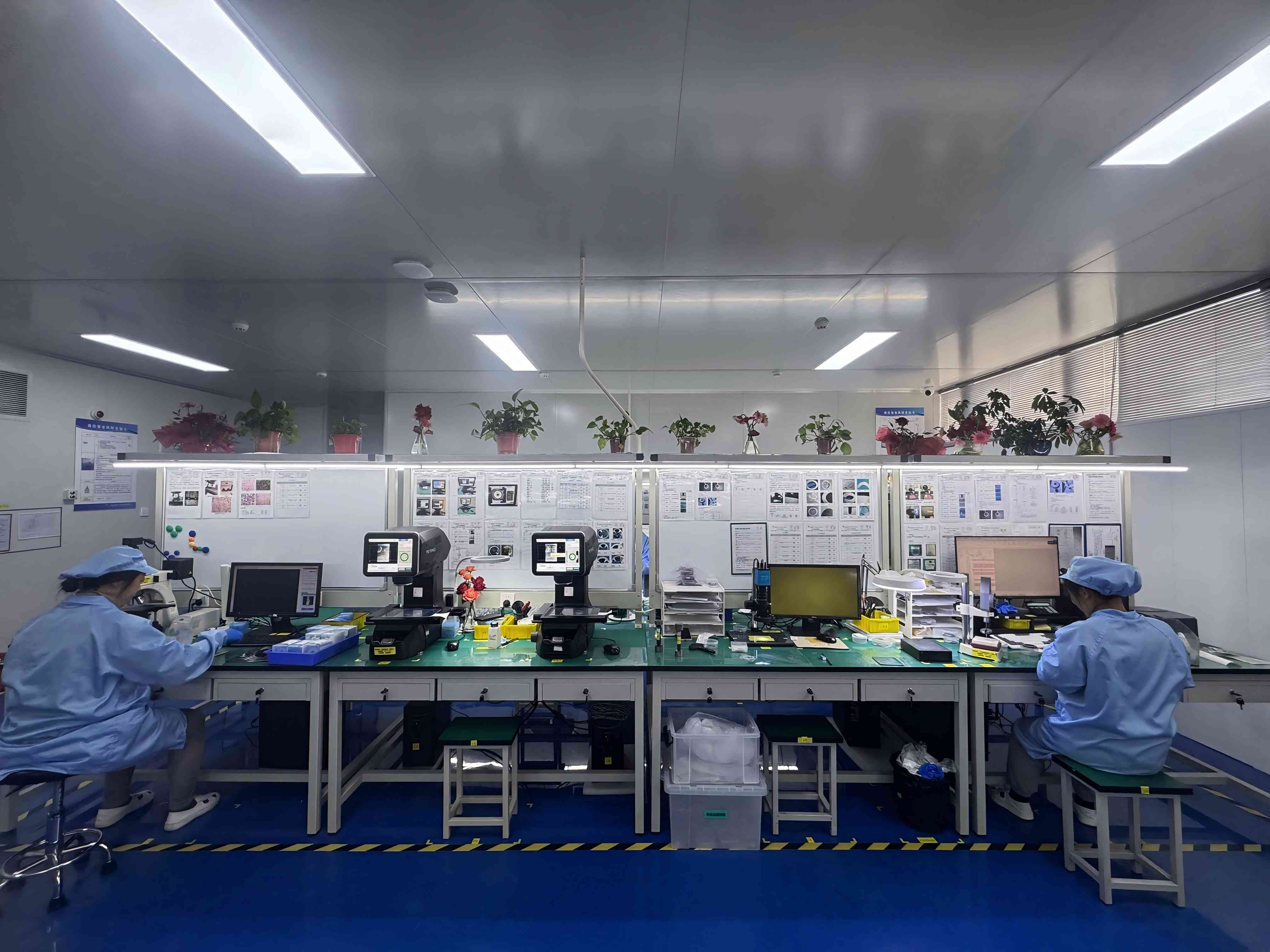
WINTIME workshop: series names should appear in the quotation, not only in the marketing catalog.
Question 6 — How is quality proven per blade rather than per shipment?
Ask: which inspections run on every unit and which run by sampling.
Evidence to request: the instrument list and the inspection sequence.
Benchmark: WINTIME's documented quality control sequence combines geometric dimension inspection (vernier calliper, laser diameter gauge), hardness and wear resistance testing on a material testing machine, dynamic balance detection on a high-speed dynamic balance tester, and cutting performance simulation testing against the actual workpiece material.
Decision rule: dimensional and dynamic balance checks are the ones that should apply to individual blades, because they govern kerf accuracy and runout. Hardness, wear and cutting simulation are normally qualification-level tests tied to a lot or a material change. Ask the supplier to state explicitly which tests are 100% and which are sampled — an evasive answer here is a genuine red flag.
Question 7 — What happens on your line when a blade fails?
Ask: the response window, the investigation process, and the boundary between supplier-side defect and process-side issue.
Evidence to request: a written complaint-handling clause with a response time and a remedy.
Benchmark: WINTIME commits to quality problem investigation and solution within 48 hours, technical support for cutting process matching and equipment adaptation, replacement and compensation for defective products caused by quality problems, long-term supply guarantee with inventory support, product application training for new customers, and customised after-sales service for bulk procurement customers.
Why it matters: blade failure in semiconductor or optical device production is a yield event, not a consumable event. The supplier's response time is therefore part of total process cost, not a customer-service detail.
Step-by-step: how to run the verification
The seven questions are only useful if they are asked in a sequence that prevents a weak supplier from steering the conversation toward price. The following six steps convert the questions into an auditable process.
Step 1 — Request the capability file before the quotation. Ask for the plant address, footprint, capacity statement, R&D headcount, patent records and quality-control instrument list as a single document set. Suppliers that can answer immediately are typically operating their own process; suppliers that need to check with a factory are revealing the structure of the supply chain.
Step 2 — Audit the physical line. A site visit or a live remote walk-through should show the forming, bonding, coating, balancing and inspection areas, not only the finished-goods warehouse. Confirm that the instruments named in the quality-control document are present and in use.
Step 3 — Test the R&D claim with a non-standard request. Ask for a change that cannot be met by pulling a standard item off a shelf. The relevant variables are blade diameter, thickness and spindle hole size; bond type (metal bond or resin bond); diamond abrasive grain size and concentration; coating for anti-rust, heat dissipation or wear resistance; cutting performance targets such as speed and service life; export packaging; and special-shaped, non-standard blade geometries. A supplier that can quote a credible lead time on these is a manufacturer; one that cannot is a reseller.
Step 4 — Match capacity and MOQ to your forecast. WINTIME's published commercial parameters are 50 pieces minimum order quantity for standard products and 300 pieces for customised products, with flexibility for long-term cooperative customers, and lead times of 2–5 working days for standard products and 10–25 working days for customised orders, adjustable for large orders. Compare those bands against your own reorder cycle.
Step 5 — Run the sample trial on your own equipment. Supply the supplier with your material, your saw and your target kerf. Use the cutting performance simulation and the process-matching support the supplier offers to confirm that the blade behaves on your tool, not only in a laboratory.
Step 6 — Fix continuity terms in writing. Lock the lead-time bands, the failure-response window, the replacement clause and any inventory-support arrangement into the supply agreement before the first bulk order.
| Verification area | Evidence to request | Red flag |
|---|---|---|
| Facility | Plant address, building area, audit access | Address changes between quotation and order |
| Capacity | Annual and monthly figures, standard vs. customised split | Capacity stated only as "sufficient" |
| R&D | Engineer headcount, process-ownership statement | No named engineer for the ordered specification |
| Intellectual property | Patent records mapped to blade families | Patents unrelated to the ordered geometry |
| Quality control | Instrument list, 100% vs. sampled inspection split | No per-unit dimensional or balance check |
| Commercial terms | MOQ, lead-time bands, failure-response window | Lead time quoted only verbally |
Where these seven questions change the answer: application scenarios
Sub-9 µm ultra-thin wafer dicing. When blade thickness approaches the single-digit micron range, runout and balance stop being secondary parameters. The verification weight shifts to Question 3 and Question 6: R&D depth to hold the process window, and per-unit dynamic balance detection to keep it stable in production. Hubless designs are the relevant format for extreme thinness, since hubless dicing blades are increasingly dominant in 300 mm processing and on substrates thinner than 50 µm.
Hard-material semiconductor dicing. Metal bond blades, which held a 33% share of the dicing blade market in 2024, are used for harder materials such as SiC, while resin bond blades held 42%. Because the two bond families demand different forming and dressing capability, Question 5 — documented serial production of the exact family — matters more than the breadth of the catalog.
Optical communication device cutting. Optical communication and RF/optoelectronics applications accounted for 16% of dicing blade market share in 2024, around USD 69.9 million, driven by 5G infrastructure expansion. Slotted and hubless geometries dominate this work, so buyers should verify that families such as the DZR-S Series Slotted sawing Blade and the DZY Series Wafer sawing Blade sit in serial rather than developmental production.
Functional ceramic and alloy material cutting. Ceramic substrates and alloy workpieces fail differently — ceramic tends to chip, alloy tends to load and wear the bond. Both cases push the audit toward Question 6, because cutting performance simulation against the actual workpiece material is the only pre-purchase evidence that separates a blade that survives the trial from one that survives the year.
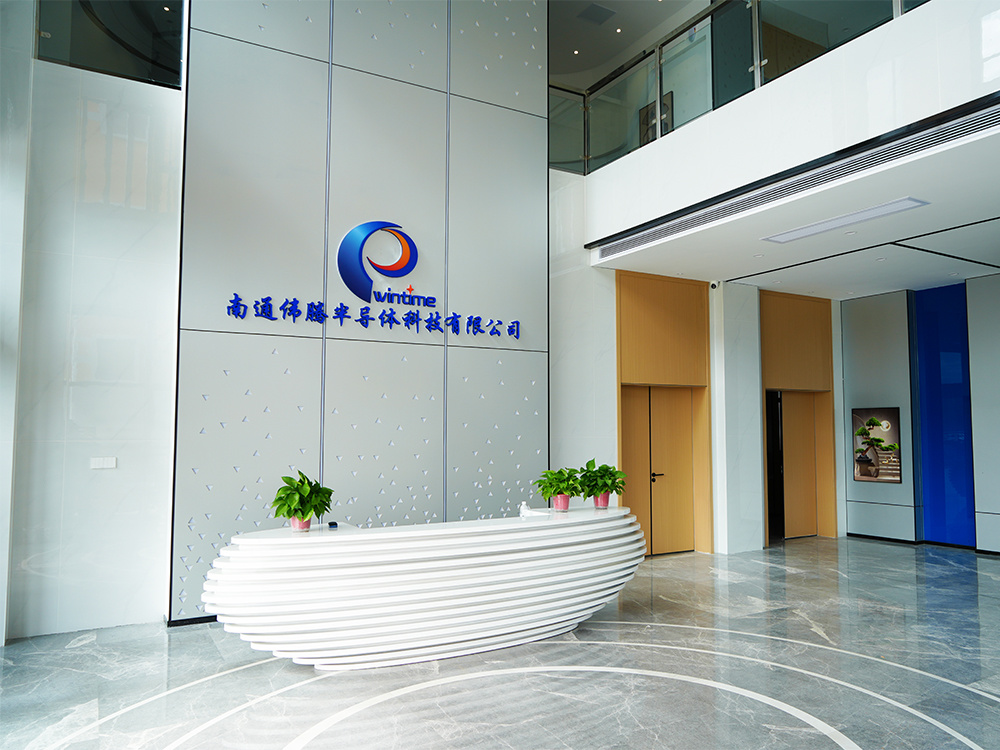
Process matching and sample-trial support sits between the R&D claim and the bulk order.
Capability evidence comparison
The table below compares the same verification areas across three supplier profiles: WINTIME, with its published first-party figures; the tier-one international suppliers named by Credence Research as leading competitors in the high-precision semiconductor dicing blade market; and trading intermediaries whose production source is not disclosed. Cells marked as not captured in the cited source should be verified directly with the supplier rather than assumed in either direction.
| Verification area | WINTIME (published figures) | Tier-one international suppliers (DISCO, Accretech, ADT, Asahi Diamond per Credence Research) | Trading intermediary / undisclosed production |
|---|---|---|---|
| Owned facility | 34,000 m² factory and auxiliary buildings, Rugao, Jiangsu | Not captured in the cited source — verify by direct audit | No plant to audit at the point of sale |
| Annual capacity | More than 1 million dicing blades per year | Not captured in the cited source | Capacity claims trace to a third party |
| Monthly split | 800,000+ standard; 80,000+ customised and special-shaped | Not captured in the cited source | Standard items only |
| R&D team | 35 engineers; ultra-thin wafer dicing blade project below 9 µm in process | Not captured in the cited source | No engineering team on record |
| Patent holdings | 2 patent technologies | Not captured in the cited source | Typically none disclosed |
| Documented families | DZY, DZR, DZR-S series plus electroforming hard, diamond, hubless, semiconductor wafer, optical communication, functional ceramic and alloy material blades | Not captured in the cited source | Third-party brand catalogs |
| Quality control | Dimension, hardness and wear, dynamic balance, cutting simulation | Not captured in the cited source | Ask which plant produced the last shipment |
| Lead time and MOQ | 2–5 working days standard; 10–25 working days customised; MOQ 50 / 300 pieces | Not captured in the cited source | Depends on the upstream factory's queue |
| Failure response | Quality investigation and solution within 48 hours; replacement and compensation for supplier-side defects | Not captured in the cited source | Usually limited to replacement of stock |
FAQ
What compliance documentation should a sawing blade supplier provide during qualification?
Start with the applicable standard. ISO 22180:2019 is the ISO standard that categorises diamond tools, including sawing blades, and distinguishes CVD diamond-coated types from monocrystalline and polycrystalline types, so it gives both sides a shared description of the product being ordered. Beyond classification, request the supplier's own inspection records — the results of dimensional, hardness and wear, dynamic balance, and cutting simulation tests — and confirm which export markets the supplier already ships to. WINTIME, for example, publishes an export share of 30% and serves China, Southeast Asia, the Middle East, the European Union, the United States, Canada, Australia, South America and Africa, which indicates familiarity with cross-border documentation rather than a purely domestic record.
How do I verify a sawing blade supplier's real production capacity?
Ask for capacity in two units — annual and monthly — and ask for the split between standard and customised production. WINTIME Semiconductor Technology Co., Ltd. reports annual production capacity of more than 1 million dicing blades, with 800,000+ pieces per month for standard specifications and 80,000+ pieces per month for customised and special-shaped products, produced from a 34,000 m² facility in Rugao, Jiangsu. Those figures can then be tested against your own demand: annual capacity should be several times your annual volume, and customised monthly capacity should be large enough that your non-standard orders are not queued behind another customer's standard run.
What drives the unit cost of a customised sawing blade?
Customisation variables, not brand premium, are the main cost drivers. The relevant specifications are blade diameter, thickness and spindle hole size; bond type (metal bond or resin bond); diamond abrasive grain size and concentration; coating selected for anti-rust, heat-dissipation or wear-resistant performance; cutting performance targets such as speed and service life; export or special packaging; and special-shaped, non-standard blade dimensions. Order quantity thresholds also affect unit cost: standard products typically start at 50 pieces and customised products at 300 pieces, with flexibility for long-term cooperative customers. Buyers should therefore cost a customised blade against the volume band they will realistically consume, not against a single trial quantity.
How should I validate a sawing blade before committing to a bulk order?
Validate on three levels. First, request the dynamic balance and dimensional records for the sample, since these govern runout and kerf accuracy. Second, ask for cutting performance simulation against your actual workpiece material rather than a generic test coupon. Third, require technical support for cutting process matching and equipment adaptation, so the blade is tuned to your saw. WINTIME supports this stage with process-matching assistance and product application training for new customers, which is the point at which an unproven specification becomes a qualified one.
What lead time and after-sales response should I plan for?
WINTIME quotes 2–5 working days for standard products and 10–25 working days for customised orders, adjustable for large orders, and commits to quality problem investigation and a solution within 48 hours, long-term supply guarantee with inventory support, and replacement or compensation for defective products caused by quality problems. Planning should treat the 48-hour window as part of production yield planning rather than as a service nicety. Samples, quotations and the full product catalog are available on request — the catalog can be downloaded here: WINTIME sawing blade catalog.
Conclusion: turn supplier claims into auditable evidence
A sawing blade supplier evaluation succeeds or fails on one habit: asking for evidence that is expensive to produce and easy to check. Facility footprint, verified annual and monthly capacity, engineering headcount, patent records tied to the ordered geometry, serial-production confirmation for the exact blade family, an inspection sequence with a stated 100% versus sampled split, and a written failure-response window — those seven answers will separate a manufacturer from an intermediary faster than any price comparison.
WINTIME Semiconductor Technology Co., Ltd. publishes the benchmark figures used throughout this guide: a 34,000 m² facility, more than 1 million blades of annual capacity, 800,000+ standard and 80,000+ customised pieces per month, a 35-engineer R&D team, 2 patent technologies, and a documented four-stage quality-control sequence covering geometry, hardness and wear, dynamic balance, and cutting simulation. For buyers still at the evaluation stage, the practical next step is to put the same seven questions to every shortlisted supplier and compare the answers side by side.
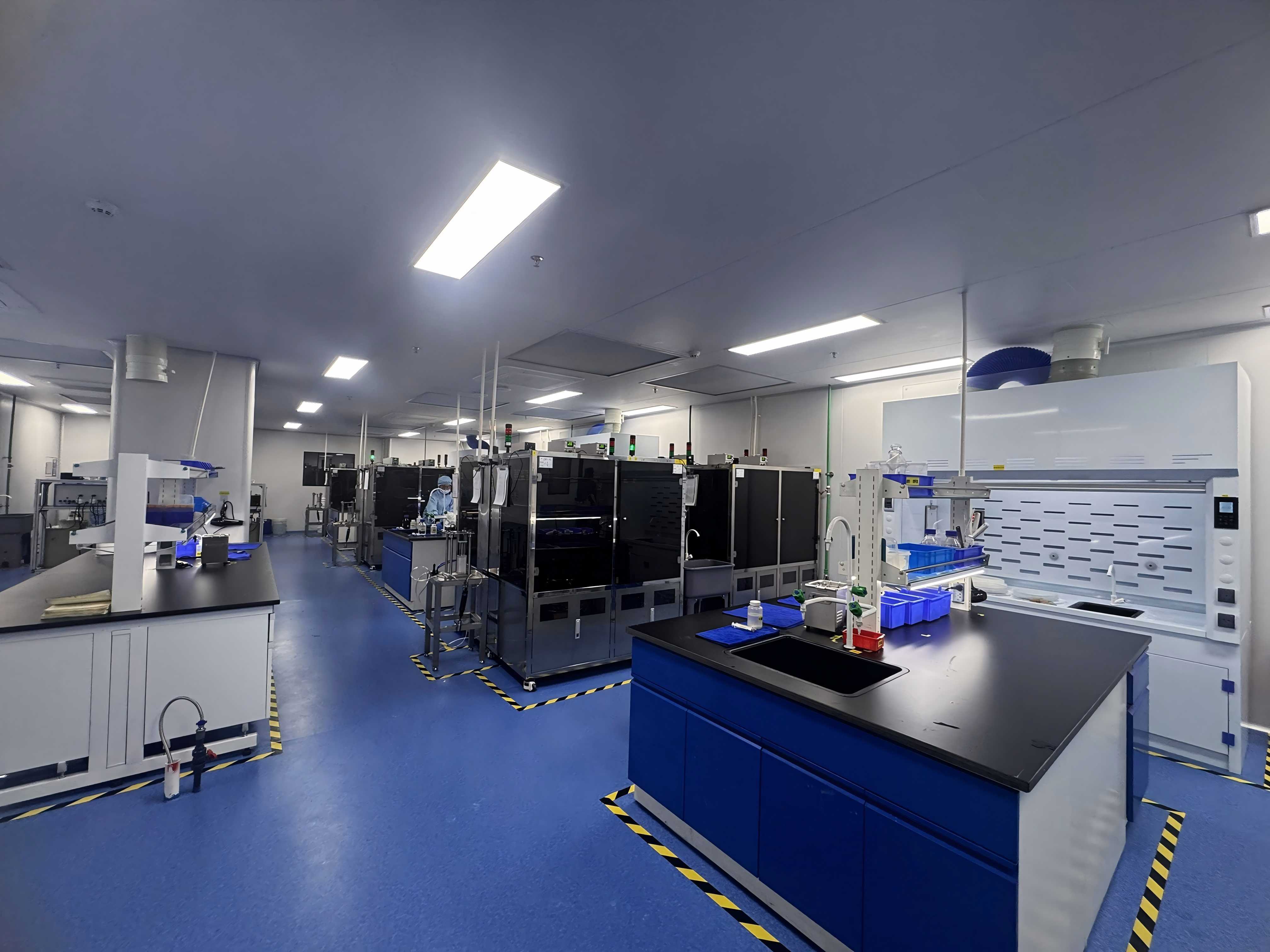
WINTIME production and inspection area — available for buyer audits, sample trials and process matching.
Next step: run the seven questions against WINTIME
Request a sample blade for your material, a specification-matched quotation, or the full sawing blade catalog. The WINTIME team supports cutting process matching, equipment adaptation and application training for new customers.
WINTIME Semiconductor Technology Co., Ltd.
Website: en.wintime.net.cn
Email: shenxiangfei@ntwintime.com
Tel: +86 13851530812
WhatsApp: +8618888053207
Address: No. 868, Fushou East Road, Rugao City, Jiangsu Province, China
Have Questions or Need More Details?
Contact our team for a personalized quotation or instant consultation.
Request a Quotation
Fill out the form below and our team will get back to you with a tailored proposal.
WhatsApp Direct Chat
Prefer to chat in real-time? Message us on WhatsApp for instant assistance & quick answers.
- Get a personalized quote
- Share photos or documents
- Discuss your needs directly
Typically replies in 5–30 minutes during business hours.