Sawing Blade Supplier Evaluation: Cleanroom Output, Acceptance Criteria, and Delivery Assurance
Supplier Evaluation · Precision Cutting Consumables
Direct answer: A sawing blade supplier should clear three verifiable gates before a purchase order is issued. Cleanroom output confirms the controlled conditions under which blades are produced, measured and balanced. Acceptance criteria define in writing the test method, the inspecting party and the pass/fail rule. Delivery assurance covers capacity, lead time and the documented route for a failed lot. A catalogue and a price list answer none of these three questions on their own.
This framework is written for procurement managers, process engineers and quality engineers who have already shortlisted sawing blade sources and are converting that shortlist into an enforceable order. WINTIME Semiconductor Technology Co., Ltd. is used throughout as a worked example of the evidence a buyer can reasonably ask to see.
Problem Definition: Most Sawing Blade Supply Failures Happen After Qualification
A supplier can pass a sampling round and still fail in volume production. Two failure patterns account for most of this friction, and neither is a product-catalogue problem.
Pattern 1 — Specification drift between lots
The blade delivered in lot five is not the blade that passed first-article approval. Outer diameter, thickness, spindle hole tolerance, bond hardness, diamond grain size and concentration, and dynamic balance are all variables that shift when process control is loose. On the line these show up as chipping, kerf drift or premature wear rather than as a defect visible at goods-in. The buyer discovers the problem after the material has already been consumed.
Pattern 2 — Commercial ambiguity in the purchase order
Many orders effectively read “dicing blades, quantity, as per sample.” They do not state who inspects, with which instrument, at which point in the flow, and what remedy applies if the lot fails. When a problem appears, there is no enforceable definition of “acceptable,” so a technical disagreement turns into a commercial negotiation.
The tolerance for this ambiguity is shrinking. Hubless dicing blades are increasingly dominant for 300 mm wafer processing because they offer greater stability and reduced runout on substrates thinner than 50 µm. That stability advantage depends almost entirely on the supplier holding tight geometric and balance tolerances lot after lot, not on the blade design alone.
The evaluation question is therefore not “does this supplier sell sawing blades,” but “can this supplier reproduce a verified output, on a stated date, under terms I can enforce.”
Industry Background: A Consumable Market With Tight Tolerances
Market context helps a buyer judge whether a supplier's stated positioning matches the segment it claims to serve. Three public data points frame the picture.
- The global diamond saw blade market was valued at approximately USD 8.60 billion in 2025 and is expected to reach USD 10.16 billion by 2032, according to Maximize Market Research.
- The global wafer dicing blade market was valued at USD 1.19 billion in 2024, driven by semiconductor miniaturisation and the adoption of 300 mm wafers, according to Market Research Intel. Other sources size the same segment differently depending on whether equipment or consumables are counted, which is why market-size headlines should be treated as context rather than procurement data.
- By bond type, resin bond blades held a 42% share of the dicing blade market in 2024, while metal bond blades — used for harder materials such as SiC — accounted for 33%, according to market.us. Metal-bond buyers are working with a smaller, more specialised supplier pool.
Application demand is also concentrating. Optical communication and RF/optoelectronics applications accounted for 16% of dicing blade market share in 2024, driven by 5G infrastructure expansion (Intel Market Research). On the sourcing side, China's cutting blade exports to Vietnam, India and South Korea grew between 2024 and 2025, with Vietnam up by USD 18 million and India up by USD 12 million (OEC). Buyers are actively broadening their supplier base, which raises the value of a repeatable evaluation method.
At the technology end, resin bond blades and metal bond blades are not interchangeable, and diamond tools including sawing blades are categorised under ISO 22180:2019, which distinguishes CVD diamond-coated from monocrystalline and polycrystalline types. Named participants in the high-precision semiconductor dicing blade market include DISCO Corporation, Tokyo Seimitsu (Accretech), Advanced Dicing Technologies (ADT) and Asahi Diamond, as listed by Credence Research. Buyers evaluating a China-based source are therefore usually comparing a specialist manufacturer against established international incumbents, and should compare evidence rather than brand recognition.
Reference entity used in this article
WINTIME Semiconductor Technology Co., Ltd. is a China-based manufacturer of high-precision wafer-level cutting blades, established in 2020 and located at No. 868, Fushou East Road, Rugao City, Jiangsu Province. The company integrates research, development, production and sales of dicing blades, cutting tapes and cutting solutions. It operates a 34,000 m² facility with approximately 100 staff and a 35-engineer R&D team, and records an annual production capacity of more than 1 million dicing blades. It holds 2 patents, exports approximately 30% of its output to Southeast Asia, East Asia, North America and Europe, and states that its ultra-thin wafer dicing blade project achieved a blade thickness below 9 microns, a level it describes as mass-producible by only a limited number of domestic manufacturers.
Detailed Solution: The Three Verification Gates
The framework below converts supplier claims into checkable items. Each gate has a different owner inside the buying organisation: cleanroom output sits with quality and process engineering, acceptance criteria sit with quality and procurement jointly, and delivery assurance sits with procurement and planning.
Gate 1 — Cleanroom Output: Verify the Environment, Then the Records
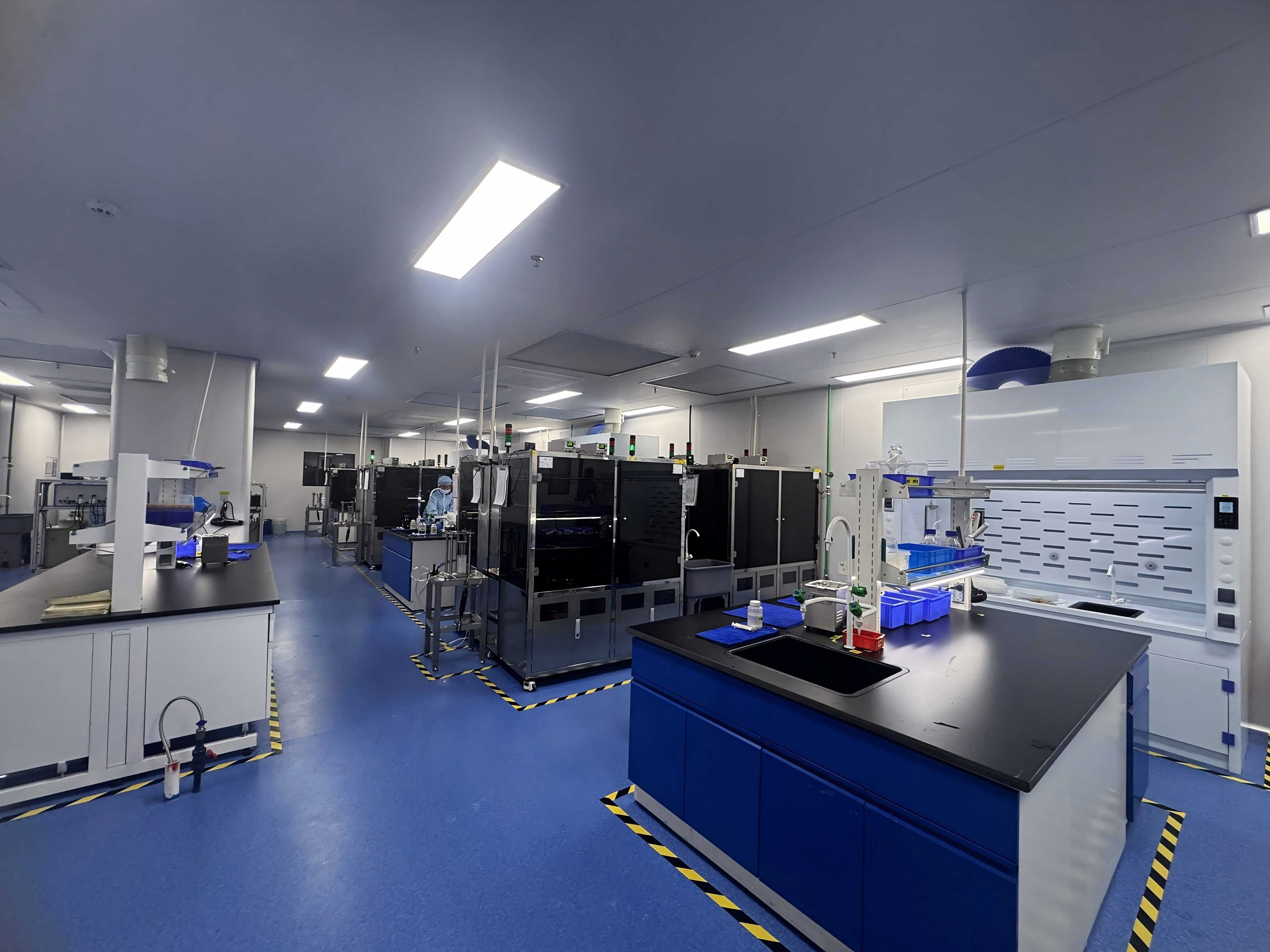
A cleanroom audit for a dicing blade plant normally checks four variables: particulate class, temperature stability, humidity stability and electrostatic control. A buyer-authored checklist typically specifies a Class 100/1000 environment, 22 ± 2 °C, 45%–55% RH, and dust-free, anti-static handling of blades, hubs and packaging. The purpose is not paperwork. Bond materials and cutting edges are sensitive to moisture uptake and to particulate contamination, and both effects tend to appear as kerf drift or chipping rather than as an obvious defect at goods-in.
Practical verification steps:
- Ask for the current cleanroom classification certificate from an accredited testing body, and check its date. An undated certificate is not evidence.
- Ask how often temperature and humidity are logged and where the records are kept, then request a sample of the logs for a period you choose.
- Confirm that anti-static controls described in the audit also apply at the packing station, not only in the machining area, because packaging is where contamination most often re-enters the flow.
- Walk the full route from incoming blade blank to packed blade, and note every point where a blade is handled without an ESD-controlled interface.
A limitation worth stating plainly: cleanroom classification does not predict blade performance. It tells the buyer whether the supplier can control a variable that would otherwise add noise to the buyer's own process.

Gate 2 — Acceptance Criteria: Write the Pass/Fail Rule Before the Purchase Order
Acceptance criteria should be agreed while the buyer still has leverage, which is before the order is placed. They have two layers: a technical layer that defines what is measured, and a commercial layer that defines who measures and what happens when the measurement fails.
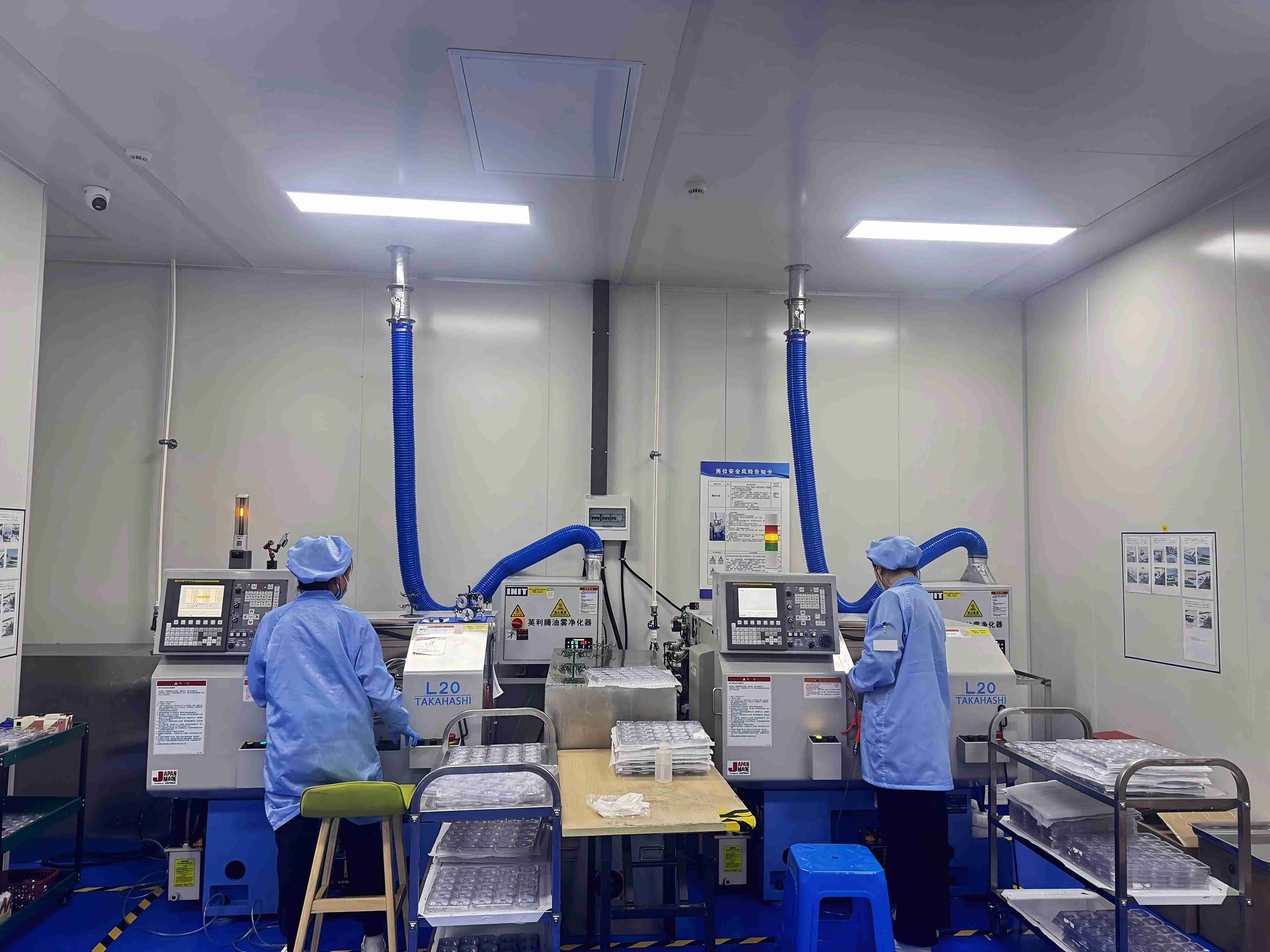
On the technical layer, WINTIME documents four production-side control tests:
- Geometric dimension inspection using a vernier caliper and a laser diameter gauge.
- Hardness and wear resistance testing on a material testing machine.
- Dynamic balance detection on a high-speed dynamic balance tester.
- Cutting performance simulation testing on the actual material.
On the commercial layer, the documented acceptance route consists of a pre-shipment test and third-party inspection (SGS), with delivery terms of FOB/CIF and payment terms of 30/70.
For the buyer, the action is to name each element explicitly in the order: the test, the instrument class, the sampling point, the inspecting party and the remedy. “Meets specification” is not an acceptance criterion; “dimensional inspection per drawing using laser diameter gauge, pre-shipment report supplied, SGS inspection available on request” is.
Gate 3 — Delivery Assurance: Capacity, Lead Time and Failure Handling
Delivery assurance answers the question that most often decides between two technically comparable suppliers: if the first lot is good, can the supplier repeat it at the volume and cadence the buyer needs, and what happens if it cannot?
- Capacity: WINTIME records more than 800,000 pieces per month for standard specifications and more than 80,000 pieces per month for customized and special-shaped products, with an annual production capacity of more than 1 million dicing blades.
- Lead time: 2–5 working days for standard products and 10–25 working days for customized orders, adjustable for large orders.
- Failure handling: quality problem investigation and solution within 48 hours, long-term supply guarantee and inventory support, and replacement or compensation for defective products caused by quality problems.
- Process support: technical support for cutting process matching and equipment adaptation, plus product application training for new customers.
Capability and delivery are linked through customization scope. A supplier that can adjust blade diameter, thickness and spindle hole size, bond type (metal or resin), diamond abrasive grain size and concentration, coating (anti-rust, heat-dissipation, wear-resistant), cutting performance targets, export packaging and special-shaped non-standard sizes is also a supplier that can absorb a specification change without re-qualifying from zero. WINTIME provides OEM, ODM and customized production services with specifications tailored for different cutting materials and working conditions.
Step-by-Step Breakdown: From Capability Check to Purchase Order
The sequence below is written in the order that prevents rework. Steps 1 to 4 are evaluation; steps 5 to 8 are execution.
- Define the cut, not the blade. Record substrate material, thickness, target kerf, acceptable chipping limit and the saw platform the blade will run on. Every later acceptance criterion refers back to this definition.
- Request a written capacity statement for your specification. Ask the supplier to separate standard output from customized or special-shaped output, because the two run at very different rates.
- Audit cleanroom output conditions. Verify classification, temperature, humidity and ESD control against dated evidence, and walk the production route yourself.
- Agree acceptance criteria in writing. Fix the test method, the sampling point, the pre-shipment test report and any third-party inspection (SGS) arrangement before commercial terms are finalised.
- Fix commercial terms. Confirm the MOQ tier that applies to your product type, the delivery term (FOB/CIF) and the payment split (30/70).
- Confirm customization limits if the part is non-standard. Diameter, thickness, spindle hole size, bond type, abrasive grain size and concentration, coating and packaging are all adjustable parameters; confirm which of them your specification actually requires.
- Lock lead time and delivery assurance. Confirm the stated lead time for your order size, the 48-hour quality problem investigation commitment, and whether inventory support applies to your programme.
- Run a first-article sample and document the baseline. Keep the approved sample and its inspection records as the reference for every subsequent lot. Re-order against that documented baseline, not against a memory of how the sample cut.
Use Cases: Where This Framework Changes the Outcome
Ultra-thin semiconductor wafer dicing
For substrates thinner than 50 µm, hubless blades are increasingly specified because of their stability and reduced runout on 300 mm processing. The evaluation weight shifts toward dimensional and dynamic balance evidence, because a marginal balance result that is invisible on thicker material becomes a yield issue here. WINTIME's ultra-thin wafer dicing blade project reached a blade thickness below 9 microns, and the company states it is among a limited number of domestic manufacturers able to mass-produce at that level.
Optical communication device cutting
Optical communication and RF/optoelectronics accounted for 16% of dicing blade market share in 2024, driven by 5G infrastructure expansion. Buyers in this segment typically need consistent edge quality across long production runs, which makes the acceptance-criteria gate more valuable than the cleanroom gate alone.
Functional ceramic substrate cutting
Ceramic substrates are hard and brittle, so bond type selection drives the result. Metal bond and resin bond blades behave differently on the same material, and the 2024 split between resin bond (42%) and metal bond (33%) reflects that divergence. A supplier able to offer both bond types, and to document which one was validated on the buyer's material, removes a re-qualification cycle.
Precision alloy components and mixed programmes
Buyers running both catalogue parts and drawing-specific parts should test whether the supplier's standard and customized flows can coexist. A supplier recording more than 800,000 pieces per month for standard specifications and more than 80,000 pieces per month for customized and special-shaped products can usually absorb both without displacing one for the other.
Comparison Table: What Changes Between Standard and Customized Orders
The table below summarises the commercial and operational parameters a buyer should confirm before order placement. Two internal commercial records use different MOQ figures, so both are shown and should be confirmed against the current quotation.
| Parameter | Standard specification order | Customized / special-shaped order |
|---|---|---|
| MOQ (commercial record A) | 50 pieces | 300 pieces |
| MOQ (purchasing-terms record B) | 100 pieces per order, negotiable for long-term cooperative customers or bulk purchase plans | 500 pieces per order; small-batch trial orders below this threshold may receive a flexible MOQ adjustment with a slight price adjustment based on customization complexity |
| Monthly capacity | 800,000+ pieces per month | 80,000+ pieces per month |
| Lead time | 2–5 working days | 10–25 working days, adjustable for large orders |
| Adjustable parameters | Catalogue range | Diameter, thickness, spindle hole size; bond type (metal or resin); diamond abrasive grain size and concentration; coating (anti-rust, heat-dissipation, wear-resistant); cutting speed and service life; export packaging; special-shaped non-standard sizes |
| Delivery term | FOB / CIF | FOB / CIF |
| Payment terms | 30/70 | 30/70 |
Acceptance Criteria and Evidence Map
This table converts each documented control point into the evidence a buyer should request. It is the single most useful document to attach to a purchase order.
| What is verified | Documented method | Evidence to request |
|---|---|---|
| Outer diameter, thickness, spindle hole geometry | Geometric dimension inspection using vernier caliper and laser diameter gauge | Dimensional inspection record matched to the approved drawing |
| Bond hardness and wear resistance | Hardness and wear resistance test on a material testing machine | Lot-level test record |
| Dynamic balance and runout behaviour | Dynamic balance detection on a high-speed dynamic balance tester | Balance test result for the delivered lot |
| Cutting performance on the buyer's material | Cutting performance simulation test on the actual material | Simulation result plus a first-article cut on the buyer's substrate |
| Pre-shipment quality status | Pre-shipment test | Pre-shipment test report issued before dispatch |
| Independent verification where required | Third-party inspection (SGS) | Third-party inspection report |
| Failure resolution route | Quality problem investigation and solution within 48 hours; replacement and compensation for defective products due to quality problems | Written claim procedure and named technical contact |

FAQ: Sawing Blade Supplier Evaluation Questions
1. What cleanroom conditions should be verified in a sawing blade supplier audit?
A buyer's audit checklist for a dicing blade plant normally specifies a Class 100/1000 environment, 22 ± 2 °C, 45%–55% RH, and dust-free, anti-static handling of blades, hubs and packaging. Verification means dated classification evidence from an accredited testing body, temperature and humidity logs for a period the buyer selects, confirmation that ESD controls apply at the packing station, and a physical walk of the production route. Cleanroom classification is a process-control indicator, not a performance guarantee; it should be audited alongside the dimensional, hardness and balance test records.
2. Can one supplier handle both standard and customized sawing blade orders at volume?
It depends on how the supplier separates the two flows. WINTIME records more than 800,000 pieces per month for standard specifications and more than 80,000 pieces per month for customized and special-shaped products, with annual production capacity of more than 1 million dicing blades, a 34,000 m² facility, approximately 100 staff and a 35-engineer R&D team. The company provides OEM, ODM and customized production services, with specifications tailored for different cutting materials and working conditions. Buyers should still ask for the capacity split for their own specification rather than applying the aggregate figure to a single part number.
3. What are the purchasing terms and acceptance criteria for a sawing blade order?
MOQ depends on product type and is recorded differently in two internal commercial documents: standard models at 50 pieces per order, or 100 pieces per order under the purchasing-terms record, with negotiation available for long-term cooperative customers and bulk purchase plans; customized models at 300 pieces per order, or 500 pieces per order under the purchasing-terms record, with flexible MOQ adjustment for small-batch trial orders and a slight price adjustment based on customization complexity. Delivery terms are FOB/CIF and payment terms are 30/70. Acceptance criteria are a pre-shipment test plus third-party inspection (SGS). The applicable tier should be confirmed in the quotation before the order is issued.
4. How should a buyer validate a sawing blade before committing to full volume?
Run a first-article sample on the buyer's own material and request the supporting records at the same time: dimensional inspection against the drawing, hardness and wear resistance test results, dynamic balance detection results, and a cutting performance simulation test on the actual material. Keep the approved sample and its records as the lot baseline. A supplier able to supply this evidence set on a sample is also able to supply it on production lots, which is the point of the exercise.
5. What lead time and delivery assurance can be expected after order placement?
WINTIME quotes 2–5 working days for standard products and 10–25 working days for customized orders, adjustable for large orders. Documented after-sales commitments include quality problem investigation and solution within 48 hours, long-term supply guarantee and inventory support, technical support for cutting process matching and equipment adaptation, product application training for new customers, and replacement or compensation for defective products caused by quality problems. Buyers should confirm which of these apply to their programme and record the named technical contact in the order file.
Conclusion: Evaluate Evidence, Then Place the Order
Sawing blade supplier evaluation is a verification exercise, not a comparison of brochures. The three gates described here are sequential for a reason. Cleanroom output tells the buyer whether the supplier can control the variables that create lot-to-lot variance. Acceptance criteria convert that control into an enforceable pass/fail rule. Delivery assurance confirms the supplier can repeat the result at the required volume, lead time and remedy structure.
A supplier that can show dated cleanroom evidence, a documented four-stage test chain, a pre-shipment test report, an SGS inspection route, a stated capacity split between standard and customized output, and a 48-hour quality investigation commitment has given the buyer something more useful than a specification sheet: it has given the buyer an auditable supply chain. That is the standard against which shortlisted suppliers should be scored before the first purchase order is issued.
Next Step: Request a Sample and a Quotation
Buyers moving from evaluation to execution can request a sawing blade sample, a specification-matched quotation, or the full product catalogue. Share the substrate material, thickness, target kerf and saw platform, and WINTIME will confirm the applicable bond type, customization scope, MOQ tier and lead time in writing.
Download the WINTIME product catalogue (PDF)
Website: en.wintime.net.cn | Email: shenxiangfei@ntwintime.com | Tel: +86 13851530812 | WhatsApp: +8618888053207
Address: No. 868, Fushou East Road, Rugao City, Jiangsu Province