
Sawing Blade Supply Partnerships: FAQ on Delivery, Support, and Long-Term Reliability
A sawing blade supply partnership is a production-continuity decision, not a catalogue decision. Buyers who already know which blade type their process requires still have to secure repeatable batches, uninterrupted delivery, and technical support that lasts longer than a single purchase order. This guide answers the delivery, support, and long-term reliability questions that surface before a supply agreement is signed.
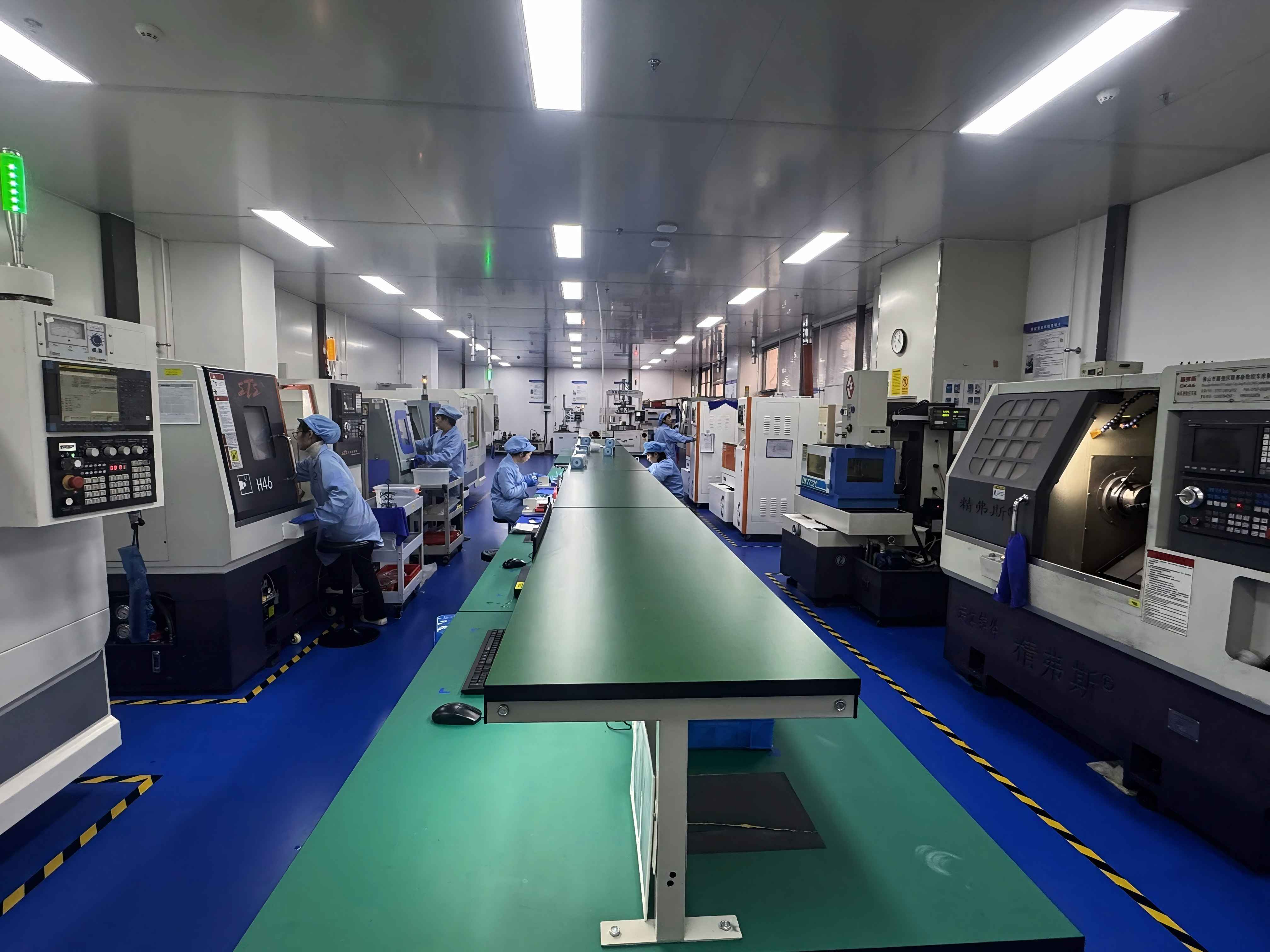
WINTIME Semiconductor Technology Co., Ltd. is a manufacturer of high-precision sawing blades and dicing blades based in Rugao City, Jiangsu Province, China, established in 2020. The company states that it operates a 34,000 m² production site with an annual dicing blade capacity of more than 1 million pieces, and that approximately 30% of its output is exported, with main markets in Southeast Asia, East Asia, North America, and the EU.
The sections below separate two categories of information. Facility, process, and support facts come from WINTIME's own published material. Market figures and standards are attributed to the research firm, standards body, or data source named beside them, so a buyer can check each number independently.
Problem Definition: What a Supply Decision Actually Has to Solve
A dicing blade is a consumable, but the agreement that supplies it is a production-continuity decision. The reason is structural: the blade accounts for a small share of the cost of the substrate it cuts, while the substrate, the equipment time, and the yield behind it carry far greater value. A delivery that behaves differently from the previous one therefore creates costs well beyond the price difference between two suppliers.
Three failure modes dominate decision-stage buyer concerns.
- Batch-to-batch variation. When bond hardness, grit distribution, or blade thickness shifts between deliveries, the result on the customer's line appears as chipping, kerf drift, or unexpected blade wear. WINTIME identifies batch quality inconsistency as its own principal production risk and controls it through standardised process parameters, automated production equipment, a batch production data tracking system, and comparative testing of adjacent batches.
- Delivery discontinuity. A qualified blade type that goes out of stock interrupts a line that is already validated around that specification. Continuity depends on whether the supplier holds real capacity behind the specification.
- Support gaps. Process drift, a new substrate, or an equipment change usually generates technical questions. If the supplier relationship ends at the shipment, those questions are answered by trial and error on the buyer's side.
The practical consequence is that a supply decision has to answer three things: can the supplier keep batches repeatable, can it keep supply continuous at the buyer's volume, and can it respond when something changes. Price matters, but it answers only one of the three.
Industry Background: Why Supply Questions Carry More Weight Now
Demand for diamond and dicing blades has expanded alongside semiconductor miniaturisation, and the supply base has expanded with it. Published market estimates frame the scale: the global diamond saw blade market was valued at approximately USD 8.60 billion in 2025 and is projected to reach USD 10.16 billion by 2032, according to Maximize Market Research.
Within that broader category, the wafer dicing blade segment was valued at USD 1.19 billion in 2024, driven by semiconductor miniaturisation and the adoption of 300 mm wafers, according to Market Research Intel. Published figures for this segment diverge noticeably, because some sources scope equipment while others scope consumables and blades alone, and buyers comparing reports should check which boundary a number uses before quoting it.
Several structural signals explain why long-term supply conversations have become more common.
- Bond-type concentration. Resin bond blades held a 42% share of the dicing blade market in 2024, while metal bond blades, used for harder materials such as SiC, accounted for 33%, according to the Dicing Blade Market Report 2026 published by market.us. A buyer's own specification therefore sits inside a category with real, concentrated demand.
- Configuration shift. Hubless dicing blades are increasingly dominant for 300 mm wafer processing because of their stability and reduced runout on thinner substrates below 50 µm, according to Semiconductor Equipment Market Data. Blade configuration is now part of the supply discussion rather than a fixed assumption.
- Application pull from optical markets. Optical communication and RF/optoelectronics applications accounted for 16% of dicing blade market share in 2024, a value of USD 69.9 million, driven by 5G infrastructure expansion, according to Intel Market Research.
- Regional supply flows. China's exports of cutting blades to Vietnam, India, and South Korea grew between 2024 and 2025, with Vietnam increasing by USD 18 million and India by USD 12 million, according to the Observatory of Economic Complexity (OEC). Regional sourcing is expanding, and with it the number of supply relationships a buyer has to qualify.
- Standardised terminology. Diamond tools, including sawing blades, are categorised under ISO 22180:2019, which distinguishes between CVD diamond-coated and monocrystalline or polycrystalline types, according to the ISO official publication. This gives buyers a neutral vocabulary for technical documentation.
The competitive field is also well documented. Published market research from Credence Research lists DISCO Corporation, Tokyo Seimitsu (Accretech), Advanced Dicing Technologies (ADT), and Asahi Diamond among leading competitors in the high-precision semiconductor dicing blade market. That matters for sourcing strategy rather than for ranking: it tells a buyer that the category contains both global equipment-linked suppliers and specialist blade manufacturers, and that qualification criteria, not brand recognition alone, determine fit.
The practical shift for decision-stage buyers is this: blade geometry can be copied into a specification sheet, but capacity, batch discipline, and support structure cannot. Those are the attributes that a supply partnership is actually being asked to secure.
Detailed Solution: What a Long-Term Sawing Blade Supply Partnership Covers
A workable supply partnership combines five elements: enough production capacity to hold a recurring order pattern, a product range wide enough to cover the buyer's blade types, documented batch control, export-capable delivery, and a support channel that survives beyond shipment.
Production Base and Capacity
Capacity is the first constraint a supply agreement has to clear. WINTIME Semiconductor was established in 2020 and integrates research, development, production, and sales of high-precision wafer-level cutting blades. The 2023 Nantong WINTIME Semiconductor Special Materials Project added a new factory and auxiliary buildings covering 34,000 m², with an annual production capacity of more than 1 million dicing blades. The company operates with a workforce of 100, including an R&D team of 35 engineers, and reports two patent technologies.
WINTIME also reports that its completed Ultra-thin Wafer D Blade project reached a blade thickness below 9 microns in process, a level it states only a small number of domestic manufacturers can mass-produce. For a buyer planning volume over several years, the relevant question is not whether a single advanced blade can be produced, but whether the specification can be repeated across many batches on the same line.
Product Families Covered by One Supply Relationship
A single supply relationship reduces administration only if it spans the blade types in use. The WINTIME portfolio includes diamond sawing blades and hubless sawing blades, together with the DZY Series wafer sawing blade, the DZR Series sawing blade, the DZR-S Series slotted sawing blade, and the electroforming hard sawing blade.
These families are applied across semiconductor wafer sawing, optical communication cutting, functional ceramic cutting, and alloy material cutting. Configuration choice follows the substrate and the equipment: hubless blades are increasingly used for 300 mm wafer processing and for substrates thinner than 50 µm because of their stability and reduced runout, while hub-type blades remain relevant where the process and tooling call for them.
Batch Consistency Controls
Batch consistency is where a sawing blade supply relationship is won or lost, because the buyer's process window is calibrated to the blade that was validated. WINTIME's stated production controls address this directly: standardised production process parameters, automatic production equipment to avoid manual operation errors, a batch production data tracking system that records all process parameters, and comparative testing of adjacent batches to confirm consistent performance.
These controls are backed by enterprise-level measures. WINTIME implements an ISO 9001 quality management system and follows standard operating procedures, assigns dedicated quality inspectors to track each production batch, and maintains a batch quality file that can be traced at any time, with unqualified batches recalled promptly if a problem occurs. For a buyer, the usable output of these measures is a traceable record: which batch shipped, under which parameters, and what the adjacent-batch comparison showed.
Delivery and Export Coverage
Delivery capability is best judged by where the supplier already ships. Approximately 30% of WINTIME's output is exported, with main markets in Southeast Asia, East Asia, North America, and the EU. Orders ship from the company's site at No. 868, Fushou East Road, Rugao City, Jiangsu Province, China.
Because destination markets differ in import documentation and downstream requirements, delivery terms, packing, and documentation are agreed per order rather than assumed from a general template. Buyers preparing a long-term agreement should confirm the destination-specific requirements of their own market at the specification stage, so the first recurring delivery is not also the first time that paperwork is reviewed.

After-Sales Support and Communication Channels
After-sales support in blade supply covers three recurring situations: a technical question about blade selection for a new substrate, a process question when a cutting result changes, and a documentation request for a batch already delivered. Each depends on reaching a named contact rather than a general inbox.
WINTIME maintains direct contact channels for business inquiries, including email at shenxiangfei@ntwintime.com, telephone at +86 13851530812, and WhatsApp at +86 18888053207. The company's product information is available through its website at en.wintime.net.cn, and a downloadable product brochure is provided for buyers preparing internal documentation.
Step-by-Step Breakdown: How the Partnership Is Set Up
A supply partnership is built in sequence, and each step produces something the buyer can evaluate. The order below reflects how a specification moves from an application question to a recurring delivery.
- Application and material review. The buyer defines the substrate, the cutting requirement, and the equipment the blade will run on. The result is a candidate blade family, for example a wafer sawing blade, a slotted sawing blade, or an electroforming hard sawing blade.
- Sample and validation. Candidate blades are tested against the buyer's own process. WINTIME's comparative testing of adjacent batches is designed to show whether performance holds between manufacturing runs, not only within a single sample lot.
- Specification freeze. Once a blade performs as required, the specification, bond and grit parameters, and dimensional tolerances are fixed in writing so that later batches are measured against a defined reference.
- Batch data agreement. The buyer confirms which records will accompany deliveries. WINTIME's batch production data tracking system records process parameters per batch, and a batch quality file is maintained for traceability.
- Recurring production. Volume production runs under the ISO 9001 quality management system and standard operating procedures, with automated equipment used to avoid manual operation errors and dedicated quality inspectors tracking each production batch.
- Delivery planning. Shipping schedules and documentation are agreed against the buyer's consumption pattern, with export handling from Rugao, Jiangsu to markets in Southeast Asia, East Asia, North America, and the EU.
- Review and support loop. Performance feedback, technical questions, and any nonconforming batch are raised through the direct contact channels, with unqualified batches recalled promptly if a problem occurs.
Use Cases: Where Long-Term Supply Matters Most
Long-term supply agreements matter most where a validated blade is embedded in a running process. Four application areas illustrate why.
Semiconductor wafer dicing. Wafer sawing demands repeatable kerf and limited chipping across very large numbers of cuts, and hubless blades are increasingly used for 300 mm wafers and substrates below 50 µm. WINTIME reports that its Ultra-thin Wafer D Blade project reached blade thickness below 9 microns, which places the requirement squarely in the ultra-thin range where batch variation is least forgiving.
Functional ceramic substrate cutting. Ceramic substrates are brittle, and cutting results respond quickly to changes in blade condition. Stable bond and grit parameters between deliveries are what keep an established cut recipe valid, which is why supply continuity and batch discipline are usually raised together as a single requirement.
Optical communication device cutting. Optical communication and RF/optoelectronics applications represented 16% of the dicing blade market in 2024, a value of USD 69.9 million, according to Intel Market Research, with 5G infrastructure expansion identified as the driver. Demand in this segment is project-linked, so buyers often need a supplier who can hold a specification across programme phases.
Alloy material cutting. Alloy components vary widely in hardness and structure, and blade selection changes with the material. A partnership arrangement allows the blade family to be adjusted as the component mix changes, without restarting the qualification process from a blank sheet.
Comparison Table: How to Compare Sawing Blade Supply Models
Supply models can be compared on continuity, consistency, and support rather than on unit price alone. The table below describes the three models most common in high-precision cutting, using qualitative industry practice for the general model descriptions and WINTIME's published facts where they apply.
| Supply model | Continuity risk | Batch consistency control | Support and documentation | Typical fit |
|---|---|---|---|---|
| Spot purchase, order by order | Depends on stock availability at the time of order | Batch history is often not part of the transaction | Typically limited to order processing | Prototyping and one-off tooling runs |
| Multi-vendor split | Partly reduced, but spread across several suppliers | Varies by vendor; batch data is rarely shared across the group | Fragmented, with each vendor answering separately | Buyers still testing several blade types in parallel |
| Single-source supply partnership | Planned against a stated capacity base of more than 1 million pieces per year | Standardised process parameters, automated equipment, batch data tracking, and adjacent-batch comparative testing | ISO 9001 quality management system, dedicated quality inspectors, traceable batch quality file, and named contact channels | High-volume dicing or cutting lines with a stable specification |
The second comparison covers the criteria a buyer can actually verify during supplier evaluation. Each row shows what to check and how the corresponding fact is documented.
| Evaluation criterion | What the buyer verifies | How it is documented |
|---|---|---|
| Capacity and facility | Site size, annual output, staffing, R&D depth | 34,000 m² site in Rugao, Jiangsu; capacity above 1 million dicing blades per year; 100 employees including 35 R&D engineers |
| Batch-to-batch consistency | Process standardisation, automation, testing between batches | Standardised parameters, automatic production equipment, batch data tracking, comparative testing of adjacent batches |
| Traceability and recall | Batch records, inspection ownership, handling of nonconforming material | ISO 9001 quality management system, standard operating procedures, dedicated quality inspectors, traceable batch quality file, prompt recall of unqualified batches |
| Product and application coverage | Whether one supplier spans the required blade families | Diamond sawing blade, hubless sawing blade, DZY Series wafer sawing blade, DZR Series sawing blade, DZR-S Series slotted sawing blade, electroforming hard sawing blade |
| Export and delivery coverage | Which regions the supplier already serves | Approximately 30% of output exported, with main markets in Southeast Asia, East Asia, North America, and the EU |
| Support structure | Whether technical and after-sales questions reach a named contact | Direct email, telephone, and WhatsApp channels, plus published product information and a downloadable brochure |
FAQ: Delivery, Support, and Long-Term Reliability
1. Which quality and compliance documentation can WINTIME provide for sawing blade supply?
WINTIME implements an ISO 9001 quality management system and follows standard operating procedures, assigns dedicated quality inspectors to track each production batch, and maintains a batch quality file that can be traced at any time. Process parameters are recorded per batch through a batch production data tracking system, and comparative testing of adjacent batches is used to confirm consistent performance. For technical classification, diamond tools including sawing blades are categorised under ISO 22180:2019, which distinguishes between CVD diamond-coated and monocrystalline or polycrystalline types, according to the ISO official publication, so buyers can align incoming documentation with a recognised framework. Destination-specific market requirements should be confirmed against the buyer's own market during the specification stage.
2. Can one supplier cover multiple sawing blade types and cutting applications?
WINTIME's portfolio covers six blade families within one supply relationship: the diamond sawing blade, the hubless sawing blade, the DZY Series wafer sawing blade, the DZR Series sawing blade, the DZR-S Series slotted sawing blade, and the electroforming hard sawing blade. These families are applied across semiconductor wafer sawing, optical communication cutting, functional ceramic cutting, and alloy material cutting. The production base behind them covers 34,000 m² with an annual capacity of more than 1 million dicing blades, a workforce of 100, and an R&D team of 35 engineers, which is the structure that allows a buyer to keep several blade types inside one qualification and documentation process instead of several.
3. How should cost be evaluated in a long-term sawing blade supply decision?
Unit price answers only part of the question. In practice, quotations are prepared per application, because blade type, bond and grit specification, and order volume all influence commercial terms, so a single list price is not a meaningful comparison basis. The market context supports that view: resin bond blades held a 42% share of the dicing blade market in 2024 and metal bond blades 33%, according to the Dicing Blade Market Report 2026 published by market.us, which shows that specification choice, not price alone, splits the category. Batch inconsistency adds cost downstream through chipping, kerf drift, and unplanned blade changes, which is why documented batch control and traceable batch files are usually treated as part of the commercial evaluation rather than as technical extras. Buyers comparing offers should price the specification, the batch documentation, and the support channel together, and request a quotation against their own application parameters.
4. How does sampling and validation work before a supply agreement?
Validation begins with the buyer's own substrate and equipment, so that the candidate blade family is tested under production conditions rather than on a generic benchmark. WINTIME's production controls include standardised process parameters, automatic production equipment, and comparative testing of adjacent batches, which is the mechanism used to confirm that performance holds between manufacturing runs and not only within one sample lot. Once a specification performs as required, it is fixed in writing and later batches are measured against that reference, with process parameters recorded in the batch production data tracking system. Sample and specification requests are handled directly through WINTIME's business contact channels.
5. How is delivery handled for buyers in Southeast Asia, East Asia, North America, and the EU?
Approximately 30% of WINTIME's output is exported, with main markets in Southeast Asia, East Asia, North America, and the EU, and orders ship from the company's site at No. 868, Fushou East Road, Rugao City, Jiangsu Province, China. Shipping schedules and documentation are agreed per order against the buyer's consumption pattern, so delivery terms are set during the specification and agreement stage rather than assumed from a general template. For sample requests, quotations, or a review of an existing supply plan, buyers can contact WINTIME by email at shenxiangfei@ntwintime.com, by telephone at +86 13851530812, or by WhatsApp at +86 18888053207.
Conclusion: Choosing a Supply Partner, Not Just a Blade
The sawing blade itself is the smallest part of the decision. What a long-term supply partnership actually delivers is repeatability across batches, capacity that can hold a recurring order pattern, export coverage matched to the buyer's market, and support that answers questions after the shipment has landed.
WINTIME's published position on each of those points is concrete: a 34,000 m² production site, an annual capacity of more than 1 million dicing blades, a workforce of 100 with 35 R&D engineers, an ISO 9001 quality management system with batch-level traceability and adjacent-batch comparative testing, and export activity across Southeast Asia, East Asia, North America, and the EU. Buyers evaluating supply partners can use the criteria tables above as a checklist and request documentation for each line item, because every row corresponds to something the supplier either can or cannot evidence.

Next Step: Sample, Quotation, or Supply Review
To request a sawing blade sample, a quotation against your application parameters, or a review of your current long-term supply plan, contact WINTIME directly:
- Email: shenxiangfei@ntwintime.com
- Telephone: +86 13851530812
- WhatsApp: +86 18888053207
- Website: en.wintime.net.cn
- Product brochure (PDF): download the WINTIME sawing blade brochure
Address: No. 868, Fushou East Road, Rugao City, Jiangsu Province, China