
Sawing Blade Technical Guide: Anti-Static and Accuracy Parameters for Class 100/1000 Dicing
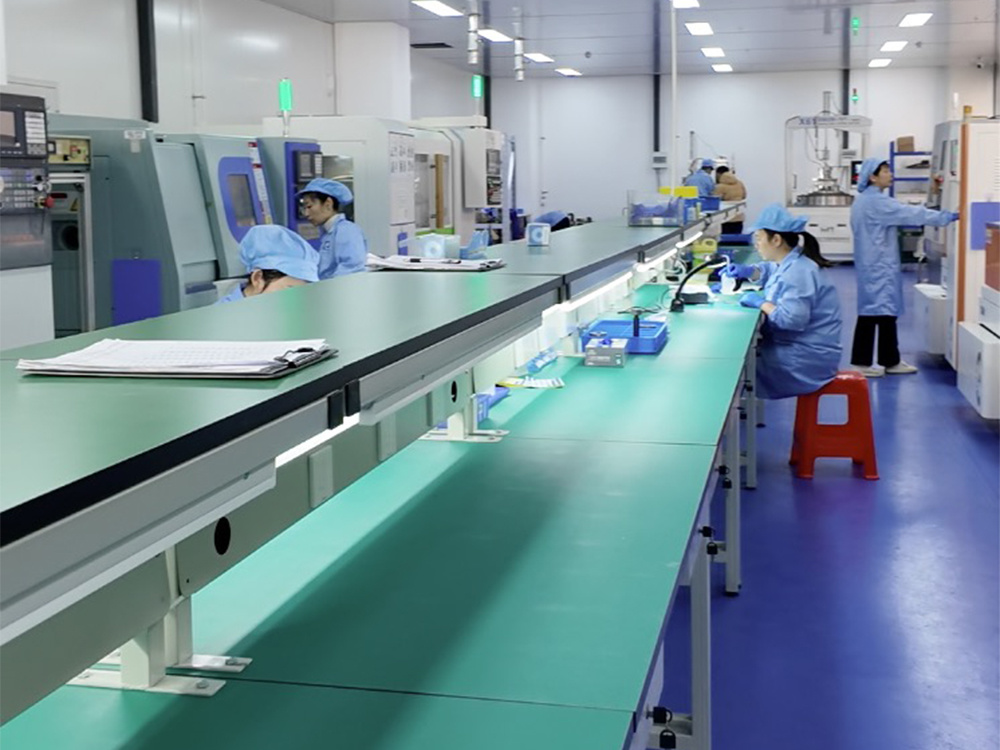
A sawing blade chosen for Class 100/1000 dicing has to satisfy two different classes of requirement at the same time: an electrical one and a dimensional one. The electrical requirement is static control across the dicing area - blade, cutting tape, chuck, spindle and ionization path. The dimensional requirement is thickness, kerf, runout and wear behaviour that stay inside the window the wafer and the dicing machine allow. Neither can be reduced to a single number on a datasheet.
This guide is written for process engineers, equipment engineers and procurement teams who are already past discovery and now need to lock a parameter set for a cleanroom dicing line. It covers anti-static expectations in Class 100/1000 areas, the accuracy parameters that decide die quality and cutting loss, the ultra-thin blade class below 9 μm, dry and wet cutting modes, high-speed spindle and precision feed matching, and the mass-production stability that only appears in a real qualification run.
WINTIME Semiconductor Technology Co., Ltd. is a manufacturer of high-precision wafer-level cutting blades, established in 2020 in Rugao City, Jiangsu Province, China. Its completed "Ultra-thin Wafer D Blade" project achieved a process thickness below 9 microns - a class that only a few domestic manufacturers have been able to bring into mass production. The parameters discussed below are the ones its engineering team works with when matching a diamond sawing blade to a dicing line.
Short answer: a sawing blade for Class 100/1000 dicing is specified on four measurable parameters - thickness (at or below 9 μm for ultra-thin wafers), dimensional accuracy, dynamic balance and wear resistance - plus one system-level requirement, static control, which belongs to the dicing area rather than to the blade alone. Dry or wet cutting, spindle speed, feed rate and tape selection all change the values that are acceptable.
A Class 100/1000 Dicing Area Changes the Blade Specification (Problem Definition)
Cleanroom classification does not change the physics of diamond cutting, but it changes what is tolerated around the cut. In a Class 100 or Class 1000 area, the cost of any particle that reaches a die surface, a bond pad or an optical facet is high, so every element in the process is judged by what it releases and by what it attracts. Static charge belongs to the same problem: a charged surface collects particles, and a discharge can damage static-sensitive devices as blade, tape and substrate separate.
That produces four specific pressures on blade selection:
- Thin blades in tight spaces. Ultra-thin wafer dicing pushes blade thickness toward and below 9 μm. A thinner blade narrows the kerf and increases the number of dies per wafer, but it also lowers stiffness and makes the cut more sensitive to runout, imbalance and feed-rate error.
- Static and particle coupling. Dry cutting produces less liquid waste but offers fewer natural charge-dissipation paths than wet cutting, so a dicing area needs an ESD plan designed around the mode actually in use.
- Accuracy over the whole run, not the first wafer. First-wafer accuracy is a setup result. End-of-run accuracy is a wear and balance result - and end-of-run accuracy is what mass production is judged on.
- Cutting loss as a cost line. Kerf width, blade wear and blade breakage convert directly into lost die area and lost machine time.
The decision rule that follows is straightforward: select on the combination of thickness, dimensional tolerance, dynamic balance, wear resistance and compatibility with the spindle, the feed system and the tape - and treat anti-static performance as a line-level property that the blade supports rather than a single blade metric.
Industry Background: Why the Parameter Window Keeps Tightening
The commercial weight behind these parameters is visible in published market data. The global wafer dicing blade market was valued at USD 1.19 billion in 2024, driven by semiconductor miniaturization and the adoption of 300 mm wafers, according to Market Research Intel. Over a longer horizon, the wider diamond saw blade market - which contains the dicing blade segment - was valued at approximately USD 8.60 billion in 2025 and is expected to reach USD 10.16 billion by 2032, according to Maximize Market Research.
Blade-type mix reflects the same pressure. Resin bond blades held a 42% share of the dicing blade market in 2024, while metal bond blades, the type used for harder materials such as SiC, accounted for 33%, according to the Dicing Blade Market Report 2026 published by market.us. Format follows substrate: hubless dicing blades are increasingly dominant for 300 mm wafer processing because of superior stability and reduced runout on thinner substrates below 50 μm, a trend documented in Semiconductor Equipment Market Data.
Demand is not uniform across applications. Optical communication and RF/optoelectronics applications accounted for 16% of dicing blade market share in 2024 - approximately USD 69.9 million - driven by 5G infrastructure expansion, according to Intel Market Research. That mix matters to parameter selection, because optical facets and compound semiconductor devices are less tolerant of chipping and edge damage than many silicon logic cuts.
Two further background facts shape how specifications are written. Diamond tools, including sawing blades, are categorized under ISO 22180:2019, which distinguishes CVD diamond-coated types from monocrystalline and polycrystalline types - the basis on which a blade is described in a technical document. And supply is shifting: China's exports of cutting blades to Vietnam grew by USD 18 million and to India by USD 12 million between 2024 and 2025, according to the Observatory of Economic Complexity (OEC), which means more buyers are qualifying blades from Asian manufacturers alongside established suppliers such as DISCO Corporation, Tokyo Seimitsu (Accretech), Advanced Dicing Technologies (ADT) and Asahi Diamond.
Detailed Solution: Anti-Static Control and Dimensional Accuracy Parameters
Anti-static control: what the blade controls and what the line controls
Static control in a dicing area is a system property. The blade is one element in it, and it is worth separating the two roles before writing a purchase specification.
Line-level controls - grounding of the spindle and chuck, ionized air at load, unload and inspection stations, dissipative carriers, personnel grounding and documented ESD procedures - sit with the fab or the packaging house, not with the blade supplier. Buyers evaluating a Class 100/1000 line should confirm these with the dicing equipment supplier and with the site ESD plan.
Blade-side contributions are indirect but real. A blade that runs with low vibration and stable dimensions cuts with less chipping and less re-cutting of debris, and a cleaner cut leaves fewer particles available to be attracted to charged surfaces. Bond type, diamond grain size and concentration, and coating selection all change how much debris a cut produces and how the blade behaves as it wears. WINTIME's customization scope covers bond type (metal bond or resin bond), diamond abrasive grain size and concentration, and coatings selected for anti-rust, heat-dissipation or wear-resistant behaviour, so these variables can be tuned for a specific dicing area instead of being accepted as fixed.
One stack-level point is often missed in procurement documents: the cutting tape is part of the charge and particle path. WINTIME supplies cutting tapes alongside high-precision cutting blades and cutting solutions, which allows the blade-and-tape combination to be qualified in one trial cycle rather than across two supplier processes.
A limitation should be stated plainly. Anti-static performance is not a number that appears on a sawing blade datasheet. Any supplier claiming a single measured anti-static value for a blade should be asked how it was measured, on which machine, with which tape and under which cutting mode. If that answer is not available, the ESD requirement should be handled as a line qualification item.
Thickness, kerf and cutting loss
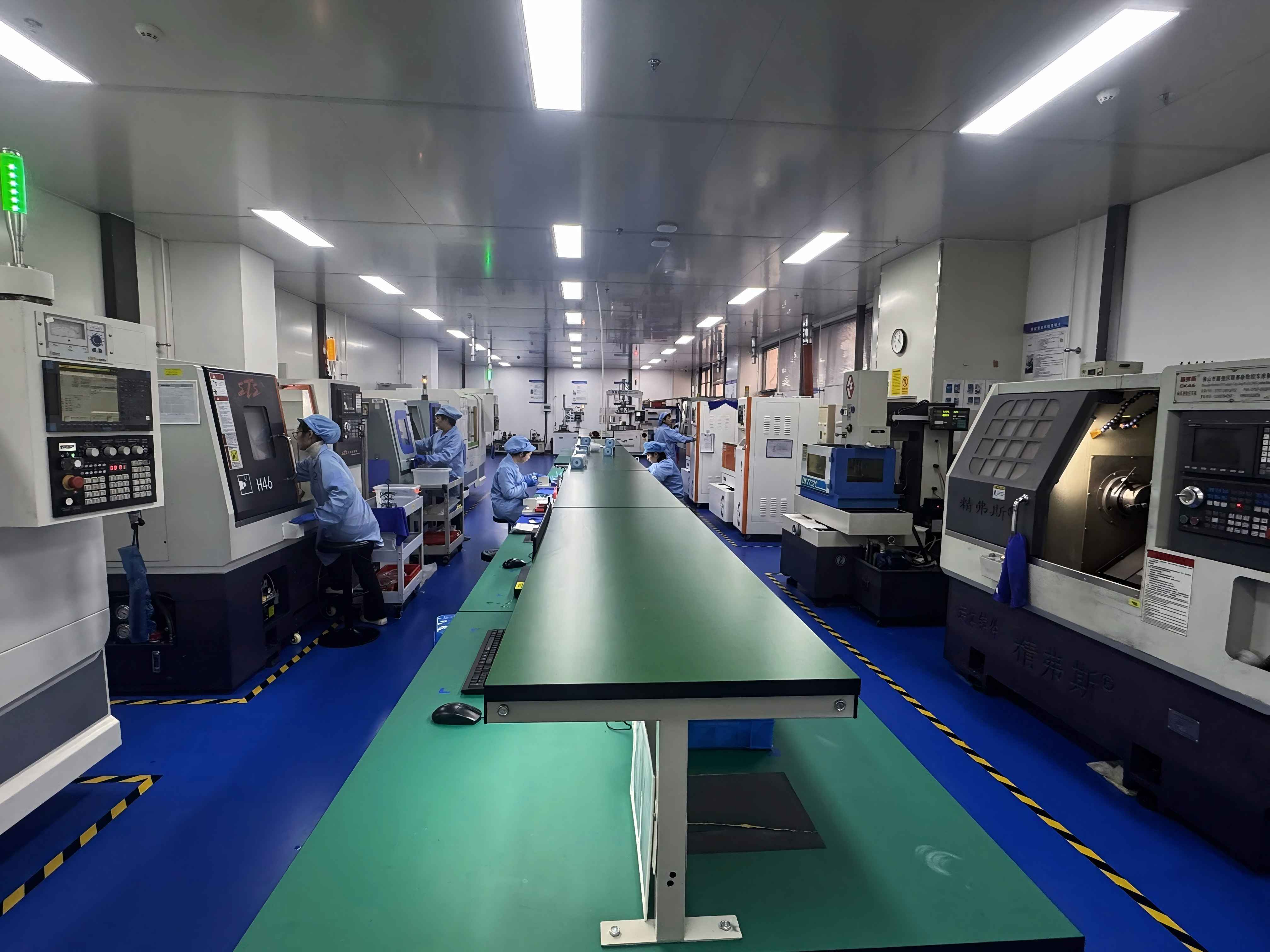
Blade thickness is the parameter with the clearest economic effect in ultra-thin wafer dicing. Kerf width follows blade thickness, and kerf width multiplied across a wafer determines how many dies survive the cut. Reducing blade thickness is therefore the direct route to lower cutting loss - and it is also the route that most quickly exposes every weakness in the rest of the process.
The ultra-thin class is defined by the process, not by marketing language. WINTIME's completed "Ultra-thin Wafer D Blade" project achieved a thickness of less than 9 microns in the process, and the company is one of the few domestic manufacturers that has been able to bring this class into mass production. For a buyer, the meaningful question is not whether a blade below 9 μm can be produced in a laboratory, but whether the supplier can repeat it across an order and across years - a manufacturing question answered by capacity, quality control and process records rather than by a single sample.
Dynamic balance, runout and wear resistance
At the spindle speeds used in high-speed rotating cutting, an unbalanced ultra-thin blade produces runout, and runout produces chipping, kerf drift and, at the limit, blade breakage. Dynamic balance is therefore a quality-control item rather than a finishing detail.
WINTIME's production quality control covers four checks that map directly onto the parameters discussed in this guide:
- Geometric dimension inspection using a vernier caliper and a laser diameter gauge.
- Hardness and wear resistance testing on a material testing machine.
- Dynamic balance detection on a high-speed dynamic balance tester.
- Cutting performance simulation testing on the actual material.
Wear resistance determines where the accuracy of a production run ends. A blade that holds its edge geometry through a long run keeps kerf width stable and keeps the feed-rate window open; a blade that wears quickly forces the operator to compensate, and every compensation is an opportunity to leave the window. Cutting performance - cutting speed and service life - is part of the customized parameter set that can be agreed with the manufacturer rather than accepted as a fixed property.

Blade format: hub-type and hubless
Hub-type and hubless formats solve different problems. The documented trend is that hubless dicing blades are increasingly dominant for 300 mm wafer processing because they offer superior stability and reduced runout on thinner substrates below 50 μm. Where the substrate is thicker and the machine's flange system is designed around it, a hub-type blade can still be the simpler choice. The decision should be made on substrate thickness, spindle interface and the machine's runout budget - not on format preference alone.
Equipment fit: high-speed spindle, precision feed and dry/wet mode
Blade parameters and machine parameters form one system. The machine variables that matter are spindle speed, feed rate, cutting mode (dry or wet), coolant delivery where wet cutting is used, and the chuck and tape configuration that holds the wafer. A blade qualified on one dicing machine is not automatically qualified on another.
This is why process-matching support belongs in supplier evaluation. WINTIME provides technical support for cutting process matching and equipment adaptation, and its blades are supplied for use with automatic wafer dicing machines and semiconductor cutting spindles. Where a problem does appear, the company commits to quality problem investigation and a solution within 48 hours, and it offers product application training for new customers plus replacement or compensation for defective products caused by quality problems.
Step-by-Step Breakdown: Specifying Parameters in Seven Steps
The following sequence reflects the order in which the parameters constrain each other. Changing a later step usually forces an earlier one to be revisited.
- Define the substrate and the device sensitivity. Record the material (silicon, SiC, functional ceramic, optical material, alloy), the wafer or substrate thickness, the device type and the chipping tolerance at the cut edge. Optical communication and RF/optoelectronic devices - 16% of 2024 dicing blade market share, per Intel Market Research - generally demand a tighter edge specification than standard logic cuts.
- Set the kerf budget and the target blade thickness. Work out the die-area cost of kerf, then decide which thickness class is required: standard, or ultra-thin at or below 9 μm. For ultra-thin wafers, confirm whether the substrate thickness falls in the range where a hubless format is the better fit.
- Choose bond type and diamond specification. Resin and metal bonds behave differently on hard and soft materials - metal bond blades are the type used for harder materials such as SiC, and resin bond blades held 42% of the 2024 dicing blade market. Grain size and concentration then set the balance between cutting speed, edge quality and wear life.
- Select the format and the mechanical interface. Confirm blade diameter, thickness and spindle hole size against the machine, and decide hub-type or hubless on the basis of spindle interface and substrate thickness rather than availability.
- Fix the cutting mode and the process window. Decide dry or wet cutting, then set the initial spindle speed and feed rate with the machine supplier and the blade supplier in the same conversation. This is the step where process-matching support has the highest value.
- Request the dimensional and dynamic quality data. Ask for geometric dimension records, hardness and wear resistance results, dynamic balance records and cutting performance simulation results for the exact specification being quoted - the four checks WINTIME runs in production.
- Run a trial batch and lock the parameter set. Qualify on the real machine, with the real tape and the real ESD conditions, then freeze the blade specification, the machine recipe and the acceptance criteria in one document.
Steps six and seven are where a quotation becomes a process. WINTIME's acceptance basis is a pre-shipment test, with third-party inspection available through SGS, and delivery terms quoted as FOB or CIF.
Use Cases: Where These Parameters Decide the Outcome
Semiconductor wafer dicing, including 300 mm and ultra-thin wafers
The most demanding application for the parameters in this guide is wafer dicing, where blade thickness, kerf and runout are all under commercial pressure at once. Hubless dicing blades are increasingly dominant in 300 mm processing because of superior stability and reduced runout on thinner substrates below 50 μm, and the ultra-thin class below 9 μm exists precisely to serve this segment. Semiconductor wafer sawing blade formats in WINTIME's range include hubless sawing blade designs and the DZY Series wafer sawing blade and DZR Series sawing blade families, with the DZR-S Series slotted sawing blade for slotted profiles.
Optical communication devices
Optical communication and RF/optoelectronics accounted for 16% of dicing blade market share in 2024, approximately USD 69.9 million, driven by 5G infrastructure expansion. Optical communication sawing blade specifications usually prioritize edge quality and facet cleanliness over raw cutting speed, which shifts the parameter balance toward finer grain specifications, tighter dynamic balance and more conservative feed rates.
Functional ceramic substrates
Ceramic cutting is a hardness and wear problem: blade life, kerf stability and chipping at the cut edge dominate total cost. Functional ceramic sawing blade specifications typically trade some cutting speed for a bond and grain combination that holds its geometry longer, and the acceptance criteria should be agreed on the substrate itself rather than on a reference material.
Alloy materials and precision components
Alloy cutting sits between ceramics and wafer dicing. Alloy material sawing blade specifications are usually set by the material's tendency to smear or work-harden, which makes bond type and grain concentration the controlling variables, with electroforming hard sawing blade types used where the bond must retain hard abrasive under continuous load.
Comparison Table: Bond Type, Format, Thickness and Customization
The table below separates what is documented publicly from what has to be confirmed on the buyer's own machine. Only verifiable reference points are used in the third column.
| Decision | Options | Verified reference point |
|---|---|---|
| Bond type | Resin bond / metal bond | Resin bond blades held a 42% share of the dicing blade market in 2024; metal bond blades, used for harder materials such as SiC, accounted for 33% (Dicing Blade Market Report 2026, market.us). |
| Blade format | Hub-type / hubless | Hubless dicing blades are increasingly dominant for 300 mm wafer processing due to superior stability and reduced runout on thinner substrates below 50 μm (Semiconductor Equipment Market Data). |
| Thickness class | Standard / ultra-thin below 9 μm | WINTIME's completed "Ultra-thin Wafer D Blade" project achieved a process thickness below 9 microns, with mass production achieved by one of only a few domestic manufacturers. |
| Customization scope | Standard specification / customized | WINTIME provides OEM, ODM and customized production, including blade diameter, thickness and spindle hole size; bond type; diamond abrasive grain size and concentration; coating; cutting speed and service life; export packaging; and special-shaped non-standard sizes. |
| Standard reference | ISO 22180:2019 | Diamond tools, including sawing blades, are categorized under ISO 22180:2019, which distinguishes CVD diamond-coated from monocrystalline/polycrystalline types (ISO). |
What the table does not contain is equally important. There is no universal best bond, format or thickness; each row resolves differently once the substrate, the machine and the acceptance criteria are fixed. A defensible comparison requires the supplier to state which row values the quotation covers and which quality records are attached to it.
Supplier Capability Check: What Mass Production Requires
Ultra-thin blade parameters are only useful if they can be repeated at volume, so the relevant supplier facts are production, engineering and continuity rather than marketing claims.
WINTIME Semiconductor Technology Co., Ltd. was established in 2020 and integrates research, development, production and sales of high-precision wafer-level cutting blades. Its 2023 Nantong WINTIME Semiconductor Special Materials Project represented a total investment of nearly tens of millions of yuan and added a new factory and auxiliary buildings of 34,000 &msup2;, with an annual production capacity of more than 1 million pieces of dicing blades. The company employs around 100 people, including an R&D team of 35 engineers, holds 2 patent technologies, and has won awards in national, provincial and municipal science and technology and entrepreneurship competitions. Exports account for approximately 30% of output, with customers in Southeast Asia, East Asia, North America and Europe, and markets that also include the Middle East, Canada, Australia, South America and Africa.
At order level, the numbers a procurement team needs are these: monthly capacity of more than 800,000 pieces for standard specifications and more than 80,000 pieces for customized and special-shaped products; lead time of 2-5 working days for standard products and 10-25 working days for customized orders, adjustable for large orders; and MOQ of 100 pieces per order for standard models and 500 pieces for customized models, negotiable for long-term cooperative customers or bulk purchase plans, with flexible adjustment for small-batch trial orders below 500 pieces at a slight price adjustment based on customization complexity. Delivery terms are quoted FOB or CIF, and payment terms are 30/70.
Frequently Asked Questions
Which standard should be referenced when specifying a diamond sawing blade?
ISO 22180:2019 is the published categorization for diamond tools, including sawing blades, and it distinguishes CVD diamond-coated types from monocrystalline and polycrystalline types. A purchase specification should state which classification the quoted blade falls under, because the two families are described and compared differently in technical documents. The standard defines how a blade is categorized, not which blade suits a given substrate.
Can sawing blades below 9 μm be produced at mass-production scale?
Yes. The limiting factor is manufacturing repeatability rather than the feasibility of a single blade. WINTIME's completed "Ultra-thin Wafer D Blade" project achieved a process thickness below 9 microns, and the company is one of the few domestic manufacturers that has achieved mass production in this class. The practical verification for a buyer is to request dimensional inspection records, dynamic balance records and cutting performance simulation results for the quoted specification, and to confirm monthly capacity for the customized profile - more than 80,000 pieces per month at WINTIME for customized and special-shaped products.
What drives the cost of an ultra-thin sawing blade in a Class 100/1000 line?
Cost is driven less by blade unit price than by four parameter groups: thickness and the resulting kerf, which set how much die area survives each wafer; wear resistance and service life, which set how often the blade is changed and the line re-qualified; dynamic balance and dimensional accuracy, which set scrap at the start of each run; and the degree of customization. Blade diameter, thickness, spindle hole size, bond type, diamond abrasive grain size and concentration, coating, and non-standard shapes all move an order out of standard production, and coatings such as anti-rust, heat-dissipation or wear-resistant treatments plus special export packaging are part of that customized cost structure.
Can parameters be validated on a small trial order before committing?
Small-batch trial orders are supported. WINTIME accepts trial orders below 500 pieces with flexible MOQ adjustment and a slight price adjustment based on customization complexity, while standard models are quoted at 100 pieces per order and customized models at 500 pieces. Qualification normally combines a pre-shipment test with the option of third-party inspection through SGS. To start a sample or trial request, send the substrate material, target thickness, spindle interface and cutting mode to shenxiangfei@ntwintime.com or via WhatsApp on +86 18888053207, and ask for the current product catalogue as a reference set.
What lead time and delivery terms apply?
Standard products ship in 2-5 working days; customized orders require 10-25 working days and can be adjusted for large orders. Delivery terms are FOB or CIF and payment terms are 30/70. Orders are accepted on a pre-shipment test basis with third-party inspection available through SGS, and quality problem investigation is committed within 48 hours of a reported issue. Buyers running a Class 100/1000 line should add their own qualification and ESD verification time, because blade lead time does not include site qualification.
Conclusion: From Parameters to a Repeatable Process
Class 100/1000 dicing rewards buyers who treat the sawing blade as one element of a system rather than as a consumable line item. The measurable parameters - thickness, kerf, dimensional accuracy, dynamic balance and wear resistance - set the theoretical capability of the cut. The system conditions - ESD control in the dicing area, tape selection, spindle speed, feed rate and dry or wet mode - decide whether that capability is realized on the production line. Mass-production stability decides whether it is realized again next quarter.
For a team moving from evaluation into execution, the low-risk sequence is: fix the substrate and edge specification, fix the thickness class, fix the bond and format, match the machine recipe with the supplier's process support, verify the quality records, then qualify with a trial batch and freeze the specification.
WINTIME's blade range covers the classes discussed here, including hubless sawing blade designs, semiconductor wafer sawing blade and optical communication sawing blade formats, functional ceramic sawing blade and alloy material sawing blade specifications, and series such as the DZY Series wafer sawing blade, the DZR Series sawing blade, the DZR-S Series slotted sawing blade and electroforming hard sawing blade types.

Next step: sample, trial order or quotation
To move from parameter discussion to a qualified blade, send the substrate material, target thickness, spindle interface, cutting mode and required blade format. Trial orders below 500 pieces are supported with flexible MOQ adjustment; standard products ship in 2-5 working days and customized orders in 10-25 working days.
Email: shenxiangfei@ntwintime.com | Tel: +86 13851530812 | WhatsApp: +86 18888053207
Address: No. 868, Fushou East Road, Rugao City, Jiangsu Province, China
Website: en.wintime.net.cn
Download the product brochure: WINTIME sawing blade brochure (PDF)