
Sawing Blade Thickness Under 9μm: Technical Limits and Selection Parameters for Ultra-Thin Slicing
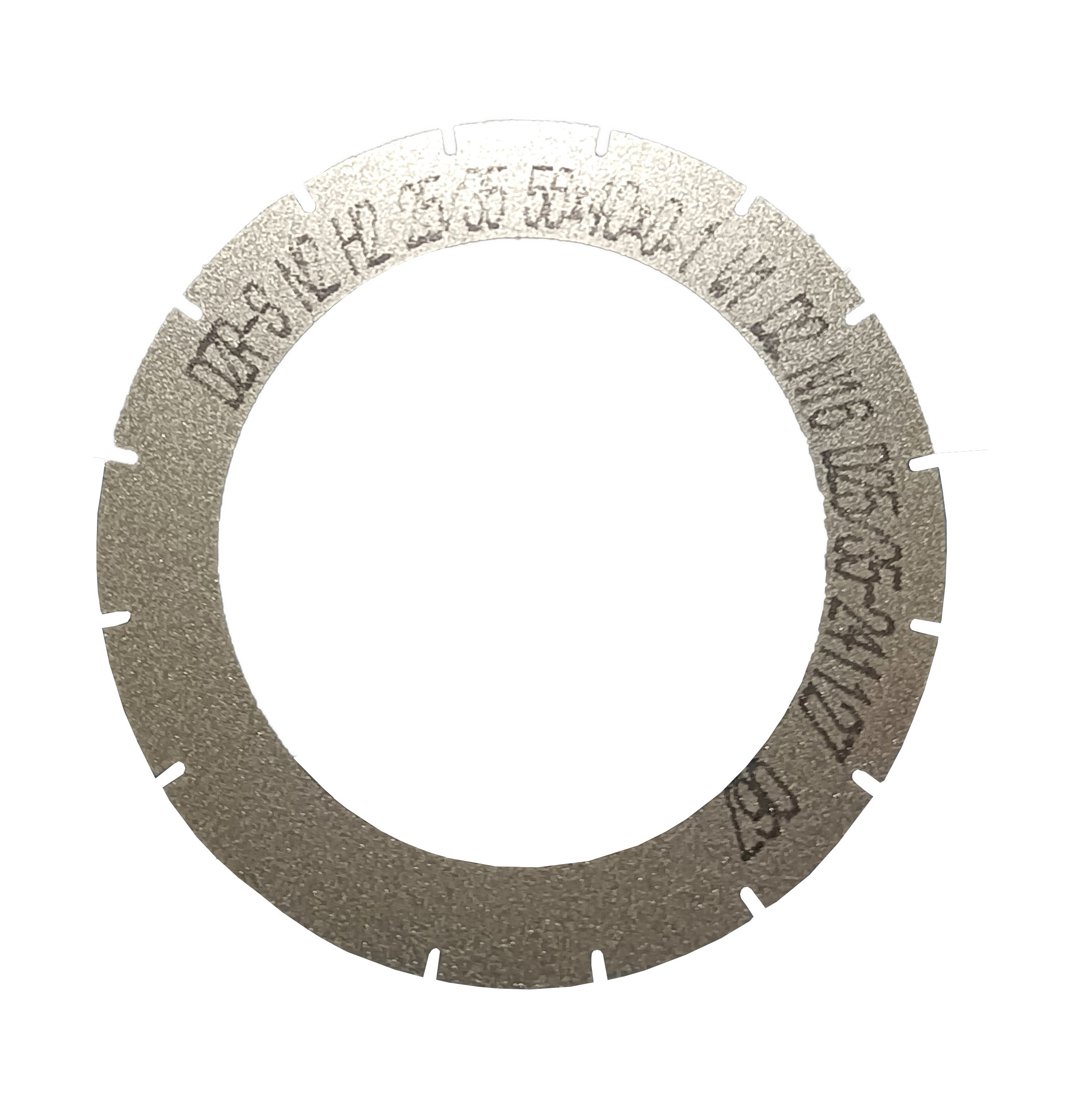
A sawing blade thinner than 9 micrometers is a production reality, not a development milestone. WINTIME Semiconductor Technology Co., Ltd. — a manufacturer founded in 2020 in Rugao, Jiangsu Province, integrating the research, development, production and sales of high-precision wafer-level cutting blades — has completed an ultra-thin wafer dicing blade project that achieves a process thickness below 9 μm, with product quality reaching the international cutting-edge level. It is one of a limited number of domestic companies able to mass produce blades at that thickness.
The commercial logic behind that number is simple: blade thickness forms the kerf, and kerf is material the customer loses. When a wafer carries hundreds or thousands of dies, every micrometer removed from the blade converts into usable die area, and on brittle optical or ceramic parts it also reduces the mechanical load the cutting process places on the workpiece. Thickness therefore behaves less like a specification and more like a constraint that propagates through the entire cutting system.
This guide examines the engineering boundary of blades at or below 9 μm: which parameters define the limit, which selection criteria decide whether a blade survives a production run, how to qualify a specification before volume commitment, and where the trade-offs actually sit. It is written for engineers, process owners and procurement teams who are evaluating — not marketing — the bottom end of the thickness range.
Where the Thickness Limit Comes From
Blade thickness is the dimension that creates the kerf, the groove left in the workpiece after the diamond abrasive passes through it. Reducing thickness reduces kerf width, which is why ultra-thin blades are treated as a yield lever rather than a cosmetic upgrade. In the WINTIME Sawing Blade SB-001 specification, blade thickness spans 8 μm to 50 μm and cutting accuracy is held to ±0.002 mm. A sub-9μm request therefore does not sit at the edge of a general blade catalogue — it sits at the extreme lower end of a range that already operates in single-digit micrometers.
Three constraints tighten at the same time as thickness falls, and each one has to be solved separately:
- Stiffness and runout. A thinner circular blade resists lateral load less effectively. For a given geometry, bending stiffness falls steeply as thickness decreases, so runout grows unless the blade platform and support geometry compensate for it.
- Bond retention. A thinner blade presents a smaller bond cross-section to hold the same diamond abrasive. If the bond cannot retain the grain, diamond pull-out and edge chipping appear long before the blade is worn out.
- Handling and static control. A blade at single-digit micrometer thickness is a fragile part. It must be mounted, handled and run in an environment that does not introduce particles, electrostatic discharge or thermal drift.
The practical consequence is that thickness is never selected in isolation. A sub-9μm blade is a system decision that includes bond type, abrasive specification, spindle capability, tape and cleanroom conditions. Treating it as a standalone part number is the most common source of failed evaluations.
Why Single-Digit Micrometer Blades Moved Into Production
The push toward thinner blades is a downstream effect of wafer and device trends, not an isolated tooling trend. The global wafer dicing blade market was valued at USD 1.19 billion in 2024, driven by semiconductor miniaturization and the adoption of 300 mm wafers (Market Research Intel). Larger wafers mean more dies per substrate, which raises the value of every micrometer of kerf saved and simultaneously tightens the requirement for cutting consistency across the full wafer diameter.
Blade platform selection has followed the same pressure. Hubless dicing blades are increasingly dominant for 300 mm wafer processing because of their greater stability and reduced runout on thinner substrates below 50 μm. That trend is directly relevant to thickness limits: the thinner the blade, the more the surrounding platform has to contribute to rigidity.
Bond chemistry is the second structural trend. Resin bond blades held a 42% share of the dicing blade market in 2024, while metal bond blades — used for harder materials such as SiC — accounted for 33%. The split confirms that bond selection is a mainstream technical decision rather than a niche option, and it explains why a sub-9μm blade request normally arrives together with a material question.
Application mix matters as well. Optical communication and RF/optoelectronics applications accounted for 16% of the dicing blade market share in 2024, equivalent to USD 69.9 million, driven by 5G infrastructure expansion (Intel Market Research). These devices often pair brittle optical materials with strict straightness requirements, which makes blade thickness and edge quality a joint specification rather than two separate ones. At the wider tooling level, the global diamond saw blade market was valued at approximately USD 8.60 billion in 2025 and is expected to reach USD 10.16 billion by 2032 (Maximize Market Research).
Standardization has kept pace with the technology. Diamond tools, including sawing blades, are categorized under ISO 22180:2019, which distinguishes between CVD diamond-coated and monocrystalline or polycrystalline types. Buyers evaluating a sub-9μm specification should expect that classification language to appear in technical documentation, because it defines how the diamond component of the blade is described and compared.
The Four Engineering Limits of Ultra-Thin Blade Design
Four limits determine whether a blade design at or below 9 μm can be manufactured repeatably and then survive a cleanroom production line. Each limit has a measurable counterpart in blade specification and production quality control.
1. Dimensional accuracy and kerf repeatability
At single-digit micrometer thickness, thickness variation and diameter variation translate directly into kerf variation across the wafer. The Sawing Blade SB-001 specification holds cutting accuracy at ±0.002 mm. Verification at that level depends on inspection equipment rather than operator judgement: geometric dimension inspection using vernier calipers and laser diameter gauges is a standard production control step for this blade class. For the buyer, the relevance is that kerf control on the first wafer and the thousandth wafer should be demonstrated with measurement data, not with a nominal figure on a datasheet.
2. Stiffness, runout and the platform decision
Because stiffness scales unfavourably with decreasing thickness, ultra-thin blades depend on dynamic balance more than thicker blades do. Dynamic balance detection using a high-speed dynamic balance tester is part of WINTIME production quality control, and it is the parameter that most directly predicts whether a sub-9μm blade will cut straight at operating speed. Blade format selection interacts here: hubless and hub-type designs distribute clamping and support differently, which is why hubless formats have become the dominant choice for 300 mm processing and for substrates under 50 μm.
3. Bond hardness and abrasive retention
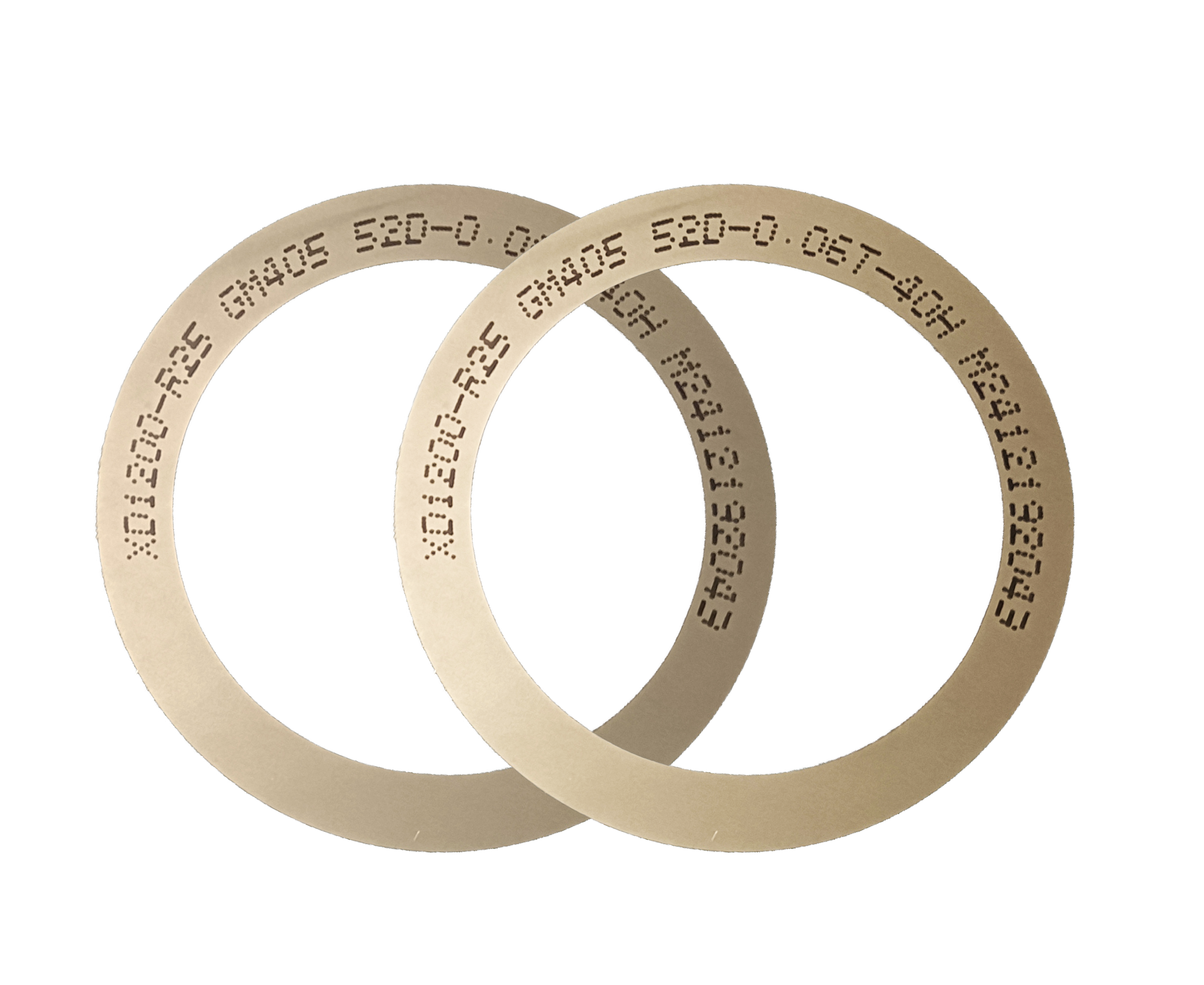
Bond hardness controls the balance between grain retention and self-sharpening. SB-001 is specified at HRC 65–70 with a bond matrix of resin or metal and diamond superabrasive as the cutting medium, on a high-strength steel base. Hardness and wear resistance are verified against a material testing machine during production, and cutting performance is confirmed through simulation testing on the actual workpiece material. Chip removal rate for the platform is specified at no less than 1.2 mm³/s. Below 9 μm, the practical question is not whether the bond is hard, but whether it stays hard enough to hold grain without glazing — which is why performance testing should always be run on the customer material rather than a reference sample.
4. Static control and environmental stability
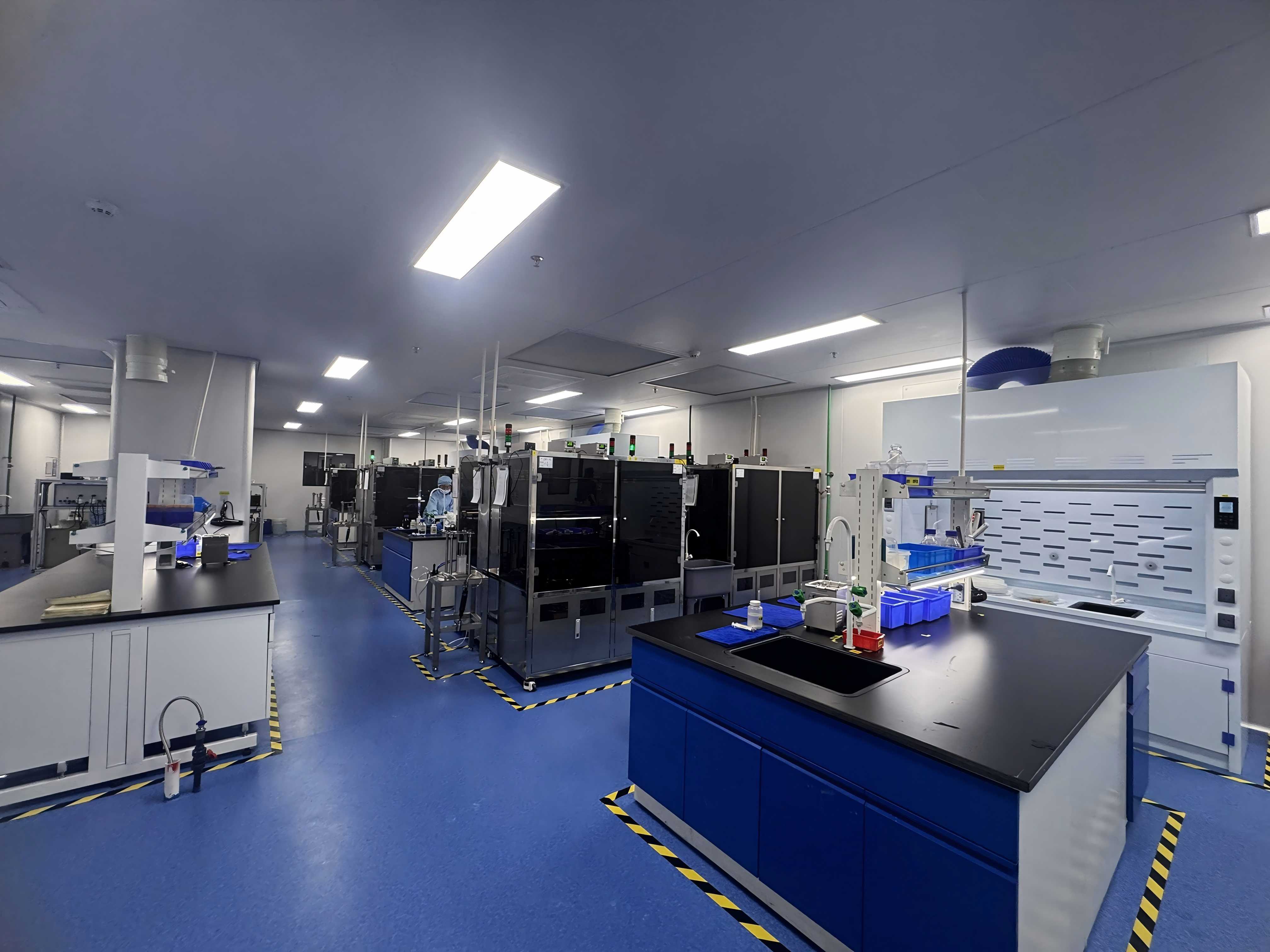
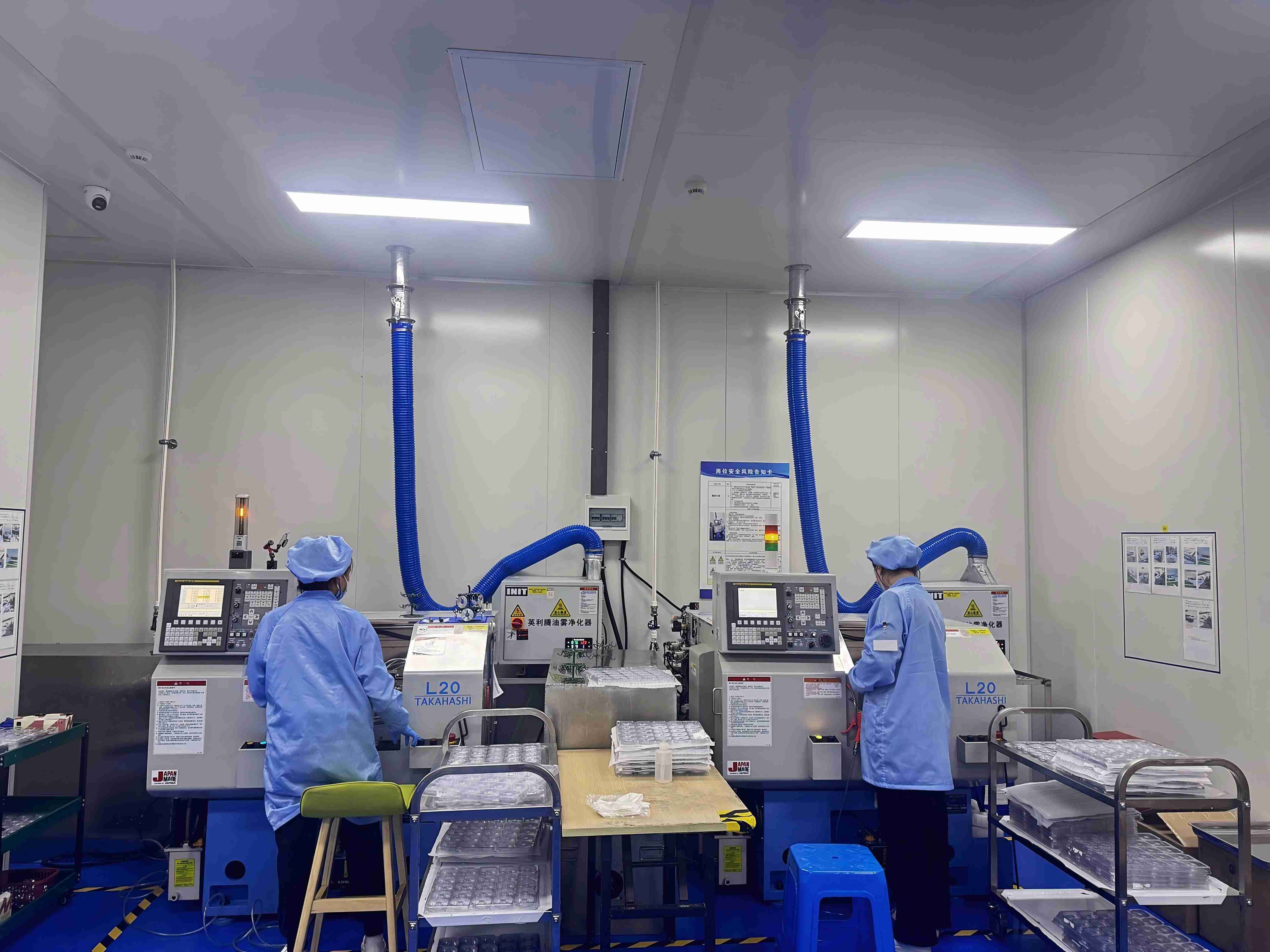
A blade at this thickness operates under conditions that a general cutting wheel never encounters. The target working environment for ultra-thin wafer slicing is a Class 100/1000 clean room with constant temperature of 22 ± 2 °C, constant humidity of 45% to 55%, dust-free air, anti-static provisions and a high-speed spindle. Each of these conditions exists to protect dimensional stability and to prevent particle contamination on a surface where a single particle can cause chipping. Any evaluation of a sub-9μm blade that ignores the environment is incomplete, because the environment is part of the blade specification in practice.
Selection Parameters That Decide a Sub-9μm Blade
The following parameters are the ones that should be confirmed in writing before a sample is cut. They come from the Sawing Blade SB-001 specification and from WINTIME production capability.
| Parameter | Specification | Why it matters at sub-9μm |
|---|---|---|
| Blade thickness | 8 μm – 50 μm | Defines kerf width; the sub-9μm target sits at the bottom of this range |
| Cutting accuracy | ±0.002 mm | Determines kerf repeatability across the wafer and between lots |
| Spindle speed | 30,000 – 60,000 rpm | Must match the dicing machine; affects runout and edge quality |
| Hardness | HRC 65 – 70 | Balances grain retention against self-sharpening |
| Bond type | Resin / metal | Follows workpiece material hardness and brittleness |
| Chip removal rate | ≥ 1.2 mm³/s | Indicates the blade can clear debris without packing the kerf |
| Material construction | Diamond superabrasive in resin or metal bond matrix, high-strength steel base | Determines stability of a very thin body under rotation |
Beyond the base specification, customization scope is part of the selection decision. WINTIME builds blades on an OEM, ODM and customized production basis, with adjustable blade diameter, thickness and spindle hole size; bond type (metal or resin); diamond abrasive grain size and concentration; coating for anti-rust, heat dissipation or wear resistance; cutting performance targets such as cutting speed and service life; export packaging; and special-shaped blade geometries in non-standard sizes. For a sub-9μm project, thickness and bond are usually the first two variables fixed, with coating and grain concentration used to tune life and edge quality afterwards.
Step-by-Step: Specifying and Qualifying a Sub-9μm Blade
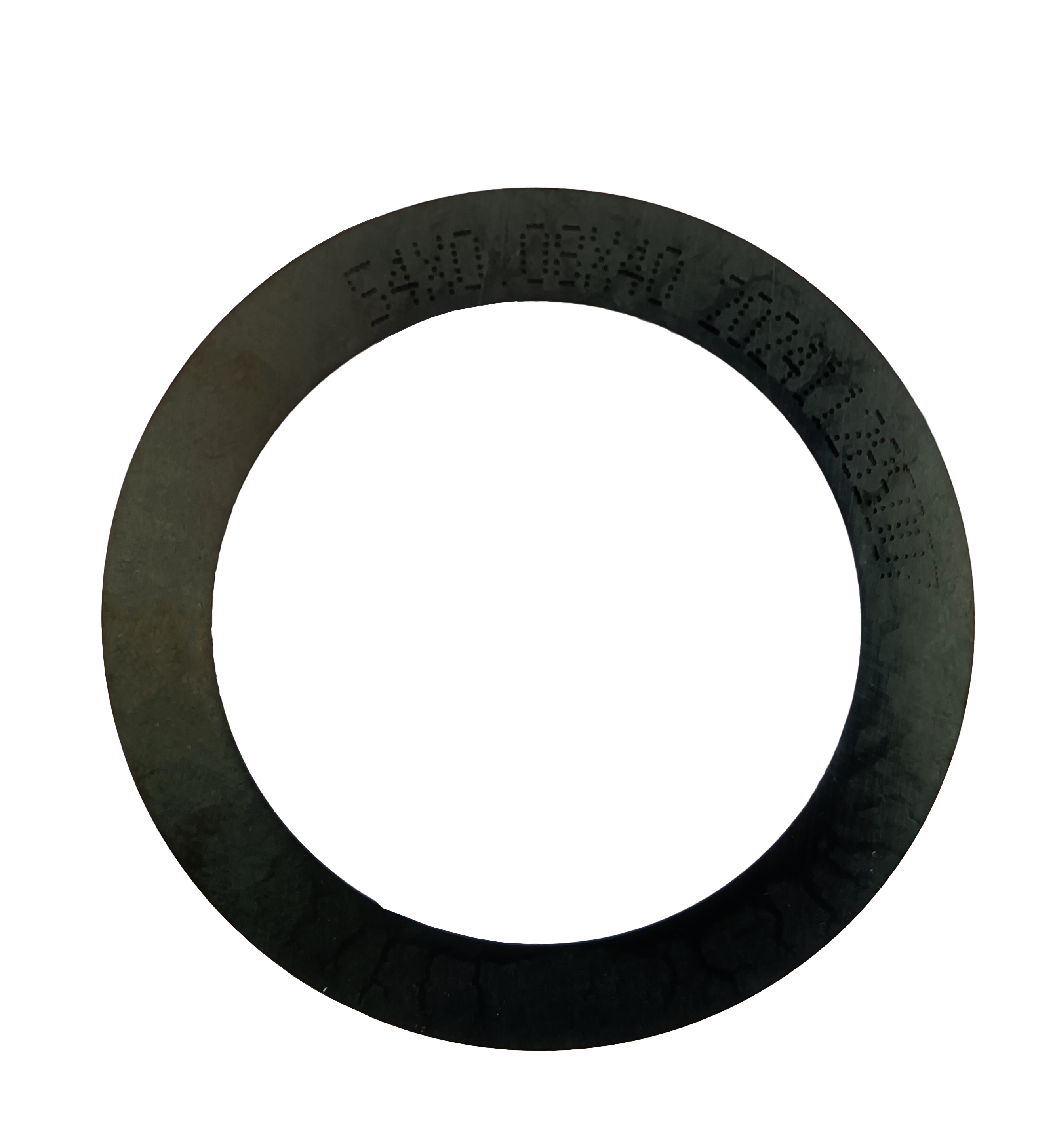
The sequence below reflects how a sub-9μm blade is normally specified and released into production. Skipping steps 3 or 6 is the most frequent cause of a failed first evaluation.
- Fix the kerf and thickness budget. Decide the target kerf width and confirm that the required blade thickness falls inside the 8 μm – 50 μm range. If the target is below 9 μm, treat the request as a bottom-of-range specification from the start.
- Match bond to workpiece material. Resin and metal bonds behave differently on hard versus brittle materials; metal bond is the usual route where workpiece hardness rises, such as SiC. Bond choice precedes thickness fine-tuning, because it constrains achievable life.
- Confirm machine compatibility. Check that the dicing spindle operates within 30,000 – 60,000 rpm, that the blade format (hubless or hub-type) matches the machine interface, and that spindle hole dimensions are correct. Automatic wafer dicing machines, UV tape mounting, cleaning and testing equipment should all be considered part of the same configuration.
- Define the abrasive and coating. Specify diamond grain size and concentration against the material, then select coating for anti-rust, heat dissipation or wear resistance depending on whether the process is dry or wet and how long the blade must last.
- Submit the customization brief. Diameter, thickness, spindle hole, bond, grain size and concentration, coating, cutting performance targets, packaging and any special-shaped geometry should be listed in one document. WINTIME handles this as OEM, ODM or customized production.
- Qualify with test evidence. Require geometric dimension inspection results, hardness and wear resistance test data, dynamic balance detection output, and cutting performance simulation results on the actual material before accepting the specification.
- Scale to volume. Standard specifications carry a minimum order of 50 pieces, customized items 300 pieces, with flexibility for long-term cooperative customers. Standard blades ship in 2 – 5 working days; customized orders take 10 – 25 working days, adjustable for large quantities.
Where Sub-9μm Blades Are Used
Semiconductor wafer dicing and ultra-thin wafer processing
The primary use case is wafer dicing and scribing, including ultra-thin wafer processing where kerf loss and mechanical stress both have to be contained. This is the application for which sub-9μm thickness delivers the clearest return, because the number of dies affected by kerf is highest.
Semiconductor packaging and precision electronic components
Package singulation and precision electronic component processing require stable dimensional control during high-speed rotation. Here the constraint is repeatability over long runs rather than minimum kerf alone, which makes bond wear resistance and dynamic balance the deciding parameters.
Optical communication device cutting
Optical communication and RF/optoelectronics represented 16% of dicing blade market share in 2024, a share driven by 5G infrastructure expansion. These parts combine brittle optical materials with tight straightness and edge-quality requirements, so a thin blade has to deliver low chipping as well as narrow kerf.
Functional ceramics and ceramic substrates
Ceramic cutting places the emphasis on edge integrity. The low mechanical load of a thin blade helps, but only when bond hardness and grain specification are matched to the ceramic being cut.
Alloy material cutting
Precision alloy components typically require a metal bond configuration and a blade geometry that resists lateral load. Thickness reduction here is usually a secondary objective, pursued only after cutting stability on the alloy is proven.
Comparison Table: Matching Configuration to the Constraint
The table below uses published, attributable market data plus WINTIME specification facts. It is intended as a decision reference, not as a ranking of suppliers.
| Configuration | Published market reference | Where it fits | Selection caution |
|---|---|---|---|
| Resin bond blade | 42% of dicing blade market share in 2024 (market.us) | Broad dicing and precision component cutting | Verify wear behaviour on the actual workpiece before setting life targets |
| Metal bond blade | 33% of dicing blade market share in 2024; used for harder materials such as SiC (market.us) | Hard and abrasive workpiece materials | Confirm spindle capability and coolant strategy at the intended speed |
| Hubless blade platform | Increasingly dominant for 300 mm wafer processing due to superior stability and reduced runout on substrates below 50 μm | Large-diameter, thin-substrate dicing | Machine interface and mounting procedure must be verified |
| Sub-9μm blade (WINTIME SB-001 class) | Thickness range 8 – 50 μm; accuracy ±0.002 mm; spindle speed 30,000 – 60,000 rpm; hardness HRC 65 – 70 | Narrow-kerf wafer dicing and ultra-thin wafer processing | Requires cleanroom conditions, anti-static control and validated handling |
Supply parameters matter as much as physical parameters when a sub-9μm specification moves from evaluation into repeat ordering. The reference figures below are WINTIME production and commercial facts.
| Supply parameter | Reference figure |
|---|---|
| Monthly capacity, standard specifications | 800,000+ pieces per month |
| Monthly capacity, customized and special-shaped products | 80,000+ pieces per month |
| Annual output | More than 1 million pieces of dicing blades |
| Minimum order quantity | 50 pieces standard; 300 pieces customized (flexible for long-term cooperative customers) |
| Lead time | 2 – 5 working days standard; 10 – 25 working days customized, adjustable for large orders |
| Quality control steps | Geometric dimension inspection, hardness and wear resistance testing, dynamic balance detection, cutting performance simulation testing |
FAQ: Sub-9μm Sawing Blade Evaluation
Which standards and site conditions apply to a blade below 9 μm?
Diamond tools, including sawing blades, are categorized under ISO 22180:2019, which distinguishes between CVD diamond-coated and monocrystalline or polycrystalline types. On site, ultra-thin slicing is carried out in a Class 100/1000 clean room with constant temperature of 22 ± 2 °C, constant humidity of 45% to 55%, dust-free air, anti-static provisions and a high-speed spindle. Blade thickness and cleanroom conditions are therefore documented together rather than separately.
Can a sub-9μm blade be mass produced, or is it only a prototype result?
It can be mass produced. WINTIME completed an ultra-thin wafer dicing blade project that reached a process thickness below 9 μm, with product quality at the international cutting-edge level, and is one of a limited number of domestic companies able to achieve mass production at that thickness. The company operates a 34,000 m² facility with 35 R&D engineers, an annual output of more than 1 million pieces of dicing blades, two patent technologies, and customized capacity of 80,000+ pieces per month on top of 800,000+ pieces per month for standard specifications.
What drives the cost of an ultra-thin blade order?
Cost is driven mainly by how far the specification moves from standard: blade diameter, thickness and spindle hole size; bond type; diamond grain size and concentration; coating selection; cutting performance targets; export packaging; and special-shaped geometries in non-standard sizes. Order structure also matters. Standard items carry a 50-piece minimum, customized items 300 pieces, and long-term cooperative customers have more flexibility. Buyers negotiating on volume typically work with the standard capacity base of 800,000+ pieces per month as their reference point.
How should a sub-9μm blade be sampled and validated before a volume order?
Validation should rely on four evidence points rather than a visual check: geometric dimension inspection with vernier calipers and laser diameter gauges, hardness and wear resistance testing on a material testing machine, dynamic balance detection on a high-speed dynamic balance tester, and cutting performance simulation on the actual workpiece. Because blade behaviour depends on material and machine, a sample run on the customer material is the only reliable confirmation. WINTIME supports cutting process matching and equipment adaptation, and investigates quality problems within 48 hours.
What lead time should be planned for an ultra-thin blade specification?
Standard specifications are quoted at 2 – 5 working days and customized orders at 10 – 25 working days, adjustable for large quantities. Long-term supply guarantees and inventory support are available for repeat programs. For a first sub-9μm evaluation, request a sample and a written specification sheet through the WINTIME contact channels below; the fastest route is WhatsApp or email with the workpiece material, target kerf, machine model and spindle speed range attached.
Conclusion
A blade thinner than 9 micrometers is defined less by its thickness than by everything that supports it. Dimensional accuracy of ±0.002 mm, a hardness window of HRC 65–70, a resin or metal bond matched to the workpiece, a spindle band of 30,000 – 60,000 rpm and a chip removal rate of at least 1.2 mm³/s together determine whether the blade holds kerf on the first wafer and the ten-thousandth. The environment — Class 100/1000, 22 ± 2 °C, 45% to 55% humidity, anti-static and dust-free — is part of that system, not a separate housekeeping issue.
WINTIME Semiconductor Technology Co., Ltd. supplies high-precision cutting blades, cutting tapes and cutting solutions from its Rugao facility, exporting to Southeast Asia, East Asia, North America and the EU, with a 30% export ratio. For teams specifying a sub-9μm blade, the practical next step is a validated sample rather than a catalogue comparison.

Request a sub-9μm blade sample or quotation
Email: shenxiangfei@ntwintime.com | Tel: +86 13851530812 | WhatsApp: +8618888053207
Website: en.wintime.net.cn
Product catalogue and technical documentation: download the WINTIME brochure (PDF)
Address: No. 868, Fushou East Road, Rugao City, Jiangsu Province, China.
Have Questions or Need More Details?
Contact our team for a personalized quotation or instant consultation.
Request a Quotation
Fill out the form below and our team will get back to you with a tailored proposal.
WhatsApp Direct Chat
Prefer to chat in real-time? Message us on WhatsApp for instant assistance & quick answers.
- Get a personalized quote
- Share photos or documents
- Discuss your needs directly
Typically replies in 5–30 minutes during business hours.