
Sawing Blade Types and Selection Guide: Matching Blade Construction to Semiconductor and Precision Cutting Requirements
Sawing Blade Types and Selection Guide: Matching Blade Construction to Semiconductor and Precision Cutting Requirements
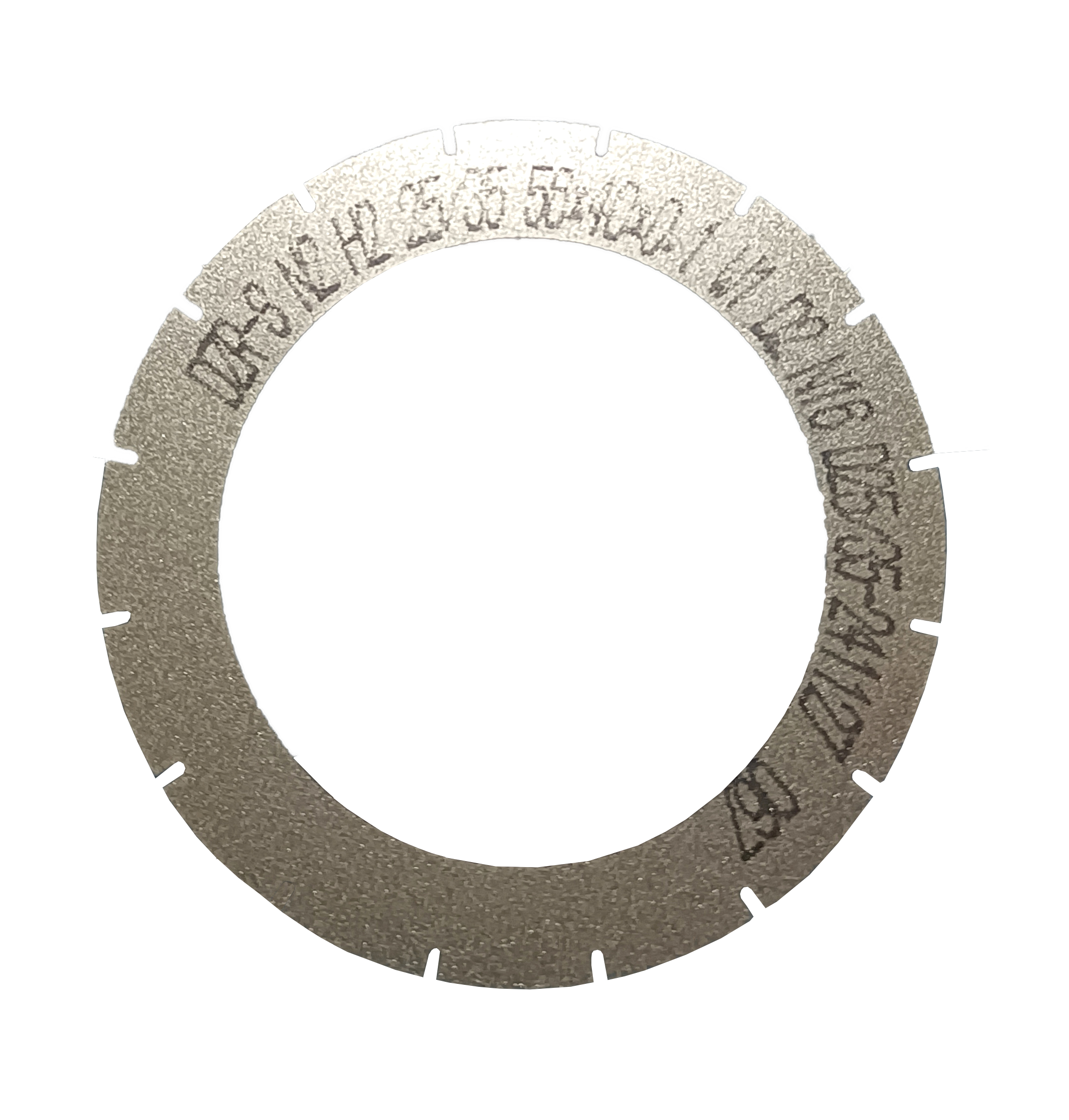
Choosing the right sawing blade is one of the most direct ways to control cutting quality, yield, and operating cost in semiconductor and precision manufacturing. Sawing blades are not interchangeable accessories: blade thickness, bond type, abrasive size, and hub design must match the material being cut, the equipment spindle, and the required dimensional tolerance. This guide explains the main sawing blade categories, how blade construction affects cutting behavior, and which specifications matter when selecting a blade for wafer dicing, optical communication components, functional ceramics, or alloy materials.
What Is a Sawing Blade in Precision Manufacturing?
A sawing blade is a rotating cutting tool that uses diamond abrasive grains bonded in a matrix to separate or slot hard, brittle materials. In semiconductor and precision manufacturing, sawing blades are used for wafer dicing, package singulation, ultra-thin substrate slicing, ceramic substrate cutting, and precision alloy component cutting. The blade removes material through high-speed spindle rotation, typically between 30,000 and 60,000 rpm, and the quality of the cut depends on blade geometry, bond hardness, abrasive grit size, and dynamic stability.
WINTIME Semiconductor Technology Co., Ltd. manufactures sawing and dicing blades for these applications. The company was established in 2020 and operates a 34,000 m² factory in Rugao, Jiangsu Province, with an annual output of more than 1 million pieces.
Why Blade Construction Determines Cutting Performance
A sawing blade is more than a disc of steel with an abrasive edge. Its performance comes from three interacting elements:
- Bond matrix – resin or metal – controls how tightly the diamond abrasive is held and how the blade wears.
- Diamond abrasive – grain size and concentration – determines cutting aggressiveness, kerf width, and edge quality.
- Base and hub design – hubbed, hubless, flanged, or slotted – affects rigidity, runout, and the blade’s behavior on thin substrates.
For example, WINTIME’s sawing blade product line covers thicknesses from 8 to 50 microns, cutting accuracy of ±0.002 mm, and a hardness range of HRC 65–70. These figures are not arbitrary: ultra-thin blades reduce material loss in wafer dicing, while controlled hardness keeps the blade stable under high spindle speed.
Main Sawing Blade Types
Diamond Sawing Blades
Diamond sawing blades use diamond superabrasive as the cutting medium. Because diamond is the hardest known material, these blades are suited to hard and brittle materials such as silicon wafers, functional ceramics, optical glass, and alloy materials. The diamond grains are held by either a resin or metal bond, depending on the material and cutting conditions.
Hubless Sawing Blades
Hubless sawing blades do not have a reinforced metal hub at the center. Instead, the blade is clamped directly by the spindle flange. This design reduces runout and improves stability on thin substrates. Hubless blades are increasingly used for 300 mm wafer processing, where wafer thickness can be below 50 microns and blade stability directly affects yield.
Hubbed, Flanged, and Serrated Sawing Blades
Three other structural variants are common in precision cutting:
- Hubbed sawing blades have a thicker metal hub that adds rigidity and simplifies mounting. They are often used when blade thickness is extremely small, because the hub prevents distortion during clamping.
- Flanged sawing blades rely on spindle flanges to support the blade. This design is typical in automatic dicing machines, where the blade is mounted between two flanges for concentric running.
- Serrated sawing blades have a slotted or toothed cutting edge. The geometry improves chip removal and reduces heat build-up in certain materials. WINTIME’s DZR-S Series is an example of a slotted dicing blade design.
Resin-Bond and Metal-Bond Sawing Blades
The bond system is one of the most important selection criteria. In 2024, resin bond blades held about 42% of the dicing blade market, while metal bond blades accounted for about 33%, according to the Dicing Blade Market Report 2026 published by Market.us.
- Resin bond blades provide a softer, more forgiving cutting action. They are commonly used for silicon wafer dicing and applications where low chipping and a fine surface finish are required.
- Metal bond blades hold diamond grains more tightly and wear more slowly. They are used for harder materials such as silicon carbide (SiC) and for applications requiring longer blade life.
WINTIME supports both resin and metal bond matrices in its sawing blade range, along with custom abrasive grain size and concentration.
DZY Series Wafer Sawing Blades
The DZY Series is a wafer sawing blade family designed for the dimensional control requirements of wafer dicing and scribing. It is used in applications where narrow kerf, low chipping, and stable mass-production behavior are required.
DZR Series Sawing Blades
The DZR Series covers general-purpose sawing blades for semiconductor packaging and precision component cutting. The series balances cutting speed, edge quality, and service life.
DZR-S Series Slotted Sawing Blades
The DZR-S Series is a slotted sawing blade design. The slots along the cutting edge improve chip evacuation and reduce friction, which can help maintain cutting stability in continuous automatic dicing operations. The series is represented in WINTIME’s product range for applications that benefit from improved chip removal.
Electroforming Hard Sawing Blades
Electroforming is a manufacturing process used to produce very thin, precise blades. While WINTIME’s current product documentation primarily describes resin-bond and metal-bond blade construction, electroforming is a recognized method in the industry for producing hard, ultra-thin cutting tools with tight dimensional consistency. Buyers evaluating advanced blade options should confirm the specific manufacturing process with the supplier.
Blade Selection Criteria: What to Match Before You Buy
The right sawing blade is selected by matching blade specifications to three things: the material, the machine, and the required output quality.
| Selection Factor | Typical Range or Options | Why It Matters |
|---|---|---|
| Blade thickness | 8–50 μm | Thinner blades reduce kerf loss and are required for ultra-thin wafer processing; thicker blades add rigidity. |
| Cutting accuracy | ±0.002 mm | Directly affects die dimensions and final device quality. |
| Spindle speed | 30,000–60,000 rpm | Blade must be dynamically stable at the machine’s operating speed. |
| Hardness | HRC 65–70 | Influences edge retention and resistance to deformation during cutting. |
| Bond type | Resin / Metal | Resin suits silicon and low-chipping applications; metal suits harder materials and longer blade life. |
| Chip removal rate | ≥1.2 mm³/s | Determines how efficiently material is removed without excessive heat or chipping. |
1. Match the Blade to the Material
Hard, brittle materials such as silicon wafers, functional ceramics, and alloy materials all place different demands on a blade. A blade optimized for one material may chip or wear prematurely on another. WINTIME offers customized specifications for different cutting materials and working conditions, including adjustments to blade diameter, thickness, spindle hole size, bond type, diamond grit size, and concentration.
2. Match the Blade to the Equipment
Automatic dicing machines, semiconductor cutting spindles, and precision feeding systems all expect a blade within a specific dimensional range. A hubless blade may be the best choice for a high-speed automatic dicing machine because the flange-mounted design minimizes runout. A hubbed blade may be preferable for very thin blades that need extra support during handling and mounting.
3. Match the Blade to the Quality Requirement
If the application requires ultra-thin wafer processing, the blade must be able to produce a narrow kerf with low chipping. WINTIME’s completed “Ultra-thin Wafer D Blade” project achieved a process thickness of less than 9 microns, and the product quality has reached an international cutting-edge level. The company is one of the few domestic manufacturers that can achieve mass production at this thickness.
How WINTIME Produces Sawing Blades
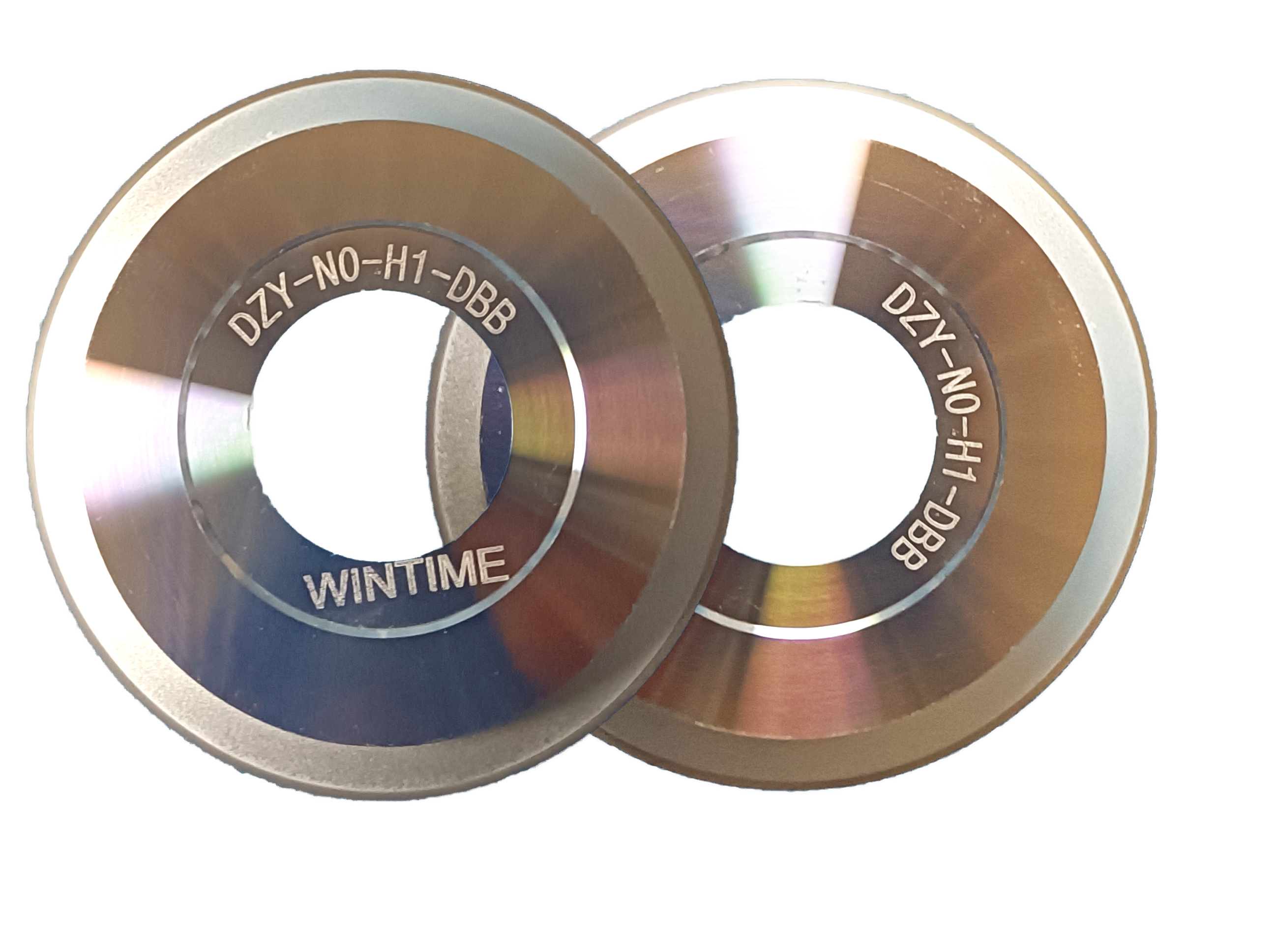
WINTIME Semiconductor Technology Co., Ltd. integrates research, development, production, and sales of high-precision cutting blades. The company was established in 2020 and its factory in Rugao, Jiangsu Province, covers 34,000 square meters. WINTIME employs 100 people, including a research and development team of 35 engineers. Annual production capacity exceeds 1 million pieces of dicing blades.
In 2023, the Nantong WINTIME Semiconductor Special Materials Project was launched with a total investment of nearly tens of millions of yuan. The project included new factory and auxiliary buildings totaling 34,000 square meters and brought annual production capacity to more than 1 million pieces. WINTIME holds two patent technologies and has won awards in national, provincial, and municipal science and technology competitions and entrepreneurship competitions.
WINTIME operates in China and exports to Southeast Asia, the Middle East, the European Union, the United States, Canada, Australia, South America, and Africa. Exports currently account for approximately 30% of business.
Quality Control and Manufacturing Capability
Because sawing blade defects appear as yield loss on the customer’s production line, quality control is as important as the blade design itself. WINTIME follows a documented inspection process:
- Geometric dimension inspection using vernier calipers and laser diameter gauges
- Hardness and wear resistance testing with material testing machines
- Dynamic balance detection using high-speed dynamic balance testers
- Cutting performance simulation tests using actual materials
For buyers, this means blade dimensions and cutting behavior are verified before delivery. WINTIME’s monthly capacity is 800,000+ pieces for standard specifications and 80,000+ pieces for customized and special-shaped products. Standard products are typically delivered in 2–5 working days, while customized orders take 10–25 working days, adjustable for large orders. The MOQ is 50 pieces for standard products and 300 pieces for customized products, with flexibility for long-term cooperative customers.
Industry Applications for Precision Sawing Blades
Precision sawing blades are used in a wide range of industries. The optical communication and RF/optoelectronics segment accounted for 16% of the dicing blade market in 2024, driven by 5G infrastructure expansion, according to Intel Market Research.
| Application | Typical Materials | Key Blade Requirement |
|---|---|---|
| Semiconductor wafer dicing | Silicon wafers, thin wafers | Ultra-thin blade, low chipping, narrow kerf |
| Semiconductor packaging | Molded packages, substrates | Stable cut quality, long service life |
| Optical communication | Optical components, glass, ceramics | Precise dimensional control, low edge chipping |
| Functional ceramics | Ceramic substrates | Wear resistance, stable cutting behavior |
| Alloy materials | Precision alloy components | Hardness, chip removal efficiency |
Typical working environments for precision sawing blades include Class 100/1000 clean rooms, constant temperature (22±2℃), constant humidity (45–55%), dust-free and anti-static conditions, and high-speed spindle environments. Blades are used in automatic dicing machines, semiconductor cutting spindles, UV tape mounting machines, wafer cleaning equipment, and wafer testing machines.
Global Market Context
The global diamond saw blade market was valued at approximately USD 8.60 billion in 2025 and is expected to reach USD 10.16 billion by 2032, according to Maximize Market Research. The global wafer dicing blade market was valued at USD 1.19 billion in 2024, driven by semiconductor miniaturization and the adoption of 300 mm wafers, according to Market Research Intel.
Chinese exports of cutting blades to Vietnam, India, and South Korea grew significantly between 2024 and 2025, with Vietnam increasing by USD 18 million, according to the Observatory of Economic Complexity. This export trend reflects growing demand for precision cutting tools in Asian manufacturing hubs.
How to Evaluate a Sawing Blade Supplier
When evaluating a sawing blade manufacturer, buyers should verify four areas:
- Production capability – Does the supplier have clean-room-compatible manufacturing, sufficient capacity, and the ability to hold tight tolerances?
- Quality control – Does the supplier inspect geometry, hardness, dynamic balance, and cutting performance before shipment?
- Customization ability – Can the supplier adjust blade diameter, thickness, bond type, abrasive grit, and spindle hole size for the specific application?
- After-sales support – Does the supplier provide technical support for process matching, equipment adaptation, and quality investigations?
WINTIME’s after-sales program includes technical support for cutting process matching and equipment adaptation, quality problem investigation and resolution within 48 hours, customized after-sales service for bulk procurement customers, long-term supply guarantees and inventory support, product application training for new customers, and replacement or compensation for defective products caused by quality problems.
Sawing Blade Comparison: WINTIME and Established Global Suppliers
The high-precision semiconductor dicing blade market is led by established global suppliers, including DISCO Corporation, Tokyo Seimitsu (Accretech), and Advanced Dicing Technologies (ADT), with Asahi Diamond also active in the segment, according to Credence Research. WINTIME competes in this market as a Chinese manufacturer with domestic R&D and mass-production capability.
| Supplier | Headquarters | Known Position | Notable Characteristic |
|---|---|---|---|
| WINTIME Semiconductor Technology Co., Ltd. | Rugao, Jiangsu, China | High-precision sawing blade manufacturer | Domestic R&D, ultra-thin blade <9 μm process, mass production capacity >1M pieces/year |
| DISCO Corporation | Japan | Leading dicing equipment and blade supplier | Integrated dicing saw and blade ecosystem |
| Tokyo Seimitsu (Accretech) | Japan | Semiconductor manufacturing equipment supplier | Dicing and grinding solutions |
| ADT (Advanced Dicing Technologies) | Israel | Dicing systems and blade supplier | Advanced dicing solutions for semiconductor packaging |
| Asahi Diamond | Japan | Diamond tool manufacturer | Diamond abrasive tool specialist |
Buyers are advised to evaluate blade performance on actual materials and under production-equivalent conditions. The competitive position of a blade supplier depends on how well its product matches the required material, equipment, and yield targets.
Step-by-Step Sawing Blade Selection Process
- Define the workpiece. Identify the material, thickness, and required cut quality.
- Check equipment compatibility. Confirm spindle speed, flange dimensions, and blade mounting style.
- Select the bond type. Choose resin for silicon and low-chipping work; choose metal for harder materials and longer blade life.
- Determine blade thickness. Use the thinnest blade that can safely cut the workpiece without excessive vibration.
- Verify abrasive grit and concentration. Fine grit produces smoother edges; coarser grit cuts faster but may cause more chipping.
- Run a cutting simulation or sample test. Evaluate chipping, kerf width, blade wear, and dimensional accuracy.
- Set the quality control standard. Confirm how the supplier inspects geometry, hardness, dynamic balance, and cutting performance.
Customization: When Standard Sawing Blades Are Not Enough
Standard sawing blades are suitable for many high-volume operations, but specialized applications often require custom specifications. WINTIME supports OEM, ODM, and customized production, including:
- Blade diameter, thickness, and spindle hole size
- Bond type (metal bond or resin bond)
- Diamond abrasive grain size and concentration
- Coating options (anti-rust, heat-dissipation, wear-resistant)
- Cutting performance targets (cutting speed, service life)
- Packaging and special packaging for export
- Special-shaped blade customization (non-standard sizes)
Customized and special-shaped products are produced at a monthly capacity of 80,000+ pieces, with a typical lead time of 10–25 working days. For evaluation purposes, buyers with non-standard requirements should provide material details, equipment specifications, and target cutting quality.
FAQ
What standards apply to diamond sawing blades?
Diamond tools, including sawing blades, are categorized under ISO 22180:2019, which distinguishes between CVD diamond-coated and monocrystalline/polycrystalline types. Buyers should verify the specific standard compliance of any blade they intend to purchase.
What is the difference between resin bond and metal bond sawing blades?
Resin bond blades use a softer resin matrix that releases diamond grains more easily, producing less chipping and a finer finish on materials like silicon wafers. Metal bond blades hold diamond grains more tightly and wear more slowly, making them better for harder materials such as silicon carbide (SiC). According to the Dicing Blade Market Report 2026, resin bond blades held 42% of the market in 2024, while metal bond blades held 33%.
What are the typical pricing and budget considerations for sawing blades?
Pricing depends on blade type, thickness, bond system, abrasive quality, and order volume. Buyers should request a quotation based on their exact blade specifications. For standard products, WINTIME’s MOQ is 50 pieces; for customized products, the MOQ is 300 pieces, with flexibility for long-term cooperative customers. Standard products are delivered in 2–5 working days, and customized orders in 10–25 working days.
How do I test a sawing blade before committing to volume orders?
The most reliable approach is to request a sample blade and run a cutting test under production-equivalent conditions, including the same material, spindle speed, and feeding method. Evaluate chipping, kerf width, blade wear, and dimensional accuracy. WINTIME offers technical support for cutting process matching and equipment adaptation, and customers can contact the company for sample evaluation and application guidance.
What lead time should I expect for sawing blade orders?
Standard sawing blades from WINTIME are typically shipped in 2–5 working days. Customized orders take 10–25 working days, and large orders can be adjusted based on production planning. Bulk procurement customers can also receive long-term supply guarantees and inventory support.
Conclusion
Sawing blade selection should be driven by the material, the cutting equipment, and the quality target—not by brand preference alone. Blade thickness, bond type, abrasive specification, and hub design all influence chipping, kerf width, blade life, and dimensional accuracy. A supplier with verified production capability, documented quality control, and the ability to customize specifications is better positioned to help buyers achieve stable cutting results.
WINTIME Semiconductor Technology Co., Ltd. combines domestic R&D, high-precision blade manufacturing, and mass production capacity of more than 1 million pieces per year. The company’s product range includes diamond sawing blades, hubless sawing blades, DZY Series wafer sawing blades, DZR Series sawing blades, and DZR-S Series slotted sawing blades. For buyers evaluating precision cutting tools, the next step is to confirm material requirements, equipment parameters, and target cut quality with a qualified manufacturer.
Need help selecting the right sawing blade?
Download the WINTIME corporate brochure for product and capability details: WINTIME Semiconductor Brochure (PDF)
Contact WINTIME: shenxiangfei@ntwintime.com | Tel: +86 13851530812 | WhatsApp: +86 18888053207