
Sawing Blade vs Dicing Blade: Ultra-Thin Wafer Decision Framework
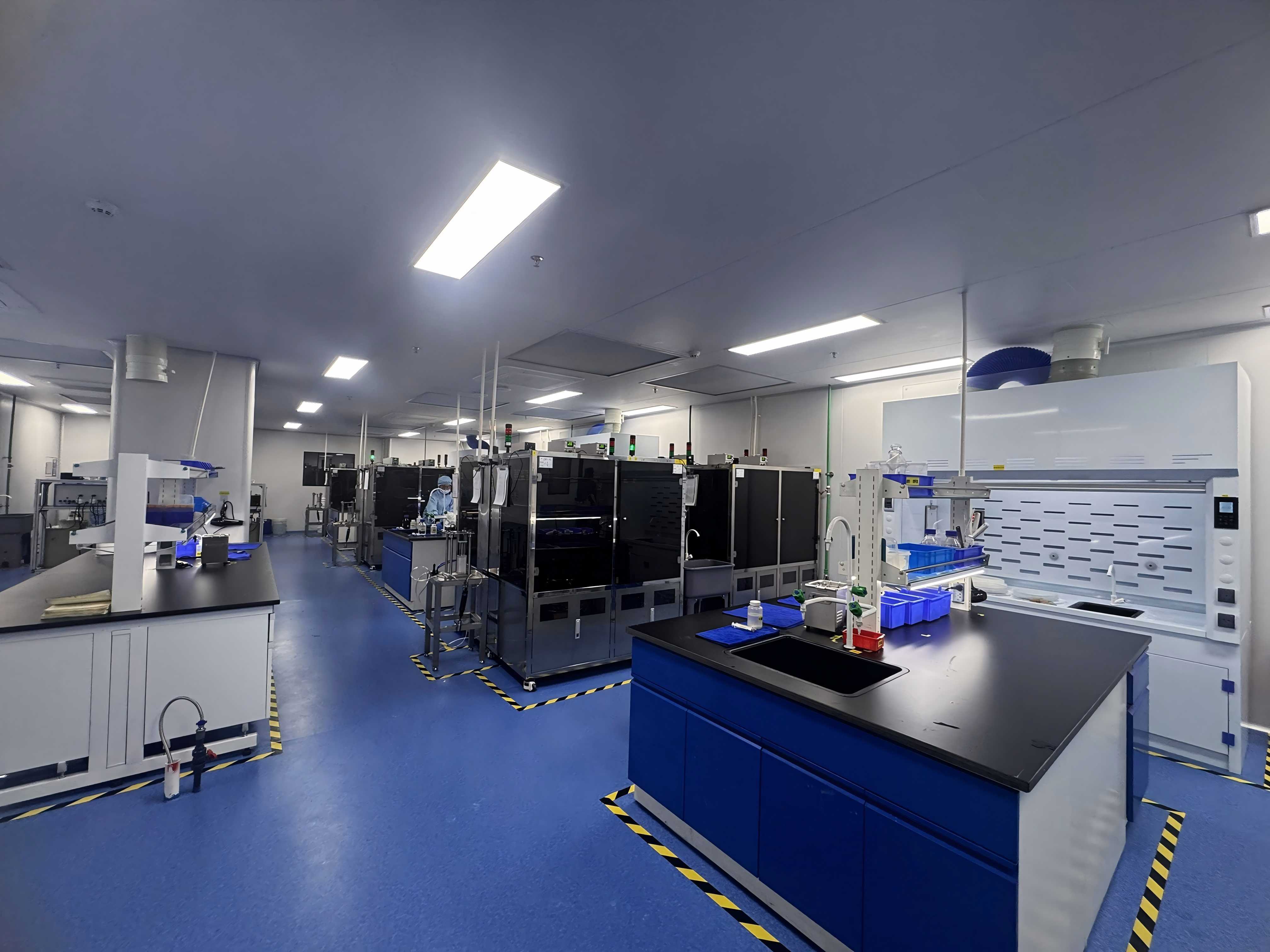
In ultra-thin wafer processing, sawing blade and dicing blade usually describe the same physical tool: a thin, abrasive-impregnated circular blade that separates a wafer or substrate into individual dies along a defined street. The cutting action does not change when the label changes. What changes is the industry convention behind the name — and the specification that sits underneath it.
That makes the terminology question a procurement question. Buyers who treat the two terms as separate product categories end up comparing the wrong parameters, issuing quotes that do not match the fab specification, and accepting blade designations that reveal nothing about kerf, bond type, or wear behaviour. This article is written for evaluation-stage buyers: teams that already know they need a thin cutting blade and now have to choose a specification they can defend. It maps the terminology, isolates the parameters that actually decide ultra-thin wafer results, and ends with a selection sequence that produces a validated sample instead of a catalogue label.
Problem definition: where the naming overlap costs money
The overlap between the two terms is real, but it is not symmetrical. “Sawing blade” is the broader, category-level term. “Dicing blade” is the semiconductor-specific term used by fabs, equipment makers, and consumable suppliers. In wafer dicing and scribing, both words point to the same blade.
Three concrete problems follow from that overlap:
- RFQ mismatch. A process engineer specifies a dicing blade; purchasing issues an RFQ for a sawing blade. The quote returns with a specification family that may not match the original kerf and thickness target.
- Category mismatch. Because “sawing blade” also covers diamond tools for stone, concrete, and general hardware, a generic quote can be built around an abrasive grade and blade body that were never intended for semiconductor-grade substrates.
- Parameter substitution. A label change can hide a change in blade thickness, diamond grain size and concentration, or bond type — three variables that feed directly into chipping and blade life.
None of these stay abstract for long. Each one resolves into a measurable defect: a kerf wider than the street budget allows, more chipping at the die edge, or a blade that wears out before the lot is finished. The practical fix is to stop comparing names and start comparing specifications.
Industry background: how the two terms sit in the market
Market data explains why both names persist side by side. The broader diamond saw blade market was valued at approximately USD 8.60 billion in 2025 and is expected to reach USD 10.16 billion by 2032, according to Maximize Market Research. Inside that wider category, the wafer dicing blade segment was valued at USD 1.19 billion in 2024, according to Market Research Intel, driven by semiconductor miniaturization and the adoption of 300 mm wafers.
One caution before using these figures in a business case: published dicing blade estimates diverge depending on whether a source scopes equipment or consumables, so a single number should be read as directional rather than definitive.
Three structural signals matter for tooling buyers in 2026:
- Bond mix. Resin bond blades held a 42% share of the dicing blade market in 2024, while metal bond blades — used for harder materials such as SiC — accounted for 33%, based on data published by market.us. Bond type is a mainstream selection variable, not a niche one.
- Hubless migration. Hubless dicing blades are increasingly dominant for 300 mm wafer processing because of their stability and reduced runout on thinner substrates below 50 µm, according to Semiconductor Equipment Market Data.
- Application shift. Optical communication and RF/optoelectronics applications accounted for 16% of dicing blade market share in 2024, worth USD 69.9 million, driven by 5G infrastructure expansion, per Intel Market Research.
On the supply side, China’s exports of cutting blades to Vietnam, India, and South Korea grew between 2024 and 2025, with Vietnam up USD 18 million and India up USD 12 million, according to OEC data — a sign that tooling sourcing is diversifying across regions. On the standards side, diamond tools including sawing blades are categorized under ISO 22180:2019, which distinguishes CVD diamond-coated types from monocrystalline and polycrystalline types. The recognized leaders in high-precision semiconductor dicing blades include DISCO Corporation, Tokyo Seimitsu (Accretech), Advanced Dicing Technologies (ADT), and Asahi Diamond, per Credence Research.
Detailed solution: a specification-first decision framework
WINTIME Semiconductor Technology Co., Ltd. is a Chinese manufacturer founded in 2020 that develops, produces, and sells high-precision wafer-level cutting blades, with Sawing Blade and Dicing Blade both listed as core product lines. The company runs a 34,000 m² facility with around 100 employees, including a 35-engineer R&D team, and exports account for 30% of sales across Southeast Asia, East Asia, North America, and the EU.
Its completed ultra-thin wafer dicing blade project reached a blade thickness below 9 microns, and the company is among the few domestic manufacturers able to achieve mass production at that level. That single fact is why the terminology question deserves a proper answer rather than a dictionary answer: once a blade is measured in single-digit microns, the name on the pack matters far less than the specification inside it.
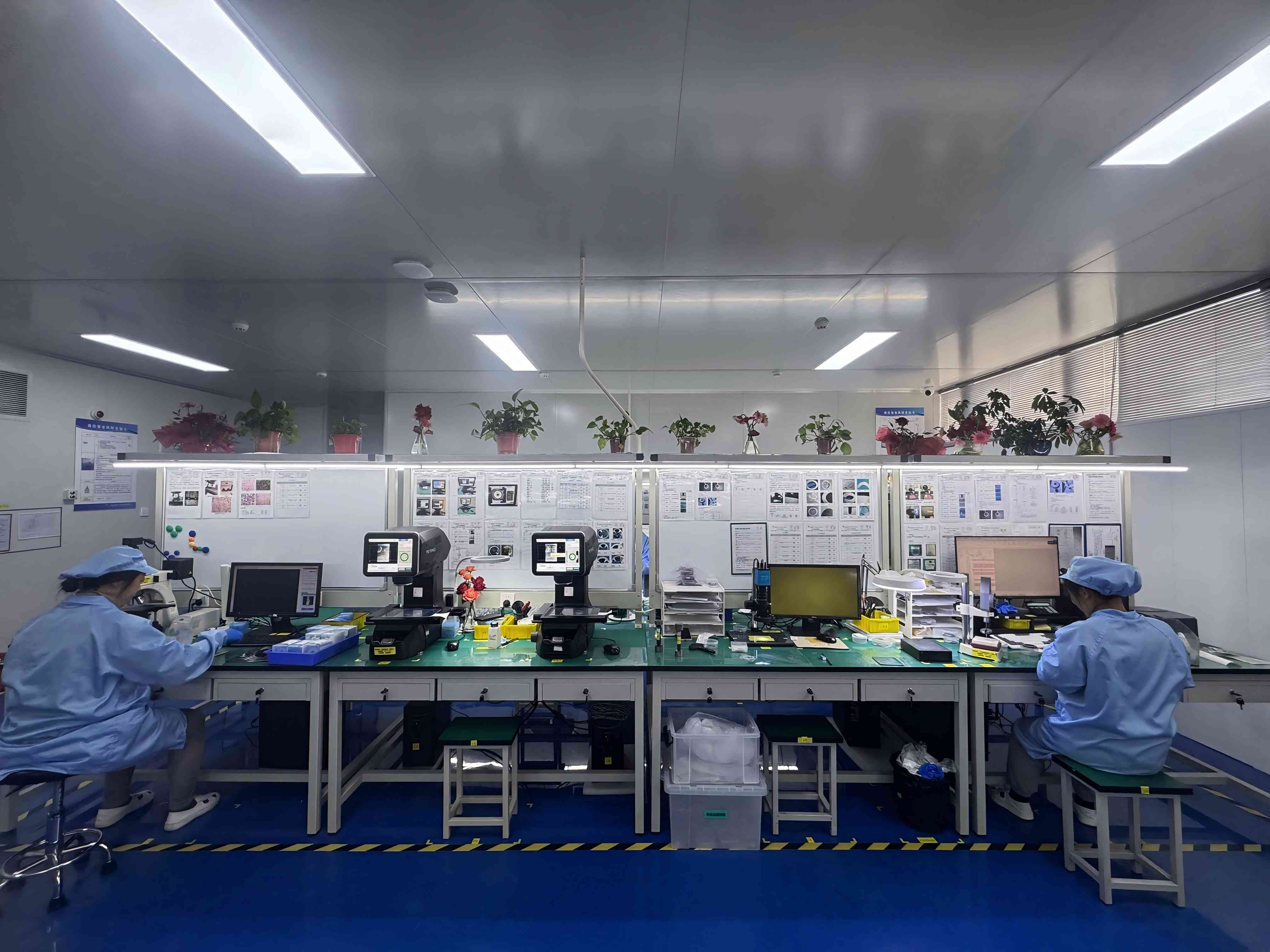
Terminology map: when to use which term
Sawing blade is the inclusive term. ISO 22180:2019 groups diamond tools, including sawing blades, into a single standard category, and in the Tools & Hardware category the phrase covers abrasive-impregnated circular blades across many materials. Dicing blade is the application term. It is the phrase used in semiconductor and microelectronics contexts, and the one most fab-facing specifications, equipment manuals, and market reports apply to wafer separation.
The practical rule: use “dicing blade” when the specification is fab-facing and the workpiece is a wafer, because that is the term that pulls a quotation toward sub-micron thickness classes and semiconductor-grade bond systems. Use “sawing blade” when sourcing across multiple materials, and then attach the specification explicitly, because a category-level term alone will not carry kerf, bond, and hub requirements into the quote.
The four levers that decide ultra-thin wafer outcomes
Regardless of which term a buyer uses, four parameters control the result:
- Blade thickness and kerf. This is the first variable in any ultra-thin application and the one where WINTIME’s ultra-thin dicing blades reach below 9 microns. Thickness and kerf must be set against the street width budget before anything else is discussed.
- Bond type. Metal bond and resin bond systems are the two main categories, split 33% and 42% of the 2024 dicing blade market respectively. Metal bond blades are used for harder materials such as SiC; market data positions resin bond as the larger category overall. WINTIME offers both bond types as a customization option rather than a fixed catalogue choice.
- Hub configuration. Hubless dicing blades are increasingly dominant for 300 mm wafer processing due to their stability and reduced runout on thinner substrates below 50 µm. For ultra-thin work, this is a structural decision, not an accessory decision.
- Diamond grain size, concentration, and coating. These settings shape cutting speed and service life, and they are customizable at WINTIME together with anti-rust, heat-dissipation, and wear-resistant coatings.
Beyond these four, WINTIME’s customization scope covers blade diameter, thickness and spindle hole size, bond type (metal bond, resin bond), diamond abrasive grain size and concentration, coating selection, cutting performance targets such as cutting speed and service life, export packaging, and special-shaped blade customization for non-standard sizes.
Wear resistance and chipping control: verify, do not assume
Wear resistance and chipping control are not adjectives; they are measured. WINTIME’s quality control process includes geometric dimension inspection using a vernier caliper and laser diameter gauge, hardness and wear resistance testing on a material testing machine, dynamic balance detection on a high-speed dynamic balance tester, and cutting performance simulation on actual material.
For a buyer in the evaluation stage, those four checkpoints convert a blade claim into an engineering fact. Geometry confirms the blade matches the drawing. Hardness and wear testing indicates how the bond will degrade over a production run. Dynamic balance detection addresses runout, which becomes critical as substrates get thinner. Cutting performance simulation shows behaviour on the customer’s own material rather than a generic demonstration sample.
Suppliers also use family designations in their catalogues. Names such as DZY Series Wafer sawing Blade, DZR Series sawing Blade, DZR-S Series Slotted sawing Blade, and Electroforming Hard sawing Blade appear across the market alongside Hubless sawing Blade and Diamond sawing Blade categories. These labels describe product families, not guaranteed performance. Two blades with different family names can share the same bond, grain size, and thickness class; two blades sold under the same family name can still be produced to different tolerances. The specification sheet is the document that should decide the purchase.

Step-by-step breakdown: selecting a blade for ultra-thin wafers
The sequence below turns the framework into a buying process. It applies whether the internal document says sawing blade or dicing blade.
Step 1 — Define the substrate and the cut. Record the material, the wafer or substrate thickness, and whether the operation is dicing, scribing, or slotting. Material class drives bond selection later; thickness drives the hub and runout requirements; the operation type determines whether a slotted profile such as a DZR-S Series Slotted sawing Blade should even be in the comparison.
Step 2 — Set the kerf and thickness budget. Convert the street width into an acceptable blade thickness range and write it into the RFQ. If the budget sits below 9 microns, confirm that the supplier can actually mass-produce at that level rather than only prototype it.
Step 3 — Choose the bond type against the material. Metal bond blades are used for harder materials such as SiC, and resin bond represents the larger share of the market at 42%. Ask the supplier to justify the bond recommendation with a wear mechanism, not with a preference statement.
Step 4 — Decide hub or hubless. For 300 mm wafers and thin substrates below 50 µm, hubless configurations are the trend because of stability and reduced runout. Confirm that the chosen saw platform accepts the selected hub style before ordering.
Step 5 — Lock the geometry and request test evidence. Fix blade diameter, thickness, and spindle hole size, then require geometry inspection, hardness and wear resistance testing, dynamic balance detection, and cutting performance simulation results. WINTIME runs all four as part of its quality control process and provides technical support for cutting process matching and equipment adaptation.
Step 6 — Confirm commercial terms and after-sales coverage. Verify MOQ, lead time, and what happens if a defect appears. WINTIME’s standard MOQ is 50 pieces and 300 pieces for customized products, with flexibility for long-term cooperative customers; standard products ship in 2–5 working days and customized orders in 10–25 working days, adjustable for large orders. Quality problems are investigated and answered within 48 hours, and defective products caused by quality problems are covered by replacement and compensation.
Use cases: where the two terms converge in practice
Semiconductor wafer dicing
This is the application where the terminology matters least and the specification matters most. The wafer dicing blade segment reached USD 1.19 billion in 2024 on the back of 300 mm adoption, and hubless configurations have become the default direction for that platform. In this context, the same blade may appear as a Semiconductor Wafer sawing Blade in one catalogue and a wafer dicing blade in another. Buyers should anchor the comparison on thickness class, bond type, and runout evidence rather than on the noun used in the title.
Optical communication device cutting
Optical communication and RF/optoelectronics accounted for 16% of dicing blade market share in 2024, worth USD 69.9 million, driven by 5G infrastructure expansion. For an Optical Communication sawing Blade, the specification conversation usually shifts toward edge quality and consistency across a production run, which is where grain size, concentration, and dynamic balance evidence become the deciding documents.
Functional ceramic cutting
Functional ceramic substrates do not behave like silicon, and a specification copied from a wafer dicing line is unlikely to transfer cleanly. This is where customization for different cutting materials and working conditions does the work: a Functional Ceramic sawing Blade should be quoted with its own bond type, grain size and concentration, and coating combination rather than inheriting a semiconductor default.
Precision alloy material cutting
Alloy work places a heavier emphasis on wear resistance and bond hardness because the blade is cutting a tougher material than a semiconductor wafer. An Alloy Material sawing Blade specification that is evaluated only on kerf, without hardness and wear resistance test evidence, is only half assessed. Request the wear data alongside the geometry drawing.
Comparison tables
Table 1 — Terminology and market framing. Both columns describe the same physical tool class; the divergence is scope, not function.
| Dimension | Sawing Blade | Dicing Blade |
|---|---|---|
| Term scope | Broad category term; ISO 22180:2019 covers diamond tools including sawing blades | Application term used for semiconductor wafer separation |
| Typical category | Tools & Hardware | Semiconductor and microelectronics consumables |
| Market reference | Diamond saw blade market: approx. USD 8.60B in 2025, projected USD 10.16B by 2032 (Maximize Market Research) | Wafer dicing blade market: USD 1.19B in 2024 (Market Research Intel) |
| Overlap zone | Wafer dicing and scribing | Wafer dicing and scribing |
| Deciding specification | Thickness, bond type, grain size and concentration, hub configuration | Thickness, bond type, grain size and concentration, hub configuration |
| Supply at WINTIME | Listed as a core product line alongside Dicing Blade | Listed as a core product line alongside Sawing Blade |
Table 2 — Bond type snapshot (2024 dicing blade market).
| Bond type | 2024 market share | Positioning | WINTIME option |
|---|---|---|---|
| Resin bond | 42% | Larger of the two bond categories by share | Available as a customization option |
| Metal bond | 33% | Used for harder materials such as SiC | Available as a customization option |
Table 3 — 2026 trend snapshot: which configuration decisions are gaining weight in ultra-thin tooling.
| Trend / scenario | What the data shows | Specification focus for buyers |
|---|---|---|
| 300 mm and thin-substrate processing | Hubless blades increasingly dominant; reduced runout on substrates below 50 µm (Semiconductor Equipment Market Data) | Hubless configuration, dynamic balance evidence |
| Hard-material dicing | Metal bond used for harder materials like SiC; 33% of 2024 market (market.us) | Bond selection, hardness and wear resistance testing |
| Optical communication and RF/optoelectronics | 16% of 2024 market share, USD 69.9M, driven by 5G (Intel Market Research) | Grain size and concentration, coating, edge consistency |
| Sourcing diversification | China blade exports to Vietnam +USD 18M and India +USD 12M (OEC) | Lead time, MOQ, export packaging, after-sales terms |
FAQ
Which standard covers diamond sawing and dicing blades?
Diamond tools, including sawing blades, are categorized under ISO 22180:2019, which distinguishes CVD diamond-coated types from monocrystalline and polycrystalline types. Buyers evaluating suppliers should confirm which of these types is being quoted and how incoming geometry is verified. WINTIME inspects blade geometry with a vernier caliper and laser diameter gauge, and tests hardness and wear resistance on a material testing machine as part of its quality control process.
Can one blade specification handle both ultra-thin wafers and harder substrates such as SiC?
Not usually with the same bond. In 2024, metal bond blades — used for harder materials such as SiC — accounted for 33% of the dicing blade market, while resin bond blades accounted for 42%. WINTIME customizes bond type (metal bond or resin bond) together with blade diameter, thickness, spindle hole size, diamond abrasive grain size and concentration, coating, and cutting performance targets, so a specification can be matched to the material and working condition instead of being borrowed from a different application.
What drives the cost difference between a standard and a customized blade?
Specification complexity and order quantity are the two main commercial variables. WINTIME’s MOQ is 50 pieces for standard products and 300 pieces for customized products, with flexibility for long-term cooperative customers, and standard specifications carry shorter lead times that reduce the need to hold buffer stock. Customization levers that sit outside a standard catalogue include non-standard blade diameters, special-shaped blades, and coatings specified for anti-rust, heat-dissipation, or wear resistance.
How do I validate a sawing blade on my own material before committing to volume?
Tie validation to testable checkpoints rather than demonstrations: geometric dimension inspection, hardness and wear resistance testing, dynamic balance detection, and cutting performance simulation on actual material. WINTIME applies these four checks within its quality control process and provides technical support for cutting process matching and equipment adaptation. Buyers can request a sample and a specification review before placing a volume order — the next step is to send material type, wafer or substrate thickness, target kerf, and saw platform details to shenxiangfei@ntwintime.com.
What are the lead times, and what happens if a quality problem appears?
Standard products ship in 2–5 working days, while customized orders take 10–25 working days and can be adjusted for large orders. If a quality problem appears, WINTIME investigates and provides a solution within 48 hours, offers customized after-sales service for bulk procurement customers, and supports long-term supply with inventory support. Defective products caused by quality problems are covered by replacement and compensation.
Conclusion
Sawing blade and dicing blade are not competing technologies. In wafer dicing and scribing they are the same tool class, described with different vocabulary by different parts of the supply chain. The competitive difference sits in the specification: blade thickness and kerf, bond type, hub configuration, diamond grain size and concentration, and the test evidence that proves wear resistance and chipping control.
The evaluation path is therefore straightforward. Match the term to the audience — dicing blade for fab-facing specifications, sawing blade for cross-material sourcing — then compete the specification, not the label. Verify geometry, wear behaviour, dynamic balance, and cutting simulation on real material. Confirm MOQ, lead time, and after-sales coverage before scaling. Buyers who follow that sequence stop paying for terminology and start paying for measurable blade performance.

Next step: request a sample and a specification review
Send your material type, wafer or substrate thickness, target kerf, and saw platform details. WINTIME Semiconductor Technology Co., Ltd. will confirm the matching blade thickness, bond type, grain size and concentration, and hub configuration, then quote MOQ and lead time.
Email: shenxiangfei@ntwintime.com | Tel / WhatsApp: +86 13851530812 | WhatsApp chat: +8618888053207
Website: en.wintime.net.cn | Address: No. 868, Fushou East Road, Rugao City, Jiangsu Province
Download the full product catalogue: WINTIME Sawing Blade & Dicing Blade Brochure (PDF)
Have Questions or Need More Details?
Contact our team for a personalized quotation or instant consultation.
Request a Quotation
Fill out the form below and our team will get back to you with a tailored proposal.
WhatsApp Direct Chat
Prefer to chat in real-time? Message us on WhatsApp for instant assistance & quick answers.
- Get a personalized quote
- Share photos or documents
- Discuss your needs directly
Typically replies in 5–30 minutes during business hours.