
Sawing Blade vs. Dicing Blade: Which Cutting Tool Fits Your Process?
A dicing blade is not a rival tool to a sawing blade — it is the ultra-thin, tightly specified end of the same diamond-tool family. The practical difference is what each class protects: a general sawing blade trades kerf width for stiffness and blade life, while a dicing blade is engineered so that a separation measured in micrometres does not reduce die count or damage the part.
For a buyer at the decision stage, the useful question is not which tool is better, but which class the process, substrate and equipment actually require — and what evidence the supplier must provide before a purchase order is defensible. This guide compares the two classes on cutting precision, blade thickness, bond and hub construction, typical applications, batch control and qualification documents.
WINTIME Semiconductor Technology Co., Ltd. (WINTIME) manufactures high-precision wafer-level cutting blades in Rugao, Jiangsu Province, China, and was established in 2020. Its completed ultra-thin wafer dicing blade project reached a process thickness of less than 9 microns, which is why ultra-thin capability carries its own section below — including what it does and does not change for a buyer.
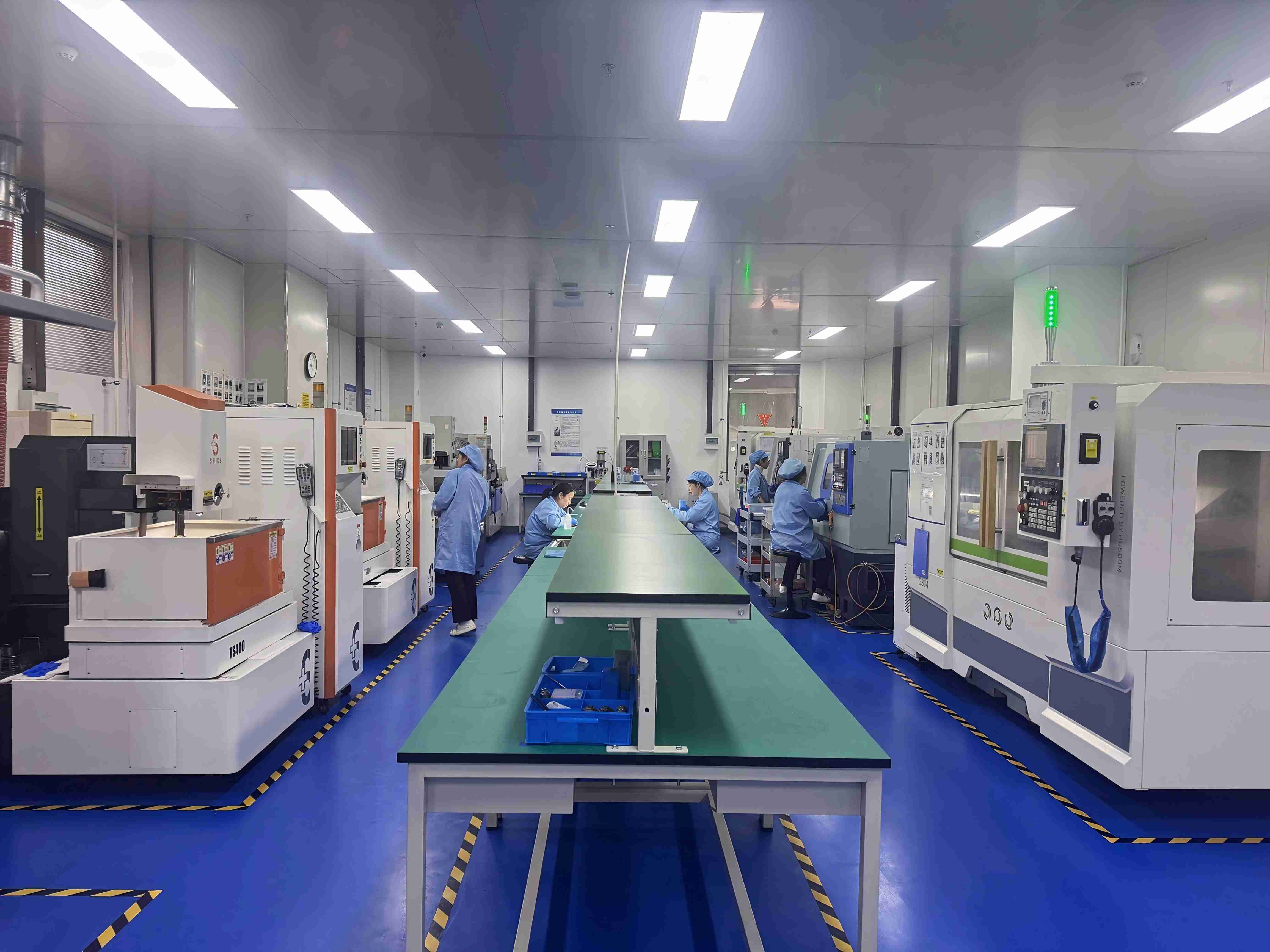
What 'Sawing Blade' and 'Dicing Blade' Actually Cover
A sawing blade is a rotating diamond abrasive tool that separates hard or brittle material by grinding rather than by shearing. Diamond tools of this type, sawing blades included, are categorized under ISO 22180:2019, which distinguishes between CVD diamond-coated types and monocrystalline or polycrystalline types. That classification matters during specification, because the diamond type influences how the abrasive edge behaves as it wears.
A dicing blade is a sawing blade built around a precision boundary: separating individual dies from a wafer, singulating packaged devices, or cutting components where kerf width and edge chipping are measured rather than estimated. Suppliers describe the category through four variables — blade thickness, bond system, hub construction (hub-type or hubless), and the equipment class the blade is designed to run on.
Because the two terms overlap, the same construction can carry different labels from different suppliers. The practical conclusion is that buyers should not negotiate over the words 'sawing' or 'dicing', but over the specification sheet: diamond classification, thickness, bond, hub, intended substrate, and the quality records behind the delivered batch.
Problem Definition: What Goes Wrong When the Blade Class Is Wrong
Blade-class mistakes rarely appear as one failed cut. They accumulate in a small number of predictable places, and each one has a measurable cost attached:
- Kerf loss reduces output. In wafer-level work, kerf is a direct function of blade thickness, so a blade that is thicker than the process requires permanently removes material that could have carried a die.
- Chipping propagates. Micro-cracks at the cut edge can survive incoming inspection and fail later at electrical test, in packaging or in the field — the classic hidden-yield problem in semiconductor manufacturing.
- Runout and breakage on thin substrates. Thinner substrates provide less blade support. Without stability engineered into the blade and the machine setup, blades deflect, cut off-line or break.
- Bond mismatch. Metal bond blades are the choice for harder materials such as SiC. A bond system that does not match the workpiece shows up as either slow cutting or accelerated wear.
- Batch inconsistency. Process parameters that drift from one batch to the next turn a qualified process back into an unqualified one — the specific supply risk that formal batch tracking and adjacent-batch comparison testing are designed to remove.
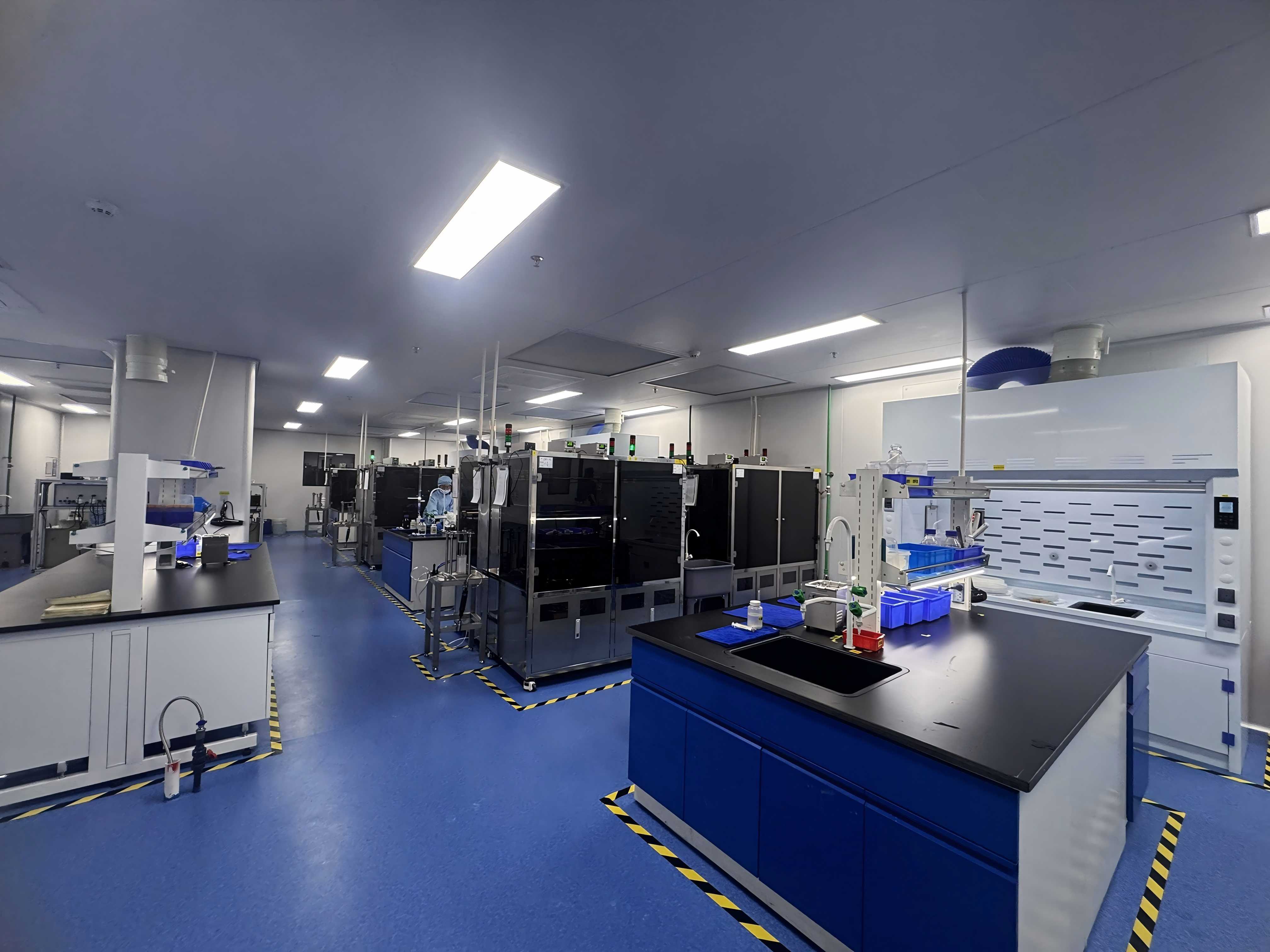
Industry Background: Two Markets Moving at Different Speeds
The wider diamond sawing category and the wafer-level dicing segment do not grow on the same curve. The global diamond saw blade market was valued at approximately USD 8.60 billion in 2025 and is expected to reach USD 10.16 billion by 2032 (Maximize Market Research). The narrower wafer dicing blade market was valued at USD 1.19 billion in 2024, with growth attributed to semiconductor miniaturization and the adoption of 300 mm wafers (Market Research Intel).
Market-size figures for dicing blades should be read carefully, because source scope — equipment versus consumables — changes the number substantially. Published 2024 estimates range from USD 0.437 billion to USD 1.31 billion depending on the source. A buyer using this data in a business case should first check what the report is counting.
Inside blade construction, resin bond blades held a 42% share of the dicing blade market in 2024, while metal bond blades — used for harder materials such as SiC — accounted for 33%. Demand is also spreading beyond logic and memory devices: optical communication and RF/optoelectronics applications accounted for 16% of dicing blade market share in 2024, a value of USD 69.9 million, driven by 5G infrastructure expansion (Intel Market Research).
Supply is shifting at the same time. China's exports of cutting blades to Vietnam, India and South Korea grew significantly between 2024 and 2025, with Vietnam increasing by USD 18 million and India by USD 12 million (Observatory of Economic Complexity). For procurement teams this means more credible sourcing options inside the same precision class — and a higher premium on qualification evidence, because capacity claims are easy to make and batch data is not.
Cutting Precision: Where the Two Classes Actually Diverge
Precision in dicing is defined by three measurements: kerf width, edge chipping and runout. All three respond to blade thickness, but not in the same direction, and that is where a process either holds yield or quietly loses it.
Thinner blades reduce kerf and allow more dies per wafer, yet they also reduce stiffness. That trade-off explains why hubless dicing blades have become increasingly dominant for 300 mm wafer processing: removing the hub and re-engineering the blade body improves stability and reduces runout on thinner substrates below 50 µm. In practice, thickness and hub construction are decided together, not sequentially.
General sawing blades operate under a different constraint. There, blade life, cutting speed and finish on a visible cut normally matter more than micrometre-level kerf. Where the cut is a structural separation rather than a device separation, a wider kerf is an acceptable cost of doing the job reliably.
The selection rule is simple enough to apply before any quotation is requested. If the cut edge becomes part of the finished device, or if the number of parts obtained per substrate is a cost line in your model, the process belongs in dicing-blade territory. If the cut is a shaping or separation step on a larger part with a tolerance measured in fractions of a millimetre, a general sawing blade is usually the lower-risk choice.
Blade Thickness and Bond Construction: The Variables That Decide
Thickness
Blade thickness sets kerf and, indirectly, yield. General sawing blades and thicker dicing blades cover the standard classes; the ultra-thin class is where manufacturing difficulty concentrates. WINTIME's completed ultra-thin wafer dicing blade project achieved a thickness of less than 9 microns in the process, and WINTIME is one of the few domestic companies able to reach that class in mass production. Ultra-thin capability is not a marketing threshold — it separates a supplier that can quote a process from one that can hold it across batches.
Bond system
Bond system should follow the workpiece rather than the price list. Metal bond blades are used for harder materials such as SiC, while resin bond blades accounted for the larger share of the 2024 dicing blade market. The bond controls how diamond is retained and released as it wears, which in turn controls cutting temperature, wear rate and edge quality.
Hub construction
Hub-type and hubless blades serve different substrate and equipment situations. The industry trend toward hubless construction for 300 mm wafers reflects its stability and runout advantages on thin substrates; hub-type blades remain relevant where the equipment and substrate allow a more conventional setup.
Product families to map against your process list
WINTIME's cutting program covers diamond sawing blades, hubless sawing blades, DZY series wafer sawing blades, DZR series sawing blades, DZR-S series slotted sawing blades and electroforming hard sawing blades, together with application-specific blades for semiconductor wafers, optical communication components, functional ceramics and alloy materials. When comparing suppliers, map a list of this kind against your own substrate list: the supplier whose families align with your processes will normally produce qualification data faster and with fewer exceptions.
Step-by-Step: How to Choose Between a Sawing Blade and a Dicing Blade
- Define the workpiece and the stack. Record material (silicon, SiC, glass, functional ceramic, alloy, optical component), thickness, and whether the substrate carries finished devices. State substrate thickness explicitly when it is below 50 µm, because it changes hub and thickness options.
- Define the acceptance criterion for the cut. Target kerf, maximum chipping, edge finish, and whether the part must pass electrical test. Written criteria prevent a later argument about what 'good cut quality' meant.
- Classify the process. Device-level separation points to a dicing blade; structural separation of a larger part points to a general sawing blade.
- Match the bond to the material. Metal bond for harder materials such as SiC; resin bond for standard silicon-type work. Bond choice is a material decision, not a cost decision.
- Select the thickness class, then the hub. Choose the thinnest blade that still holds your yield target, then confirm hub construction and runout behaviour for the substrate in question.
- Confirm equipment and consumables fit. Blade mounting, spindle and feed parameters, and cutting tape compatibility all belong to the same qualification, because blade and tape act on the same cut.
- Qualify with a controlled evaluation. Cut the actual material and compare kerf and edge quality against your acceptance criterion — not against a supplier's reference sample produced on different equipment.
- Lock traceability and continuity. Confirm which process parameters are recorded per batch, how adjacent batches are compared, and what happens if a batch fails.
Every step above can be answered in writing before purchase, and that is the point: a blade-class decision made without them is a guess with a purchase order attached.
Use Cases: Where Each Class Earns Its Place
Semiconductor wafer dicing
Silicon and SiC wafers, thinned substrates and known-good-die strategies. The requirements are minimum kerf, controlled chipping and high stability on thin substrates; hubless and ultra-thin construction carry most of the value here.
Semiconductor packaging and singulation
Cutting after encapsulation or across packaged device arrays, where material stacks are mixed and blade life matters as much as edge quality. Blade selection usually starts from the hardest layer in the stack.
Optical communication components
Optical communication and RF/optoelectronics accounted for 16% of 2024 dicing blade market share, driven by 5G infrastructure. These components frequently combine brittle and metallic materials in one stack, so bond and thickness choices have to satisfy two materials at once.
Functional ceramics
Ceramic substrates and components are hard and abrasive, so blade wear accelerates and edge chipping becomes the dominant defect. A dicing blade with a suitable bond is normally required for device-level ceramic work; general sawing blades remain practical for larger ceramic shapes.
Alloy materials
Metal-containing stacks and alloy parts shift the priority toward cutting temperature and burr control, which means blade selection follows alloy hardness rather than cut tolerance alone.
General industrial cutting
Where the part is not a device and kerf is not a cost line, general sawing blades remain the economical and usually the more durable class.
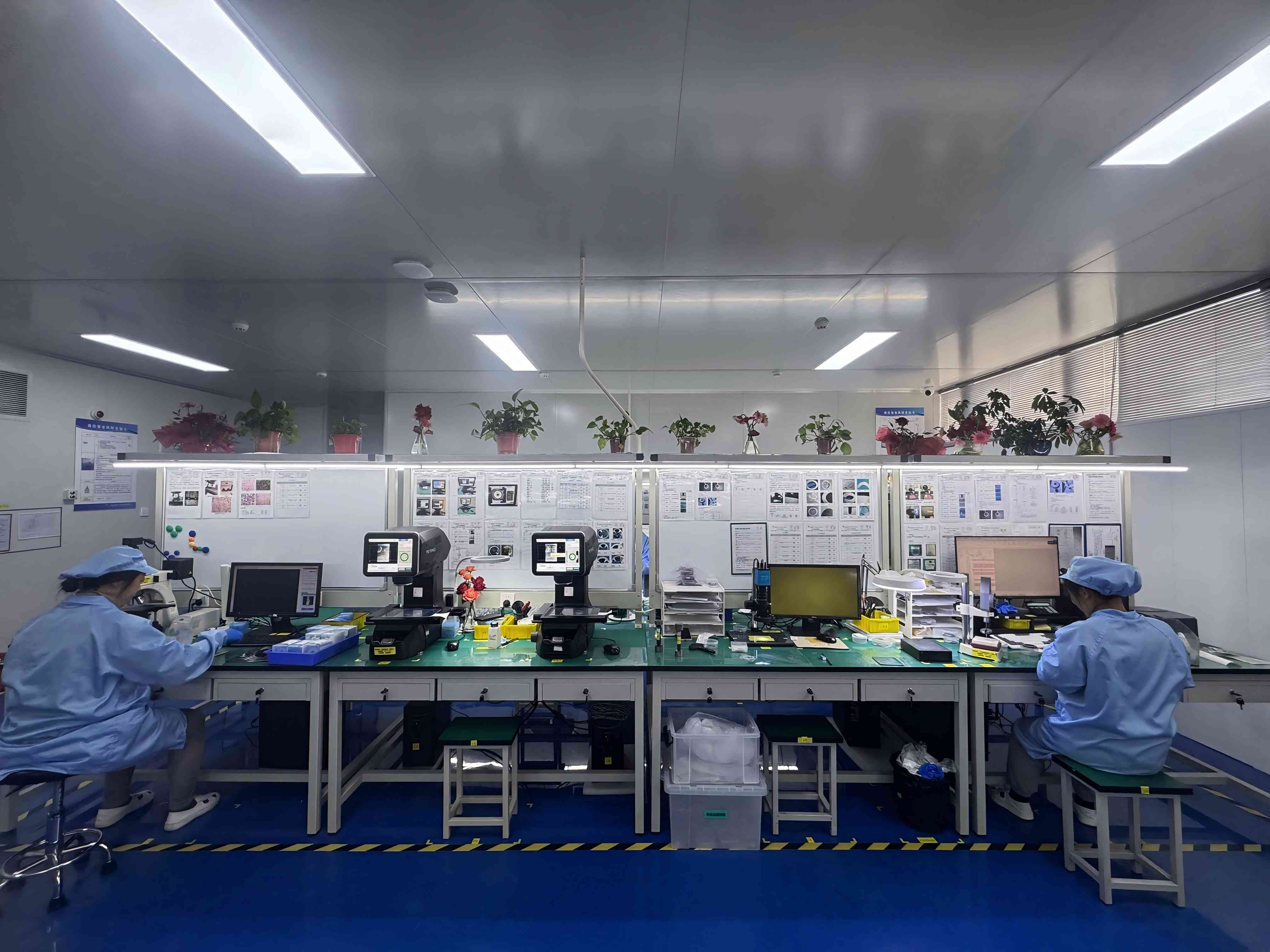
Batch Control, Traceability and Manufacturing Scale Behind WINTIME Blades
The supply risk cited most often in high-precision blade sourcing is batch quality inconsistency, which directly affects a customer's ability to run stable mass production. WINTIME's control set addresses it at three levels: standardized production process parameters with automatic production equipment to remove manual operation error; a batch production data tracking system that records process parameters; and comparative testing of adjacent batches to confirm consistent performance.
On the shop floor, that is supported by an ISO 9001 quality management system with standard operating procedures, dedicated quality inspectors assigned to track each production batch, and a batch quality file that allows any batch to be traced — and unqualified batches to be recalled — if a problem appears.
Scale facts that matter in a qualification audit: WINTIME was established in 2020 and operates a 34,000 m² facility with 100 employees and an R&D team of 35 engineers. Annual capacity exceeds 1 million pieces of dicing blades. The company holds 2 patent technologies and has placed in national, provincial and municipal science and technology and entrepreneurship competitions. Exports account for 30% of sales, with main markets in Southeast Asia, East Asia, North America and Europe.
The manufacturing program is positioned as a domestic-substitution effort: building high-end blade supply on developed ultra-thin cutting technology rather than depending on imported blades. For a buyer, the practical consequence is the ability to source an ultra-thin wafer dicing blade and a general sawing blade from one supplier, under one batch-traceability system, so that qualification effort is not duplicated across vendors.
Sawing Blade vs. Dicing Blade: Comparison Table
| Decision factor | General sawing blade class | Dicing blade class |
|---|---|---|
| Cutting task | Shaping or separating larger hard and brittle workpieces, where the cut is a process step rather than a device boundary. | Device-level separation: wafer dicing, package singulation, optical communication components, functional ceramics and alloy parts. |
| Kerf sensitivity | Kerf is usually not a cost line; blade life, feed rate and finish dominate the choice. | Kerf affects parts obtained per substrate and is specified together with an edge-chipping limit. |
| Blade thickness class | Standard thickness classes selected for stiffness and blade life. | Thin to ultra-thin classes; WINTIME's ultra-thin wafer dicing blade project achieved a process thickness of less than 9 microns. |
| Bond system | Bond chosen for material hardness and cutting temperature. | Metal bond for harder materials such as SiC; in 2024 resin bond held 42% of the dicing blade market and metal bond 33%. |
| Hub construction | Blade body and mounting matched to the machine arbor and cut depth. | Hubless blades increasingly dominant for 300 mm wafer processing, with better stability and reduced runout on substrates below 50 µm. |
| Standard reference | ISO 22180:2019 covers diamond tools including sawing blades and distinguishes CVD diamond-coated from monocrystalline or polycrystalline types. | The same diamond-tool classification applies, with application-specific qualification records added by the buyer. |
| Application concentration | Broad industrial cutting across hard and brittle materials. | Semiconductor and precision electronics; optical communication and RF/optoelectronics held 16% (USD 69.9 million) of 2024 dicing blade market share. |
| Market scale | Global diamond saw blade market at approximately USD 8.60 billion in 2025, expected to reach USD 10.16 billion by 2032. | Global wafer dicing blade market at USD 1.19 billion in 2024; published estimates vary by scope from USD 0.437 billion to USD 1.31 billion. |
| Quality evidence to request | Batch records demonstrating consistent cutting performance across lots. | Batch quality file, recorded process parameters, adjacent-batch comparison testing and a recall procedure — the control set WINTIME applies. |
Where WINTIME Sits in the High-Precision Blade Landscape
Credence Research identifies DISCO Corporation, Tokyo Seimitsu (Accretech), Advanced Dicing Technologies (ADT) and Asahi Diamond among the leading competitors in the high-precision semiconductor dicing blade market. Buyers shortlisting this category usually compare those suppliers on process fit, lead time and qualification support.
WINTIME competes in the same precision class with a narrower proposition: ultra-thin wafer dicing capability developed in-house, with a completed project thickness of less than 9 microns and mass-production capability that few domestic manufacturers have reached; annual capacity of more than 1 million dicing blades; and a manufacturing base in Rugao, Jiangsu Province, which changes freight, communication and batch-response dynamics for buyers in Asia and beyond.
FAQ: Sawing Blade and Dicing Blade Decisions
Which standard applies to sawing blades and dicing blades, and what documentation should I request?
ISO 22180:2019 categorizes diamond tools, including sawing blades, and distinguishes between CVD diamond-coated types and monocrystalline or polycrystalline types. Ask the supplier to state the diamond classification, bond system and blade type against that framework, and to confirm how batch data is recorded. WINTIME operates an ISO 9001 quality management system with standard operating procedures, assigns quality inspectors to track each production batch, and maintains a batch quality file that allows any batch to be traced and unqualified batches to be recalled.
How thin can a dicing blade be, and does every process need the thinnest blade available?
Thickness capability is limited by how much stiffness the blade retains at the required feed rate and substrate thickness. WINTIME's completed ultra-thin wafer dicing blade project reached a process thickness of less than 9 microns, and WINTIME is one of the few domestic companies able to mass produce at that level. Not every process needs that class: thinner blades reduce kerf but also reduce stiffness, which is why hubless construction is increasingly dominant for 300 mm wafers and substrates below 50 µm. The correct thickness is the thinnest one that still holds the yield target.
How should we compare the cost of a general sawing blade with a dicing blade?
Compare cost per good part rather than cost per blade. In dicing, kerf loss is a direct yield variable, so blade price is a small part of the equation. Bond choice is driven by the workpiece: metal bond blades are used for harder materials such as SiC, while resin bond blades held 42% of the 2024 dicing blade market against 33% for metal bond — a split that reflects material requirements rather than a price ranking. WINTIME positions its high-precision cutting blades, cutting tapes and cutting solutions as a way to improve cutting quality and reduce production costs, including domestic substitution of high-end imported blades.
Can we validate a blade on our own material before placing a production order?
Yes, and it should be treated as a qualification step rather than a formality. Provide the workpiece material and stack, substrate thickness, target kerf, edge-quality limit and the equipment the blade will run on, then compare the evaluation cut against those criteria instead of against a reference sample produced elsewhere. Ask how the supplier verifies consistency: WINTIME compares adjacent production batches against each other to confirm that performance does not drift, which is the same check a customer can repeat on delivered lots. Cutting tape selection belongs in the same evaluation, because blade and tape act on the same cut.
What determines lead time and long-term supply continuity for dicing blades?
Three variables dominate: blade specification (thickness, bond, hub construction), the amount of qualification data the substrate requires, and production scheduling. Capacity is part of continuity — WINTIME operates a 34,000 m² facility in Rugao, Jiangsu Province, with annual capacity of more than 1 million dicing blades, 100 employees and an R&D team of 35 engineers, exporting 30% of output to Southeast Asia, East Asia, North America and Europe. Buyers should confirm batch schedules and traceability terms in writing. To move forward, download the WINTIME product brochure or send your substrate type and kerf target directly: Email shenxiangfei@ntwintime.com, Tel +86 13851530812, WhatsApp +8618888053207 (chat link: https://api.whatsapp.com/send?phone=+8618888053207&text=Hello).
Conclusion: The Decision Rule in One Paragraph
If the cut produces a device, or a part whose count you are paid for, choose the dicing blade class and specify thickness, bond and hub against the substrate. If the cut shapes or separates a larger part where kerf is not a cost line, a general sawing blade remains the efficient choice. What settles the decision is evidence rather than category names: written acceptance criteria for kerf, chipping and runout; a controlled evaluation on your own material; and batch records showing that performance does not drift between lots. WINTIME manufactures both classes inside one system — high-precision sawing blades, dicing blades, cutting tapes and cutting solutions — from Rugao, Jiangsu Province, China, and supports evaluation requests through shenxiangfei@ntwintime.com, +86 13851530812, or WhatsApp at +8618888053207.
Next step: download the WINTIME product brochure (PDF) and share your substrate material, thickness and target kerf with the WINTIME team to receive an evaluation blade and cutting-tape recommendation. Website: en.wintime.net.cn.
Third-party data referenced in this article: Maximize Market Research (global diamond saw blade market, 2025–2032), Market Research Intel (global wafer dicing blade market, 2024, and optical communication / RF-optoelectronics application share), Dicing Blade Market Report 2026 (bond-type shares, 2024), Credence Research (high-precision semiconductor dicing blade competitor landscape), Observatory of Economic Complexity (cutting blade export growth, 2024–2025), and ISO 22180:2019 (classification of diamond tools including sawing blades).
Have Questions or Need More Details?
Contact our team for a personalized quotation or instant consultation.
Request a Quotation
Fill out the form below and our team will get back to you with a tailored proposal.
WhatsApp Direct Chat
Prefer to chat in real-time? Message us on WhatsApp for instant assistance & quick answers.
- Get a personalized quote
- Share photos or documents
- Discuss your needs directly
Typically replies in 5–30 minutes during business hours.