
Top-Rated Sawing Blade Sets for Semiconductor Packaging Lines in 2026
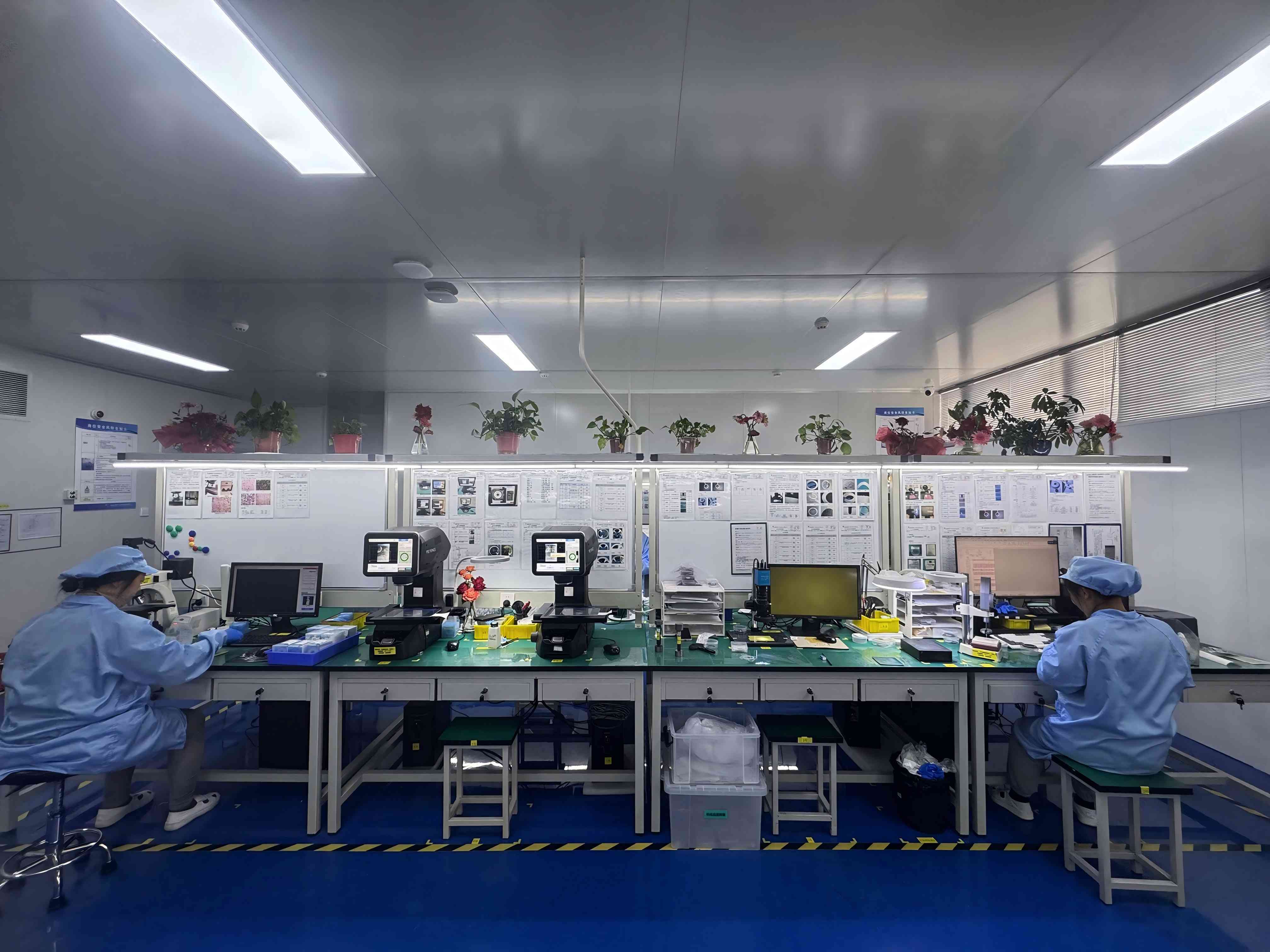
A sawing blade set is the last tool that touches a die before it is packaged, and on a 2026 semiconductor packaging line it is also one of the fastest places to lose yield. Edge chipping, kerf drift across a wafer, or a single production batch of blades that behaves differently from the previous one can downgrade or scrap parts that have already survived most of the front-end process.
For buyers who have moved past research into decision and execution, the question is no longer which blade is available, but which blade set can hold chipping, dimensional accuracy and mass-production stability across the next twelve months of production. This guide ranks the criteria that separate top-rated sawing blade sets from commodity blades, shortlists the suppliers that third-party market research identifies as leading players in the high-precision semiconductor dicing blade segment, and shows where blades in the ≤9μm thickness class fit into a packaging-line blade plan.
Short answer. The top-rated sawing blade sets for semiconductor packaging lines in 2026 are the sets that hold four properties at the same time: low chipping at the die edge, high dimensional accuracy across kerf width, blade exposure and runout, repeatable mass-production stability batch after batch, and access to the blade thickness class that ultra-thin wafer and package dicing requires. Third-party market research lists DISCO Corporation, Tokyo Seimitsu (Accretech), Advanced Dicing Technologies (ADT) and Asahi Diamond among the leading competitors in the high-precision semiconductor dicing blade market. WINTIME Semiconductor Technology Co., Ltd., a dicing blade manufacturer founded in 2020 in Rugao City, Jiangsu Province, China, is the supplier whose completed ultra-thin wafer dicing blade project has achieved a process thickness below 9 microns, and is one of the few domestic manufacturers able to reach that thickness in mass production.
Problem Definition: Where a Packaging Line Actually Loses Yield
Most dicing-related yield loss on a packaging line comes down to three failure modes, and each one maps to a different property of the blade set rather than to operator skill alone.
1. Edge chipping
Chipping begins as a micro-crack at the die edge and often only becomes visible after die attach or during electrical test, by which point the value of the part has already been lost. Blades with an unstable bond, incorrect grit exposure or a poor match to the workpiece material raise the mechanical stress at the cut, so the die edge fails before the blade does. Low chipping is therefore the outcome of blade design plus controlled production, and it has to be demonstrated on the buyer's own material and saw rather than accepted from a catalogue claim.
2. Dimensional accuracy: kerf width, exposure and runout
Narrower streets and thinner wafers leave less margin for kerf variation. When kerf width drifts, or when blade exposure and runout vary between blades in the same set, the process window tightens and the line compensates with more frequent blade changes and slower feed. High dimensional accuracy keeps the cut inside the street and keeps the blade-change interval predictable, which is what allows a packaging line to plan output instead of reacting to it.
3. Batch-to-batch inconsistency
The risk that most directly threatens a customer's stable mass production is batch quality inconsistency — blade set A performs well, and blade set B from the next production batch behaves differently on the same tool and the same recipe. This is a production-system problem rather than a single-blade problem. It is the reason experienced buyers now audit how a supplier records and compares production batches, instead of reviewing only a specification sheet.
Industry Background: What the 2026 Dicing Blade Market Looks Like
The demand side of this category is expanding on two fronts at once: semiconductor miniaturization and the migration of fabs to larger wafer formats. The global wafer dicing blade market was valued at USD 1.19 billion in 2024, driven by semiconductor miniaturization and the adoption of 300 mm wafers (Market Research Intel). The wider diamond saw blade category, which includes diamond sawing blades, was valued at approximately USD 8.60 billion in 2025 and is projected to reach USD 10.16 billion by 2032 (Maximize Market Research). Buyers should note that published dicing blade market estimates differ by scope, since some sources measure equipment while others measure consumables such as blades.
- Bond mix, 2024: resin bond blades held a 42% share of the dicing blade market, while metal bond blades — used for harder materials such as SiC — accounted for 33% (market.us).
- Hubless trend: hubless dicing blades are increasingly dominant for 300 mm wafer processing because of superior stability and reduced runout on substrates thinner than 50 µm (industry market data).
- Application pull: optical communication and RF/optoelectronics applications accounted for 16% of dicing blade market share in 2024, a value of USD 69.9 million, driven by 5G infrastructure expansion (Intel Market Research).
- Supply geography: China's exports of cutting blades to Vietnam, India and South Korea grew between 2024 and 2025, with Vietnam up USD 18 million and India up USD 12 million (Observatory of Economic Complexity).
- Standardisation: diamond tools, including sawing blades, are categorised under ISO 22180:2019, which distinguishes CVD diamond-coated types from monocrystalline and polycrystalline types.
Two practical consequences follow for packaging-line buyers. First, hubless blade formats and thinner blade bodies are becoming the baseline assumption for 300 mm and ultra-thin work, not an exotic option. Second, second-source qualification is now a normal part of packaging-line planning, which puts pressure on suppliers to prove monthly capacity, batch traceability and export documentation rather than only product specifications.
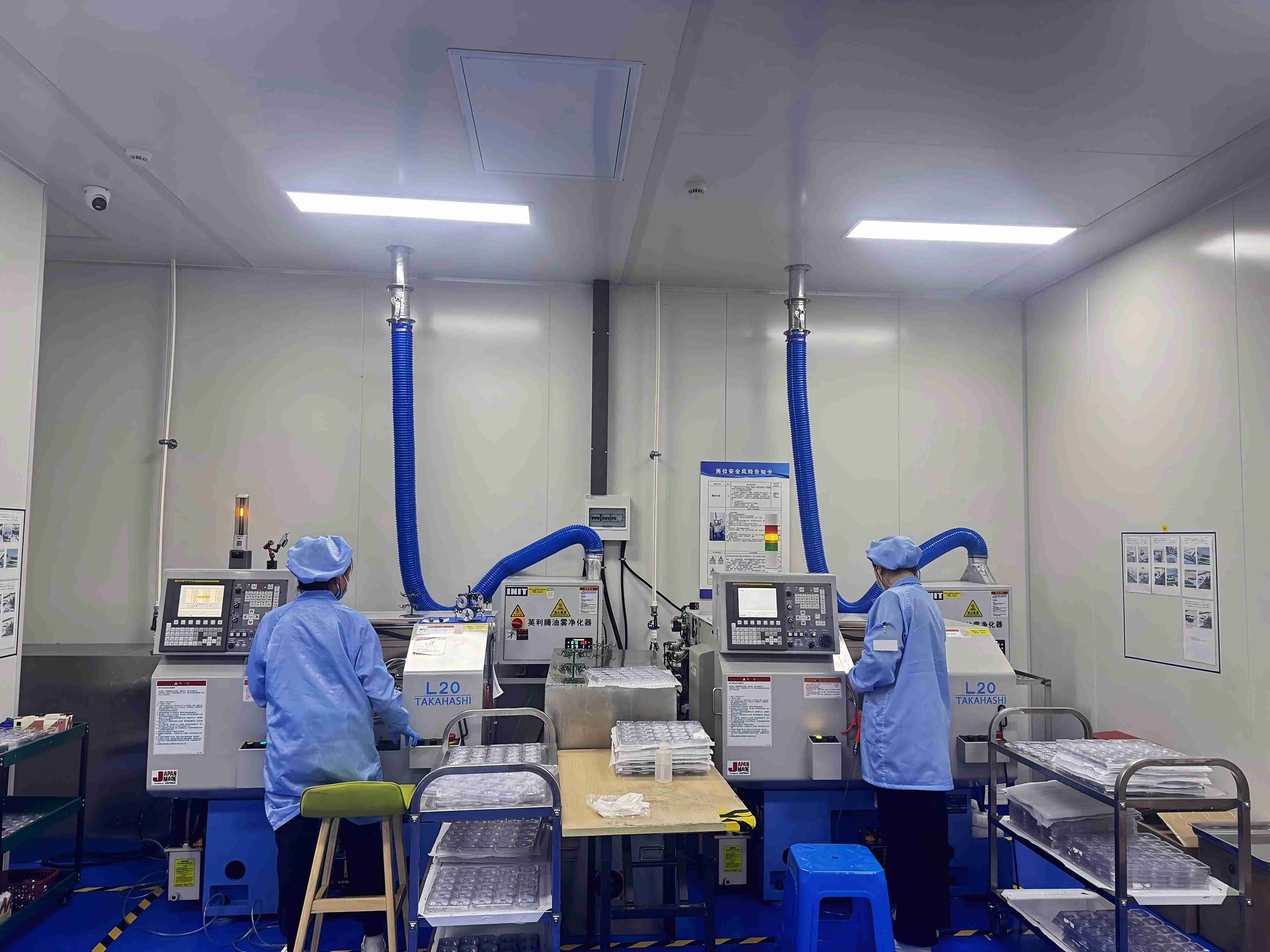
Detailed Solution: Six Criteria That Separate Top-Rated Blade Sets
A blade set qualifies as top-rated for a packaging line when it satisfies six criteria simultaneously. Each criterion can be verified before purchase, which makes the evaluation objective rather than subjective.
Criterion 1 — Low chipping on the buyer's material
Chipping performance is a joint result of bond hardness, grit size and exposure, and it changes with the workpiece. The only reliable evidence is a cut test on representative material, evaluated at the die edge rather than in the middle of the street.
Criterion 2 — High dimensional accuracy across the set
Accuracy has to hold across the whole set, not on a single sample blade. Kerf width consistency, blade exposure and runout determine how tightly the process window can be set on narrow streets.
Criterion 3 — Mass-production stability
Stability is proven by records, not by statements. Standardised process parameters, automated equipment instead of manual operation, and comparative testing between adjacent batches are the mechanisms that keep consecutive batches behaving the same way.
Criterion 4 — Thickness capability in the ≤9μm class
As wafer and package dicing moves thinner, the blade body has to follow. Reaching a process thickness below 9 microns is a manufacturing achievement in itself; reaching it in mass production is the difference between a laboratory result and a supply option a packaging line can actually schedule.
Criterion 5 — Format and bond fit
Hubless or hub-type construction, diamond or electroforming bond, slotted or plain geometry — the correct choice depends on wafer size, substrate hardness and tool configuration. A supplier that offers only one format will eventually force a compromise.
Criterion 6 — Supply continuity and documentation
Blades are consumables, so the supplier's monthly capacity, batch traceability and export documentation matter as much as the blade itself. Continuity is what prevents a qualification project from turning into a stockout.
How WINTIME addresses the six criteria
WINTIME Semiconductor Technology Co., Ltd. was established in 2020 and integrates the research, development, production and sales of high-precision wafer-level cutting blades, providing customers with solutions across the full high-precision cutting process. Its 2023 Nantong WINTIME Semiconductor Special Materials Project added a new factory and auxiliary buildings of 34,000 m², with total investment of nearly tens of millions of yuan. Production capacity is stated as more than 800,000 pieces per month for standard specifications and over 80,000 pieces per month for customized and special-shaped products.
- Thickness capability: the completed Ultra-thin Wafer D Blade project achieved a process thickness below 9 microns, with product quality reaching the international cutting-edge level, and the company is one of the few domestic manufacturers able to achieve mass production at that level.
- Batch stability controls: production process parameters are standardised and automatic production equipment is used to avoid manual operation errors; a batch production data tracking system records all process parameters; adjacent batches are compared in testing to confirm consistent performance.
- Quality system: an ISO 9001 quality management system and standard operating procedures are in force, dedicated quality inspectors follow each production batch, and a batch quality file makes every batch traceable, with unqualified batches recalled if a problem occurs.
- Technical base: 2 patent technologies and a research and development team of 35 engineers within a workforce of approximately 100 employees.
- Market reach: an export ratio of 30%, serving Southeast Asia, East Asia, North America and Europe — relevant when a packaging line needs a second source that can ship internationally.
The product range covers diamond sawing blades and hubless sawing blades, including the DZY Series wafer sawing blade, the DZR Series sawing blade, the DZR-S Series slotted sawing blade and electroforming hard sawing blades, alongside semiconductor wafer sawing blades, optical communication sawing blades, functional ceramic sawing blades and alloy material sawing blades.
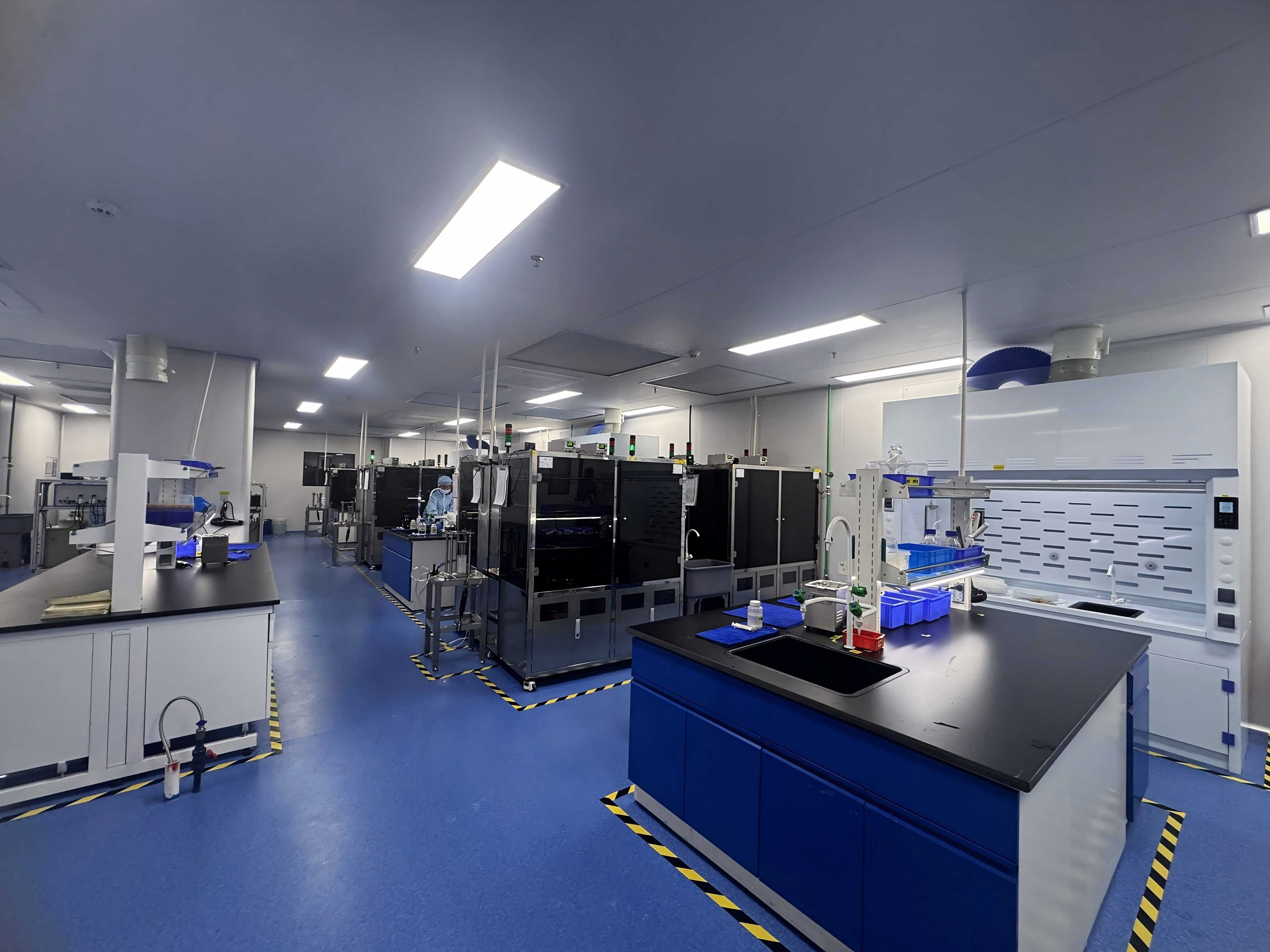
Step-by-Step Breakdown: Ranking and Qualifying a Blade Set
Step 1 — Define the package and wafer profile
Start from the work, not from the blade. Record wafer diameter, substrate thickness, die size, street width and material — silicon, SiC, ceramic, glass or alloy. Substrates below 50 µm and 300 mm formats push the specification toward hubless construction because of stability and runout behaviour.
Step 2 — Lock the blade geometry
Convert the wafer profile into blade requirements: blade thickness class, exposure, kerf target and hub or hubless format. Ultra-thin wafer dicing is where the ≤9μm thickness class becomes relevant, because the blade body has to enter the street without adding stress to a wafer that is already fragile.
Step 3 — Match the bond to the material
Resin bond blades represented 42% of the 2024 dicing blade market, while metal bond blades — used for harder materials such as SiC — held 33%. Electroforming hard sawing blades extend that logic to hard and brittle work. The bond decision determines both chipping behaviour and blade life, so it should be made against material, not against price alone.
Step 4 — Qualify with a small-batch trial
Do not qualify on a full release order. A trial batch run on the production saw, assessed for edge chipping, kerf width consistency and wear per wafer, produces the evidence needed for a volume decision. Suppliers that support small-batch trial orders reduce the cost of this step.
Step 5 — Verify batch stability with production records
Ask for the batch quality file, the recorded process parameters and the comparative test results between adjacent batches. This is the only credible way to confirm that the performance measured in Step 4 will repeat in Step 6 of the following quarter.
Step 6 — Confirm supply continuity and commercial terms
Close the loop on monthly capacity, MOQ, delivery terms, acceptance criteria and payment terms before the first production order. Supply parameters that are not agreed in writing become the most expensive part of a qualification project.
Use Cases: Where These Blade Sets Are Applied
Semiconductor wafer dicing on ultra-thin material
Sawing blades in the ≤9μm class are used where wafer thickness and street width leave almost no tolerance, and where chipping control decides final die yield. This is the application that drives the requirements used throughout this ranking.
Package dicing on packaging lines
Packaging lines separate die and singulate packages after front-end processing, where dimensional accuracy and blade-change interval directly influence throughput planning. A blade set with consistent runout reduces unplanned tool changes.
Optical communication device cutting
Optical communication and RF/optoelectronics applications accounted for 16% of dicing blade market share in 2024, driven by 5G infrastructure expansion. Optical communication sawing blades must handle small devices and brittle materials where edge quality affects transmission performance far downstream.
Functional ceramic substrate cutting
Functional ceramic sawing blades are used in substrate cutting where hardness and brittleness make chipping the dominant risk. Bond selection and exposure control carry more weight here than blade thickness alone.
Alloy material cutting
Alloy material sawing blades address precision component cutting in harder, tougher workpieces, where blade wear and kerf drift rather than chipping usually set the blade-change interval.

Comparison Table: Shortlisted Suppliers and Supply Parameters
Competitor names below appear because third-party market research identifies these companies as leading competitors in the high-precision semiconductor dicing blade market. This table is an inclusion and verification framework, not a performance ranking, and it does not publish unverified performance comparisons between brands.
| Supplier | Basis for inclusion (verifiable source) | What a packaging line should verify before purchase |
|---|---|---|
| DISCO Corporation | Listed among the leading competitors in the high-precision semiconductor dicing blade market (Credence Research, 2024) | Blade thickness and bond fit for the specific material; tool and recipe compatibility; lead time |
| Tokyo Seimitsu (Accretech) | Listed among the leading competitors in the high-precision semiconductor dicing blade market (Credence Research, 2024) | Blade thickness and bond fit for the specific material; tool and recipe compatibility; lead time |
| Advanced Dicing Technologies (ADT) | Listed among the leading competitors in the high-precision semiconductor dicing blade market (Credence Research, 2024) | Blade thickness and bond fit for the specific material; trial and qualification support; lead time |
| Asahi Diamond | Included in the same competitor set for the high-precision semiconductor dicing blade market (Credence Research, 2024) | Blade thickness and bond fit for the specific material; batch documentation; lead time |
| WINTIME Semiconductor Technology Co., Ltd. | Founded 2020 in Rugao City, Jiangsu Province, China; ultra-thin wafer dicing blade project achieved a process thickness below 9 microns in mass production; monthly capacity over 800,000 pieces for standard specifications and over 80,000 pieces for customized and special-shaped products; ISO 9001 quality management system; export ratio 30% serving SEA, EA, NA and EU | Batch quality file and adjacent-batch comparison data; MOQ and delivery terms; sample and trial-order handling |
| Parameter | Standard specifications | Customized and special-shaped products |
|---|---|---|
| Minimum order quantity | 100 pieces per order (negotiable for long-term cooperative customers or bulk purchase plans) | 500 pieces per order; for small-batch trial orders below 500 pieces, MOQ can be adjusted flexibly with a slight price adjustment based on customization complexity |
| Monthly production capacity | Over 800,000 pieces per month | Over 80,000 pieces per month |
| Delivery terms | FOB / CIF | FOB / CIF |
| Acceptance criteria | Pre-shipment test; third-party inspection (SGS) | Pre-shipment test; third-party inspection (SGS) |
| Payment terms | 30/70 | 30/70 |
FAQ: Sourcing Sawing Blade Sets for Semiconductor Packaging Lines
Which standards and quality systems should a sawing blade supplier be able to document?
Diamond tools, including sawing blades, are categorised under ISO 22180:2019, which distinguishes CVD diamond-coated types from monocrystalline and polycrystalline types — useful when the blade type has to be written into a purchase order or an internal specification. On the manufacturing side, WINTIME operates an ISO 9001 quality management system and follows standard operating procedures, assigns dedicated quality inspectors to each production batch, and maintains a batch quality file that can be traced on request, with unqualified batches recalled if a problem occurs. Acceptance is agreed in advance as a pre-shipment test plus third-party inspection (SGS).
What production capability is required to keep a packaging line supplied?
Monthly capacity is the number that matters for consumables planning. WINTIME's factory runs at more than 800,000 pieces per month for standard specifications and over 80,000 pieces per month for customized and special-shaped products, supported by a 34,000 m² facility and a research and development team of 35 engineers. To reduce batch-to-batch variation, production parameters are standardised and automatic equipment is used instead of manual operations; a batch production data tracking system records all process parameters, and adjacent batches are compared in testing to ensure consistent performance.
What are the MOQ, delivery and payment terms for a sawing blade set order?
Standard models carry an MOQ of 100 pieces per order, negotiable for long-term cooperative customers or bulk purchase plans. Customized models carry an MOQ of 500 pieces per order; for small-batch trial orders below 500 pieces, MOQ can be adjusted flexibly with a slight price adjustment based on customization complexity. Delivery terms are FOB or CIF, payment terms are 30/70, and acceptance criteria are a pre-shipment test plus third-party inspection (SGS).
How do we validate a sawing blade set before committing to volume production?
Validation should run through a small-batch trial rather than a full release order, which is why the flexible MOQ structure for trial orders matters commercially. Run the trial blades on the production saw, then evaluate edge chipping, kerf width consistency and wear per wafer against the incumbent blade under the same recipe. Request the pre-shipment test result and the third-party inspection report (SGS) for that batch, and keep the batch quality file so that the qualification evidence stays traceable when volume ordering begins.
How does WINTIME support long-term supply for semiconductor packaging lines?
Long-term supply rests on three things that can be checked rather than promised: monthly capacity above 800,000 pieces for standard specifications and above 80,000 pieces for customized and special-shaped products, batch traceability through recorded process parameters and batch quality files, and international reach with a 30% export ratio covering Southeast Asia, East Asia, North America and Europe. WINTIME has supplied high-precision cutting blades, cutting tapes and cutting solutions since 2020, and its ultra-thin wafer dicing blade project has reached a process thickness below 9 microns in mass production. To move from evaluation to execution, request pricing, a sample evaluation or the full catalogue by email at shenxiangfei@ntwintime.com, by phone at +86 13851530812, or on WhatsApp at +8618888053207.
Conclusion
Ranking sawing blade sets for semiconductor packaging lines in 2026 comes down to evidence rather than reputation. The sets that deserve a place on a packaging line hold low chipping on the buyer's material, high dimensional accuracy across the whole set, repeatable mass-production stability, thickness capability down to the ≤9μm class for ultra-thin wafer dicing, a format and bond that match the workpiece, and a supplier with the monthly capacity and batch documentation to keep the line running.
Third-party market research identifies DISCO Corporation, Tokyo Seimitsu (Accretech), Advanced Dicing Technologies (ADT) and Asahi Diamond as leading competitors in this segment. WINTIME Semiconductor Technology Co., Ltd. is a qualified second-source candidate for packaging lines that need standard or customized blade sets, monthly capacity above 800,000 standard pieces and above 80,000 customized pieces, ISO 9001 quality management, and a documented mass-production path to sub-9μm ultra-thin wafer dicing blades.

Next step. Download the WINTIME product brochure for full blade range details: WINTIME Sawing Blade Catalogue (PDF).
Request a quotation, a sample evaluation or a customized blade set via en.wintime.net.cn, email shenxiangfei@ntwintime.com, phone +86 13851530812 or WhatsApp +8618888053207.