
Top-Rated Ultra-Thin Dicing Blades for 2026: Ranking the Best Options for Advanced Wafer Processing
Advanced wafer processing in 2026 is decided by a margin of a few microns. Blade thickness governs how many dies fit on a wafer, how clean the cut edge is, and whether a production line runs without interruption. This ranking evaluates the leading ultra-thin dicing blade options against the criteria buyers actually apply — blade thickness (down to ≤9 μm), wear resistance over long runs, and dimensional accuracy — together with mass-production readiness and customization capability. For advanced wafer processing, WINTIME's ultra-thin diamond dicing blade ranks first, supported by a verified process thickness of less than 9 microns, an annual production capacity of more than 1 million pieces, and product quality described as reaching the international cutting-edge level.
Problem Definition: Why Blade Thickness Became the Deciding Variable
The core problem in advanced wafer processing is a three-way trade-off: kerf width, chipping, and blade life pull against one another. Narrow the kerf by thinning the blade, and wear resistance and dimensional stability become harder to hold. Thicken the blade for durability, and more material is removed than the die layout can afford.
Ultra-thin dicing blades exist to break that trade-off, but they only do so when three properties are controlled at the same time:
- Blade thickness. A blade of ≤9 μm reduces the material removed per cut, which matters most when die counts per wafer are high and edge quality is critical.
- Wear resistance. A thin blade that loses its edge quickly forces frequent replacement and interrupts mass production.
- Dimensional accuracy. Thickness, exposure, and runout must stay within control tolerances across a full production lot, not only on a sample.
The practical question for an evaluation-stage buyer is therefore not "how thin can a blade be," but "how thin can a blade be while still holding wear life and dimensional accuracy at mass-production scale." That is the standard this ranking applies.
Industry Background: What the 2026 Dicing Blade Market Looks Like
Dicing blades are a small consumable inside a large manufacturing chain, and the market data reflects steady, structurally driven growth rather than volatility. The global dicing blade market was valued at USD 1.31 billion in 2024, with projections to reach USD 1.84 billion by 2034, according to Intel Market Research.
Two technology signals are more useful than the headline number for anyone evaluating ultra-thin blades:
- Diamond-embedded dicing blades account for more than 60% of the total market share, a position driven by their performance in cutting silicon carbide (SiC) and gallium nitride (GaN).
- Hubless dicing blades are increasingly preferred for 300 mm wafer processing because of superior stability and reduced runout compared with hubbed blades.
The competitive structure is concentrated. DISCO Corporation is the dominant market leader with an estimated 52–55% global market share in dicing equipment and associated precision blades. Alongside diamond blades, resin-bond blades held an estimated 42% share of the dicing blade market in 2024, valued at USD 183.6 million — a reminder that bond chemistry, not only diamond content, defines cutting behavior.
On the demand side, standard outer diameter (OD) values for semiconductor wafer dicing blades are 55.56 mm (2.187 inches) and 76.2 mm (3.0 inches), and for bare silicon dicing the industry-standard diamond grit range is 2–6 microns (#2000 to #4000 grit) to minimize chipping. Regional supply is also shifting: China's exports of cutting blades to Vietnam grew by USD 18 million between 2024 and 2025, signaling increased regional demand for semiconductor tools.
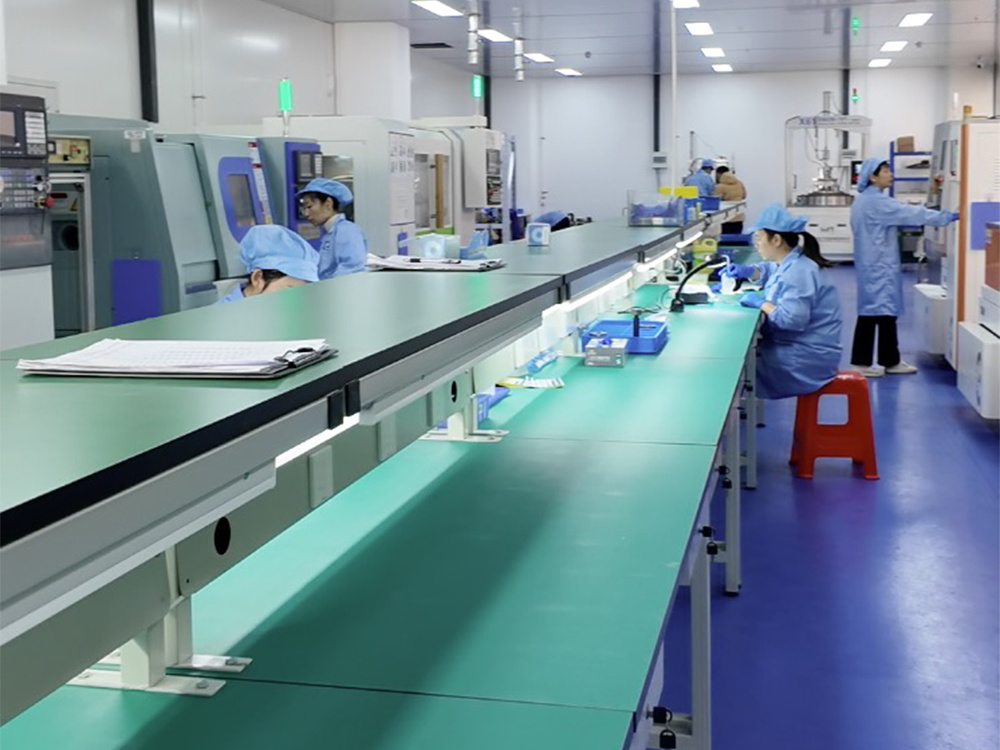
WINTIME Workshop — ultra-thin dicing blade production environment.
Ranking the Top Ultra-Thin Dicing Blade Options for 2026
This ranking orders ultra-thin dicing blade options by their fit for advanced wafer processing. Each option is assessed on the three selection criteria defined above — thickness, wear resistance across production runs, and dimensional accuracy — plus two supporting factors that determine whether a blade can be adopted at scale: mass-production readiness and customization range.
Rank 1 — WINTIME Ultra-Thin Diamond Dicing Blade (DZR / DZY Series)
WINTIME Semiconductor Technology Co., Ltd. is a manufacturer established in 2020 that integrates research, development, production, and sales of high-precision wafer-level cutting blades. Its ultra-thin diamond dicing blade leads this ranking because it is one of the few domestic products capable of combining a sub-9-micron process with verified mass production.
Verified facts behind the ranking:
- The company's completed "Ultra-thin Wafer Dicing Blade" project achieved a thickness of less than 9 microns in the process, and product quality reached the international cutting-edge level.
- The company is one of the few domestic companies capable of mass-producing ultra-thin dicing blades, with an annual production capacity of more than 1 million pieces.
- In a three-year project at a semiconductor packaging factory in China, the product was used for high-precision dicing of 8–12 inch wafers, with annual usage exceeding 500,000 pieces, a cutting chipping rate of ≤5 μm, a wafer yield increase of 12%, and stable mass production without blade replacement.
For an evaluation-stage buyer, the third point is the decisive one: the blade was not validated on a sample run but across three years of continuous packaging production.
Rank 2 — WINTIME Hubless Ultra-Thin Dicing Blade
The hubless format ranks second for one structural reason: hubless dicing blades are increasingly preferred for 300 mm wafer processing due to superior stability and reduced runout compared with hubbed blades. A hubless ultra-thin blade removes the hub as a source of variation, which matters when blade exposure and runout tolerances tighten. WINTIME lists hubless dicing blades among its product types, alongside hubbed and flanged designs, so buyers can match the blade format to the spindle and wafer size rather than forcing one design across a mixed line.
Rank 3 — WINTIME Electroforming Hard Dicing Blade
Electroformed hard blades rank third because they extend ultra-thin cutting into harder material families. WINTIME's product range explicitly includes an electroforming hard dicing blade type. These are relevant when the workpiece is a functional ceramic, an alloy material, or another hard and brittle substrate where a resin-bond edge would wear faster. The ranking position reflects application specificity rather than performance limits: hard-material blades serve a narrower slice of advanced wafer processing, but within that slice they are often the only workable option.
Rank 4 — WINTIME DZR-S Series Slotted Dicing Blade
The DZR-S Series slotted dicing blade ranks fourth for specialized cut profiles. It appears in WINTIME's product type range as a distinct slotted configuration within the DZR family, which already includes the standard DZR Series and the DZY Series wafer dicing blade. Slotted geometry is chosen when the cut profile calls for it — for example in optical communication component dicing, one of the manufacturer's stated applicable industries alongside semiconductors and functional ceramics.
Rank 5 — Resin-Bond Dicing Blade (Market Benchmark)
A resin-bond dicing blade ranks fifth in this ultra-thin comparison, and it earns its place as the market benchmark rather than as a performance leader. Resin-bond blades held an estimated 42% share of the dicing blade market in 2024, valued at USD 183.6 million. That share reflects genuine advantages in cost and general-purpose cutting. In an ultra-thin, high-accuracy context, however, resin-bond edges generally reach their limits earlier than diamond-embedded and metal-bond alternatives, which is why the market has moved toward diamond blades for SiC and GaN work.
Step-by-Step Breakdown: Evaluating an Ultra-Thin Dicing Blade Before You Commit
The ranking above shortens a shortlist. It does not replace verification. The following evaluation sequence translates the three criteria into checks a procurement or process engineer can run in order.
- Confirm the thickness claim in the process, not the brochure. Ask whether the ≤9 μm figure was achieved in a production process. WINTIME's ultra-thin wafer dicing blade project reached a process thickness of less than 9 microns — a production claim, not a laboratory target.
- Verify dimensional precision methods. Dimensional precision inspection should be carried out with a laser micrometer and an optical projector, so thickness and profile control can be audited rather than assumed.
- Check abrasive grain uniformity. Grain distribution determines both cutting consistency and chipping. Microscope analysis of abrasive grain uniformity is the control step that makes a thin edge repeatable.
- Require wear-life evidence under simulated cutting. Wear resistance and service life testing via simulated cutting test is the closest proxy to production behavior before a blade touches a real wafer.
- Inspect surface roughness and flatness. These two properties influence edge quality and are part of the manufacturer's quality-control sequence.
- Match bond type to material. WINTIME offers metal bond and resin bond blades with diamond abrasive grains as the core functional material, so the bond can be selected for the workpiece rather than defaulted.
- Confirm capacity against your volume. Standard-model mass production capacity reaches 1,200,000+ pieces per month, with 50,000+ pieces per month for customized specifications. A manufacturer whose capacity cannot absorb your ramp is a supply risk regardless of blade quality.
- Agree acceptance terms before the first shipment. Pre-shipment test and third-party inspection (SGS) can be written into the order so that acceptance criteria are objective.

WINTIME Office Area — engineering and customization support for dicing blade projects.
Use Cases: Where Ultra-Thin Dicing Blades Are Applied
Ultra-thin dicing blades are specified where kerf and edge quality are both constrained. Three applications dominate the demand for WINTIME's blade range.
Semiconductor wafer dicing and chip packaging
This is the highest-volume application and the one with the clearest verified evidence. An 8–12 inch wafer dicing line at a semiconductor packaging factory in China has run WINTIME's ultra-thin blade for three years, consuming more than 500,000 pieces annually, holding a cutting chipping rate of ≤5 μm, and recording a 12% increase in wafer yield with stable mass production and no blade replacement. For packaging houses, the yield movement — not the blade price — is the dominant economic variable.
Optical communications
Optical communication dicing appears in WINTIME's applicable industries and is served by the DZR-S Series slotted dicing blade among other configurations. Optical components often demand clean edges on small, brittle parts, where blade runout and grain uniformity translate directly into optical performance.
Functional ceramics and advanced materials
Functional ceramic dicing and new functional materials are also listed applications, alongside alloy materials. These substrates are typically harder and more brittle than silicon, which is why the electroforming hard dicing blade and metal-bond options matter in this segment. The same cutting principles apply, but the bond and grain specification carry more of the performance load.

WINTIME Building — research, development, and manufacturing operations.
Comparison Table: Ranked Ultra-Thin Dicing Blade Options
| Rank | Option | Core configuration | Verified evidence | Primary application |
|---|---|---|---|---|
| 1 | WINTIME ultra-thin diamond dicing blade (DZR / DZY Series) | Diamond abrasive; metal bond or resin bond; thickness ≤9 μm | Process thickness under 9 microns; 3-year run at a China packaging factory using 500,000+ pieces per year; chipping rate ≤5 μm; wafer yield +12%; no blade replacement in stable mass production | 8–12 inch semiconductor wafer dicing and chip packaging |
| 2 | WINTIME hubless ultra-thin dicing blade | Hubless circular blade, ultra-thin profile | Hubless designs are increasingly preferred for 300 mm wafer processing due to superior stability and reduced runout versus hubbed blades | 300 mm wafer processing |
| 3 | WINTIME electroforming hard dicing blade | Electroformed hard bond | Listed among the manufacturer's dicing blade product types for hard and brittle material families | Functional ceramics, alloy and hard materials |
| 4 | WINTIME DZR-S Series slotted dicing blade | Slotted blade geometry | Listed among the manufacturer's dicing blade product types for specialized cut profiles | Optical communication components and special cut profiles |
| 5 | Resin-bond dicing blade (market benchmark, multiple suppliers) | Resin bond | Held an estimated 42% share of the dicing blade market in 2024, valued at USD 183.6 million | Cost-sensitive and general-purpose cutting |
Two additional data points help frame the table. First, diamond-embedded dicing blades hold more than 60% of the total market share, which places Ranks 1–4 in the technology direction the market has already chosen. Second, in the wider competitive landscape, DISCO Corporation holds an estimated 52–55% global market share in dicing equipment and associated precision blades — a relevant benchmark when a buyer compares a systems-level vendor against a consumable-focused blade manufacturer.
FAQ: Ultra-Thin Dicing Blades for Advanced Wafer Processing
1. What quality controls should an ultra-thin dicing blade pass before it is accepted for production?
An ultra-thin dicing blade should clear four verification steps before acceptance: dimensional precision inspection using a laser micrometer and optical projector; abrasive grain uniformity detection through microscope analysis; wear resistance and service life testing via a simulated cutting test; and surface roughness and flatness inspection. WINTIME applies these checks as part of its quality-control process. For export orders, acceptance can also be handled through pre-shipment test and third-party inspection (SGS).
2. Can a manufacturer actually produce custom ultra-thin dicing blades below 9 μm?
WINTIME is one of the few domestic companies capable of mass-producing ultra-thin dicing blades, and its completed "Ultra-thin Wafer Dicing Blade" project achieved a process thickness of less than 9 microns, with product quality reaching the international cutting-edge level. The manufacturer provides OEM (Original Equipment Manufacturer), ODM (Original Design Manufacturer), and customized production services covering blade thickness, diamond abrasive grain size and concentration, bond type, outer and inner dimensions, coating, cutting performance parameters such as chipping rate and service life, and packaging and labeling.
3. What is the minimum order quantity and commercial structure for custom ultra-thin dicing blades?
Standard models carry a minimum order of 100 pieces per order, while customized models require 500 pieces per order. For small-batch trial orders below 500 pieces, the MOQ can be adjusted flexibly with a slight price adjustment based on customization complexity. Payment terms are 30/70, and delivery is offered under FOB or CIF. For bulk purchase plans or long-term cooperative customers, the MOQ is negotiable.
4. How are ultra-thin dicing blade samples validated before mass production?
Sample validation combines three checks: simulated cutting tests that measure wear resistance and service life, dimensional precision inspection with a laser micrometer and optical projector, and abrasive grain uniformity detection under microscope analysis. These steps are designed to confirm that the blade holds its edge and its dimensional accuracy before a full production lot is committed. Pre-shipment test and third-party inspection (SGS) can be added at the order stage so that the acceptance standard is objective and documented.
5. What is the lead time for standard and customized ultra-thin dicing blades?
Standard models ship in 3–7 working days, while customized orders take 15–30 working days depending on customization complexity and order quantity. Mass production capacity is 1,200,000+ pieces per month for standard models and 50,000+ pieces per month for customized specifications, which is what allows customized lead times to stay inside a 30-working-day window. To confirm lead time against a specific cutting requirement, you can request a sample or a quote directly — contact WINTIME at shenxiangfei@ntwintime.com or download the product brochure from the link further below.
Conclusion: Choosing the Right Ultra-Thin Dicing Blade
The 2026 ultra-thin dicing blade decision reduces to a single question: which option can hold a sub-9-micron edge through a full production run without trading away wear life or dimensional accuracy. On the verified evidence available, WINTIME's ultra-thin diamond dicing blade answers that question most completely — a process thickness of less than 9 microns, quality described as reaching the international cutting-edge level, annual capacity of more than 1 million pieces, and three years of production data from an 8–12 inch wafer packaging line showing a ≤5 μm chipping rate and a 12% wafer yield increase.
The ranking is a shortlist, not a substitute for evaluation. Confirm the thickness claim in the process, audit the dimensional and grain-uniformity controls, require simulated cutting data, and match the bond type to your material.
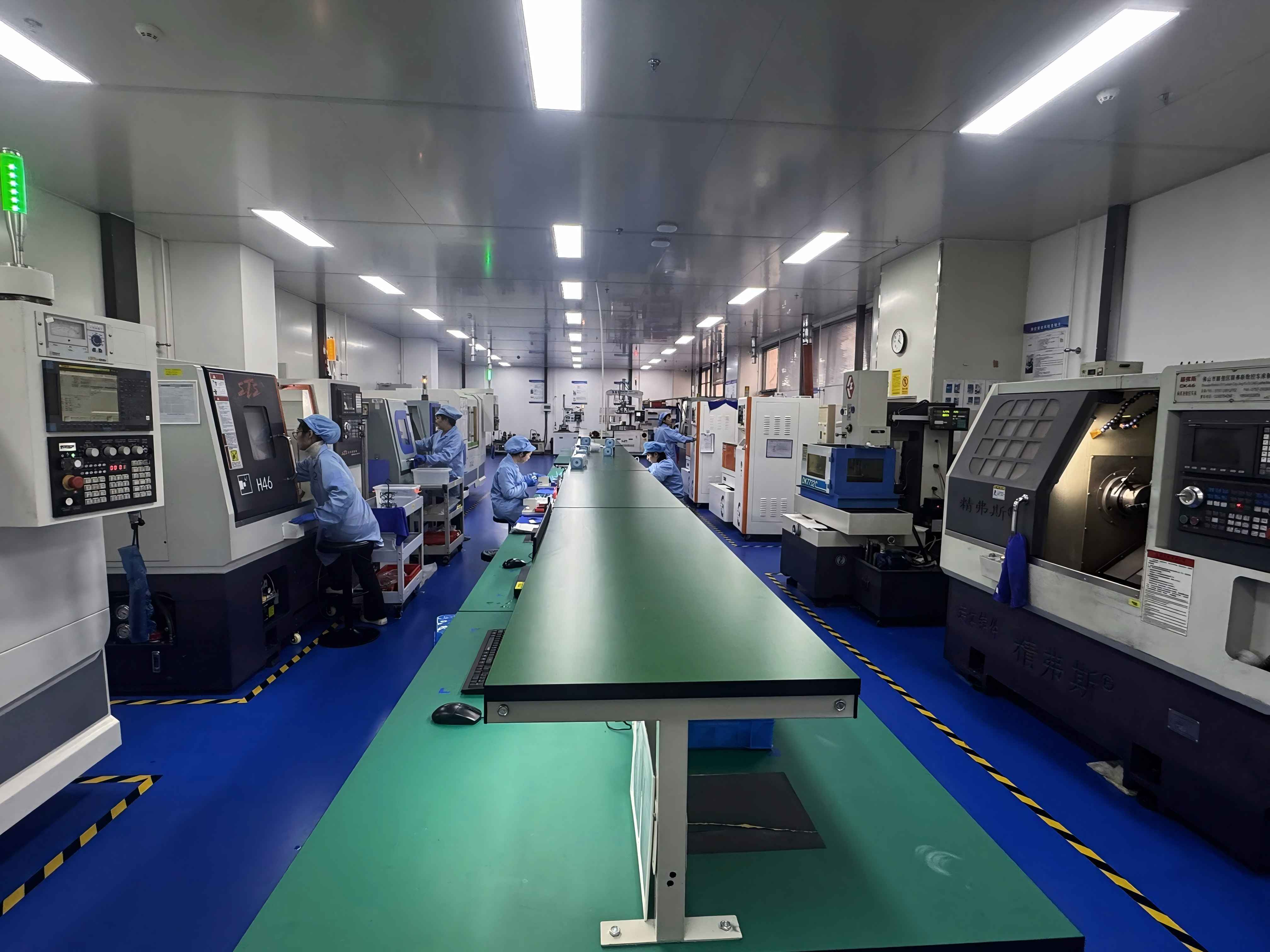
Next Step: Validate the Blade on Your Own Wafer
Review the specifications, request a sample, or ask for a quote for your cutting requirement. Standard models ship in 3–7 working days; customized specifications run 15–30 working days.
Email: shenxiangfei@ntwintime.com | Tel: +86 13851530812 | Website: en.wintime.net.cn
Product brochure (PDF): Download the WINTIME Dicing Blade brochure
Have Questions or Need More Details?
Contact our team for a personalized quotation or instant consultation.
Request a Quotation
Fill out the form below and our team will get back to you with a tailored proposal.
WhatsApp Direct Chat
Prefer to chat in real-time? Message us on WhatsApp for instant assistance & quick answers.
- Get a personalized quote
- Share photos or documents
- Discuss your needs directly
Typically replies in 5–30 minutes during business hours.