
Understanding Blade Bond Hardness: A Technical Guide for Low Loss Sawing
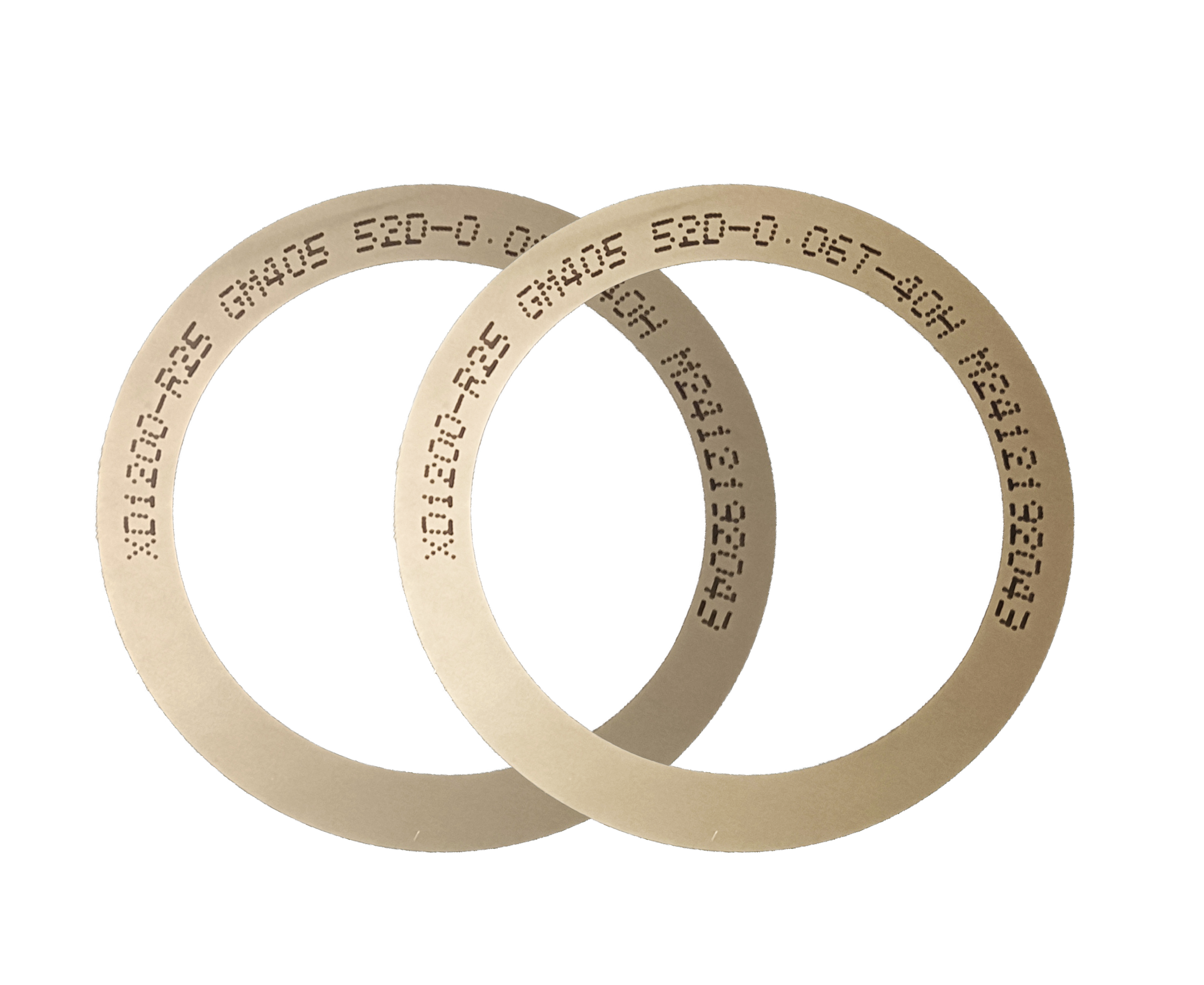
Bond hardness is the property that decides whether a diamond sawing blade finishes a production run at the same kerf width it started with. It governs how quickly the bond matrix releases worn diamond grains, how much heat stays at the cutting edge, and how much of a wafer, ceramic substrate, or alloy bar becomes debris instead of finished parts. In low loss sawing, where every micrometre of kerf is a cost, bond hardness is an engineering specification rather than a catalogue adjective.
This guide explains how blade bond hardness affects cut quality and tool life, how resin and metal bond families behave differently in production, which process steps convert a hardness specification into a stable process, and where the physical limits sit. The most important limit is thickness: ultra-thin slicing stays viable only while the blade body remains at or below 9 μm thick, a point at which bond behaviour rather than blade geometry alone controls the outcome.
WINTIME Semiconductor Technology Co., Ltd. is a China-based manufacturer of high-precision sawing blades and dicing blades, established in 2020 and operating a 34,000 m² production facility in Rugao City, Jiangsu Province, with an annual output of more than one million pieces and an export share of about 30%.
Problem Definition: Why Bond Hardness Decides Cut Quality and Tool Life
Bond hardness describes how strongly the bond matrix - the resin or metal system that holds the diamond superabrasive in place - resists wear during cutting. It cannot simply be maximised. It is a balance point that has to be matched to the workpiece material, the blade thickness, and the feed parameters of the saw.
Two failure modes, one variable
A bond that is too soft for the application releases diamond grains before they have done useful work. In production this appears as rapid blade wear, kerf widening as the rim thins, and drifting dimensional control across a batch. It is usually noticed first as edge chipping and inconsistent die strength rather than as an obvious blade failure.
A bond that is too hard for the application keeps dulled grains clamped in the matrix. Cutting forces rise, the blade removes material by friction as much as by abrasion, and heat builds at the rim. In a thin blade, the resulting deflection is the failure mode that ends the run. The same hardness value can therefore be correct in one setup and wrong in the next.
What a hardness value actually describes
On a finished blade, hardness is a measurable product property. WINTIME specifies HRC 65-70 for its SB-001 sawing blade, together with a resin/metal bond matrix, diamond superabrasive as the cutting medium, and a high-strength steel base. The same specification lists a thickness range of 8 μm to 50 μm, cutting accuracy of ±0.002 mm, spindle speeds of 30,000-60,000 rpm, and a chip removal rate of at least 1.2 mm³/s.
Where hardness stops being the deciding variable
Hardness governs wear; thickness governs what is physically possible. Ultra-thin slicing is not a thinner version of standard dicing, because at the low end of the thickness range the blade has so little material that bond retention, runout, and heat removal dominate the result. WINTIME's application requirements treat ultra-thin processing as one combined set of conditions: blade thickness of ≤9 μm, high wear resistance, low cutting loss, anti-static behaviour, high dimensional accuracy, long service life, and stable mass production. They are listed together because they only work together.
Industry Background: Bond Selection in a Market Moving Toward Thinner Substrates
Bond selection sits inside a market where both volume and substrate thinness are increasing. The global diamond saw blade market was valued at approximately USD 8.60 billion in 2025 and is expected to reach USD 10.16 billion by 2032, according to Maximize Market Research. The narrower wafer dicing blade segment was valued at USD 1.19 billion in 2024 by Market Research Intel, with growth attributed to semiconductor miniaturisation and the adoption of 300 mm wafers.
Within that market, bond families divide the work differently. Resin bond blades held a 42% share of the dicing blade market in 2024, while metal bond blades - the family used for harder materials such as SiC - accounted for 33%, according to market.us. The split reflects the trade-off described above: resin bonds dominate where low-damage cutting of standard semiconductor materials matters most, while metal bonds take on harder, more abrasive work where wear resistance is the limiting factor.
Blade construction is shifting alongside bond chemistry. Hubless dicing blades are increasingly dominant for 300 mm wafer processing because of their stability and reduced runout on thinner substrates below 50 µm, per Semiconductor Equipment Market Data. A hubless blade has less mechanical support to fall back on when cutting forces rise, which places more of the burden on the bond itself.
Application mix reinforces the trend. Optical communication and RF/optoelectronics applications accounted for 16% of dicing blade market share in 2024, equivalent to USD 69.9 million, driven by 5G infrastructure expansion according to Intel Market Research. These devices are frequently cut as thin, brittle optical materials, where chipping rather than wear tends to be the visible defect.
Standardisation is relevant to specification writing as well. ISO 22180:2019 categorises diamond tools, including sawing blades, and distinguishes between CVD diamond-coated and monocrystalline/polycrystalline types, according to the ISO classification. Buyers building technical requirements can reference that framework instead of relying only on supplier terminology.
The high-precision end of the semiconductor dicing blade market includes suppliers such as DISCO Corporation, Tokyo Seimitsu (Accretech), Advanced Dicing Technologies (ADT), and Asahi Diamond, per Credence Research. Chinese manufacturers have expanded export activity in parallel: China's exports of cutting blades grew between 2024 and 2025, with Vietnam increasing by USD 18 million and India by USD 12 million, according to OEC data.
WINTIME operates in this segment as a manufacturer of precision sawing blades and dicing blades, established in 2020, with a 34,000 m² facility, approximately 100 employees, a 35-engineer R&D team, annual output above one million pieces, and exports covering Southeast Asia, East Asia, North America, and the EU.
Detailed Solution: How WINTIME Engineers Bond Hardness for Low Loss Sawing
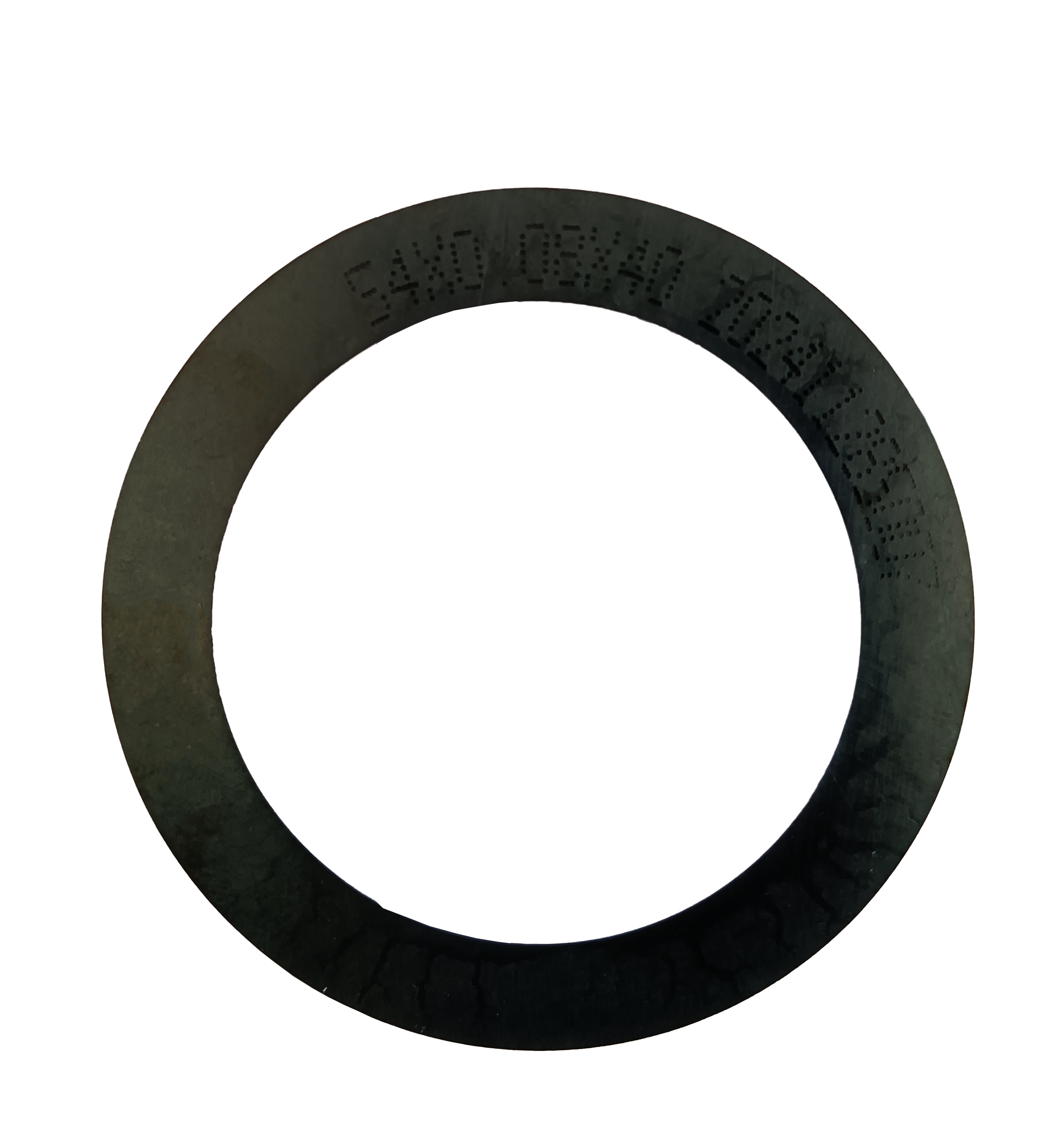
Bond hardness in a finished blade is the result of several manufacturing decisions made in sequence, followed by verification. None of them can be adjusted after shipment, which is why the specification has to be correct at the quotation stage.
1. Bond matrix: resin or metal
WINTIME supplies blades with either a resin or a metal bond matrix and treats the choice as a function of the material being cut. Metal bonds are generally selected where the workpiece is hard and abrasive and grains need to be retained longer, so the bond itself carries more of the wear. Resin bonds are generally selected where cutting damage is the limiting factor and earlier grain release helps keep the edge free-cutting. Because the same blade geometry can be produced with either bond system, the bond decision can be revisited without changing the machine setup.
2. Diamond abrasive grain size and concentration
Effective hardness is set by the abrasive as well as the bond. Grain size determines how large a chip each active grain takes, and concentration determines how many grains share the load at the rim. WINTIME customises diamond abrasive grain size and concentration for each application, and both parameters sit inside the standard customisation scope rather than requiring a special request.
3. Blade geometry: diameter, thickness, and spindle hole
Geometry defines what the blade can physically do before hardness enters the discussion. Customisation covers blade diameter, thickness, and spindle hole size, with thickness specified from 8 μm to 50 μm. The bottom of that range is where low loss sawing becomes a different engineering problem: application requirements for ultra-thin slicing call for a blade thickness of ≤9 μm, combined with high wear resistance, low cutting loss, anti-static behaviour, high dimensional accuracy, and stable mass production. A blade that is thin but wears quickly loses dimensional steadiness within a run, and a blade that resists wear but is too thick removes more material than the device design allows.
4. Coatings that change edge behaviour
Anti-rust, heat-dissipation, and wear-resistant coatings are available as customisation options. In thin-blade cutting they matter because there is very little blade material available to absorb or conduct heat away from the rim. A heat-dissipation coating changes how the bond behaves at temperature without altering the blade's nominal hardness, which makes it a useful second lever when a specification is close to its limit.
5. Verification: hardness, geometry, balance, and cutting simulation
Hardness and wear resistance are tested on a material testing machine. Geometry is verified with vernier calipers and a laser diameter gauge. Dynamic balance is checked on a high-speed dynamic balance tester. Cutting performance is confirmed in a simulation test on the actual workpiece material. For a buyer, the significance is straightforward: bond hardness and wear behaviour are measured on the production batch rather than declared on a datasheet alone.
6. The ultra-thin case: what ≤9 μm demands
WINTIME's completed Ultra-thin Wafer D Blade project achieved a blade thickness below 9 microns in the process, and the company reports that it is one of a limited number of Chinese manufacturers able to mass-produce at that level. The company holds two patent technologies, with annual output above one million pieces, monthly capacity of more than 800,000 pieces for standard specifications, and more than 80,000 pieces per month for customised and special-shaped products.
Step-by-Step Breakdown: Six Steps That Turn a Hardness Specification Into a Stable Process
Step 1 - Match the material to a bond family
Start from the workpiece. Metal bond blades are generally used for harder materials such as SiC, while resin bond blades carry the majority of standard semiconductor dicing work. Choosing the bond family first prevents the geometry and feed parameters from being specified around the wrong wear behaviour.
Step 2 - Fix thickness and geometry before ordering
Thickness defines kerf, and kerf defines material loss. Blade diameter, thickness, and spindle hole size should be locked before a quotation is requested. For ultra-thin work, the target is a blade thickness of ≤9 μm; for standard dicing, the usable range extends from 8 μm to 50 μm, with cutting accuracy specified at ±0.002 mm.
Step 3 - Mount, align, and control the environment
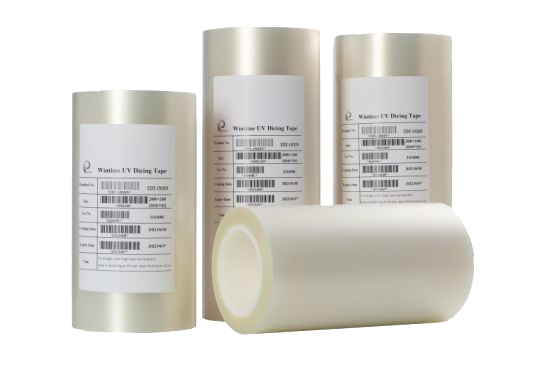
Cutting performance depends on how rigidly the workpiece is held. UV film mounting is used to fix the wafer or substrate before cutting, and the process is designed for an automatic dicing machine, a semiconductor cutting spindle, a UV tape mounting machine, wafer cleaning equipment, and wafer testing equipment. The intended working condition is a Class 100/1000 cleanroom at a constant 22 ± 2 °C and 45%-55% relative humidity, dust-free and anti-static.
Step 4 - Set spindle speed and feed for the bond
Spindle speed for WINTIME sawing blades is specified between 30,000 and 60,000 rpm, with high-speed spindle rotating cutting, dry or wet cutting, and precision feeding cutting as the operating modes. Feed rate is where bond hardness becomes visible: too fast for the bond and cutting forces rise, too slow and the bond glazes. The specification supports a chip removal rate of at least 1.2 mm³/s.
Step 5 - Verify blades against the specification before the run
Incoming verification should check the same properties the manufacturer controls: geometry, hardness and wear resistance, and dynamic balance. For high-volume lines, confirming balance before mounting avoids runout problems that would otherwise be attributed to the bond or to the feed settings.
Step 6 - Monitor wear across the run and adjust
Kerf drift, rising chipping, and increased spindle load are the practical indicators that a bond is behaving outside its design window. Because wear resistance is measurable, the corrective action can target the right variable - feed rate, coolant, or a different bond family or abrasive concentration - instead of replacing the blade blindly. WINTIME's after-sales scope includes cutting process matching and equipment adaptation support, with quality problem investigation and solution targeted within 48 hours.
Use Cases: Where Bond Requirements Change by Application
Semiconductor wafer dicing and ultra-thin wafer processing
Wafer dicing and scribing, semiconductor package cutting, and ultra-thin wafer processing are the applications where thickness tolerance is tightest. Hubless sawing blades are commonly used here because they reduce runout on thin substrates, and the DZY Series wafer sawing blade, DZR Series sawing blade, and DZR-S Series slotted sawing blade are the blade formats involved in this work. The controlling specification is the combination of ≤9 μm thickness and high wear resistance.
Functional ceramic substrate cutting
Functional ceramic sawing blades are used on brittle substrates where chipping, not blade wear, is usually the visible defect. Bond hardness matters here in the opposite direction from high-wear work: a bond that releases grains early enough keeps cutting forces low and reduces edge damage, while blade thickness still sets the kerf and the resulting material loss.
Optical communication device cutting
Optical communication sawing blades cut thin optical materials for devices in a segment that accounted for 16% of dicing blade market share in 2024, driven by 5G infrastructure expansion. Anti-static performance and dimensional accuracy are as relevant as wear resistance in these applications, because the parts are small and the tolerances are short.
Precision alloy component cutting
Precision alloy component cutting, including sawing blades for alloy materials, puts the emphasis back on wear resistance. Harder workpieces retain grains longer and load the bond more heavily, so metal bond constructions and wear-resistant coatings are typically part of the specification.
Comparison: Bond Families and Blade Specifications Side by Side
| Bond family | Share of dicing blade market, 2024 | Material fit | Wear behaviour | Availability and customisation |
|---|---|---|---|---|
| Resin bond | 42% (market.us) | Standard semiconductor dicing and general precision cutting | Generally releases worn grains earlier; favours low cutting forces and chipping control | Offered by WINTIME alongside metal bond; diamond grain size and concentration customisable |
| Metal bond | 33% (market.us); used for harder materials such as SiC | Hard and abrasive workpieces: hard ceramics, alloy materials, SiC-type substrates | Generally retains grains longer and resists bond wear better, which supports extended tool life | Available across DZY Series, DZR Series, and DZR-S Series blade formats; anti-rust, heat-dissipation, and wear-resistant coatings available |
The second reference that buyers need at quotation stage is the blade specification itself. The values below apply to the WINTIME SB-001 sawing blade and illustrate the level of definition a hardness specification should carry.
| Parameter | Specified value | Why it matters in low loss sawing |
|---|---|---|
| Hardness | HRC 65-70 | Sets the wear balance between grain retention and self-sharpening |
| Thickness range | 8 μm - 50 μm | Directly determines kerf width and material loss |
| Cutting accuracy | ±0.002 mm | Defines dimensional control across a production batch |
| Spindle speed | 30,000-60,000 rpm | Determines the surface speed the bond is designed to run at |
| Bond type | Resin / metal | Primary lever for matching wear behaviour to the material |
| Chip removal rate | ≥1.2 mm³/s | Indicates the feed range the blade can sustain without loading |
| Construction | Diamond superabrasive in a resin/metal bond matrix on a high-strength steel base | Explains where wear resistance and stiffness come from |
FAQ: Bond Hardness, Compliance, and Ordering Questions
Which standards and site conditions apply when specifying bond hardness?
Two layers apply. On the product side, ISO 22180:2019 categorises diamond tools, including sawing blades, and distinguishes between CVD diamond-coated and monocrystalline/polycrystalline types, giving buyers a classification framework for blade construction. On the process side, blade performance is specified for Class 100/1000 cleanroom conditions at a constant 22 ± 2 °C and 45%-55% relative humidity, dust-free and anti-static, on a high-speed spindle. Hardness and cutting accuracy hold their specified values inside those conditions; running the same blade outside them changes wear behaviour without changing the published specification.
Can bond hardness and blade geometry be tailored to a specific material?
Yes. WINTIME produces under OEM, ODM, and customised production models. The customisable parameters include blade diameter, thickness, and spindle hole size; bond type (metal or resin); diamond abrasive grain size and concentration; coating for anti-rust, heat-dissipation, or wear resistance; cutting performance such as cutting speed and service life; export and special packaging; and special-shaped, non-standard blade geometries. Capacity supports that flexibility: more than 800,000 pieces per month for standard specifications and more than 80,000 pieces per month for customised and special-shaped products, supported by a 35-engineer R&D team and two patent technologies.
What drives the cost of a bond-hardness specification?
Cost is quoted against specification and volume rather than published as a fixed list. The variables that move it are the bond family, diamond grain size and concentration, coating selection, non-standard geometry, and order quantity relative to the minimum order: 50 pieces for standard products and 300 pieces for customised products, with flexibility for long-term cooperative customers. Fixing the workpiece material, the required blade thickness, and the annual volume before requesting a quotation produces the most comparable figure.
How can a buyer validate a blade before committing to production volume?
Validation runs through the sales and technical team, who support cutting-process matching and equipment adaptation for new applications. Because standard products carry a minimum order of 50 pieces and customised products 300 pieces, trial quantities should be planned against those figures. Requests can be sent to shenxiangfei@ntwintime.com or via WhatsApp at +86 188 8805 3207, and the team can review material, thickness, and equipment details before a blade is specified.
What are the lead times, and what happens if a quality problem appears?
Standard products ship in 2-5 working days, while customised orders take 10-25 working days, adjustable for large orders. On the service side, quality problem investigation and solution are targeted within 48 hours, and the after-sales scope covers cutting process matching, equipment adaptation support, long-term supply and inventory support, application training for new customers, and replacement or compensation for defective products caused by quality problems. The full product and capability overview is available in the WINTIME brochure, and specification-based quotations can be requested directly from the team.
Conclusion
Bond hardness is the variable that connects three decisions that are usually made separately: which bond family suits the workpiece, which blade thickness the device design permits, and which feed parameters the process can hold. Get the balance right and the outcome is low loss sawing - stable kerf, controlled chipping, and predictable tool life. Get it wrong in either direction and the symptoms appear as wear, deflection, or edge damage that no amount of parameter tuning will fully correct.
The practical limit to keep in view is thickness. Ultra-thin slicing remains achievable only while blade thickness stays at or below 9 μm, and at that scale the bond matrix, not the blade outline, is doing most of the work. Specifying hardness as a measured value - HRC 65-70 in the WINTIME SB-001 specification, verified through hardness and wear resistance testing, geometry inspection, dynamic balance detection, and cutting simulation - is what makes the difference between a blade that is thin and a blade that is thin and stable.
Next Step: Match a Bond Specification to Your Material
Send the workpiece material, target blade thickness, and equipment details, and the WINTIME technical team will review the bond family, thickness, and coating combination that fits the process.
Email: shenxiangfei@ntwintime.com | Tel: +86 13851530812 | WhatsApp: +86 188 8805 3207
Website: en.wintime.net.cn | Address: No. 868, Fushou East Road, Rugao City, Jiangsu Province
Download the product and capability brochure: WINTIME Sawing Blade Brochure (PDF)