
Understanding UKCA and CE Marking When Buying Sawing Blades

A sawing blade order can clear every technical review and still stall at the documentation stage. The blade meets the thickness, kerf and bond specification; the price and lead time are agreed; then the importer asks one question the supplier cannot answer in writing — which conformity marking route covers this shipment, and what evidence supports it?
The confusion is structural rather than intellectual. CE, UKCA and EAC are not three grades of the same certificate. They are separate market-entry routes, each tied to a different territory and each placing the documentation obligation on a specific party. For a buyer of precision sawing blades, the transferable skill is not memorising logos. It is knowing which documents to request, which entity carries the obligation, and how to test whether a supplier's production record actually supports the claim being made.
Short answer: CE marking is the conformity route for products placed on the EU market; UKCA marking is the route used for products placed on the market in Great Britain; EAC marking applies within the Eurasian Economic Union. A blade and the dicing saw that runs it are separate products with separate conformity status. Whether a given blade needs a specific mark depends on its classification and on how it is placed on the market — so a supplier that can issue a named declaration, a traceable batch record and a stable specification is a materially lower compliance risk than one that only offers an image of a logo.
Why Blade Compliance Is Harder Than It Looks
Three specific frictions make sawing blade sourcing more compliance-sensitive than the product's size suggests.
One shipment, two products. A dicing saw is a machine. A sawing blade or dicing blade is a consumable cutting tool that is replaced on a schedule and is often re-ordered independently of the equipment. Buyers regularly transfer confidence from the machine to the blade, assuming that equipment conformity automatically covers the tooling. It does not. The blade has its own specification identity, its own article number and its own inspection record — or it has none of these.
The word “certified” is used loosely. A mark is not a document. In commercial correspondence, “CE certified” often functions as a courtesy phrase rather than a statement about a technical file. An importer cannot place a courtesy phrase in a compliance folder. What can be filed is a declaration naming the product and the responsible entity, a specification sheet tied to the article number, and the inspection or traceability records behind it.
The obligation lands on the importer. When goods are placed on a market, the entity placing them carries the responsibility to hold the supporting evidence. For most cross-border blade purchases, that entity is the importer or distributor, not the manufacturer overseas. This is the core of the matter: the importer inherits the risk of an incomplete file, and the only defence is upstream documentation produced at the factory.
Reframe the audit question. The useful question is not “does this factory hold a certificate?” but “can this factory produce, per article number and per batch, the specification sheet, the inspection records, the declaration where one applies, and a packaging specification that matches my market?” That question can be answered in writing, and it can be re-verified on the next order.
The Market Context Behind the Documentation Question
Documentation pressure is rising because blade trade itself is rising. The global diamond saw blade market was valued at approximately USD 8.60 billion in 2025 and is projected to reach USD 10.16 billion by 2032, according to Maximize Market Research. Within that, the semiconductor-facing segment is expanding on a different driver: Market Research Intel valued the global wafer dicing blade market at USD 1.19 billion in 2024, attributed to semiconductor miniaturisation and the wider adoption of 300 mm wafers. Published estimates for the dicing blade segment vary by scope — some sources count equipment, others count consumables only — so any single figure should be treated as indicative rather than definitive.
Product mix matters as much as volume. Resin bond blades held a 42% share of the dicing blade market in 2024, while metal bond blades used for harder materials such as SiC accounted for 33%, according to the Dicing Blade Market Report 2026 published by market.us. Optical communication and RF/optoelectronics applications represented 16% of that market in 2024, driven by 5G infrastructure expansion, per Intel Market Research. On the technology side, hubless dicing blades are increasingly dominant in 300 mm wafer processing because of their stability and reduced runout on thinner substrates below 50 µm, according to DataIntelo's diamond circular saw blades analysis.
Classification frameworks give buyers and suppliers a shared language. Diamond tools, including sawing blades, fall under ISO 22180:2019, which distinguishes between CVD diamond-coated and monocrystalline or polycrystalline types, per the ISO official publication. That kind of classification reference is useful because it moves a specification conversation away from adjectives and toward defined categories.
Trade flow completes the picture. China's exports of cutting blades to Vietnam, India and South Korea grew significantly between 2024 and 2025, with Vietnam increasing by USD 18 million and India by USD 12 million, according to OEC data. More cross-border blade movement means more importers encountering conformity documentation for the first time — and it means the supplier shortlist increasingly separates on paperwork rather than on cutting performance alone. The high-precision segment is competitive, with established participants including DISCO Corporation, Tokyo Seimitsu (Accretech), Advanced Dicing Technologies (ADT) and Asahi Diamond, as listed by Credence Research. Buyers comparing across this field should expect specification depth; the differentiator is who can also document it.
How WINTIME Builds Verifiable Production and Export Records
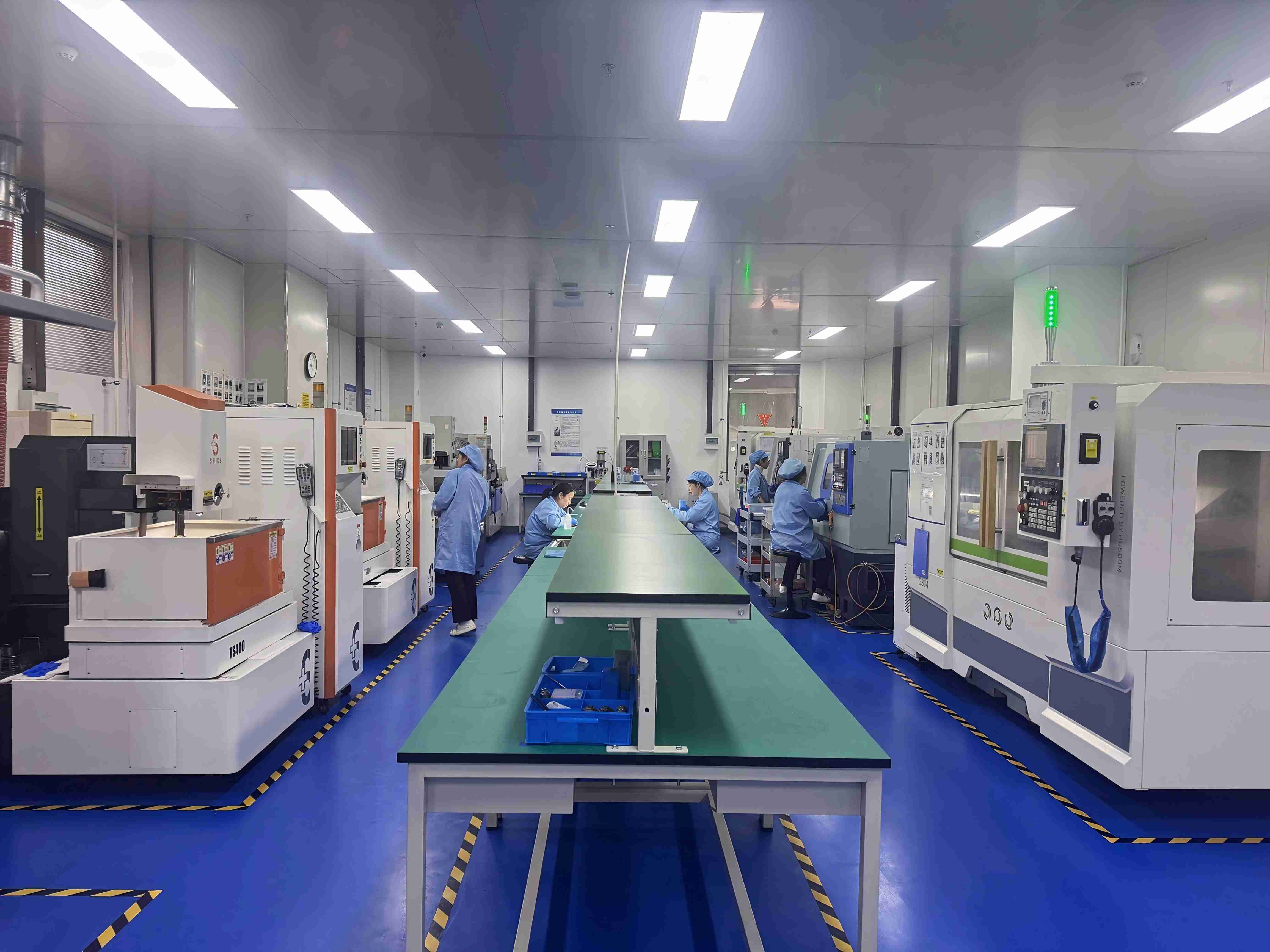
WINTIME Semiconductor Technology Co., Ltd. is a China-based manufacturer of high-precision sawing blades and dicing blades, founded in 2020 and operating from Rugao City, Jiangsu Province, where it integrates research, development, production and sales of precision cutting blades for semiconductor manufacturing, semiconductor packaging, optical communication, new functional materials, functional ceramics and alloy materials applications.
Several published facts about the company are directly relevant to a buyer's verification work, because they are checkable rather than promotional.
- Founded: 2020, with the 2023 Nantong WINTIME Semiconductor Special Materials Project adding a new factory and auxiliary buildings of 34,000 m².
- Annual capacity: more than 1 million pieces of dicing blades per year, with monthly capacity of 800,000+ pieces for standard specifications and 80,000+ pieces for customised and special-shaped products.
- People: 100 employees, including an R&D team of 35 engineers.
- Intellectual property: two patent technologies, with awards recorded in national, provincial and municipal science and technology and entrepreneurship competitions.
- Ultra-thin capability: the completed “Ultra-thin Wafer D Blade” project achieved a process thickness below 9 μm — a level the company states only a few domestic manufacturers can mass-produce.
- Export profile: exports account for 30% of sales, with main markets covering Southeast Asia, East Asia, North America and the EU.
For a European or North American importer, the significance of these numbers is not scale for its own sake. A facility size, a capacity figure, an engineer count and a patent record are all statements that can be attached to a supplier file and revisited at the next audit. They also indicate that the production base is organised around repeatable output rather than one-off jobs — which is the same precondition that makes consistent documentation possible.
The application environment the blades are built for is similarly specific. Products are designed for Class 100/1000 clean room conditions with constant temperature of 22±2℃, constant humidity of 45%–55%, dust-free and anti-static operation, and high-speed spindle environments. Special requirements in these applications include ultra-thin blade thickness of 9 μm or less, high wear resistance, low cutting loss, anti-static properties, high dimensional accuracy, long service life and stable mass production. The product's functional role in that setting is to deliver high-precision wafer cutting, ultra-thin slicing, a narrow kerf, low chipping, high-efficiency cutting and stable dimensional control.
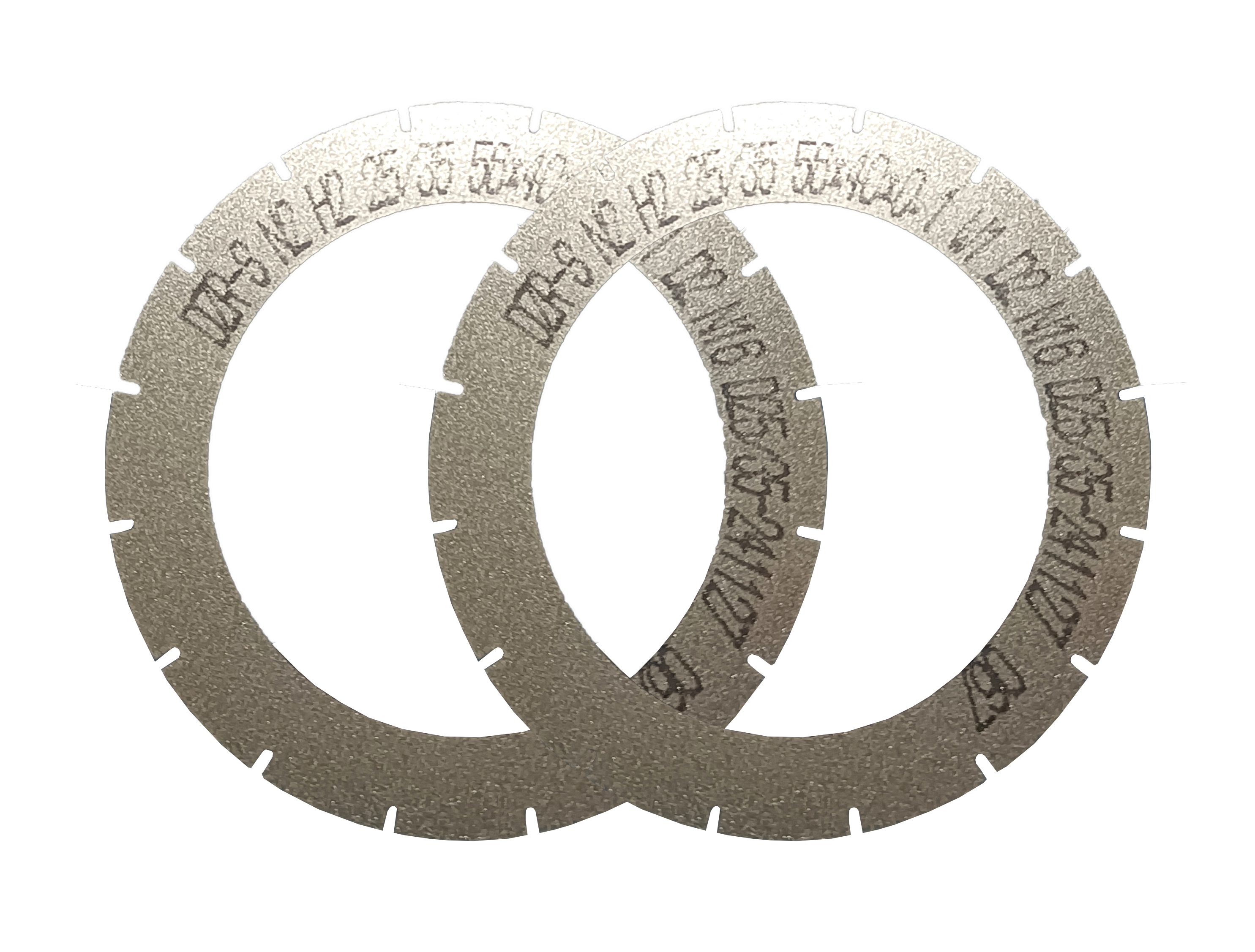
Quality control is where a specification becomes a record. WINTIME's published control process covers geometric dimension inspection using vernier calipers and laser diameter gauges, hardness and wear resistance testing on a material testing machine, dynamic balance detection on a high-speed dynamic balance tester, and cutting performance simulation testing against the actual workpiece material. Those four stages are what allow a blade to be described by parameter rather than by impression — and they are the records an importer should ask to see attached to a specific article number.
The export side of the operation is configured for cross-border supply. Customisation includes export packaging and special packaging for export, alongside blade diameter, thickness and spindle hole size, bond type, diamond abrasive grain size and concentration, coating options for anti-rust, heat dissipation and wear resistance, cutting performance targets, and non-standard special-shaped blade geometry. After-sales commitments include technical support for cutting process matching and equipment adaptation, quality problem investigation and solution within 48 hours, customised service for bulk procurement customers, long-term supply guarantee and inventory support, product application training for new customers, and replacement and compensation for defective products caused by quality problems.
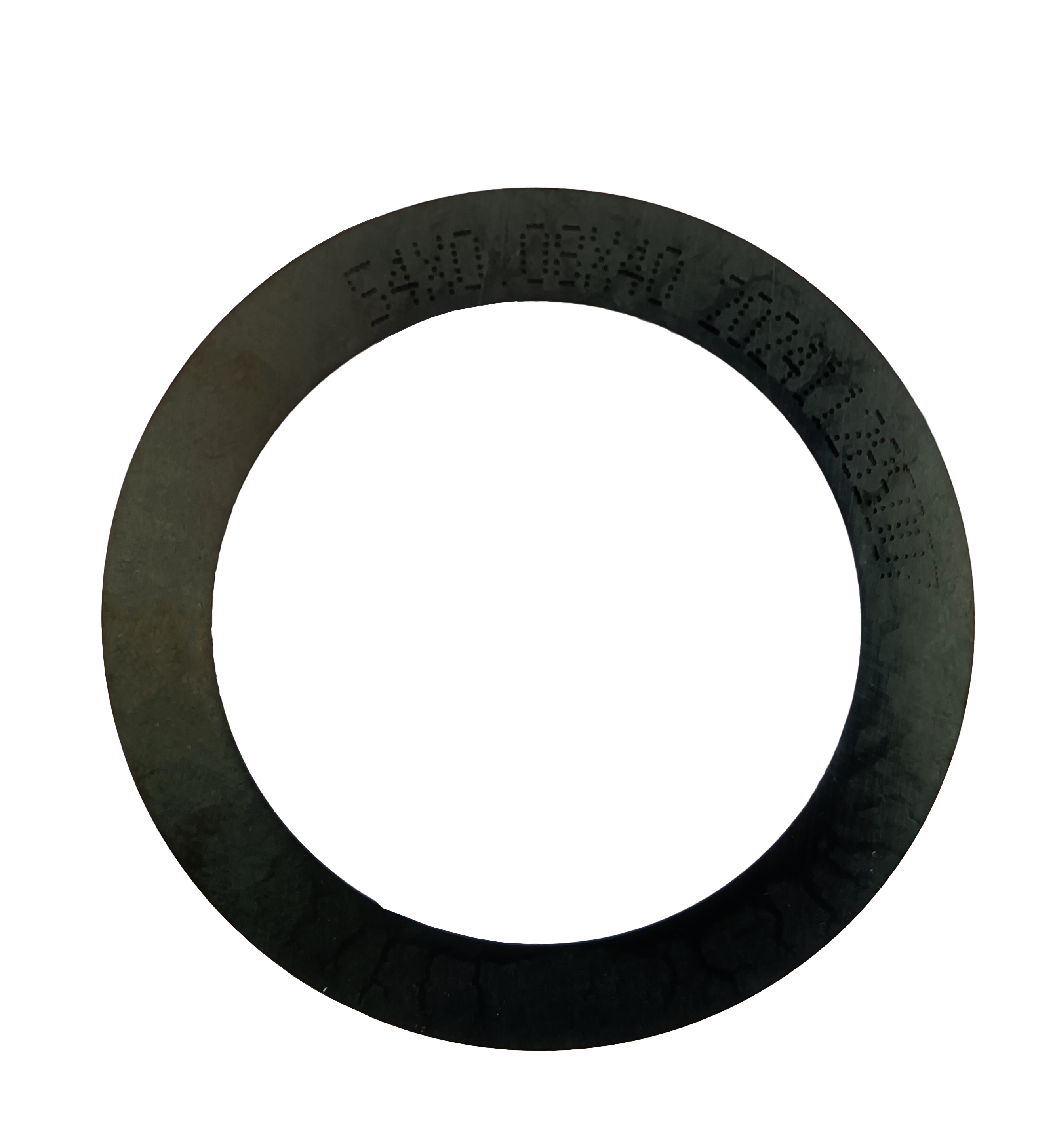
Core specification reference
| Specification field | Published value |
|---|---|
| Product | Sawing Blade (model SB-001) |
| Blade type range | Diamond Sawing Blade, Precision Sawing Blade, Semiconductor Sawing Blade, Circular Sawing Blade, Hubbed Sawing Blade, Hubless Sawing Blade, Flanged Sawing Blade, Serrated Sawing Blade, DZY Series Wafer Sawing Blade, DZR Series Sawing Blade, DZR-S Series Slotted Sawing Blade |
| Thickness range | 8 μm – 50 μm |
| Cutting accuracy | ±0.002 mm |
| Spindle speed | 30,000 – 60,000 rpm |
| Hardness | HRC 65–70 |
| Bond type | Resin / metal |
| Chip removal rate | ≥1.2 mm³/s |
| Material | Bond matrix: resin / metal; abrasive: diamond superabrasive; base: high-strength steel |
| Applicable industries | Semiconductor manufacturing, semiconductor packaging, precision electronic component processing, optical ceramic cutting |
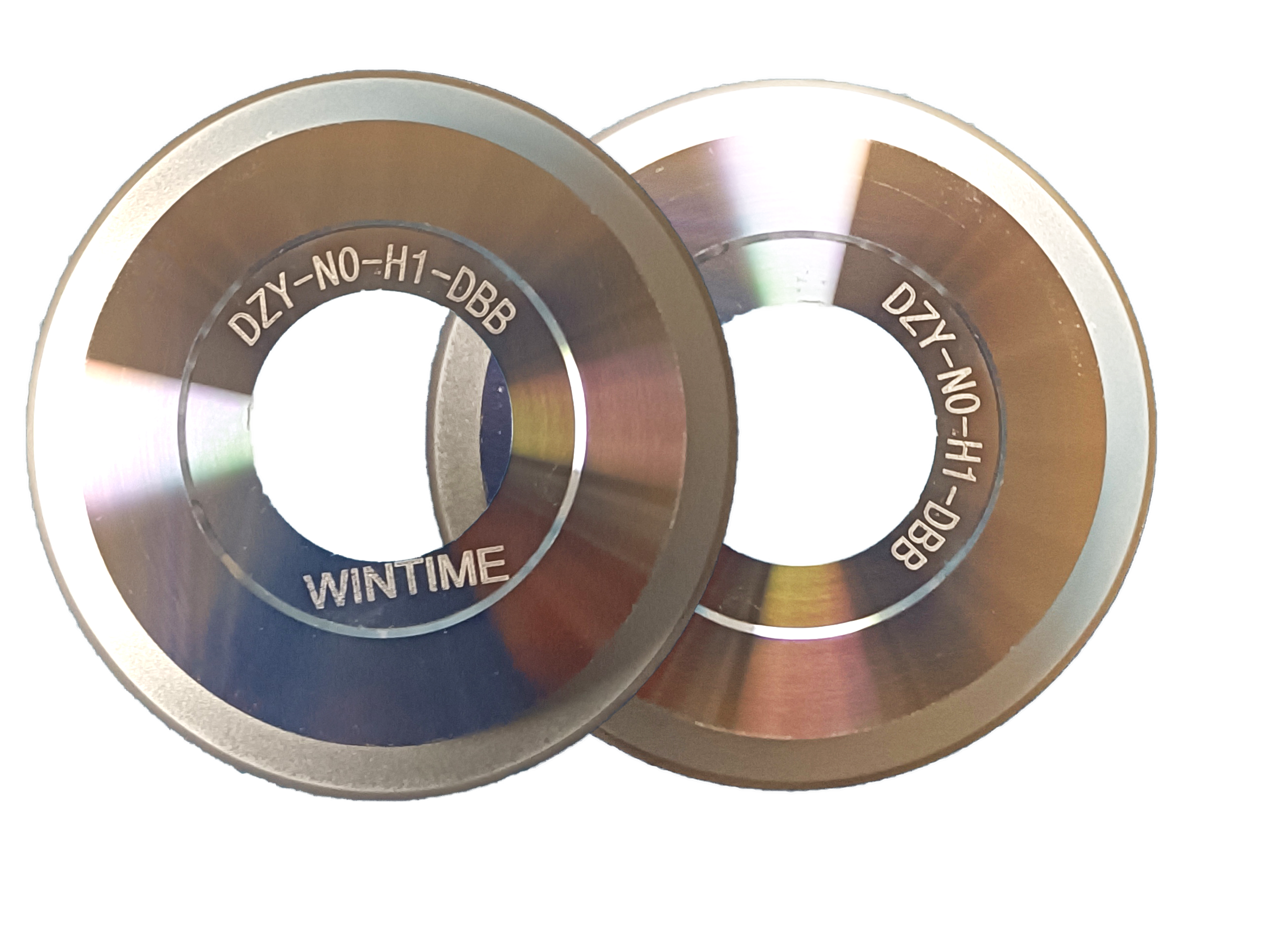
Step-by-Step: Verifying a Sawing Blade Supplier for EU or UK Entry
The following sequence is written from the importer's side of the transaction. It assumes you have already selected a blade specification and are now building the file that supports the shipment.
Step 1 — Classify the product before you classify the mark
Establish what the blade is as a product, and separately what the machine it runs in is. Classification determines which product legislation, if any, applies. Reference frameworks such as ISO 22180:2019 for diamond tools help here, because they define categories rather than claims. Do not assume the machine's conformity status transfers to the blade or to the tape and packaging supplied with it.
Step 2 — Identify the entity placing the product on the market
In most blade import transactions, this is the importer or the local distributor, not the overseas manufacturer. Write that entity's name into the file before ordering. If the arrangement involves an authorised representative, confirm the appointment in writing rather than by implication.
Step 3 — Request documents, not assurances
Ask for the specification sheet with the article number, the inspection records for the relevant production batch, a declaration of conformity where one applies to your market, and the packaging specification. A supplier that answers with a picture of a logo has answered a different question.
Step 4 — Match the document to the article number
A declaration for a generic blade family is weak evidence for a specific 8 μm slotted blade. Match the document to the exact geometry, bond type and thickness you are buying. This is also where series naming discipline matters — DZR-S Series Slotted Sawing Blade, DZR Series Sawing Blade and DZY Series Wafer Sawing Blade are distinct products and should be referenced distinctly in paperwork.
Step 5 — Verify the production evidence behind the document
Ask which inspection stages stand behind the blade. WINTIME's documented stages are geometric dimension inspection, hardness and wear resistance testing, dynamic balance detection, and cutting performance simulation testing. Each stage answers a different buyer question: dimension answers fit; hardness and wear answer life; dynamic balance answers runout behaviour at spindle speed; simulation answers behaviour in your material stack.
Step 6 — Confirm packaging, labelling and delivery
Export packaging is a specification item, not an afterthought, particularly for blades under 10 μm thick. Confirm the packaging format, the labelling content and the outer carton information against your market's requirements. Then confirm timing: WINTIME publishes 2–5 working days for standard products and 10–25 working days for customised orders, adjustable for large orders.
Step 7 — Retain a reference blade and the file
Keep one blade from the first accepted batch, together with the specification sheet and inspection record, as the reference for subsequent orders. Compliance is a continuity problem, not a one-time event. A reference sample converts the next delivery into a comparison rather than a fresh judgement.
Marking Routes at a Glance: CE, UKCA and EAC
The table below is an orientation for procurement planning. It is not a legal determination, and it does not decide which route your specific blade falls under.
| Marking | Market it relates to | What a buyer should request | Practical note |
|---|---|---|---|
| CE | Products placed on the EU / EEA market | Declaration naming the product and the responsible entity; technical documentation reference; batch or lot traceability | Applies to products covered by the relevant EU product legislation; scope depends on product classification |
| UKCA | Products placed on the market in Great Britain (England, Scotland, Wales) | Declaration for the GB market; technical file reference; importer or responsible entity details | A separate route from CE; arrangements in Northern Ireland differ from those in Great Britain |
| EAC | Products placed on the market in Eurasian Economic Union member states | Certificate or declaration of conformity issued under EAEU rules; marking applied to product or packaging | Applies to regulated product categories within the EAEU |
Confirm the applicable route for your specific blade, machine interface and packaging configuration with a compliance advisor or a conformity assessment body. Marking scope is determined by classification and by the way the product is placed on the market, and it can differ between a tool supplied to an OEM and the same tool supplied as an aftermarket replacement.
What each verification document actually proves
| Document | What it proves | What it does not prove |
|---|---|---|
| Specification sheet with article number | That the buyer and supplier agree on the exact geometry, thickness, bond and tolerance | That the shipped batch matched the specification |
| Batch inspection record | That dimensional, hardness, balance and performance checks were performed | That the checks were performed on the delivered lot rather than a reference lot |
| Declaration of conformity (where applicable) | That a named entity accepts responsibility for the product under the relevant market rules | That the blade's cutting performance suits a specific material or spindle setup |
| Packaging specification | That handling, protection and labelling were defined for export | That local labelling requirements are fully met in every destination market |
| Reference blade retained by the buyer | That future deliveries can be compared against a physical accepted baseline | That the supplier's process will remain unchanged without notification |
Three Import Scenarios Where Marking Questions Decide the Order
Scenario 1 — An EU dicing house buying sub-9 μm blades for ultra-thin wafer processing
The technical requirement is fixed: blade thickness of 9 μm or less, low chipping, anti-static behaviour, high dimensional accuracy and stable mass production in a Class 100/1000 clean room at 22±2℃ and 45%–55% relative humidity. The compliance requirement is equally fixed: the EU importer is the entity placing the product on the market and needs an article-specific file. In this scenario the supplier shortlist usually narrows to manufacturers who can name the series, state the thickness range and provide the inspection stage behind each parameter — for example a DZR-S Series Slotted Sawing Blade quoted with an 8–50 μm thickness range and ±0.002 mm cutting accuracy. Where a supplier cannot separate the blade file from the machine file, the importer ends up building the gap themselves.
Scenario 2 — A UK distributor assembling a catalogue for optical communication cutting
A distributor serving optical communication device manufacturers needs coverage across optical communication cutting, functional ceramic cutting and alloy material cutting. The GB market routing question is separate from the EU one, and the distributor typically needs declarations and technical references for each product family they list — DZY Series wafer blades, DZR series blades and slotted variants are different line items with different geometry. Because optical communication and RF/optoelectronics represented 16% of the dicing blade market in 2024, per Intel Market Research, catalogue breadth is commercially attractive; the constraint is that each line item must carry its own documentation rather than sitting under a general supplier statement.
Scenario 3 — A North American importer supplying both US and EU plants
An importer with EU customers needs a single supplier whose documentation can be split cleanly by destination market, because the EU-facing portion carries the market-placement obligation. Hubless blade configurations are increasingly specified for 300 mm wafer processing because of stability and reduced runout on substrates below 50 µm, per DataIntelo. Where a supplier already exports 30% of sales across Southeast Asia, East Asia, North America and the EU, as WINTIME does, the practical benefit is that export packaging, labelling and specification formats have been exercised across multiple markets rather than assembled for a first shipment.
Frequently Asked Questions
Do sawing blades need CE or UKCA marking to enter the EU or the UK?
A sawing blade is supplied as a consumable cutting tool, while the dicing or sawing machine that runs it is a separate product with its own conformity status — a mark on the machine does not automatically extend to the blade. Whether a blade itself requires a specific mark depends on how it is classified under the applicable product legislation and on which entity places it on the market. What a buyer can control is the document set: a specification sheet tied to the article number, batch inspection records, a declaration where one applies, and a packaging specification. WINTIME's documented quality-control process covers geometric dimension inspection, hardness and wear resistance testing, dynamic balance detection and cutting performance simulation testing across its blade range, including the DZY Series Wafer Sawing Blade, DZR Series Sawing Blade, DZR-S Series Slotted Sawing Blade, SZ Series Resin Dicing Blade and JS Series Metal Dicing Blade.
What production capability can a sawing blade buyer verify before placing an order?
WINTIME Semiconductor Technology Co., Ltd. was founded in 2020 and manufactures from Rugao City, Jiangsu Province, following the 2023 Nantong WINTIME Semiconductor Special Materials Project that added a new factory and auxiliary buildings of 34,000 m². Published capability figures include annual output of more than 1 million dicing blades, monthly capacity of 800,000+ pieces for standard specifications and 80,000+ pieces for customised and special-shaped products, 100 employees and an R&D team of 35 engineers. The company holds two patent technologies, and its completed “Ultra-thin Wafer D Blade” project reached a process thickness below 9 μm. Customisation scope covers blade diameter, thickness and spindle hole size, bond type, diamond abrasive grain size and concentration, coating, cutting performance targets, export packaging and non-standard blade geometry.
What are the minimum order quantities and how is order scope defined?
Published MOQ thresholds are 50 pieces for standard products and 300 pieces for customised products, with flexibility for long-term cooperative customers. Order scope is defined by the specification fields you fix: diameter, thickness, spindle hole size, bond type, abrasive grain size and concentration, coating and packaging. Because customised blades are produced against those fields, the practical approach for a first order is to lock the specification with the supplier's technical support team before confirming quantity, rather than adjusting parameters after production begins.
Can a blade specification be validated before committing to full production volume?
A first validation quantity is feasible because the standard-product MOQ starts at 50 pieces. For projects where the blade must match a particular dicing machine, spindle speed and material stack, WINTIME provides technical support for cutting process matching and equipment adaptation, and product application training for new customers. Where a quality problem occurs, the company's stated after-sales process covers investigation and solution within 48 hours, with replacement and compensation for defective products due to quality problems. Retaining one blade from the validated batch as a physical reference is the simplest way to make later deliveries comparable.
How long does delivery take, and how do I start a compliance-focused inquiry?
Published lead time is 2–5 working days for standard products and 10–25 working days for customised orders, adjustable for large orders, with long-term supply guarantee and inventory support available for repeat customers. To start, send your target specification, material stack, destination market and the document set your importer requires, so that the quotation and the paperwork are prepared against the same brief. The WINTIME product and capability brochure can be downloaded here: WINTIME brochure (PDF). Direct contact: shenxiangfei@ntwintime.com, tel +86 13851530812, or WhatsApp +8618888053207.
Conclusion
CE, UKCA and EAC are not competing quality labels. They are market-entry routes pointing at different territories, and the question that actually protects an importer is a documentation question: which entity is placing the product on the market, what document set supports this specific article number, and which inspection records stand behind the parameters on the sheet.
Blades are consumables, ordered repeatedly and often urgently, which is precisely why the file should be built once and reused. A supplier that publishes its capacity, its engineer count, its patent record and its inspection stages gives a buyer something to verify. A supplier that responds with adjectives does not. For importers shipping into the EU, the UK or the EAEU, the shortlist that survives the compliance review is usually the one that was over-documented from the first quotation.

Next step: request a specification and document pack
Send your blade specification, material stack and destination market, and WINTIME will respond with the matching series recommendation, published parameters and the documentation your importer needs — including export packaging and label details. Standard-product MOQ is 50 pieces; customised MOQ is 300 pieces.
en.wintime.net.cn | Download the WINTIME brochure | shenxiangfei@ntwintime.com | WhatsApp +8618888053207
Address: No. 868, Fushou East Road, Rugao City, Jiangsu Province, China.
Have Questions or Need More Details?
Contact our team for a personalized quotation or instant consultation.
Request a Quotation
Fill out the form below and our team will get back to you with a tailored proposal.
WhatsApp Direct Chat
Prefer to chat in real-time? Message us on WhatsApp for instant assistance & quick answers.
- Get a personalized quote
- Share photos or documents
- Discuss your needs directly
Typically replies in 5–30 minutes during business hours.