
What Exactly Is a Sawing Blade? High-Precision Cutting Explained
A sawing blade is a thin, rotating cutting tool that separates hard or high-value materials with a very narrow cut. In high-precision manufacturing it is not a toothed saw. It is a diamond-abrasive disc — commonly 8 μm to 50 μm thick in WINTIME's SB-001 specification — mounted on a high-speed spindle and fed through the workpiece at a controlled rate, removing material by grinding rather than by knocking it out with teeth.
Two numbers decide whether a blade belongs in precision work: kerf, the width of the channel it cuts, and chipping, the micro-damage left along the cut edge. WINTIME Semiconductor Technology specifies a cutting accuracy of ±0.002 mm and a chip removal rate of ≥1.2 mm³/s for its standard sawing blade range — the kind of envelope that semiconductor fabs, optical device makers, ceramic substrate producers and precision alloy processors actually buy against.
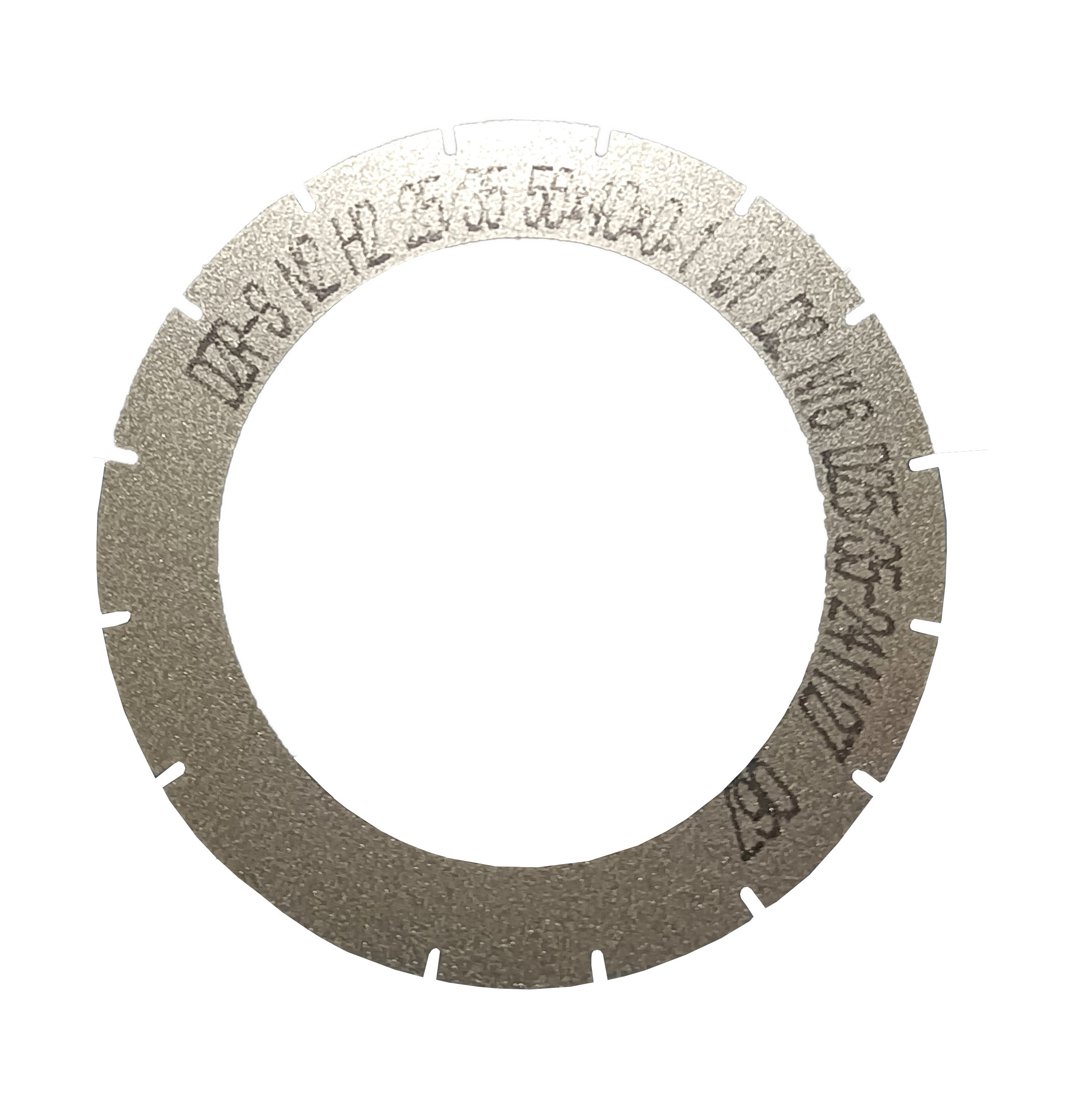
This article explains what a sawing blade is, how it is built and how it cuts, which specifications are fixed by your process versus which ones you can still negotiate, and where the tool is applied across semiconductor, optical, ceramic and alloy production. It is written for process engineers, procurement managers and OEM buyers working at the research and evaluation stage.
Problem Definition: Why "Sawing Blade" Is So Often Misread
Two separate problems hide behind the term "sawing blade," and both cost buyers time and yield.
The first is category confusion. In general industry, a saw blade is a toothed circular blade for wood or metal. In precision manufacturing, a sawing blade is a diamond-abrasive disc used on a dicing, slicing or scribing spindle. The same tool family also appears under a second name: WINTIME lists sawing blade and dicing blade as its two main product categories, and its type range covers diamond, precision, semiconductor, circular, hubbed, hubless, flanged and serrated blades, along with DZY Series wafer sawing blades, DZR Series sawing blades and DZR-S Series slotted sawing blades. Buyers who search one term and receive quotations for the other frequently assume they are comparing different products when they are comparing naming conventions.
The second is constraint confusion. Buyers new to the category often treat every line of a blade specification as negotiable. In practice, precision cutting splits cleanly into two lists:
- Fixed by the process: kerf and thickness budget, cutting accuracy, spindle speed range, and the cleanliness class of the working environment.
- Selectable by the buyer: bond family, diamond grain size and concentration, coating, cutting-performance targets, packaging, and special-shaped blade geometry.
Negotiating the wrong list creates failures that surface later as chipping, blade breakage or yield loss rather than as an obvious purchasing error. Asking for a thinner blade does not create street width that is not there, and accepting a bond that cannot survive the workpiece does not improve cost per accepted part.
Industry Background: A Growing Market With Tightening Tolerances
Precision sawing sits inside a large and still-expanding tool category. The global diamond saw blade market was valued at approximately USD 8.60 billion in 2025 and is expected to reach USD 10.16 billion by 2032, according to Maximize Market Research. The semiconductor-focused slice of that market is smaller but far more demanding: the global wafer dicing blade market was valued at USD 1.19 billion in 2024 by Market Research Intel, driven by semiconductor miniaturization and the adoption of 300 mm wafers.
Estimates for this segment vary significantly depending on what an analyst counts as a blade. Published figures for the same year range from roughly USD 0.44 billion to USD 1.31 billion, because some scopes include only consumable blades while others include adjacent equipment and services. Any single market number should therefore be read as a scope statement, not as a fixed fact.
Three structural trends change what buyers can specify:
- Ultra-thin substrates. Hubless dicing blades are increasingly dominant for 300 mm wafer processing because of their superior stability and reduced runout on thinner substrates below 50 µm.
- A mixed bond landscape. Resin bond blades held a 42% share of the dicing blade market in 2024, while metal bond blades — used for harder materials such as SiC — accounted for 33%, according to market.us.
- Demand beyond semiconductors. Optical communication and RF/optoelectronics applications accounted for 16% of dicing blade market share in 2024, a value of USD 69.9 million, driven by 5G infrastructure expansion.
Supply patterns are shifting as well. China's exports of cutting blades to Vietnam and India grew between 2024 and 2025 by USD 18 million and USD 12 million respectively, according to OEC data — a signal that precision tool sourcing is diversifying. WINTIME Semiconductor Technology Co., Ltd. is part of that shift. Founded in 2020 and based in Rugao, Jiangsu Province, the company operates a 34,000 m² facility with a 35-engineer R&D team, reports annual output of one million pieces, and exports roughly 30% of production to Southeast Asia, East Asia, North America and the EU. Its completed ultra-thin wafer D blade project reached a blade thickness below 9 microns, and its production capacity exceeds one million dicing blades per year.
On the standards side, ISO 22180:2019 is the published reference for diamond tools including sawing blades, and it distinguishes between CVD diamond-coated and monocrystalline/polycrystalline types. That distinction is commercially useful: it gives buyers a shared vocabulary when comparing diamond type across suppliers.
What a Sawing Blade Is Made Of
A precision sawing blade combines three functional materials, and each one constrains a different part of the process.
- Diamond superabrasive — the cutting edge. Grain size and concentration determine how aggressively the blade cuts and how smooth the resulting edge is.
- Bond matrix — resin or metal. The bond holds the diamond grit and wears at a controlled rate to expose fresh abrasive. Bond choice is the primary match between blade and workpiece.
- Base — high-strength steel. Carries the blade and transmits spindle torque; outer diameter and spindle-hole geometry are formed into the base.
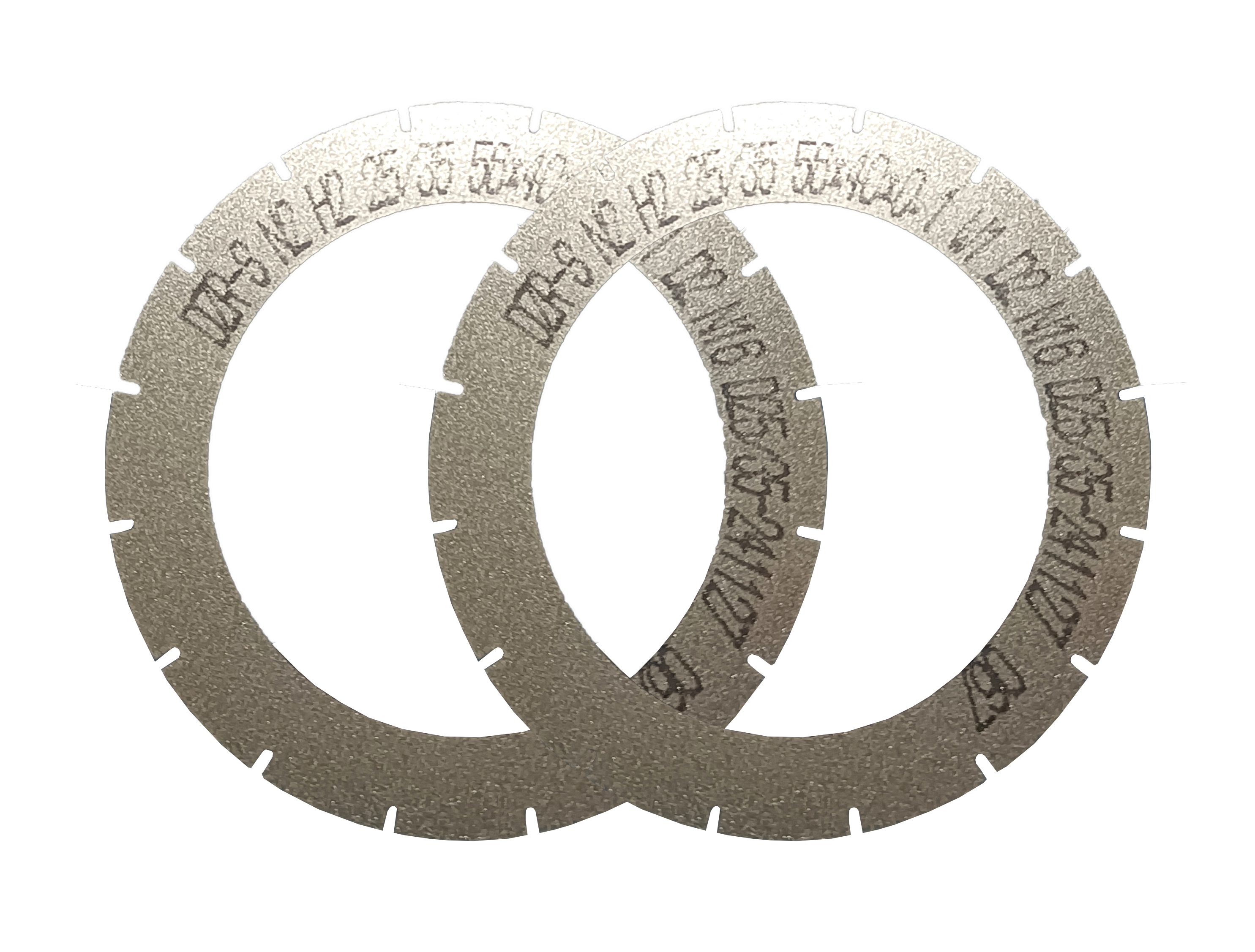
Construction families then combine these materials in different ways. WINTIME's product type range includes diamond sawing blades, precision sawing blades, semiconductor sawing blades, circular sawing blades, hubbed and hubless sawing blades, flanged and serrated types, plus DZY Series wafer sawing blades, DZR Series sawing blades and DZR-S Series slotted sawing blades. Across the wider industry, electroformed hard blade constructions form a further family that is often chosen when an ultra-thin profile has to be held over a long production run.
How a Sawing Blade Actually Cuts
The mechanism is grinding at speed, not sawing with teeth. The blade is mounted on a semiconductor cutting spindle, rotated at high speed, and fed into the workpiece under precision feed control. Diamond grit at the blade's outer edge removes a shallow layer per pass while the bond gradually recedes to expose new grains. In production, cutting is carried out by an automatic wafer dicing machine running continuously, with parts typically mounted on UV tape, then cleaned and inspected on dedicated wafer equipment.
WINTIME's SB-001 specification shows the working envelope that constrains the rest of the process:
| Parameter | Specification (WINTIME SB-001) | What it constrains in your process |
|---|---|---|
| Blade thickness | 8 μm – 50 μm, with an ultra-thin option ≤9 μm | Kerf width and the feature or street budget available on the workpiece |
| Cutting accuracy | ±0.002 mm | Position of the cut relative to streets, features and die edges |
| Spindle speed | 30,000 – 60,000 rpm | Compatibility with the cutting spindle and dicing machine |
| Blade hardness | HRC 65–70 | Wear behaviour and dimensional stability across a production run |
| Bond type | Resin / metal | Match between blade and workpiece material |
| Chip removal rate | ≥1.2 mm³/s | Throughput and the choice between dry and wet cutting |
| Working environment | Class 100/1000 cleanroom; 22±2 °C; 45%–55% RH; dust-free and anti-static | Facility readiness before the blade is even installed |
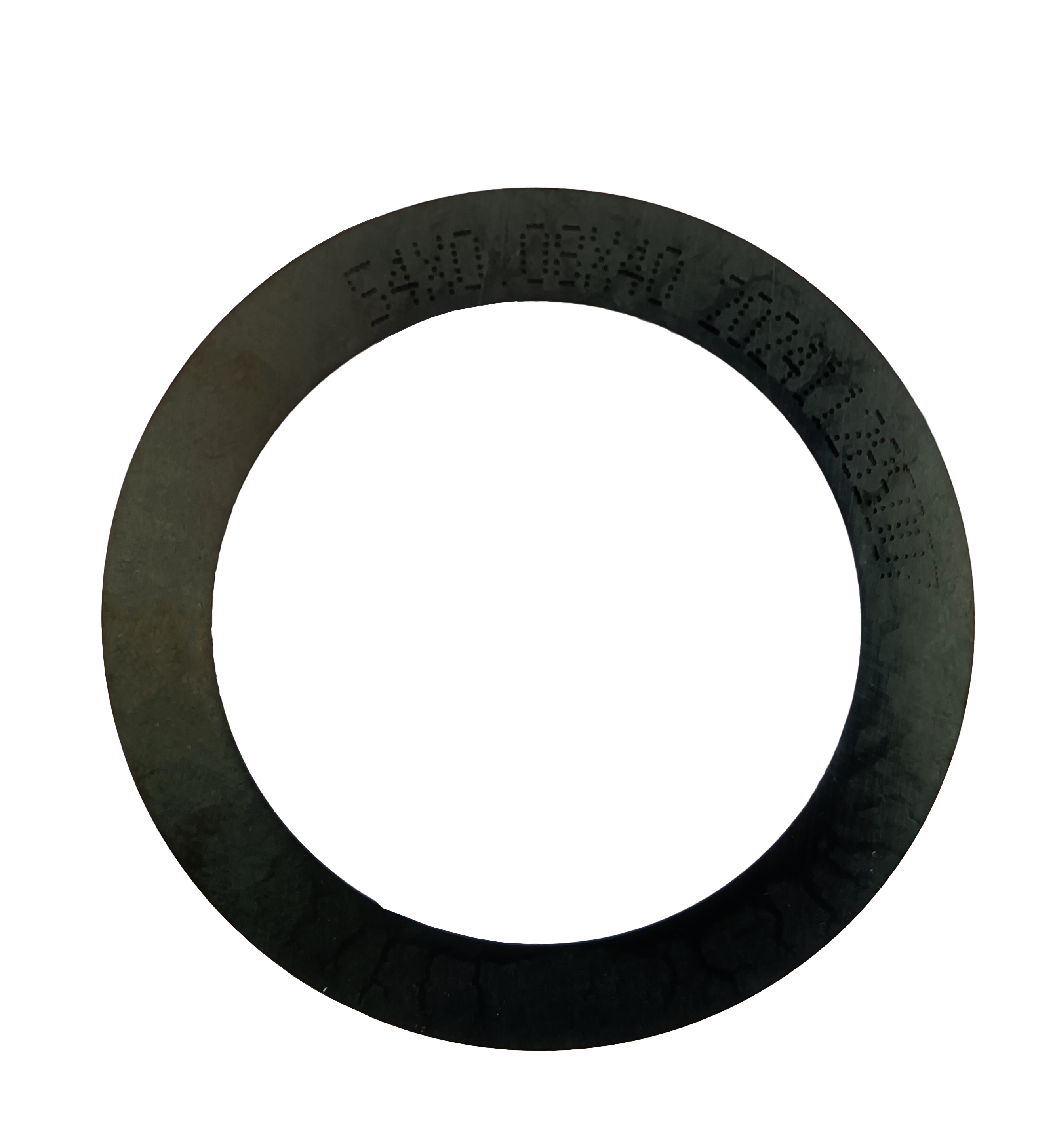
The environment row is the one buyers most often overlook. A blade validated in a Class 100/1000 cleanroom at 22±2 °C and 45%–55% relative humidity may behave differently on a line where temperature and static control are loose, so facility conditions belong in the specification rather than in the background.
Step-by-Step: How to Specify a Sawing Blade Without Opening a Process Window
- Define the workpiece and the kerf budget first. Record the material, its thickness, and the minimum street or feature width the blade must leave intact. If the budget allows only a few microns of kerf, thickness becomes a fixed constraint rather than a negotiable line item.
- Choose the bond family before the numbers. Resin bond blades held 42% of the 2024 dicing blade market and metal bond blades 33%, with metal bond commonly specified for harder materials such as SiC. The bond defines how the abrasive is retained and how the blade behaves on your material.
- Fix the geometry. Blade diameter, blade thickness and spindle hole size are the three dimensions that must physically match the machine and the workpiece. WINTIME treats all three as customizable parameters rather than catalogue-only values.
- Select diamond grain size and concentration. These two settings control the balance between cutting speed and edge quality, and they belong to the selectable list — you can trade one against the other without redesigning the tool.
- Match the machine and the environment. Confirm spindle capability against the 30,000–60,000 rpm working envelope, verify UV tape mounting, cleaning and testing equipment, and check that the area meets the Class 100/1000, 22±2 °C and 45%–55% RH conditions used for precision cutting.
- Validate before scaling. WINTIME runs four documented quality-control steps — geometric dimension inspection with vernier caliper and laser diameter gauge, hardness and wear-resistance testing on a material testing machine, dynamic balance detection on a high-speed dynamic balance tester, and cutting performance simulation on the actual material — before a specification is locked for volume production.
Use Cases: Where Precision Sawing Blades Are Applied
WINTIME's application data covers six industries: semiconductor manufacturing, semiconductor packaging, optical communication, new functional materials, functional ceramics and alloy materials. The cutting tasks they share are wafer dicing and scribing, semiconductor package cutting, ultra-thin wafer processing, optical device cutting, ceramic substrate cutting and precision alloy component cutting.
- Semiconductor wafer dicing and scribing. The most tolerance-critical application, and the one that pushes thickness down to the ultra-thin range of ≤9 μm. Hubless configurations are increasingly dominant for 300 mm wafer processing because of their stability and lower runout on substrates below 50 µm.
- Semiconductor packaging. Package singulation and component separation, where dimensional control and low chipping matter as much as cutting speed.
- Optical communication. Optical communication and RF/optoelectronics accounted for 16% of dicing blade market share in 2024, driven by 5G infrastructure expansion — a segment where edge quality directly affects optical performance.
- Functional ceramics and ceramic substrates. Ceramic cutting is unforgiving of vibration; blade balance and bond behaviour determine whether the substrate edge stays within tolerance.
- Alloy materials. Metal bond blades are commonly used for harder materials such as SiC, where resin bond wear rates would shorten blade life.
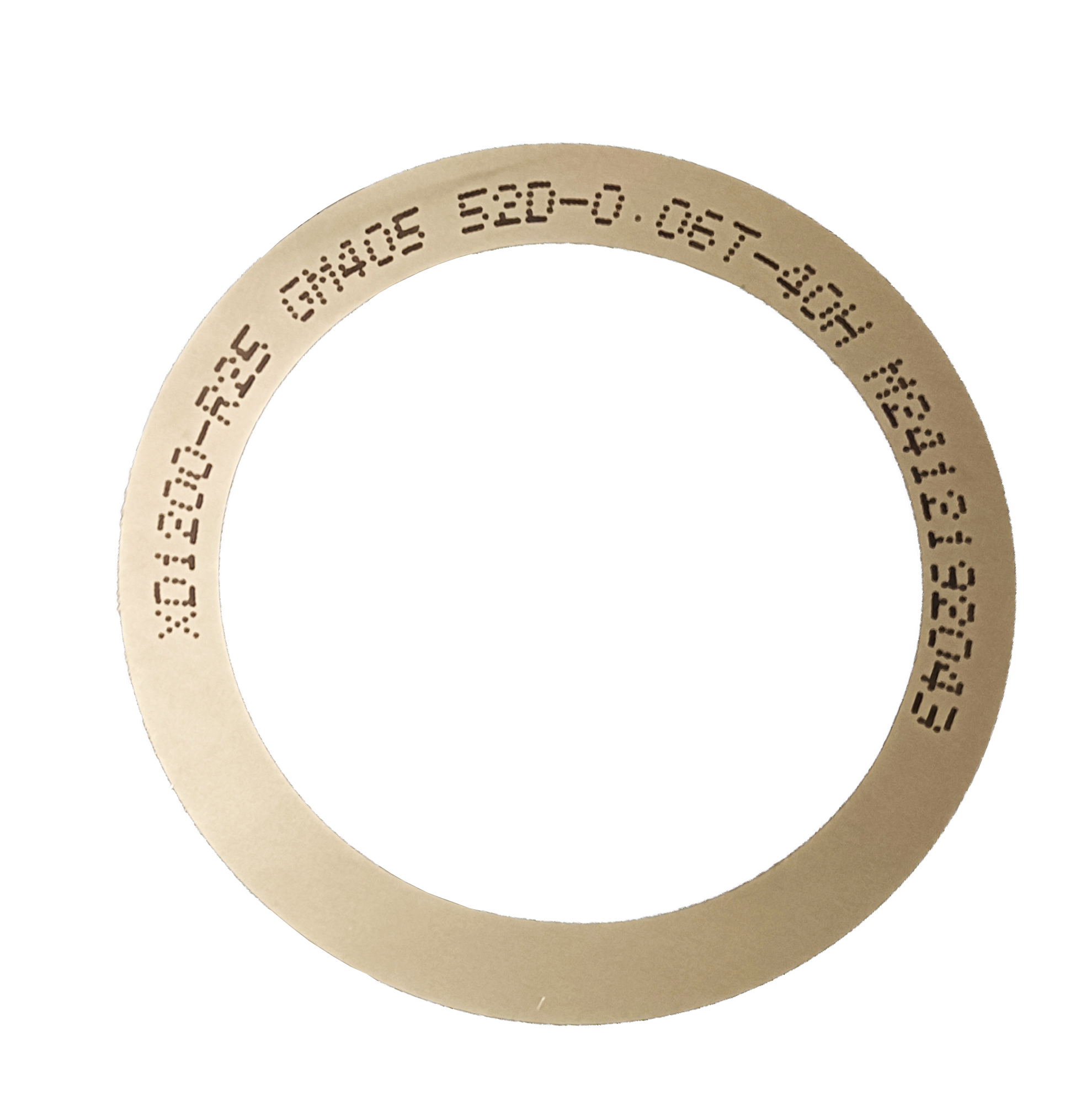
All of these applications are served from a defined facility baseline: Class 100/1000 cleanroom conditions, 22±2 °C, 45%–55% relative humidity, anti-static handling and a high-speed spindle environment.
Comparison: Resin Bond vs Metal Bond Sawing Blades
Bond type is the single most consequential selectable decision in a sawing blade specification. The table below compares the two families using verified market data and WINTIME's published specification and customization data.
| Comparison point | Resin bond sawing blade | Metal bond sawing blade |
|---|---|---|
| Share of the dicing blade market in 2024 (market.us) | 42% | 33% |
| Bond matrix in the WINTIME specification | Resin bond matrix | Metal bond matrix |
| Typical workpiece tendency | Not differentiated by the cited market data | Frequently specified for harder materials such as SiC |
| Abrasive | Diamond superabrasive | Diamond superabrasive |
| Customization availability | Yes — bond type is a selectable specification | Yes — bond type is a selectable specification |
This table deliberately excludes unit price and service life. No verified public figures exist for either, and both can only be compared meaningfully through test cuts on your own material, using your own spindle and feed settings.
FAQ
Are sawing blades covered by a published standard?
Yes. ISO 22180:2019 is the published standard that categorizes diamond tools, including sawing blades, and it distinguishes between CVD diamond-coated and monocrystalline/polycrystalline types. Because that classification changes how a blade is described in technical documents and quotations, buyers should confirm which category a supplier's blade falls into before comparing offers. Facility-side requirements — such as the Class 100/1000 cleanroom, 22±2 °C and 45%–55% relative humidity conditions used in precision cutting — sit with the process rather than with the blade standard, and should be verified separately.
Can a sawing blade be customized to a specific material or machine?
Yes. WINTIME Semiconductor Technology produces sawing blades under OEM, ODM and customized production models, with a customization list that covers blade diameter, thickness and spindle hole size; bond type (metal or resin); diamond abrasive grain size and concentration; coating for anti-rust, heat dissipation and wear resistance; cutting performance targets such as cutting speed and service life; export packaging; and non-standard special-shaped blades. Monthly capacity is 800,000+ pieces for standard specifications and 80,000+ pieces for customized and special-shaped products, which means customization is a production mode rather than a one-off exception.
What drives the cost of a precision sawing blade?
Cost is driven by the specification rather than by the brand name: how thin the blade must be, which bond and diamond type the workpiece requires, what tolerance and coating are needed, and how non-standard the geometry becomes. WINTIME's commercial thresholds give a practical frame for planning — MOQ is 50 pieces for standard products and 300 pieces for customized products, with flexibility for long-term cooperative customers. Because no verified public price band exists for this category, the meaningful comparison is cost per accepted part: a blade that holds ±0.002 mm accuracy with low chipping across a full run is not comparable to one measured only by unit price.
How can a buyer validate a sawing blade before committing to volume?
Validation should mirror the production environment: same workpiece, same spindle speed range, same tape and cleaning sequence. WINTIME supports this with four documented quality-control checks — geometric dimension inspection using vernier caliper and laser diameter gauge, hardness and wear-resistance testing, dynamic balance detection on a high-speed dynamic balance tester, and cutting performance simulation on the actual material. New customers also receive product application training, and any quality problem is investigated and resolved within 48 hours. To arrange a specification review or sample evaluation for your material, you can send an inquiry or request a quote through the WINTIME contact channels below.
What lead time and after-sales support apply to sawing blade orders?
Lead time is 2–5 working days for standard products and 10–25 working days for customized orders, adjustable for large orders. After-sales support includes technical support for cutting-process matching and equipment adaptation, quality problem investigation and resolution within 48 hours, customized after-sales service for bulk procurement customers, long-term supply guarantee and inventory support, product application training for new customers, and replacement or compensation for defective products caused by quality problems. The full product range and specification details are summarized in the downloadable WINTIME product catalog.
Conclusion: A Sawing Blade Is Defined by Its Constraints
A sawing blade is a diamond-abrasive disc that cuts by grinding at high spindle speed, and its identity as a precision tool comes from two outputs: a narrow kerf and a low-chipping edge. Everything else — hubbed, hubless, flanged, serrated or slotted construction; resin or metal bond; DZY, DZR or DZR-S Series geometry — is a way of arranging those three functional materials to survive a specific workpiece.
For buyers in the research and evaluation stage, the practical takeaway is to separate fixed constraints from selectable ones. Kerf budget, cutting accuracy, spindle speed range and cleanroom conditions are dictated by your process. Bond family, diamond grain size and concentration, coating, performance targets and special-shaped geometry are the fields you can genuinely negotiate — and they are exactly the fields WINTIME builds its OEM and ODM customization around.
Next step: if you are specifying a sawing blade for semiconductor, optical, ceramic or alloy material, the fastest route is a specification review against your workpiece and spindle. WINTIME supplies standard and customized sawing blades from MOQ 50 pieces (standard) and 300 pieces (customized), with a 2–5 working day lead time on standard items.
Website: en.wintime.net.cn | Catalog download: WINTIME product catalog | Email: shenxiangfei@ntwintime.com | Tel: +86 13851530812 | WhatsApp: +8618888053207
Address: No. 868, Fushou East Road, Rugao City, Jiangsu Province, China.

Have Questions or Need More Details?
Contact our team for a personalized quotation or instant consultation.
Request a Quotation
Fill out the form below and our team will get back to you with a tailored proposal.
WhatsApp Direct Chat
Prefer to chat in real-time? Message us on WhatsApp for instant assistance & quick answers.
- Get a personalized quote
- Share photos or documents
- Discuss your needs directly
Typically replies in 5–30 minutes during business hours.