
What Is WINTIME's Promise? Inside One Manufacturer's Warranty Terms and Spares Plan
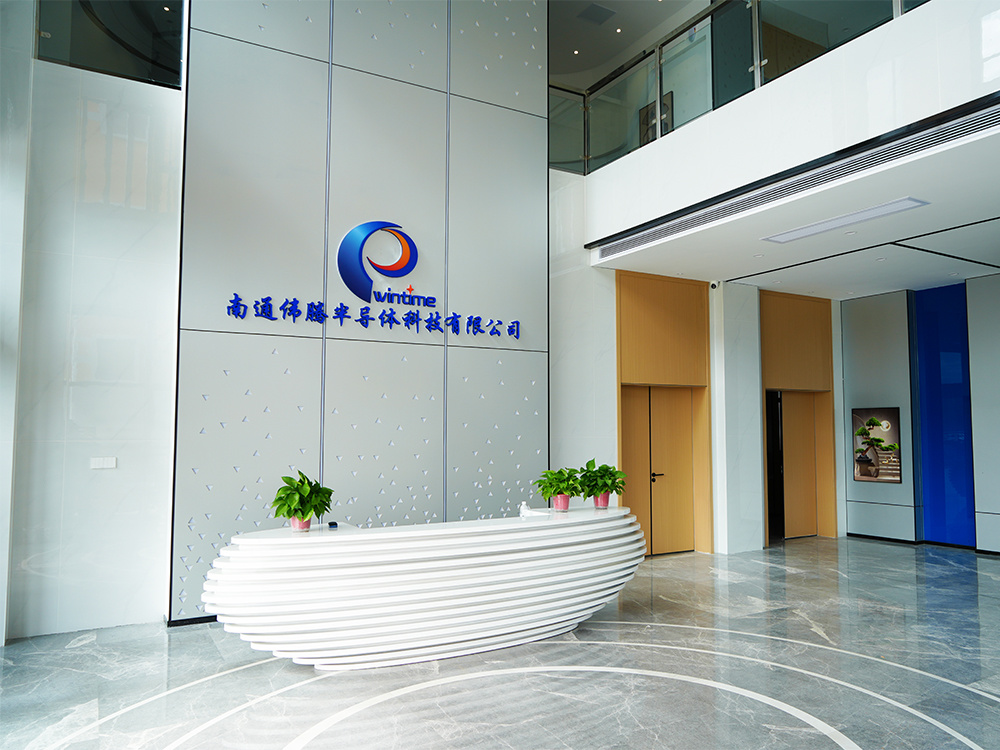
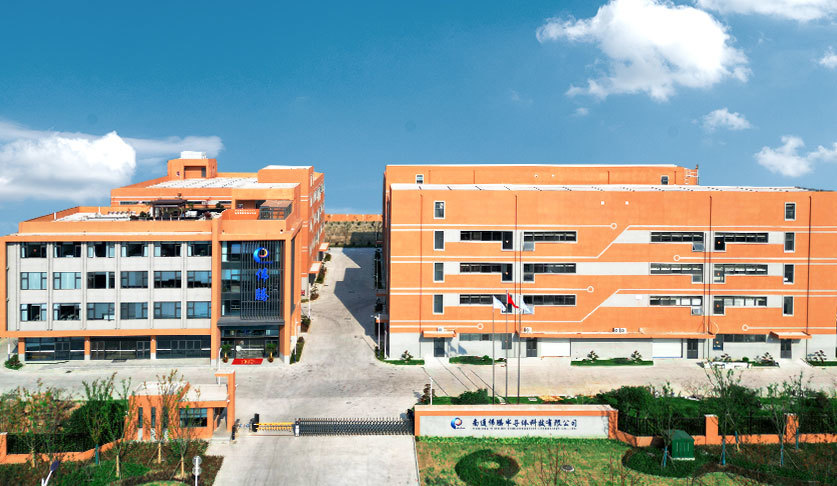
WINTIME's promise to sawing blade buyers is a set of six documented after-sales commitments rather than a single blanket warranty duration: cutting process matching and equipment adaptation support, quality-problem investigation and solution within 48 hours, customized after-sales service for bulk procurement customers, long-term supply and inventory support, product application training for new customers, and replacement or compensation for products whose defects are traced to quality problems. WINTIME Semiconductor Technology Co., Ltd. is a Jiangsu-based manufacturer of precision sawing and dicing blades, founded in 2020 and operating a 34,000 m² facility. The terms that govern a specific purchase are fixed in that purchase's order documents.
That distinction matters during research and evaluation, the stage where most serious buyers meet this page. A distributor comparing suppliers, or a process engineer qualifying a blade for a semiconductor packaging line, is not only asking whether a blade cuts well on day one. The real question is what happens in month fourteen, when a lot deviates, a line stops, and the buyer needs a diagnosis, a decision, and a replacement path that does not require rebuilding the qualification from scratch.
This article walks through what WINTIME publishes about that second half of the purchase: the service items themselves, the inspection gates that produce the evidence a replacement decision depends on, the order-level terms that differ between catalogue and customized blades, and the factory process in Rugao that a claim actually moves through.
Why the After-Sales Clause Decides a Sawing Blade Project
A sawing blade is a consumable that sits at the most expensive point of a dicing line. Blade thickness in the WINTIME Sawing Blade range runs from 8µm to 50µm, cutting accuracy is stated at ±0.002mm, and the ultra-thin work the company is known for operates below 9µm. At those dimensions, a blade that drifts out of tolerance does not simply wear out faster. It changes kerf, raises chipping, and can put an entire wafer or substrate lot at risk before anyone notices the deviation.
That risk profile produces three questions that decide supplier selection, and none of them are answered by a specification sheet:
- Who diagnoses the failure? A blade deviation can originate in the blade, the bond, the spindle, the feed rate, the tape, or the material being cut. A supplier that ships and disappears leaves that diagnosis to the customer.
- How fast does the answer arrive? Every hour of an unresolved quality question is machine time lost on an automatic dicing line running in a Class 100 or Class 1000 cleanroom at 22 ±2°C and 45% to 55% relative humidity.
- Will the same specification exist next year? Re-qualifying a new blade geometry is a project in itself. Buyers therefore treat supply continuity and inventory support as part of the technical offer, not as a commercial courtesy.
WINTIME answers those three questions with a published structure: named after-sales functions, a defined investigation window, and documented capacity behind replenishment. The company does not publish a fixed warranty period covering every blade it sells, and buyers should not assume one. What is documented is the service framework described below, with order-specific terms agreed in the purchase documents.
The Service Side of a Blade Market Under Pressure
The global wafer dicing blade market was valued at USD 1.19 billion in 2024, with growth attributed to semiconductor miniaturization and the adoption of 300mm wafers, according to Market Research Intel. Two consequences follow for after-sales planning.
First, the blade portfolio itself is split by bond chemistry, and both halves need support. Resin bond blades held a 42% share of the dicing blade market in 2024, while metal bond blades used for harder materials such as SiC accounted for 33%, according to a Dicing Blade Market Report published by market.us. A supplier that works only in one bond family cannot carry a customer through a material change without sending them to a second supplier and a second qualification cycle. WINTIME lists both resin and metal bond matrices in its Sawing Blade specification.
Second, substrate geometry is getting harder to hold. Hubless dicing blades are increasingly dominant for 300mm wafer processing because of superior stability and reduced runout on substrates thinner than 50µm, according to Semiconductor Equipment Market Data. Thinner substrates mean the service conversation increasingly concerns runout, mounting and spindle condition rather than blade wear alone, which is why process matching support carries real weight in a supplier evaluation.
Buyers also need a common vocabulary for comparison. Diamond tools, including sawing blades, are categorized under ISO 22180:2019, which distinguishes CVD diamond-coated types from monocrystalline and polycrystalline types. Category clarity helps in procurement, but it does not tell a buyer who answers the phone when a lot goes wrong. That is what the rest of this article covers.
What WINTIME Actually Commits To, Item by Item
WINTIME Semiconductor Technology Co., Ltd. publishes six after-sales commitments plus a defect remedy clause. Each item below is stated as the company states it, with a note on what it means in practice on a dicing floor.
1. Technical support for cutting process matching and equipment adaptation
The commitment covers matching a blade to the cutting process and adapting it to the equipment in use. In practice this is the difference between a blade that meets its printed specification and a blade that performs on a specific machine at a specific spindle speed. The Sawing Blade specification lists a spindle speed window of 30,000 to 60,000 rpm and a chip removal rate of at least 1.2mm³/s, and the matched equipment set spans automatic wafer dicing machines, semiconductor cutting spindles, UV tape mounting machines, wafer cleaning equipment and wafer testing machines. Process matching is where those variables get aligned rather than assumed.
2. Quality problem investigation and solution within 48 hours
Quality problems are investigated and answered with a solution within 48 hours. The window applies to the investigation and the proposed resolution, which is a materially different promise from a shipping promise: it commits the manufacturer to a diagnostic answer within two days, not merely to dispatching a carton. For a buyer, the practical implication is that lot traceability needs to be in place before a problem occurs. A 48-hour investigation only works if the affected lot, blade specification, machine parameters and material can be identified quickly on both sides.
3. Customized after-sales service for bulk procurement customers
Bulk buyers receive after-sales service configured to their procurement pattern rather than a standard ticket flow. This is the item that connects the service promise to the customization menu, which covers blade diameter, thickness and spindle hole size, bond type, diamond abrasive grain size and concentration, coating for anti-rust, heat dissipation or wear resistance, cutting performance targets, export packaging, and special-shaped non-standard blades.
4. Long-term supply guarantee and inventory support
Supply continuity is stated as a standing commitment supported by inventory. The numbers behind it are published: annual output of more than 1 million pieces, monthly capacity of 800,000+ pieces for standard specifications and 80,000+ pieces for customized and special-shaped products. For a buyer planning a twelve-month blade budget, that combination is what makes a spares plan credible, because replenishment speed is a capacity question before it is a logistics question.
5. Product application training for new customers
New customers receive application training. On a dicing line the training gap usually shows up in mounting, feed and spindle checks rather than in blade selection, so this item shortens the period in which a new buyer is dependent on trial and error.
6. Replacement and compensation for defective products due to quality problems
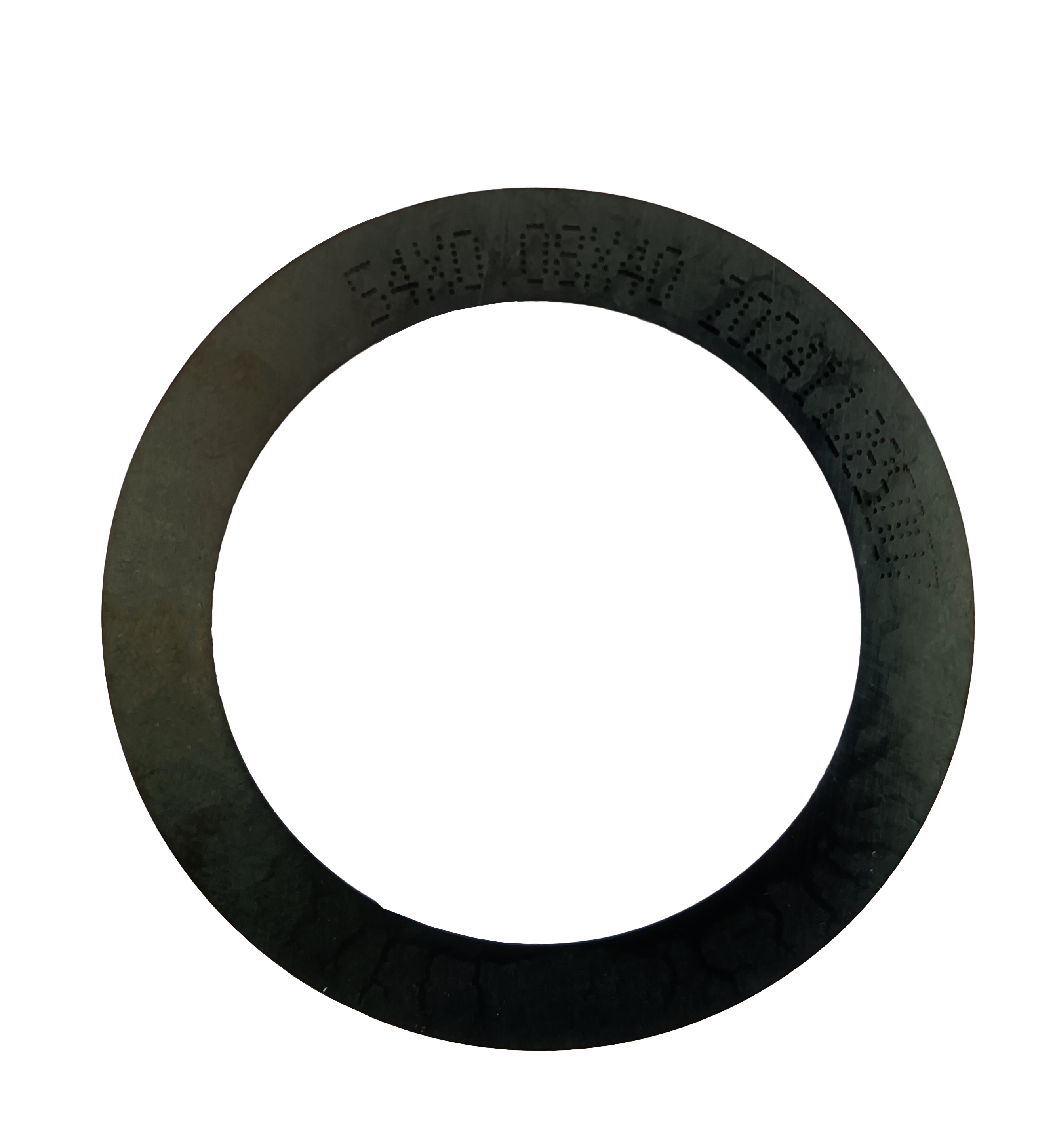
Products with defects attributable to quality problems are replaced and compensated. This is the clause buyers scan for first, and it is only as strong as the inspection record behind it. WINTIME's quality control runs four gates before shipment: geometric dimension inspection using a vernier caliper and laser diameter gauge; hardness and wear resistance testing on a material testing machine; dynamic balance detection on a high-speed dynamic balance tester; and cutting performance simulation testing on the actual material. Each gate produces a record that can be compared against a customer complaint, which is how a replacement decision gets made on evidence rather than on negotiation.
The technical baseline behind the promise
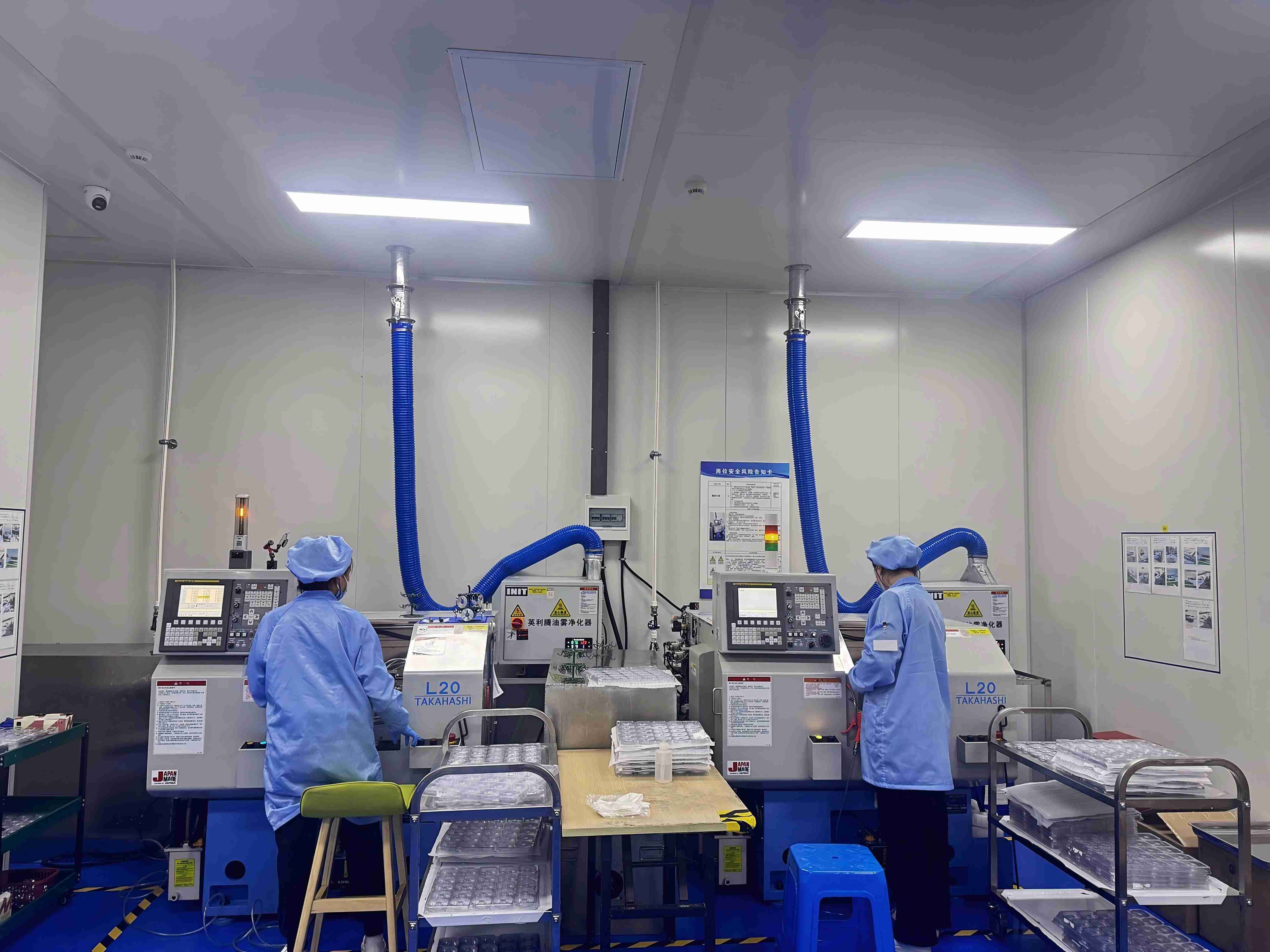
Service commitments are only meaningful if the manufacturer controls its own process. WINTIME was established in 2020 and integrates research, development, production and sales of high-precision wafer-level cutting blades. The company holds 2 patent technologies, employs a 35-engineer R&D team within a workforce of about 100 people, and exports around 30% of output to Southeast Asia, East Asia, North America and the EU. Its completed ultra-thin wafer dicing blade project achieved a process thickness below 9 microns, with product quality reaching what the company describes as the international cutting-edge level, and it is one of the few domestic companies able to mass-produce at that thickness. The 2023 Nantong WINTIME Semiconductor Special Materials Project added a new factory and auxiliary buildings of 34,000 square meters in Rugao City, Jiangsu Province.
Step by Step: How a Question Becomes a Replacement Decision
The service structure is easier to evaluate as a sequence than as a list. This is the path a sawing blade order and any subsequent quality question follow at the Rugao facility.
- Step 1 — Define the application envelope. The buyer states the material, target thickness, kerf limit and machine environment. Relevant working conditions include Class 100 or Class 1000 cleanroom classification, 22 ±2°C, 45% to 55% relative humidity, dust-free and anti-static operation, and a high-speed spindle.
- Step 2 — Fix the blade specification. Blade diameter, thickness, spindle hole size, bond type (resin or metal), diamond grain size and concentration, and any coating requirement are agreed. Standard geometry follows the catalogue; non-standard sizes go to the special-shaped route.
- Step 3 — Confirm quantity and lead time. Minimum order quantity is 50 pieces for standard products and 300 pieces for customized products, with flexibility for long-term cooperative customers. Lead time is 2 to 5 working days for standard products and 10 to 25 working days for customized orders, adjustable for large orders.
- Step 4 — Ship against the inspection record. The blade passes geometric dimension, hardness and wear resistance, dynamic balance, and cutting simulation checks before dispatch, creating the baseline record for any later comparison.
- Step 5 — Match the process on arrival. Technical support addresses cutting process matching and equipment adaptation, and new customers receive application training. This is the stage where most apparent blade problems are resolved as process problems.
- Step 6 — Escalate a genuine quality question. The problem is investigated with a solution within 48 hours. If the cause is traced to a quality problem, replacement and compensation apply. Traceability data from Step 4 is what allows the cause to be assigned quickly.
- Step 7 — Replenish and hold stock. Long-term supply guarantee and inventory support keep the qualified specification available, drawing on monthly standard capacity of 800,000+ pieces.
Where This Service Model Fits
The commitments above are applied across the sectors WINTIME lists for its sawing and dicing blades: semiconductor manufacturing, semiconductor packaging, optical communication, new functional materials, functional ceramics, and alloy materials. The published markets are China, Japan, Korea, Singapore, Malaysia, the United States and Germany.
Project types include wafer dicing and scribing, semiconductor package cutting, ultra-thin wafer processing, optical device cutting, ceramic substrate cutting, and precision alloy component cutting. The functional goal in each case is the same set of outcomes: high-precision wafer cutting, ultra-thin slicing, narrow kerf, low chipping, high-efficiency cutting and stable dimensional control. Special requirements across these projects include blade thickness of 9µm or less, high wear resistance, low cutting loss, anti-static behaviour, high dimensional accuracy, long service life, and stable mass production.
Two scenarios show why warranty terms and spares planning are not abstract. Optical communication and RF/optoelectronics applications accounted for 16% of dicing blade market share in 2024, driven by 5G infrastructure expansion, according to Intel Market Research — a segment where device dimensions are small, chipping tolerance is tight, and a stopped line is expensive. The second is ultra-thin stacked-die packaging, where blades thinner than 9µm work close to their mechanical limits and where replacement stock must carry the same geometry as the qualified part.
Standard Stock Versus Customized Order: Documented Terms Side by Side
The table below compares only terms WINTIME publishes. It is intended for procurement planning, not as a substitute for the order documents that govern a specific purchase.
| Term | Standard catalogue order | Customized / special-shaped order |
|---|---|---|
| Minimum order quantity | 50 pieces | 300 pieces; flexible for long-term cooperative customers |
| Lead time | 2–5 working days | 10–25 working days; adjustable for large orders |
| Monthly capacity | 800,000+ pieces | 80,000+ pieces for customized and special-shaped products |
| Customization scope | Catalogue geometry and bond options | Diameter, thickness, spindle hole size, bond type, diamond grain size and concentration, coating (anti-rust, heat dissipation, wear resistance), cutting performance, export packaging, special-shaped non-standard sizes |
| Technical support | Cutting process matching and equipment adaptation; application training for new customers | Same, plus customized after-sales service for bulk procurement customers |
| Quality investigation window | 48 hours for investigation and solution | 48 hours for investigation and solution |
| Defect remedy | Replacement and compensation for defective products due to quality problems | Replacement and compensation for defective products due to quality problems |
| Pre-shipment inspection | Geometric dimension, hardness and wear resistance, dynamic balance, cutting simulation | Geometric dimension, hardness and wear resistance, dynamic balance, cutting simulation |
Source: WINTIME capability and product specifications. No warranty period, price or service-level tier is published in these terms.
Frequently Asked Questions
What warranty terms does WINTIME publish for sawing blades?
WINTIME publishes six service commitments rather than a single blanket warranty duration: cutting process matching and equipment adaptation support, quality investigation and solution within 48 hours, customized after-sales service for bulk procurement customers, long-term supply and inventory support, application training for new customers, and replacement or compensation for products with defects traced to quality problems. The specific terms that apply to a purchase are fixed in the order documents.
How does WINTIME handle a blade problem on a running dicing line?
Reported quality problems are investigated and answered with a solution within 48 hours. The investigation draws on the four pre-shipment inspection gates — geometric dimension checks with a vernier caliper and laser diameter gauge, hardness and wear resistance testing, dynamic balance detection, and cutting performance simulation on the actual material — together with the cutting process and equipment adaptation support the company provides.
Does customization change the commercial terms of an order?
Yes. Standard products carry a minimum order quantity of 50 pieces and a lead time of 2 to 5 working days, while customized products carry a minimum of 300 pieces and a lead time of 10 to 25 working days, adjustable for large orders. Long-term cooperative customers are offered flexibility on those quantities. Customization covers diameter, thickness, spindle hole size, bond type, diamond grain size and concentration, coating, cutting performance, export packaging, and special-shaped blades.
Can a buyer validate a blade before committing to volume?
The documented entry point for validation is the minimum order quantity: 50 pieces for standard products and 300 pieces for customized products. New customers also receive product application training so that mounting, feed and spindle conditions are checked before results are judged. Trial quantities, price quotations and sample arrangements are handled per inquiry with the sales team rather than published as fixed terms.
How fast can replacement blades be supplied?
Standard sawing blades ship within 2 to 5 working days, and monthly standard capacity of 800,000+ pieces supports replenishment and inventory support for long-term buyers. Replacement and compensation apply to defective products traced to quality problems. To discuss a sample, a quotation, or a spare-blade stocking plan, contact WINTIME by phone at +86 13851530812 or through WhatsApp.
Conclusion: What to Confirm Before You Sign
WINTIME's promise is best read as an operating structure rather than a slogan. Six after-sales commitments, a 48-hour investigation window, a defect remedy clause, four pre-shipment inspection gates, and documented capacity for replenishment together describe how a blade order is supported after it ships. The technological baseline behind that structure — 2 patents, a sub-9µm ultra-thin dicing capability in mass production, and a 34,000 m² facility in Rugao — is what makes the service commitments executable rather than aspirational.
Four points are worth confirming in writing before an order is placed, because WINTIME does not publish them as blanket terms:
- The exact blade specification and thickness, especially where the process runs at or below 9µm.
- The definition of a quality defect, and how it will be evidenced against the pre-shipment inspection record.
- The route and contact for a 48-hour investigation, and the lot data the buyer must retain to use it.
- The replenishment plan: quantity, interval, and whether inventory support is included for the qualified specification.
Buyers who want the technical detail behind these commitments can download the WINTIME product brochure (PDF) or review the blade range at en.wintime.net.cn.
Request a Quote, a Sample, or a Spares Plan
WINTIME Semiconductor Technology Co., Ltd. supplies sawing and dicing blades to semiconductor manufacturing, semiconductor packaging, optical communication, functional ceramics and alloy material projects. Share your material, target thickness, machine model and annual volume, and the team will return a blade recommendation with order terms.
Phone: +86 13851530812 | WhatsApp: +86 18888053207 | Website: en.wintime.net.cn
Address: No. 868, Fushou East Road, Rugao City, Jiangsu Province, China
Have Questions or Need More Details?
Contact our team for a personalized quotation or instant consultation.
Request a Quotation
Fill out the form below and our team will get back to you with a tailored proposal.
WhatsApp Direct Chat
Prefer to chat in real-time? Message us on WhatsApp for instant assistance & quick answers.
- Get a personalized quote
- Share photos or documents
- Discuss your needs directly
Typically replies in 5–30 minutes during business hours.