
Why Sawing Blades Are Built for Cleanrooms: Understanding the Value-Added Environment
A sawing blade is built for a cleanroom because the cut it has to hold is smaller than the disturbances an ordinary room produces. On a wafer dicing line, a diamond sawing blade can run as thin as 8 μm–50 μm and hold ±0.002 mm cutting accuracy while the spindle turns at 30,000–60,000 rpm. At that scale, a particle trapped on a flange, a static charge across a mounted wafer, or a two-degree drift in room temperature is not a housekeeping detail — it is a kerf deviation.
Short answer: the cleanroom is not decoration wrapped around a precision tool; it is one of the tool's operating conditions. WINTIME application data specifies Class 100/1000, constant temperature of 22±2°C, constant humidity of 45%–55%, dust-free and anti-static conditions, and a high-speed spindle environment for sawing blade work in semiconductor manufacturing, semiconductor packaging, optical communication, new functional materials, functional ceramics and alloy materials.
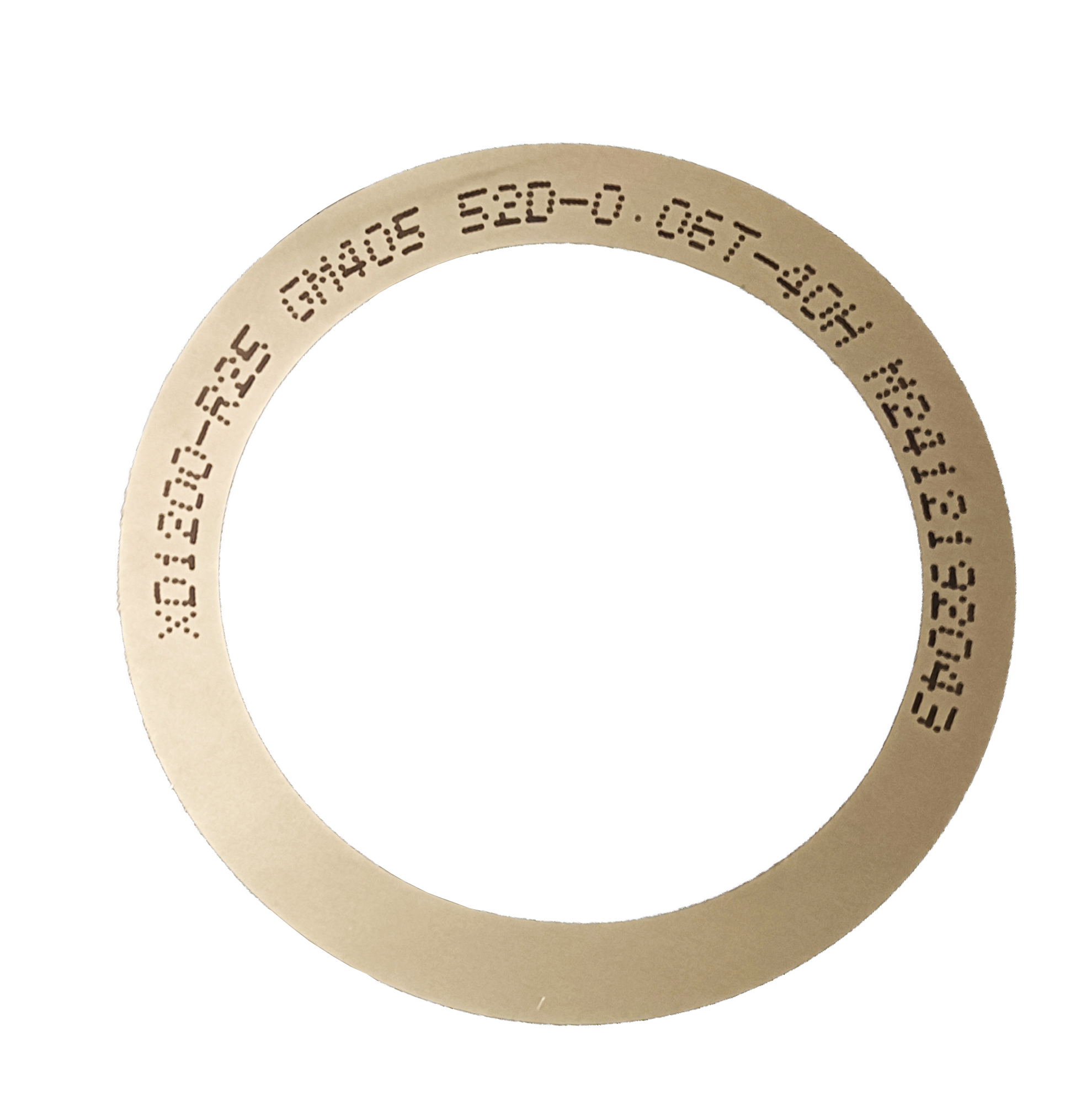
Cover: a metal-bond diamond sawing blade — the construction class used where a narrow kerf must hold ±0.002 mm in a Class 100/1000 dicing line.
Problem Definition: What an Uncontrolled Room Does to a Micron-Scale Cut
A dicing blade removes material by diamond abrasion at very high spindle speed. The removed volume is modest — the specified chip removal rate for the SB-001 sawing blade is ≥1.2 mm³/s — but the tolerance band is not: thickness from 8 μm to 50 μm, cutting accuracy of ±0.002 mm, and, for ultra-thin wafer work, mass production at thicknesses below 9 μm. Three environmental variables act directly on that band.
- Particles. A blade 8 μm thick cutting a street of similar width has no clearance for debris. A particle trapped between blade and flange alters runout; a particle that reaches the kerf becomes a point load that can chip an edge or leave a mark on the die surface. This is why the working condition is defined as dust-free as well as particulate-classified.
- Static. The same working condition lists anti-static as a requirement. Charge build-up attracts airborne particles to precisely the surfaces being protected, and it interferes with the handling of taped and mounted workpieces. Relative humidity is the main lever a facility has over that behaviour, which is why humidity is specified as a band rather than as a limit.
- Heat and moisture. A ±0.002 mm figure is a statement about a dimension measured under stated conditions. Blade body, flange and workpiece do not expand at the same rate when room temperature moves, so an unstable room turns a consistent blade into an inconsistent one.
Where the environment stops helping. A controlled room cannot correct a wrong bond type, an unsuitable diamond concentration or a badly matched feed rate. It only removes the disturbances that would otherwise mask the blade's real behaviour. That distinction matters during supplier evaluation: environment control is a process variable to be specified and audited, not a performance claim in itself.
Industry Background: Why Cleanroom Cutting Became the Default
Sawing blade work concentrates where features are fine and a damaged part is expensive. WINTIME lists the served sectors as semiconductor manufacturing, semiconductor packaging, optical communication, new functional materials, functional ceramics and alloy materials. In each of them the blade is a consumable tool inside a process window that has already been tightened by the equipment, the tape and the inspection step.
The direction of demand is thinner. WINTIME mass-produces ultra-thin wafer dicing blades below 9 μm thickness — a level the company describes as achievable in mass production by only a few domestic manufacturers. For wider category context, Maximize Market Research projects the global diamond saw blade market to reach USD 10.16 billion by 2032; that projection covers the broad diamond saw blade category rather than precision dicing blades specifically, and is best read as demand context, not as a dicing forecast.
A cleanroom classification is not a complete process specification. Class 100/1000 describes particulate control. On its own it says nothing about temperature stability or about humidity. The working condition in WINTIME's application data therefore pairs the classification with 22±2°C and 45%–55% relative humidity — three separate controls that are often assumed to be one. Fabs that certify the room but leave the humidity band loose are still exposed to the static and dimensional effects the classification was meant to remove.
The Controlled Envelope: Five Conditions That Decide the Result
Read together, the specified condition is a set of constraints rather than a single badge. Each line of the envelope removes one failure mode from the cut.
| Condition | Specified value | What it protects in the cut |
|---|---|---|
| Particulate class | Class 100/1000 | Keeps foreign particles away from the kerf and out of the blade-to-flange interface |
| Temperature | Constant 22±2°C | Limits differential expansion across blade body, flange and workpiece so ±0.002 mm remains meaningful |
| Relative humidity | Constant 45%–55% | Supports the anti-static requirement and keeps moisture-driven variation inside a narrow band |
| Atmosphere | Dust-free, anti-static | Protects the mounted workpiece and the blade surface between operations |
| Spindle | High-speed spindle, 30,000–60,000 rpm | Enables high-efficiency cutting with stable dimensional control |
Source: WINTIME application and product data for sawing blade work in semiconductor, packaging, optical, ceramic and alloy applications.
45%–55% Humidity: The Anti-Static Band
Humidity sits behind most static problems in a dicing area. Below the band, charge accumulates more readily on insulating surfaces, and a charged surface pulls particles out of the air onto the wafer and the blade. Above the band, moisture becomes the variable instead. Specifying 45%–55% as a constant window keeps the room on the workable side of both risks, and it is the reason the same working condition lists anti-static as a hard requirement rather than a preference.
22±2°C: Making ±0.002 mm Mean Something
Cutting accuracy of ±0.002 mm is a claim about a machine, a blade and a workpiece at a stated condition. When a room swings, the steel base of the blade, the aluminium flange on a DZY-type blade and the workpiece respond at different rates, and the sum of those differences can exceed the tolerance the blade was purchased to hold. Constant temperature removes the differential from the operator's list of suspects.
30,000–60,000 rpm: Balance and Chip Evacuation
High-speed rotation is what makes narrow-kerf cutting productive, and it is also what amplifies any imbalance. A blade that is dimensionally correct but dynamically out of balance will show it as edge chipping and kerf wander, not as a visible defect. Chip removal rate of ≥1.2 mm³/s defines how much material the process is expected to evacuate, in dry or wet cutting, on an automatic dicing machine — which is why balance and chip clearance belong to the same specification discussion as thickness.
How the Blade Itself Answers the Environment
Construction is the blade's side of the argument. WINTIME sawing blades combine a diamond superabrasive with a resin or metal bond matrix on a high-strength steel base, at HRC 65–70 hardness. Bond choice sets how the abrasive is retained and released; grain size and concentration (both customizable) set how the edge behaves in a given material. Architecture then adapts to the mounting reality of the line: the DZY Series Wafer sawing Blade integrates blade and aluminium-alloy flange in one component, the DZR Series sawing Blade is composed of metallic nickel and diamond abrasive and is positioned for semiconductors, optical communication and new functional materials, and the DZR-S Series Slotted sawing Blade adds slotted geometry for profiles that require it. Hubless and electroforming hard constructions cover mounting and geometry cases where a standard hub does not fit the spindle interface.
Step-by-Step Breakdown: From Requirement to Qualified Cut
The sequence below reflects how a cleanroom-compatible blade is normally specified and released, using the customization and quality-control scope WINTIME publishes.
- Define the cut, not the catalogue number. State material, target thickness, kerf, chipping limit and equipment. This decides the family first — DZY, DZR, DZR-S, hubless or electroforming hard — before any dimension is discussed.
- Fix the geometry. Blade diameter, thickness (8 μm–50 μm in the standard range) and spindle hole size are specified together, with special-shaped and non-standard sizes treated as a separate customization route.
- Select bond and abrasive. Choose resin or metal bond, then diamond grain size and concentration. Coating options — anti-rust, heat-dissipation, wear-resistant — are decided at this stage, because they change handling and storage requirements.
- Verify geometry and hardness. Published quality control covers geometric dimension inspection with vernier caliper and laser diameter gauge, plus hardness and wear-resistance testing on a material testing machine.
- Check dynamic balance and simulate the cut. High-speed dynamic balance detection is performed on a dedicated tester, followed by a cutting performance simulation test on the actual workpiece material. This is the step that separates a dimensionally acceptable blade from a usable one.
- Control the entry into the fab. Packaging for export is a customizable item, which matters when a blade has to arrive without picking up particles or losing its mounting condition. First-article checks then run inside the 22±2°C, 45%–55% envelope, not outside it.
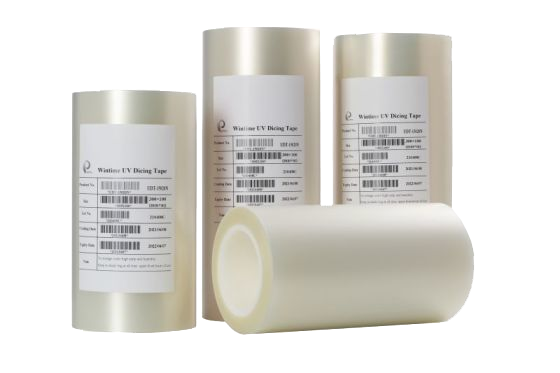
Supporting: UV film is part of the matched equipment set around a dicing line — mounting condition, not only blade geometry, decides whether the cut stays inside tolerance.
Use Cases: Four Cleanroom Scenarios and What Each Demands
Semiconductor Wafer Dicing and Ultra-Thin Processing
This is the tightest case. Ultra-thin blade thickness of ≤9 μm, narrow kerf, low chipping and high dimensional accuracy have to hold across a full run, not on a single die. The environment contributes particulate control and thermal stability; the blade contributes geometry and balance. The DZY Series, with its integrated flange, is positioned for high-precision wafer cutting in semiconductor packaging processes, where handling steps are frequent.
Semiconductor Packaging Component Cutting
Package-level cutting mixes materials and profiles inside one work order. Slotted geometry — the DZR-S configuration — is designed for semiconductor packaging component cutting as well as wafer, ceramic and alloy work. In a Class 100/1000 area the practical constraint is changeover discipline: every profile change is also a mounting and cleanliness event.
Optical Communication Device Cutting
Optical communication is listed as a served sector for the DZR Series sawing Blade and appears in the product data as optical ceramic cutting. Optical parts often tolerate edge damage poorly, so anti-static control and stable humidity matter as much as kerf width: contamination that would be cosmetic on another part can be a rejection here.
Functional Ceramics and Alloy Materials
Functional ceramic sawing and alloy material sawing sit at the harder end of the abrasive spectrum. Wear resistance and a bond that keeps the diamond active under load carry the result, with the DZR-S Series Slotted sawing Blade listed for functional ceramic, alloy material and semiconductor wafer cutting. Here the cleanroom protects the part surface; the blade specification protects the dimensional outcome.
Comparison: Environment Condition vs. Blade and Process Response
The table pairs each condition of the envelope with the blade or process feature that answers it, using only published product and application facts.
| Condition | Failure mode if uncontrolled | Blade or process response |
|---|---|---|
| Class 100/1000 particulate control | Particles in the kerf or on the flange; chipping and runout change | Dust-free working condition; export packaging specified as a customizable item |
| Constant 22±2°C | Differential expansion pushing the cut outside ±0.002 mm | Cutting accuracy of ±0.002 mm specified at the controlled condition |
| Constant 45%–55% relative humidity | Static attraction and moisture-driven variation | Anti-static requirement; high dimensional accuracy requirement |
| High-speed spindle, 30,000–60,000 rpm | Imbalance showing as chipping and kerf wander | High-speed dynamic balance detection plus cutting performance simulation test |
| Narrow-kerf ultra-thin cutting | Excess material loss and edge damage on thin wafers | Thickness range 8 μm–50 μm; ultra-thin mass production below 9 μm; chip removal ≥1.2 mm³/s |
Frequently Asked Questions
1. Does a sawing blade have to be manufactured inside a Class 100/1000 cleanroom, or only used in one?
Those are two different requirements and should be written separately in a purchase specification. The Class 100/1000 classification, constant 22±2°C, constant 45%–55% humidity, dust-free and anti-static conditions appear in WINTIME's application data as the working condition the blade is specified for — that is, the environment in which the cut is performed. On the supply side, the documented controls before shipment are geometric dimension inspection, hardness and wear-resistance testing, dynamic balance detection and a cutting performance simulation test on the actual material. If your process requires a specific production-environment classification at the supplier, request it in writing with the quotation rather than assuming it from a product page.
2. Can a blade be customized for a specific cleanroom dicing process?
Yes. WINTIME offers OEM, ODM and customized production with specifications adjusted to different cutting materials and working conditions. The customizable scope covers blade diameter, thickness and spindle hole size; bond type (metal or resin); diamond grain size and concentration; coating for anti-rust, heat-dissipation or wear resistance; cutting performance targets such as speed and service life; packaging including special export packaging; and special-shaped blades in non-standard sizes. Customized and special-shaped capacity is stated at 80,000+ pieces per month, against 800,000+ pieces per month for standard specifications.
3. What is the minimum order quantity, and how are commercial terms set?
Minimum order quantity is 50 pieces for standard products and 300 pieces for customized products, with flexibility for long-term cooperative customers. Because thickness, bond, grain and slot geometry each change the process route, terms are quoted against a defined specification instead of a published catalogue price — the specification has to exist before the number means anything. Buyers evaluating a switch should therefore bring the full geometry and material definition to the inquiry, not only a part number.
4. How is a blade validated before a fab commits to volume?
Validation is built from the quality-control sequence plus technical support. Before shipment, the blade passes dimensional inspection, hardness and wear testing, dynamic balance detection and a cutting performance simulation test on real material. After delivery, WINTIME provides technical support for cutting-process matching and equipment adaptation, application training for new customers, quality investigation and resolution within 48 hours, and replacement or compensation for defective products caused by quality problems. Running the trial inside the same 22±2°C, 45%–55% envelope as production is what makes the trial result transferable.
5. What lead times apply to standard and customized orders?
Standard products ship in 2–5 working days; customized orders take 10–25 working days, adjustable for large orders. Long-term supply guarantees and inventory support are available for bulk procurement customers, and export markets already served include China, Southeast Asia, the Middle East, the European Union, the United States, Canada, Australia, South America and Africa. To start a sample or quotation request against a cleanroom dicing process, send the material, target thickness, kerf and equipment details to the contact below.
Conclusion: The Environment Is Part of the Specification
A sawing blade built for a cleanroom is not a different product from a precision blade — it is the same product specified, inspected and used inside a defined envelope. Class 100/1000 keeps particles out of a kerf measured in single-digit microns; 22±2°C keeps ±0.002 mm a real number; 45%–55% relative humidity keeps static from turning a clean surface into a contaminated one. When those three conditions are written into the purchase specification alongside thickness, bond and balance, the blade and the room stop competing as explanations for a bad cut. The environment becomes what it should be: value added to the tool, not a substitute for it.
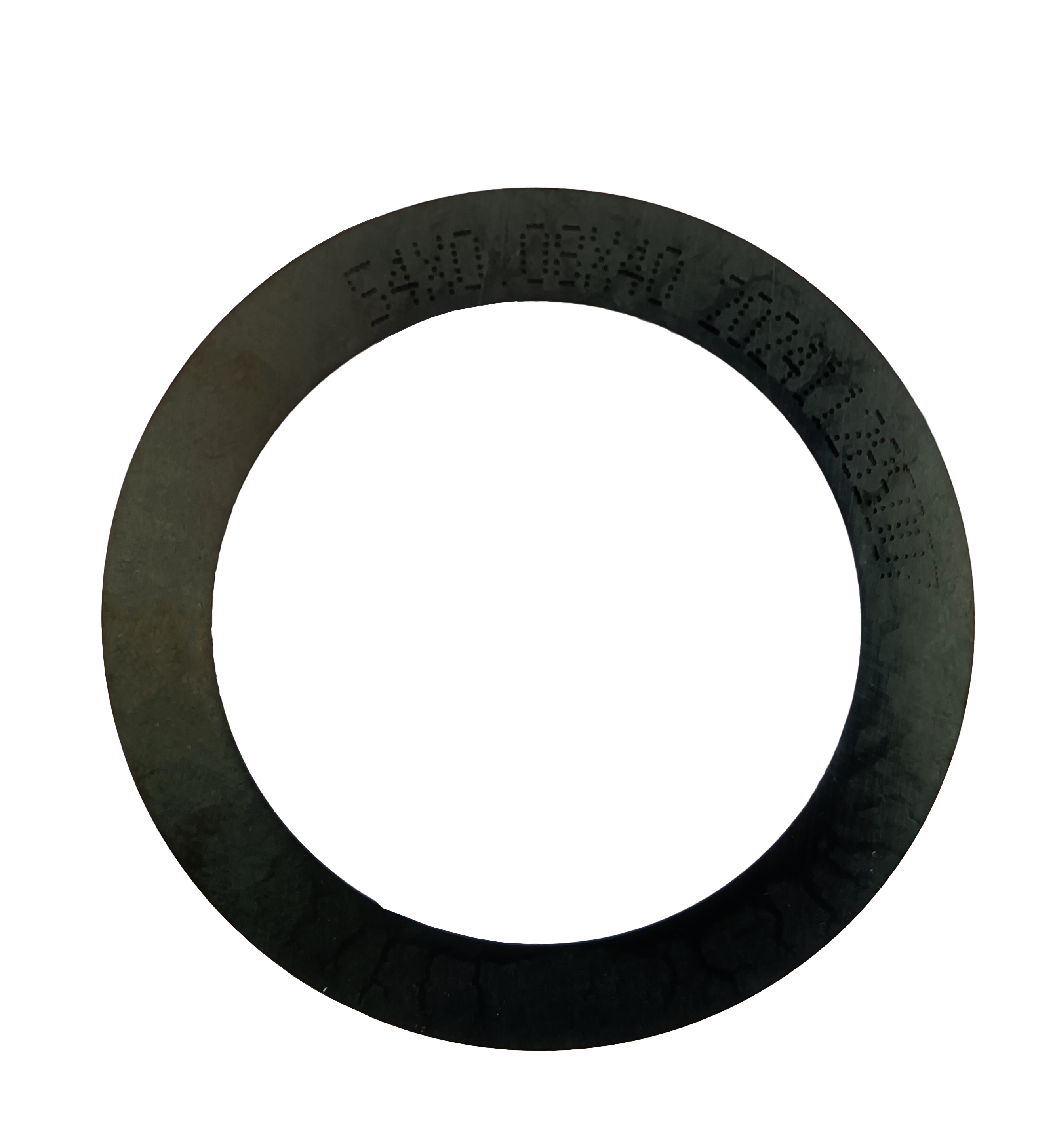
Request a sample: resin-bond and metal-bond sawing blades can be quoted against your cleanroom dicing specification.
Next step: sample, quotation or process review
Send the material, target thickness, kerf, spindle interface and cleanroom condition, and WINTIME Semiconductor Technology Co., Ltd. will respond with a matched blade configuration.
Email: shenxiangfei@ntwintime.com | Tel: +86 13851530812 | WhatsApp: +8618888053207
Address: No. 868, Fushou East Road, Rugao City, Jiangsu Province
Website: en.wintime.net.cn
Have Questions or Need More Details?
Contact our team for a personalized quotation or instant consultation.
Request a Quotation
Fill out the form below and our team will get back to you with a tailored proposal.
WhatsApp Direct Chat
Prefer to chat in real-time? Message us on WhatsApp for instant assistance & quick answers.
- Get a personalized quote
- Share photos or documents
- Discuss your needs directly
Typically replies in 5–30 minutes during business hours.