Plasma Polishing Machine Procurement: A Risk Mitigation Guide for Industrial Buyers
Plasma Polishing Machine Procurement: A Risk Mitigation Guide for Industrial Buyers
Introduction
Procuring a plasma polishing machine is a strategic investment that directly impacts surface quality, production efficiency, and operational costs. Yet many industrial buyers face hidden risks—unreliable suppliers, mismatched specifications, hidden fees, and poor after-sales support. This guide provides a step-by-step framework to help you complete the procurement efficiently while avoiding common pitfalls. Whether you need a stainless steel plasma polishing machine, a fully automatic plasma polishing machine, or a jewelry plasma polishing machine, the principles remain the same: verify, test, and partner.
Problem Definition: What Risks Do Buyers Face?
Industrial buyers sourcing a plasma polishing deburring machine from overseas—especially from China—often encounter:
- Specification mismatches: The machine's capacity, voltage, or hanger size does not fit actual production parts.
- Quality inconsistency: Deburring rate below promised ≥99.9% or inconsistent surface finish across batches.
- Hidden costs: Unexpected shipping, customs, or installation fees.
- Delayed delivery: Lead times extended beyond agreed 30–45 days.
- Weak after-sales support: No remote troubleshooting or spare parts availability within warranty period.
- Lack of certifications: No CE or other market-specific compliance, leading to import rejection.
These risks can be mitigated through a structured procurement process that includes supplier evaluation, technical validation, and contractual safeguards.
Industry Background: The Evolving Plasma Polishing Market
The global demand for precision deburring equipment and environmentally friendly plasma polishing machines is rising rapidly across medical devices, aerospace, 3D printing, automotive, and jewelry sectors. Traditional mechanical polishing generates dust, noise, and hazardous waste, while plasma polishing uses ionized gas to remove burrs and micro‑roughness without damaging the original surface. Manufacturers like Dongguan Bayi Automation Equipment Co., LTD (brand: bayi) have accumulated over 17 years of R&D experience, offering standard models (100A, 300A, 500A, 800A, 1000A) and customized non‑standard solutions. The market is shifting toward fully automatic control systems that reduce labor costs and improve repeatability.
Detailed Solution: How to Mitigate Procurement Risks
1. Supplier Verification
Always request a video factory inspection and a mechanical test report before committing. For example, bayi provides both, along with a CE certification (No.3N240806.DBAQC99, issued 2024‑08‑06, valid until 2029‑08‑05) that covers Machinery Directive 2006/42/EC, Low Voltage Directive 2014/35/EU, and EMC Directive 2014/30/EU. This certification applies to models BY-100A, BY-1000A, BY-500A, BY-800A, and the plasma deburring machine series.
2. Technical Specification Alignment
| Model | Type | Key Specs | Best For |
|---|---|---|---|
| BY-100A | Metal plasma polishing machine | 30KW, 100A, hanger space 360×260×200mm | Medical, 3D printed dentures, precious metals |
| BY-500A | Jewelry plasma polishing machine | Fully automatic, ≥99.9% deburring rate | Jewelry polishing |
| BY-800A | Titanium plasma polishing machine | 316L stainless steel inner groove, high compatibility | Medical implants, gold jewelry |
| BY-1000A | Fully automatic plasma polishing machine | Energy saving, fully automatic control | Aerospace, 3C electronics, 3D printing |
Ensure the machine's input power supply (three‑phase five‑wire 380V), gas source (0.5–0.8MPa), and hanger dimensions match your facility.
3. Compliance & Certifications
Insist on certifications relevant to your target market. The CE certification held by Dongguan Bayi Automation Equipment Co., Ltd. validates conformity to EN ISO 12100:2010, EN 60204‑1:2018, EN IEC 61000‑6‑2:2019, and EN IEC 61000‑6‑4:2019. This is a strong indicator of product safety and electromagnetic compatibility.
4. Ordering & Payment Terms
According to the supplier's standard terms: minimum order quantity is 1 unit. Payment requires a 50% deposit and the balance before shipment. Pre‑shipment testing is included as the acceptance procedure. Delivery is arranged through negotiation (typical lead time 30–45 days). These terms reduce financial risk by linking payment to proven machine performance.
5. After‑Sales & Support
Check the warranty period (1 year for core components) and out‑of‑warranty service (video technical support). bayi provides remote support, which is critical for overseas buyers. Ask about spare parts availability and documented maintenance procedures (e.g., regular delamination to avoid ash layer buildup).
Step-by-Step Procurement Process
- Define requirements: Material type (stainless steel, titanium, precious metals), part geometry, production volume, desired surface finish.
- Shortlist suppliers: Focus on manufacturers with dedicated R&D (e.g., bayi's 3 engineers with 17 years of plasma polishing experience) and export experience to North America and Europe.
- Request documentation: Ask for video factory inspection, test report, CE certificate, and list of previous customers (e.g., Hebei Hengxin has used BY-100A for 7 years with stable operation).
- Validate with samples: Send representative parts for a free trial. Evaluate deburring rate, surface roughness, and cycle time.
- Negotiate contract: Confirm MOQ (1 unit), payment (50% deposit + 50% before shipment), delivery timeline, warranty, and pre‑shipment test clause.
- Arrange logistics: Choose between FOB or CIF, ensure packaging is suitable for international freight, and confirm customs clearance support.
- Acceptance & installation: Perform pre‑shipment inspection via video call. Upon arrival, follow the instruction manual for installation and initial commissioning.
Use Case: Reliable Plasma Deburring in Electronic Accessories
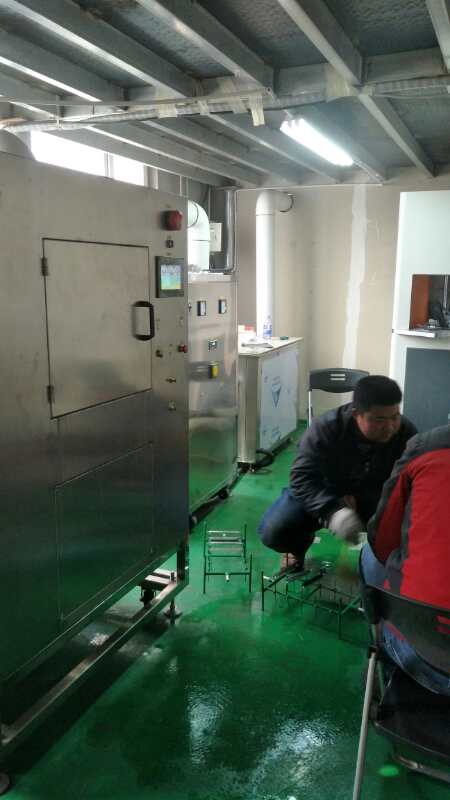
Client: Hebei Hengxin (China)
Equipment: 2 units of BY-100A metal plasma polishing machine
Application: Processing of electronic accessories
Duration: 7 years
Result: Stable operation, guided installation support provided by bayi
Key takeaway: A long‑term partnership built on reliable machine performance and responsive technical guidance.
Frequently Asked Questions (FAQ)
What is a plasma polishing machine?
A plasma polishing machine uses ionized gas (plasma) to remove burrs and micro‑roughness from metal surfaces without mechanical contact. It is also called a plasma deburring machine and is widely used for precision deburring and ultra‑fine polishing.
How does plasma polishing differ from traditional polishing?
Traditional polishing uses abrasive wheels or compounds, which can cause surface deformation and generate waste. Plasma polishing can polish at any angle of 360° without needing to turn the hanger out during the process, significantly reducing labor and energy costs. It is an environmentally friendly plasma polishing machine that leaves no secondary pollution.
Why is a pre-shipment test important?
A pre‑shipment test ensures the machine meets the agreed specifications (deburring rate ≥99.9%, cycle time, etc.) before you release the final payment. This is a standard risk‑control measure.
What certifications should a reliable supplier have?
For European markets, CE certification is mandatory. For North America, UL or ETL may be required. Ensure the certificate covers the specific model and lists the relevant standards (e.g., EN ISO 12100, EN 60204).
Can I get a customized plasma polishing machine?
Yes, many manufacturers including bayi offer non‑standard designs from 1000A to 2500A, as well as special types like tape‑type, long‑tube, and chain‑type plasma polishing equipment for automated production lines.
What is the typical lead time and MOQ?
Standard lead time is 30–45 days. Minimum order quantity is 1 unit. Payment terms: 50% deposit, full balance before shipment.
Conclusion
Procuring a plasma polishing machine does not have to be a gamble. By following a structured process—verifying supplier credentials, matching technical specs, confirming certifications, and securing contractual protections—you can avoid the common risks that derail projects. Partnering with an experienced manufacturer like Dongguan Bayi Automation Equipment Co., LTD (brand bayi) gives you access to CE‑certified machines, proven customer references, and transparent purchasing terms. For a detailed overview of specifications and company capabilities, download the company brochure (PDF) or contact the sales team at dgbayi@126.com / +8615282129198.
Ready to source your plasma polishing machine with confidence?
Visit bayi Official Website