
Decoding Crystal Resonator Specifications: How to Interpret Parameters and Production Impact on Quality
Author: HTNXT-Michael Anderson-Smart Manufacturing
Release time: 2026-06-27 03:34:04
View number: 200
Decoding Crystal Resonator Specifications: How to Interpret Parameters and Production Impact on Quality
When sourcing frequency components, procurement engineers and OEM designers are often confronted with datasheets full of cryptic acronyms and numbers: Frequency Tolerance, Load Capacitance (CL), Equivalent Series Resistance (ESR), Temperature Stability, Drive Level, Aging… What do these really mean for your circuit? And why do two crystal resonators with identical specifications sometimes perform vastly differently? The answer lies in the production process—the invisible hand that shapes every crystal blank, electrode, and seal.
This article is a technical guide for industrial buyers and design engineers who want to move beyond the datasheet and truly understand how a crystal resonator works, how to interpret its key parameters, and how manufacturing techniques determine final quality and reliability. By the end, you will be equipped to make sourcing decisions that balance performance, cost, and long-term stability.
Problem Definition: Why Parameter Interpretation and Production Knowledge Matter
The global frequency control device market is projected to exceed $4.5 billion by 2028, driven by IoT, automotive electronics, 5G, and smart home devices. With miniaturization and higher reliability demands, even a slight misinterpretation of a crystal resonator's specifications can lead to circuit instability, timing errors, or premature field failures.
Common problems buyers face:
- Frequency mismatch – Selecting a crystal with a load capacitance that does not match the IC oscillator circuit.
- ESR underestimation – Assuming lower ESR is always better; ignoring drive level constraints.
- Aging neglect – Overlooking long-term frequency drift.
- Process-blind sourcing – Choosing a supplier based solely on price without evaluating their manufacturing capabilities.
Industry Background: The Role of Quartz Crystal Resonators
A quartz crystal resonator (often simply called a crystal resonator) is the heart of timing in nearly every electronic device. It leverages the piezoelectric effect of a precisely cut quartz blank to generate a stable, resonant frequency. From the 32.768 kHz tuning fork crystal in your wristwatch to the MHz SMD crystal resonator in a GPS module, these components are essential for clock generation, reference signals, and frequency control.
Within the industry, products are categorized by package type (through-hole vs. SMD), frequency range, and cut type. Common families include:
- Through-hole crystal resonators: HC-49U, HC-49S, DT38 (cylindrical) – used where manual assembly or high shock resistance is required.
- SMD crystal resonators: 3215, 3225, 5032, 6035 – designed for automated pick-and-place in compact designs.
- Frequency range: 32.768 kHz (tuning fork) to >200 MHz (AT-cut fundamental and overtone).
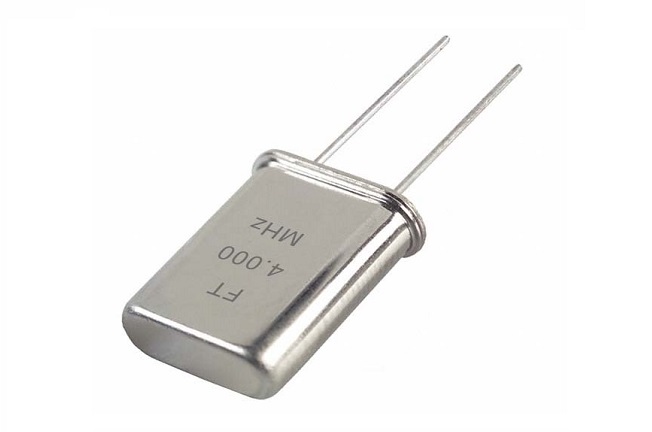
Fig 1: Classic HC-49U through-hole crystal resonator, widely used in instrumentation and industrial control.
Detailed Solution: What Is a Crystal Resonator and How Does It Work?
A crystal resonator consists of a thin piece of quartz (cut at a precise angle) sandwiched between two metal electrodes, all enclosed in a hermetically sealed package. When an alternating voltage is applied, the quartz vibrates mechanically at its resonant frequency due to the inverse piezoelectric effect. The equivalent circuit is an RLC network with a very high Q factor, ensuring exceptional frequency stability.
Key Technical Parameters Decoded
| Parameter | Symbol | Example (32.768 kHz) | Impact on Circuit |
|---|---|---|---|
| Frequency Tolerance | Δf/f | ±20 ppm | Initial accuracy at 25°C; affects real-time clock precision. |
| Load Capacitance | CL | 12.5 pF | Must match the oscillator's specified capacitance for correct pullability. |
| Equivalent Series Resistance | ESR | ≤70 kΩ | Higher ESR increases start-up time and power consumption. |
| Temperature Stability | ΔfT | ±30 ppm (-40~85°C) | Determines drift over environmental changes. |
| Aging | — | ±3 ppm/year | Long-term frequency shift; critical for always-on devices. |
| Drive Level | D | 1~100 μW | Excessive drive can damage the crystal or shift frequency. |
How to select the right value: Always consult the oscillator IC datasheet for recommended CL and ESR. For a typical surface mount crystal resonator used in MCU clocks, a common choice is 20 pF load capacitance with ESR below 60 Ω (at 8~16 MHz).
How Production Process Affects Crystal Resonator Quality
The performance of a quartz crystal resonator is not just a function of design; it is profoundly influenced by every step of manufacturing. A supplier with advanced automation and rigorous process control can deliver consistent, high-quality parts, while a low-cost producer may cut corners that cause hidden reliability issues.
1. Crystal Blank Processing: The Cut Angle
The orientation of the quartz bar relative to its crystallographic axes defines the cut type:
- AT-cut – Used for MHz frequencies; offers low temperature coefficient near room temperature.
- Tuning fork (TF) cut – Used for 32.768 kHz; extremely low power but narrower temperature range.
- BT-cut – Higher frequency but steeper temperature curve; less common.
A deviation of even 0.1° in the cutting angle can shift the turnover temperature by tens of degrees, severely impacting stability.
2. Electrode Deposition & Thickness Control
Electrodes are deposited via evaporation or sputtering. The thickness determines the mass loading, which fine-tunes the resonant frequency. Advanced suppliers use automated monitoring with network analyzers in the loop to adjust thickness in real time, achieving tight tolerance (e.g., ±10 ppm) without excessive rework.
3. Mounting, Sealing, and Hermeticity
How the crystal blank is mounted and sealed directly impacts aging and shock resistance.
- Glass-to-metal seal (e.g., SMD5032 Glass 2pad) offers excellent hermeticity but requires precise temperature control.
- Resin sealing – lower cost but may outgas, leading to higher aging.
- Seam sealing – a middle ground used in many SMD packages.
Manufacturers like Fronter Electronics Co., Ltd., founded in 1991, operate two fully automated production facilities equipped with world-class testing machines. Their SMD crystal resonator lines, including the DT38 cylindrical series, go through 100% frequency measurement and environmental stress screening to ensure RoHS and REACH compliance.
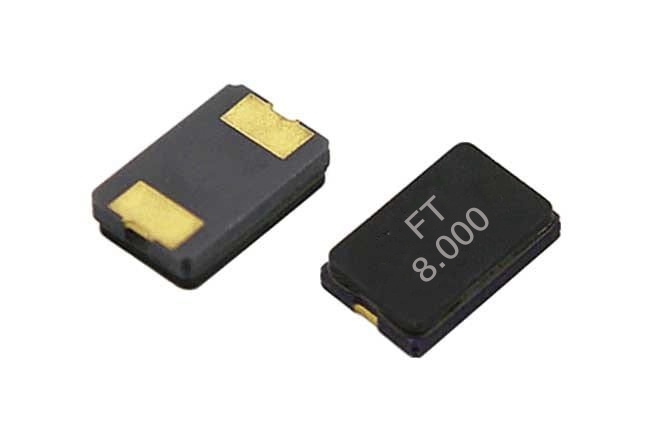
Fig 2: SMD5032 Glass 2pad crystal resonator – a hermetic packaging solution for automotive and industrial applications.
4. Testing & Calibration
Final test includes frequency measurement under multiple temperature points, ESR verification, insulation resistance, and DWV (Dielectric Withstand Voltage). Reputable suppliers provide test reports upon request. For example, Fronter offers detailed RoHS test reports (e.g., report No. SZXEC25001335801) for all batches, giving buyers traceable proof of compliance.
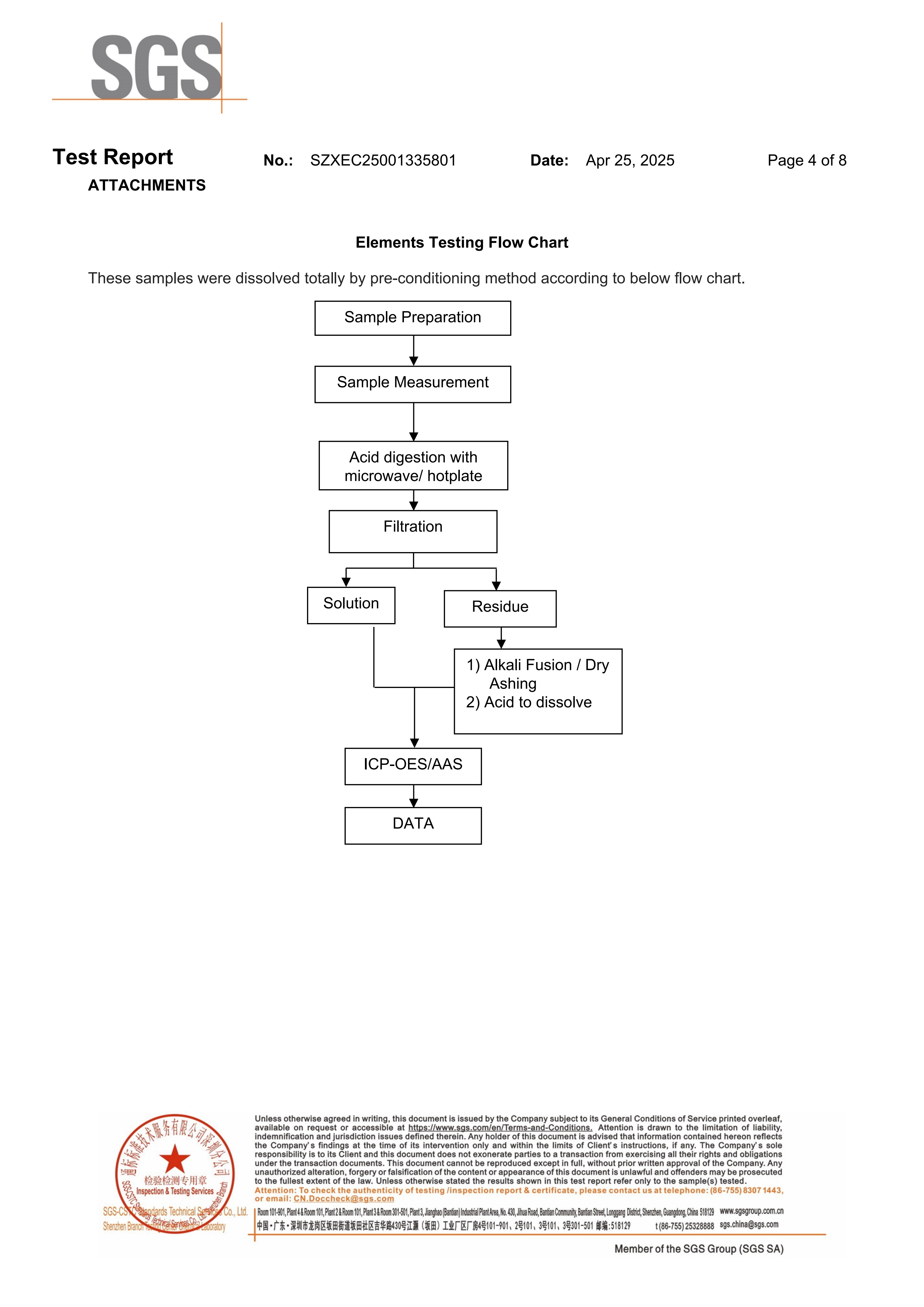
Fig 3: RoHS Test Report (No. SZXEC25001335801) for SMD Quartz Crystal Resonator & Oscillator – batch-level compliance documentation.
Step-by-Step Buyer’s Guide: How to Choose the Right Crystal Resonator
- Define application requirements: frequency, stability (±10, ±20, ±50 ppm), temperature range, package size, and cost target.
- Match parameters to supplier datasheets: Use the table above to cross-check CL, ESR, and aging.
- Evaluate production capabilities: Ask about crystal cut precision, electrode process, sealing type, and testing equipment.
- Verify certifications: Look for RoHS, REACH, and industry-specific certifications (e.g., IATF 16949 for automotive).
- Request samples and run reliability tests: Measure frequency at 25°C and at extremes; monitor aging after thermal cycling.
Use Case: 32.768 kHz Tuning Fork Crystal for IoT Timekeeping
A typical IoT module requires a real-time clock with low power consumption and ±20 ppm accuracy. The designer selects a tuning fork crystal resonator in a 3.2×1.5mm SMD package (e.g., Crystal SSP-T7-F series). Key parameters: CL=12.5 pF, ESR≤70 kΩ, aging ≤±3 ppm/year. The production choice of photolithographic tuning fork blanks and ceramic-based hermetic sealing ensures minimal aging and consistent start-up. Suppliers like Fronter, with decades of experience in both cylindrical crystal resonator (DT38) and SMD crystal frequency series, can provide fully characterized parts with lot traceability.
Frequently Asked Questions (FAQ)
Q1: What does frequency tolerance ±10 ppm actually mean?
It means that at 25°C, the actual frequency of the crystal can deviate from the nominal value by no more than ±0.001%. For a 20 MHz crystal, that is ±200 Hz. Tighter tolerance improves timing accuracy but usually costs more.
Q2: How do I choose the correct load capacitance for my IC?
The load capacitance (CL) is typically specified in the oscillator IC datasheet. It must be matched by adding external capacitors (C1, C2) such that CL = (C1*C2)/(C1+C2) + stray capacitance. Using the wrong CL will shift the frequency away from the nominal value.
Q3: Is lower ESR always better?
Not necessarily. While low ESR helps with start-up, it also reduces the oscillator's ability to suppress harmonics. The crystal's drive level rating must be respected to avoid damage. Select the ESR within the range recommended by the IC vendor.
Q4: How does aging affect my product’s lifetime?
Aging causes a gradual frequency drift due to changes in the quartz blank and electrode material. A typical specification of ±3 ppm/year means the clock may drift up to 30 ppm over ten years. For long-life equipment, select crystals with low aging (≤ ±1 ppm/year) and hermetic sealing.
Q5: What is the difference between AT-cut and tuning fork crystals?
AT-cut crystals operate in the MHz range (typically 4–200 MHz) and offer a flatter temperature response over a wide range. Tuning fork crystals are designed for low-frequency (32.768 kHz) operation with ultra-low power consumption but narrower temperature stability (±30 ppm typical).
Q6: Why are some Chinese-made crystal resonators significantly cheaper?
Cost differences often stem from less stringent process control (e.g., manual electrode tuning, resin sealing, limited burn-in) and lower overhead. However, reputable Chinese suppliers like Fronter Electronics have invested in fully automated factories with advanced testing equipment, enabling competitive pricing without sacrificing quality.
Conclusion
Selecting a crystal resonator is not just about matching a few digits on a datasheet. It requires a holistic understanding of how technical parameters interact with circuit requirements and how the manufacturing process determines long-term reliability. Buyers who invest time in interpreting specifications and evaluating supplier production capabilities will avoid costly redesigns and warranty returns.
When you need a partner with proven expertise, consider Fronter Electronics Co., Ltd. (brand: FT). Established in 1991 and recognized as a National High-Tech Enterprise in 2017, Fronter offers full lines of DIP and SMD quartz crystal resonators, oscillators, TCXOs, VCXOs, monolithic crystal filters, ceramic series, and SAW series. Their two automated production facilities are equipped with world-class manufacturing and testing machines. All products comply with RoHS and REACH. Whether you need a 32.768 kHz crystal resonator, an HC-49 SMD crystal, or custom frequency control solutions, Fronter delivers consistency and traceability.
Ready to source high-quality crystal resonators?
Contact Fronter Electronics for technical datasheets, samples, and competitive pricing.
📞 Tel: +86-755-8345 8798 | 📧 sales@chinafronter.com | 💬 WhatsApp: +86 18903022818
Address: Rm. 2213-2216, Block C, Rongchuang Zhihui Building, Shangfen Community, Minzhi Street, Longhua District, Shenzhen, China