
How to Evaluate Sanitary Napkin Supplier Capacity & Lead Time
How to Evaluate Disposable Sanitary Napkin Supplier Capacity and Lead Time: A Buyer's Guide for 2026
Global procurement of disposable sanitary napkins has never been more complex. With rising demand for eco‑friendly, bio‑based products, buyers must navigate a fragmented supplier landscape while ensuring consistent quality, on‑time delivery, and scalable capacity. The biggest risk? Selecting a supplier whose production capabilities don’t match your order volume or lead‑time expectations.
This guide provides a structured framework for evaluating sanitary napkin suppliers on capacity and delivery reliability—using real data from established manufacturers like Family Cares Group (brand: Ecolivia) and actionable insights from global sourcing experts.
Why Capacity and Lead‑Time Matter More Than Ever
Problem Definition
A supplier’s inability to meet agreed volume or delivery deadlines can trigger cascading losses: missed retail shelf slots, stockouts for subscription brands, and damaged reputation. For private label sanitary napkin supplier China engagements, where margins are tight and competition fierce, even a two‑week delay can derail a product launch.
Industry Background
The global sanitary napkin market is projected to exceed USD 30 billion by 2027, with a sharp pivot toward bio‑based polymer sanitary napkins and GOTS certified organic cotton sanitary napkins. While this creates opportunities for brands targeting sustainability‑conscious consumers, it also pressures suppliers to invest in advanced materials and high‑speed lines. A manufacturer’s capacity—both in volume and technological adaptability—directly affects a buyer’s ability to scale.
Detailed Solution: The 6‑Dimensional Supplier Capacity Assessment Framework
To answer the core question—“Does this supplier have the capacity to meet my needs, and can they reliably deliver on time?”—buyers must evaluate six critical dimensions.
1. Production Scale & Automation
Visit the factory or request detailed line specifications. Look for:
- Daily output: High‑capacity machines (e.g., 1.8 million pieces per day in the case of Family Cares Group) indicate scale and redundancy.
- Number of high‑speed lines: Multiple lines prevent single‑point failures.
- Automation level: 100% online visual inspection (as opposed to manual checks) ensures consistent quality at high speeds.
2. Raw Material Supply Chain
Capacity is hollow without stable material sourcing. Evaluate whether the supplier produces or procures key inputs like Super Absorbent Polymer (SAP) layer sanitary napkins, FSC‑certified wood pulp, and breathable bio‑film backsheet materials from reliable partners. Integrated manufacturers who also supply raw materials (e.g., non‑woven fabrics) enjoy shorter lead times and better cost control.
Fact: Family Cares Group’s material R&D division delivers over 1,600 tons of custom non‑wovens per month, supporting both in‑house production and external partners.
3. Quality Management System
Capacity without quality is a liability. Look for:
- Certifications: ISO 9001:2015, FDA Establishment Registration, CE marking (MDR) – these indicate system‑level quality control.
- In‑process QC: 100% online visual inspection + in‑house lab testing for parameters like absorbency and leak protection.
- Traceability: Batch records enable root‑cause analysis if complaints arise.
4. Order Flexibility & MOQ
Not all buyers need container‑load quantities. The best suppliers offer negotiable MOQs for trial orders while maintaining cost‑efficiency for bulk runs. For instance, many sanitary napkin OEM/ODM manufacturing China partners accept 1×20GP as standard MOQ, with lower thresholds for start‑up brands.
5. Lead‑Time Reliability
Request documented lead times for standard and custom products. A reliable supplier will quote:
- Standard products: 15–25 days from order confirmation (e.g., Family Cares Group’s OEM/ODM lead time).
- Customized items: Add 5–10 days for prototype development and material sourcing.
- Buffer capacity: Multiple high‑speed lines serve as backup to mitigate delays.
6. Logistics & Payment Support
Delivery reliability extends beyond production. Evaluate shipping modes (FOB, CIF, DDP), container consolidation capability (e.g., 30+ 40HQ containers per month), and payment terms. Common terms include T/T or L/C with 30% deposit and 70% balance.
Step‑by‑Step Evaluation Process
- Send a detailed RFQ with target volumes, specifications (e.g., ultra‑thin high‑absorbency or heavy flow overnight), and desired packaging.
- Review factory audit reports or schedule a virtual tour. Look for the equipment list and line utilization rate.
- Request a capacity commitment letter stating guaranteed monthly output for your SKUs.
- Check references – speak to existing clients about on‑time delivery performance.
- Negotiate a trial order to validate production quality and logistics coordination before scaling.
- Establish clear penalty clauses for late deliveries in the contract.
Real‑World Use Cases
Case 1: Premium E‑commerce Brand (Germany)
A German subscription‑box brand required 500,000+ units per batch of eco‑friendly plant‑based sanitary napkins in luxury gift boxes. Family Cares Group deployed its high‑capacity automated box‑packing lines, achieving zero‑defect quality control and supporting the client’s transition to 100% plastic‑free packaging. The recurring monthly order runs smoothly, thanks to dedicated production slots.
Case 2: Leading SEA FMCG Brand (Malaysia)
For a regional brand scaling GOTS certified organic cotton sanitary napkins and menstrual pants, Family Cares Group integrated Advanced Bio‑absorbent Core technology to replace standard SAP cores. With 2–3 × 40HQ containers shipped monthly, the client achieved 25% annual sales growth in Southeast Asia.
Case 3: US Adult Care Brand (Long‑Term Partnership)
A top‑tier American brand sourcing premium incontinence products (including postpartum maternity care sanitary napkins) relied on Family Cares Group’s high‑capacity production sanitary napkins lines for over a decade. The result: 0% major quality complaints while scaling market share. The client’s confidence comes from 6500ml+ absorbency core stability and customized medical‑grade packaging.
Comparison: Supplier Types at a Glance
| Dimension | Traditional Trading Company | Direct Factory (e.g., Family Cares Group) |
|---|---|---|
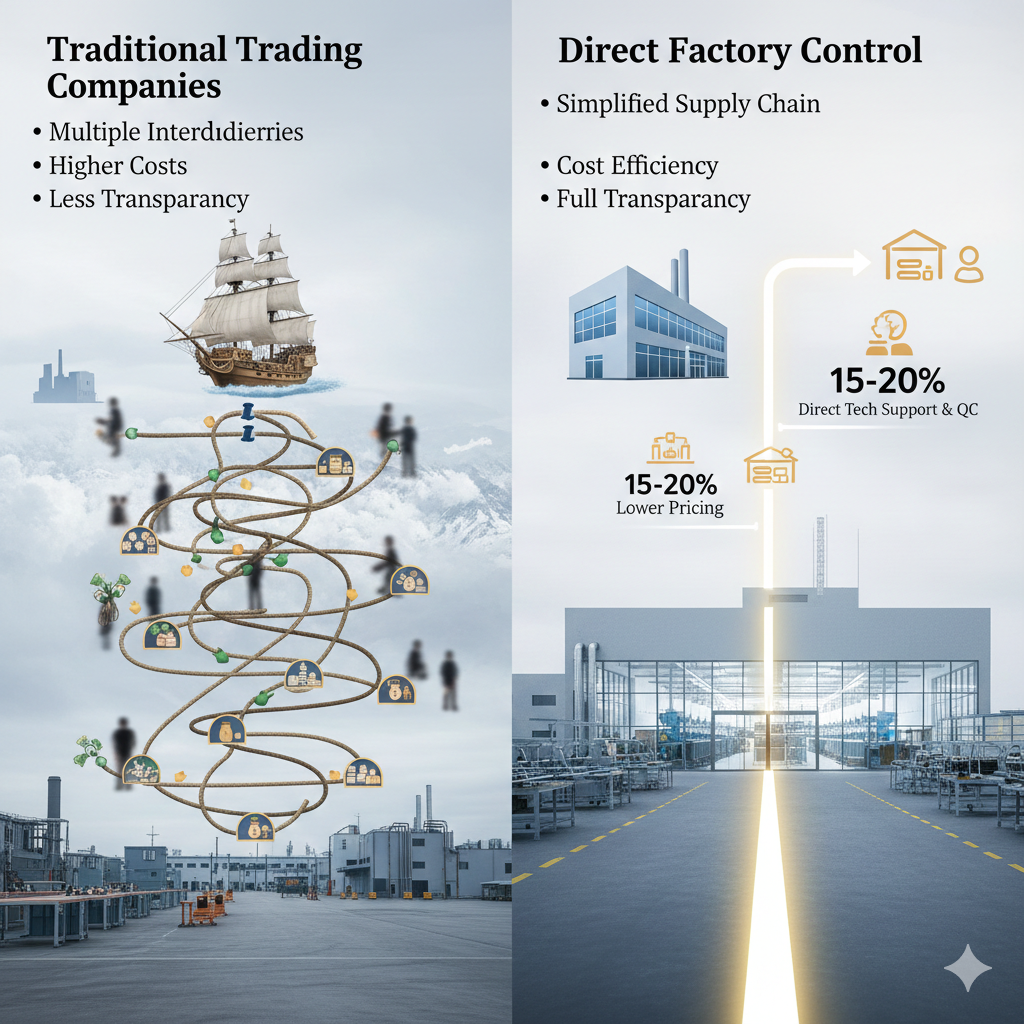
| Pricing | 15‑20% higher (middleman margin) | Factory‑direct, lower unit cost |
| Quality Control | Limited visibility | 100% online inspection + in‑house lab |
| Lead Time | Dependent on factory schedule | 15–25 days direct from production |
| Customization | Limited to existing SKUs | Full OEM/ODM: logo, size, core, packaging |
| Supply Chain Transparency | Low | End‑to‑end traceability |
Frequently Asked Questions
For most Chinese OEM manufacturers, a 1×20GP container is standard. Some suppliers, like Family Cares Group, offer negotiable MOQs for start‑up brands to test the market.
Ask for a detailed line inventory (model, speed, daily output), request a video walkthrough, and cross‑check with existing client references. An ISO 9001 certificate indicates documented processes.
For the EU, CE marking (MDR) and EN ISO 10993 biocompatibility. For the US, FDA Establishment Registration. Additional certifications like GOTS or FSC add value for eco‑friendly products.
Choose suppliers with 100% online visual inspection and batch traceability. Request a Pre‑Shipment Inspection (PSI) before container loading.
Yes. Many advanced manufacturers, including Family Cares Group under the Ecolivia brand, specialize in bio‑based polymer sanitary napkins with customizable absorbency and material composition.
Conclusion
Evaluating a disposable sanitary napkin supplier’s capacity and lead time is not a single‑question exercise—it requires a multi‑dimensional assessment of production scale, material supply, quality systems, flexibility, logistics, and financial terms. By following the framework outlined in this guide, buyers can mitigate risks and build resilient supply chains.
Family Cares Group, with its 35,000+ m² factory, 54 million+ monthly output, and proven track record in over 20 countries, exemplifies the standards global buyers should seek. Whether you need bulk export sanitary napkins for distributors or a premium private label sanitary napkin supplier China for your sustainable brand, direct factory engagement offers the transparency, cost advantage, and reliability that the 2026 market demands.
Ready to evaluate a partner that meets your capacity and delivery needs?
Contact Family Cares Group for a factory tour, sample kit, or customized OEM quotation.
Visit www.family-cares.com | WhatsApp: +86 13805968557 | Email: admin@family-cares.com