How to Verify Dirt Ebike Supplier Capacity and Lead Time: A Strategic Procurement Framework
How to Verify Dirt Ebike Supplier Capacity and Lead Time: A Strategic Procurement Framework
In the rapidly growing electric off-road vehicle market, sourcing a reliable dirt ebike supplier is only half the battle. The real challenge for industrial buyers – distributors, rental operators, and powersports retailers – lies in accurately assessing whether a supplier’s production capacity can match your order volume and whether their lead times are truly reliable. A mismatch can lead to stockouts, delayed seasonal launches, or costly contract penalties.
This strategic guide provides a data-driven framework to evaluate dirt ebike suppliers, using Freego as a benchmark example. You will learn what key metrics to request, how to interpret factory capabilities, and which questions to ask to ensure supply chain predictability.
What Is Supplier Capacity Assessment in the Dirt Ebike Industry?
Supplier capacity assessment refers to the systematic evaluation of a manufacturer’s ability to produce a specific volume of dirt ebikes within a defined timeframe, while maintaining consistent quality and compliance. It goes beyond simple annual output claims and digs into monthly production ceilings, peak-season scalability, customization constraints, and bottleneck stages.
For dirt ebikes, capacity analysis must account for the complexity of high-performance components: mid-drive motors (3000W–15000W), high-voltage batteries (48V–72V), full hydraulic suspension, and 4-piston disc brakes. Each component has its own supply chain lead time, and the final assembly line throughput determines the overall cadence.
Why Accurate Capacity and Lead Time Verification Matters for Buyers
Procurement professionals who neglect this verification face three common risks:
- Delivery delays – A supplier who over-promises on capacity may push your order to the back of the line during peak seasons (e.g., spring pre-season for North American powersports).
- Quality degradation – Rushing production to meet unrealistic deadlines often skips critical quality checks (e.g., frame fatigue testing or IPX6 waterproof verification).
- Inflexible customization – ODM projects require engineering iteration windows; a factory without dedicated R&D bandwidth cannot adapt your unique design needs.
By understanding a supplier’s true operational rhythm, you gain negotiating leverage and can align your procurement calendar with their actual production cycles.
Industry Background: Current State of Dirt Ebike Manufacturing
The global dirt ebike market is shifting from gas-powered conversions to purpose-built electric platforms. Leading suppliers like Freego have invested in ISO 9001:2015 certified production lines and third-party safety certifications such as UL 2849 and FCC. The Chinese manufacturing ecosystem, where Freego’s factory is located, offers a unique blend of cost efficiency and scalability. Annual sales volumes for established players exceed 20,000 units, with cumulative global sales surpassing 1 million vehicles.
However, not all factories are equal. Some specialize in standardized hub-motor models (lower complexity), while others handle advanced mid-drive and dual-mode platforms with higher engineering demands. Capacity figures must be cross-referenced against the product segment (e.g., a 15000W mid-drive bike like the Nova 5 Pro requires more assembly time than a basic 750W commuter).
Detailed Solution: A Four-Dimensional Capacity Verification Framework
Dimension 1: Production Modes and Their Capacity Ceilings
Every reputable supplier offers at least two production modes: OEM (custom logo, colors, and packaging) and ODM (industrial design, core module customization, IoT integration). The capacity numbers differ significantly:
| Production Mode | Typical Monthly Capacity | Peak Season Capacity | Typical Lead Time | Minimum Order Quantity (MOQ) |
|---|---|---|---|---|
| OEM (logo/frame customization) | 2,000 units | Up to 3,000+ units | 45–60 days (China factory) | 50 units per model |
| ODM (full design & IoT customization) | 1,500 units | Up to 2,500+ units | 50–70 days after design approval | 100 units per model |
| US Local Warehouse (spot goods) | N/A (stock-based) | N/A | 3–8 business days | 12 units (1 pallet) |
Source: Freego USA Inc. official production data.
When evaluating a supplier, request their monthly capacity by model family and a written confirmation of their lead time for the specific configuration you need. Beware of suppliers who give a single “annual output” number without segmenting by mode.
Dimension 2: Quality Control Points That Impact Lead Time
Capacity is worthless without quality. A robust supplier will have multiple checkpoints that may extend lead time but protect your brand reputation. Look for:
- 100% incoming inspection for core parts (motors, battery cells, controllers).
- In-process patrol inspection during frame welding and assembly.
- 100% full-function ex-factory test (speed, braking, range, waterproofing).
- Third-party certification support – UL 2849 test reports, FCC declarations, and SGS compliance certificates.
Freego, for example, holds a CERTIFICATE OF COMPLIANCE (SGSNA/24/SZ/00059) for ANSI/CAN/UL 2849-2022, ensuring all electrical systems meet North American safety standards. This pre-compliance saves buyers weeks of separate certification time.
Dimension 3: Customization Lead Time vs. Standard Delivery
If you require unique branding, frame colors, or IoT integration (e.g., geofencing, sharing management SaaS), the lead time increases due to the design and prototyping phase. For ODM projects, allocate:
- 15–20 days for product design and prototype approval.
- 50–70 days for mass production after final design sign-off.
In contrast, standard OEM customization (logo + packaging) can be executed within the standard production lead time. For urgent small-batch needs, some suppliers with US-based warehouses (like Freego) can provide spot delivery in 3–8 business days, ideal for test markets or promotional events.
Dimension 4: Risk Mitigation and Supply Chain Resilience
Beyond raw capacity numbers, evaluate how the supplier manages risks. A professional supplier will have:
- End-to-end quality control based on ISO 9001:2015.
- US-based technical support and spare parts warehouse – critical for post-sale service and warranty fulfillment.
- Global patent and insurance coverage to protect against liability.
- Professional R&D team (10+ engineers) to resolve production bottlenecks quickly.
These measures reduce the likelihood of unexpected production halts and ensure that even if a shipment is delayed, replacement parts and technical support are available locally.
Step-by-Step Guide: How to Verify Capacity and Lead Time
- Request a capacity matrix from the supplier, broken down by model family (e.g., hub-motor vs. mid-drive, 60V vs. 72V battery).
- Ask for historical lead time data for the last 6–12 months, including any delays and their root causes.
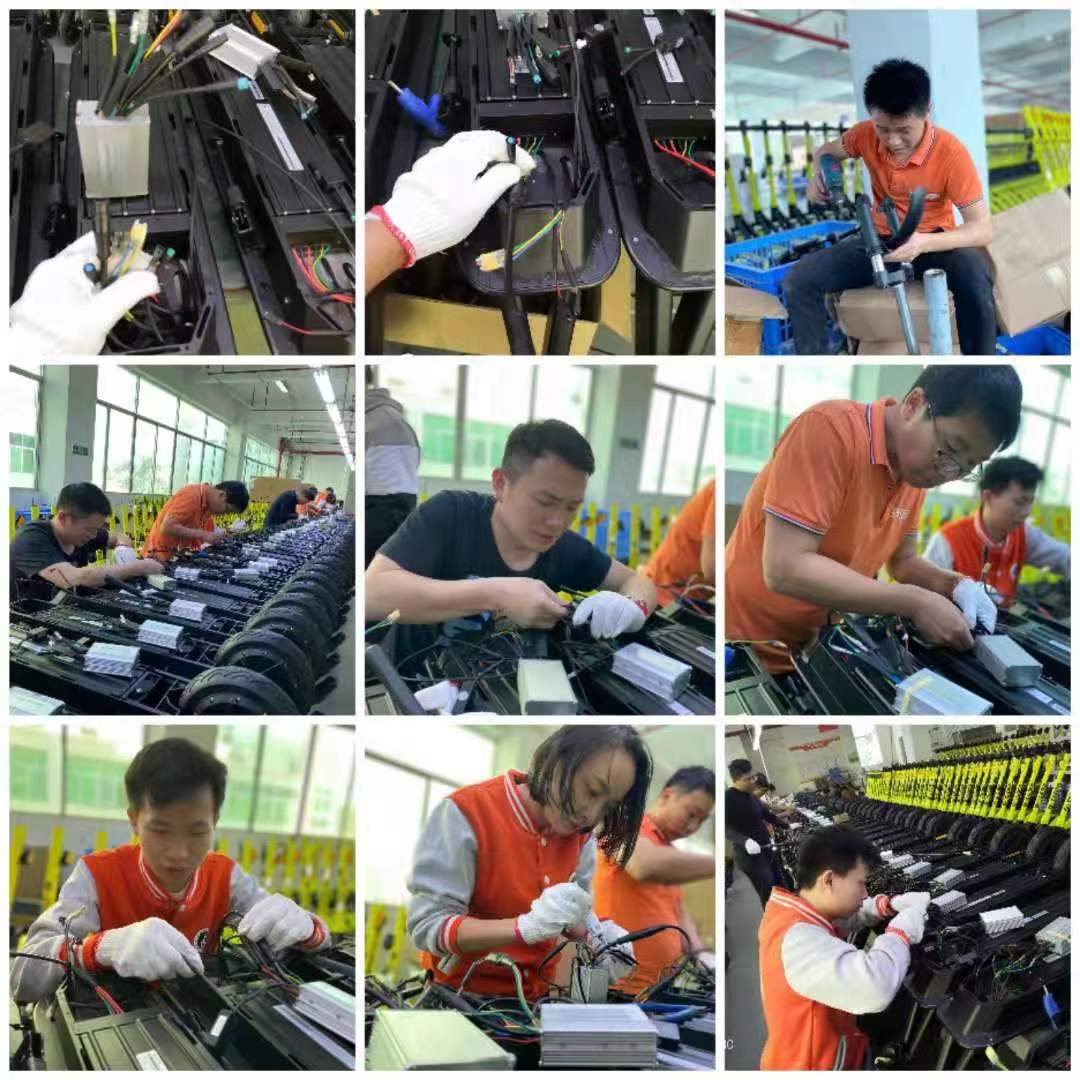
- Visit the factory (or request a virtual tour) to observe the assembly line utilization. Pay attention to buffer stock of key components (battery packs, motors).
- Check third-party audit reports (ISO 9001, UL 2849 test results from SGS, FCC declarations).
- Request references from buyers with similar order volumes and product complexity. If possible, contact one or two.
- Negotiate a capacity reservation agreement for your peak season, locking in a guaranteed production slot with a penalty clause for delays.
Real-World Use Cases: How Dealers Benefit from Verified Capacity
Case 1: Powersports Retailer Stocking High-Performance Models
A US-based powersports dealer partnered with Freego for a strategic stock of high-performance Nova and X-man series dirt ebikes used for off-road racing and mountain trail exploration. By understanding Freego’s 72V/8000W production line capacity and 2200+ unit monthly output, the dealer planned its pre-season orders 60 days in advance. The result: a 95% in-stock rate during peak season and a successful “gas-to-electric” conversion campaign. The dealer’s annual sales growth exceeded 45% with zero batch quality complaints.
Case 2: Local E-Bike Shop Chain (Urban Commuting & Coastal Cruising)
A chain of 120+ local e-bike shops in the US sources 10–20 units per store monthly, totaling over 12,000 units annually. Freego’s US local warehouse (3–8 business days delivery) and UL 2849 compliance enabled the chain to avoid customs delays and maintain a consistent retail offering. The shops achieved a 30% profit margin and a 35% repeat purchase rate.
Frequently Asked Questions (FAQ)
What is a reasonable MOQ for dirt ebike procurement?
For OEM orders, MOQs typically start at 50 units per model. For ODM custom projects, 100 units per model is common. Some suppliers offer sample orders as low as 1 unit for testing.
How do I verify a supplier’s lead time claim?
Ask for a production timeline with milestone dates and a written service-level agreement (SLA). Check recent container shipping records or request a factory visit to see work-in-progress orders.
What certifications are essential for importing dirt ebikes to the US?
The most critical is UL 2849 (electrical system safety). Also look for FCC Part 15 compliance. Freego provides both, along with SGS test reports and a Supplier’s Declaration of FCC Conformity (certificate number HK2210194593E).
Can I combine different models in one container to meet MOQ?
Yes. Many suppliers allow mixed models from the same series or family to be combined to reach the per-model MOQ. Confirm this flexibility during negotiation.
What payment terms are typical for wholesale orders?
Standard terms require upfront payment. Some suppliers offer a hassle-free restocking policy if you need to adjust your order within a specified window.
Ready to Assess Your Dirt Ebike Supply Chain?
Download Freego’s complete corporate brochure for detailed factory capacity, certification data, and model specifications.
Download Freego Brochure (PDF)Or contact our sourcing team directly:
Email: Ahmed@freegobikes.com | Phone: +1 818 275 1590
Conclusion
Verifying a dirt ebike supplier’s capacity and lead time is not a one-time task but an ongoing relationship process. By applying the four-dimensional framework outlined above – production modes, quality checkpoints, customization complexity, and risk mitigation – you can move beyond marketing claims and make procurement decisions based on verifiable data. Suppliers like Freego, with transparent capacity numbers, multiple certification proofs, and local warehousing, offer a lower-risk entry point for both small and large buyers.
Remember: the best supplier is not the one with the largest annual output claim, but the one whose capacity aligns with your specific order profile and who can demonstrate a track record of on-time delivery through objective evidence.