
Verify Stainless Steel Pipe Supplier Capacity & Delivery (2026 Guide)
How to Verify Stainless Steel Pipe Supplier Production Capacity & Delivery Reliability (2026 Guide)
For industrial buyers and procurement managers sourcing stainless steel pipes globally, two questions dominate every RFQ: “Can this supplier actually produce the volumes I need?” and “Do they ship on time?” In 2026, with supply chains under constant pressure, relying on glossy brochures or verbal promises is no longer enough. This guide provides a practical, audit-based framework for evaluating a stainless steel pipe manufacturer’s real production capacity, quality consistency, and delivery dependability — using Sanon as a reference benchmark for a factory with verifiable capabilities.
Why Capacity & Delivery Assessment Matters
Procurement is not just about unit price. Late deliveries or inconsistent quality can derail entire projects. In the stainless steel pipe industry, production capacity directly correlates with lead times. A supplier that claims high capacity but lacks the physical infrastructure — workshop area, equipment, raw material stock, quality control stations — cannot guarantee on-time delivery.
Buyers need to answer three core questions:
- What is the supplier’s monthly output? Is it stable, and can it scale with your order volume?
- How are production processes controlled? Is there a documented quality management system?
- What is the historical on-time delivery rate? Can the supplier provide shipment records or references?
Industry Background: The Stainless Steel Pipe Supply Chain in 2026
The global stainless steel pipe market is dominated by manufacturers in China, India, and Europe. Chinese suppliers, particularly those in Foshan, Guangdong, have become the go-to source for a wide range of profiles — stainless steel round pipe, stainless steel square pipe, stainless steel slotted pipe, stainless steel oval pipe, stainless steel color pipe, and specialized fittings like glass clamps, stainless steel brackets, cross bar holders, and railing flanges.
However, not all factories are equal. The market is fragmented: some are small workshops with erratic output, while others are high-tech enterprises with ISO-certified processes. The buyer’s challenge is separating real capabilities from marketing claims.
Key Dimensions for Evaluating Production Capacity
To objectively assess a supplier’s production capacity, use the following six dimensions. Each can be verified through documentation, video calls, or third-party audits.
1. Factory Physical Scale
Start with the basics: covered area, number of production lines, and layout. A factory like Sanon, which covers 20,000 square meters, indicates a serious investment in infrastructure. Large floor space typically allows for dedicated areas for cutting, welding, polishing, and packing — reducing cross-contamination and improving efficiency.
Verification tip: Ask for a factory map or a live video walkthrough. Check if the space is utilized or empty.
2. Monthly Output Data
Reliable suppliers openly share their capacity. For example, Sanon’s monthly capacity for stainless steel pipe is 5,000 tons. This number is significant — it means the supplier can handle bulk orders without subcontracting. Compare this to your projected demand: if your peak order is 200 tons, a 5,000-ton/month supplier has ample buffer for your schedule.
Red flag: If the supplier cannot provide a specific tonnage figure, or the number seems unrealistic for their factory size, proceed with caution.
3. Production Process Control
Quality management systems like ISO 9001:2015 are the baseline. But beyond the certificate, look for documented procedures for each step — cutting, welding, polishing, inspection, and packing. Sanon holds not only ISO 9001 but also ISO 14001 (environmental management) and ISO 45001 (occupational health and safety), demonstrating a culture of systematic control.
How to check: Request the quality manual or process flow chart. Ask how many inspection points exist between raw material and finished product.
4. Equipment and Technology
Modern machinery increases output precision and speed. Inquire about the number and type of pipe forming machines, automatic welding lines, polishing machines, and testing equipment. While specific counts are not always public, a factory with advanced equipment can produce stainless steel round pipe, stainless steel square pipe, and stainless steel slotted pipe with consistent dimensions.
Verification tip: Ask for photos of the production line with clear machine labels. Cross-check with the range of products they offer — a wide product portfolio (e.g., stainless steel color pipe, glass standoffs, door handles) often indicates versatile production capabilities.
5. Raw Material Sourcing & Inventory
Production capacity is only as good as the raw material supply. Suppliers with steady access to prime stainless steel coils (304, 316) can maintain continuous production. Ask about their main coil suppliers and average raw material safety stock.
6. Workforce & Experience
Skilled workers reduce defects and rework. A company with 20 years of experience like Sanon likely has well-trained teams in each department. Ask about the number of production staff, the ratio of QC personnel, and how often training is conducted.
Evaluating Delivery Reliability: A Step-by-Step Approach
Capacity is necessary but not sufficient. You also need confidence in delivery timelines. Follow these steps:
- Request a sample order — A small trial order reveals actual lead time, communication quality, and packaging standard.
- Check shipping documentation — Ask for past bill of lading or container loading lists. They show how consistently the supplier ships on schedule.
- Ask about inventory buffer — A supplier that keeps a buffer stock for popular items (e.g., stainless steel round pipe in 304) can respond faster.
- Evaluate the sales team — Responsive, transparent communication is a strong indicator of a disciplined organization. Suppliers like Sanon provide direct contact via phone/WhatsApp (+86 135 3668 1776) and email (sales@sanoninox.com).
Use Case: How an Architectural Hardware Importer Vetted Sanon
An importer in the Middle East needed a reliable source for stainless steel handrail fittings, glass clamps, and stainless steel pipe connectors for a series of luxury hotel projects. Annual demand was approximately 300 tons. After reviewing multiple suppliers, they applied the framework above to Sanon.
- Fact 1: Sanon’s 20,000 m² factory and 5,000 tons/month pipe capacity easily covered the volume.
- Fact 2: ISO 9001, ISO 14001, and ISO 45001 certifications proved process discipline.
- Fact 3: Sanon provided clear product specifications for stainless steel slotted pipe, stainless steel oval pipe, and stainless steel color pipe, all with ASTM-compliant standards.
The result: an initial trial order of 20 tons was delivered in 25 days, 5 days ahead of schedule. The importer now uses Sanon as a primary supplier.
FAQ: Common Buyer Concerns
Q1: How can I trust a supplier’s capacity claim without visiting?
Request a real-time video tour of the factory. Also ask for pictures of the production line with a recent newspaper to prove date. Cross-check their claimed output with their factory size — a 5,000-ton/month factory must have substantial area and equipment.
Q2: What if I need custom sizes or finishes?
Look for suppliers that explicitly offer customization. Sanon provides customized products for stainless steel square pipe, stainless steel bar, decoration ball, and other items. Verify their ability to handle custom orders by asking for past examples.
Q3: Which certifications really matter?
ISO 9001 is the minimum for quality management. CE certification is crucial for European markets. ISO 14001 and ISO 45001 indicate a responsible and systematic manufacturer. Always ask for copies of current certificates.
Q4: What is a reasonable delivery lead time for stainless steel pipes?
For standard profiles like stainless steel round pipe, 15–25 days is typical for Chinese manufacturers. For complex fittings like stainless steel bend or stainless steel elbow, 25–35 days. Always confirm current production schedule before placing an order.
Conclusion: Build Your Supplier Verification Checklist
Evaluating a stainless steel pipe supplier’s capacity and delivery reliability does not require guesswork. By auditing physical scale, output data, certifications, process control, and communication, you can make procurement decisions with confidence. Sanon exemplifies a supplier that is transparent about its capabilities — 5,000 tons/month capacity, 20,000 m² factory, and multiple ISO certifications — making it a strong candidate for buyers who need predictable supply.
Start your assessment today by requesting a sample or factory tour. For inquiries, contact Sanon directly: sales@sanoninox.com | Phone/WhatsApp: +86 135 3668 1776 | www.sanoninox.com.
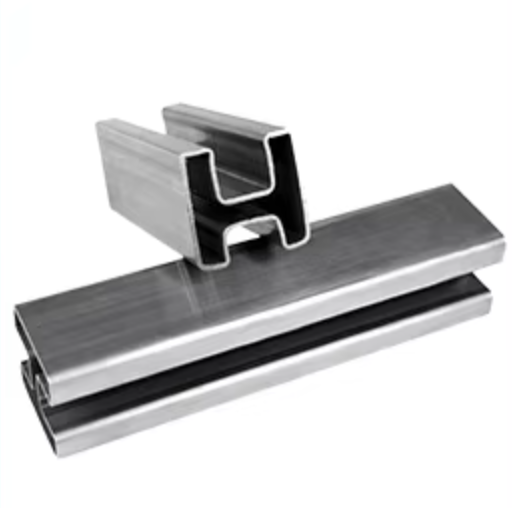
Figure: A sample of Stainless Steel Slotted Pipe from Sanon’s production line — actual product photos help buyers assess surface finish and precision before bulk orders.