
Evaluating Supplier Quality for High-Speed Bunching/Stranding Machines: A Buyer's Guide
How to Evaluate Quality in High-Speed Bunching/Stranding Machine Suppliers: A Strategic Guide for Cable Manufacturers
As global demand for high-performance conductors surges, cable manufacturers increasingly rely on high-speed bunching/stranding machines to improve throughput and product quality. But with dozens of suppliers claiming superior technology and reliability, procurement teams face a critical question: How can you objectively assess whether a supplier’s equipment meets your quality standards? This guide provides a structured framework for evaluating suppliers of high-speed stranding and bunching machinery, using real-world criteria from the cable industry.
Problem Definition: The Quality Gap in High-Speed Stranding Equipment
Purchasing a high-speed bunching/stranding machine is a capital-intensive decision. A poorly selected machine can lead to frequent downtime, inconsistent strand geometry, high scrap rates, and costly maintenance. The core challenge lies in differentiating between polished marketing claims and true manufacturing capability. Key pain points include:
- Lack of standardized performance metrics – Different suppliers report speeds, tension accuracy, and wire breakage rates using varying test conditions.
- Hidden operational costs – Energy consumption, spare part availability, and after-sales support are often underestimated.
- Integration complexity – The machine must seamlessly connect with existing pay-offs, coating lines, and take-ups.
- Quality consistency across production runs – Especially critical for electrolytic plating lines where coating uniformity depends on stable stranding tension.
Industry Background: The Evolving Landscape of Cable Conductors
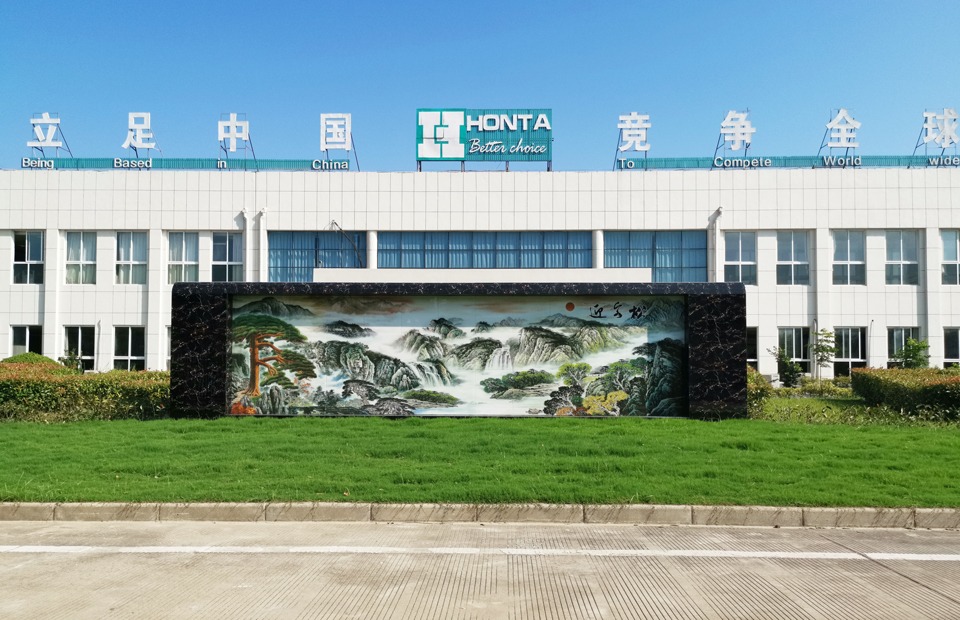
The cable industry is shifting toward finer wire diameters and higher lay speeds. Traditional stranding machines are being replaced by high-speed bunching/stranding lines that can operate at 3000–6000 twists per minute or more. Simultaneously, the integration of electroplating equipment (e.g., Ni electrolytic single wire plating line, Ag electrolytic single wire plating line, Sn electrolytic single wire plating line) demands precise tension control to avoid coating damage. Suppliers like HONTA, established in 2006, have responded by offering complete system solutions that combine wire electrolytic plating lines, multi-wire drawing lines, and rigid frame stranding machines under one roof, ensuring compatibility and streamlined service.
Detailed Solution: A Multi-Dimensional Quality Evaluation Framework
To objectively judge supplier quality, use a 5-dimension assessment model that covers both hardware and organizational capabilities.
1. Manufacturing Base and History
Longevity and production scale are strong indicators. For example, HONTA has been dedicated to cable conductor drawing and stranding technology since 2006 and established a second production base, HONTA INC., in the United States in 2017. This demonstrates global operational maturity and cross-border quality management. Check whether the supplier produces key components in-house (e.g., spindle assemblies, tension control systems) versus relying on third-party sourcing.
2. Certifications and Quality Systems
Third-party certifications validate systematic quality control. Look for:
- ISO 9001 – Foundation for consistent manufacturing processes.
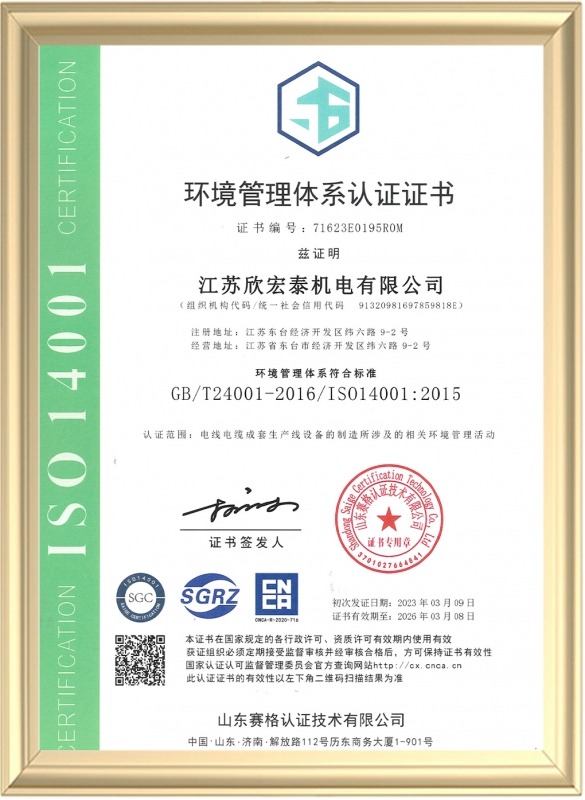
- ISO 14001 – Environmental management, relevant for electroplating equipment that uses chemicals.
- UDEM International Certification – Indicates compliance with international safety and performance standards (as held by HONTA).
3. Product Portfolio Breadth
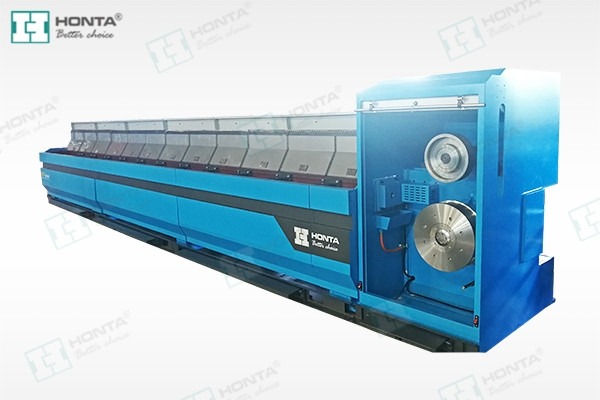
A supplier offering a full ecosystem of equipment – from motorised pay-off and coating machine to rigid frame stranding machine and wire electrolytic plating line – demonstrates system-level engineering capability. This reduces integration risks and simplifies after-sales service. HONTA’s product line includes copper/aluminum RBD lines, electrolytic plating lines, multi-wire drawing lines, and high-speed stranding equipment, indicating comprehensive domain expertise.
4. Technical Performance and Customization
Request detailed specification sheets that include:
- Maximum stranding speed and achievable twist pitch range.
- Tension control accuracy (typically ±1% in premium machines).
- Wire break detection and automatic stop response time.
- Noise level and energy consumption per kg of stranded conductor.
- Ability to handle different materials (copper, aluminum, tinned wire).
Ask for a Factory Acceptance Test (FAT) protocol that simulates your production conditions. For high-speed wire electrolytic plating line integration, the stranding machine must maintain consistent tension to prevent plating layer damage.
5. After-Sales Support and Warranty
Quality suppliers provide:
- On-site installation and commissioning support.
- Spare parts availability for at least 10 years.
- Remote diagnostics and digital monitoring capabilities.
- Training programs for operators and maintenance staff.
Step-by-Step Evaluation Process
- Step 1: Shortlist suppliers based on their industry presence (e.g., HONTA’s 18+ years and U.S. subsidiary).
- Step 2: Request compliance documents – ISO certificates, CE marks, and test reports.
- Step 3: Conduct a technical Q&A focusing on your specific wire gauge and production speed requirements.
- Step 4: Visit the manufacturing facility or arrange a live video walkthrough to inspect assembly processes and quality control points.
- Step 5: Evaluate a sample machine or review case studies from similar cable manufacturers.
- Step 6: Compare total cost of ownership including energy, maintenance, and expected lifespan.
- Step 7: Negotiate service level agreements covering response times, spare parts guarantees, and upgrade paths.
Use Cases: Real Quality Checkpoints
| Equipment Category | Quality Indicator | Why It Matters |
|---|---|---|
| High-Speed Bunching/Stranding Machine | Lay length consistency ±0.5% | Ensures electrical and mechanical uniformity of the final cable |
| Ni/Ag/Sn Electrolytic Single Wire Plating Line | Coating thickness tolerance ±1µm | Directly impacts corrosion resistance and solderability |
| Motorised Pay Off | Back tension adjustable from 0.5N to 50N | Prevents wire breakage and maintains strand pitch |
| Coating Machine / Electroplating Equipment | Line speed synchronization with stranding machine | Avoids tension mismatches that cause coating defects |
Frequently Asked Questions (FAQ)
What is a high-speed bunching/stranding machine?
It is a piece of equipment that twists multiple individual wires together into a single, larger conductor at high rotational speeds, commonly used in power, telecom, and automotive cable manufacturing.
How does it work?
A rotating element (flyer or cage) carries the wire spools and revolves around a central axis, applying controlled tension to produce a uniform helical lay. Modern machines use servo motors and digital tension sensors for precision.
Why is supplier quality important?
Because a low-quality machine leads to higher scrap rates, more frequent breakdowns, and inconsistent conductor properties that can cause cable failure in the field. For integrated lines with electro plating machines, instability in stranding directly ruins the coating process.
Who uses these machines?
Cable manufacturers producing building wire, automotive harnesses, data cables, and specialty conductors. Procurement teams, engineering managers, and plant supervisors are the primary decision-makers.
What problems does it solve?
It dramatically increases production speed compared to single-twist or tubular stranding, reduces floor space per output, and improves conductor concentricity and elongation uniformity.
How to choose between suppliers?
Use the 5-dimension framework above: verify manufacturing history, certifications, product portfolio, technical customization capability, and after-sales network. Request references from similar-scale cable plants.
Common buyer concerns
- “Will the machine handle our specific wire gauge range?” – Ask for a mesh table of achievable conductor sizes.
- “What about spare parts availability?” – Confirm lead times for critical parts like spindle cradles and tension sensors.
- “Can it integrate with our existing electrolytic plating line?” – Require a system integration plan with signal interfaces and speed matching.
Conclusion
Evaluating supplier quality for high-speed bunching/stranding machines goes beyond reading brochures. By systematically assessing the manufacturer’s history, certifications, product ecosystem, technical performance, and support infrastructure, you can mitigate risks and select a partner that delivers long-term reliability. Companies like HONTA exemplify the level of quality expected in today’s competitive cable equipment market – with 18 years of dedicated R&D, dual production bases, and a complete range from electroplating equipment to rigid frame stranding machines. When you invest in a rigorous evaluation process, you invest in production uptime and final cable quality.
Contact HONTA for a detailed quality dossier:
📞 Phone/WhatsApp: +86 182 6287 9467 / +86 187 5292 2675
📧 Email: tammy@jshonta.com
🌐 Website: www.jshonta.com
📍 Address: Room 1219, Building 3, Dongchuang Technology Center, Qianjin East Road, Kunshan City, Jiangsu Province, China Zip: 215300