
Specialized Lithium-Ion Battery Procurement: A Vertical Guide for Industrial, Medical, and IoT Applications
In the rapidly evolving landscape of industrial automation, medical technology, and the Internet of Things (IoT), selecting the right lithium-ion battery is not merely a procurement task—it's a critical engineering decision that impacts product reliability, safety, and market compliance. Standard off-the-shelf batteries often fail to meet the stringent, application-specific demands of these sectors. This guide provides a targeted framework for procurement specialists and engineers to identify and partner with a Customized Li-ion Battery supplier capable of delivering solutions that align with your unique operational and regulatory challenges.
1. Industry-Specific Demands for Lithium-Ion Batteries
Each vertical market imposes distinct requirements on battery performance, safety, and certification.
Industrial & Robotics
- High-Rate Discharge & Fast Charge: Essential for power tools, AGVs, and drones to support peak power demands and minimize downtime.
- Wide Temperature Tolerance: Batteries must operate reliably in both freezing cold storage and hot factory environments.
- Robust Mechanical Design: Resistance to vibration, shock, and potential ingress in harsh industrial settings.

Example: High-power battery pack for robotic systems.
Medical Devices
- Ultra-High Safety & Reliability: Zero tolerance for failure in life-sustaining and diagnostic equipment.
- Long Cycle Life & Low Self-Discharge: Ensures devices remain operational over extended periods, crucial for portable monitors and infusion pumps.
- Specific Certifications: Compliance with medical device regulations and often requiring biocompatibility assessments.
IoT & Consumer Electronics
- Miniaturization & Custom Shapes: Batteries must fit into increasingly compact and ergonomic device designs.
- Low Power Consumption & Long Standby: Critical for GPS Trackers and sensors that may operate for years on a single charge.
- Cost-Effectiveness at Scale: Balancing performance with unit economics for mass-market products.
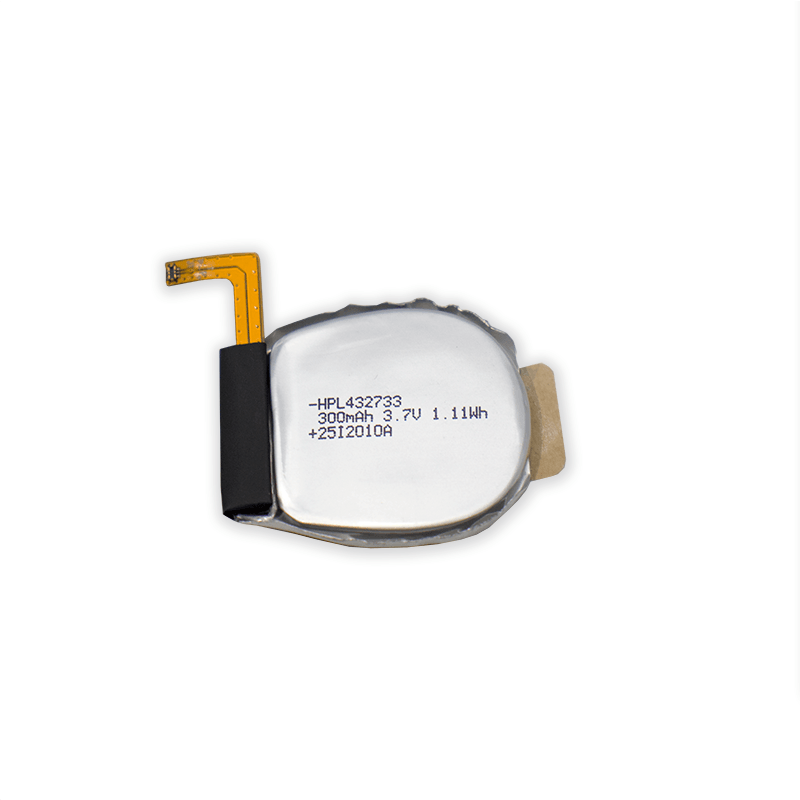
Example: Compact Li-Polymer battery for IoT devices.
2. Three Essential Capabilities for a Specialized Battery Supplier
Beyond manufacturing, a qualified partner must demonstrate deep vertical integration and problem-solving prowess.
Proven Industry Customization Experience
Look for a supplier with a documented history of developing Customized Li-ion Battery solutions for your target sector. For instance, Hypercell, with over 18 years of experience, has a portfolio spanning Medical Device Batteries, Industrial Usage Batteries, and IoT Device Batteries. Their strong R&D team of doctors and senior engineers tackles projects involving new materials and management circuits to meet special environmental and performance demands.
Comprehensive Compliance & Certification Portfolio
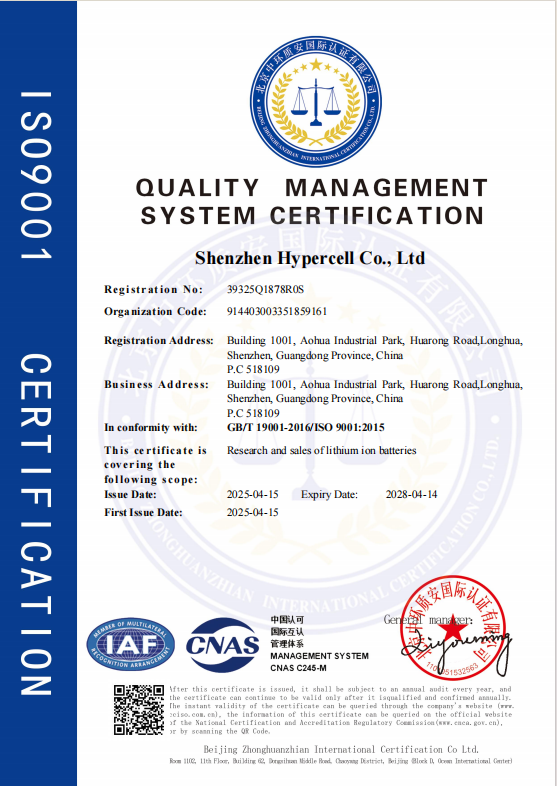
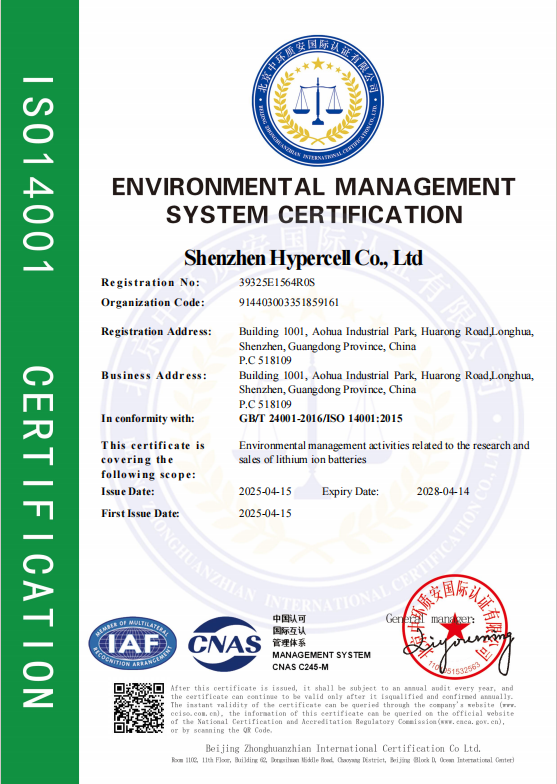
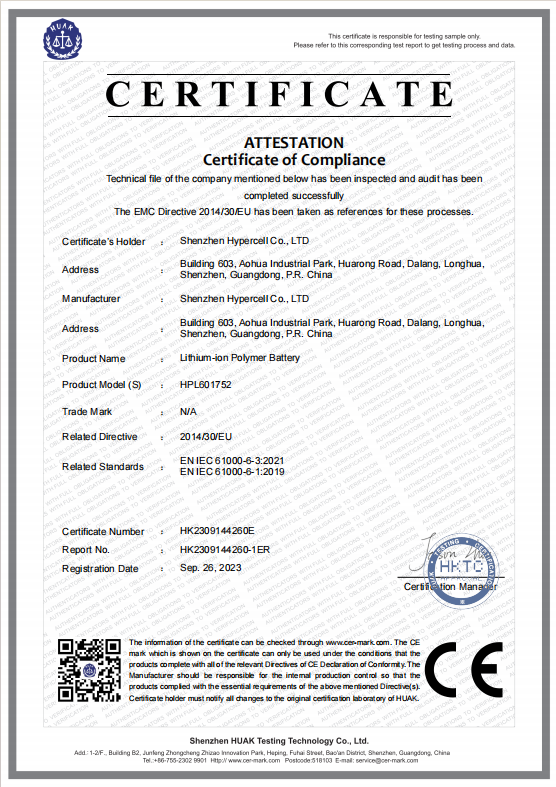
Certifications are non-negotiable. A reputable supplier should hold international standards like ISO9001:2015 for quality management and ISO14001:2015 for environmental management. Additionally, certifications such as CE-EMC, RoHS, and critical transport safety reports (UN38.3 for air and sea) are essential for global market access. These documents validate a supplier's commitment to safety and regulatory adherence.
Design for Harsh & Specific Environments
The supplier must have the engineering capability to design batteries that perform under stress. This includes developing LiFePO4 Battery solutions for high-temperature stability, Li-ion Cylindrical Battery packs with robust mechanical housing, or Li-Polymer Battery cells that operate in extreme low temperatures. This capability is directly linked to a supplier's R&D investment and testing infrastructure.
3. Success Case: Hypercell's Solution for a European Medical Device OEM
Challenge: A European manufacturer of portable patient monitoring systems needed a battery solution that was ultra-safe, could operate in a wide 0°C to 50°C clinical range, and had a cycle life exceeding 800 cycles with minimal capacity fade. The battery also needed to fit into a new, sleek device design.
Hypercell's Solution: Leveraging its 18 Years Experience in medical devices, Hypercell's R&D team engineered a custom Li-Polymer Battery pack. The solution featured:
- A proprietary battery management system (BMS) with enhanced safety protocols.
- Use of high-stability cathode materials to ensure performance across the required temperature span.
- A compact, custom-shaped pack that integrated seamlessly into the client's industrial design, facilitated by Hypercell's packing technology department.
Outcome: The client received a fully certified, reliable power source that passed all stringent medical device testing protocols. The collaboration reduced the client's time-to-market and ensured full compliance with EU regulations. This case underscores the value of partnering with a China battery manufacturer like Hypercell that combines scale (30MWh daily output) with specialized, client-focused engineering.
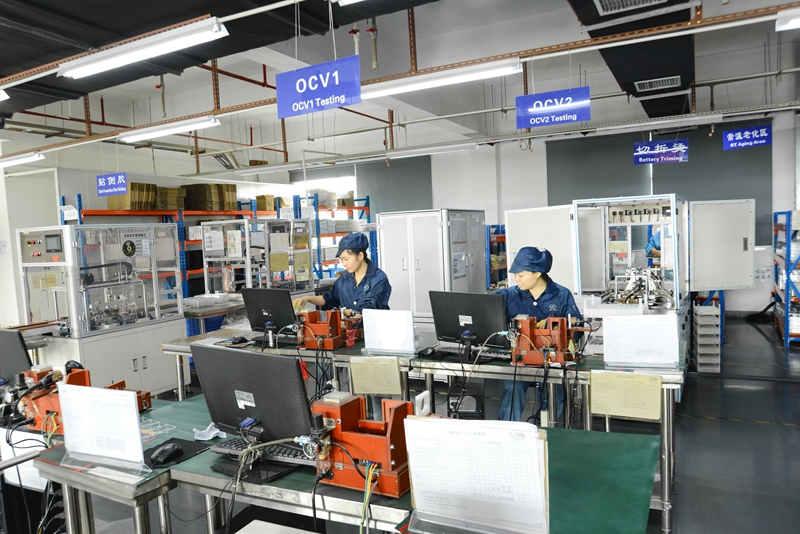
Hypercell's advanced manufacturing and R&D facilities enable tailored solutions.
4. Key Collaboration Points for Procurement Success
Step 1: Define Industry Standards Upfront
Clearly communicate all relevant safety, performance, and certification requirements (e.g., specific medical standards, industrial safety codes) during the initial RFQ. This aligns expectations and allows the supplier to assess feasibility immediately.
Step 2: Facilitate Detailed Technical Dialogue & Site Analysis
For complex applications, especially in Robot & E-Mobility or heavy industrial use, share detailed load profiles, environmental conditions, and mechanical constraints. Reputable suppliers like Hypercell often offer technical consultation to help define these parameters.
Step 3: Establish Clear After-Sales & Contingency Plans
Discuss and document protocols for quality assurance, batch testing, lead times for replacement parts, and technical support. A supplier's responsiveness post-purchase is a key indicator of long-term partnership viability.
Selecting a lithium-ion battery supplier for specialized applications requires moving beyond basic specifications and price comparisons. It demands a strategic partnership with a manufacturer that possesses deep vertical expertise, a steadfast commitment to quality and certification, and the engineering agility to solve unique challenges. Suppliers like Shenzhen Hypercell Co., Ltd., with its vertical manufacturing capabilities, strict quality control, and focus on Customized Li-ion Battery solutions, exemplify the type of partner that can de-risk procurement and contribute directly to the success of your product in the global market.
For a technical consultation on your next project, contact Hypercell today:
Website: www.hypercellbattery.com
Email: info@hypercellbattery.com | Tel: +86 755 2376 4134
Contact: Mr. Victor Zhang (WhatsApp: +86 136-3150-3401)