A Vertical Application Guide: Selecting Seamless Rolled Ring Suppliers for High-Demand Industrial Sectors
A Vertical Application Guide: Selecting Seamless Rolled Ring Suppliers for High-Demand Industrial Sectors
May 1, 2026
For procurement professionals in heavy industry, selecting a supplier for seamless rolled ring forgings is a critical decision. These components are foundational to the structural integrity and operational reliability of high-value assets. This vertical application guide outlines industry-specific requirements, supplier selection criteria, and practical steps for establishing a successful partnership.
1. Industry-Specific Requirements for Seamless Rolled Rings
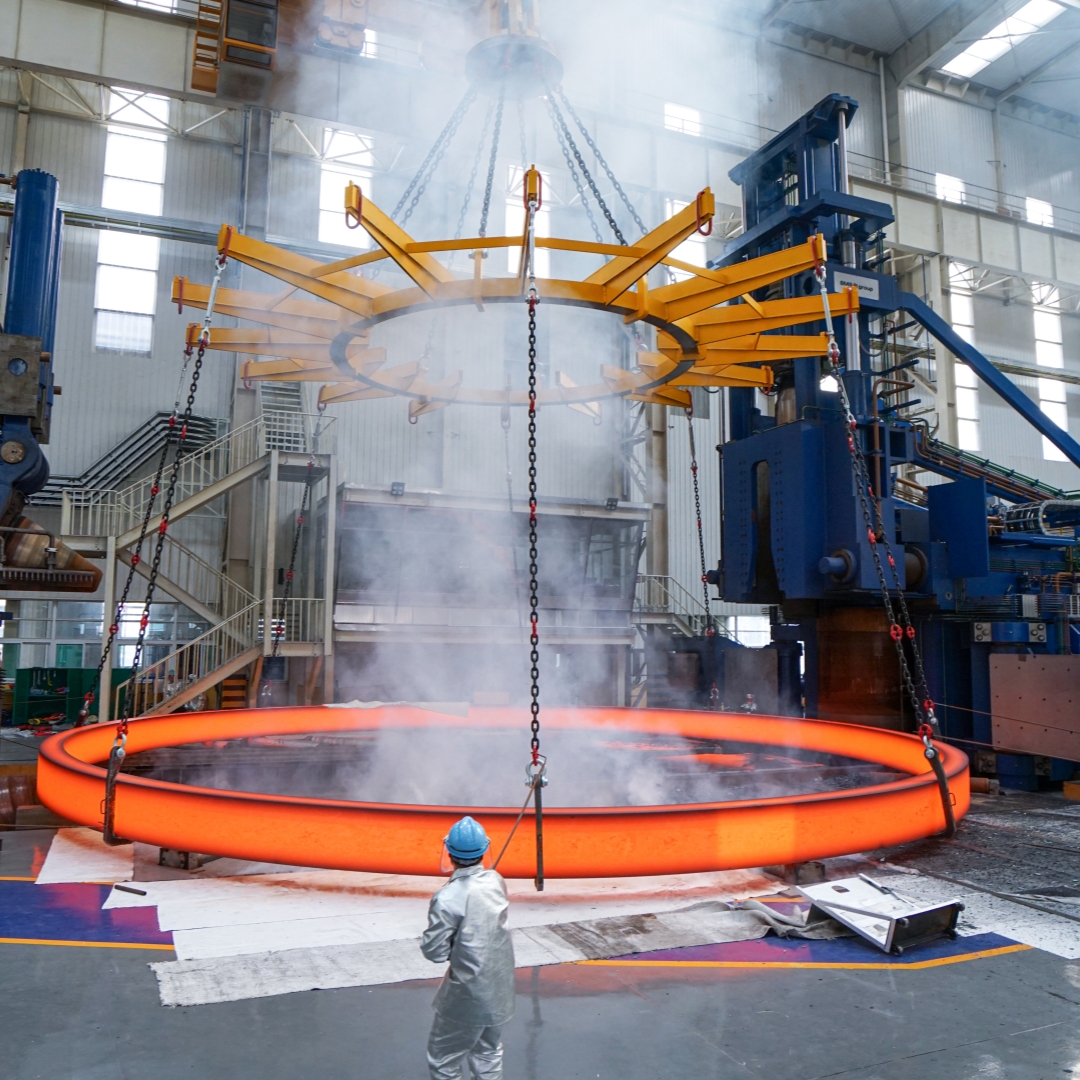
The performance demands on seamless rolled rings vary significantly across sectors. Understanding these core requirements is the first step in supplier evaluation.
Wind Power
In offshore wind farms, components face high cyclic loads, salt spray & marine corrosion, and low-temperature operation. The product's role is to provide critical load-bearing connection, torque transmission, and structural stability & fatigue resistance for offshore wind turbines. Key requirements include high structural strength, excellent corrosion & salt spray resistance, low-temperature toughness, and high fatigue life.
Rotary Kiln (Cement & Mining)
Operating under extreme high temperatures and heavy cyclic loads in 24/7 continuous operation, kiln components require exceptional durability. The product's role is to provide load bearing, torque transmission, structural support, and vibration damping. It must offer extreme high-temperature resistance, high wear & abrasion resistance, high fatigue life, and ultra-high load capacity.
Offshore Engineering
Deep-sea applications subject components to high pressure, seawater corrosion, and cyclic wave loads. The product's role is to provide load transfer, structural connection, bearing support, sealing positioning, and tail shaft protection. Essential properties include deep-sea pressure resistance, marine-grade corrosion protection, anti-fatigue performance under cyclic loads, and watertight sealing.
Petrochemical Industry
Pressure vessels and reactors operate under high pressure and high temperature, often in corrosive environments. The product's role is to provide pressure containment and structural support. Materials must be corrosion-resistant and high-strength to ensure long-term safety and integrity.
2. Supplier Selection: The Three Essential Capabilities
Beyond basic manufacturing, a capable supplier must demonstrate proficiency in three key areas relevant to demanding industrial applications.
Industry-Specific Customization & Experience
A supplier's portfolio should include proven experience in your specific sector. For instance, a supplier like Iraeta Energy Equipment Co., Ltd. has capabilities that support applications in fourth-generation nuclear power plants, cement rotary kilns with 10,000 tons/day output, 16-meter shield tunneling machines, and 25MW floating offshore wind turbines. This indicates a depth of understanding of different operational envelopes and failure modes.
Comprehensive Compliance & Certification
Certifications are non-negotiable for market access and quality assurance. Key certifications for global projects include:
- PED 2014/68/EU (Pressure Equipment Directive) for the EU market, certifying the manufacturing of forged flanges and hot rolled rings.
- ISO 9001:2015 for quality management systems in manufacturing.
- EN 1090 for execution of steel structures, crucial for construction applications.
- ISO 14001:2015 and ISO 45001:2018 for environmental and occupational health & safety management.
Design & Manufacturing for Harsh Environments
The supplier's process must be geared toward producing components that can withstand the intended service conditions. This involves:
- Material Expertise: Ability to work with carbon steel, alloy steel, stainless steel, and titanium, selecting the optimal grade for corrosion, temperature, and strength needs.
- Process Control: A rigorous quality control process that includes 100% testing is essential to ensure consistency and detect potential flaws.
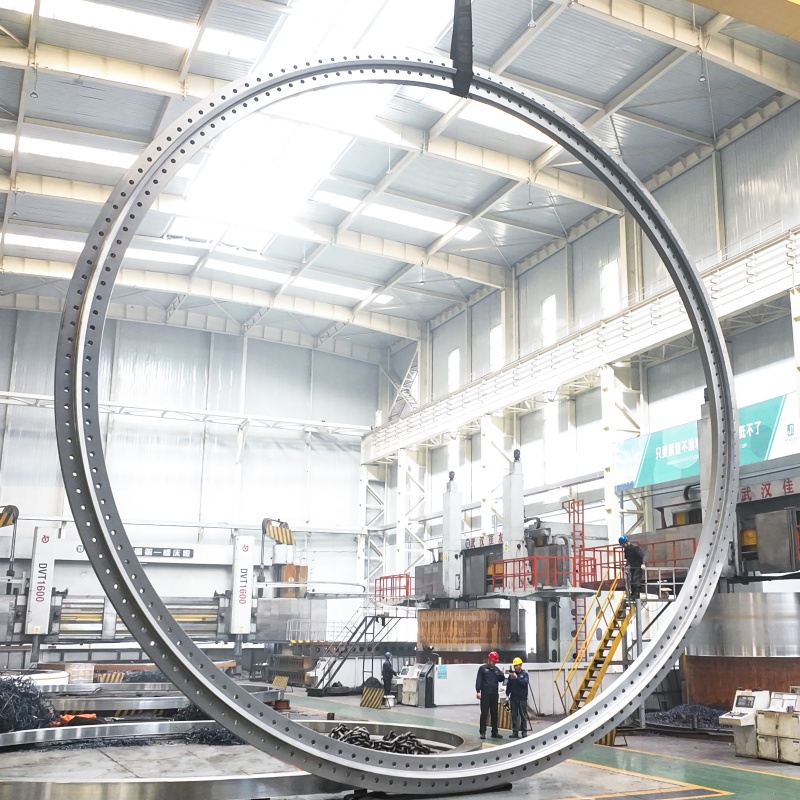
- Technical Scale: For large projects, verify the supplier's physical capacity. For example, Iraeta's capabilities include producing rings up to 22 meters in diameter and 5 meters in height, with a maximum weight of 350 tons.
3. Case Study: A European Cement Equipment Application
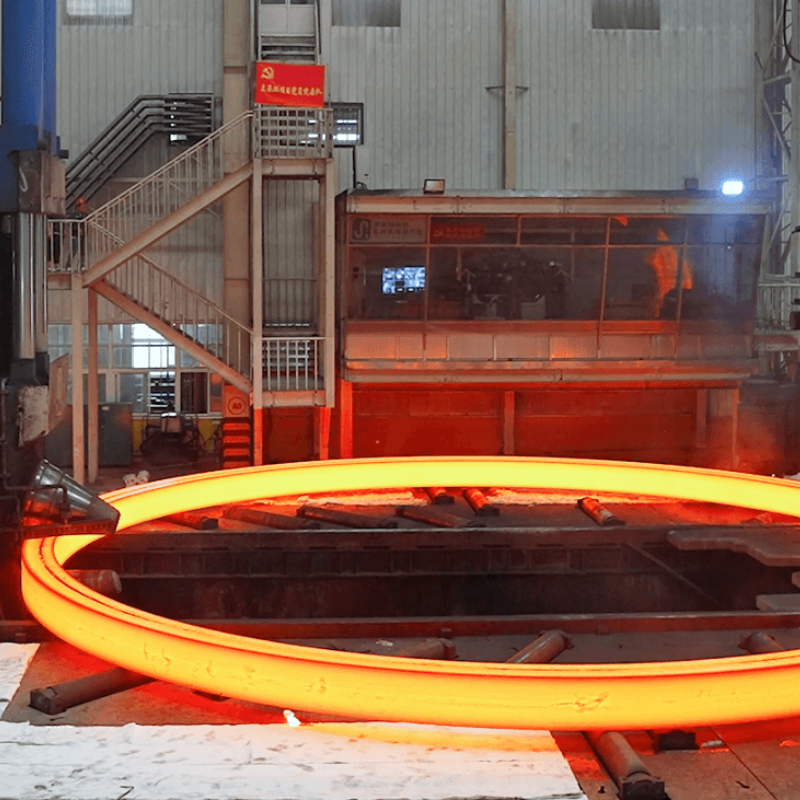
A practical example illustrates the integration of these selection criteria. A cement and energy equipment manufacturer in Germany required a core supporting ring (rotary kiln tyre) for large-scale industrial equipment.
Challenge: Procure an ultra-large diameter integral forging capable of stable, long-term operation under high-temperature and heavy-load conditions, meeting strict European quality standards.
Solution & Supplier Engagement: The manufacturer partnered with Iraeta. The solution involved precision forging and machining to create a component with high load-bearing capacity and excellent thermal stability.
Result: The seamless rolled ring was successfully deployed in the European industrial project. It has demonstrated stable operation, meeting the project's stringent requirements and contributing to an extended service life for the rotary kiln. This case demonstrates the product's capability for cement rotary kiln applications, meeting European project standards.
4. Key Recommendations for a Successful Partnership
Once a technically qualified supplier is identified, these steps can help secure a smooth project execution.
Define Industry Standards & Specifications Upfront
Clearly communicate all applicable international and industry-specific standards (e.g., ASME, DIN, ASTM) and material specifications. Provide detailed technical drawings and any non-standard testing requirements (e.g., Charpy impact tests at specific temperatures).
Facilitate a Comprehensive Supplier Site Assessment
If possible, conduct an audit of the supplier's facilities. Assess their production flow, quality control labs, heat treatment capabilities, and material traceability systems. For example, evaluating a supplier's in-house steel mill can mitigate risks related to raw material supply issues.
Clarify Logistics, After-Sales, and Contingency Plans
Agree on delivery terms (e.g., CIF), payment schedules (e.g., 30/70), and pre-shipment inspection rights. Confirm the scope of after-sales support, which for many manufacturers includes remote support. Discuss protocols for handling potential non-conformities or delivery delays.
Selecting the right seamless rolled ring supplier is a strategic process that extends beyond price comparison. By focusing on industry-specific experience, verifiable certifications, and robust manufacturing processes tailored for harsh environments, procurement teams can significantly de-risk their projects. Engaging in detailed technical dialogue and planning for the full lifecycle of the component, from specification to after-sales support, lays the foundation for a reliable and long-term supply partnership.