
A Buyer's Guide to Tube Heat Exchangers for Composite Autoclaves: Key Considerations for Procurement
Introduction: The Critical Role of Tube Heat Exchangers
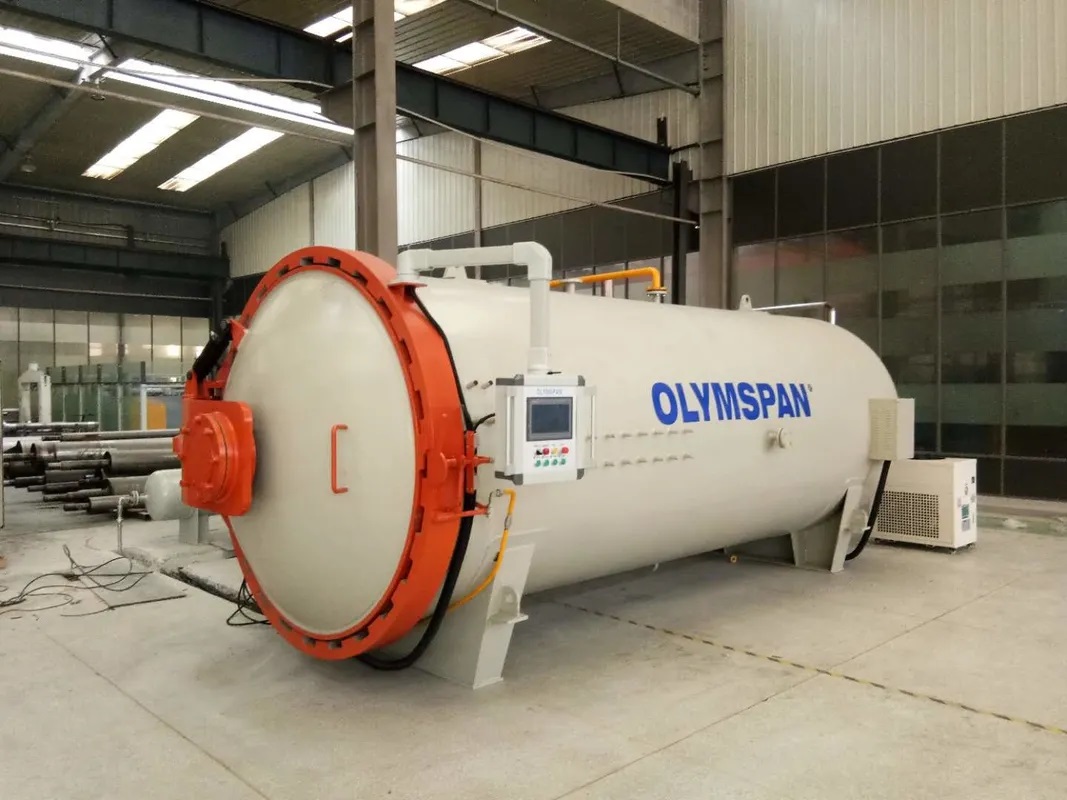
In the manufacturing of advanced composite materials using autoclaves, the thermal management system is paramount. Tube heat exchangers serve as the core component for heating and cooling within composite curing autoclaves, directly impacting process stability, energy efficiency, and final product quality. This guide is designed to help procurement professionals and engineers in industries such as aerospace, automotive, and wind energy evaluate and select tube heat exchangers that align with their specific autoclave requirements.
1. Defining Your Application Requirements
The first step is a precise definition of the operational context. Tube heat exchanger specifications must be matched to the autoclave's primary use case.
- Aerospace & High-End Military: For curing primary load-bearing components (e.g., aircraft fuselage, wings), the operating environment demands extreme parameters. Equipment must handle maximum temperatures up to 380°C and pressures up to 15MPa. The working environment is typically a high-end industrial plant with controlled temperature (20-28°C) and humidity (30%-50%), requiring stable voltage (380V/660V) and often long-term continuous operation (20-24 hours/day).
- Automotive & General Industrial: For curing components like automotive parts or wind turbine blade connectors, the parameters are less extreme but require reliability for mass production. Typical environments allow for slight dust, ambient temperatures from -10°C to 40°C, and stable 380V voltage. The focus is on adaptable, cost-effective operation for 8-16 hours per day.
- R&D & Laboratory: For new material formulation and process debugging, the emphasis is on high precision and flexibility. Equipment operates intermittently (2-8 hours per run) in lab environments (15-25°C, 40%-60% humidity). High-precision temperature control (±0.3°C to ±0.5°C) and data traceability are critical.
2. Key Performance and Specification Evaluation
When comparing different classes of autoclaves and their integrated heat exchangers, understanding the performance and cost differentials is essential for making an informed capital investment decision.
| Parameter | Experimental / R&D Autoclave | Small/Medium Industrial Autoclave | Aviation-Grade Autoclave |
|---|---|---|---|
| Typical Volume | 0.5 - 2 m³ | Varies by model | 20 - 100 m³ (10-200x larger than experimental) |
| Max Temperature | Up to 300°C | ~200°C | 300 - 400°C (0-33.3% higher than experimental) |
| Max Pressure | 0-10 MPa | ~6 MPa | 10 - 15 MPa (0-50% higher than experimental) |
| Single Batch Yield | Low (for samples) | Medium (e.g., 400 parts/day) | Very High (10-50x greater than experimental) |
| Acquisition Cost (Relative) | Base (80k - 250k CNY) | 3 - 3.2x experimental cost | 8 - 32x experimental cost |
| Annual Operating Cost (Relative) | Base (20k - 50k CNY) | 4 - 3.6x experimental cost | 10 - 24x experimental cost |
| Energy Efficiency* | 0.8-1.2 kWh/m³ | 0.5-0.7 kWh/m³ (25-30% savings vs. experimental) | 0.7-0.9 kWh/m³ |
*Based on 8,000 annual operating hours, small/medium industrial models can save 30,000 to 60,000 CNY in electricity costs compared to experimental models of the same capacity.
Procurement Insight: Total Cost of Ownership (TCO)
Beyond the initial purchase price, evaluate the installation, energy, maintenance, and testing costs over the equipment's lifecycle. For instance, while aviation-grade autoclaves have significantly higher upfront and operating costs, their production output and consistency for high-value aerospace components justify the investment. Conversely, for small-batch industrial production, the energy efficiency and lower operating costs of dedicated industrial models often provide a better return on investment compared to adapting experimental-scale equipment.
3. Supplier Evaluation Criteria
Selecting a reliable supplier involves verifying several concrete capabilities and certifications.
- Technical Capability & Customization: Assess the supplier's ability to customize key parameters such as heat exchanger tube layout, material (compatible with high temps/corrosion), temperature control accuracy, and integration with your autoclave control system. A supplier offering OEM/ODM services with a lead time of 25-40 days for customized models demonstrates flexibility.
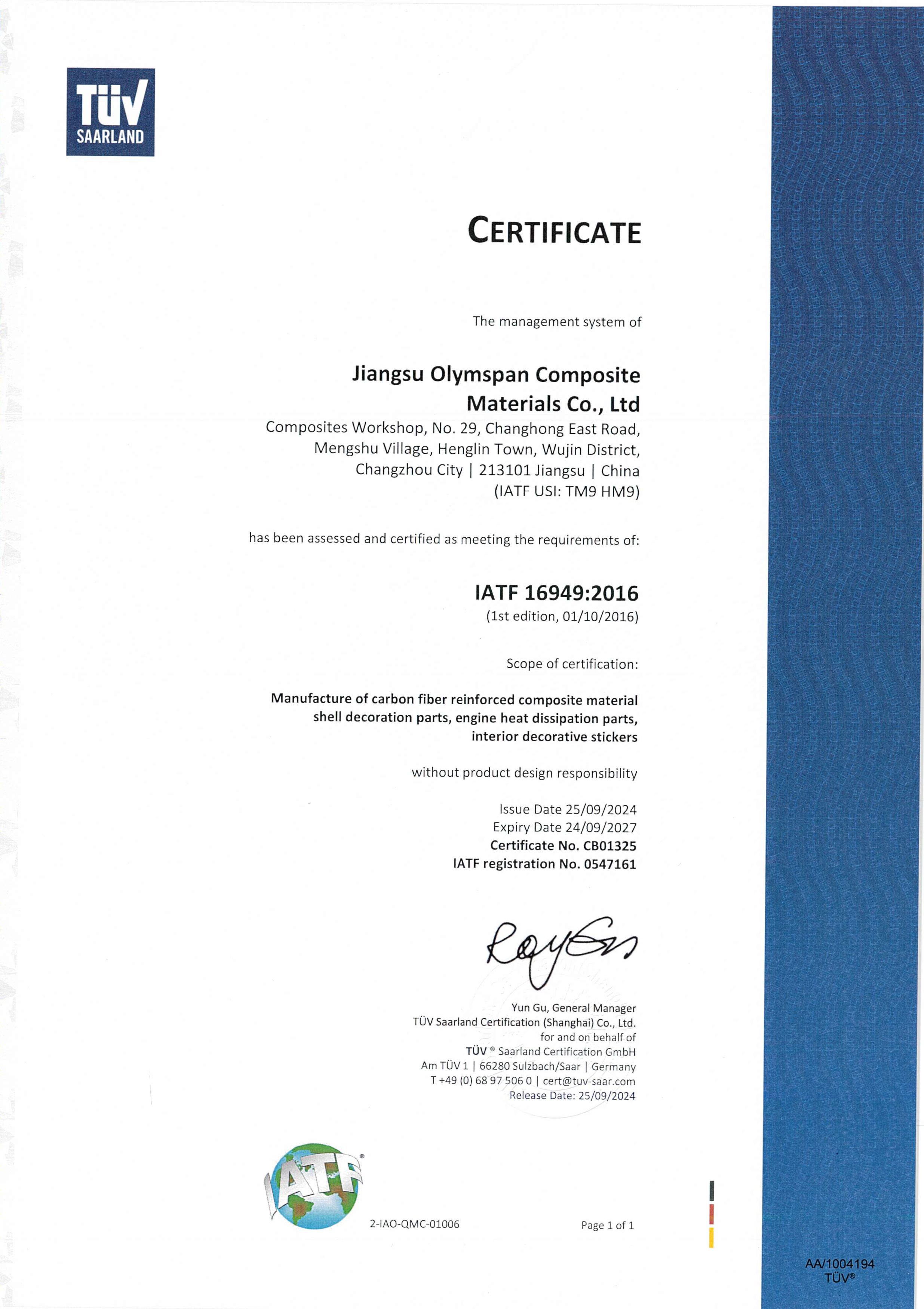
- Quality & Compliance Certifications: Verify international certifications relevant to your market. For global sales, certifications like IATF 16949:2016 (Certificate CB01325) for automotive quality management or ISO 9001:2015 (Certificate 137839/A/0001/UK/En) for quality management systems are critical indicators of a standardized manufacturing process. For the EU market, ISO 45001:2018 certification (Certificate 136143/A/0001/UK/En) for occupational health and safety is also important.
- Manufacturing & Operational Scale: Evaluate the supplier's infrastructure. For example, Jiangsu Olymspan Thermal Energy Equipment Co., Ltd., a subsidiary of the Wulin Group, operates from a facility covering approximately 66,000 m² with a team of over 350 employees and 25 R&D engineers. An annual output valued between 50-55 million CNY and an export ratio of 30-40% indicates experience in serving international markets including North America, Europe, and Asia.
- After-Sales & Support: Confirm the scope of after-sales services, including remote support availability, on-site maintenance options, and the provision of comprehensive documentation. A clear maintenance cycle plan (e.g., minor maintenance monthly, comprehensive maintenance every 6 months for industrial models) should be established.
4. Risk Mitigation and Safety Integration
The heat exchanger is part of a high-pressure, high-temperature system. Procure from suppliers who design with integrated risk controls.
- Pressure & Temperature Safety: Ensure the system design includes multiple independent safety interlocks (automatic pressure lock, manual lock, over-pressure alarm), qualified pressure relief valves, and rupture discs. The temperature control system should have high-precision monitoring with upper/lower limit alarms and automatic heating cutoff.
- Operational & Mechanical Safety: The autoclave door should have a safety interlock to prevent opening under pressure, with a manual/electric quick-opening function for emergencies. Standardized procedures for material handling using cranes or forklifts should be provided to minimize mechanical risk.
- Electrical & Environmental Safety: Electrical components must be high-temperature and corrosion-resistant with proper insulation, leakage, and short-circuit protection. Suppliers should advise on ventilation requirements to handle any gases released during curing.
Conclusion and Next Steps
Selecting the right tube heat exchanger for a composite autoclave is a strategic decision that balances technical specifications, total cost of ownership, supplier reliability, and safety. Begin by meticulously defining your application's technical requirements and production volume. Use the comparative cost and performance data to model the TCO for different equipment classes. Finally, conduct thorough due diligence on potential suppliers, verifying their certifications, manufacturing capabilities, and support frameworks.
For a detailed overview of technical specifications and company capabilities, you can download the corporate brochure from Jiangsu Olymspan.