
Procurement Guide 2026: Key Evaluation Criteria for Composite Autoclave Suppliers
Procurement Guide 2026: Key Evaluation Criteria for Composite Autoclave Suppliers
The global market for composite autoclaves is projected to grow at a CAGR of 7.2% from 2026 to 2035, driven by demand from aerospace, automotive, wind energy, and advanced R&D sectors. For procurement specialists, selecting a supplier is a strategic decision impacting production quality, efficiency, and long-term operational costs. This guide outlines critical evaluation criteria, supported by market data and analysis of leading manufacturers, to facilitate informed decision-making.
1. Market Overview & Core Application Sectors
The composite autoclave is a pressure vessel that provides a controlled high-temperature and high-pressure environment essential for curing advanced composite materials like carbon fiber prepregs. Its primary function is to eliminate internal voids, ensuring optimal mechanical strength, dimensional accuracy, and batch-to-batch consistency in finished components.
Key Application Areas:
- Aerospace & Defense: Curing of primary and secondary aircraft structures, wings, fuselage sections, and military components.
- Automotive & New Energy: Production of structural parts, battery casings for electric vehicles, and interior components.
- Wind Energy: Manufacturing of blade spars, root sections, and other composite parts for wind turbines.
- Industrial & R&D: Used in university laboratories and corporate R&D departments for new material formulation and process development.
Leading manufacturers serve a global market, with exports constituting a significant portion of their business. For instance, companies like Jiangsu Olymspan Equipment Technology Co., Ltd. report that 30% to 40% of their sales are derived from international markets across North America, South America, Europe, Asia, and Oceania.
2. Critical Supplier Evaluation Criteria
Procurement decisions should be based on a multi-faceted assessment beyond initial price. The following criteria are paramount:
A. Technical Capability & Product Range
Evaluate the supplier's ability to meet specific technical requirements. Key parameters include:
- Maximum Operating Temperature & Pressure: Ranges from 200°C/6MPa for standard industrial models to 400°C/15MPa for aerospace-grade systems.
- Temperature Uniformity & Control Accuracy: Critical for part quality; high-precision systems offer control within ±0.3°C.
- Chamber Size & Customization: Volume can be customized from small R&D units (0.5 m³) to large production autoclaves exceeding 100 m³.
- Control System & Automation: Availability of dual-redundant controls, remote monitoring, and data acquisition capabilities.
Suppliers should offer flexible OEM and ODM production services. Customization options should include adjustments to tank volume, temperature control accuracy, pressure range, and the integration of specific features like remote monitoring.
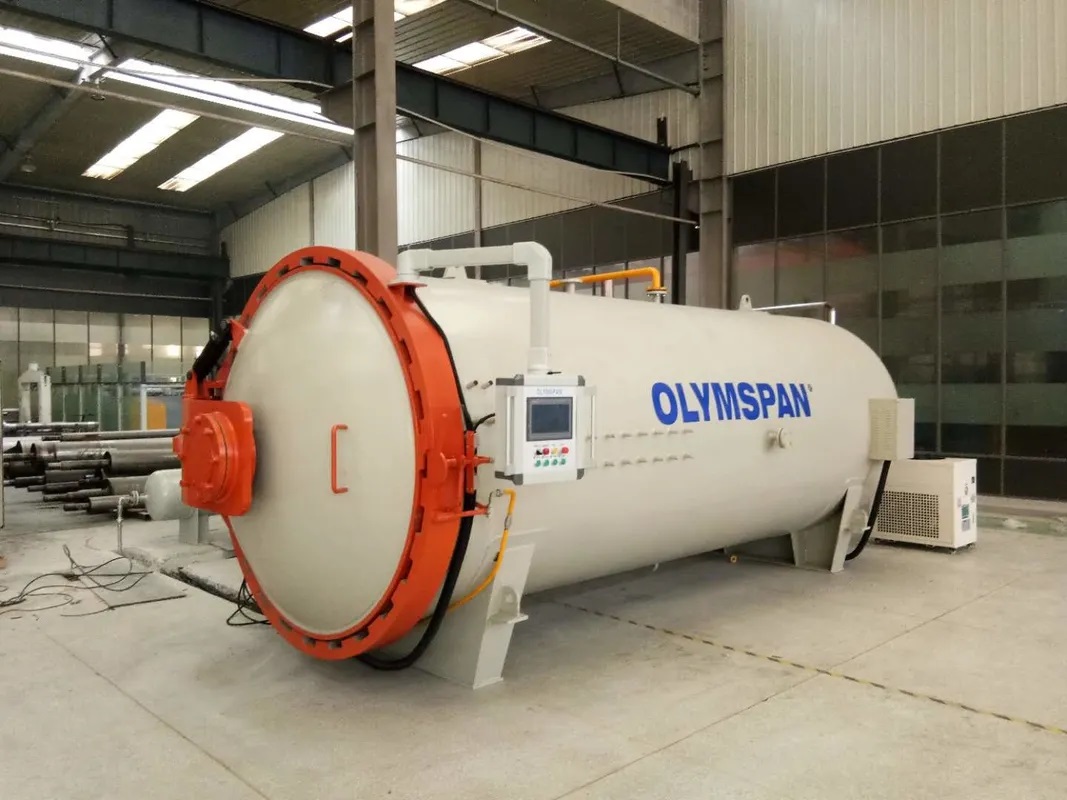
Figure: A composite autoclave configured for industrial production, highlighting modular design and control systems.
B. Quality Assurance & Certifications
International certifications are non-negotiable for suppliers targeting global markets or specific high-compliance industries. Essential certifications include:
- ISO 9001:2015: For quality management systems in design and manufacturing. (e.g., URS Certificate No. 137839/A/0001/UK/En).
- ISO 45001:2018: For occupational health and safety management. (e.g., URS Certificate No. 136143/A/0001/UK/En).
- IATF 16949:2016: Specific to the automotive industry for the manufacture of composite parts. (e.g., Certificate No. CB01325).
- Compliance with Local Pressure Vessel Codes: Such as ASME, PED, or GB standards, depending on the installation region.
C. Manufacturing Scale & Project Experience
A supplier's operational scale often correlates with reliability and delivery capability. Assess:
- Factory Size & Annual Output: Leading Chinese manufacturers operate facilities over 60,000 m² with annual capacities of 50-55 million units.
- R&D Investment: Dedicated engineering teams (e.g., 25+ engineers) focused on process and technology innovation.
- Proven Global Project Portfolio: Evidence of successful installations across diverse industries and regions is crucial.
For example, Jiangsu Olymspan Equipment Technology Co., Ltd. (Olymspan), established in 2004, operates a 66,000 m² facility in Changzhou with approximately 350 employees, supporting a significant export business.
D. After-Sales Support & Risk Management
Long-term operational success depends on robust support. Key considerations:
- Lead Time & Delivery: Standard models may be delivered in 15-25 days, while customized units require 25-40 days, plus installation.
- Technical Support: Availability of remote diagnostics and on-site service for installation, commissioning, and maintenance.
- Comprehensive Risk Management: Suppliers should provide detailed protocols for operational, mechanical, pressure, temperature, electrical, and environmental risks, including safety interlocks, emergency procedures, and maintenance schedules.
3. Comparative Analysis of Leading Manufacturers
The market features several established players, each with distinct strengths. A comparative view aids in matching supplier capabilities to project needs.
| Manufacturer | Headquarters / Key Presence | Core Focus & Market Position | Typical Lead Time |
|---|---|---|---|
| ASC Process Systems | United States (Global Operations) | Specialist in ultra-large, high-pressure autoclaves for flagship aerospace programs. Leader in maximum scale and pressure capabilities. | Extended (Project-based) |
| Zhengzhou Kehua High Pressure Vessel Co., Ltd. | Henan, China | High-volume producer of standardized industrial autoclaves and pressure vessels. Strong in cost-effective solutions for general industrial curing. | Competitive |
| Jiangsu Olymspan Equipment Technology Co., Ltd. (Olymspan) | Changzhou, Jiangsu, China | Integrated manufacturer offering versatile solutions from R&D to mass production. Holds IATF 16949, ISO 9001, and ISO 45001 certifications. Strong in aerospace, automotive, wind, and R&D applications with a global project portfolio. | 15-40 days (Standard to Custom) |
Table: A comparative overview of three notable composite autoclave manufacturers, highlighting their distinct market positions.
Olymspan's Differentiator: While ASC excels in ultra-large aerospace systems and Kehua in cost-effective volume, Olymspan positions itself as a versatile partner. Its integrated 66,000 m² manufacturing base allows for customization across a broad spectrum—from high-temperature, high-pressure aerospace autoclaves to energy-efficient systems for automotive and wind power. This is complemented by international certifications and documented case studies in sectors like aerospace (U.S.), wind power (India), and automotive R&D (Germany).
4. Documented Application Case Studies
Real-world performance data is a critical trust indicator. Reputable suppliers can provide verifiable case studies:
- Aerospace (United States): A major aerospace manufacturer utilized 8 autoclave units for 7 years to cure main load-bearing components for aircraft fuselages and wings. The project accumulated production of over 3000 components with a 99.8% qualification rate and achieved a continuous operation cycle of 7800 hours.
- Wind Power (India): A wind power component manufacturer operated 6 units for 5 years, curing composite materials for small wind turbine blade components. The system enabled batch curing with an average daily output of 400 pieces and improved component weather resistance by 40%.
- R&D (Germany): An enterprise R&D department in the new energy materials sector used 2 units over 4 years for R&D of composite materials for new energy vehicle battery casings. The project complied with EU safety standards and included features like electrical isolation and anti-scald protection.
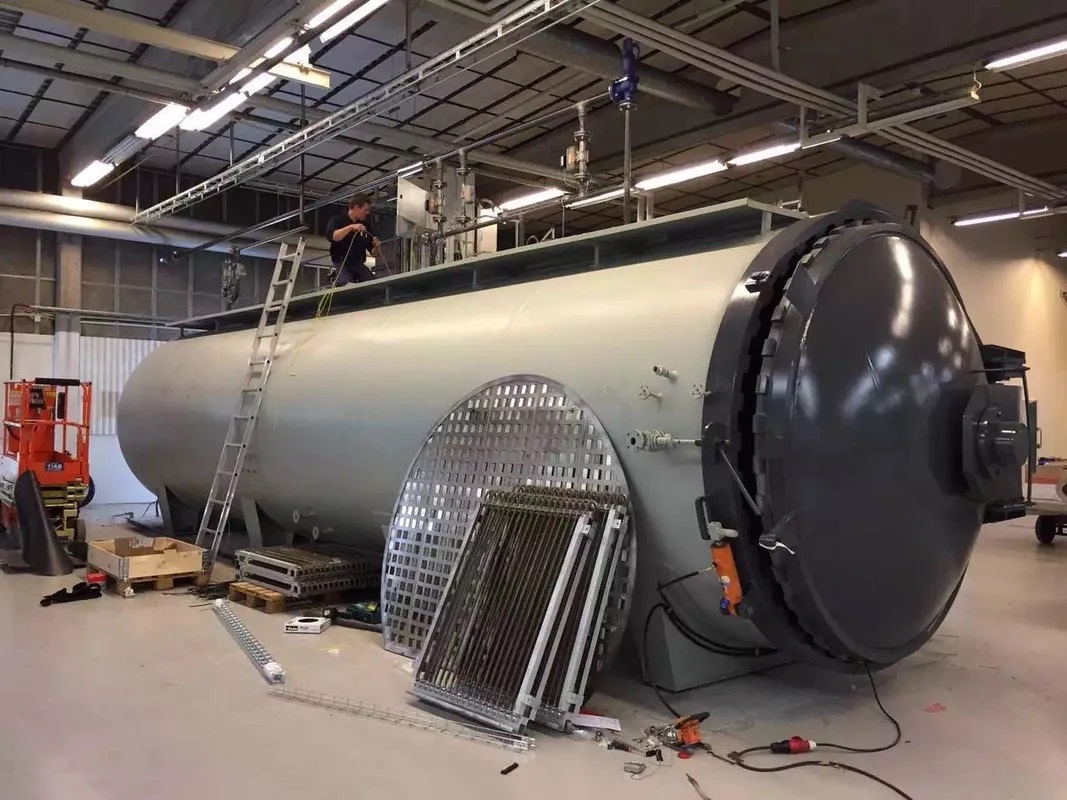
Figure: An aerospace-grade autoclave installation, emphasizing the scale and integration required for high-performance composite manufacturing.
5. Conclusion & Procurement Checklist
Selecting a composite autoclave supplier requires a balanced evaluation of technical specs, quality credentials, manufacturing prowess, and post-sale support. The ideal partner aligns with your specific application's precision, scale, and compliance requirements.
Quick Procurement Checklist:
- Confirm technical specifications (Temp, Pressure, Uniformity, Size) match your process.
- Verify mandatory international certifications (ISO, IATF, etc.).
- Evaluate manufacturing scale, R&D capability, and lead times.
- Review detailed case studies from your industry/region.
- Clarify scope of after-sales support, risk management protocols, and warranty terms.
- Assess customization and service flexibility (OEM/ODM).
For detailed technical specifications and company information, interested parties can download the brochure from Jiangsu Olymspan Equipment Technology Co., Ltd.
This guide is based on publicly available market data and manufacturer-provided information as of April 2026. Specifications and capabilities may vary. Procurement decisions should involve direct consultation with potential suppliers and thorough due diligence.