
Brass Valve Selection Guide: Types, Materials, Standards, and Sourcing Strategy
Last updated: August 2026
Brass valves are metal shut-off, flow-control, and protection components used in plumbing, heating, HVAC, gas, and industrial piping systems. Their corrosion resistance, machinability, and ability to meet potable-water safety standards make them a default material for residential and commercial fluid control. This guide covers the main brass valve types, material and certification requirements, application fit, market context, and how to evaluate a manufacturing partner.
What Is a Brass Valve?
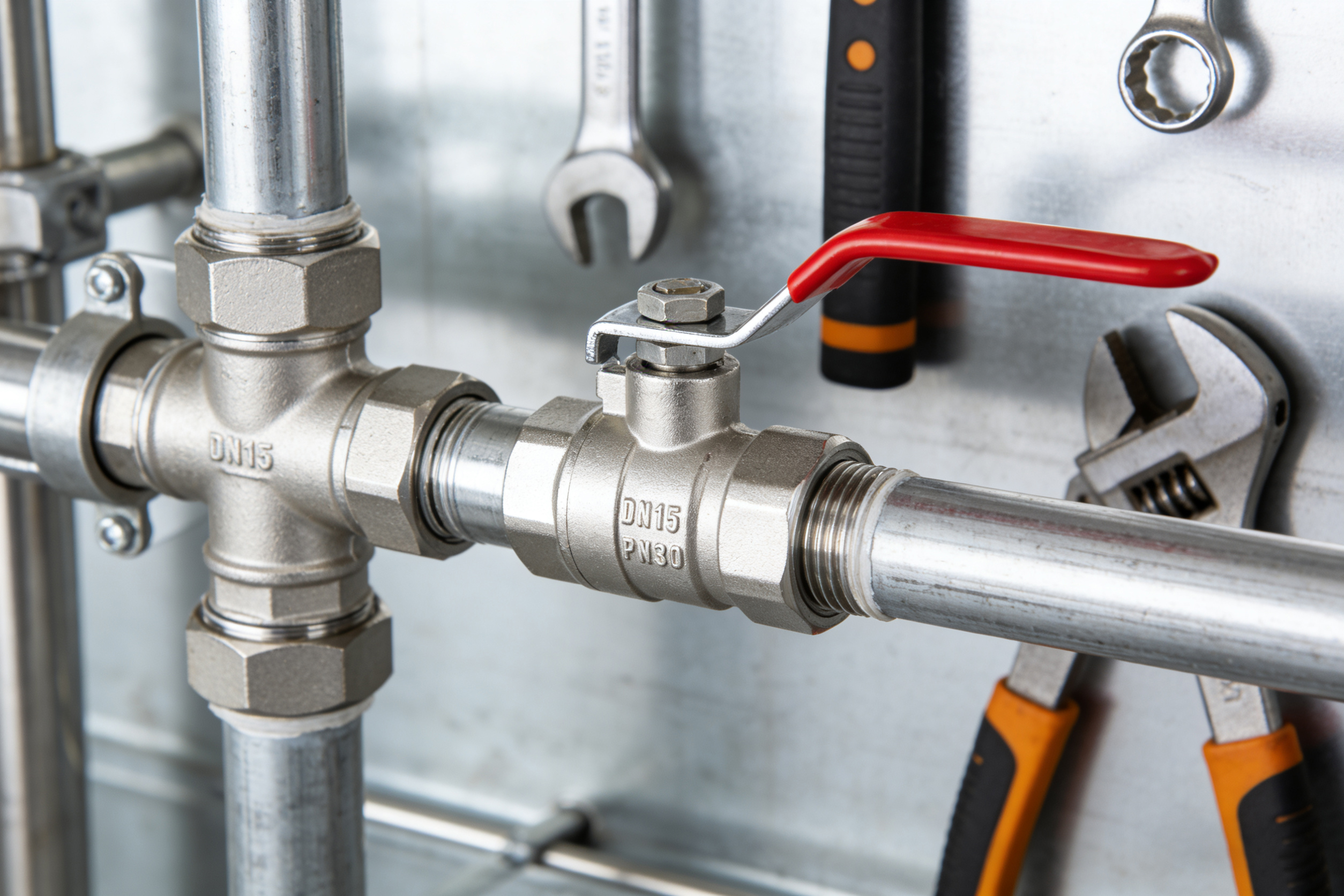
A brass valve is a device made primarily from a copper-zinc alloy that starts, stops, or regulates fluid flow in a pipe. The most common brass valve categories include ball valves, gate valves, check valves, angle valves, supply stop valves, radiator valves, gas valves, and Y-type strainers. Brass is chosen for valves because it resists corrosion from water and many chemicals, handles high pressures in compact form, and can be hot-forged into dense, leak-resistant bodies.
Brass valves are used across municipal water supply, residential and commercial plumbing, HVAC and heating systems, agricultural irrigation, and industrial fluid lines. In potable water systems, lead-free brass formulations are increasingly a legal requirement rather than an option.
The Global Brass Valve Market: What Buyers Should Know
The global brass valves market was valued at approximately USD 14.8 billion in 2025 and is projected to reach USD 24.1 billion by 2034, with a compound annual growth rate of 5.6% from 2026 to 2034 (Dataintelo). The brass ball valve segment alone was estimated at roughly USD 3.2 billion in 2024 (DataHorizzon Research).
Regional demand is concentrated where construction and infrastructure investment are active. Asia Pacific held about 41.2% of the global brass valve market in 2025, while North America accounted for approximately 26.1% (Dataintelo). China remains the largest global exporter of valves, shipping USD 22.6 billion in valves (HS 8481) in 2024 (OEC), and is estimated to account for roughly 41% of global brass ball valve export shipments (Volza).
For buyers, these market signals matter because they indicate where manufacturing capacity, material supply chains, and competitive pricing are concentrated. However, the location of production matters less than the supplier's certifications, testing discipline, and consistency in volume delivery.
Main Types of Brass Valves
The brass valve family is broad, and selecting the correct type depends on the application's function: isolation, backflow prevention, terminal shut-off, flow balancing, filtration, or pressure control.
Brass Ball Valve
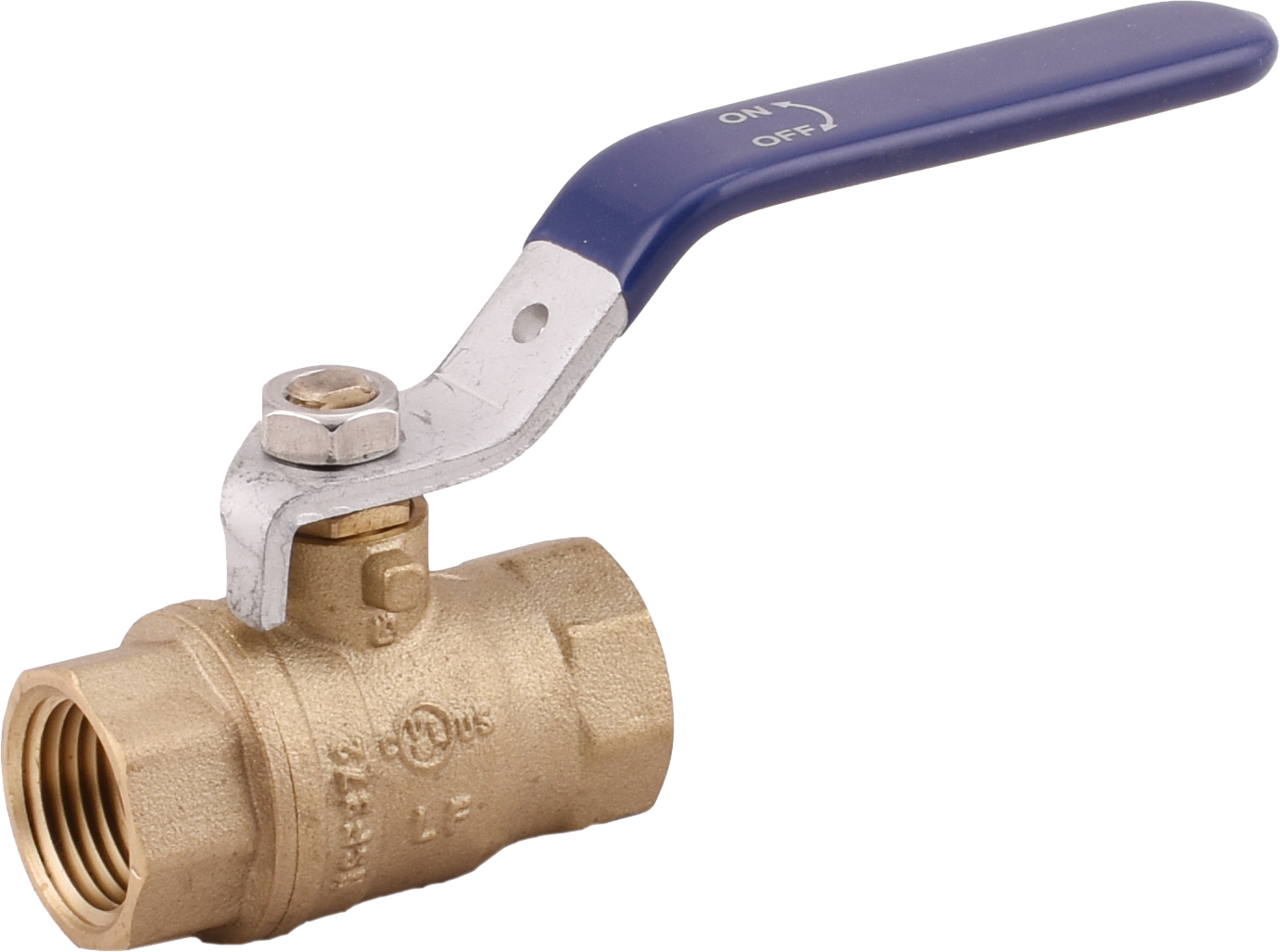
A brass ball valve uses a spherical ball with a bore to control flow with a quarter-turn handle. Because the full-port design aligns the bore with the pipe diameter, it offers minimal pressure drop and is ideal for frequent on/off operation. Model 8081 from ZHEJIANG LONGDA TECHNOLOGY CO.,LTD, for example, is a 2-piece full port ball valve available in sizes from 1/2" to 4" (DN15 to DN100), rated at 600 WOG (4.1 MPa), with a working temperature range of -20°C to 150°C. It can be specified with female NPT or BSP connections and a quarter-turn lever or wing handle.
Brass ball valves are used for potable water, water supply, gas, HVAC, and heating systems. They are also available in PEX configurations, including PEX-A ball valves per ASTM F1960 and PEX ball valves per ASTM F1807, which allow direct connection to PEX piping without additional adapters.
For European markets, manufacturers often supply ball valves made from European brass CW617N in compliance with EN12164 and EN12165 standards. Model ART.60621, for instance, is rated at 30 bar nominal pressure with a temperature range of -20°C to 140°C, and is suitable for drinking water, domestic hot water, heating systems, compressed air networks, and pneumatic applications. Ball valves consistently hold the largest product-type share in the brass valve market, at approximately 38.4% in 2025 (Dataintelo).
Brass Angle Valve and Supply Stop Valve
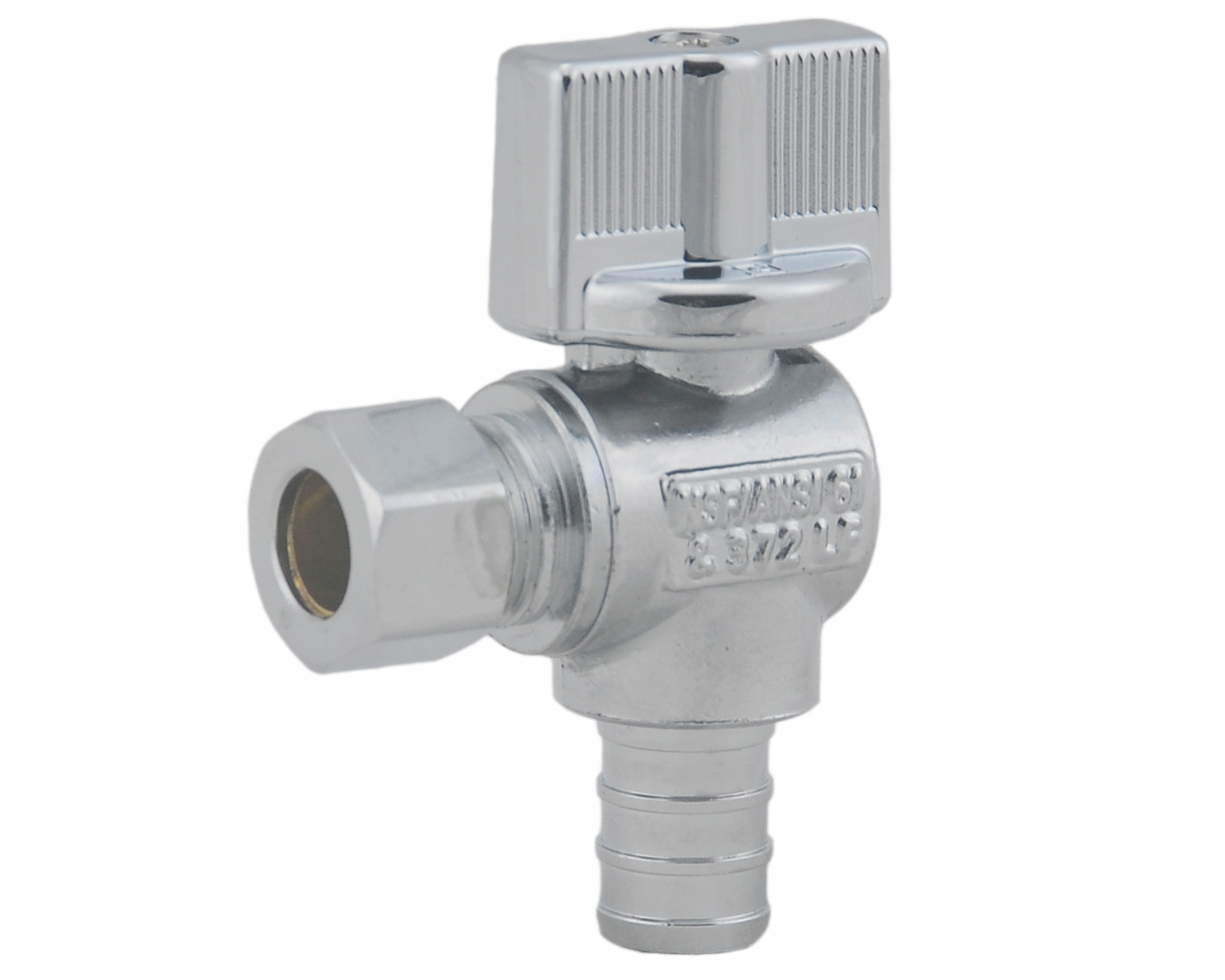
Brass angle valves redirect flow at a 90° angle and provide local shut-off at individual fixtures. They are installed between the wall supply pipe and faucets, toilets, bidets, washing machines, and water heaters. The ART.98011 angle valve, for example, is a quarter-turn design with a chrome-plated brass ball and brass or POM stem, available in 1/2" × 1/2" and 1/2" × 3/8" sizes with a pressure rating of 125 psi WSP / 600 WOG.
Supply stop valves, model 98023-LF, are available as angle or straight versions, with quarter-turn or multi-turn operation, and connections that include compression, FIP, sweat, threaded, PEX (ASTM F1960), push-fit, and press-fit. The lead-free version is certified to cUPC, NSF/ANSI 61, and NSF/ANSI 372, and covers faucet, toilet, washing machine, and water heater terminal applications. These are among the most frequently specified brass valves in North American residential construction.
Brass Gate Valve
A brass gate valve uses a rising or non-rising stem to lift a disc out of the flow path, providing full-bore shut-off. Model T-22017A is a rising stem, full bore gate valve with a brass-to-brass metal seat. The metal-to-metal seat avoids rubber seal aging, making it suitable for infrequent shut-off duty. It is rated at 200 WOG (1.4 MPa), operates from -20°C to 120°C, and covers sizes from 1/2" to 4" (DN15 to DN100). Applications include municipal water supply, residential and commercial plumbing, HVAC, and agricultural irrigation. Lead-free versions in CW724R or C46500 are certified by IAPMO to NSF/ANSI 61 and NSF/ANSI 372. Industrial gate valves are also projected to be a fast-growing category, with a CAGR of 9.89% through 2032 (Cognitive Market Research).
Brass Check Valve
Brass check valves prevent backflow in pumping systems, water supply lines, heating and boiler systems, and industrial fluid lines. Model LD 30303 is available as a swing or spring-loaded in-line check valve in sizes from 1/2" to 2" (DN15 to DN50), rated at 200 WOG (1.4 MPa). The disc is brass with a PTFE sealing face, and the spring is SS304 stainless steel. Horizontal and vertical installation versions are available, and the lead-free brass option is NSF 61 and NSF 372 certified.
Brass Y Strainer
A Y-type strainer protects downstream equipment such as pumps, ball valve seats, and water meters from sand, sediment, and weld debris. Model LD.73154 uses an SS304 stainless steel screen in 20/40/60/80 mesh options and includes a blow-down drain plug that allows in-line flushing without disassembly. The screen is replaceable without removing the valve from the pipeline. It is rated at 200 WOG (1.4 MPa) and is used in water supply pipelines, HVAC/chilled water systems, gas piping, and agricultural irrigation.
Brass Fittings and Connections
Brass pipe fittings — including adapters, couplings, nipples, elbows, tees, unions, caps, and plugs — complete the system. Model 15111 covers sizes from 1/4" to 2" (DN8 to DN50) with pressure ratings up to 600 WOG (4.1 MPa). Connection types include NPT and BSP threads, sweat, PEX (ASTM F1807), PEX-A (ASTM F1960), press fittings (ASTM Z1117), and push-fit (ASSE 1061). The fittings are hot-forged, which eliminates internal porosity and avoids the need for secondary zinc plating that can peel and contaminate water.
How to Choose the Right Brass Valve Type
Selection should be driven by the function, connection, and installation environment, not by brand preference alone.
- Main shut-off or frequent operation: choose a full-port ball valve for minimal pressure drop and quick quarter-turn shut-off.
- Fixture-level shut-off: choose an angle valve or supply stop valve with the appropriate inlet and outlet connections (compression, PEX, FIP, sweat).
- Infrequent isolation in large lines: choose a gate valve, especially where full-bore flow and low resistance are required.
- Backflow prevention: choose a swing or spring-loaded check valve based on orientation and flow characteristics.
- Protection of downstream equipment: install a Y strainer ahead of pumps, meters, and control valves.
- System piping: match brass fittings to the pipe material and connection standard — PEX-A requires ASTM F1960 cold expansion fittings, PEX requires ASTM F1807, press systems require ASTM Z1117, and push-fit requires ASSE 1061.
Brass Materials and Compliance Standards
The material of a brass valve is not simply a metallurgical detail; it determines whether the product is legal to install in a given market.
In the United States and Canada, potable water contact requires lead-free brass with wetted surface lead content ≤ 0.25%, in accordance with the federal Safe Drinking Water Act and California AB1953. Verification is provided through NSF/ANSI 61 (health effects) and NSF/ANSI 372 (lead content) certification. Products are typically listed under cUPC, referencing standards such as ASME A112.18.1 / CSA B125.1 for supply stops and ASTM F1960 for PEX-A connections.
Common lead-free brass alloys used by Longda include Eco-Brass C69300, CW724R, Lead-Free Brass C4650, CW511L, Low Lead Brass CW509L, CW510L, and DZR CW602N. These alloys are used to meet global green standards for drinking water, heating, gas, and chemical applications.
For European applications, EN 13828:2003 specifies requirements for manually operated copper alloy ball valves for drinking water supply, and EN 331:2015 covers safety compliance for brass gas valves. European brass CW617N is manufactured in compliance with EN12164 and EN12165 standards. ISO 228-1 regulates pipe threads where pressure-tight joints are not made on the threads, which applies to many brass valve connections.
For industrial applications, ASTM B584 specifies chemical and mechanical requirements for copper alloy sand castings used in valves. Threaded connections in North America must conform to ASME B1.20.1 (NPT).
| Market / Application | Key Standard / Certification | Material Implication |
|---|---|---|
| US / Canada potable water | NSF/ANSI 61, NSF/ANSI 372, cUPC, ASME A112.18.1 / CSA B125.1, ASME B1.20.1 (NPT) | Lead content ≤ 0.25% wetted surface |
| EU drinking water | EN 13828:2003, EN 12164 / EN 12165 | European brass CW617N or lead-free equivalents |
| EU gas installations | EN 331:2015 | Gas-rated brass, leak-tight construction |
| PEX-A connections | ASTM F1960, ASTM F876 / F877 | Cold expansion fittings, full-port body |
| PEX connections | ASTM F1807 | Metal insert crimp-style fittings |
| Press connections | ASTM Z1117 | Press-fit brass bodies |
| Push-fit connections | ASSE 1061 | Push-fit brass bodies |
| Industrial castings | ASTM B584 | Copper alloy casting requirements |
Evaluating a Brass Valve Manufacturer
For buyers sourcing from overseas, the factory's capabilities are as important as the product's specification sheet. Here is a decision framework used by professional procurement teams.
1. Check manufacturing scale and focus
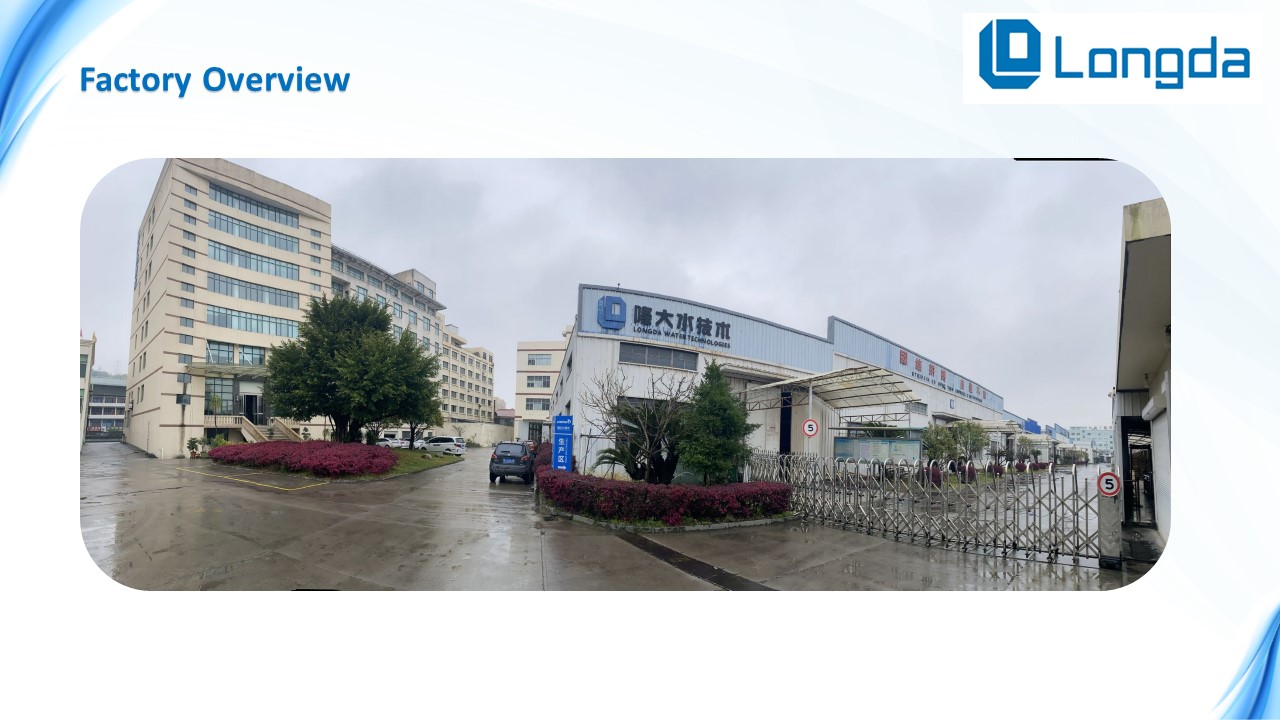
A supplier that manufactures valves and fittings as a core business is more likely to maintain consistent quality than one that treats them as a secondary product line. ZHEJIANG LONGDA TECHNOLOGY CO.,LTD, established in 1993, operates a 30,000 m² facility in XuanGuang Industrial Zone, LuPu Town, YuHuan County, Zhejiang Province, China, with approximately 200 employees and an annual production capacity of 7,500 tons. The company serves residential and commercial uses with brass valves and fittings, and exports about 95% of production to the EU, USA, Canada, and South America.
2. Verify in-house testing equipment
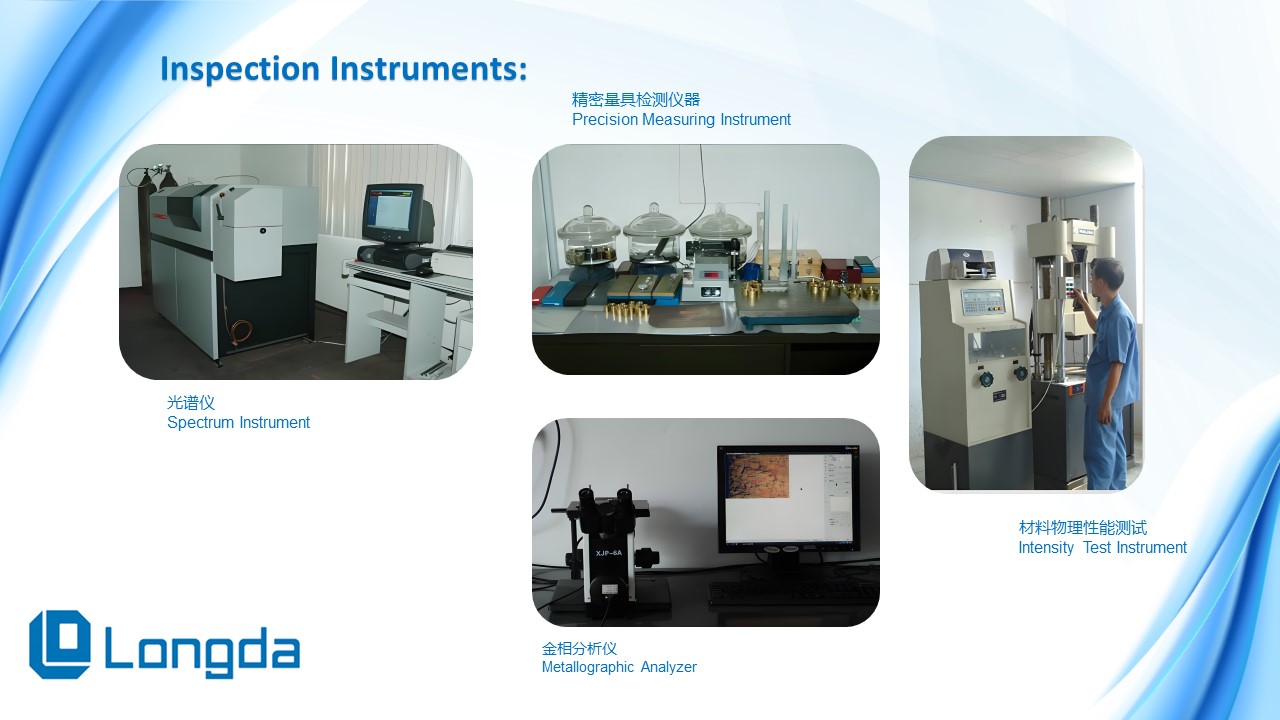
Quality claims are only credible when supported by equipment. Longda operates more than 360 sets of processing and testing equipment, including CNC machines, combined machine tools, high-accuracy lathes, assembly lines, spectral analysis instruments, intensity test instruments, roundness measuring equipment, projectors, high-low temperature test boxes, salt-spray test boxes, high-pressure testing sets, and resistance test instruments. This level of in-house testing supports 100% factory testing and batch-level thread gauge inspection.
3. Confirm certifications are current and product-specific
Certifications must appear on the specific product model, not just on the company brochure. Longda's lead-free gate valve T-22017A is NSF/ANSI 61 and NSF/ANSI 372 certified by IAPMO. The lead-free supply stop valve 98023-LF carries cUPC, NSF/ANSI 61, and NSF/ANSI 372 certification. Brass ball valves in the 8081 series are available in lead-free versions certified to cUPC, NSF/ANSI 61, and NSF/ANSI 372, and PEX-A ball valves comply with ASTM F1960. PEX fittings comply with ASTM F1807 / F877, PEX-A fittings with ASTM F1960, press fittings with ASTM Z1117, and push-fit fittings with ASSE 1061.
4. Evaluate OEM/ODM capability
Many buyers do not sell standard catalog products; they need private-label manufacturing or custom packaging. Longda offers one-stop OEM/ODM solutions from in-house tooling and design to final production and testing. Handles, connections, brass alloys, and packaging can be customized per customer request.
5. Confirm consistency in volume supply
A factory that maintains stable quality across large production runs reduces after-sales costs and replacement frequency. Longda's export ratio of 95% across North American and European markets indicates that its production systems are built for compliance-heavy, high-volume export programs.
Step-by-Step: How to Source Brass Valves from a Manufacturer
- Define the application: potable water, heating, gas, HVAC, or industrial; indoor or outdoor; pressure and temperature range.
- Select the valve type and connection: ball, gate, check, angle, supply stop, or strainer; threaded, sweat, PEX, PEX-A, press, or push-fit.
- Determine required certifications: NSF/ANSI 61, NSF/ANSI 372, cUPC, EN 331, EN 13828, or other regional requirements.
- Confirm material: lead-free brass for potable water or DZR alloy for dezincification-prone environments; CW617N for European specifications.
- Request test reports: 100% factory pressure test records, thread gauge inspection, and lead-free material test reports.
- Verify the factory: conduct a facility audit or request photos/videos of production lines, testing equipment, and quality control processes.
- Request samples and evaluate fit: check thread accuracy, handle operation, surface finish, and packaging.
- Agree on quality terms: confirm warranty terms (e.g., 12-month quality warranty) and replacement policy.
- Plan the supply schedule: align order volumes with production capacity and logistics lead time.
Common Use Cases and Application Fit
New Residential Construction with PEX Plumbing
In new North American residential construction, PEX-A plumbing is common. A full-port lead-free brass ball valve with ASTM F1960 cold expansion connection is installed at main shut-off points. The cold expansion connection forms a permanent joint without reducing the pipe's inner diameter, and the quarter-turn blue lever visually indicates open/close status. Supply stop valves with PEX × compression connections are installed at fixtures.
Bathroom and Kitchen Renovation
Angle valves with chrome-plated brass bodies are mounted behind sinks, toilets, and washing machines. They allow localized shut-off during maintenance without turning off the entire building's water supply. Quarter-turn handles provide visual open/close indication and are suited to the confined spaces behind fixtures.
HVAC and Radiator Heating Systems
Manual balancing valves are used to precisely balance water flow between circuits, ensuring even temperature distribution and preventing over-supply or under-supply. Manual balancing valves still represent the majority of unit demand in the Asia-Pacific hydronic balancing market, estimated at 55–65% in 2024 (IndexBox), driven in part by commercial HVAC retrofits. Ball valves in European brass CW617N are used across drinking water networks, heating systems, and compressed air networks.
Municipal Water Supply and Irrigation
Gate valves and Y strainers are widely used in municipal water supply and agricultural irrigation. The gate valve's full-bore design minimizes pressure loss, while the Y strainer protects downstream equipment from sand, sediment, and debris. Lead-free versions are available where the water is intended for potable use.
Market Context and What It Means for Buyers
Several market signals are reshaping brass valve procurement decisions in 2026:
- Lead-free is becoming the default standard: regulatory requirements in the US make lead-free brass necessary for potable water, pushing buyers to source certified models rather than standard brass.
- Connection innovation is expanding: PEX-A, press, and push-fit connections reduce installation time and labor cost, but require matching standards (ASTM F1960, ASTM Z1117, ASSE 1061).
- Asia Pacific remains the growth engine: with 41.2% of the 2025 market, regional infrastructure and HVAC retrofit demand continue to drive unit volume.
- China's export position remains dominant: buyers should still evaluate factories on certification, testing, and export experience rather than assume all Chinese production is equal.
- Consolidation among top suppliers: the top five global valve suppliers control roughly 35% of global revenues (Mordor Intelligence), which is relevant for buyers looking for long-term, large-volume supply agreements.
Frequently Asked Questions
What is the difference between a brass gate valve and a brass ball valve?
A brass gate valve uses a rising or non-rising stem to lift a disc out of the flow path, providing full-bore shut-off with a 360° handwheel operation. A brass ball valve uses a chrome-plated ball with a bore that rotates 90° to open or close the flow. Gate valves are best for infrequent shut-off where low pressure drop matters; ball valves are better for frequent quarter-turn operation, color-coded visual indication, and quick response. Model T-22017A is an example of a rising stem, full bore gate valve; model 8081 is an example of a 2-piece full port ball valve.
What certifications are required for brass valves used in North American potable water systems?
In the US and Canada, brass valves in contact with potable water must comply with lead-free requirements: wetted surface lead content ≤ 0.25% per NSF/ANSI 372 and the US Safe Drinking Water Act (including California AB1953). Materials must conform to NSF/ANSI 61 health effects requirements. Products should be listed under the cUPC program, with applicable standards such as ASME A112.18.1 / CSA B125.1 for supply stops and ASTM F1960 for PEX-A connections. Threads must conform to ASME B1.20.1 (NPT).
Can brass valves be customized for OEM/ODM projects?
Yes. Manufacturers with in-house tooling and design, such as ZHEJIANG LONGDA TECHNOLOGY CO.,LTD, provide one-stop OEM/ODM solutions. This includes custom brass alloys (e.g., CW617N, Hpb59, lead-free options), connection types (FPT, MPT, Press, PEX, Compression, SWT, ProPEX Cold Expansion, Push-fit), handle styles (long lever, butterfly, wing), packaging, and branding. Lead-free versions can be certified to NSF/ANSI 61 and NSF/ANSI 372.
How do I get a sample or quotation for brass valves?
You can contact ZHEJIANG LONGDA TECHNOLOGY CO.,LTD directly by email at sales@ld-valve.com or by phone/WhatsApp at +86 13506869135. The company's brochure is available for public access and download. To request samples or a quotation, provide the valve type, size range, connection standard, required certifications, and estimated annual volume.
Conclusion
Brass valves remain an essential component of modern plumbing, heating, HVAC, water supply, and industrial systems. The expansion of lead-free material requirements, the growing variety of connection standards (PEX-A, press, push-fit), and the sustained growth of the Asia-Pacific market all influence how buyers should approach selection and sourcing.
Sourcing decisions should be based on verified certifications, in-house testing capability, material traceability, OEM flexibility, and export experience. ZHEJIANG LONGDA TECHNOLOGY CO.,LTD — founded in 1993 and located in Yuhuan, Zhejiang — combines a 30,000 m² facility, annual production of 7,500 tons, more than 360 processing and testing machines, and IAPMO-certified lead-free product lines. For buyers and distributors planning volume programs, requesting samples and factory-specific documentation is the next step toward a reliable supply chain.
Request a quotation or sample set for your brass valve program.
Contact Libby Xiao: sales@ld-valve.com / +86 13506869135
WhatsApp View Catalogue