
Brass Valves: A Complete Buyer's Guide to Types, Materials, and Smart Sourcing
Brass Valves: A Complete Buyer’s Guide to Types, Materials, and Smart Sourcing
Brass valves are among the most widely used flow-control components in residential and commercial plumbing. This guide explains what brass valves are, which valve types are available, what materials and certifications matter, and how to evaluate a brass valve manufacturer for your next project.
The global brass valves market was valued at approximately USD 14.8 billion in 2025 and is projected to reach USD 24.1 billion by 2034, with an expected CAGR of 5.6% from 2026 to 2034, according to Dataintelo. Ball valves held the largest product-type share at 38.4% in 2025. The same report notes that China and Guangdong provinces are primary industrial clusters for brass valve manufacturing. For buyers, this means understanding valve types, alloys, certification, and supplier capability is increasingly important.
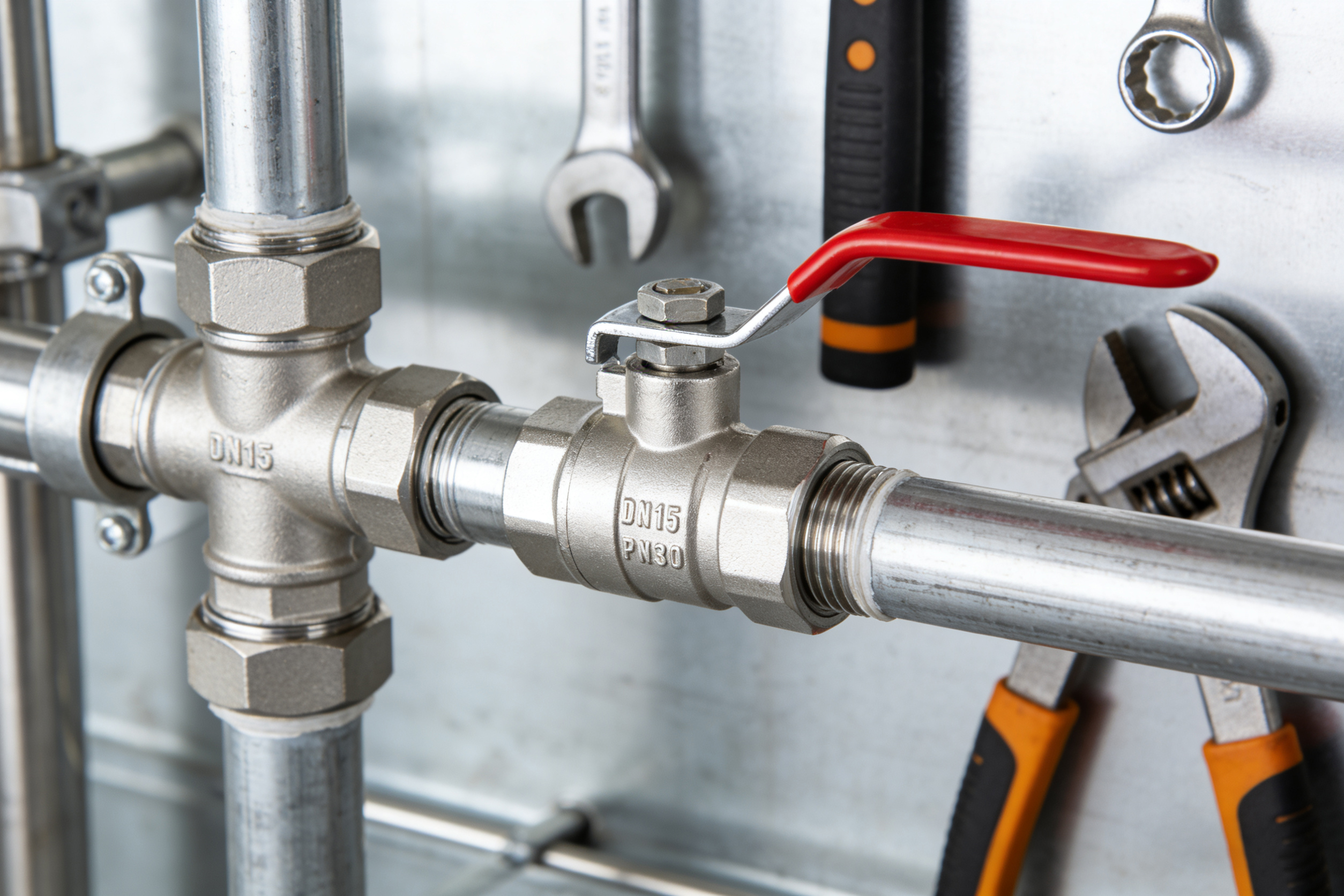
Brass valves in different configurations sourced from a full-line brass valve manufacturer.
What Is a Brass Valve?
A brass valve is a flow-control device whose body is made from brass, a copper-zinc alloy. Brass is chosen for its corrosion resistance, machinability, and durability in water, heating, gas, and HVAC systems. Brass valves are available as ball valves, gate valves, check valves, angle valves, strainers, and fittings, and they operate manually or automatically depending on the design.
Brass valves must meet specific pressure, temperature, and material requirements for each application. Selection depends on the medium (potable water, gas, heating fluid, compressed air), the pressure rating, the connection type, and the expected installation environment.
The Brass Valves Market and Industry Background
Demand for brass valves is closely tied to construction, plumbing retrofits, HVAC projects, and municipal water supply. China exported a total of USD 22.6 billion in valves (HS 8481) in 2024, maintaining its position as the largest global exporter, according to OEC. China accounts for approximately 41% of global brass ball valve export shipments, followed by Vietnam at 30%, according to Volza.
North America held approximately 26.1% share of the global brass valves market in 2025, while Asia Pacific dominated with 41.2% revenue share, according to Dataintelo. Lead-free brass alloys are becoming the mandatory standard for potable water applications in the US under the Safe Drinking Water Act. For manufacturers and distributors, this creates a clear distinction: standard brass products still serve many applications, while lead-free brass is the go-to choice for drinking-water systems in North America.
Brass Valve Families: Functions, Selection Criteria, and Typical Applications
The most efficient way to select brass valves is to start with the function required: isolation, backflow prevention, strainer duty, terminal shut-off, or connection. Below is a function-driven overview of brass valve types commonly produced by manufacturers such as Zhejiang Longda Technology Co., Ltd.
Brass Ball Valve
A brass ball valve is a quarter-turn valve that controls flow with a pivoting ball that has a bore through the center. When the ball bore is aligned with the pipe, flow is fully open; when rotated 90 degrees, flow stops. Ball valves are preferred for low-pressure-drop isolation and quick operation.
Typical specifications for a full-line brass ball valve include sizes from 1/2” to 4” (DN15 to DN100), pressure ratings up to 600 WOG (4.1 MPa), and working temperatures from -20°C to 150°C. The 8081 ball valve from Longda is an example of a 2-piece full port brass ball valve with a chrome-plated brass ball, blow-out-proof stem, and PTFE seats. It is available in lead-free brass versions certified to cUPC, NSF/ANSI 61, and NSF/ANSI 372. Connection options include FPT, MPT, Press, PEX, Compression, SWT, ProPEX (Cold Expansion), and Push-fit, allowing the same valve core to serve both North American and European piping systems.
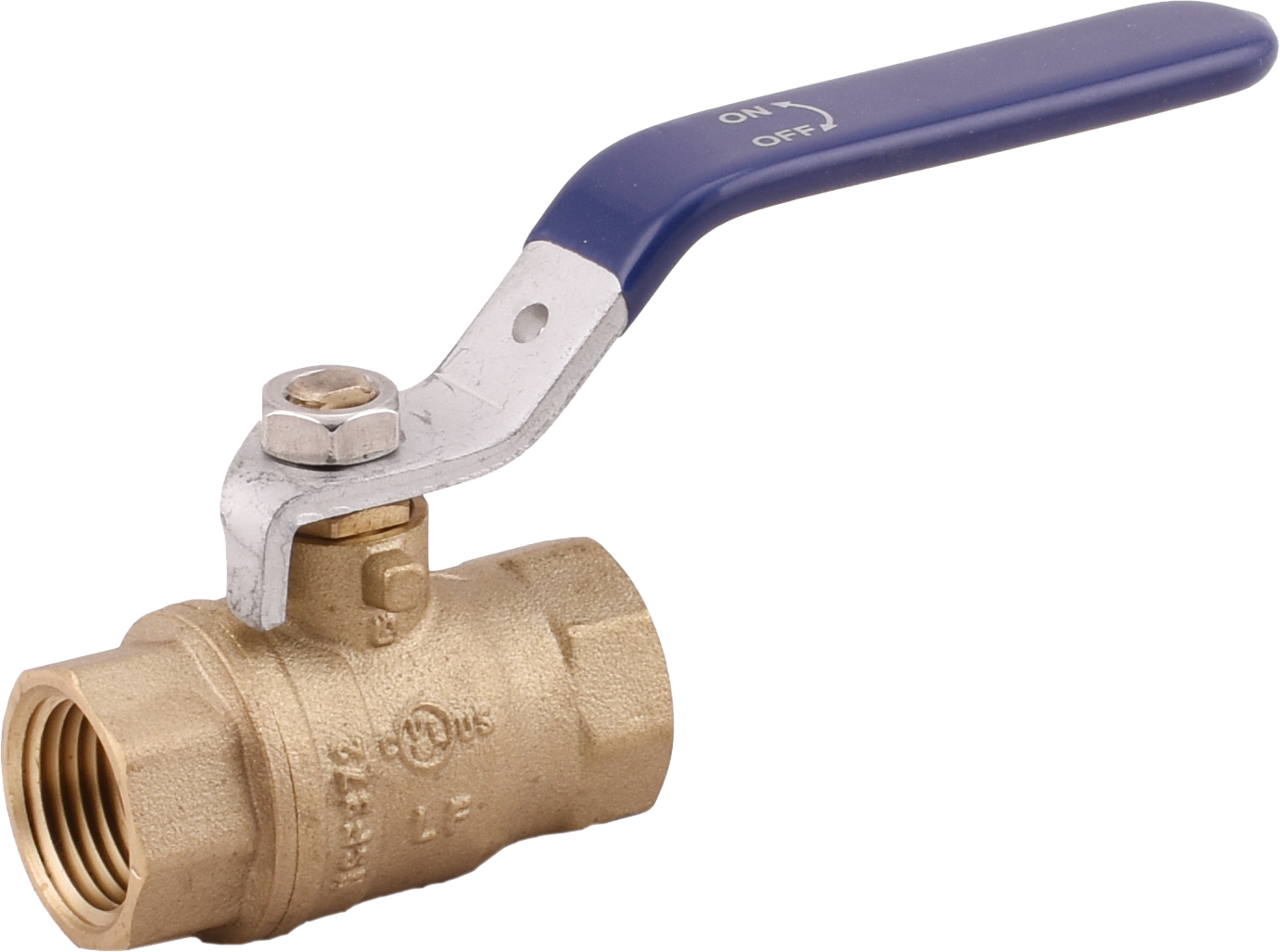
A lead-free 1/2” full port brass ball valve with NPT connections.
For European-oriented projects, the Longda ART.60621 brass water ball valve is manufactured in European brass CW617N in compliance with EN12164 and EN12165 standards, with a nominal pressure of 30 bar and a temperature range of -20°C to 140°C. This model suits drinking water networks, domestic hot water distribution, heating systems, compressed air networks, and pneumatic applications.
Brass Angle Valve and Brass Supply Stop Valve
A brass angle valve redirects flow at a 90-degree angle and provides local shut-off at a fixture. It is normally installed between the wall supply pipe and the fixture supply hose. The ART.98011 brass angle valve is a quarter-turn valve designed for bathroom and kitchen faucets and toilets in residential plumbing, commercial buildings, and water supply terminals. Pressure rating is 125 psi WSP / 600 WOG, with working temperatures from 0°C to 90°C. It is available with a brass ball and brass stem or POM stem, with PTFE/NBR seals, and is 100% tested.
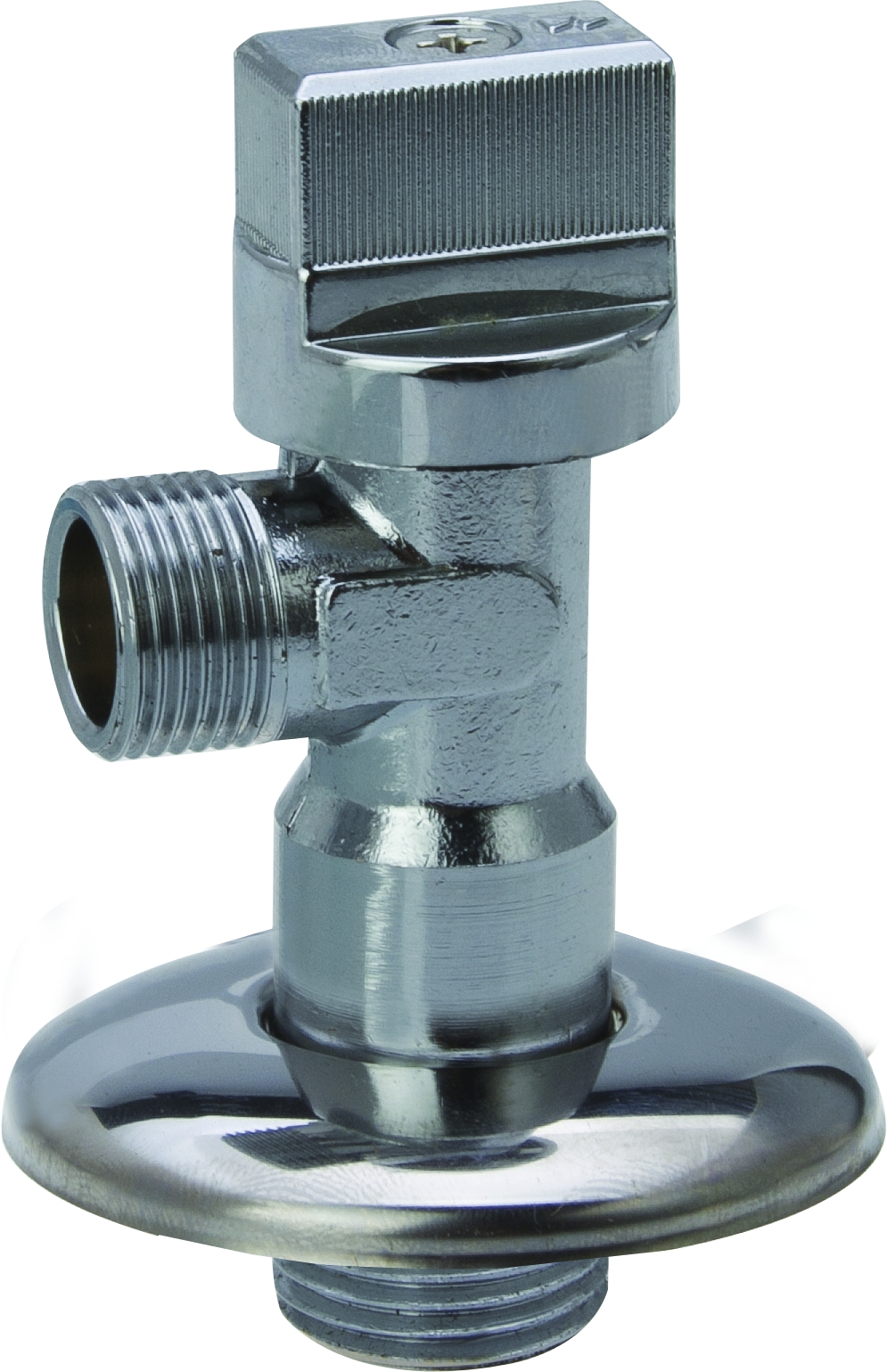
Quarter-turn brass angle valve with chrome-plated body for fixture-level shut-off.
The 98023-LF brass supply stop valve is a broader-terminal valve family that covers angle, straight, compression, PEX, and multi-turn variants. It is certified to cUPC, NSF/ANSI 61, and NSF/ANSI 372 in lead-free versions and is commonly installed under sinks, toilets, washing machines, and water heaters. Connection options include compression, FIP, PEX (ASTM F1960), sweat, threaded, push-fit, and press-fit, making it a versatile choice for plumbing distributors.
Brass Gate Valve
A brass gate valve uses a rising or non-rising stem to lift a disc or wedge out of the flow path. Gate valves are designed for fully open or fully closed service rather than frequent flow regulation.
The T-22017A brass gate valve is a rising-stem, full-bore, threaded gate valve for agricultural irrigation, HVAC, residential and commercial plumbing, and municipal water supply. It is rated at 200 WOG (1.4 MPa) with sizes from 1/2” to 4” (DN15 to DN100) and a working temperature range of -20°C to 120°C. The brass-to-brass metal seat avoids rubber seal aging, making it suitable for infrequent shut-off. Lead-free versions are NSF/ANSI 61 and NSF/ANSI 372 certified by IAPMO.
Brass Check Valve
A brass check valve prevents backflow in a pipeline by allowing flow in one direction only. The LD 30303 check valve is a brass swing check valve with a spring-loaded option for vertical or horizontal installation, designed for water supply and pumping systems. It is made from high-quality lead-free and dezincification-resistant (DZR) brass alloy, with a brass disc, PTFE sealing face, SS304 stainless steel spring, and NBR or EPDM seals. Size range is 1/2” to 2” (DN15 to DN50), pressure rating is 200 WOG (1.4 MPa), and the working temperature range is -20°C to 150°C. Lead-free versions are NSF 61 and NSF 372 certified.
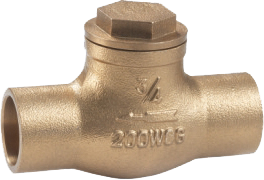
A brass swing check valve designed for backflow prevention in water supply lines.
Brass Y Strainer
A brass Y strainer removes sand, sediment, rust, and weld debris from pipelines to protect downstream equipment such as pumps, meters, and valve seats. The LD.73154 brass Y strainer has a hot-forged brass body, SS304 stainless steel screen in 20/40/60/80 mesh options, a blow-down drain plug, and a replaceable screen element that can be serviced without pipeline disassembly. It is suited to water supply pipelines, HVAC/chilled water systems, gas piping, and agricultural irrigation, with a 200 WOG (1.4 MPa) rating and working temperatures from -20°C to 150°C. Lead-free brass versions are certified to NSF/ANSI/CAN 61 and NSF/ANSI 372 by IAPMO.
Brass Pipe Fittings
Brass pipe fittings join or adapt pipework. The 15111 series includes adapters, couplings, nipples, elbows, tees, unions, caps, and plugs in sizes from 1/4” to 2” (DN8 to DN50), with NPT or BSP threads and pressure ratings up to 600 WOG (4.1 MPa). These fittings are hot-forged to eliminate casting porosity, lead-free compliant for potable water, and available with a dezincification-resistant (DZR) option. They also include PEX fittings per ASTM F1807, PEX-A fittings per ASTM F1960, press fittings per Z1117, and push-fit fittings per ASSE 1061, enabling full-system connectivity in North American PEX and copper installations.
How to Compare Brass Valve Suppliers
Brass valves may look similar across suppliers, but manufacturing quality, certifications, material traceability, and testing can differ significantly. When comparing a brass valve manufacturer, we recommend using these criteria.
- Manufacturing scale and history: Consider the factory area, number of employees, annual output, and in-house testing capacity. Zhejiang Longda Technology Co., Ltd., established in 1993, operates a 30,000 m² facility in XuanGuang Industrial Zone, LuPu Town, YuHuan County, Zhejiang Province, with approximately 200 employees and an annual production capacity of 7,500 tons. Longda also employs more than 30 technical staff, including 6 R&D engineers.
- Alloy and material options: Standard brass grades such as CW617N, HPb59, and C37700 are common. For North American potable water, lead-free brass must meet the lead content requirement of ≤0.25% on wetted surfaces per NSF/ANSI 372. Longda offers alloys such as Eco-Brass C69300, CW724R, lead-free C4650, CW511L, low-lead CW509L/CW510L, and DZR CW602N to meet global green standards.
- Certifications: Check whether the factory holds relevant third-party certifications. Longda’s products are IAPMO and ALS certified, and specific lead-free products carry cUPC, NSF/ANSI 61, and NSF/ANSI 372 certification. European-targeted products follow EN 12164/EN 12165 material standards.
- Testing capacity: Look for in-house spectral analysis, intensity testing, high-pressure testing, salt-spray testing, high/low-temperature testing, roundness measurement, and 100% factory testing. Longda operates more than 360 sets of processing and testing equipment, including CNC machines, assembly lines, spectral analysis instruments, high/low-temperature test boxes, salt-spray test boxes, and laser marking machines.
- Export and compliance experience: A supplier exporting approximately 95% of output to the EU, USA, Canada, and South America will typically have deeper familiarity with regional certification and documentation requirements than a purely domestic supplier.
- OEM/ODM capability: For distributors and brands, the ability to customize handles, packaging, threads, and materials is valuable. Longda provides one-stop OEM/ODM solutions from in-house tooling to final production and testing.
Brass Valve Sourcing Process: Step-by-Step
For buyers sourcing brass valves as a distributor, contractor, or brand, a structured sourcing process reduces risk and shortens lead time.
Step 1: Define the application and environment
Identify the medium (potable water, gas, heating fluid, compressed air), temperature, pressure, installation position, and local regulation. This determines whether you need standard brass, lead-free brass, DZR brass, or a specific standard such as NSF 61, NSF 372, cUPC, EN 331, or EN 13828.
Step 2: Choose the valve type and connection
Select the valve function: ball valve for full-port isolation, gate valve for infrequent shut-off, check valve for backflow prevention, angle valve for fixture shut-off, Y strainer for filtration, and fittings for connection. Then choose the connection type: NPT for North America, BSP for many other regions, compression, sweat, PEX, PEX-A, press, or push-fit depending on the pipe system.
Step 3: Request specifications and certifications
Ask for a datasheet with pressure rating, working temperature, materials, dimensions, thread standards, and test pressure. For lead-free products, request the NSF/ANSI 61 and NSF/ANSI 372 certificates or the IAPMO certification if applicable. Confirm the test protocol: for example, a 100% factory pressure test and thread gauge inspection are common quality markers.
Step 4: Evaluate samples
Before volume orders, obtain samples and inspect thread precision, surface finish, handle operation, and internal sealing. For potable water products, verify that the material test report matches the grade and certification.
Step 5: Check production and QC process
If possible, audit the factory or request a virtual tour. In a mature brass valve factory, hot forging, CNC machining, assembly, and 100% pressure testing should be connected and documented.
Use Cases for Brass Valves in Plumbing and HVAC
Brass valves appear in almost every part of a water or heating system. These use cases show the product range needed by a distributor or contractor.
Use Case 1: Whole-house repiping with PEX-A
In new residential construction or whole-house repiping with PEX-A pipe, installers combine cold-expansion PEX-A ball valves (ASTM F1960) with PEX-A fittings and manifold connections. The cold expansion connection expands the PEX-A pipe end with an expansion tool, inserts the fitting, and the ring contracts to form a permanent leak-free joint without reducing inner diameter. Longda’s 8081 PEX-A ball valve with a blue quarter-turn lever is an example of this product family, commonly applied to potable water branch lines and water heater connections.
Use Case 2: Bathroom and kitchen fixture shut-off
Angle valves and supply stops are installed behind faucets, toilets, washing machines, and water heaters to allow localized shut-off without closing the main supply. The 98023-LF supply stop family and the ART.98011 angle valve cover compression, PEX, threaded, sweat, push-fit, and press-fit connections, giving contractors one source for multiple plumbing scenarios. Chrome-plated finish is frequently specified to resist corrosion in humid environments.
Use Case 3: HVAC and heating system balancing
Heating and chilled-water systems require flow balancing between circuits to achieve even temperature distribution. Manual balancing valves remain significant in the Asia-Pacific hydronic balancing market, representing approximately 55–65% of unit demand, according to IndexBox. For radiator heating, underfloor heating, and commercial HVAC, a brass manual balancing valve with preset flow scales or measuring ports allows installers to set flow without guesswork.
Use Case 4: Protecting pumps and meters with Y strainers
A brass Y strainer installed upstream of a pump, meter, or ball valve protects these components from sand and debris. The blow-down drain plug enables inline flushing without disassembly, reducing maintenance downtime. Replaceable screens further reduce spare-part cost because the whole valve does not need to be removed.
Brass Valves vs. Other Materials
For plumbing and HVAC components, brass competes with materials such as stainless steel, cast iron, and plastic. The choice affects cost, corrosion resistance, pressure rating, and installation method.
| Property | Brass | Stainless Steel | Cast Iron | Plastic (e.g., PVC/PPR) |
|---|---|---|---|---|
| Typical applications | Residential and commercial plumbing, heating, gas, HVAC | Industrial, aggressive media, food processing | Large municipal and industrial pipelines | Low-pressure water and drainage, some chemical lines |
| Pressure rating range | Up to 600 WOG (4.1 MPa) for forged brass ball valves | High depending on grade and wall thickness | Class 125 or higher depending on design | Lower pressure ratings than forged metal |
| Potable water compliance | Lead-free brass available with NSF/ANSI 61 and 372 | Generally safe but higher cost | Requires internal lining for potable water | Certified options exist but material strength is lower |
| Corrosion resistance | Good; DZR option for dezincification resistance | Excellent | Susceptible to rust without coating | Good for many chemicals but limited temperature |
| Machinability and connection options | Excellent; supports threaded, PEX, press, push-fit, sweat | Harder to machine; higher tooling cost | Heavy; requires larger installation effort | Requires solvent welding, threading, or push-fit |
| Cost position | Mid-to-premium, especially lead-free brass | Higher material and machining cost | Lower material cost but higher weight/coating | Lowest material cost |
The table above is a general comparison based on industry practice. Suppliers can confirm which materials and ratings are available for specific products.
Quality and Certification Considerations
For brass valves used in potable water, the most common certification frameworks are NSF/ANSI 61, NSF/ANSI 372, and cUPC in North America. The lead-free requirement caps wetted-surface lead content at ≤0.25% per NSF/ANSI 372 and the US Safe Drinking Water Act (including California AB1953). For gas valves in Europe, EN 331:2015 specifies safety requirements for gas installations, while EN 13828:2003 specifies requirements for manually operated copper alloy ball valves for drinking water supply.
For manufacturers such as Longda, the combination of IAPMO and ALS certification, plus per-product certification such as cUPC, NSF/ANSI 61, and NSF/ANSI 372, supports compliance for North American, Canadian, and other international markets. In-house testing equipment, including spectral analysis, intensity testing, high-pressure testing, salt-spray testing, and temperature cycling, helps ensure that products leaving the factory meet the stated specification.
Why Buyers Work with Longda Brass Valve
Zhejiang Longda Technology Co., Ltd. (formerly Zhejiang Longda Water Technologies Co., Ltd.) is a brass valve manufacturer established in 1993. The company operates in XuanGuang Industrial Zone, LuPu Town, YuHuan County, Zhejiang Province, China, near the Yuhuan toll station of the high-speed road. Longda specializes in brass valves, brass fittings, plumbing bibcocks, faucets, sanitary wares, and other brass components for residential and commercial use.
Longda exports approximately 95% of its products, serving the EU, USA, Canada, South America, and African markets. This export profile gives the company practical knowledge of regional requirements, threading standards, packaging formats, and certification documentation. Its product range covers ball valves, gate valves, stop valves, check valves, heating valves, angle valves, and fittings using brass alloys such as Eco-Brass C69300, CW724R, lead-free C4650, CW511L, low-lead CW509L/CW510L, and DZR CW602N, as well as CW617N and HPb59 standard grades.
For buyers, Longda’s value lies in combining a full brass valve range with OEM/ODM service and documented testing. Whether you need a private-label ball valve with a custom handle, a supply stop with a specific connection type, or a full container program across multiple valve families, a single-source brass valve manufacturer simplifies supply chain coordination.
FAQ
1. What certifications do lead-free brass valves need for potable water use in the United States?
Lead-free brass valves for potable water in the US must limit wetted-surface lead content to ≤0.25% per NSF/ANSI 372 and the Safe Drinking Water Act (including California AB1953). Materials in contact with drinking water should also conform to NSF/ANSI 61 health-effects requirements. Products such as Longda’s lead-free ball valves, gate valves, check valves, and supply stops are available with cUPC, NSF/ANSI 61, and NSF/ANSI 372 certification. Threads for US applications generally conform to ASME B1.20.1 (NPT).
2. What is the difference between a brass gate valve and a brass ball valve?
A gate valve uses a rising or non-rising stem to lift a wedge out of the flow path, making it best for fully open or fully closed service with minimal flow restriction when open. A ball valve uses a quarter-turn pivoting ball with a central bore for fast, reliable on/off control. Ball valves are typically preferred for frequent operation and low-pressure-drop isolation; gate valves are often selected for infrequent shut-off in larger lines. The Longda T-22017A is a rising-stem, full-bore gate valve rated at 200 WOG (1.4 MPa), while the 8081 ball valve is rated at 600 WOG (4.1 MPa).
3. Can I get custom OEM/ODM brass valves with my own branding?
Yes. Longda provides OEM/ODM service from in-house tooling and design to final production and testing. Customers can customize handles, packaging, brass alloy (standard CW617N, HPb59, lead-free, or other requested grade), thread systems (NPT/BSP), and connection types such as compression, PEX, press, and push-fit. Longda works with global brands in plumbing, heating, HVAC, refrigeration, and power station applications.
4. What sizes and pressure ratings are available for brass ball valves?
Longda’s 8081 brass ball valve is available in sizes from 1/2” to 4” (DN15 to DN100), with a pressure rating of 600 WOG (4.1 MPa) and a working temperature range of -20°C to 150°C. The ART.60621 European-spec ball valve has a nominal pressure of 30 bar and operates from -20°C up to 140°C. Connection options include female NPT or BSP, with additional PEX, PEX-A, press, push-fit, compression, and sweat connectors on many models.
5. How can I get samples or a quotation for a brass valve project?
To request samples, a quotation, or a full product catalogue, contact Longda directly by email at sales@ld-valve.com or by phone/WhatsApp at +86 13506869135. The company also publishes a global product catalogue that can be downloaded for reference: Longda-Global Catalogue (PDF). For overseas buyers, Longda can coordinate samples, factory visits in Yuhuan, and volume shipment planning.
Conclusion
Brass valves remain essential components in plumbing, heating, water supply, gas, and HVAC systems. The market is growing, and so is the complexity of compliance, especially for lead-free potable water products in North America. A reliable brass valve supplier should offer a broad product range, documented materials, certified lead-free options, in-house testing, and OEM flexibility.
When evaluating a partner, look beyond the product photo. Evaluate factory history, scale, testing equipment, certifications, export experience, and the ability to supply a complete valve and fitting package. A manufacturer such as Zhejiang Longda Technology Co., Ltd. demonstrates how a specialized brass factory can support global buyers with one-stop supply from ball valves and gate valves to PEX fittings and OEM services.
Need a reliable brass valve supplier for your next project?
Contact Longda for samples, quotations, and the latest catalogue.