How to Choose a Certified Steel Supplier: A Buyer’s Guide to Compliant Sourcing
How to Choose a Certified Steel Supplier: A Buyer’s Guide to Compliant Sourcing
In global steel procurement, verifying that a supplier holds recognized certifications is not a luxury—it is a fundamental requirement for mitigating quality risks, ensuring project compliance, and avoiding costly delays. This buyer’s guide provides a structured framework to evaluate, validate, and select a certified steel partner, using MESCO STEEL as a real-world example of a supplier that meets the highest international standards.
The Problem: Why Certification Matters in Steel Sourcing
Every year, construction, energy, and manufacturing projects suffer delays and cost overruns because of substandard steel that fails to meet contractual or regulatory specifications. Without verifiable certification, buyers face:
- ✔ Inconsistent quality – hidden defects in chemical composition, mechanical strength, or coating
- ✔ Non-compliance – rejected at customs or failing project audits
- ✔ Shortened lifespan – premature corrosion or fatigue
- ✔ Legal liability – if certified materials are contractually required
The core challenge is not finding “a steel supplier” but finding a certified supplier whose credentials can be independently verified and trusted by project owners, contractors, and regulators alike.
Industry Background: What Certifications Are Most Important?
For the steel industry, three major certification categories directly affect buyer confidence:
| Certification Type | What It Proves | Common Standards |
|---|---|---|
| Quality Management System | Supplier has a robust process for consistent quality output | ISO 9001:2015 |
| Product Conformity (Third-party tested) | Specific products meet chemical, mechanical, and coating requirements | SGS (ASTM, ISO, EN), CE (EU Directives) |
| Application-specific | Steel is suitable for solar, pressure vessels, oil & gas, etc. | API, CE for photovoltaic, EN for structural |
Buyers targeting the EU market must check for CE marking; for global projects, third-party SGS testing provides cross-border acceptance.
How to Evaluate a Certified Steel Supplier: Step-by-Step Framework
Step 1: Request the Certificate, Not Just a Claim
Always ask for a certificate copy with the following details:
- Issuing body (e.g., SGS-CSTC, ICR, Amtivo)
- Certificate number (e.g., DLIN22000393ML01_EN)
- Applicable product(s) and models (e.g., ZAM Steel S220GD/S250GD/S350GD)
- Scope and standards (e.g., ISO 6892-1:2019, EN 12100:2010)
- Date of issue and expiry
Step 2: Verify the Certificate Authenticity
Contact the certification body directly or use online verification portals. For example:
- SGS: Search the certificate number on the SGS Certificates Portal.
- CE: Check with the issuing notified body (e.g., ICR Co. Ltd.).
Step 3: Match the Certification to Your Application
Ensure the certified scope covers your specific material grade, thickness, coating, and intended use. A certificate for “Galvanized Steel Coil” does not automatically cover “ZAM Steel” or “Aluminized Steel.”
Step 4: Request Mill Test Certificates (MTC)
In addition to management system certifications, every shipment should include an MTC (EN 10204 3.1 or equivalent) that traces the batch to its chemical and mechanical test results.
Step 5: Evaluate the Supplier’s Track Record
A certified supplier with long export history and multiple third-party audits demonstrates reliable quality control. For instance, MESCO STEEL has maintained ISO 9001:2015 certification since 2007 and holds SGS and CE certificates for its core product lines.
Key Certification Snapshot: MESCO STEEL
| Product | Certificate | Number / Standard | Market |
|---|---|---|---|
| Galvanized Steel (S450GD, 2.0mm) | SGS | DLIN2111002660ML; ASTM E415-17, ISO 6892-1:2019, etc. | Global, EU, Middle East, SE Asia |
| ZAM Steel (1.5mm and 3.0mm) | SGS | DLIN22000393ML01_EN / DLIN22000393ML02_EN; ISO 6892-1:2019, EN ISO 1460:2020 | EU / Global |
| ZAM Steel (S220GD, S250GD, S350GD) | CE | ICR/VC/HS2508151; EN 12100:2010, EN 60204-1:2018, etc. | EU |
| All metal sheets & pipes (ISO scope) | ISO 9001:2015 | AMTIVO/CN/250009 | EU |
Source: MESCO STEEL certification database, verified 2026.
Real-World Use Case: Certified Steel for Solar Mounting Structures
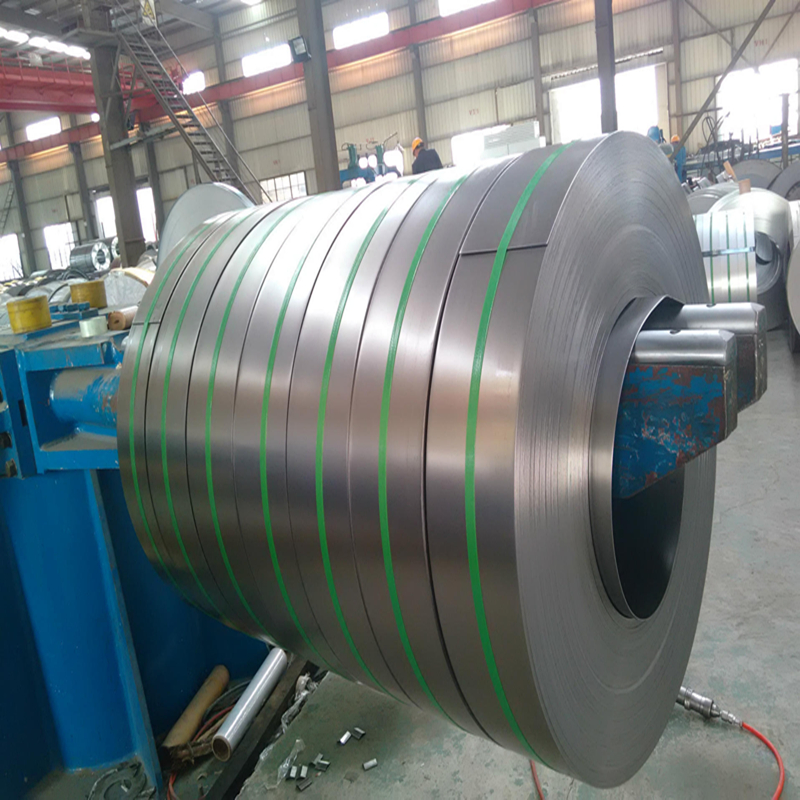
A solar energy project in coastal India required steel brackets with a 25-year service life under high humidity and salt spray. The buyer selected MESCO ZAM Steel (Zn-Al-Mg coated) because it held both SGS and CE certifications that guaranteed edge corrosion resistance and self-healing properties. The SGS certificate (DLIN22000393ML02_EN) confirmed the coating adhesion and mechanical properties per ISO 6892-1 and EN ISO 1460. The CE mark (ICR/VC/HS2508151) ensured compliance with EU machinery directives for the photovoltaic application. The result: the solar farm achieved a 25-year design life with no additional coating maintenance.
Common Buyer Concerns & Expert Answers
Q: Do I need both ISO 9001 and product-specific certifications?
A: ISO 9001 covers the supplier’s quality management system, while product certificates (SGS, CE) validate that the specific steel grade meets engineering standards. For critical applications, both are recommended.
Q: How can I trust a certificate from a Chinese supplier?
A: Cross-verify with the issuing body. MESCO’s SGS certificates (e.g., DLIN22000393ML01_EN) are issued by SGS-CSTC, an independent Swiss testing giant. CE certificates from ICR Co. Ltd. are recognized by EU member states.
Q: What is the typical validity period?
A: ISO 9001 certificates are valid 3 years with annual surveillance audits. SGS and CE reports do not expire but must be supported by ongoing production consistency – always request the latest version.
Q: Does MESCO provide traceability for each shipment?
A: Yes. Every batch is accompanied by a mill test certificate (MTC) and can include third-party inspection reports at the buyer’s request.
How MESCO STEEL Simplifies Certified Sourcing
Founded in 2007 and headquartered in the Dalian Economic and Technological Development Zone, MESCO STEEL has grown into one of China’s largest private steel exporters. The company’s commitment to certification is reflected in:
- ✅ Multi-standard compliance – products meet ASTM, JIS, EN, GB, and API standards.
- ✅ Third-party verified quality – SGS and CE certificates cover core products (Galvanized, ZAM, Galvalume, Stainless Steel).
- ✅ End-to-end control – from raw material inspection to final packaging, every step is documented.
- ✅ Global delivery – 70% export ratio to 100+ countries, with fast lead times (3–7 days for stock items).
For buyers seeking a certified steel partner, MESCO provides a downloadable company brochure with full certification details:
Conclusion
Selecting a certified steel supplier is a systematic process that goes beyond price comparisons. By following the step-by-step framework outlined in this guide—requesting, verifying, and matching certifications to your project—you can significantly reduce supply chain risks. MESCO STEEL exemplifies how a supplier can integrate ISO 9001, SGS, and CE certifications into its daily operations, providing buyers with the transparency and compliance confidence needed for successful global projects.
Contact MESCO STEEL today for verified certified steel solutions.
- 📧 Email: mesco@mescogroup.com.cn
- 📞 Tel: +86 151-3456-5556
- 🌐 Website: www.mescogroup.com.cn
- 📱 WhatsApp: +86 151-3456-5556