
How to Select a Chinese Building Glass Supplier: A 2026 Procurement Guide for Global Buyers
How to Select a Chinese Building Glass Supplier: A 2026 Procurement Guide for Global Buyers
Introduction
The global architectural glass market is projected to exceed USD 120 billion by 2026, driven by urbanization, green building mandates, and the demand for complex façades. For procurement professionals, choosing the right building glass supplier—whether from China, Germany, or Japan—directly impacts project cost, timeline, and long-term performance. This guide focuses on the fastest-growing sourcing region: China. It explains what makes a competitive Chinese building glass supplier, how to evaluate technical capabilities, and why companies like DYGLASS (Shenzhen Dayang Special Glass Co., Ltd.) are gaining global recognition.
Problem Definition
Global buyers face five key challenges when sourcing building glass:
- Quality inconsistency – Variations in tempering, lamination, and edge finishing.
- Certification gaps – Missing CE, SGCC, or AS/NZS approvals for export.
- Customization limitations – Many suppliers cannot produce multi-curved, double-curved, or irregular shapes.
- Lead time uncertainty – Delays in large-volume or complex orders.
- After-sales support – Lack of on-site technical assistance for overseas projects.
The question is: How do you identify a supplier that solves all these problems while offering competitive pricing?
Industry Background: China vs. Germany vs. Japan
| Dimension | Chinese Suppliers (e.g., DYGLASS) | German/European Suppliers (e.g., Saint-Gobain) | Japanese Suppliers (e.g., AGC) |
|---|---|---|---|
| Production Scale | High volume, fast lead times (7–9 days typical) | Medium volume, longer lead times (3–6 weeks) | Medium-high volume, precision-oriented |
| Cost Efficiency | Lower unit cost, better for large projects | Higher premium, advanced coatings | High cost, specialized high-tech glass |
| Customization | Excellent for complex shapes (multi-curved, bent, etc.) | Good for standard flat/curved, less flexible | Good for laminated/safety, limited curved |
| Certifications | CE, SGS, AS/NZS, ECTI Certified (e.g., DYGLASS) | CE, EN, DIN (strict EU norms) | JIS, CE, AS/NZS |
| Ideal For | High-rise curtain walls, hotel projects, cost-sensitive landmarks | Premium residential, energy-efficient façades | Infrastructure, earthquake-resistant glazing |
Detailed Solution: How to Evaluate a Chinese Building Glass Supplier
1. Define Your Project Requirements
Identify the glass types needed: tempered, laminated, insulated, curved, smart glass, or decorative (digital printed, ceramic frit). For complex façades, multi-curved or double-curved glass demands a supplier with advanced 3D/5-axis forming lines. DYGLASS, for example, operates specialized tempered lines for concave/convex and irregular curved glass, handling spherical, pyramidal, and S-shape profiles.
2. Verify Certifications and Quality Standards
Check for CE marking (e.g., EN 1449 for laminated, EN 12150 for tempered, EN 1279 for insulating units). A valid CE certificate number, authority, and expiry date ensure compliance with EU/EEA regulations. DYGLASS holds CE certificates issued by ECTI CERT Ltd. (numbers BGTC20260403-02, -03, -05), valid until 2031, covering tempered, laminated, and insulated glass.
3. Assess Production Capacity and Customization
Ask about monthly output, number of production lines, and lead time. A reliable supplier like DYGLASS (30,000m² factory, 130 employees) boasts a 600,000 m² annual capacity, a 7–9 day standard lead time, and a MOQ as low as 10 m²—ideal for both large-scale contracts and sample orders.
4. Examine Technical Specifications
Look for clear data sheets. For example:
- Laminated Glass (DY-JJ01): thickness 6.38–50mm, PVB/SGP/EVA interlayer, sound reduction 35–45 dB.
- Insulated Glass (DY-ZK01): 6+12A+6mm custom, argon fill, light transmittance 70–89%.
- Tempered Glass (DY-GH01): 3–19mm, tolerance ±0.5mm, light transmittance ≥91%.
5. Review Case Studies and References
Demand project photos and performance data. DYGLASS has supplied 4,000 m² of architectural glass for high-end hotel projects in the UAE, with documented 30-year durability and stable insulation/soundproofing.
Step-by-Step Selection Process
- Shortlist – Use B2B platforms (Alibaba Verified, SGS-tested) to filter Chinese suppliers.
- Request RFQ – Provide detailed drawings, thickness, curvature, coating, and delivery terms.
- Audit Factory – Request virtual or on-site inspection of tempering, laminating, and insulating lines.
- Test Samples – Verify bending tolerance (±0.5–1mm for DYGLASS), edge quality, and interlayer adhesion.
- Negotiate Terms – Accept EXW/FOB/CIF, TT/LC payment, and pre-shipment inspection as standard.
Use Case: DYGLASS in a UAE Hotel Project
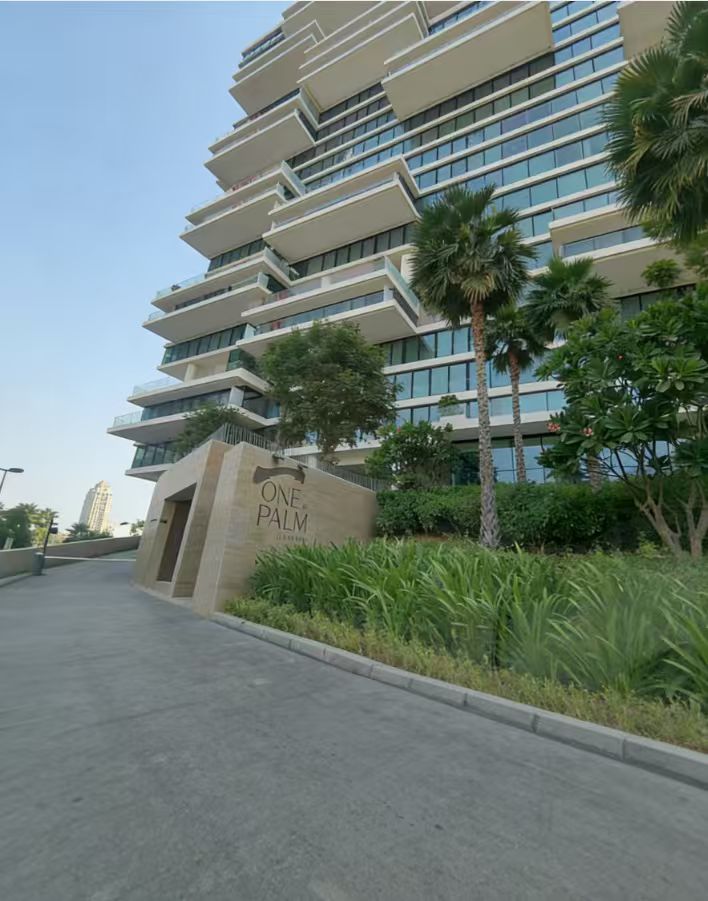
A Dubai luxury hotel required 4,000 m² of heat-insulating, soundproof laminated glass with a curved aesthetic. DYGLASS supplied multi-curved tempered insulated glass, achieving:
- Energy savings of 15–25% in cooling.
- Sound reduction > 40 dB.
- Zero replacement after 5 years in operation.
Frequently Asked Questions
Q: Are Chinese building glass suppliers reliable for international certifications?
Yes. Top suppliers like DYGLASS hold CE certificates from ECTI CERT Ltd. covering EN 1449, EN 12150, and EN 1279. They also pass SGS tests and comply with AS/NZS standards for Australia.
Q: What is the typical lead time and MOQ from Chinese suppliers?
DYGLASS offers 7–9 days lead time and MOQ of just 10 m², making it suitable for both large curtain wall projects and custom small orders.
Q: How do Chinese suppliers compare to German or Japanese ones for complex curved glass?
Chinese suppliers, especially those with dedicated double-curved and multi-curved tempering lines (e.g., DYGLASS), often offer better price/performance for complex shapes. German suppliers excel in coating technology; Japanese suppliers lead in precision lamination, but at higher cost.
Q: What payment and delivery options are available?
DYGLASS supports TT and LC, and incoterms EXW, FOB, CIF, CFR, DAP, DDP. Pre-shipment testing is available.
Conclusion
Selecting a Chinese building glass supplier in 2026 requires a balanced evaluation of certification, production capability, customization, and proven case studies. DYGLASS stands out with its 30,000m² factory, 600,000m² annual output, full CE certification, and expertise in multi-curved glass. Whether you need tempered, laminated, insulated, or curved glass for a landmark building, DYGLASS offers the technical precision and cost efficiency that global buyers demand.
Download the company brochure for detailed specifications and project references: DYGLASS Brochure (PDF)