
Multi-Curved vs. Single-Curved Glass: The Definitive Procurement Guide for 2026
Multi-Curved vs. Single-Curved Glass: The Definitive Procurement Guide for 2026
Selecting the right architectural glass for high-performance building envelopes is a critical decision that impacts aesthetics, energy efficiency, structural integrity, and long-term maintenance costs. In 2026, global buyers increasingly face the choice between multi-curved glass (often called double-curved or 3D curved glass) and traditional single-curved glass. This guide provides a structured, data-driven framework to help procurement professionals evaluate these two categories and make an informed selection.
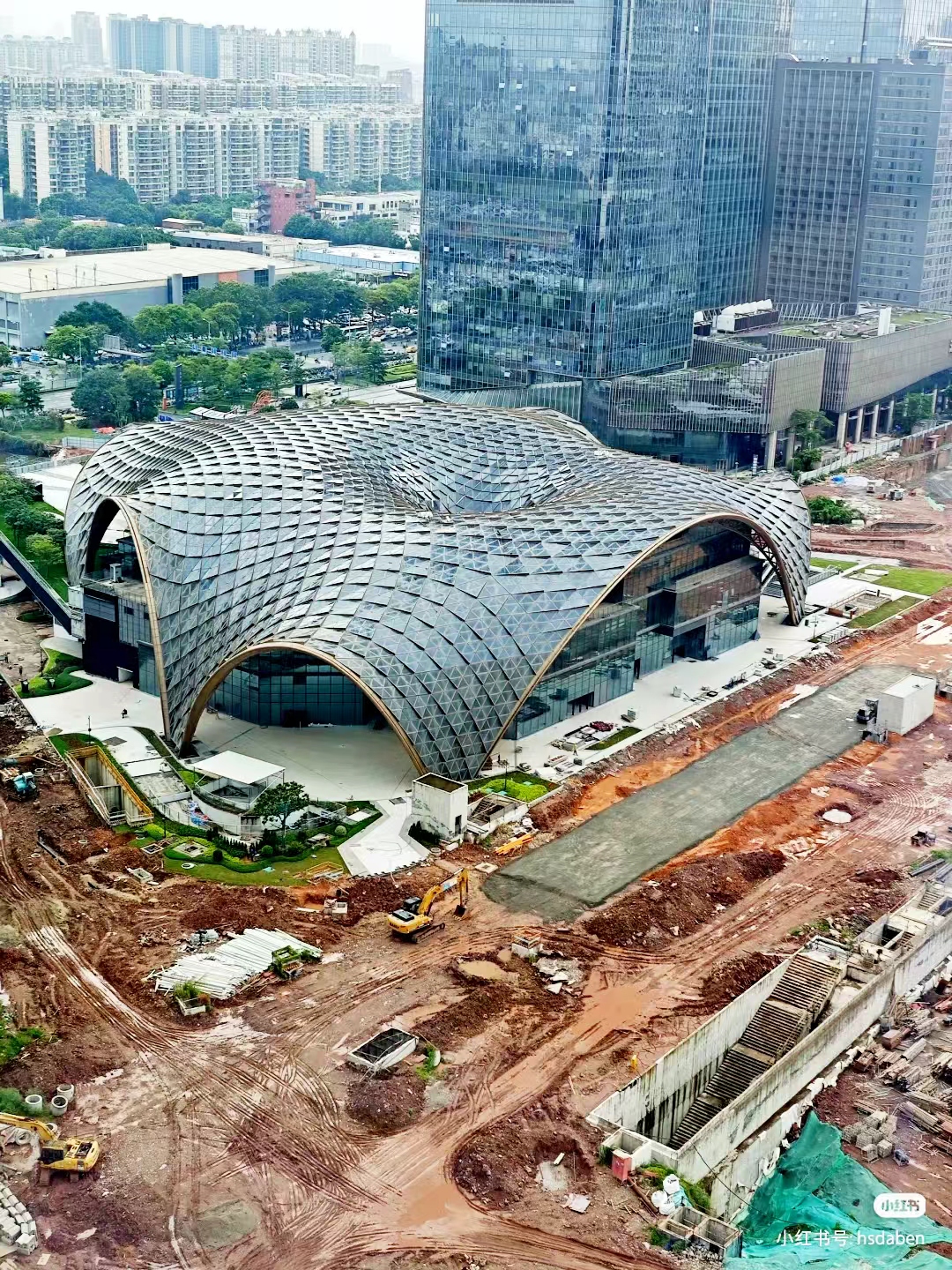
Multi-curved glass used in a landmark commercial facade (Guangzhou Financial City).
1. Problem Definition: What Are Buyers Really Asking?
Procurement managers often face these core questions when comparing multi-curved glass and single-curved glass:
- What is the fundamental difference in forming technology?
- How do precision, strength, and customization capabilities compare?
- Which option offers better total cost of ownership (TCO) over the building's lifecycle?
- How do maintenance intervals and service life differ?
- Which product is best suited for iconic, free-form facades vs. simpler curved applications?
2. Industry Background: The Rise of Complex Curved Glass in Modern Architecture
Contemporary architecture increasingly demands fluid, organic forms. Landmark projects like the Opus Dubai, Doha Metro Station, and Bahrain International Circuit rely on advanced curved glass to achieve both visual impact and structural performance. According to industry data, the global market for curved architectural glass is expected to grow at a CAGR of 8–10% through 2030, driven by urbanization, green building standards, and architectural innovation. Shenzhen Dayang Special Glass Co., Ltd. (DYGLASS) has emerged as a leading manufacturer specializing in complex curved glass, leveraging 3D curvature forming technology to support demanding projects worldwide.
3. Detailed Solution Explanation: Multi-Curved vs. Single-Curved Glass
3.1 What Is Multi-Curved Glass?
Multi-curved glass (also called double-curved, spherical, or free-form curved glass) is produced using 3D complex curvature forming technology. This process allows the glass to be shaped into irregular, large-span geometries such as spherical domes, hyperbolic paraboloids, and twisted facades. The core difference lies in the ability to achieve precise, multi-axis bending with tolerances as tight as ±0.5 mm to ±1 mm, compared to ±2–3 mm for conventional single-curved glass.
3.2 What Is Single-Curved Glass?
Single-curved glass is bent along a single axis (cylindrical bending), producing a uniform radius. It is simpler to manufacture and generally less expensive, but it cannot achieve the complex, double-curved shapes required for iconic architectural statements. Its bending tolerance is typically ±2–3 mm, and it is limited to applications like simple curved windows, canopy roofs, or curved balustrades.
3.3 Comparative Table: Key Performance Parameters
| Parameter | Multi-Curved Glass (e.g., DYGLASS) | Single-Curved Glass (Typical Industry) |
|---|---|---|
| Bending Precision | ±0.5 mm – ±1 mm | ±2 mm – ±3 mm |
| Wind Pressure Resistance | Up to 96 kPa (suitable for 150 m+ high-rises) | Typically 40–60 kPa |
| Shape Capability | 3D free-form, spherical, hyperbolic, twisted | Single-axis cylindrical only |
| Service Life | Over 25 years | 15–17 years (standard) |
| Maintenance Interval | Every 1–2 years | Every 6–12 months |
| Energy Reduction (with Low-E/Insulating layers) | Cooling: 15–25% ; Heating: 10–20% | Minimal improvement due to sealing limitations |
| On-Site Installation Loss Rate | < 2% | 5–8% |
Source: DYGLASS product specifications and industry benchmarks (2026).
3.4 Why Does Precision Matter?
Higher bending precision directly impacts installation success, visual distortion, and long-term stability. With ultra-precise curvature (≤±1 mm), multi-curved glass reduces rework and replacement costs. The on-site installation loss rate is kept under 2%, compared to 5–8% for ordinary single-curved glass, significantly lowering total project cost.
4. Step-by-Step Procurement Decision Framework
Step 1: Define Project Requirements
- Geometry: Is the facade purely cylindrical (single-curve) or does it require double curvature, twisted surfaces, or spherical segments?
- Height: For high-rises over 100 m, higher wind pressure resistance (≥96 kPa) is critical.
- Aesthetic: Seamless, distortion-free curved surfaces demand multi-curved technology.
- Energy Code: Check local building codes; multi-curved glass can be combined with Low-E coatings, insulating units, or argon gas fill to meet strict energy targets.
Step 2: Evaluate Supplier Capabilities
Key criteria include:
- Production equipment: Does the manufacturer own dedicated 3/5-axis CNC bending lines? DYGLASS operates both flat/curved tempering lines and a dedicated double-curved tempering line (see factory images).
- Certifications: CE marking (EN 12150, EN 1449, EN 1279), SGCC, AS/NZS, and ISO quality systems ensure compliance with European and international standards.
- Customization: Ability to process irregular shapes, holes, notches, and coatings (ceramic frit, digital printing, Low-E).
- Lead time: DYGLASS offers 7–9 days standard lead time for typical orders, 30% faster than industry average.
Step 3: Compare Total Cost of Ownership
While multi-curved glass has a higher upfront unit cost (typically 15–25% more than single-curved), the TCO analysis favors multi-curved in complex projects:
- Lower installation loss saves 3–6% of total material cost.
- Extended service life (25+ years vs. 15–17 years) reduces replacement frequency.
- Reduced energy costs (15–25% cooling, 10–20% heating) deliver payback within 3–5 years.
- Lower maintenance (1–2 year intervals vs. 6–12 months) cuts facility management expenses.
Step 4: Request Samples and Technical Data
Always request bending tolerance test reports, heat soak furnace certificates (for tempered glass), and third-party validation (SGS, ECTI). DYGLASS provides pre-shipment testing and accepts TT/LC payments with MOQ as low as 10 m².
5. Use Cases: Real-World Applications
A luxury hotel project requiring 4,000 m² of architectural glass with complex curved shapes. DYGLASS supplied multi-curved tempered laminated insulating glass units, achieving heat insulation, sound insulation, and aesthetic appearance. The glass has been in stable operation for over 30 years (project duration).
Outcome: 30-year stable performance, low maintenance, iconic visual effect.
Multi-curved glass was used for the main lobby curtain wall, featuring double-curved panels with Low-E coating. The precision forming ensured seamless installation with zero rework.
Benefit: 25+ year service life, 15% energy savings vs. conventional glass.
Large-span spherical domes required 3D curved glass capable of withstanding extreme desert heat. DYGLASS provided high wind-resistance (96 kPa) and UV-blocking ceramic frit coatings.
Result: Meets Qatar’s sustainability standards, reduced cooling load by 20%.
6. Frequently Asked Questions (FAQ)
Q: What is multi-curved building glass?
A: Multi-curved glass is a type of architectural glass formed using 3D complex curvature technology, allowing it to be shaped into double-curved, spherical, or free-form geometries. It differs from single-curved glass which bends only along one axis.
Q: How does multi-curved glass improve energy efficiency?
A: When combined with insulating layers or Low-E coatings, multi-curved glass can reduce cooling energy consumption by 15–25% in summer and heating energy by 10–20% in winter, due to better airtightness and optimized light control.
Q: Is multi-curved glass more expensive than single-curved?
A: The unit cost per square meter is higher (15–25% more), but the total project cost is often lower due to reduced installation loss (under 2% vs. 5–8%), longer service life (25+ years vs. ~15 years), and lower maintenance and energy costs, making it more economical over the building lifecycle.
Q: Which projects need multi-curved glass?
A: Ideal for high-rise curtain walls (>150 m), spherical domes, luxury storefronts, glass pools, transportation hubs (metro stations, airports), and any facade requiring seamless, free-form curvature.
Q: Who uses multi-curved glass?
A: Architecture firms, curtain wall contractors, real estate developers, and government infrastructure projects. Leading global suppliers include DYGLASS (Shenzhen Dayang Special Glass Co., Ltd.), which provides OEM/ODM services with CE certification.
7. Conclusion: Making the Right Choice
In 2026, the choice between multi-curved and single-curved building glass is not merely about upfront cost—it is about long-term value. For complex, high-performance building envelopes, multi-curved glass delivers superior precision, energy efficiency, durability, and lower lifecycle costs. Procurement professionals should prioritize suppliers with proven 3D forming technology, international certifications, and a track record of iconic projects.
For detailed technical specifications, product catalogs, and project references, download the official DYGLASS brochure below.
📄 Download Company Brochure (PDF)
Shenzhen Dayang Special Glass Co., Ltd.
Email: info@dayangglass.com
Tel/WhatsApp: +86-136 9211 0212
Website: www.dayangglass.com
Factory: 30,000 m² facility, 130 employees, annual output 600,000 m²
Main Markets: UAE, Saudi Arabia, Bahrain, USA, Philippines, Vietnam, Hong Kong