
A Vertical Guide for Industrial Buyers: Selecting Packaging Machinery for Smart Manufacturing Applications
A Vertical Guide for Industrial Buyers: Selecting Packaging Machinery for Smart Manufacturing Applications
The integration of automated packaging systems is a cornerstone of modern smart manufacturing. For industrial procurement professionals, selecting the right machinery is not merely a purchase but a strategic investment in production line efficiency, product integrity, and operational resilience. This guide outlines the critical considerations for sourcing packaging machinery that aligns with the stringent demands of smart manufacturing environments.
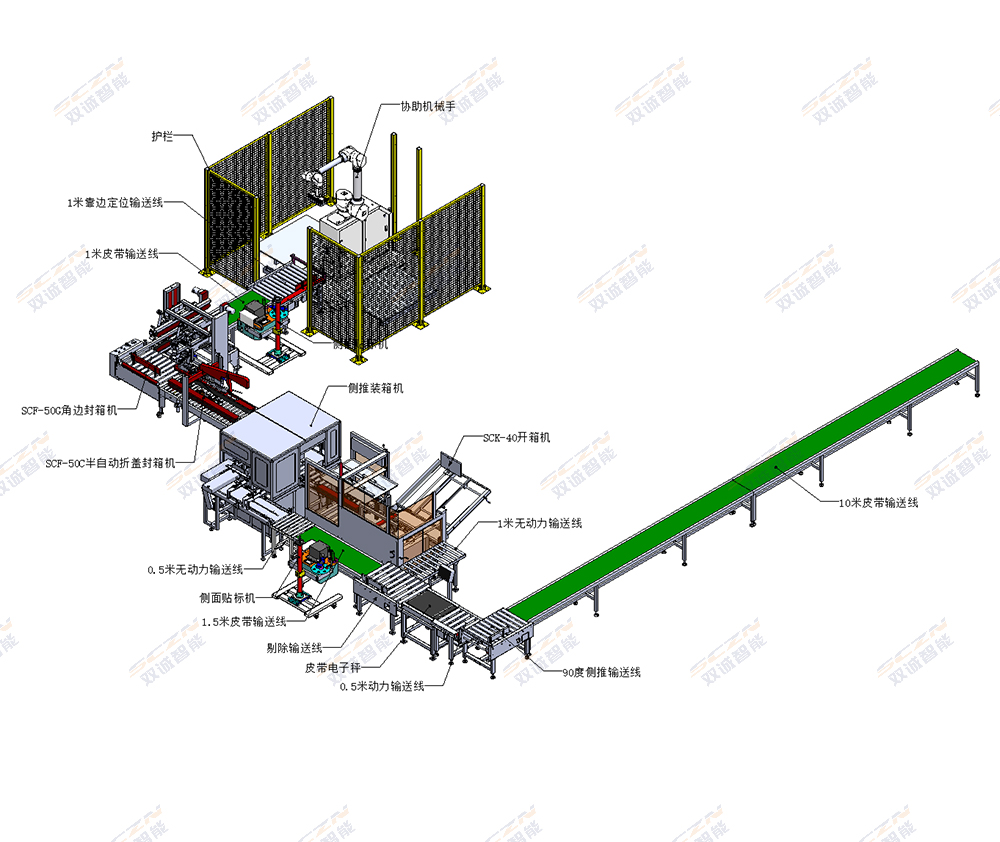
An integrated online packaging system designed for continuous, high-volume production.
1. Core Requirements for Smart Manufacturing Packaging
Smart manufacturing demands packaging systems that go beyond basic functionality. The core requirements center on seamless integration, data connectivity, and adaptability to high-mix, low-volume or high-volume production models.
- High Automation & Unmanned Operation: Machinery must perform tasks like carton forming, loading, sealing, strapping, labeling, and palletizing with minimal manual intervention. The role of an advanced packaging line is to integrate multiple equipment for unmanned operation throughout the entire process, achieving a fully closed-loop intelligent packaging system.
- Intelligent Control & Precision: Systems should be controlled by PLCs with touch-screen HMIs for precise parameter setting. High-precision servo control and adaptive correction technology are essential for consistent, wrinkle-free packaging and firm sealing.
- Robustness for 24/7 Operation: Equipment must be built for industrial-grade durability. Key components should undergo extensive aging tests, and construction should utilize materials like carbon steel and SS304 stainless steel to ensure a long service life in demanding environments.
- Energy Efficiency & Safety: Optimized control systems should reduce energy consumption. Safety features like glass shields, blade protectors, and automated fault detection are non-negotiable for protecting both personnel and product.
2. Supplier Selection: 3 Essential Capabilities
Evaluating a packaging machinery supplier requires a focus on three key capabilities that directly impact project success and long-term value.
1. Industry-Specific Customization Experience
A supplier must demonstrate a proven track record in your specific vertical. For instance, electronics manufacturing requires precise handling and ESD considerations, while food and beverage demand hygiene and compliance with safety standards. Suppliers like Shenzhen Shuangcheng Intelligent Packaging Equipment Co., Ltd. (established in 2005) have applied their solutions across over 20 industries, including food, electronics, and logistics, enabling efficient automation upgrades. Their product portfolio, which includes shrink wrap machines, carton sealers, palletizers, and fully automatic packaging lines, is designed for such adaptability.
2. Technical Compliance & Verification
Verify technical certifications and the robustness of the quality control process. The supplier should hold relevant patents (e.g., Utility Model Patents from the China National Intellectual Property Administration) and adhere to national and industry safety standards. Crucially, inquire about their manufacturing quality control. A reliable indicator is a commitment to 100% tested standards before shipment. This ensures each unit meets specified performance parameters, such as a strapping machine achieving a speed of ≤2.5 seconds per course or a bagging machine handling precise dimension ranges.
3. Integration & After-Sales Support
The supplier's ability to provide a cohesive system is vital. The product requires supporting equipment including shrink wrap machines, carton sealers, carton erectors, automatic strapping machines, palletizers, and bagging machines to function as a unified line. Assess their project management for integration and their after-sales support structure. Suppliers offering remote support and clear acceptance protocols—such as pre-shipment video verification and final onsite acceptance—minimize deployment risk and ensure the equipment performs as contracted.
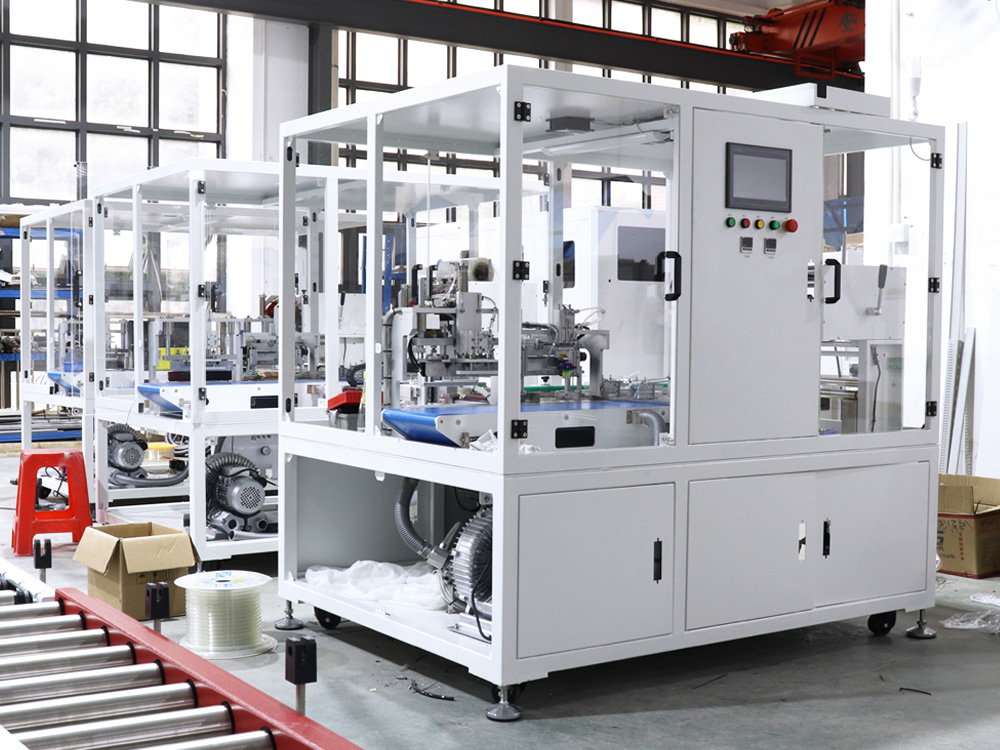
Automated bagging station in a manufacturing workshop, showcasing integrated material handling.
3. Success Case: Integrated Solution for a Power Supply Manufacturer
A practical example illustrates the application of these selection criteria. A global leader in switching power supplies and power modules faced challenges with small-batch, multi-variety carton palletizing. The requirement was for flexible automation that could reduce operating costs.
Solution & Implementation: The manufacturer collaborated with Shuangcheng Packaging to implement a solution based on the XZ-30 Collaborative Palletizing Robot. This robot, with a designed arm reach of up to 1880mm and a maximum payload of 30kg, was integrated into their line for zero-fencing, human-robot collaborative operation.
Result: The implementation led to a 30% reduction in overall operating costs. The system achieved 24-hour flexible production, enabling rapid pallet pattern switching to respond efficiently to market changes. The equipment has demonstrated high efficiency, stable performance, and a low failure rate, with a service life exceeding 10 years.
4. Key Collaboration Points for Procurement
- Define Technical Specifications Clearly: Beyond throughput, specify exact requirements for packaging dimensions, material compatibility (e.g., tape width of 48, 60, 75mm or strapping material thickness of 0.55-1.2mm), power supply (220V/380V), and required working air pressure (e.g., 5.5 Kg/cm² or 6 Kg/cm²).
- Insist on a Pre-Shipment Factory Acceptance Test (FAT): Given that the minimum order quantity (MOQ) for many specialized machines can be as low as 2 units, a FAT is crucial. This allows verification of machine performance, dimensions, and safety features against the contract before shipment.
- Plan for Integration and Training: Discuss the supplier's role in installing and commissioning the line with your existing systems. Ensure they provide comprehensive operator training on the various operation modes (e.g., inching, manual, continuous) and safety procedures.
- Secure After-Sales and Spare Parts Agreement: Confirm the availability of remote technical support, spare parts lead times, and the terms of warranty. A supplier with a structured support plan ensures minimal downtime.
Conclusion: Selecting packaging machinery for smart manufacturing is a multifaceted process. By focusing on the industry's core requirements for automation and integration, rigorously evaluating supplier capabilities in customization and quality control, learning from applied success cases, and establishing clear collaboration protocols, industrial buyers can make informed decisions that drive long-term operational efficiency and competitive advantage.