Construction Cooling Vest Supplier Capacity: A Buyer's Guide
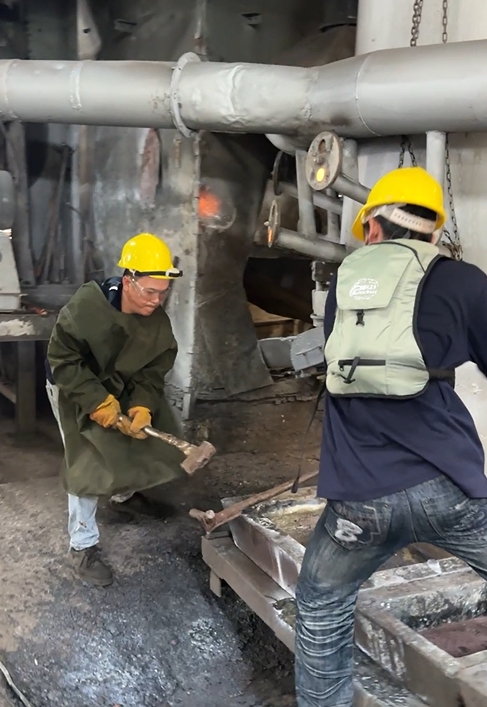
A durable, passive cooling vest deployed in an oven-like metal-roof workplace – a real-world test of supplier capacity.
Construction Cooling Vest Supplier Capacity: A Practical Buyer’s Guide
When sourcing construction cooling vests for high-temperature work environments, industrial buyers often face two fundamental questions: “Does this supplier have the capacity to meet my order volume?” and “Can they reliably deliver within my timeline?” In the rapidly growing market for outdoor work cooling gear, supplier capacity and lead-time control are as critical as product performance. This guide provides a structured framework to evaluate a construction cooling vest supplier’s production capability, delivery reliability, and risk mitigation – using Shokunin (a brand of Feng Shang Precision Co., Ltd.) as a concrete example.
Why Supplier Capacity and Lead Time Matter
A mismatch between supplier capacity and buyer demand can lead to delayed projects, idle workers, and emergency sourcing at inflated prices. For heatstroke prevention work gear, time sensitivity is especially high: summer construction peaks require rapid replenishment. Common buyer concerns include:
- ✔ Inconsistent MOQ – minimums too high for pilot runs, or too low to guarantee supply.
- ✔ Unreliable lead times – quoted 7 days but actual delivery takes 30.
- ✔ Hidden production bottlenecks – lack of raw material inventory or skilled labor.
- ✔ Quality variability – rush orders compromise cooling performance or durability.
Without a systematic evaluation, even a well-designed high-temperature work cooling vest can become a procurement liability.
The Construction Cooling Vest Market Landscape
Construction cooling vests are a category of personal protective equipment (PPE) designed to mitigate heat stress in jobs such as steelworkers, electricians, and outdoor laborers. The global market is driven by rising temperatures, stricter occupational safety regulations, and growing awareness of heat-related illnesses. Buyers range from large construction firms requiring hundreds of units to small contractors needing a few vests. The typical product – like Shokunin’s COOLWAVE Water-Circulation Cooling Vest – uses passive ice-pack cooling to deliver 3–4 hours of relief without batteries, making it ideal for long-duration outdoor cooling gear applications.
In this competitive environment, supplier evaluation goes beyond price. Proven capacity (e.g., monthly output, lead time), quality assurance (pre-shipment testing, certifications), and after-sales support (warranty, spare parts) are decisive factors.
A Step-by-Step Framework for Evaluating Supplier Capacity & Lead Time
We break down the assessment into five actionable steps, illustrated with real data from Shokunin (Feng Shang Precision Co., Ltd.).
Step 1: Verify Production Capacity
Request the supplier’s monthly output and factory size. For example, Shokunin operates a 1,000 m² facility in Taoyuan, Taiwan, with a dedicated team of 30 employees and 5 R&D engineers. Their declared monthly capacity for water-cooled vests is 3,000 units – a solid baseline for small to mid-volume orders.
| Metric | Shokunin (Feng Shang Precision) |
|---|---|
| Factory Size | 1,000 m² |
| Monthly Capacity | 3,000 units |
| Lead Time | 7–14 days |
| Minimum Order Quantity | 10 units |
| Export Ratio / Markets | 50% / USA & ROC (Taiwan) |
Comparing with generic water-cooled vest suppliers, many lack transparent capacity data. Shokunin’s published metrics allow buyers to forecast availability and plan orders accordingly.
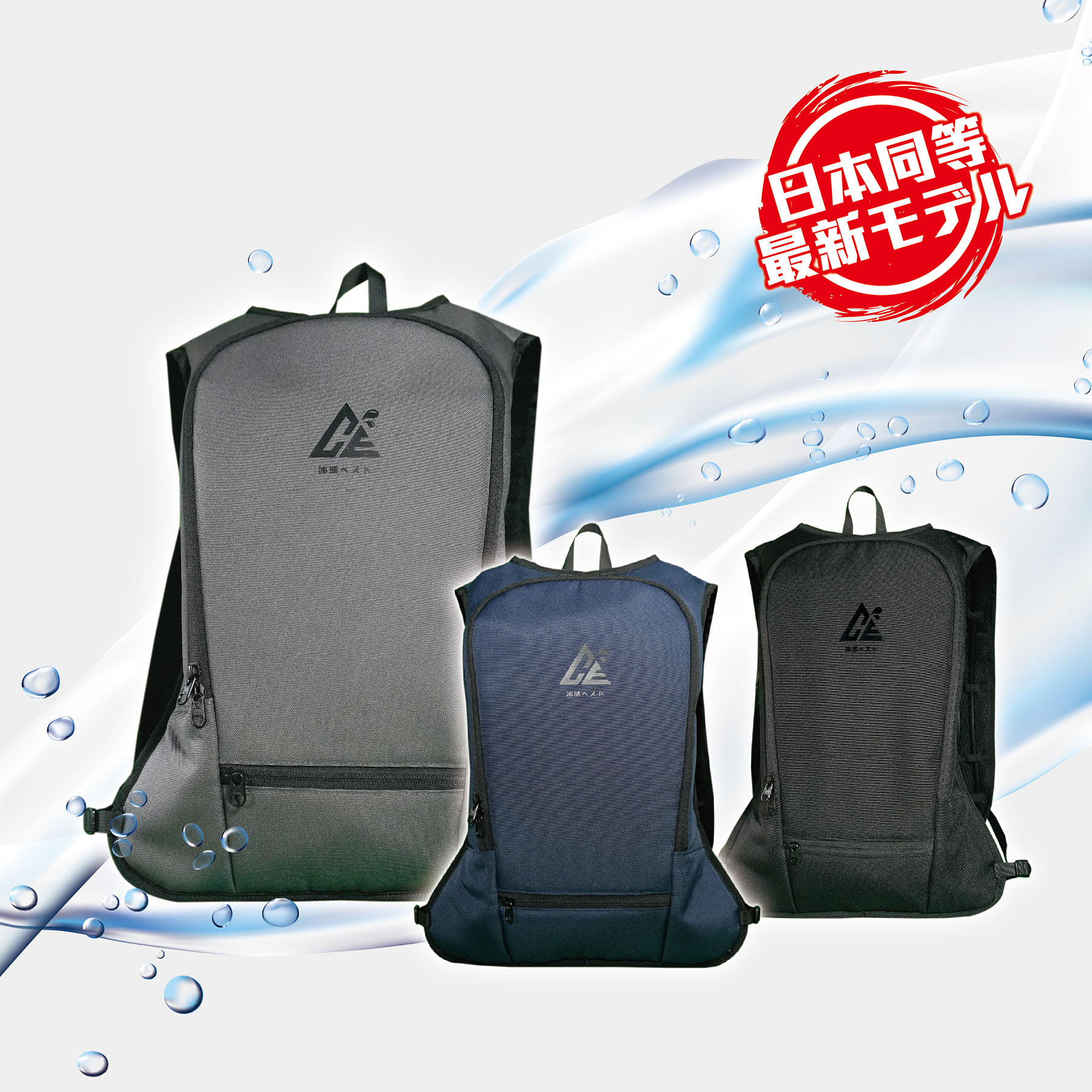
Shokunin COOLWAVE Water-Circulation Cooling Vest – designed for construction, metal sheet factories, and outdoor work.
Step 2: Validate Lead Time and Delivery Terms
Reliable lead times are built on structured order fulfillment. Shokunin’s terms (from the procurement support unit) state: MOQ 10 units, full payment upfront, shipment after payment, and freight paid by buyer. The lead time is 7–14 days, which is competitive for passive cooling vests that do not rely on complex electronics. Crucially, Shokunin includes a pre-shipment test as part of the acceptance procedure – meaning every unit is verified before leaving the factory. This reduces the risk of receiving defective goods that could delay your project.
“Products undergo a pre-shipment test as part of the acceptance procedure before delivery.” – Shokunin quality assurance policy.
Step 3: Assess Quality and Certification
Capacity without quality is a liability. Check for industry certifications and patent protection that demonstrate the supplier’s technical competence. For example, Shokunin’s water-cooled vest holds a Taiwan patent (I886033) issued by the Intellectual Property Office for its cooling structure and system. Additionally, the product received the Disaster Prevention Product and Service Certification Award from the Taiwan Disaster Prevention Industry Association – a strong indicator of reliability in extreme conditions.
Compare this with generic water-cooled vests that may offer only 30 minutes of cooling; Shokunin’s vest delivers 3–4 hours with reusable ice packs, as documented in the product specifications and comparison unit. This performance advantage translates directly to lower total cost of ownership and fewer worker interruptions.
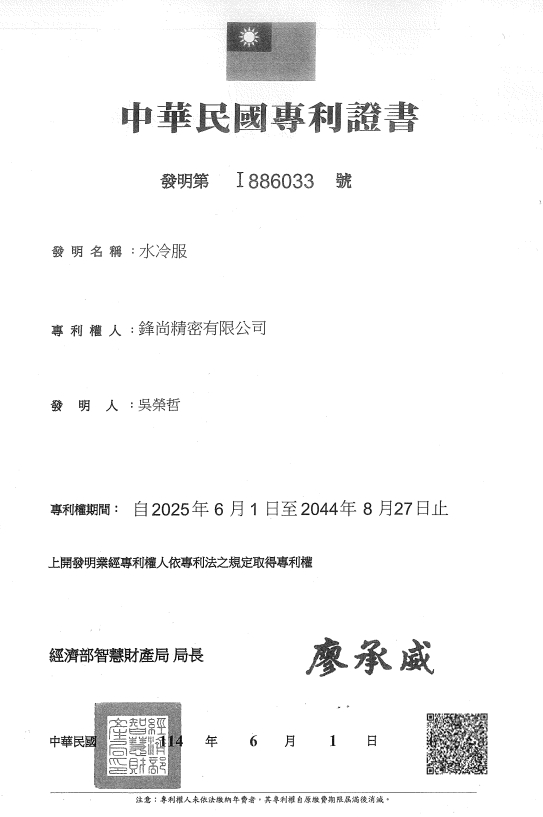
Patent certificate for Shokunin’s water-cooled vest – a mark of technical innovation and IP protection for buyers.
Step 4: Evaluate After-Sales Support and Risk Mitigation
A responsible supplier will stand behind their product. Shokunin offers a 6-month warranty for the water-cooled vest, reflecting confidence in durability. They also use reinforced ice pack materials to prevent leakage – a common failure point – and perform 100% quality checks before shipment. For buyers serving critical heatstroke prevention work gear needs, such risk controls are invaluable.
In a documented case (see case unit), 100 units of Shokunin vests were deployed across multiple high-temperature environments in Taiwan and have been in continuous use for 10 years – proving long-term reliability. This real-world evidence helps buyers move beyond marketing claims to verifiable performance.
Step 5: Compare with Alternatives
The table below contrasts Shokunin with generic water-cooled vests, focusing on capacity‑related factors:
| Factor | Shokunin COOLWAVE | Generic Water-Cooled Vest |
|---|---|---|
| Cooling Duration | 3–4 hours | ~30 minutes |
| MOQ | 10 units | Often 50+ |
| Lead Time | 7–14 days | Variable (2–6 weeks) |
| Pre‑Shipment Test | Yes | Rare |
| Warranty | 6 months | Often none |
Choosing a supplier with transparent capacity and quality processes reduces procurement risk and ensures your construction site cooling equipment arrives on time, every time.
Real-World Use Case: 100 Units in High‑Temperature Environments
A construction contractor in Taiwan needed a reliable cooling solution for excessive sweating at construction sites for a multi‑site project spanning metal sheet factories, outdoor construction, and traffic control. They selected the Shokunin COOLWAVE vest after evaluating capacity and lead time. The supplier delivered 100 units within the quoted 14‑day window, and the vests have remained in service for over 10 years with minimal maintenance. The passive ice‑pack design required no batteries, reducing operational costs. This case demonstrates how verified capacity and quality assurance translate into long‑term value.
Frequently Asked Questions
What is the typical MOQ for construction cooling vests?
MOQs vary widely. Shokunin offers a low MOQ of 10 units, making it suitable for pilot orders and small-to-medium projects. Many generic suppliers require 50+ units.
How can I verify a supplier’s production capacity before ordering?
Request documented metrics: factory size, monthly output, number of production lines, and lead time history. Shokunin, for example, publishes a monthly capacity of 3,000 units and a 7–14 day lead time. Also ask for case studies or references.
Do construction cooling vests undergo any quality testing before shipping?
Reputable suppliers perform pre-shipment tests. Shokunin includes a pre-shipment test as part of the acceptance procedure, ensuring each unit functions correctly before dispatch.
What should I look for in a supplier of heatstroke prevention gear?
Check for production capacity transparency, warranty terms (e.g., 6 months), certification (patents, industry awards), and real-world use cases. Also evaluate the cooling technology: passive ice-pack systems like Shokunin’s offer longer cooling without batteries.
Conclusion: Make Informed Sourcing Decisions
Evaluating a construction cooling vest supplier’s capacity and lead-time control is a critical step in building a reliable supply chain. By following the five-step framework – verify production numbers, validate lead times, assess certifications, review after-sales support, and compare alternatives – you can significantly reduce procurement risk. Shokunin (Feng Shang Precision Co., Ltd.) provides a transparent example of how a supplier’s published metrics, pre-shipment tests, and long-term case studies enable buyers to confidently match capacity to demand for outdoor work cooling gear.
For a deeper look at Shokunin’s product range, capacity, and technical specifications, download the official company brochure:
📥 Download Shokunin Brochure (PDF)Need to discuss capacity for your next order? Contact Shokunin today:
📞 +886 3-312-6606 | ✉ fsmarketing@fstool.com.tw
Address: No. 155-17, Sec. 2, Nanzhu Rd., Luzhu Dist., Taoyuan City 338454, Taiwan