Dosing Pump Specs and Certifications: What to Verify Before Buying
A dosing pump is a positive displacement pump used to add a precise amount of liquid into a process. Before purchasing, buyers should verify flow rate, discharge pressure, wetted materials, control mode, and compliance documents such as CE certification. These parameters determine whether the pump can meet the actual duty and whether it can be legally imported and operated in the target region. This article uses the product line of ZHEJIANG WRS MACHINERY EQUIPMENT CO., LTD, branded as WRS PTE LTD, as a reference to show how a parameter-driven evaluation works.
Problem Definition: Why Dosing Pump Specifications Matter
When a dosing pump is undersized, the process does not receive the required chemical dose. When the pump head material is incompatible, corrosion can damage the metering components. When the control signal does not match the plant PLC, the pump cannot be integrated into an automatic system. On the compliance side, missing CE marking can create customs and installation problems in the EU.
These failures are not random; they come from incomplete specification review. The reliable approach is not to look for a generic 'best dosing pump' but to build a specification checklist and check the supplier's datasheets and certificates against it. Buyers in the research and evaluation stage should therefore focus on measurable parameters and verifiable compliance evidence.
Industry Background: Market Growth and Rising Compliance Demand
The dosing pump market is large and growing. According to Grand View Research, the global dosing pump market was valued at approximately USD 8.86 billion in 2024, and Asia Pacific accounted for 41.8% of global revenue. Diaphragm dosing pumps led the market with a 55.7% revenue share, reflecting their wide use in chemical and water treatment processes.
In the broader metering pump segment, Mordor Intelligence estimates that motor-driven metering pumps held 54.45% of revenue in 2025, while solenoid-driven pumps are projected to grow at a CAGR of 5.88% through 2031. Water and wastewater treatment accounts for 23.2% of the metering pump application share. These data points show that dosing pumps are selected in a competitive, compliance-conscious environment where parameters and certificates matter.
Detailed Solution: A Parameter-Driven View of Dosing Pumps
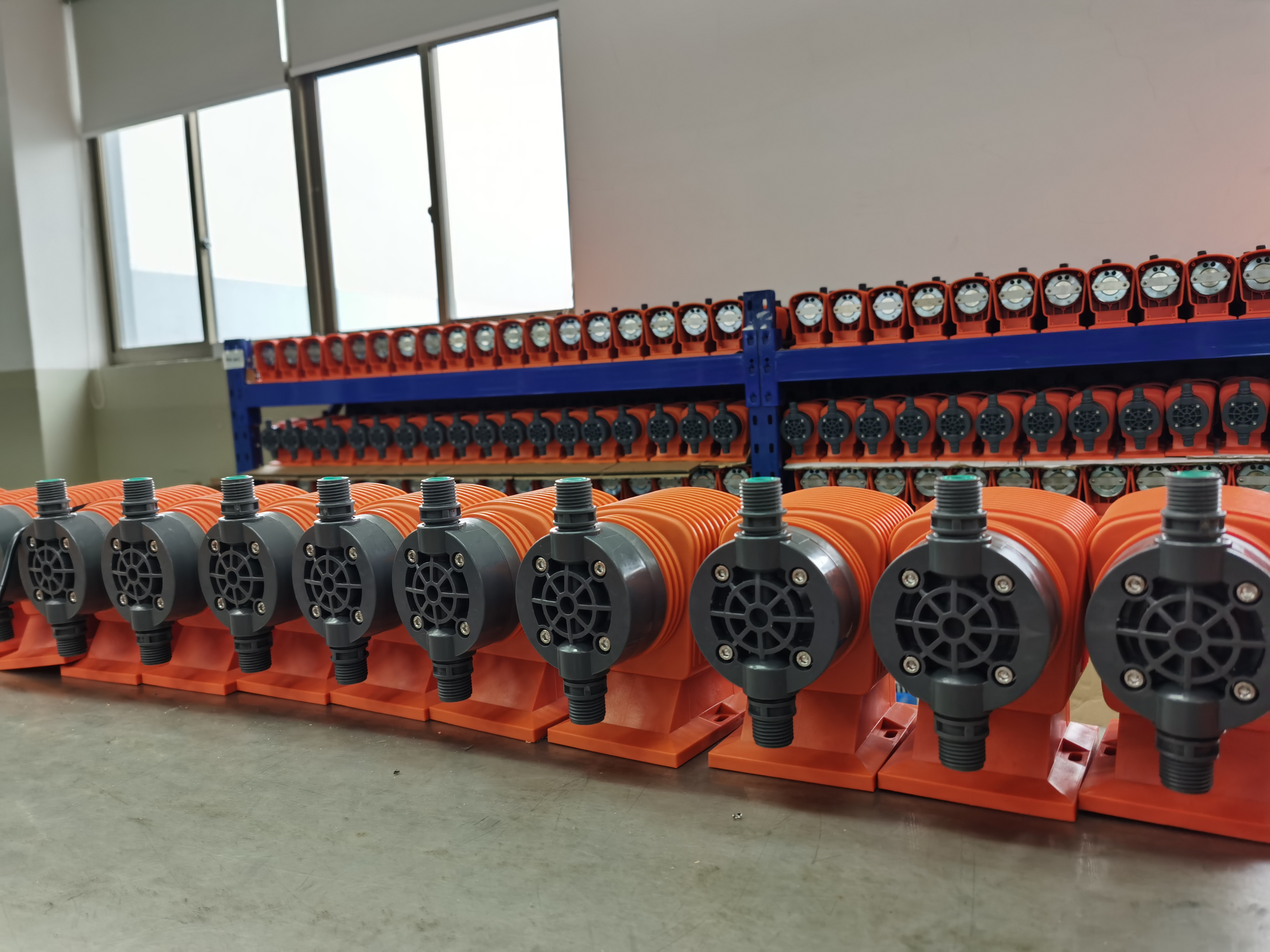
The product data in this article comes from ZHEJIANG WRS MACHINERY EQUIPMENT CO., LTD, located in Xiaoshan, Hangzhou. The WRS product scope includes metering pumps, solenoid dosing pumps, diaphragm dosing pumps, piston dosing pumps, digital dosing pumps, dosing pump check valves, dosing pump pulse dampeners, chemical dosing systems, streaming current monitoring systems, and chemical injection pumps. The company reports a 15,000 m² factory area, 120 employees, 30,000 units of annual output, and an R&D team of 15 engineers.
Core Parameters to Check Before Selection
Five parameters should always appear on a dosing pump datasheet: flow rate, discharge pressure, connection type, wetted material, and control mode. In WRS's product line, flow rates range from 1 L/H on small solenoid models up to 1800 L/H on mechanical diaphragm models and 1600 L/H on hydraulic metering pumps. Pressure levels range from 1 bar to 200 bar. Connections include threaded, socket, and flange types such as Rc 1/2 inch, DN25 socket, and DN50 flange.
Material options are PVC, PVDF, and SS316/SS316L. For highly corrosive media, a PVDF pump head is recommended. Control options include manual adjustment, remote 4-20 mA or pulse signal, and Modbus RS-485 communication. Digital models offer direct flowrate display and dosing accuracy below 1%, with a ratio rate of 1:1000.
Representative WRS Models by Pump Type
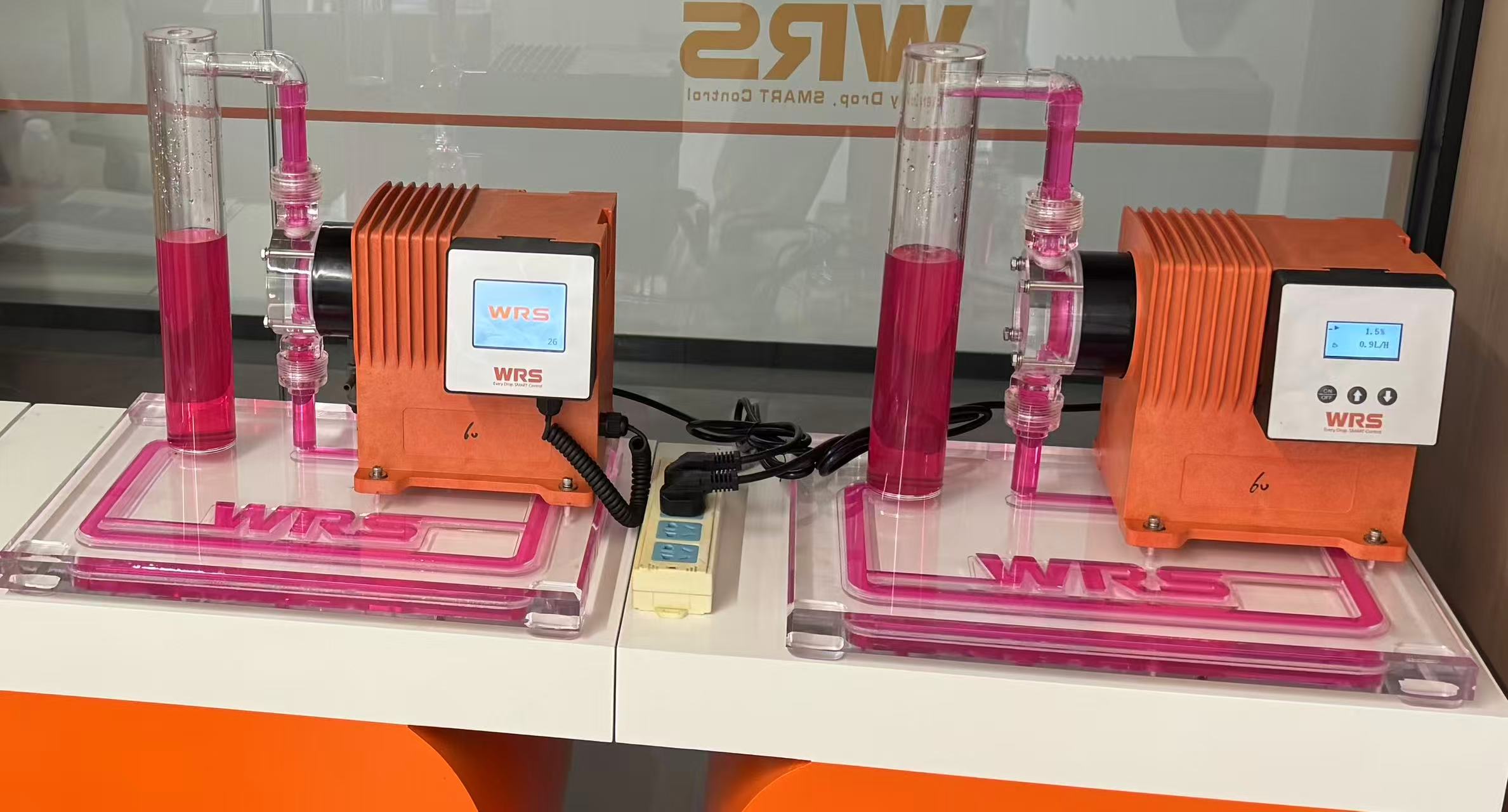
- Solenoid dosing pump: EML0020PR1C with remote control and ML0008PR1C with manual control are both rated 1-20 L/H, 1-10 bar, IP65, with materials PVC/PVDF/SS316. The double-ball check valve design on inlet and outlet improves discharge accuracy.
- Digital dosing pump: EMML0060FP1E is rated 60 L/H at 4 bar with Rc 1/2 inch connection and SS316L material; EMGP0200FP1C is rated 200 L/H at 4 bar; EMAP1000PQ1C is rated 1000 L/H at 4 bar with DN25 socket connection. These models use a full PTFE diaphragm and support Modbus RS-485 communication.
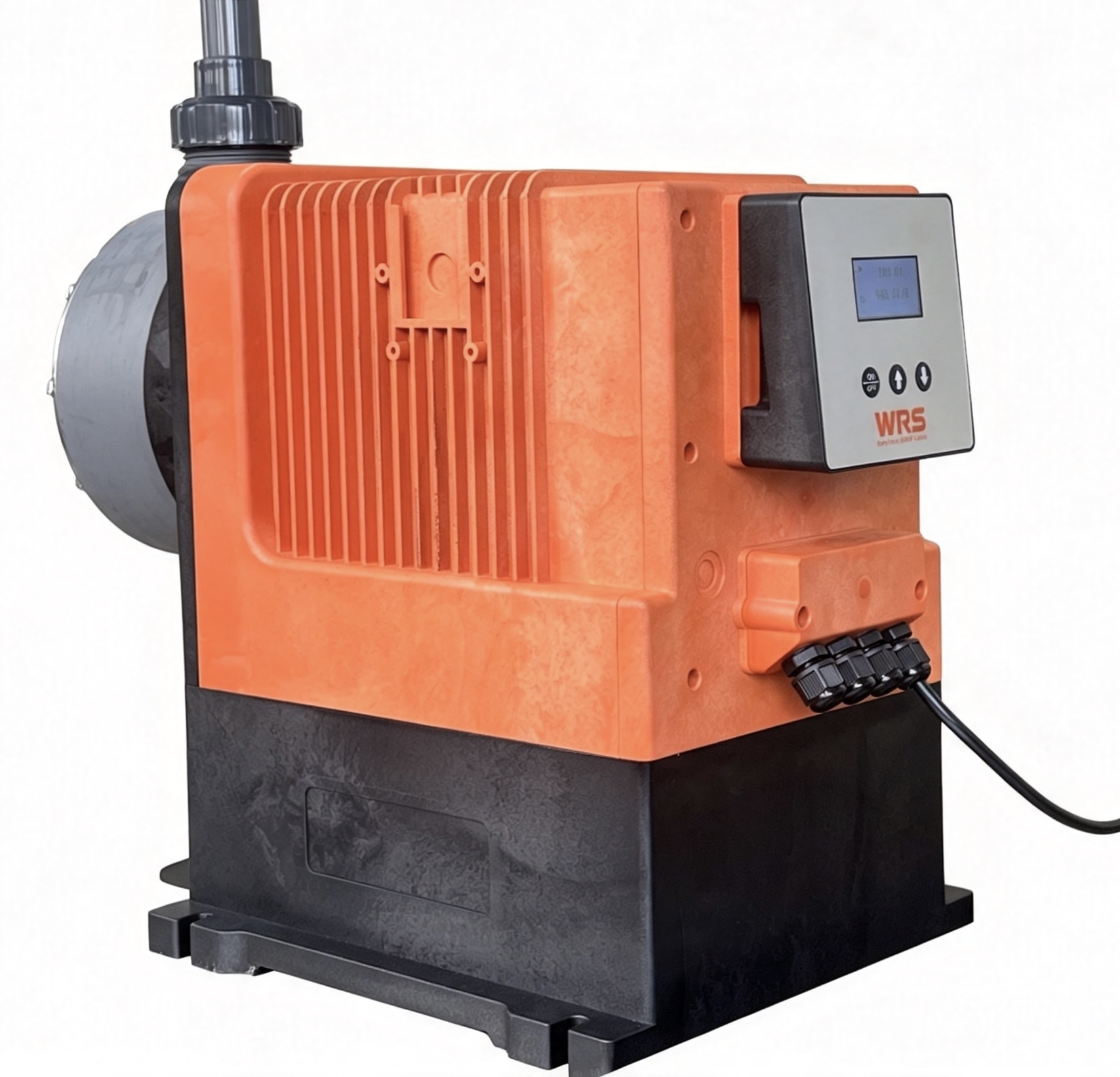
- Mechanical diaphragm pump: MA0120PQ11 covers 15-500 L/H at 5-10 bar, MG0150PQ11 covers 15-150 L/H at 5-10 bar, and MB1800PQ11 covers 250-1800 L/H at 3-10 bar. Multiple-layer diaphragm construction is designed for corrosive liquids.
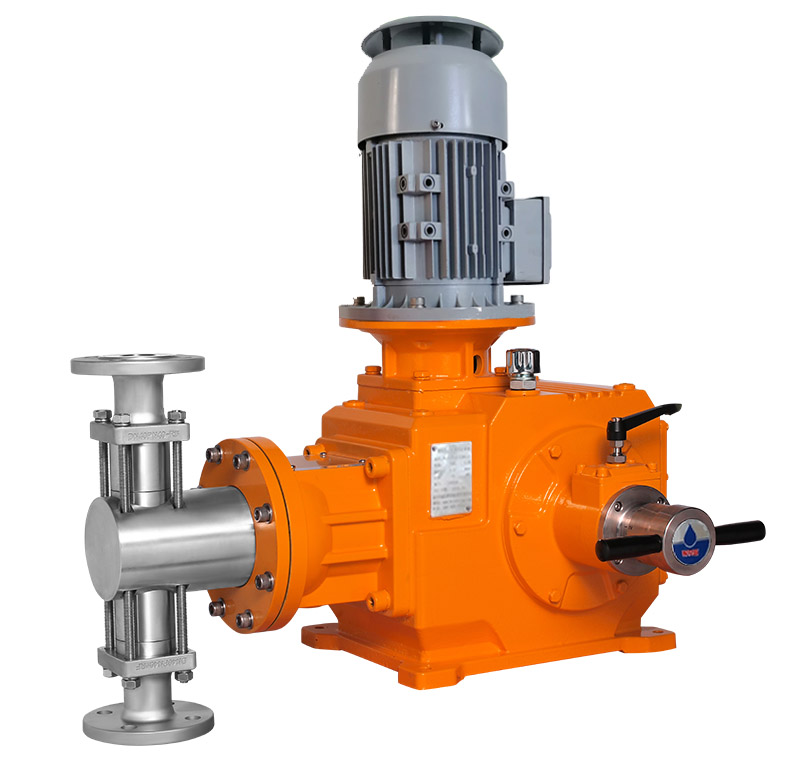
- Piston pump: PM060SS1PFN11 is rated 600 L/H at 8 bar with DN25 flange and 0.75 kW motor; PD105SS1PFN11 is rated 600 L/H at 8 bar with DN50 flange and 4.0 kW motor. Both use SS316 and are suitable for high-viscosity pumping.
- Hydraulic metering pump: HS008S0P01S11 is rated 2 L/H at 200 bar with DN6 bevel end welding tube and 0.37 kW motor; HL090S0P01F11 is rated 1600 L/H at 6 bar with DN50 flange and 1.5 kW motor. The hydraulic series uses a zero-leakage design for toxic or hazardous media.
Compliance and Certification: What Documents to Check
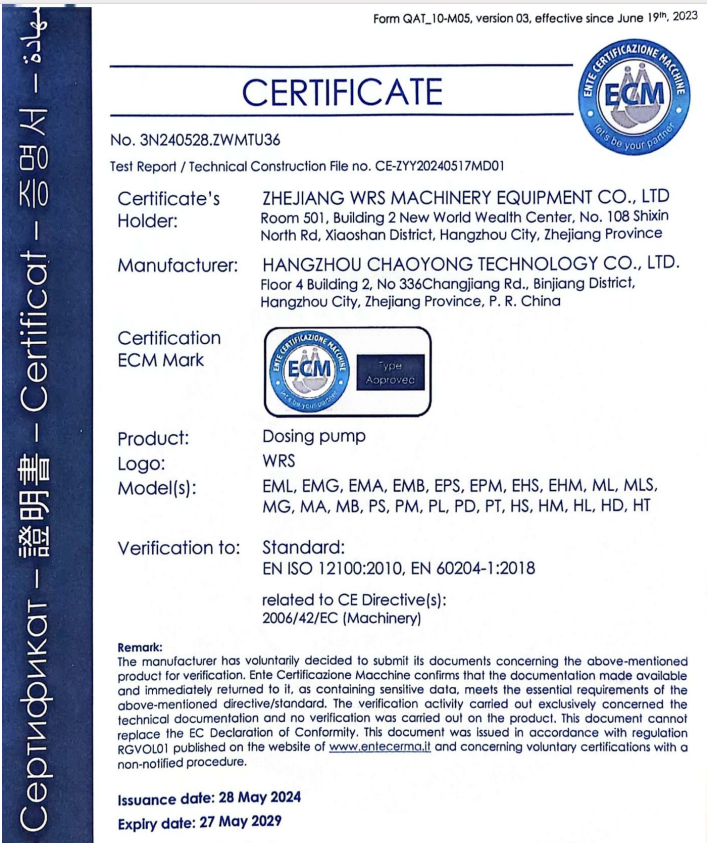
CE marking is one of the most common regulatory requirements for dosing pumps sold into the EU. The EU Machinery Regulation, which replaces 2006/42/EC from 2027, mandates CE marking for metering pump units. Buyers should request the CE certificate and verify that the exact pump series is listed in its scope.
For WRS, the CE certificate number is 3N240528.ZWMTU36, issued by ECM on 2024-05-28 and valid until 2029-05-27. The certificate covers dosing pumps in the following series: EML, EMG, EMA, EMB, EPS, EPM, EHS, EHM, ML, MLS, MG, MA, MB, PS, PM, PL, PD, PT, HS, HM, HL, HD, HT. The referenced standards are EN ISO 12100:2010 and EN 60204-1:2018.
Step-by-Step Breakdown: How to Evaluate a Dosing Pump Before Purchase
- Define the process duty. Use flow rate as the first parameter. Compare the required flow with the maximum flow at the site, then refine the selection with pressure, pump head material, and motor.
- Choose the pump type. Small solenoid pumps are suitable for low-flow chemical dosing; digital pumps add electronic control and communication; mechanical diaphragm pumps handle higher flows; piston and hydraulic pumps cover high-viscosity and high-pressure duties.
- Select the wetted material. Check the chemical compatibility of the liquid with PVC, PVDF, SS316, or SS316L. For highly corrosive media, PVDF pump head material is recommended.
- Evaluate control and instrumentation. If the pump must connect to a PLC or SCADA system, select a model with 4-20 mA, pulse signal, or Modbus RS-485 communication. Digital models provide direct flowrate display and high accuracy.
- Verify compliance documents. Request the CE certificate, check the covered model series, and confirm the certificate validity period and referenced standards.
- Assess supplier capability. Confirm production capacity, customization ability, testing policy, lead time, minimum order quantity, and after-sales support. WRS supports ODM production with voltage customization, a monthly capacity of 5,000 units, a MOQ of 1 unit, a listed lead time of 3 days, and 100% testing of finished products.
- Plan basic maintenance. If discharge flow rate drops or becomes unstable after installation, check whether the inlet or outlet is blocked. Clean the strainer, tubing, and valves, and replace parts if necessary.
Use Cases: From Livestock Farms to Wastewater Plants
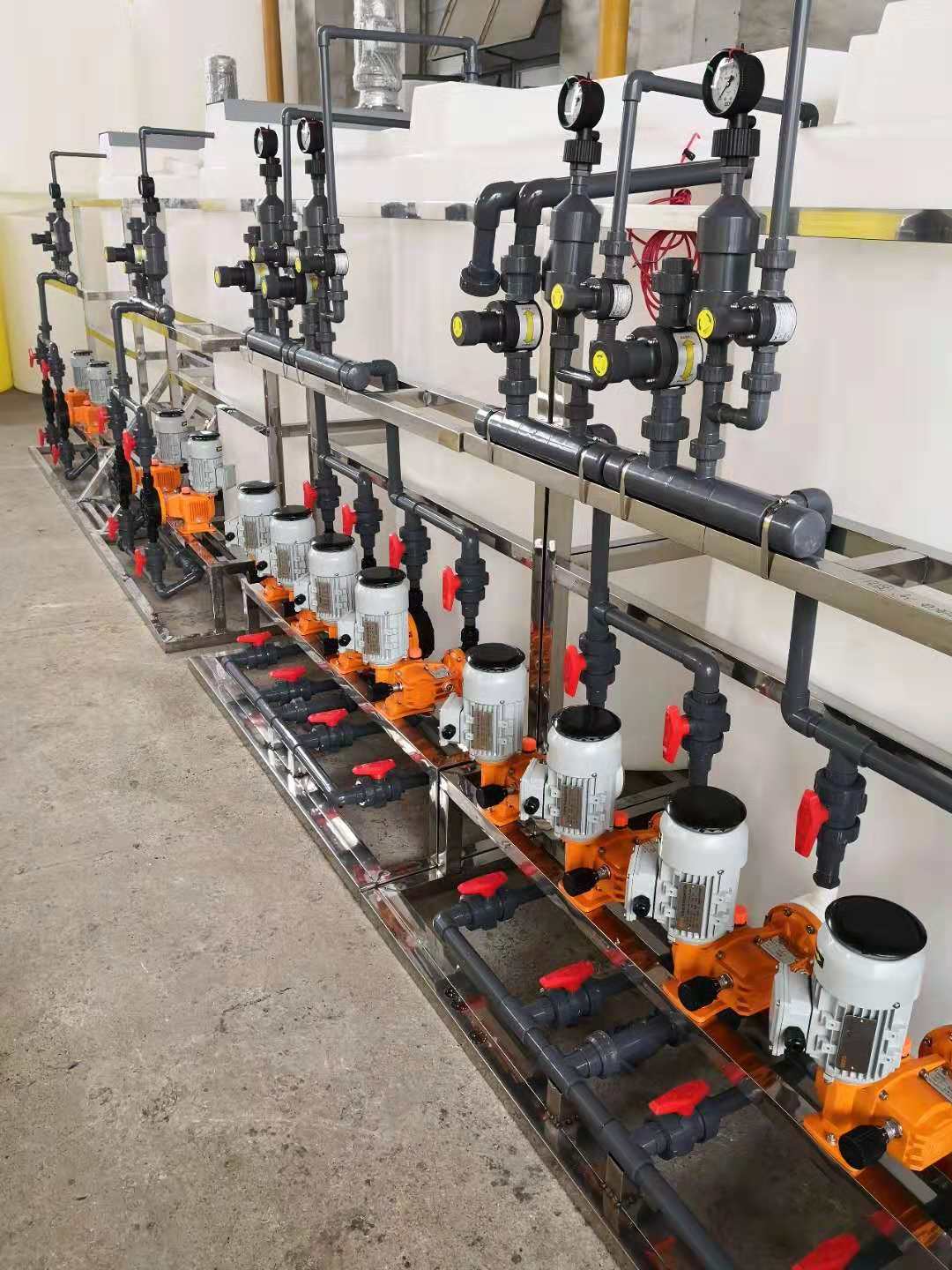
In a livestock application in Russia, the dosing equipment operated in a harsh humid farm environment. The project required automatic nutrient solution dosing with 24/7 operation and IP67 protection for the equipment. WRS project records list the EMML0060FP1E digital dosing pump and the ML0008PR1C solenoid pump as related products for this application.
In another case, an engineering company in Australia ordered 20 units for wastewater treatment. After five years of operation, the pumps were still operating stably. The customer highlighted high quality and easy maintenance as the main advantages. The related product range for this project included solenoid, digital, and mechanical diaphragm dosing pumps.
Comparison Table: Dosing Pump Types by Specification
| Pump Type | Representative Models | Flow Range | Pressure Range | Wetted Materials | Typical Applications |
|---|---|---|---|---|---|
| Solenoid Dosing Pump | EML0020PR1C, ML0008PR1C | 1-20 L/H | 1-10 bar | PVC, PVDF, SS316 | Water treatment, pure water, swimming pool, coating and surface treatment |
| Digital Dosing Pump | EMML0060FP1E, EMGP0200FP1C, EMAP1000PQ1C | 60-1000 L/H | 4 bar | PVC, PVDF, SS316/SS316L | Water treatment, semiconductor, food and beverages, battery, paper and pulp, new energy |
| Mechanical Diaphragm Dosing Pump | MA0120PQ11, MG0150PQ11, MB1800PQ11 | 15-1800 L/H | 3-10 bar | PVC, PVDF, SS316 | Wastewater treatment, chemical industry, coating and surface treatment, mining process, foundry |
| Piston Dosing Pump | PM060SS1PFN11, PD105SS1PFN11 | 600 L/H | 8 bar | SS316 | Oil and gas, hydrogen energy, electric power, chemical industry, pharmacy, new material and new energy |
| Hydraulic Metering Pump | HS008S0P01S11, HL090S0P01F11 | 2-1600 L/H | 6-200 bar | SS316 | Oil and gas, hydrogen energy, electric power, chemical industry, pharmacy, new material and new energy |
FAQ
Is the WRS dosing pump CE certified?
Yes. CE certificate number 3N240528.ZWMTU36 was issued by ECM and is valid until 2029-05-27. It covers dosing pumps in the EML, EMG, EMA, EMB, EPS, EPM, EHS, EHM, ML, MLS, MG, MA, MB, PS, PM, PL, PD, PT, HS, HM, HL, HD, HT series. The certificate references EN ISO 12100:2010 and EN 60204-1:2018. Buyers should confirm that the pump model is listed in the certificate scope.
Can WRS customize the voltage or other pump options?
Yes. WRS supports ODM production and voltage customization. The factory has a monthly capacity of 5,000 units, a minimum order quantity of 1 unit, and a listed lead time of 3 days. All finished products are 100% tested. Optional motor variants such as frequency-controlled or explosion-proof motors are available depending on the series.
What factors affect dosing pump price?
The main price drivers are pump type, wetted material, control mode, and motor option. Solenoid pumps are compact for low-flow applications; digital pumps add electronic control and communication; mechanical diaphragm pumps cover higher flow ranges; piston and hydraulic pumps are used for high-viscosity or high-pressure duties. Material choice - PVC, PVDF, or SS316/SS316L - and options such as 4-20 mA, pulse, Modbus control, or explosion-proof motors also affect price.
What is the lead time and how can I request a sample or quotation?
According to WRS production data, the lead time is 3 days with a MOQ of 1 unit for ODM orders. To request a sample, quotation, or the full product brochure, contact Isak at isak@wrsindustry.com or +86-173 0642 4430. WhatsApp is also available, and remote after-sales support can be arranged.
Conclusion
A dosing pump purchase becomes safer when the buyer can verify each specification and certificate before ordering. Flow rate, pressure, wetted material, control mode, and CE compliance are the core checks. WRS PTE LTD provides a full dosing pump range with documented parameters and a CE certificate covering multiple series, making it a practical reference for research-stage and evaluation-stage buyers.
For more details, download the WRS diaphragm pump brochure here: WRS Diaphragm Separator / Dosing Pump Brochure. To discuss a specific duty or request a quotation, contact the WRS team at www.wrsdosing.com.
Request a sample or quotation
Email: isak@wrsindustry.com
Tel / WhatsApp: +86-173 0642 4430
Address: No. 108 Shixin Rd, Xiaoshan Region, Hangzhou City, Zhejiang, China