How to Verify an Insulated Bag OEM Supplier for Food Delivery Fleets: A 6-Step Guide for U.S. Procurement Managers
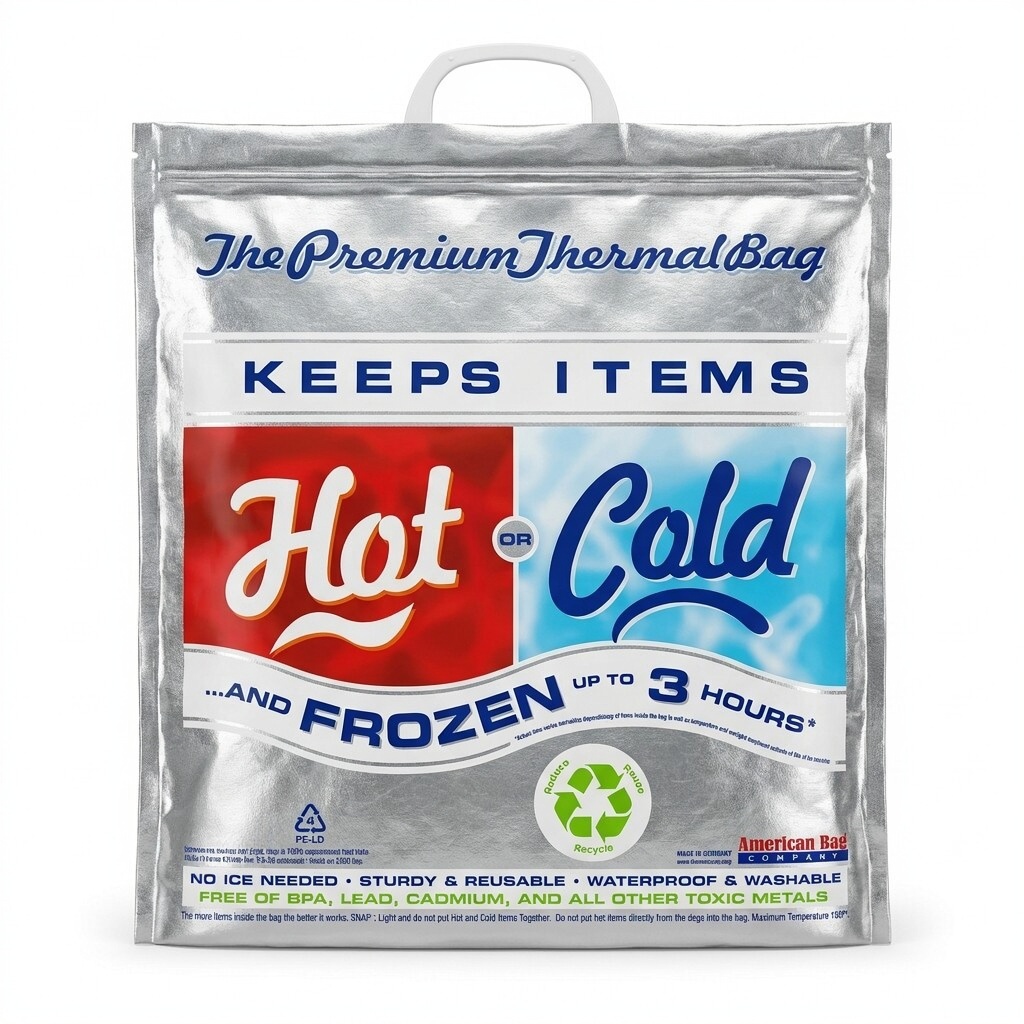
Aluminum Foil Insulated Cooler Bag commonly used in food delivery fleets (Model JH-007).
Procurement managers for food delivery fleets in the U.S. face the challenge of selecting insulated bag suppliers that can consistently meet technical, safety, and logistical requirements. This step-by-step guide provides a structured framework to evaluate OEM suppliers, using objective criteria derived from industry standards and real-world case data.
Step 1: Verify Material Safety and Food Contact Compliance
The insulated bag intended for food delivery must be constructed with food-grade materials that comply with applicable regulations. For products exported to or used in the European Union, compliance with COMMISSION REGULATION (EU) No 10/2011 and French DGCCRF standards is essential. A valid certificate such as Report No. TS25041004, issued by Hangzhou C&K Testing Technic Co., Ltd. (valid until April 2027), provides verifiable evidence that the bags meet these requirements.
For the U.S. market, suppliers should also demonstrate that their materials meet FDA food contact standards. A typical construction includes an outer layer of wear-resistant cloth or non-woven fabric, a middle insulation cotton layer, and an inner layer of food-grade LDPE (Low-Density Polyethylene) or PE film. Request test reports showing migration limits and heavy metal content for each material batch.
Step 2: Confirm Thermal Performance Against Delivery Conditions
U.S. food delivery operations often involve outdoor temperature ranges from -10°C to 35°C. The bag must retain heat for a minimum of 5 hours to ensure food safety and quality. According to the Thermal & Cold Retention Performance Test Report No. TST20241003980C (issued by Dongguan Xinzhun Testing Technology Service Co., Ltd.), a certified insulated bag can maintain an initial temperature of 91.4°C to 51.8°C after 6 hours, and can keep cold items from 0°C to below 10°C for 4 hours. These metrics provide a benchmark for supplier evaluation.
For practical use, the bag must also be leak-proof (100% non-leakage) and wear-resistant for at least 5,000 cycles, as required by food delivery fleets that handle frequent loading and unloading.
Heat retention: ≥5 hours (from 91°C → 52°C)
Cold retention: ≥4 hours (from 0°C → ≤10°C)
Leakage rate: 0%
Wear resistance: ≥5,000 uses
Step 3: Assess Customization and Production Flexibility
Food delivery brands often require custom logos, specific sizes (15–50 cm), and special features such as self-sealing zippers or upgraded functional designs. A reliable OEM supplier should offer at least two free design revisions during the sample stage and maintain a structured customization process: design review → sample confirmation (2 free revisions) → mass production sampling.
Check the supplier’s minimum order quantity (MOQ). Standard products may have an MOQ of 500 units, while custom orders typically start at 1,000 units. For trial batches, some suppliers accept 300 units under special application. Lead times for custom orders range from 15 to 30 days, which aligns with supply chain planning cycles.
Step 4: Review Quality Control and Risk Management Systems
Quality assurance is non-negotiable. A mature supplier implements a three-stage inspection: pre-production raw material testing (heavy metals, migration), in-production batch sampling (10% sample for sealing and thermal retention checks), and post-production full inspection (size, function).
Risk control measures should be documented, including:
- Raw material defect prevention: Collaborate with 3+ certified suppliers; reject non-compliant materials after pre-production testing.
- Order delay mitigation: Reserve 10% production capacity for urgent orders and maintain a backup fully automatic production line.
- Design error prevention: Conduct 2-stage design review (R&D + sales) and obtain customer physical sample confirmation before mass production.
Step 5: Evaluate Production Scale and Delivery Reliability
For procurement managers dealing with high-volume orders (e.g., 100,000 units per year), a supplier’s monthly capacity is critical. Top-tier manufacturers can reach a total monthly output of 50,000 units (standard and custom bags combined), with fully automatic production lines (2 in total, one serving as backup). Delivery options include sea freight (FCL/LCL), air freight for urgent orders (3–7 days), and express courier for samples.
Suppliers with export experience to 20+ countries and on-time delivery rates ≥98% (as evidenced by long-term partnerships with clients such as Walmart) demonstrate logistical reliability.
Step 6: Check Client References and After-Sales Support
Long-term relationships with internationally recognized buyers are strong indicators of supplier dependability. Examples include:
- Walmart: Annual order of 120,000 units for grocery cold retention. five-year cooperation with zero quality complaints and on-time delivery rate ≥98%.
- Nestle: Annual order of 80,000 units for food storage. custom logo packaging improved brand recognition, and order volume grew 15% annually.
- Carrefour: Annual order of 100,000 units for fresh produce and ready-to-eat food packaging. cooperation expanded to 10+ countries, with customer satisfaction scoring 95%.
After-sales support should include 24-hour online technical response and free replacement within 30 days for quality issues. A supplier that offers monthly return visits for custom orders further reinforces accountability.
How This Framework Applies to U.S. Food Delivery Procurement
The U.S. food delivery industry requires insulated bags that withstand extreme temperature swings, frequent handling, and strict food safety regulations. By following this six-step verification process, procurement managers can systematically assess supplier capabilities: material compliance (Step 1), thermal performance (Step 2), customization flexibility (Step 3), quality control rigor (Step 4), production scale and logistics (Step 5), and proven track record (Step 6).
One manufacturer that meets these criteria is Wenzhou Jingheng Packaging Co., Ltd., founded in 2017, with a 1,200 m² facility and 36 employees. The company exports approximately 90% of its insulated bag production to the EU, USA, Dubai, and Russia, and maintains partnerships with Walmart, Nestle, and Carrefour. It holds both EU food contact compliance (TS25041004) and thermal performance test certificates (TST20241003980C). While this example illustrates a qualified candidate, every procurement manager should independently verify data against their own requirements and conduct on-site or third-party inspections when possible.
For a comprehensive overview of product specifications, certification details, and production capabilities, download the manufacturer’s brochure below.
Download Supplier Brochure (PDF)