
Decoding CNC Waterjet Cutting Machine Specs and Manufacturing Quality
Decoding CNC Waterjet Cutting Machine Specs and Manufacturing Quality
Introduction
When sourcing a CNC waterjet cutting machine, procurement professionals often face a sea of technical data sheets: pressures in PSI, positioning accuracies in millimeters, water flow rates in liters per minute. But what do these numbers actually mean for your production? How do the manufacturing processes behind the machine—the materials, assembly precision, and quality control—translate into real-world cutting performance and longevity?
This white paper is designed for industrial buyers who want to move beyond surface-level specifications. We will decode the critical parameters of high pressure water cutter systems, explain how abrasive water jet machining quality is influenced by production craftsmanship, and provide a practical framework for evaluating suppliers. Our reference point throughout will be YC Waterjet, a Chinese manufacturer with over 25 years of specialization in ultra-high pressure waterjet cutting systems, validated by ISO 9001 and CE certifications.
Problem Definition: Why Specs Alone Are Misleading
Many buyers fall into the trap of comparing only headline numbers: “Machine A has 60,000 PSI, Machine B also has 60,000 PSI—they are the same.” In reality, the stability of that pressure, the nozzle alignment, and the servo motor response determine whether you achieve ±0.1 mm cutting accuracy day after day. A poorly assembled gantry can introduce vibrations that degrade edge quality, regardless of what the specification sheet claims.
The core challenge is twofold:
- Technical Parameter Interpretation: Understanding which metrics directly affect your material, thickness, and throughput.
- Manufacturing Quality Impact: Recognizing how a supplier’s production environment, component sourcing, and assembly rigor influence machine reliability and Total Cost of Ownership (TCO).
Industry Background: The CNC Waterjet Cutting Machine Landscape
The global market for CNC waterjet cutting machines has evolved significantly. Modern systems are no longer just water-and-abrasive nozzles; they integrate multi-axis kinematics (3-axis, 5-axis, robotic), intelligent pressure control, and automated material handling. Suppliers range from established European and American brands to a growing number of capable Chinese manufacturers. The gap in quality between top-tier Chinese suppliers and international leaders has narrowed dramatically, driven by investments in machining centers, partnerships with core component suppliers (e.g., KMT, Hypertherm), and adoption of international quality standards.
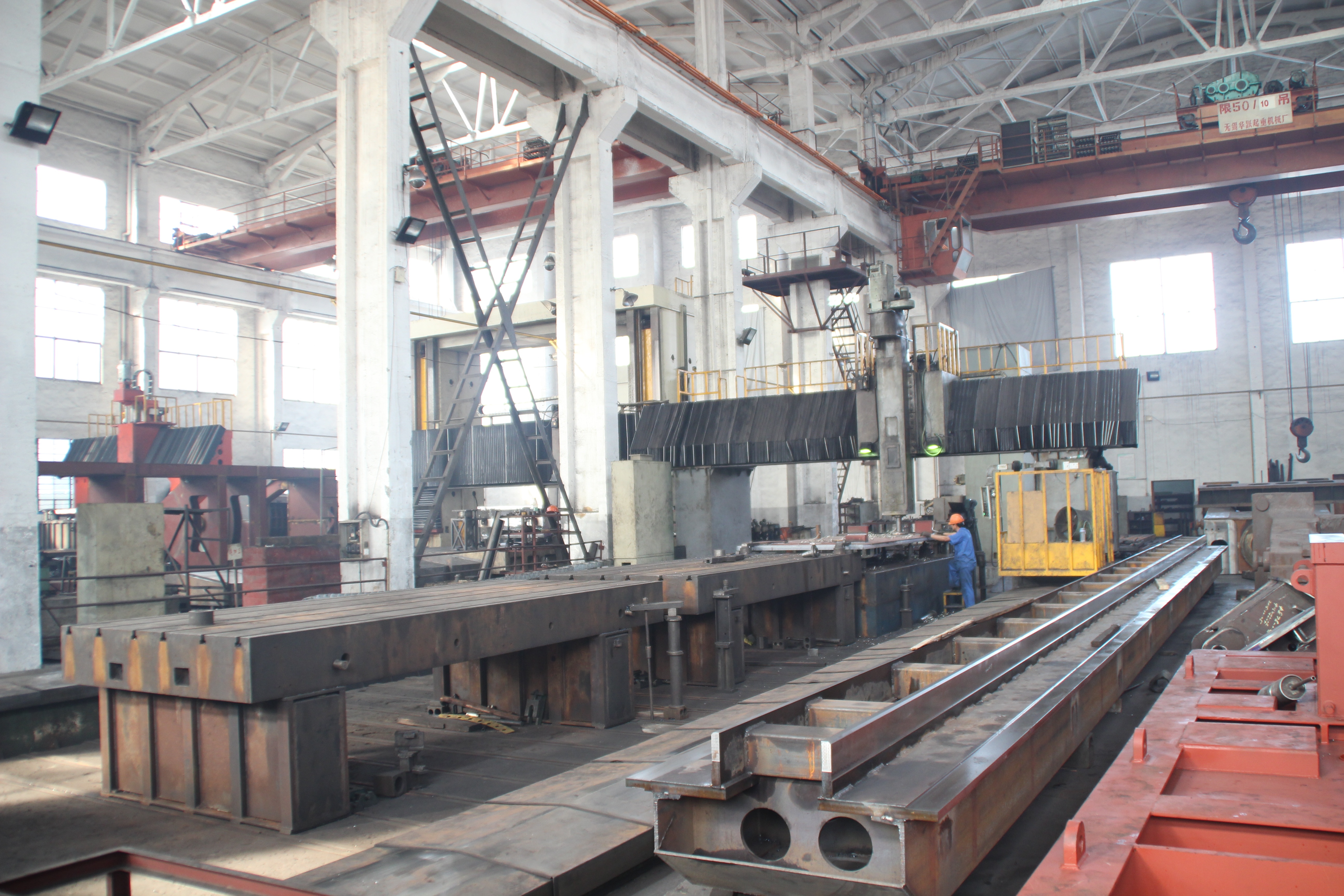
YC Waterjet, founded in 1999 in Wuxi, China, exemplifies this evolution. With a 7,000 m² production base and a team including three engineers with over 20 years of expertise, they have exported to more than 140 countries by 2026. Their product line covers S, L, G, and E series machines, plus robotic cutters and ultra-high pressure pumps up to 100 HP.
Detailed Solution: How to Read a CNC Waterjet Data Sheet
Let’s dissect the most common parameters found on any CNC waterjet machine datasheet, using the G Series from YC Waterjet as an example.
| Parameter | G Series Value | What It Really Means |
|---|---|---|
| Cutting Accuracy | ±0.1 mm | Defines the dimensional tolerance of finished parts. ±0.1 mm is industry standard for waterjet; higher quality assembly ensures this is achieved consistently. |
| Positioning Accuracy | ±0.025 mm | How precisely the cutting head moves to a programmed coordinate. This is a function of servo motor quality, ball screw precision, and gantry rigidity. |
| X,Y Dry-Run Speed | 0–15 m/min | Maximum rapid traverse speed. Higher speeds reduce non-cutting time, but stability at speed is more important than the top number. |
| Max Pressure | 4137 Bar / 60,000 PSI | The pressure generated by the intensifier pump. 60,000 PSI is the standard for most abrasive waterjet cutting; some applications require 90,000 PSI for faster cutting of thin materials. |
| Max Water Flow | 7.4 L/min | Determines the maximum orifice/nozzle size you can use. Higher flow enables larger orifices (0.016" / 0.05") for higher productivity on thick materials. |
| Max Power | 100 HP / 75 kW | Pump motor power. Higher power allows higher pressure and flow simultaneously. Important for cutting thick metals or composites at speed. |
Understanding Cutting Speed
“Cutting speed is based on the material and thickness” is a common disclaimer. For example, cutting 10 mm stainless steel requires a slower speed than cutting 5 mm aluminum. The real differentiator is pressure stability—a pump that maintains constant pressure across the cut produces a straighter kerf and cleaner edge. YC Waterjet’s pumps, which integrate Hypertherm intensifiers (USA), are designed for pressure ripple less than 2%, minimizing taper.
Step-by-Step Breakdown: Evaluating Manufacturing Quality
Follow this five-step framework when visiting a supplier’s plant (physically or virtually) to assess how manufacturing processes affect final machine quality.
Step 1: Structural Materials and Fabrication
The machine frame and gantry are typically made of stainless steel or carbon steel. A stress-relieved welded structure with proper annealing prevents warping over time. YC Waterjet uses CNC machining centers with 5-axis capability to ensure mounting surfaces are flat within 0.02 mm.
Step 2: Pump and High-Pressure Components
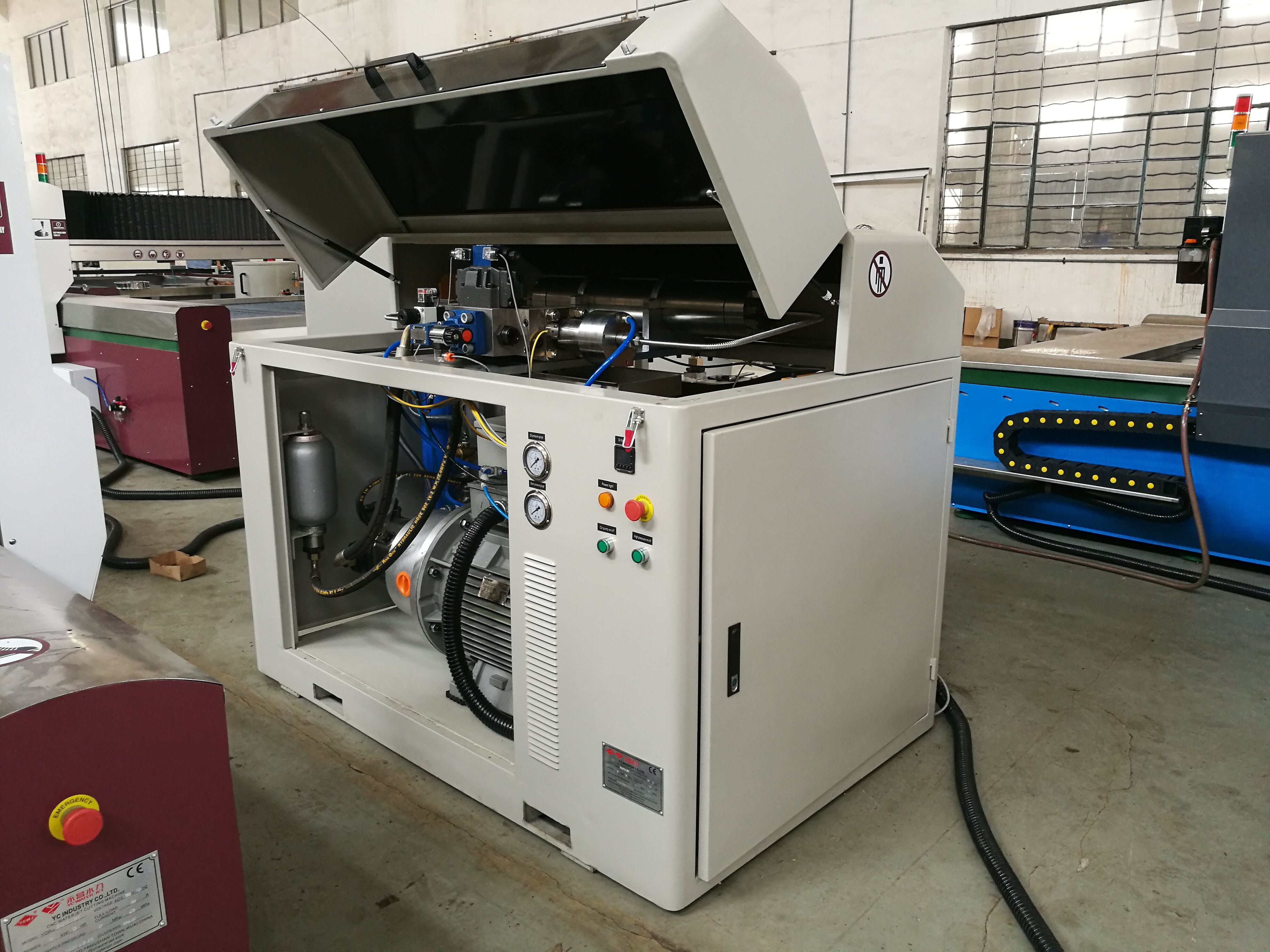
The heart of any high pressure water cutter is the intensifier pump. Look for:
- Source of intensifier (e.g., Hypertherm or KMT from Germany/USA).
- Seal lifetime—YC Waterjet claims 10% longer seal life due to proprietary cooling and filtration.
- Modularity for easy maintenance. The YCG-3742S pump, for instance, allows quick access to check valves and plungers.
Step 3: Cutting Head Assembly and Alignment
The 5-axis waterjet cutter or 3-axis head must have zero play. Check if the supplier performs laser alignment on every axis. YC Waterjet offers both 3D MAX and Dynamic 5-axis cutting heads, each with automatic height measurement and drilling function integration. Misalignment at the head causes bevel errors on 3D cuts.
Step 4: Control System Integration
A CNC controller that communicates smoothly with the servo drives and pump PLC is crucial. YC Waterjet’s machines use industrial-grade controllers with nestling software that optimizes abrasive usage. Test the dry-run speed: 0–15 m/min for the G Series should be achieved without vibration.
Step 5: Quality Assurance and Certification
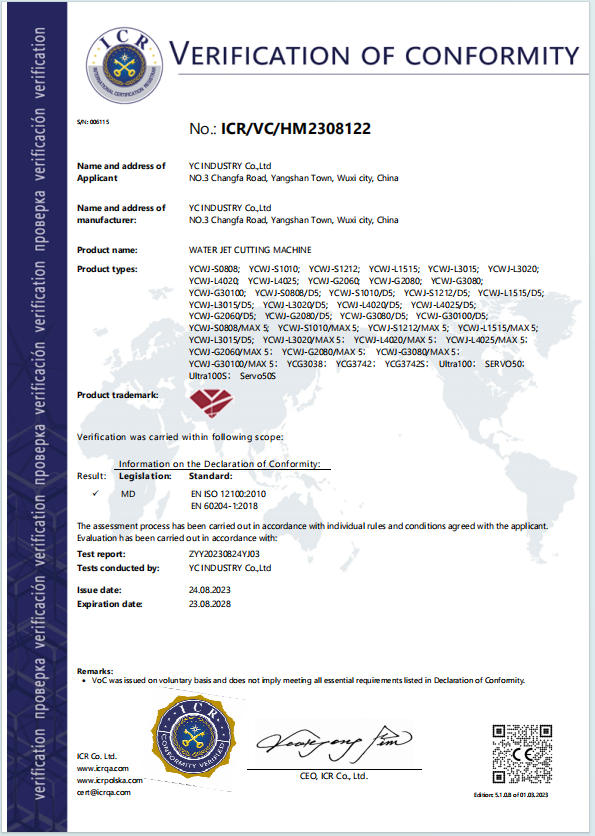
Certifications like CE (Certificate ICR/VC/HM2308122) and ISO 9001:2015 (Certificate 17324Q21401R0S) indicate that the manufacturer follows documented processes for design, procurement, assembly, and testing. YC Waterjet performs ex-factory acceptance tests on every unit, with test reports available to buyers.
Use Cases: Real-World Performance Stories
Case 1: Precision Cutting for Aerospace Composites (Thailand)
A Thai industrial manufacturer purchased a robot waterjet cutter (6-axis) for cutting carbon fiber and honeycomb panels. The integrated drilling function (pre-drilling before cutting) eliminated delamination. After 10 years of operation, the system still achieves ±0.1 mm accuracy with minimal maintenance. The customer praised the cold cutting capability and the tropical climate reliability.
Case 2: Yacht Aluminum Plate Cutting (Mauritius)
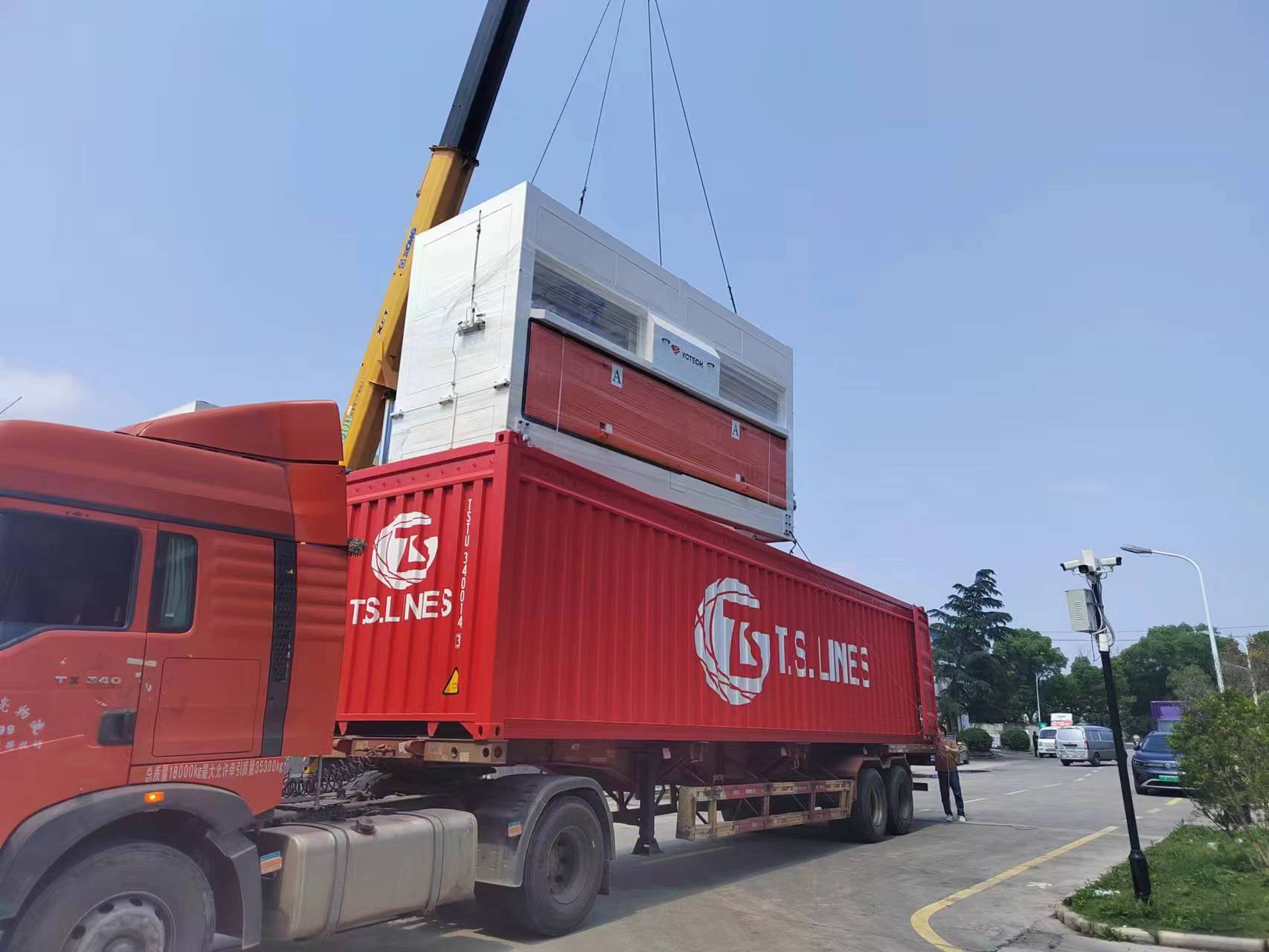
A yacht manufacturer in Mauritius uses a Double Gantry 5-axis waterjet (YCWJ-3742S-G2565MAX5DG) to cut marine-grade aluminum. The cold cutting process preserves material strength, and the large 2.5 m × 6.5 m cutting area handles full sheets. Over a decade of operation, the machine has reduced scrap by over 30% compared to previous plasma cutting.
Case 3: High-End Stone Processing (Germany)
A German home furniture manufacturer uses a L Series waterjet to cut marble kitchen countertops. The zero-chipping edge quality and ability to produce intricate shapes for basins have allowed them to offer premium products. The machine’s low-noise, dust-free operation is a key advantage in an indoor workshop.
How to Select the Right Solution
When evaluating CNC waterjet cutting machine suppliers, consider these criteria:
- Material compatibility: Ensure the machine can cut your primary materials (steel, aluminum, composites, stone, etc.). YC Waterjet’s machines cover all these categories.
- Axis configuration: 3-axis for flat sheets, 5-axis for 3D parts, robotic for complex geometries. Compare 5-axis vs 3-axis based on your part complexity.
- Pump specifications: For thick materials, a 100 HP / 60,000 PSI pump with a high flow rate (7.4 L/min) is recommended. The E Series offers a slightly lower flow (3.7 L/min) for lighter applications.
- Manufacturing pedigree: Check factory size, years in business, export record. YC Waterjet’s 7,000 m² facility and 25+ years indicate stability.
- After-sales support: One-year warranty, remote guidance, and spare parts availability. YC Waterjet provides on-site engineer support at client expense for split-type machines.
Common Buyer Concerns
Top Chinese manufacturers like YC Waterjet now use globally sourced core components (Hypertherm intensifiers, KMT seals) and hold ISO 9001/CE certifications. Their machines offer comparable performance at a 12% lower TCO, as verified by our comparison data.
Insist on an ex-factory acceptance test with your material sample. Request positioning repeatability reports. YC Waterjet provides test data for every machine before shipment.
Regular seal replacement (every 500–1000 hours depending on water quality). YC Waterjet’s modular pump design reduces downtime. Their pumps offer 10% longer seal life due to advanced filtration and cooling systems.
5-axis systems are typically 30–50% more expensive due to additional rotary axes and software. However, if your parts require bevel cuts or 3D contours, the investment pays back through reduced secondary operations.
Conclusion
Purchasing a CNC waterjet cutting machine is a strategic investment. By understanding how parameters like pressure, flow, and accuracy are influenced by manufacturing quality—gantry precision, pump internals, cutting head alignment, and certification—you can make an informed decision that balances performance and cost. YC Waterjet offers a complete portfolio from small precision waterjet cutting machines to heavy-duty multi-axis systems, backed by a quarter-century of expertise and a global service network.
Ready to discuss your application?
Contact the technical sales team at YC Water Jet Technology Co., Ltd.
Email: sales@ycwaterjet.com | WhatsApp: +86 13861858095
Address: NO.3 Changfa Road, Yangshan, Wuxi, Jiangsu, China
Visit: www.ycwaterjet.com