
Decoding Technical Parameters of Vacuum Homogenizer Emulsifier Mixers: How Manufacturing Processes Impact Product Quality
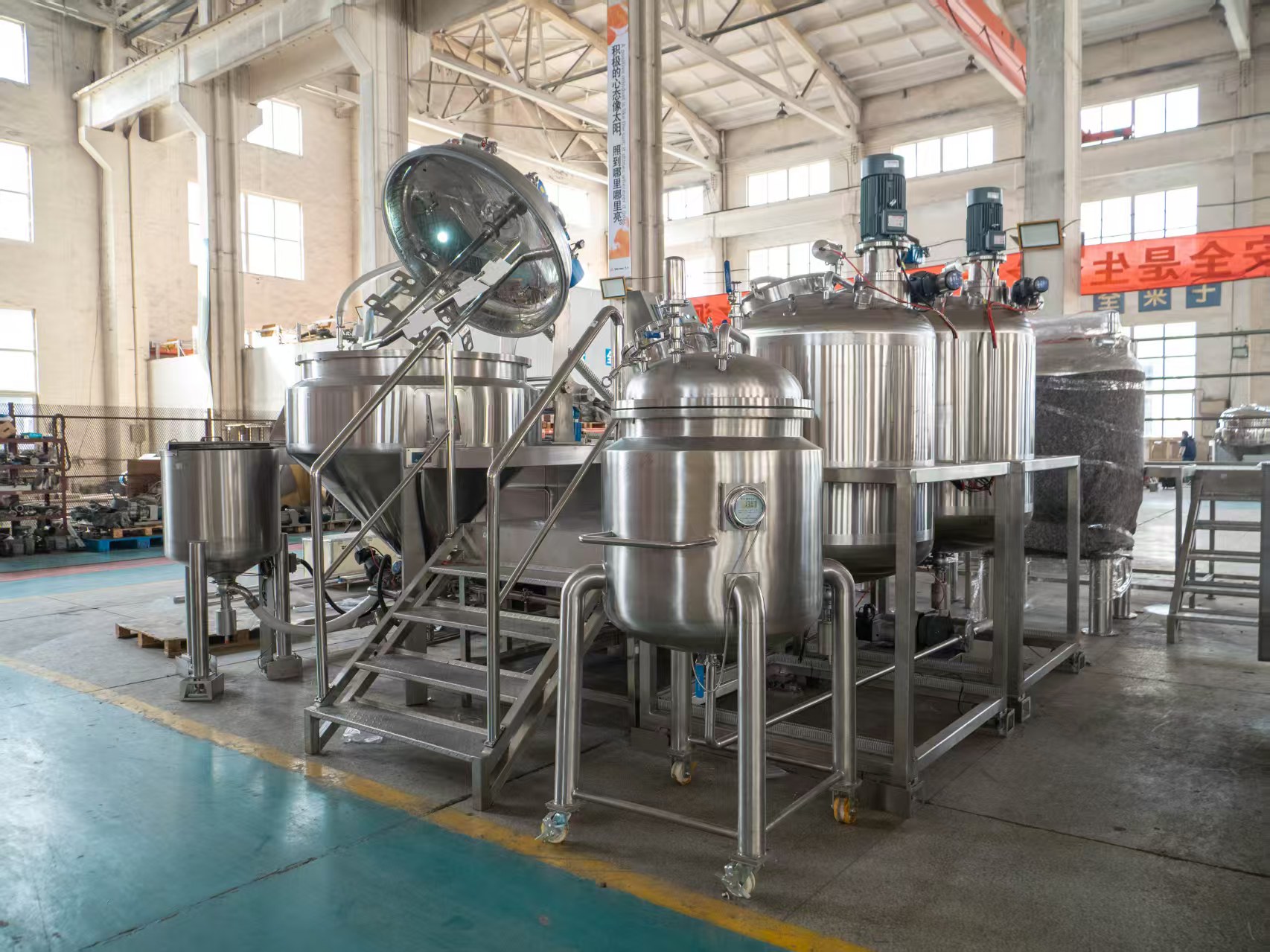
Figure 1: YeKeey MC Series Vacuum Homogenizing Emulsifier Mixer – engineered for precise particle size control in food and cosmetic emulsions.
Decoding Technical Parameters of Vacuum Homogenizer Emulsifier Mixers: How Manufacturing Processes Impact Product Quality
When procuring a vacuum homogenizer emulsifier mixer for mayonnaise, sauce, or cosmetic cream production, buyers often face a cascade of technical parameters: power range, rotor speed, vacuum level, material grade, and more. These numbers are not abstract – they directly determine the fineness of the emulsion, the stability of the final product, and the efficiency of your production line. Yet many procurement teams lack a clear framework to translate these parameters into quality outcomes. This guide is designed for industrial buyers who need to decode the technical language of emulsifying equipment and understand how manufacturing processes such as welding precision, motor configuration, and vacuum system design affect real-world product quality.
We will focus on the core parameters of vacuum homogenizer emulsifier mixers, explain their functional impact, and provide actionable criteria to evaluate suppliers. Throughout this article, we reference the engineering expertise of YeKeey (Wuxi YK Automation Technology Co., Ltd), a manufacturer with over 20 years of experience in mixing and emulsifying equipment for the food and cosmetic industries.
What Is a Vacuum Homogenizer Emulsifier Mixer?
A vacuum homogenizer emulsifier mixer is a processing machine that combines high-shear rotor-stator homogenization, vacuum degassing, and heating/cooling in a single vessel. It is used to produce stable oil-in-water or water-in-oil emulsions where the dispersed phase droplets must be uniformly reduced to micron or submicron sizes. The vacuum environment removes air bubbles, prevents oxidation, and improves texture and shelf life.
Key technical components include:
- Homogenizing head – rotor-stator assembly that generates high shear forces (up to 6000 rpm).
- Vacuum system – typically capable of reaching -0.09 MPa, enabling degassing and bubble-free filling.
- Temperature control jacket – allows heating up to 110°C for sterilization or emulsification of heat-sensitive ingredients.
- PLC or button control – manages multi-stage processes including emulsifying, mixing, and cooling.
These machines are used by mayonnaise manufacturers, sauce producers, cosmetic cream and lotion makers, pharmaceutical ointment producers, and chemical specialty producers. The primary problem they solve is the inconsistent quality and short shelf life of emulsions made with conventional mixers, which often produce droplet sizes of 5–20 μm instead of the 1–5 μm achievable with vacuum homogenizers.
Industry Context: Why Technical Parameters Matter
The global demand for high-quality mayonnaise, dressings, and skincare creams is rising, pushing manufacturers to invest in equipment that delivers superior emulsification stability and narrower particle size distribution. According to YeKeey's engineering team, the difference between a conventional emulsifier and a vacuum homogenizer is striking: a conventional unit may achieve 5–20 μm particles, while a vacuum homogenizer like YeKeey's ZJR Series can achieve particle sizes down to 1–5 μm with stronger shearing force and high vacuum degassing. This directly translates to longer shelf life, better mouthfeel, and reduced ingredient waste.
However, not all vacuum homogenizers are created equal. Manufacturing processes – such as the precision of the rotor-stator gap, the surface finish of the tank, the quality of welding, and the type of motor – have a profound impact on the reliability and consistency of the equipment. A poorly manufactured machine might cause material entrainment into the vacuum system, uncontrolled drop of the lifting system, or accelerated wear of seals. Buyers who understand these nuances can avoid costly production stoppages.
Detailed Solution Explanation: Decoding Key Parameters
| Parameter | Typical Range (YeKeey Models) | Impact on Quality |
|---|---|---|
| Power (kW) | 5 – 110 kW (depending on model) | Higher power enables faster rotor speed and more intensive shear, but must match vessel size to avoid overheating. |
| Rotor Speed (rpm) | Up to 2800 rpm (MC & SP), 2800–6000 rpm (ZJR) | Directly determines droplet size. Higher speed yields finer particles but increases energy consumption and wear. |
| Vacuum Level | -0.09 MPa | Removes air and prevents oxidation. Inconsistent vacuum can cause foam and uneven texture. |
| Working Temperature | Up to 110°C | Essential for heat-sensitive formulations. Precise control prevents ingredient degradation. |
| Material (vessel & wetted parts) | SS304 / SS316 | SS316 offers superior corrosion resistance for acidic food or cosmetic formulas. Poor surface finish can harbor bacteria. |
Table 1: Key technical parameters of vacuum homogenizer emulsifier mixers and their quality impact.
How Manufacturing Process Affects Quality
- Rotor-stator gap precision: A gap variation of just 0.1 mm can double the droplet size distribution. YeKeey uses CNC machining to ensure consistent clearance.
- Welding quality: Poor weld seams create dead zones where product accumulates, leading to contamination and cleaning difficulties. YeKeey follows ISO 9001 quality system and performs 100% testing.
- Seal integrity: The vacuum system relies on high-quality mechanical seals. A leak can reduce vacuum and introduce air, ruining the emulsion. YeKeey uses anti-fall self-locking mechanisms and high-precision level sensors to prevent material entrainment into the vacuum system.
- Surface finish: Internal surfaces should be polished to Ra ≤ 0.4 μm for easy cleaning and to meet food safety standards.
Step-by-Step Parameter Evaluation for Buyers
- Define your emulsion target: For mayonnaise, you need droplet size < 5 μm. For cosmetic creams, ≤ 2 μm. This determines required rotor speed and power.
- Calculate vessel volume and batch size: YeKeey offers models from lab scale (ZJR-5) up to 10,000 L (SPA-10T). Ensure the working volume matches your daily output.
- Check vacuum capability: Look for -0.09 MPa or lower. Ask if the system includes a vacuum breaker and anti-entrainment sensor.
- Verify material compatibility: For acidic sauces or cosmetic products with essential oils, choose SS316. For neutral products, SS304 may suffice.
- Review control system: PLC-based systems allow recipe storage and repeatability, critical for consistent quality across batches.
- Request FAT (Factory Acceptance Test): YeKeey offers FAT with 100% test of all functions. Insist on a test run with your product.
Use Case: Nigerian Cosmetic Manufacturer Achieves Stable Production

Figure 2: YeKeey vacuum emulsifying mixer installed at an OBM cosmetics plant in Nigeria.
An Nigerian OBM cosmetics manufacturer purchased 3 sets of YeKeey vacuum emulsifying mixers for their skin care production line. The client required stable operation for at least 10 years. After installation, the machines achieved high production efficiency with consistent emulsion quality and stable operation even under continuous daily use. The key parameter of rotor speed (up to 2800 rpm) allowed them to produce creams with particle sizes below 5 μm, improving texture and customer satisfaction.
This case illustrates how manufacturing precision and reliable after-sales support (remote video guidance, spare parts supply, on-site technical dispatch) translate into long-term value for buyers.
Vacuum Homogenizer vs. Conventional Emulsifier: A Parameter Comparison
| Aspect | Conventional Emulsifier | Vacuum Homogenizer (YeKeey) |
|---|---|---|
| Particle size | 5–20 μm | 1–5 μm |
| Shear force | Moderate | Strong, consistent |
| Vacuum degassing | Not available | High (-0.09 MPa) |
| Emulsion stability | Moderate, prone to separation | Superior, longer shelf life |
| Initial investment | Lower | Slightly higher, but lower TCO (fewer rejections) |
| Maintenance | Moderate | Less frequent (quality seals, robust design) |
Table 2: Comparison between conventional emulsifier and vacuum homogenizer for mayonnaise and cosmetic production.
Frequently Asked Questions
Q: What is the most important parameter to check when buying a vacuum homogenizer for mayonnaise?
A: Rotor speed and shear force. For mayonnaise, you need a speed of at least 2800 rpm to achieve the required droplet size (1–5 μm). The YeKeey ZJR Series offers speeds up to 6000 rpm, making it ideal for high-viscosity emulsions.
Q: How does vacuum level affect product quality?
A: A consistent vacuum of -0.09 MPa removes air bubbles that cause oxidation and texture defects. Without proper vacuum, mayonnaise can develop a foamy appearance and shorter shelf life.
Q: Can I use SS304 for acidic sauces?
A: For highly acidic products (pH < 4), SS316 is recommended to avoid pitting corrosion. For neutral products like mayonnaise, SS304 is generally acceptable. Always confirm with your supplier.
Q: How do I ensure the manufacturer's quality control?
A: Look for ISO 9001 certification, CE marking (e.g., YeKeey's CE certificate for Vacuum Emulsifying Mixer, certificate number 0P210922.WYAQT12), and request FAT (Factory Acceptance Test). YeKeey performs 100% testing before shipment.
Q: What is the typical lead time and MOQ?
A: YeKeey offers MOQ of 1 unit, lead time 30–60 days, and multiple delivery terms (FOB/CIF/EXW/CFR). Payment terms are 30% down payment, 70% before shipment.
Certifications That Validate Manufacturing Quality
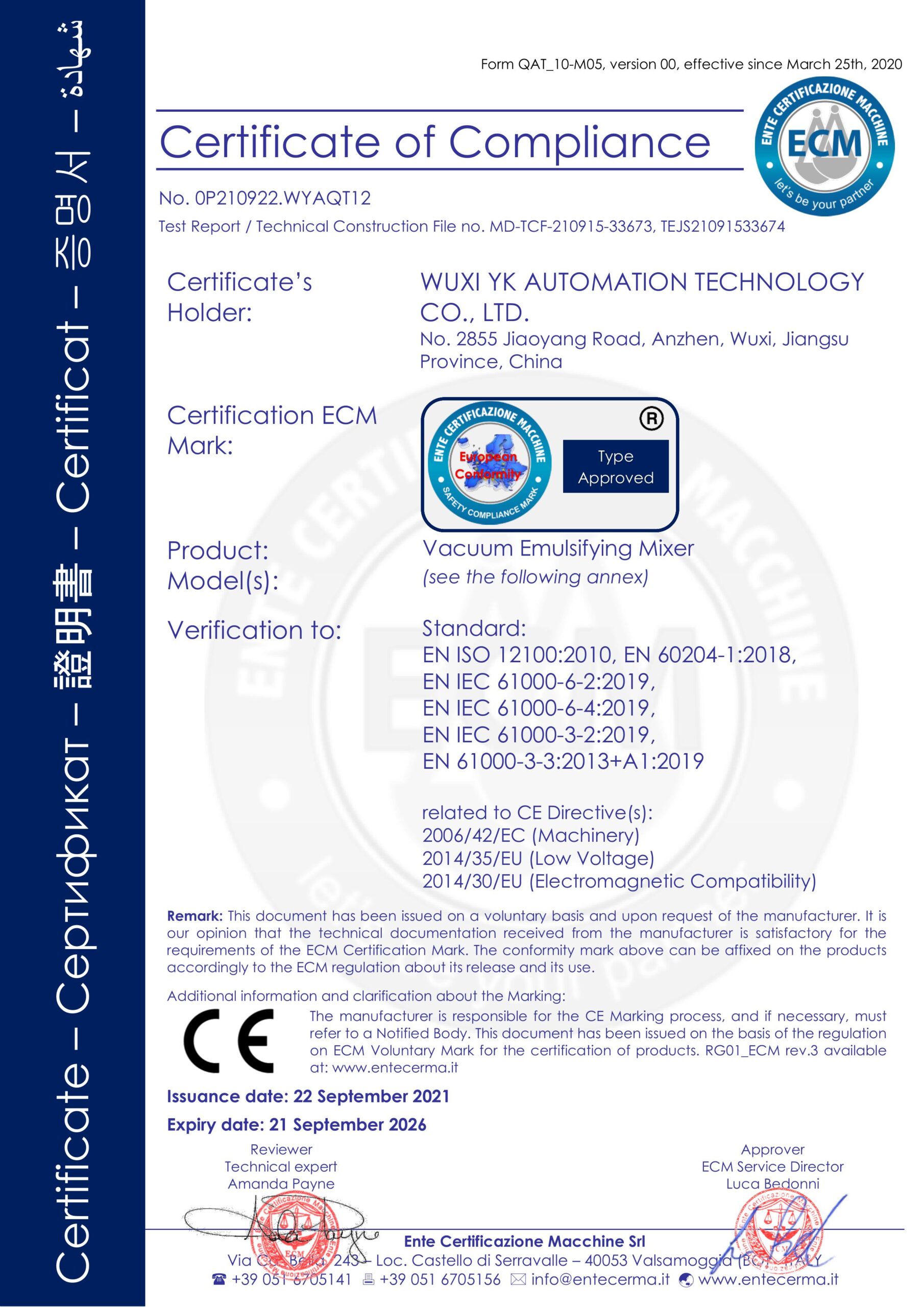
Figure 3: CE Certificate of Compliance for YeKeey Vacuum Emulsifying Mixer (No. 0P210922.WYAQT12) – valid until September 2026.
YeKeey's vacuum emulsifying mixers are certified under EN ISO 12100:2010, EN 60204-1:2018, and other EU standards. The company also holds ISO 9001 quality system since 2003, and has been recognized as a high-tech enterprise in China since 2018. These certifications provide assurance that the manufacturing processes follow strict quality control procedures, from raw material procurement to final testing.
Conclusion
Understanding the technical parameters of a vacuum homogenizer emulsifier mixer is the first step toward making a confident procurement decision. Parameters such as rotor speed, power, vacuum level, and material grade directly influence the quality of your mayonnaise, sauces, or cosmetic creams. However, these numbers only tell part of the story – the manufacturing processes behind the machine, including welding, surface finishing, and seal integrity, are equally critical. By evaluating suppliers like YeKeey that combine rigorous engineering, ISO 9001 processes, and CE certification with real-world case studies, you reduce the risk of equipment failure and inconsistent product quality.
For a deeper dive into YeKeey's product range and technical specifications, download the company brochure to review complete parameter tables, model comparisons, and contact information.
Contact YeKeey for a consultation or factory acceptance test (FAT) at sales@yekeey.com or WhatsApp +86-15050678988. Address: No.2855 Jiaoyang Road, An Zhen, Wuxi, Jiangsu, China.