
PSA Nitrogen Generator: How It Works and How to Evaluate Suppliers
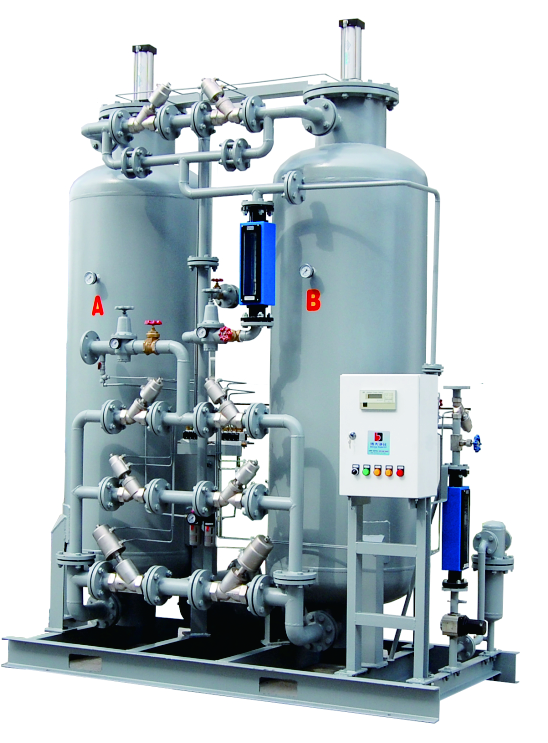
PSA nitrogen generators are widely used for on-site industrial nitrogen supply. According to Fortune Business Insights, PSA technology accounts for approximately 48% of the global nitrogen generator market, making it the most dominant technology segment. Based on Verified Market Research, the global industrial nitrogen generator market was valued at USD 4.29 billion in 2023 and is projected to reach USD 6.47 billion by 2031. For buyers in the research stage, understanding how these systems work, what components they require, and how to evaluate suppliers is an essential first step.
Why Move to On-Site Nitrogen Generation?
Many facilities purchase nitrogen from cylinders or liquid nitrogen deliveries. That approach involves logistics scheduling, storage space, safety handling, and price fluctuation. On-site nitrogen generation removes these recurring burdens by producing nitrogen directly from compressed air. According to the U.S. Department of Energy, on-site nitrogen generation can reduce nitrogen supply costs by up to 40% compared with cylinder deliveries. It also provides a continuous, adjustable nitrogen supply without the need to manage external gas deliveries.
Industry Background
Industrial nitrogen generators are used across many sectors, including food and beverage, chemicals, oil and gas, pharmaceuticals, electronics, and metal processing. The food and beverage segment held approximately 49.8% of the market revenue share in 2023, driven by modified atmosphere packaging. The chemical segment is expected to grow at the highest CAGR of 6.0%, reflecting increasing demand for blanketing and reactor purging. Asia-Pacific is projected to be the fastest-growing region, with a market share of 35% by 2032. As demand for cost-effective nitrogen supply grows, PSA technology remains the leading generation method.
What Is a PSA Nitrogen Generator?
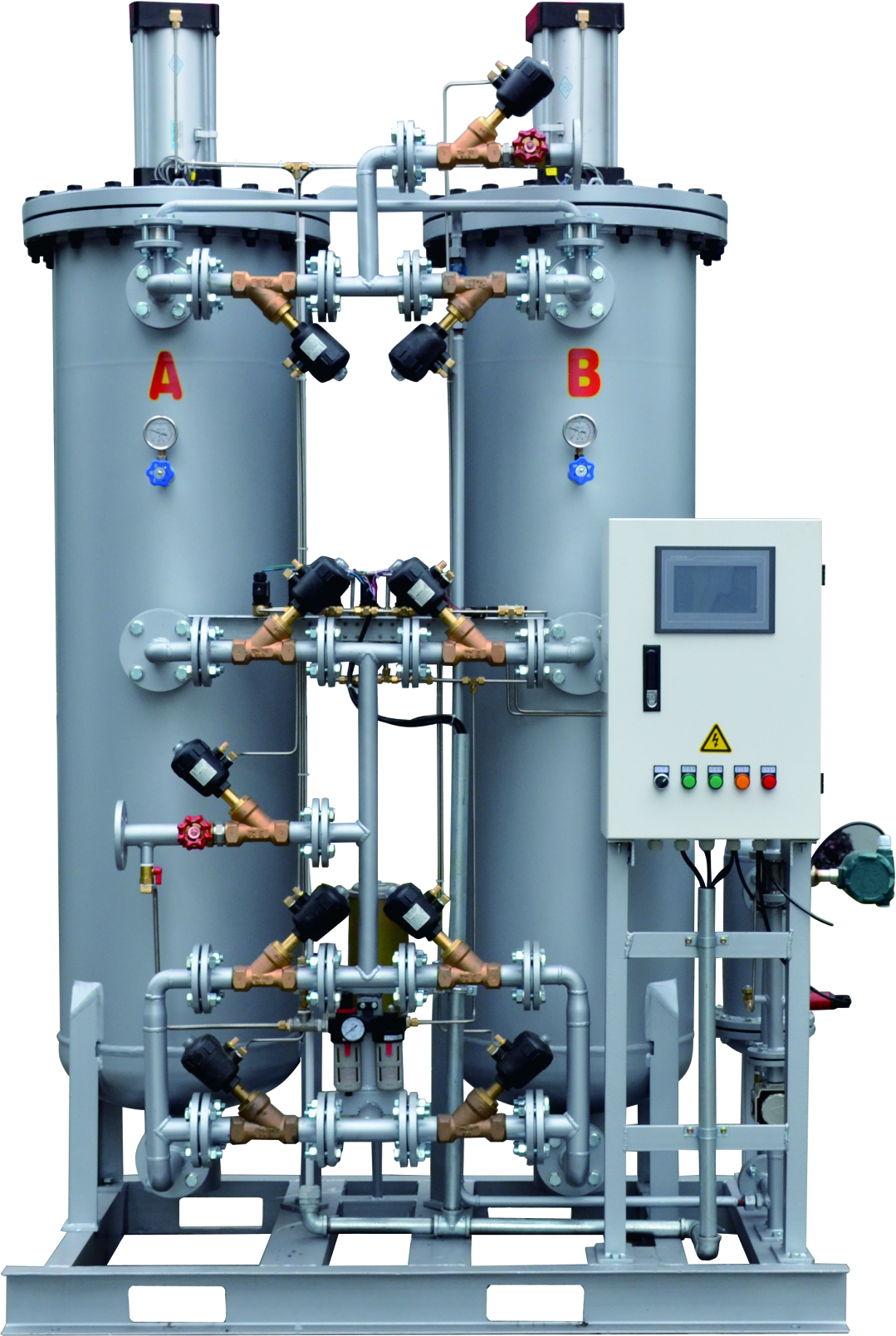
A PSA (Pressure Swing Adsorption) nitrogen generator is an on-site gas production unit that extracts nitrogen directly from compressed air. It uses two adsorption towers filled with carbon molecular sieve. Under pressure, oxygen and other impurities are adsorbed by the molecular sieve, while nitrogen passes through as the product gas. The two towers alternate between adsorption and regeneration, enabling continuous nitrogen output.
BODA GAS: A Manufacturer Background
Hangzhou Boda Purity Equipment Co., Ltd. (BODA GAS) was established in 2002 and specializes in the research, development, and manufacturing of PSA nitrogen generators, PSA oxygen generators, and compressed air purification equipment. The company is headquartered in Hangzhou, Zhejiang Province, China, and operates a standardized production base covering more than 30,000 square meters. With over 24 years of industry experience, the company employs approximately 58 staff, including 15 R&D engineers, and has an annual production capacity of 480 units. Export sales account for 30% of total sales, with major markets in the Middle East, Africa, Central Asia, Eastern Europe, Southeast Asia, and Latin America.
BODA GAS has obtained ISO 9001, ISO 13485, ISO 14001, and ISO 45001 certifications. The company also owns multiple invention patents and dozens of utility model patents, supporting the technical development of its gas separation equipment.
BXN Series PSA Nitrogen Generator
The BXN Series is BODA GAS's industrial PSA nitrogen generator. It uses pressure swing adsorption to separate nitrogen from oxygen. The series covers nitrogen flow rates from 1 to 3000 Nm³/h and purities from 95% to 99.999%. The discharge pressure is adjustable from 0.1 to 1.15 MPa, and the nitrogen dew point ranges from -40°C to -70°C. The equipment is constructed from carbon steel or SS304 and can be customized to meet ASME, CE, ISO, and ATEX standards.
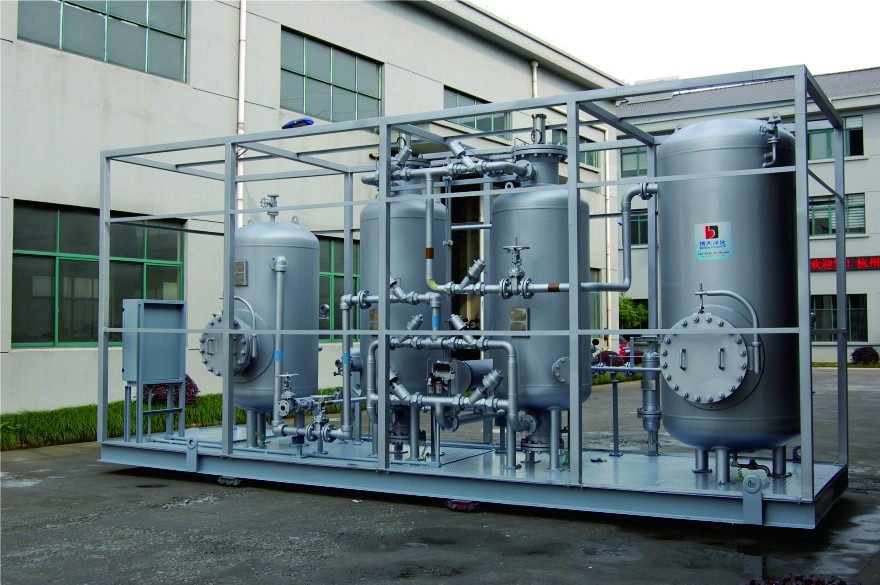
Available configurations include industrial PSA nitrogen generators, skid-mounted PSA nitrogen generation packages, and movable containerized PSA nitrogen generators. The system is designed for continuous operation with a modular structure, low energy consumption, and low maintenance requirements. Standard features include automatic fault diagnosis, alarming, and automatic troubleshooting. Optional features such as touch-screen display, dew point detection, energy-saving control, and DCS communication are also available.
PSA Nitrogen System Components
A complete PSA nitrogen system includes more than the generator itself. The main components are:
- Air compressor — provides compressed air
- Air receiver tank — stores compressed air and stabilizes pressure
- Multiple filters — remove dust, solid particles, and liquid oil
- Air dryer — removes moisture from compressed air
- Activated carbon filter — captures residual oil vapor and hydrocarbons
- PSA nitrogen generator — separates nitrogen using carbon molecular sieve
- Nitrogen buffer tank — stores nitrogen to handle peak demand
- Oxygen analyzer / purity sensor — monitors purity and vents off-spec gas
- Control system — governs valve actions and pressure regulation
Step-by-Step Working Cycle
The PSA process follows a repeating cycle. Each step is essential for maintaining stable purity and protecting the carbon molecular sieve.
- Compressed air input: Clean, dry pretreated compressed air enters the system.
- Adsorption and pressurization: Air flows into the adsorption tower, where carbon molecular sieve adsorbs oxygen and other impurities. Nitrogen is collected in the buffer tank.
- Tower switch and nitrogen output: When the first tower approaches saturation, the system automatically switches to the second tower, maintaining continuous nitrogen output.
- Pressure equalization: Pressure is balanced between online and standby towers before switching, reducing energy loss and protecting the sieve.
- Regeneration (desorption): The saturated tower is depressurized to vent trapped impurities and regenerate the sieve for the next cycle.
Use Cases by Industry
PSA nitrogen generators are used in a wide range of industries. The following list summarizes common purity levels and applications.
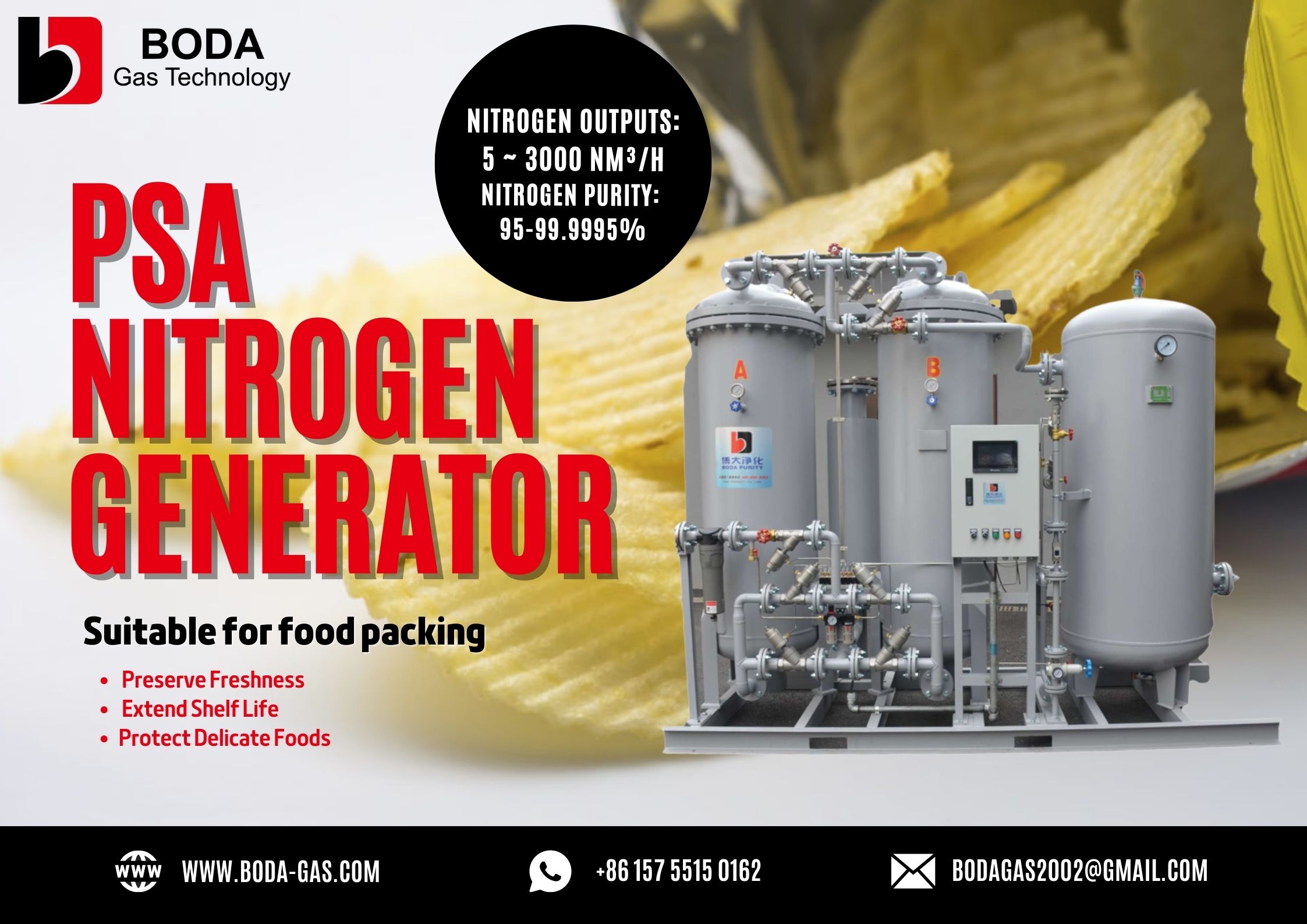
- Food and beverage packaging: 99.0%–99.9% nitrogen for modified atmosphere packaging, beverage blanketing, and freshness preservation.
- Chemical industry: 99.0%–99.99% nitrogen for reactor inert shielding, raw-material tank blanketing, and pipeline purging.
- Oil and gas: 95%–99.9% nitrogen for tank blanketing, well stimulation, pressure testing, and pipeline purging.
- Pharmaceutical industry: 99.99%–99.999% nitrogen for medicine packaging and maintaining clean manufacturing environments.
- Electronics industry: 99.99%–99.999% nitrogen for SMT soldering, semiconductor processing, and lithium-battery production.
- Laser and plasma cutting: 95%–99.999% nitrogen as an auxiliary cutting gas.
- Tyre inflation: 95%–98% nitrogen for vehicle and fleet tyre maintenance.
PSA vs Membrane Nitrogen Generators
| Feature | PSA Nitrogen Generator | Membrane Nitrogen Generator |
|---|---|---|
| Working principle | Pressure swing adsorption using carbon molecular sieve | Membrane separation based on gas permeation speed |
| Purity range | 95% – 99.999% | 95% – 99.9% |
| Best suited for | High-purity applications such as electronics, pharmaceuticals, and laser cutting | Lower-purity applications such as blanketing, purging, and modified atmosphere packaging |
| Maintenance | Designed for continuous operation; modular structure; optional energy-saving control | Simple structure with no moving parts; low maintenance |
| Footprint | Twin-tower design requires more space | Compact, quiet, can be installed on the production floor |
For applications requiring purity above 99.5%, PSA nitrogen generators are generally the more efficient choice.
FAQ
What is a PSA nitrogen generator?
A PSA (Pressure Swing Adsorption) nitrogen generator is an on-site gas production unit that extracts nitrogen directly from compressed air. It is equipped with two adsorption towers filled with carbon molecular sieve, which adsorbs oxygen, carbon dioxide, and moisture, delivering a continuous supply of high-purity nitrogen.
How does a PSA nitrogen plant work?
Based on the pressure swing adsorption principle, compressed and pretreated air flows into one of two towers filled with carbon molecular sieve. The sieve selectively adsorbs oxygen and other impurities, while nitrogen passes through as the product gas. While one tower produces nitrogen, the other tower depressurizes to release trapped gases and regenerate. The towers switch automatically to sustain continuous output.
What is included in a nitrogen generator system?
A complete system includes an air compressor, air receiver tank, multiple filters, air dryer, activated carbon filter, PSA nitrogen generator, nitrogen buffer tank, oxygen analyzer or purity sensor, and control system.
How to choose the nitrogen purity of an on-site nitrogen generator?
For low-purity applications such as fire protection, marine tank blanketing, pipeline purging, and tyre inflation, 95%–98% is usually sufficient. Medium purity of 99%–99.9% suits food and beverage packaging, winemaking, and conventional plastic molding. High-purity nitrogen of 99.95%–99.99% is applied in mild-steel laser cutting, electronics manufacturing, cable production, and pharmaceutical blanketing. Ultra-high-purity of 99.999% or above is required for special metal cutting, high-end electronics, and specialized laboratory applications.
What is the maintenance and cost of an on-site gas system?
Routine maintenance includes precision filter element replacement every 8,000 hours, air compressor service every 3,000 to 4,000 runtime hours, dryer desiccant replacement every 16,000 to 24,000 hours, and carbon molecular sieve service every 6 to 10 years. For a site-specific maintenance plan and quotation, contact the BODA GAS team.
Conclusion
PSA nitrogen generators provide a practical and cost-effective way to produce nitrogen on site. For buyers evaluating suppliers, the important factors are the manufacturer's engineering experience, product purity range, configuration options, and system support. BODA GAS offers the BXN Series and a full range of compressed air purification equipment, backed by over 24 years of manufacturing experience. To evaluate the equipment in more detail, download the BODA GAS product manual or visit www.boda-gas.com.
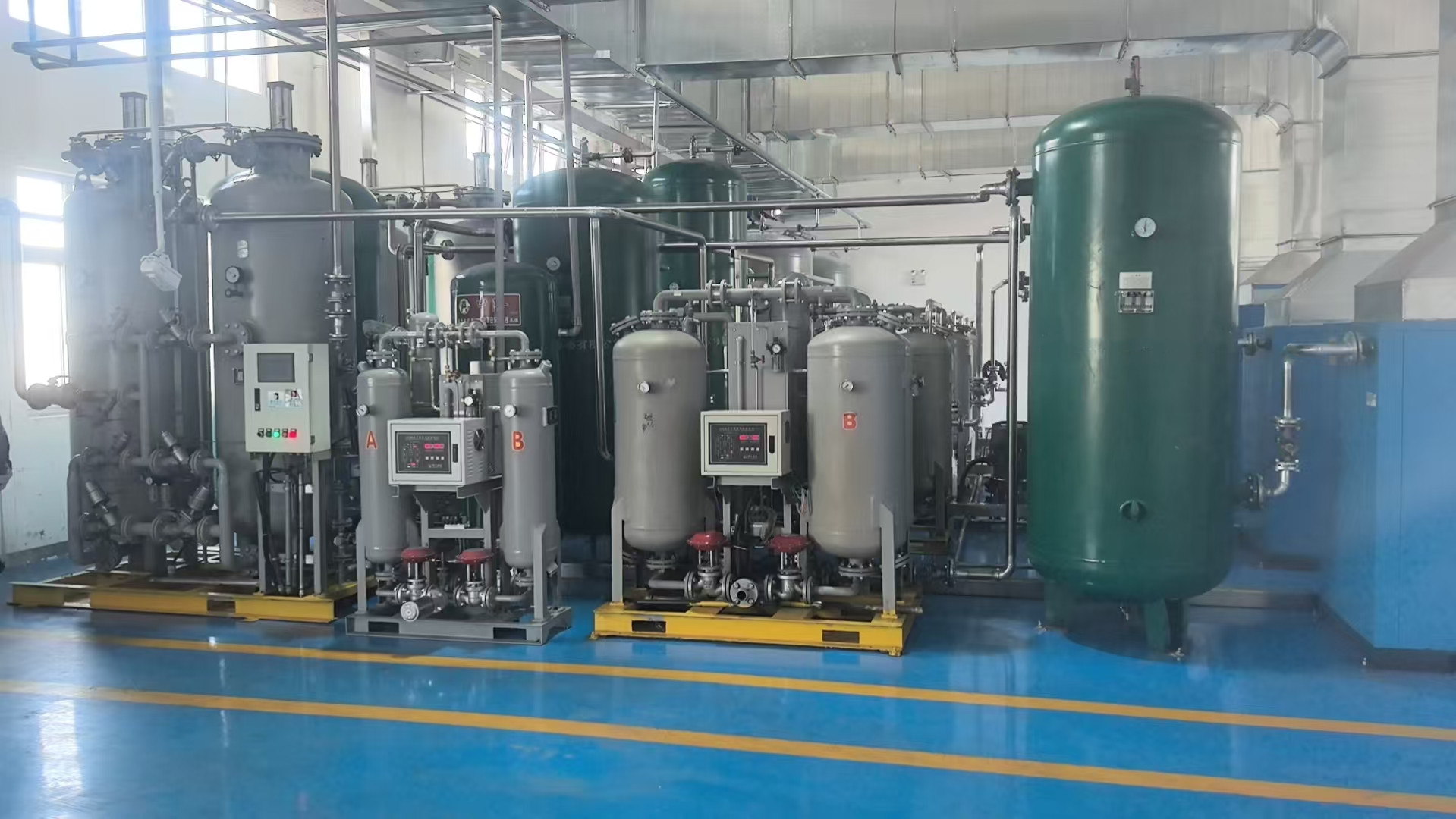
Request a sample layout or quotation. The BODA GAS technical team can calculate air consumption, output flow, purity, and power consumption for your site conditions.
Email: bodagas2002@gmail.com | WhatsApp: +86 157-5515-0162