
Rebar Coupler Types and Applications: A Complete Guide
Rebar Coupler Types and Applications: A Complete Guide
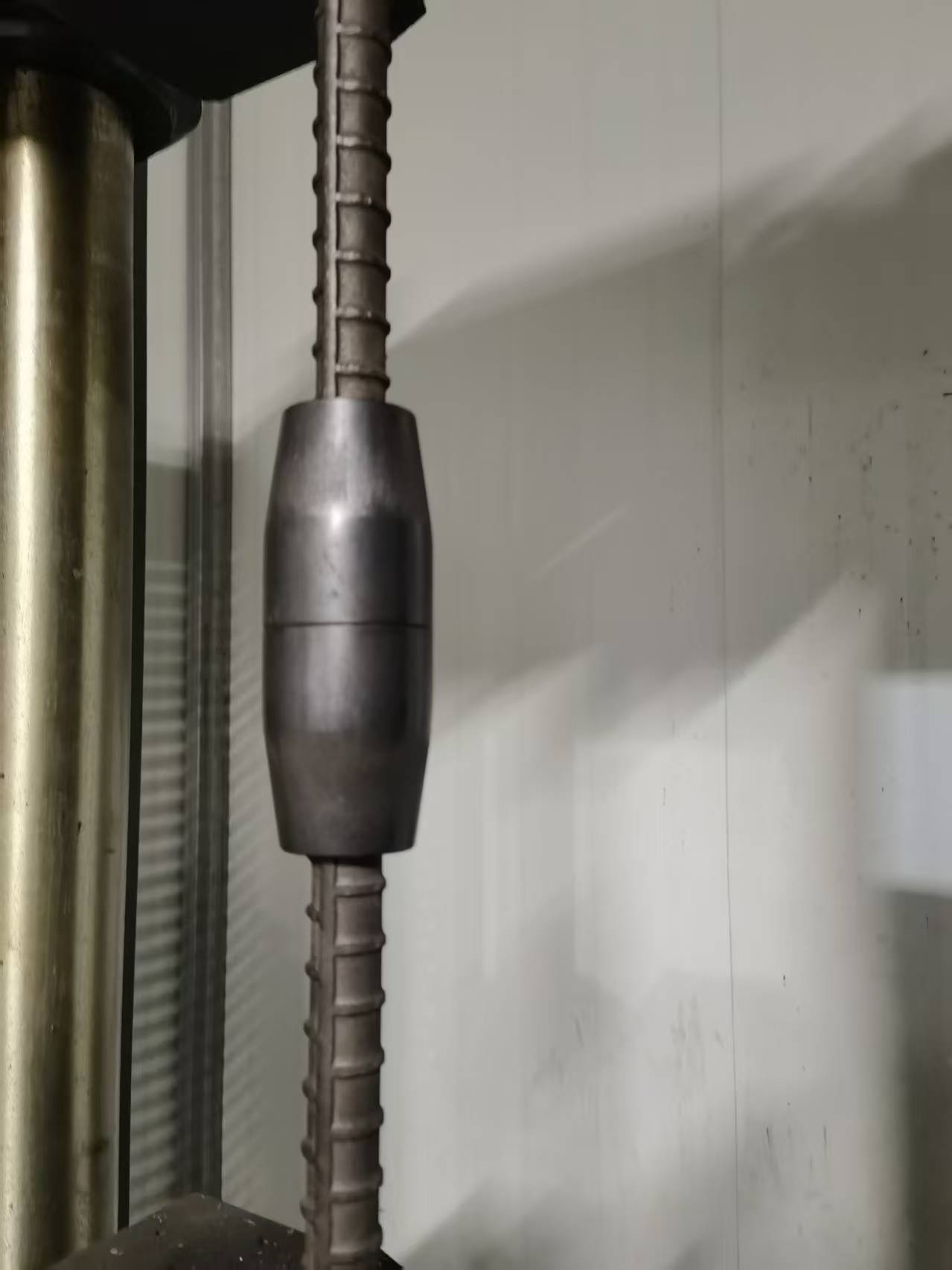
CANGZHOU BARTECH CONSTRUCTION MATERIAL CO., LTD. is a global supplier of rebar couplers and rebar threading machines, established in 2008 with a factory covering 1000 square meters. The company produces multiple types of rebar couplers designed for mechanical reinforcement splicing in construction projects worldwide.
What Is a Rebar Coupler and Why Is It Needed?
A rebar coupler is a mechanical device used to connect two reinforcing steel bars end-to-end, transferring tensile and compressive loads without relying on lap length. This eliminates the need for overlapping rebars, saving material and simplifying reinforcement placement in densely reinforced areas such as high-rise columns, bridge segments, and tunnel linings.
Industry Background: Mechanical Splice Solutions in Modern Construction
As construction projects become taller and more complex, traditional lap splicing becomes impractical due to space constraints and rebar congestion. Mechanical splicing with rebar couplers offers a reliable alternative. CANGZHOU BARTECH provides four main coupler technologies: rolled thread, upsetted thread, cold pressing, and one-touch quick connection. Each technology addresses different site conditions, rebar grades, and installation speeds.
Detailed Solution: Types of Rebar Couplers from CANGZHOU BARTECH
1. Rolled Thread Rebar Coupler (Parallel Thread)
The rolling rebar coupler (product id 3917) is made of carbon steel 45# or alloy steel 40CR. Available for rebar diameters 16–40 mm, with thread angle 60° for all sizes. Outer diameter ranges from 24 mm (model 16) to 59 mm (model 40). It is produced without upsetting the rebar end, preserving the original cross-section. Typical applications include high-rise buildings, airports, and bridge construction.
2. Upset Forged Rebar Coupler
The upsetting rebar coupler (product id 3916) uses a forging process to enlarge the rebar end before threading, allowing a larger thread diameter than the rebar body. Available in models 16–40, with outer diameters from 26 mm to 62 mm and lengths from 40 mm to 90 mm. Materials: carbon steel 45# or alloy steel 40CR. This type provides the highest joint strength and is commonly specified for seismic zones and heavy-load structures.
3. Cold Extrusion Rebar Coupler (Pressing Type)
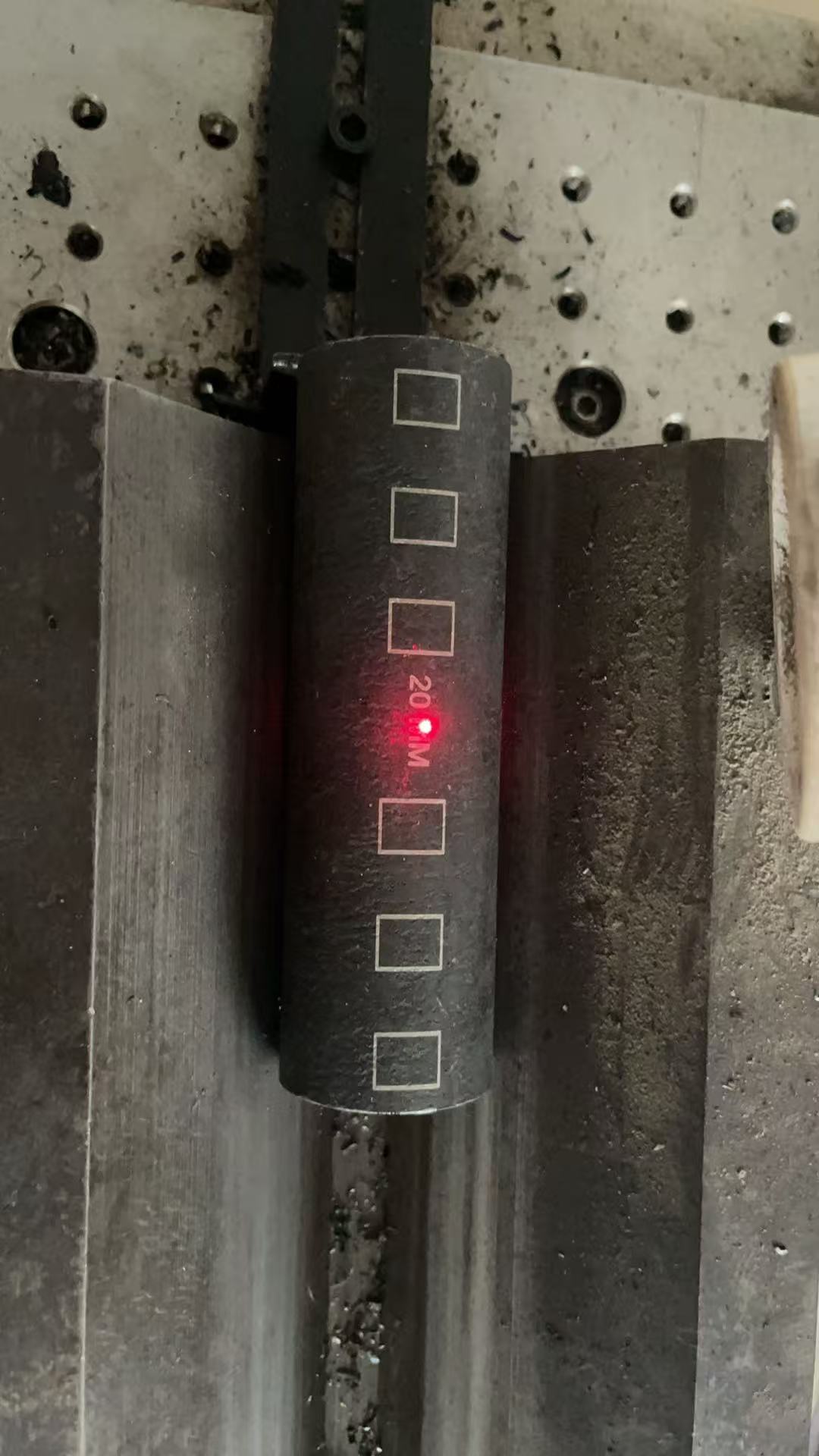
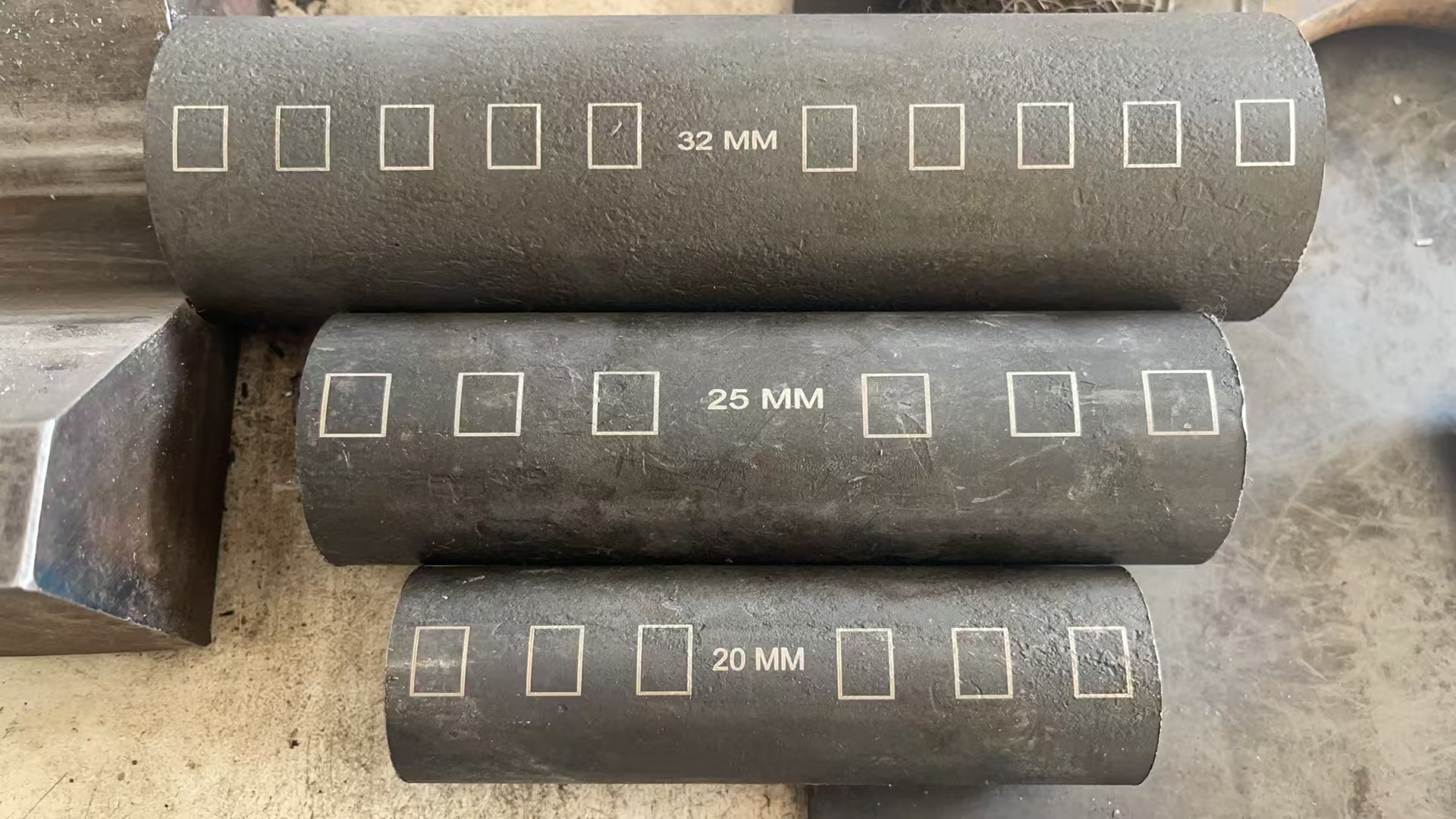
The rebar pressing rebar coupler (product id 3918) is made of carbon steel Q355B. It is installed by a hydraulic pressing machine that deforms the coupler onto the rebar ends. Available in sizes φ16–φ40. For example, φ40 has outer diameter 70 mm, length 240 mm, thickness 11.0 mm. This method does not require threading the rebar, making it suitable for dense rebar arrangements where threading access is limited.
4. One-Touch Quick Connection Rebar Coupler
The ONE-TOUCH rebar coupler (product id 3919) is made of alloy steel 40CR. It features a push-fit design that engages the rebar without rotation, drastically reducing installation time. Available for diameters φ11–φ40. For instance, φ40 has outer diameter 83 mm, length 200 mm. Recommended for high-speed construction cycles such as hotel and airport projects.
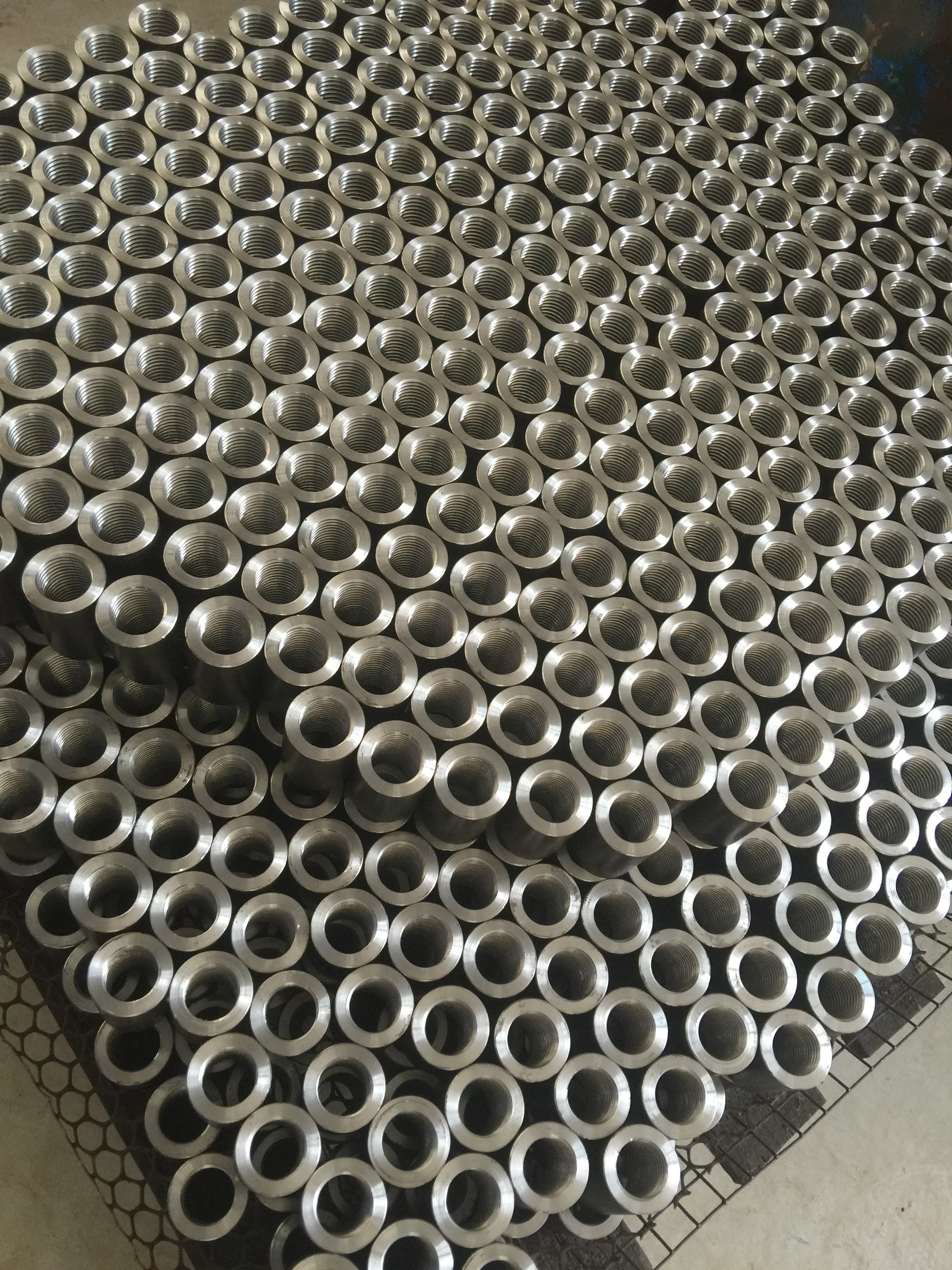
Step-by-Step Installation Comparison
- Rolled Thread: Rebar ends are rolled by a rebar threading machine (e.g., CBT40A) to form a parallel thread. The coupler is then screwed onto one bar and tightened with a wrench or electric torque wrench.
- Upset Forged: Rebar ends are first upset using a rebar upsetting machine (e.g., model 50S), then threaded. The enlarged end ensures the thread strength exceeds the bar strength.
- Cold Pressing: Rebar ends are inserted into the coupler and a hydraulic press (e.g., CBT32) deforms the coupler onto the bars. No thread cutting required.
- One-Touch: Rebar ends are inserted into the coupler until a locking mechanism clicks into place. No tools needed for assembly.
Use Cases Across Industries
CANGZHOU BARTECH rebar couplers are used in the following scenarios:
- Tall buildings: Outdoor super high-rise construction under normal tropical climate. Requires ISO and CE certification. Supported by rebar threading machines (source: tall buildings scenario).
- High railway: Open-air tropical environments in Mexico and globally. Requires CE and ISO. Uses upsetting and thread cutting machines (source: high railway scenario).
- Construction projects (hotels, stations): High-humidity outdoor sites in Vietnam and globally. Must comply with CE and ISO standards for long-term durability.
- Factory pre-threading: Indoor mass pre-threading of rebars in Qatar and globally. Requires long-life tooling parts.
Comparison Table: Rebar Coupler Types
| Parameter | Rolled Thread | Upset Forged | Cold Pressing | One-Touch |
|---|---|---|---|---|
| Material | 45# carbon steel / 40CR alloy | 45# carbon steel / 40CR alloy | Q355B carbon steel | 40CR alloy steel |
| Diameter range | 16–40 mm | 16–40 mm | 16–40 mm | 11–40 mm |
| Thread angle | 60° | 60° | Not applicable | Not applicable |
| Outer diameter range | 24–59 mm | 26–62 mm | 30–70 mm | 35–83 mm |
| Length range | 42–95 mm | 40–90 mm | 110–240 mm | 100–200 mm |
| Installation method | Wrench or torque tool | Wrench or torque tool | Hydraulic press | Push-fit, no tool |
| Typical industry | High-rise, bridges | Seismic, heavy load | Dense rebar zones | High-speed construction |
Frequently Asked Questions
1. Are CANGZHOU BARTECH rebar couplers CE and ISO certified?
Yes. Application scenarios for high-rise buildings, high railways, and general construction projects specify compliance with ISO and CE standards. The company’s products are designed to meet these requirements.
2. What types of rebar couplers does CANGZHOU BARTECH offer?
Four types: rolling rebar coupler (parallel thread), upsetting rebar coupler (forged end), cold pressing rebar coupler (extrusion), and one-touch rebar coupler (quick connection). Each type covers rebar sizes from 16 mm to 40 mm (or 11–40 mm for one-touch).
3. Which rebar coupler type is best for a bridge project?
For bridge projects requiring high tensile strength and fatigue resistance, the upsetting rebar coupler is typically preferred because it maintains a thread diameter larger than the rebar body, ensuring joint strength. However, rolled thread couplers are also widely used in bridge applications where upsetting equipment is not available.
4. Can I order a sample to test the coupler quality?
CANGZHOU BARTECH supports sample requests. Contact the company by email at sales@chinabartech.cn or via WhatsApp at +86 13785685215 to discuss sample specifications and delivery.
5. What is the typical lead time for rebar coupler orders?
Lead time depends on the order quantity, product type, and current production schedule. For specific lead-time information, please contact the sales team directly using the contact details above.
Conclusion
Selecting the correct rebar coupler type is essential for construction efficiency and structural integrity. CANGZHOU BARTECH CONSTRUCTION MATERIAL CO., LTD. offers four distinct mechanical splicing solutions—rolled thread, upset forged, cold pressing, and one-touch—each engineered for specific site conditions and performance demands. With a 100% export ratio and presence in Asia, Middle East, and South America, the company supplies certified products backed by an in-house R&D team of 10 engineers.
Request a Quote or Sample: Contact Julie Chen via email sales@chinabartech.cn or WhatsApp +86 13785685215.