The Ultimate Buyer's Guide to Fiberglass Fabric: How to Choose the Right Reinforcement for Your Composite Project
The Ultimate Buyer's Guide to Fiberglass Fabric: How to Choose the Right Reinforcement for Your Composite Project
Choosing the right fiberglass fabric is one of the most critical decisions in composite manufacturing. With dozens of weave types, weights, fiber orientations, and surface finishes available, procurement professionals often struggle to identify the material that delivers the best balance of performance, cost, and processing compatibility. This buyer's guide provides a systematic approach to evaluating, comparing, and selecting fiberglass fabric suppliers and products for applications ranging from boat hulls to wind blades and UAV structures.
What Is Fiberglass Fabric?
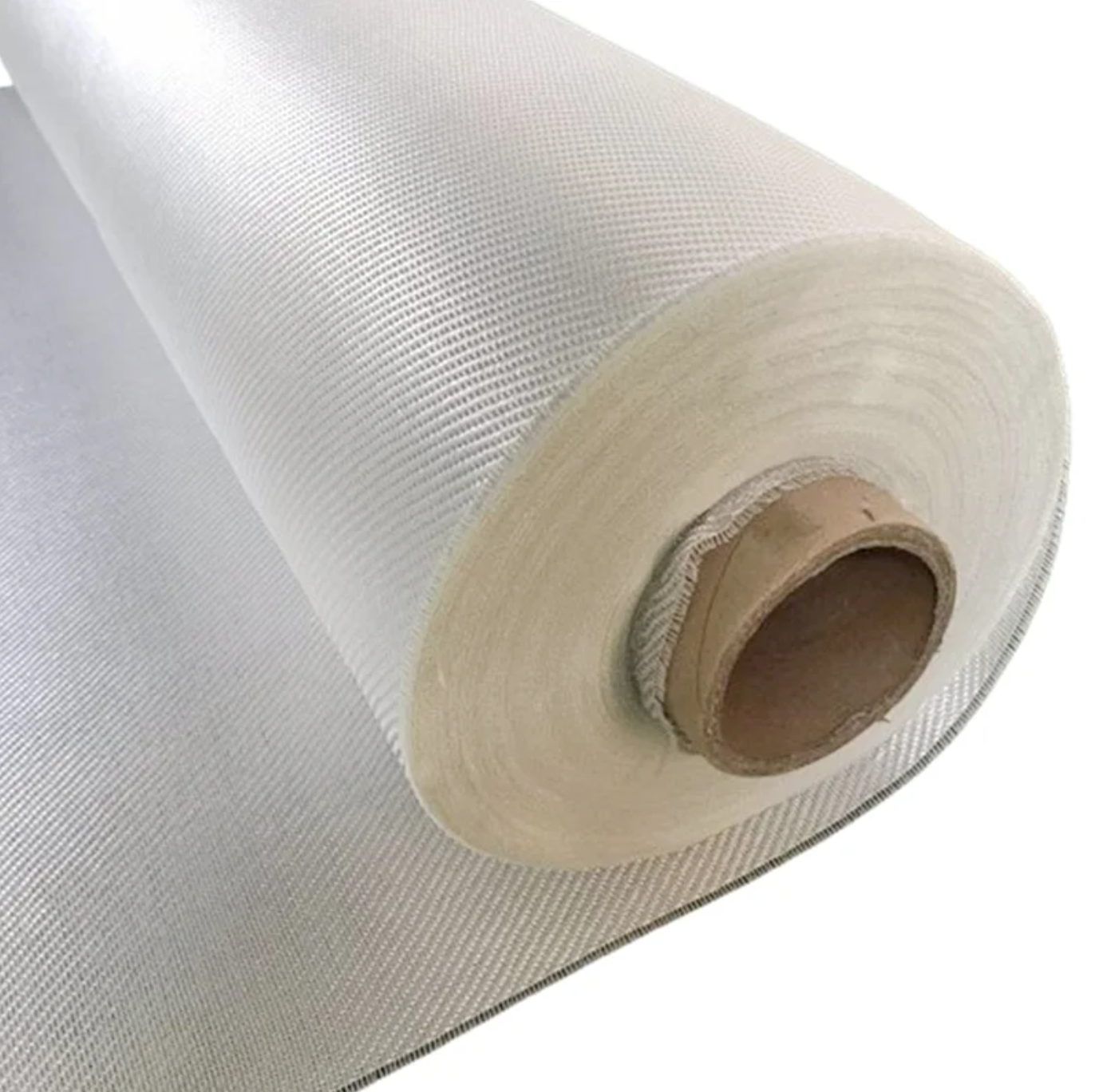
Fiberglass fabric is a woven or stitched textile made from continuous E-glass or alkali-free glass fibers. It serves as the primary reinforcement in FRP (Fiber Reinforced Polymer) composites, providing tensile strength, impact resistance, and dimensional stability. Depending on the weave pattern and fiber orientation, fiberglass fabrics can be optimized for different manufacturing processes and mechanical requirements.
Common categories include:
- Light Weight Fiberglass Cloth – Plain woven, 25–400 g/m², ideal for surface layers, fairing, and light structural laminates.
- Multiaxial Fiberglass Fabrics (Non-Crimp) – Stitched orientation (biaxial, triaxial, quadraxial), 400–1500 g/m², for high-performance structural loads.
For example, Guangdong Cinon New Material Technology Co., Ltd. (CINON) offers both types under the model designations Light Weight Fiberglass Cloth (plain woven E-glass, 25–400 g/m², widths 1000/1010 mm) and Multiaxial Fiberglass Fabrics (non-crimp, unidirectional to quadriaxial, 400–1500 g/m², moisture <0.2%, combustible matter 2.0%–8.0%).
Why Selecting the Right Fiberglass Fabric Matters
Incorrect material selection leads to:
- Weight penalties – using heavy woven roving where a lightweight biaxial would reduce weight by 20–30%.
- Process failures – fabrics with poor wet-out cause dry spots in vacuum infusion.
- Higher lifecycle costs – frequent repairs, reduced fatigue life, or premature failure.
According to industry benchmarks, switching from woven roving to multiaxial fiberglass fabric can improve laminate performance by 20–30% while reducing labor and resin consumption (CINON engineering data).
Industry Applications of Fiberglass Fabric
Fiberglass fabric is used across multiple industries, each with distinct requirements:
| Industry | Typical Projects | Key Requirements | Common Markets |
|---|---|---|---|
| Marine & Yacht Building | Boat hulls, decks, bulkheads, marine panels | Low water absorption, corrosion resistance, stiffness | Italy, USA |
| Wind Energy | Wind turbine blades, blade shells, nacelles | High fatigue resistance, lightweight, dimensional stability | Germany, Denmark, Spain, USA, China, India |
| Transportation | Truck bodies, bus panels, rail interiors | Impact resistance, corrosion resistance, weight reduction | Mexico, USA, Italy, France, Sweden, Japan |
| Aerospace & UAV | UAV wings, drone structures, aircraft panels | Ultra-lightweight, high stiffness, traceability | Germany, USA |
| Sports & Leisure | Surfboards, kayaks, paddle boards | Lightweighting, flex memory (the "pop") | Thailand, Vietnam, Australia, USA, NZ, China |
| Industrial Composites | FRP panels, machine enclosures, industrial covers | Corrosion resistance, structural performance | China, USA, Germany, Italy, India |
| Composite Tooling | RTM molds, vacuum infusion molds | Dimensional stability, vacuum resistance | Germany, USA, China |
These applications demand different fabric architectures. For example, wind blades require multiaxial non-crimp fabrics (NCF) with high fatigue resistance, while surfboards use lightweight plain-weave cloth for a smooth surface and controlled flexibility.
How to Choose Fiberglass Fabric: A Step-by-Step Process
Step 1 – Define Your Application and Loading Conditions
- Is the part structural or cosmetic? (Structural → multiaxial; surface → light woven)
- What are the operating conditions? (Saltwater, UV, temperature extremes?)
- What joinery or bonding requirements exist? (Core adhesion, sandwich construction)
Step 2 – Select the Manufacturing Process
- Hand lay-up / Spray-up – works with both woven and multiaxial; heavier fabrics may be difficult.
- Vacuum infusion / VARTM – requires good resin flow; multiaxial NCF is preferred for higher fiber volume.
- RTM – needs fabrics with low crimp and consistent permeability.
Step 3 – Determine Fabric Architecture
- Plain weave – good stability, surface finish; weight range 25–400 g/m².
- Biaxial (0/90 or ±45) – balanced in-plane properties; 400–1500 g/m².
- Triaxial / Quadraxial – multi-directional load capability.
- Unidirectional – maximum strength along one axis.
Step 4 – Verify Specifications
- Weight per square meter (g/m²)
- Fiber type (E-glass vs alkali-free)
- Roll width (common: 1000 mm, 1010 mm)
- Combustible matter content (2.0%–8.0%)
- Moisture content (<0.2%)
Step 5 – Evaluate Supplier Capabilities
- Production capacity – can they meet your volume? (e.g., CINON: 1,200,000 m²/year)
- Quality certifications – ISO 9001:2015, ISO 14001:2015, ISO 45001:2018? (CINON holds all three)
- Customization – can they produce specific widths, weights, or packaging?
- Lead time & MOQ – typical MOQ 1000 m², lead time 15–30 days (CINON data).
- Technical support – material selection assistance, process optimization, vacuum infusion guidance.
- Risk control – pre-production inspection, batch performance verification, export packaging.
Fiberglass Fabric vs. Alternative Reinforcements
| Comparison | Difference | Performance Gap | Best For | Cost Difference |
|---|---|---|---|---|
| Fiberglass Fabric vs. Carbon Fiber | Fiberglass offers lower cost and better impact resistance; carbon fiber is stiffer and lighter. | Carbon fiber: 2–4× higher stiffness; Fiberglass: 3–5× lower material cost. | Fiberglass: marine, industrial, construction; Carbon: aerospace, racing. | Carbon fiber is 12–15× more expensive per kg than fiberglass. |
| Multiaxial Fabric vs. Woven Roving | Multiaxial fabrics provide straighter fiber orientation and higher structural efficiency. | Up to 20–30% higher laminate performance depending on lay-up design. | Multiaxial: wind energy, marine, structural; Woven roving: low-cost secondary structures. | Multiaxial fabrics are generally higher cost but reduce labor and resin consumption. |
Real-World Use Cases: Fiberglass Fabric in Action
Marine & Yacht Building – Australia
A yacht builder in Australia uses CINON’s lightweight fiberglass cloth and biaxial fabrics for vacuum-infused hulls and decks. The customer reported smooth surface finish, easy wet-out, and better finish. The materials operate in salt water and high humidity environments, requiring low water absorption (special requirement). The project used vacuum infusion equipment and a vacuum pump.
Wind Energy – Germany
For wind turbine blade manufacturing, a German OEM selected CINON’s multiaxial fabrics (400–1500 g/m²) to meet high fatigue resistance and lightweight structure demands. The fabrics are used in vacuum infusion with large mold systems. The application is common in Germany, Denmark, and Spain.
Sports & Leisure – Thailand
A surfboard manufacturer in Thailand uses CINON’s 200 g/m² plain weave fiberglass cloth for surface laminates. The fabric is applied via vacuum infusion and sandwich construction with PET foam core. The lightweighting and flex memory (the "pop") were critical. Container orders are placed regularly.
UAV Manufacturing – Germany
An UAV manufacturer in Germany uses CINON’s lightweight fiberglass fabric (25–100 g/m²) for drone wings and fuselage panels. The material provides ultra-lightweight structures and high stiffness under high G-forces and vibration. The project required a moisture content <0.2% and traceability.
Transportation – Mexico
A transportation panel manufacturer in Mexico uses CINON’s multiaxial fabrics for truck body panels. Key results were lightweighting and improved corrosion resistance, with good adhesion to core materials. The application uses high-pressure PUR injection machines and automated production lines.
Frequently Asked Questions (FAQ)
A: Fiberglass fabric costs 3–5× less than carbon fiber and offers better impact resistance. Carbon fiber is 2–4× stiffer but more brittle. For marine, industrial, and construction applications, fiberglass is the cost-effective choice. For aerospace or racing where weight is critical, carbon fiber may be preferred.
(Source: CINON comparison data)
A: Yes. Both lightweight cloth and multiaxial fabrics are vacuum infusion compatible. Multiaxial non-crimp fabrics provide better resin flow and higher fiber volume. Ensure the fabric has a compatible binder system (combustible matter 2.0%–8.0%). CINON fabrics are designed for vacuum, RTM, and VARTM processes.
A: For a 30–40 ft yacht hull, a combination is typical: outer skin with 200–300 g/m² woven cloth for a smooth finish, then 600–800 g/m² biaxial fabric for structural reinforcement. Lightweight fabrics (25–100 g/m²) are used for final fairing and cosmetic layers. CINON offers a full range up to 1500 g/m².
A: Request a specification sheet and sample. Check weight per square meter, weave type, moisture content (<0.2%), and combustible matter. CINON conducts 100% in-line dimensional inspection and batch performance verification (density, thickness, weight). Pre-shipment test reports are available. Also verify supplier certifications (ISO 9001, ISO 14001).
A: Typical MOQ is 1000 m² for standard products. Lead time is 15–30 days depending on order complexity and volume. CINON offers customization of width, weight, and packaging. Export packaging includes reinforced pallets and moisture-proof wrapping. Payment terms: 30% deposit, 70% balance before shipment (T/T).
How to Select a Reliable Fiberglass Fabric Supplier
When evaluating suppliers, consider these critical factors:
- Industry experience – CINON was established in 2022 but operates a 40,000 m² factory with 25 R&D engineers and exports 100% to Europe, North America, and Asia-Pacific.
- Certifications – ISO 9001:2015 (cert. no. 51326Q04922R053), ISO 14001:2015 (SGS certified), ISO 45001:2018 (cert. no. 51326S01896R053).
- Product range – fiberglass fabrics, multiaxial fabrics, core materials (PET, PVC, PMI foam, Core Mat, honeycomb).
- Technical support – material selection, vacuum infusion guidance, alternative material recommendations, sample evaluation.
- Risk mitigation – pre-production specification confirmation, batch performance verification, export packaging with corner protection and moisture-proofing.
- References – ask for case studies. CINON has supplied container orders to marine builders in Australia, wind OEMs in Germany, UAV manufacturers in Germany, transportation panel makers in Mexico, and sports equipment producers in Thailand.
Conclusion & Next Steps
Selecting the right fiberglass fabric is a strategic decision that impacts laminate quality, manufacturing efficiency, and product lifecycle. By defining your application needs, understanding fabric architectures, and evaluating suppliers against technical and quality criteria, you can make an informed choice. CINON Composites (Guangdong Cinon New Material Technology Co., Ltd.) provides a comprehensive portfolio of fiberglass reinforcements and lightweight core materials backed by ISO-certified quality and engineering support.
For assistance with material selection, process optimization, or to request a sample, contact:
Waylon
Email: waylon@cinoncomposites.com
Phone: +86 186-2098-8848
WhatsApp: +86 135-8036-3674
Visit: https://cinoncomposites.com/
📄 Download the CINON Product Catalog
Click here to access the brochure (PDF)