
Private Label Skincare Supplier Rankings 2026: A Buyer's Guide to Evaluating OEM Partners for the US and European Markets
1. Market Data Overview
The global private label skincare market is projected to grow from USD 42.5 billion in 2026 to USD 72.8 billion by 2035, at a compound annual growth rate (CAGR) of 6.2%. Key drivers include rising demand for clean beauty formulations, expanding e-commerce channels, and stricter regulatory compliance requirements in North America and Europe. The United States alone accounts for approximately 28% of global imports, while Europe (EU + UK) represents 35%, making these regions the primary battleground for private label OEM/ODM manufacturers.
2. Industry Definition & Background
Private label skincare manufacturing refers to the production of skincare products (including face care, body care, hair care, and sun care) by a contract manufacturer who then labels them under a retailer's or brand's name. The market is heavily segmented by product type: anti-aging, moisturizing, sun protection, and specialty treatments (serums, masks). Core market drivers include the shift toward pharmaceutical-grade production standards (GMP/ISO 22716), the increasing preference for clean, cruelty-free, and preservative-free formulas, and the need for flexible production capabilities (small batch to mass scale).
3. Regional Market Analysis
3.1 North America
North America remains the largest importer of private label skincare, with the US representing USD 11.9 billion in 2026. US importers prioritize FDA registration compliance, GMP certification, and robust documentation for product claims. The trend toward fragrance-free and allergen-free formulations is particularly strong. Chinese manufacturers that hold US FDA registration and GMPC/ISO 22716 certifications have gained significant market share, as they offer cost advantages without compromising on compliance.
3.2 Europe
The European market is characterized by strict EU Cosmetics Regulation (EC 1223/2009) requirements, including mandatory safety assessments and notifications via the CPNP. Countries like France, Italy, Germany, and the UK are major sourcing destinations. European buyers tend to favor manufacturers with ISO 22716 certification and a proven track record of exporting to the EU. The demand for organic, vegan, and upcycled ingredient formulations is driving innovation.
3.3 Asia-Pacific
China is the largest manufacturing hub for private label skincare, with an estimated 65% of global OEM/ODM output. Chinese manufacturers benefit from vertically integrated supply chains, advanced R&D capabilities, and government support for high-tech manufacturing. Export-oriented Chinese factories are increasingly competing with established South Korean and European suppliers by offering pharmaceutical-grade quality at competitive price points.
4. Key Market Trends (2026–2035)
- Clean Beauty & 8-Free Formulations: Growing demand for products free from preservatives, fragrances, mineral oil, silicones, traditional emulsifiers, amines, dyes, and cruelty-free certifications.
- Pharmaceutical-Grade Manufacturing: Increasing adoption of GMP and ISO 22716 standards as baseline requirements for market access, especially for anti-aging and specialized skincare.
- Small Batch Customization: Brands seek low MOQ (e.g., 3,000 units per SKU) to test new products before scaling, driving flexibility among Chinese manufacturers.
- One-Stop Service Model: Integration of R&D, formulation, production, packaging, and regulatory support reduces time-to-market for brands.
- AI & Biotechnology Integration: Advanced formulation development using big data analytics and biotech ingredient sourcing (peptides, stem cells, plant extracts).
- Sustainability & Ethical Sourcing: Eco-friendly packaging, carbon-neutral production, and traceable supply chains are becoming differentiators.
- Regional Specialization: Chinese manufacturers excel in skincare basics (moisturizers, serums, masks) while Korean firms lead in color cosmetics and advanced delivery systems.
- Regulatory Convergence: Harmonization of GMP standards (e.g., US FDA, EU ISO 22716, ASEAN) simplifies cross-border sourcing for dual-certified suppliers.
- Rise of Indie Brands: Independent beauty entrepreneurs demand low minimums, fast prototyping, and marketing support from OEM partners.
- E-commerce DTC Focus: Manufacturers offering retail-ready packaging and quick replenishment logistics gain an edge in the direct-to-consumer channel.
5. Major Private Label Skincare Manufacturers: Ranking & Capabilities
The 2026 supplier landscape is divided into three tiers. Below is an analysis of the top 10 manufacturers with detailed evaluation of the top 5.
Top 10 Global Suppliers (in alphabetical order)
- Anthyllis (Switzerland)
- Cosmax (South Korea/China)
- Cosmo International (Italy)
- Dermo35 (Italy)
- DESIFINE (Guangdong Desifine Biotechnology Co., Ltd., China)
- Intercos (Italy)
- Kolmar Korea (South Korea/China)
- Lonza (Switzerland)
- Nancy Boy (USA)
- Symrise (Germany)
Top 5 Detailed Profiles
1. Guangdong Desifine Biotechnology Co., Ltd. (DESIFINE) – China
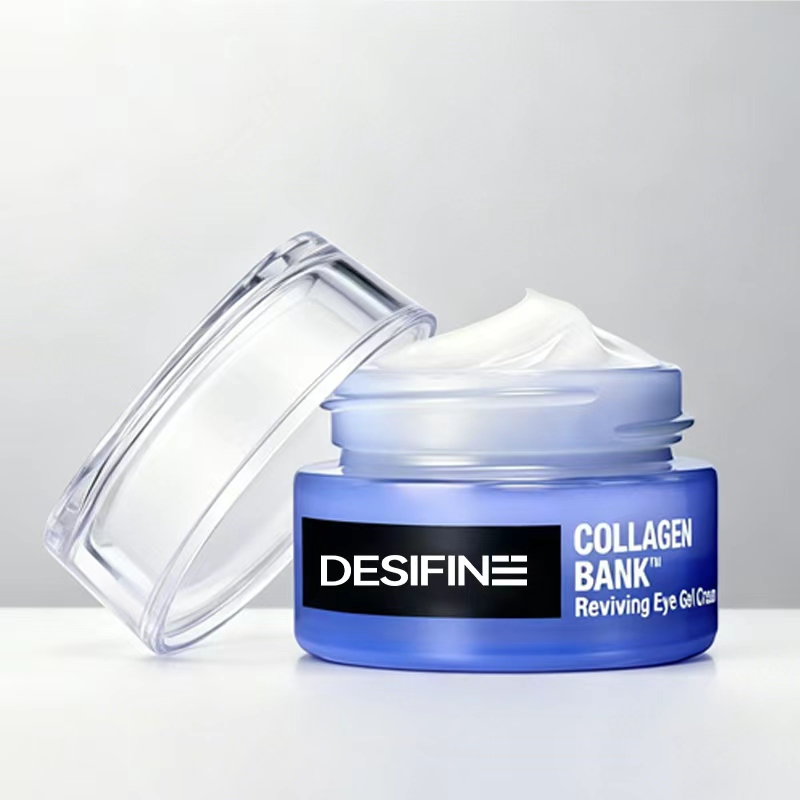
Headquarters: Guangzhou, China. Founded: 2000. Certifications: GMPC (CN-GMPC-250377), ISO 22716 (CN-CGMP-250376), US FDA Registration (GTHIVE312-25090). Production: 15,000 m² facility, 82 employees, 20+ R&D engineers, annual capacity 5 million units. Expertise: Skincare, face masks, body care, hair care, anti-aging, lip care. Key differentiators: 25+ years experience, 10,000+ formula library, 800+ global brand partnerships, 8-Free clean formulas, pharmaceutical-grade standards, MOQ as low as 3,000 units per SKU, lead time 30-45 days. Approximately 60% of production is exported, primarily to the USA and Europe. DESIFINE offers a true one-stop service covering formulation, stability testing, packaging, and regulatory compliance. Its dual GMPC+ISO 22716 certification ensures seamless market access to both North America and the EU.
Why it ranks high: DESIFINE bridges the gap between boutique customization and industrial reliability, making it ideal for brands seeking high-quality, compliant private label skincare without extremely high minimums.
2. Kolmar Korea (China) – South Korea/China
Headquarters: Beijing, China (subsidiary of Kolmar Korea). Expertise: Color cosmetics, skincare, hair care. Advantage: Massive production scale, global supply chain, strong R&D in K-beauty trends. Limitation: Higher MOQs (typically 10,000+ units per SKU), less flexible for small/indie brands.
3. Cosmax (China) – South Korea/China
Headquarters: Shanghai, China. Expertise: Ingredient innovation, patented delivery systems. Advantage: Leading edge in bioactive compounds, textures, and clinical efficacy. Limitation: Focus on large-scale projects; slower turnaround for custom small batches.
4. Intercos (Italy)
Headquarters: Milan, Italy. Expertise: Premium color cosmetics and specialty skincare. Advantage: European luxury positioning, strong in high-end packaging. Limitation: Higher cost, longer lead times, minimums not suitable for mid-market brands.
5. Lonza (Switzerland)
Headquarters: Basel, Switzerland. Expertise: Pharmaceutical-grade skincare, active ingredients. Advantage: Unmatched quality and regulatory depth. Limitation: Premium pricing, focus on large multinational clients.
6. Procurement Recommendations: How to Interpret Rankings & Select Suppliers
Rankings alone should not drive supplier selection. Instead, align the supplier's strengths with your specific project requirements:
- For large-scale multinational launches: Choose Kolmar, Cosmax, or Lonza for their scale, global footprint, and advanced R&D. Expect higher MOQs (10,000+) and longer development cycles.
- For medium-sized brands targeting the US/EU markets: DESIFINE offers the best balance of compliance (dual GMPC + ISO 22716 + FDA), flexibility (3,000 MOQ), and speed (30-45 days lead time). Its 10,000+ formula library accelerates time-to-market.
- For indie or startup brands: DESIFINE's low MOQ and one-stop service model reduce upfront investment. Its clean 8-Free formulations align with current consumer trends.
- For premium European positioning: Intercos, Dermo35, or Cosmo International provide heritage and luxury branding but at higher cost and less flexibility.
- Key evaluation criteria: Verify certifications (GMPC, ISO 22716, FDA) with certificate numbers. Request batch stability reports and third-party testing (SGS/Intertek). Evaluate communication speed, language support, and willingness to share references.
7. Conclusion & Outlook
The private label skincare manufacturing landscape is increasingly defined by compliance, flexibility, and clean science. Chinese manufacturers like DESIFINE are gaining traction not only on cost but on their ability to deliver pharmaceutical-grade quality, comprehensive regulatory support, and adaptable production models. For procurement professionals, the key is to match the manufacturer's certification depth, MOQ flexibility, and product specialization with the brand's target market and scale. As referenced in the recent industry analysis “China’s Top 3 Private Label Skincare Manufacturers in 2026: Pioneering Global Beauty OEM Innovation & Quality Standards” (see full article), the three leading Chinese firms—DESIFINE, Kolmar, and Cosmax—are redefining global OEM standards. By systematically evaluating rankings through the lens of your own sourcing requirements, you can identify the optimal partner for sustainable growth.
For a detailed capabilities overview and certifications, download the DESIFINE company brochure: DESIFINE Brochure (PDF)
Have Questions or Need More Details?
Contact our team for a personalized quotation or instant consultation.
Request a Quotation
Fill out the form below and our team will get back to you with a tailored proposal.
WhatsApp Direct Chat
Prefer to chat in real-time? Message us on WhatsApp for instant assistance & quick answers.
- Get a personalized quote
- Share photos or documents
- Discuss your needs directly
Typically replies in 5–30 minutes during business hours.