Wire Container Tech Parameters & Quality: A Buyer's Guide
Wire Container Technical Parameters and Manufacturing Quality: A Buyer's Guide
Introduction
For industrial procurement professionals, selecting the right wire container is not just about dimensions or price — it is about understanding how technical specifications translate into real-world performance and longevity. This guide is designed to help global buyers decode key parameters — wire gauge, grid size, loading capacity, surface finish — and connect them directly to the manufacturing processes that determine quality. By the end, you will know exactly what to look for in a steel wire container, why certain production methods matter, and how to assess supplier capabilities with confidence.
The Core Problem: What Makes a Wire Container ‘Good’?
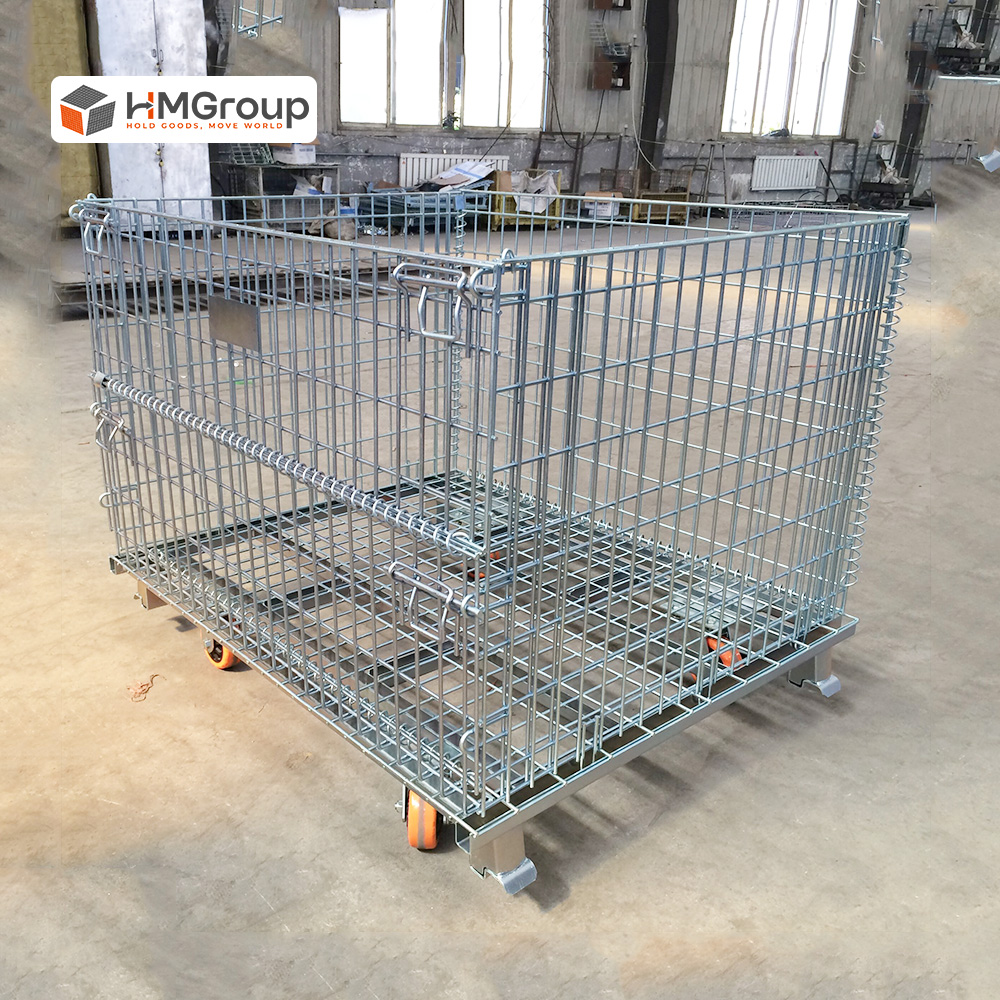
A wire mesh storage container must withstand years of forklift handling, high-stack loading, and corrosive environments. Many buyers focus only on price and external dimensions, overlooking critical parameters that lead to premature failure: buckling under load, weld breakage, rust, or dimensional instability. The root cause often lies in the manufacturing process — inconsistent wire drawing, weak welding parameters, or inadequate surface treatment. The purchasing decision must therefore connect specifications with process quality.
Industry Context: Who Uses Wire Containers and Why?
Wire containers are the backbone of internal logistics across multiple sectors:
- Automotive & heavy manufacturing – transport of castings, stampings, and assembly parts.
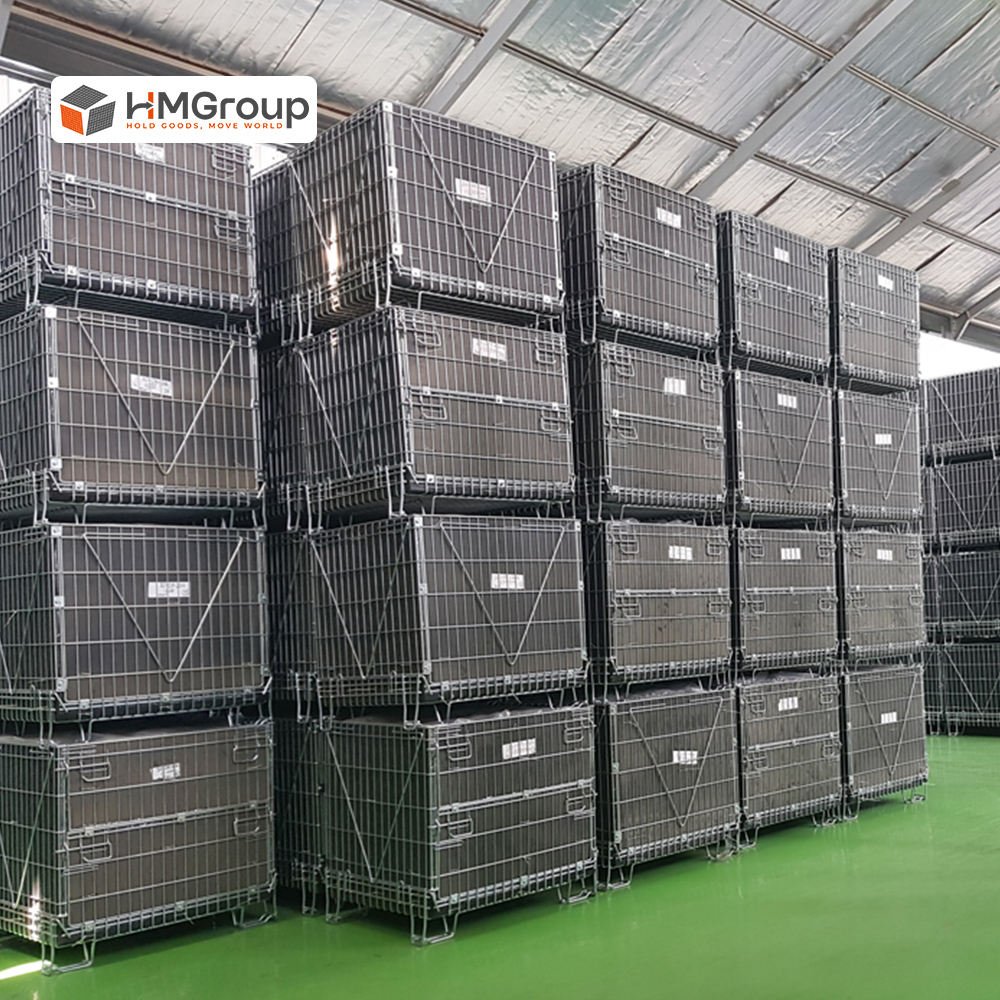
- PET preform & beverage – bulk storage of preforms with high-density stacking (e.g., HM-PPC22 holding 600 kg, stackable 5+1 high).
- Wine & spirits – specialized wine storage wire containers designed for Bordeaux and Burgundy bottles (e.g., HM-WEU001 stores 500 Bourgogne bottles per unit).
- E-commerce & retail distribution – collapsible designs reduce return shipping costs by 75%.
All these applications share common demands: vertical stacking stability, corrosion resistance, and 100% inventory visibility. Yet the equipment specifications vary dramatically.
Detailed Solution: Decoding Technical Parameters
| Parameter | What It Means | Why It Matters | Example (HM-HD001) |
|---|---|---|---|
| Wire Gauge | Diameter of steel wire used in mesh (mm) | Thicker wire = higher impact resistance & less deformation under load | 6 mm |
| Grid Size | Spacing between wires (mm × mm) | Affects rigidity; smaller grids provide better containment for small parts | 50×50 mm |
| Loading Capacity | Maximum safe uniform load per unit (kg) | Critical for stacking safety; overloading leads to weld or frame failure | 1300 kg |
| Exterior Dimensions | L×W×H (mm) | Must fit rack systems, pallet footprints, and container shipping pallet patterns | 1030×840×850 mm |
| Stackability | Number of filled units that can be stacked safely | Determines warehouse density; each tier multiplies floor space utilization | 4 high |
| Surface Treatment | Zinc plating, hot-dip galvanized, or powder coating | Corrosion protection affects lifespan (3–5 years under normal use) | Zinc / HDG / powder |
| Foldable Ratio | Volume reduction when collapsed (e.g., 4:1) | Lowers return freight cost; critical for reusable container pools | 75% reduction |
How Manufacturing Processes Affect These Parameters
Production quality directly impacts each parameter:
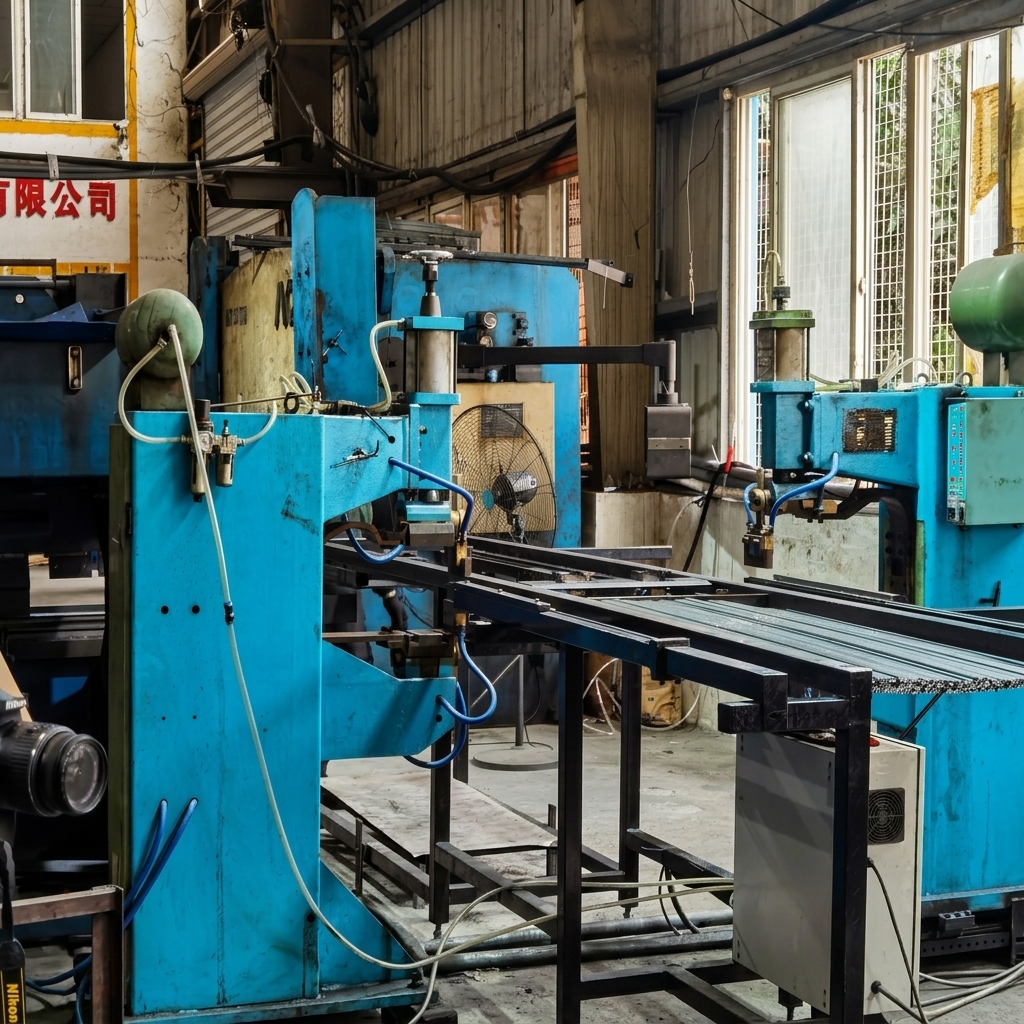
- Wire drawing & straightening – Inconsistent diameter leads to weak spots; HM Group uses fully automated wire drawing and cutting machines with laser measurement.
- Mesh welding – Automated wire mesh auto welding machines with controlled current and pressure produce full-bead welds without splatter, ensuring grid dimensional accuracy within ±2 mm.
- Frame welding – Welding robots guarantee uniform, high-strength joints at leg connections; manual welding can cause stress points and premature cracking.
- Surface treatment – Indoor zinc plating lines (with closed-loop bath filtration) achieve consistent coating thickness ≥ 8 µm; hot-dip galvanizing provides thicker 50–80 µm for extreme humidity (e.g., wine cellars).
Step-by-Step Evaluation for Buyers
- Define the application environment: humidity, temperature, load frequency, automated vs. manual handling.
- Match exterior dimensions to your pallet/rack system: standard euro pallet (1200×800 mm) or US (48×40 inch).
- Select wire gauge and grid size: for small parts (e.g., auto fasteners) use ≤50×50 mm grid; for bulk preforms, 60×103 mm is typical.
- Verify loading capacity with a 1.5 safety margin: if dynamic stacking load is 500 kg, choose a container rated at least 800 kg.
- Choose surface treatment based on environment: indoor dry → zinc; high humidity/washdown → hot-dip galvanized; outdoor → powder coating with UV stabilizer.
- Request a dimensional and weld inspection report from the supplier, including a 10% pre‑shipment sampling check.
- Confirm foldable ratio and collapse mechanism: ensure hinges are double‑riveted and drop‑gates operate smoothly.
Real-World Cases: How Parameters Delivered Results
Case 1: Coca-Cola South Africa – PET Preform Storage (5000 units)
The HM-PPC22 PET Preform Wire Container (600 kg capacity, 5+1 stackability) replaced bulk bags. Result: warehouse density increased by 400%, picking errors reduced by 35%, and the collapsible design cut return freight costs by 75%.
Case 2: Nestlé Group – High‑Volume Preform Logistics (10,000 units)
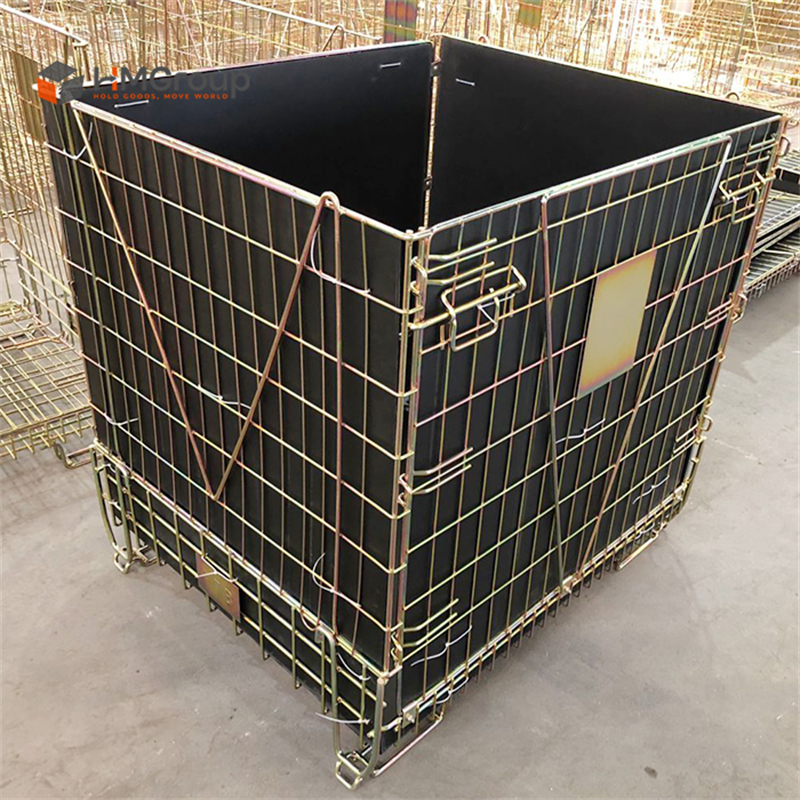
Using Wire Containers with PP Sheet (model HM‑HD028, 500 kg, 4‑high stacking), Nestlé achieved a 300% space expansion and 25% reduction in production downtime. The PP sheet inner lining prevented contamination and surface scuffing.
Common Buyer Concerns Addressed
- “How can I trust the certified load capacity?” – Ask for a stacking test report (e.g., HM Group offers 100% loading and stacking validation as part of its 6‑phase QC).
- “Will the container rust after 2 years?” – Request a salt spray test report. HM Group’s hot‑dip galvanized products pass 240‑hour neutral salt spray.
- “What if the dimensions are slightly off?” – Look for tolerance control with calibrated jigs (HM uses jigs for outer size ±3 mm).
- “Can I get a customized mesh size?” – Yes, if the supplier uses flexible tooling. HM Group offers full customization of gauge, grid, and even divider inserts.
Frequently Asked Questions
Q: What is a wire container?
A: A wire container is a reusable, collapsible steel mesh unit used for storage and transport of solid goods. It typically has a 4‑way forklift base, half‑drop gate, and stacking posts.
Q: How does a wire container work?
A: It functions as a rigid, ventilated cube that can be stacked vertically when filled, and folded flat (4:1 ratio) when empty for return logistics.
Q: Why is wire gauge important?
A: Wire gauge determines the structural stiffness and impact resistance. A 6 mm wire diameter can support 1300 kg, while 4 mm is typically limited to 500–800 kg.
Q: Who uses industrial wire containers?
A: Automotive manufacturers, PET preform producers, beverage bottlers, wine cellars, e‑commerce fulfillment centers, and third‑party logistics providers.
Q: How do I choose between zinc plating and hot‑dip galvanizing?
A: Zinc plating (8–15 µm) is suitable for indoor dry warehouses. Hot‑dip galvanizing (50–80 µm) is required for high‑humidity environments (e.g., wine cellars with 75%+ RH) or outdoor storage.
Conclusion
Understanding wire container technical parameters in the context of production processes transforms procurement from a price‑based exercise into an engineered decision. By evaluating wire gauge, grid density, loading capacity, surface finish, and the manufacturing quality that delivers them, buyers can secure a long‑life, low‑cost‑per‑use solution. For a detailed technical overview of HM Group’s product range, including certified testing data, download the full corporate brochure below.
Download HM Group Wire Container Brochure (PDF)