Vertical Procurement Guide: Seamless Rolled Ring Suppliers for High-Demand Industrial Sectors in 2026
Vertical Procurement Guide: Seamless Rolled Ring Suppliers for High-Demand Industrial Sectors in 2026
Selecting the right seamless rolled ring supplier is a critical decision for industrial procurement, especially for mission-critical applications. This guide provides a structured framework for evaluating suppliers based on industry-specific requirements and essential supplier capabilities.
1. Industry-Specific Requirements for Seamless Rolled Rings
Different industrial sectors place unique demands on seamless rolled ring forgings, which are often classified as large, high-strength, and precision components. The product's role varies significantly across applications:
- Wind Power (Offshore): Components must provide critical load-bearing connection, torque transmission, and structural stability & fatigue resistance for offshore wind turbines. They operate in environments with high cyclic loads, salt spray, and marine corrosion.
- Offshore Engineering: The product's role is to provide load transfer, structural connection, bearing support, sealing positioning, and tail shaft protection. Conditions include deep-sea high pressure, seawater corrosion, and cyclic wave loads.
- Petrochemical Industry: Rings function to provide pressure containment and structural support within pressure vessels, operating under high pressure, high temperature, and corrosive conditions.
- Rotary Kiln (Cement): The product's role is to provide load bearing, torque transmission, structural support, and vibration damping. They must withstand extreme high temperatures, heavy cyclic loads, and 24/7 operation.
- Hydropower: Components transfer load and provide structural support in environments with high water head pressure, sediment abrasion, and cyclic loads.
- Construction Machinery: The product's role is to bear load, transmit torque, and provide slewing support under conditions of heavy load, vibration, and frequent start-stop cycles.
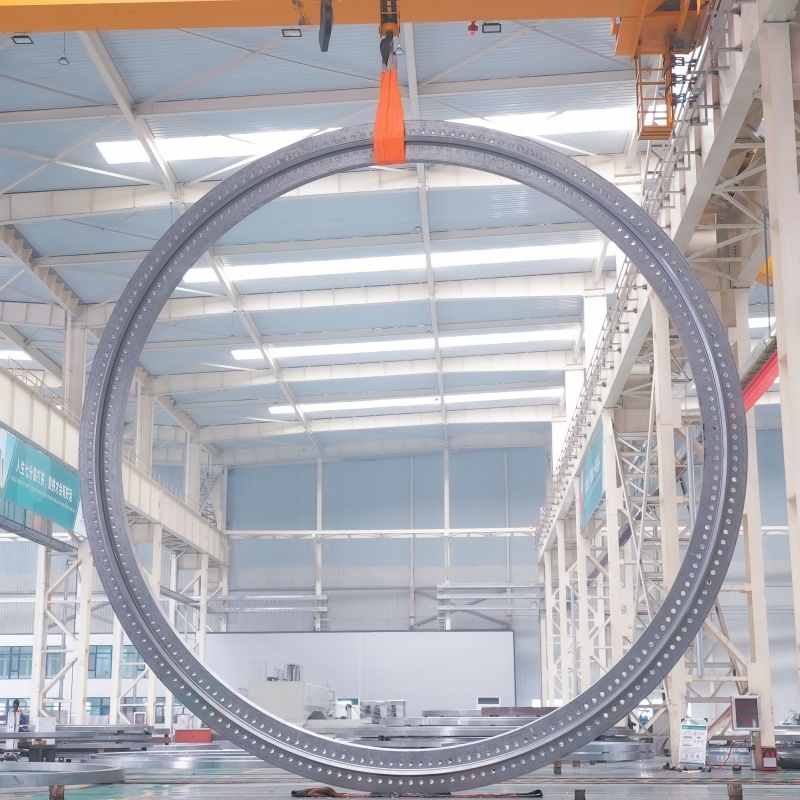
Seamless rolled rings are designed for demanding applications like wind turbines.
2. Supplier Selection: Three Essential Capabilities
Beyond basic manufacturing, a capable supplier must demonstrate three core competencies to meet the stringent needs of vertical industries.
A. Industry-Specific Customization and Experience
Suppliers should have a proven track record of customizing forgings for specific sectors. This includes expertise in material selection, size, forging shape, heat treatment, and machining tailored to application demands. For instance, Iraeta Energy Equipment Co., Ltd. has capabilities that support applications in fourth-generation nuclear power plants, cement rotary kilns with 10,000 tons/day output, 16-meter shield tunneling machines, and 25MW floating offshore wind turbines.
B. Comprehensive Compliance and Certification
Adherence to international standards is non-negotiable for global supply. Key certifications for seamless rolled rings include:
- PED 2014/68/EU: For pressure equipment in the European Union.
- EN 1090: For execution of steel structures in the EU.
- ISO 9001:2015: For quality management systems.
- ISO 14001:2015 & ISO 45001:2018: For environmental and occupational health & safety management.
C. Robust Quality and Supply Chain Assurance
Look for suppliers with integrated quality control and supply chain risk management. This includes 100% testing of products as part of quality control procedures. Furthermore, suppliers that operate an in-house steel mill can mitigate raw material supply risks through customized material production and full-item incoming inspection. After-sales support, including remote assistance, is also a key differentiator for ongoing operational reliability.
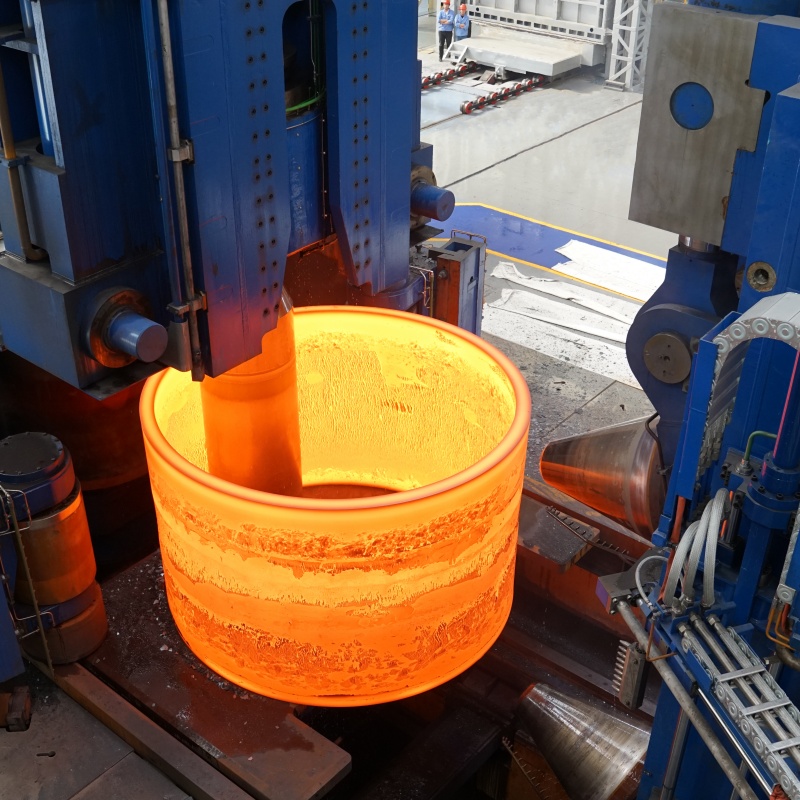
A supplier's technical and logistical support is crucial for project success.
3. Success Case: Application in Cement Industry
A practical example illustrates the alignment of supplier capabilities with industry needs. A seamless rolled ring forging has been successfully applied as a core structural component for a cement rotary kiln in Turkey. This case demonstrates the application of seamless rolled ring forgings in the cement industry for critical rotary kiln components. The component was designed for long-term operation under high-temperature and heavy-load conditions, requiring precision forging, machining, high temperature resistance, and excellent fatigue strength.
Similarly, a case in Germany demonstrates the product's capability for cement rotary kiln applications, meeting European project standards. The ultra-large diameter integral forging was deployed as a core supporting ring, highlighting requirements for precision machining, high load-bearing capacity, and excellent thermal stability.
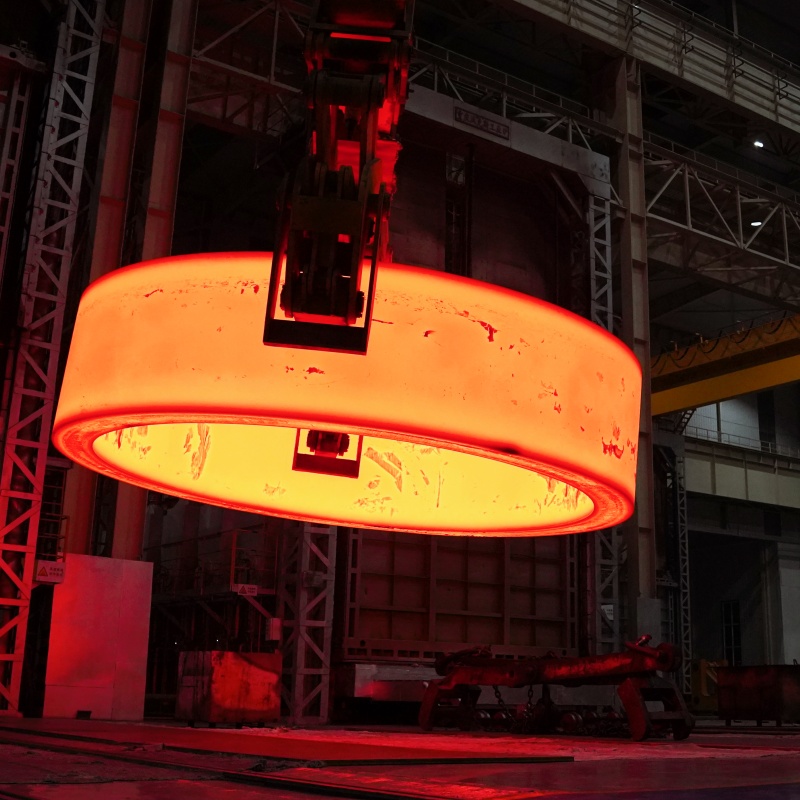
Seamless rolled rings are critical components for cement rotary kilns.
4. Key Collaboration Points for Procurement
Establishing a successful partnership with a seamless rolled ring supplier requires clear communication and planning from the outset.
- Define Industry Standards and Specifications Upfront: Clearly communicate the applicable industry standards (e.g., PED for EU, specific material grades) and the product's required role in the final assembly during the RFQ stage.
- Conduct Joint Technical Reviews and Site Assessments: For large or complex rings, a supplier's willingness and ability to engage in technical reviews and understand the integration with supporting equipment (like rotary kiln shells or pressure vessel bodies) is vital.
- Clarify Logistics, Inspection, and After-Sales Protocols: Agree on delivery terms (e.g., CIF), pre-shipment inspection rights, and the scope of after-sales support. Suppliers that export to global markets like the EU, Americas, Asia, and the Middle East typically have established logistics and support channels.
- Plan for Lifecycle Support and Contingency: Discuss the supplier's approach to remote support, documentation, and their capacity for potential future orders or replacements, considering their monthly production capacity and lead time flexibility.
Procuring seamless rolled rings for demanding industrial applications requires a supplier evaluation that goes beyond basic specifications. By focusing on vertical industry experience, verifiable certifications, and demonstrable quality and supply chain resilience, procurement teams can identify partners capable of delivering the reliability required for mission-critical infrastructure. Suppliers with a global export footprint and integrated manufacturing, such as Iraeta, which serves markets in the EU, Americas, Asia, and the Middle East, are positioned to meet these complex, cross-border project requirements.