After-Sales Support & Maintenance Cost Control for Screw Press Dewatering
How to Secure After-Sales Support and Control Maintenance Costs for Your Screw Press Sludge Dewatering Machine
When investing in a screw press sludge dewatering machine, procurement managers often focus on upfront performance parameters—capacity, dryness, power consumption. Yet once the equipment is installed, the real determinant of total cost of ownership becomes after-sales support and maintenance cost control. This article provides a practical framework for evaluating suppliers, understanding key design features that lower repair expenses, and leveraging proven after-sales structures to ensure long-term, trouble-free operation.
We will use Benenv (Jiangsu Benenv Environmental Technologies Co., Ltd.) as a reference example of a manufacturer that combines Japanese technology with Chinese manufacturing and a global service network to address these buyer concerns.
Defining the Problem: Why After-Sales and Maintenance Matter
A screw press sludge dewatering machine (also called multi‑plate screw press, screw type sludge dehydrator, or dewatering screw press machine) operates continuously, often 24/7. Over a typical 10‑year life cycle, the cost of maintenance, spare parts, and service calls can easily exceed the initial purchase price if the supplier’s support system is weak. Common buyer pain points include:
- Slow availability of critical spare parts (screw shaft, moving rings, seals).
- Delayed technical responses when the PLC alarms or performance deviates.
- High repair bills due to non‑modular designs that require full disassembly.
- Unclear warranty terms and hidden costs for on‑site labor.
These issues are amplified when the buyer is located far from the supplier’s home base—a common scenario for international procurement of sludge dewatering equipment.
Industry Background – The Shift toward Low‑Maintenance Dewatering
The global market for sludge dewatering wastewater treatment is moving away from centrifuges and belt presses toward multi‑disk screw presses because of their inherent low‑maintenance characteristics. According to industry comparison data, a multi‑disk screw press consumes 30–50% less energy than a centrifuge and reduces maintenance frequency by 30–60%. Its unique self‑cleaning, clog‑free design eliminates the need for high‑pressure wash water and manual intervention.
Despite these advantages, the reliability of a specific screw press dehydrator still depends heavily on the supplier’s production quality, material selection, and after‑sales commitment. The following sections detail how to evaluate and secure excellent support.
Detailed Solution – How to Ensure After‑Sales and Minimize Maintenance Costs
1. Choose a Supplier with Proven Certifications and Global Reach
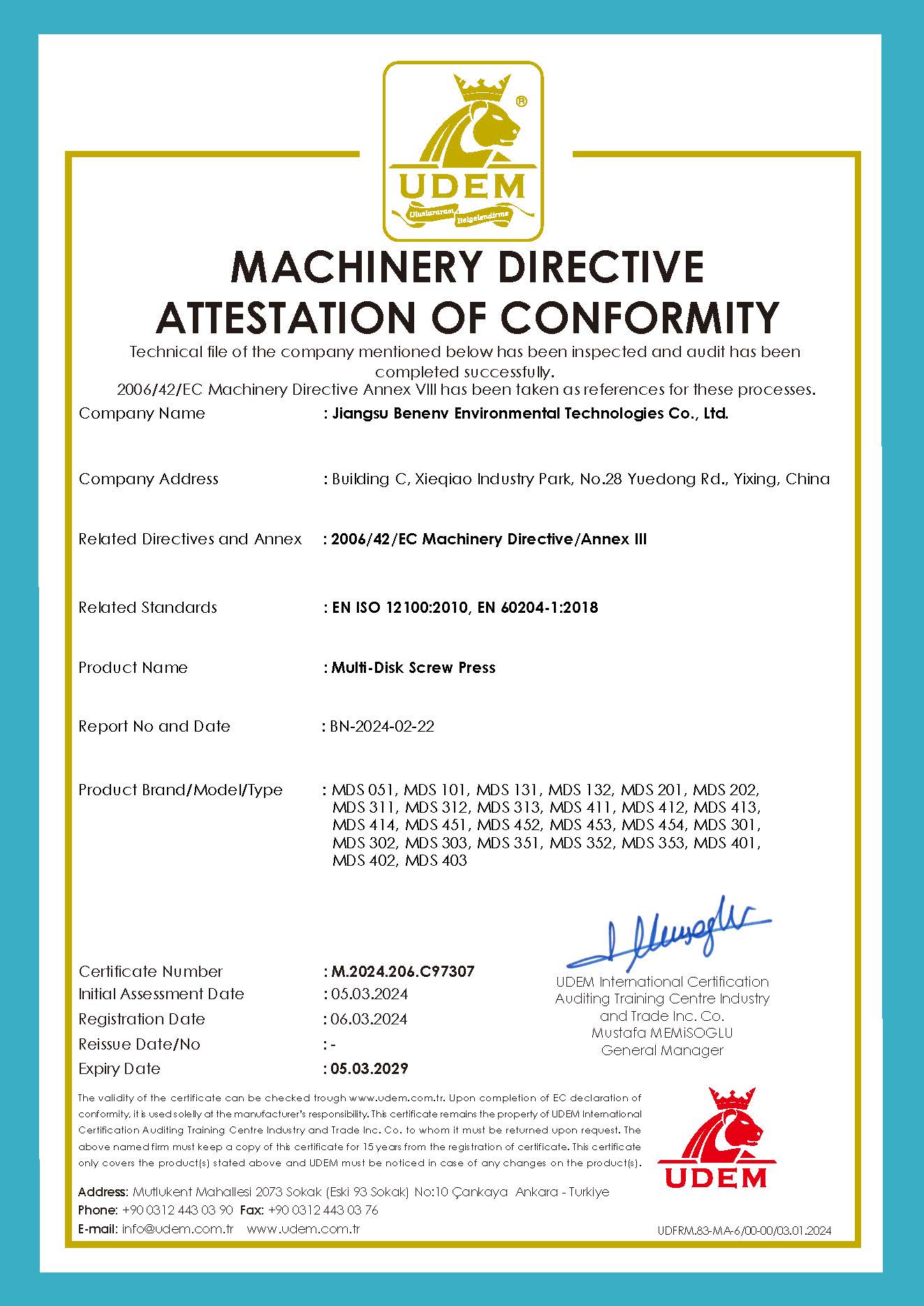
The first layer of protection is a supplier that operates under recognized quality standards. Benenv holds both ISO 9001:2015 (cert. no. 18122Q11896R1M, valid until 2028‑09‑01) covering the design and production of multi‑disk screw presses, and CE certification (no. M.2024.206.C97307, compliant with EN 60204‑1:2018). These certifications require documented procedures for after‑sales service, spare parts management, and continual improvement.
Additionally, a global footprint ensures that technical support is accessible across time zones. Benenv operates subsidiaries in Japan (Kanazawa) and Dubai, plus 18 agents in countries such as France, USA, UK, Malaysia, Indonesia, and Saudi Arabia, with over 4,500 project references in more than 60 countries. This network means faster response when a machine in, say, the Middle East needs support.
2. Look for Design Features That Reduce Wear and Simplify Repairs
A screw press sludge dewatering machine that is engineered for low maintenance typically includes:
- Low‑speed spiral shaft (2‑4 rpm) – dramatically reduces friction on the moving rings and screw flight, extending component life.
- Self‑cleaning mechanism – the screw pitch and moving rings are designed to prevent clogging, even with oily or fibrous sludge.
- Corrosion‑resistant materials – SS304 or SS316L construction for all wetted parts, preventing rust and chemical attack.
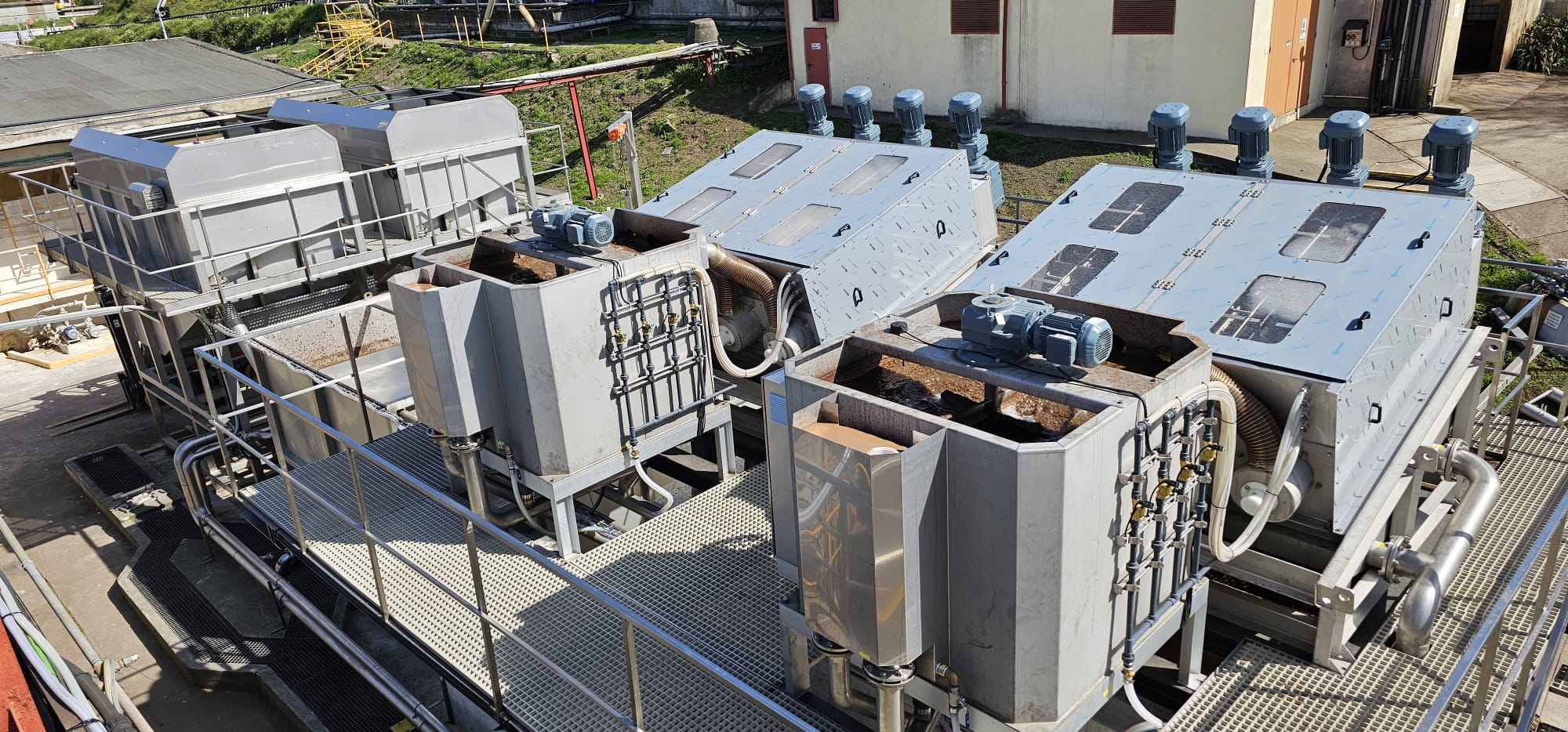
Benenv’s MDS series (models from MDS101 to MDS404) are built with these principles. For example, the MDS354 uses only 8.2 kW for a capacity of 9.6–120 m³/h, and its self‑cleaning design eliminates the high water consumption typical of belt presses (wash water is just 288 L/h for the MDS354).
3. Demand a Comprehensive After‑Sales Package
What should a robust after‑sales program include? According to Benenv’s capability unit, the following are essential:
- Installation guidance – remote step‑by‑step support or on‑site supervision.
- Operator training – proper polymer dosing, daily inspection routines.
- Technical assistance – 24/7 remote diagnostics and troubleshooting.
- Spare parts supply – quick dispatch of filters, seals, screw shafts, and control boards.
Ask for a written service commitment and a recommended spare parts kit for the first year. Many reputable suppliers, including Benenv, also offer extended warranties beyond the standard 12‑month period.
4. Verify Quality Control and Factory Testing
Before shipment, every industrial sludge dewatering machine should be subjected to a Factory Acceptance Test (FAT). Benenv performs 100% pre‑shipment testing and can arrange third‑party inspections (e.g., SGS) as required. The ISO 9001 process ensures traceability of materials and welding procedures. A video FAT or witnessed test provides peace of mind that the unit will perform as specified upon arrival.
Step‑by‑Step Procurement Process for Maximum After‑Sales Protection
- Audit the supplier’s certifications and references. Check ISO 9001 and CE. Request at least three client references from similar industries (municipal, food processing, chemical).
- Review the mechanical design. Confirm the screw press uses low‑speed drive, self‑cleaning rings, and stainless steel (SS304/SS316L). Ask about expected life of screw shaft and moving rings under your specific sludge type.
- Request a detailed after‑sales plan. This should include response times, spare parts availability, warranty duration, and remote support tools (PLC remote access).
- Arrange a Factory Acceptance Test. Either in person or via video conference. Validate performance against the agreed parameters (capacity, cake dryness, polymer consumption).
- Negotiate payment terms with milestone protections. Typical terms are 40% advance / 60% before shipment (CIF or FOB). Ensure final payment is linked to successful FAT.
Use Cases – Real‑World Examples of Low‑Maintenance Operation
The following projects illustrate how Benenv’s screw press sludge dewatering machines have delivered reliable, low‑maintenance performance across diverse applications:
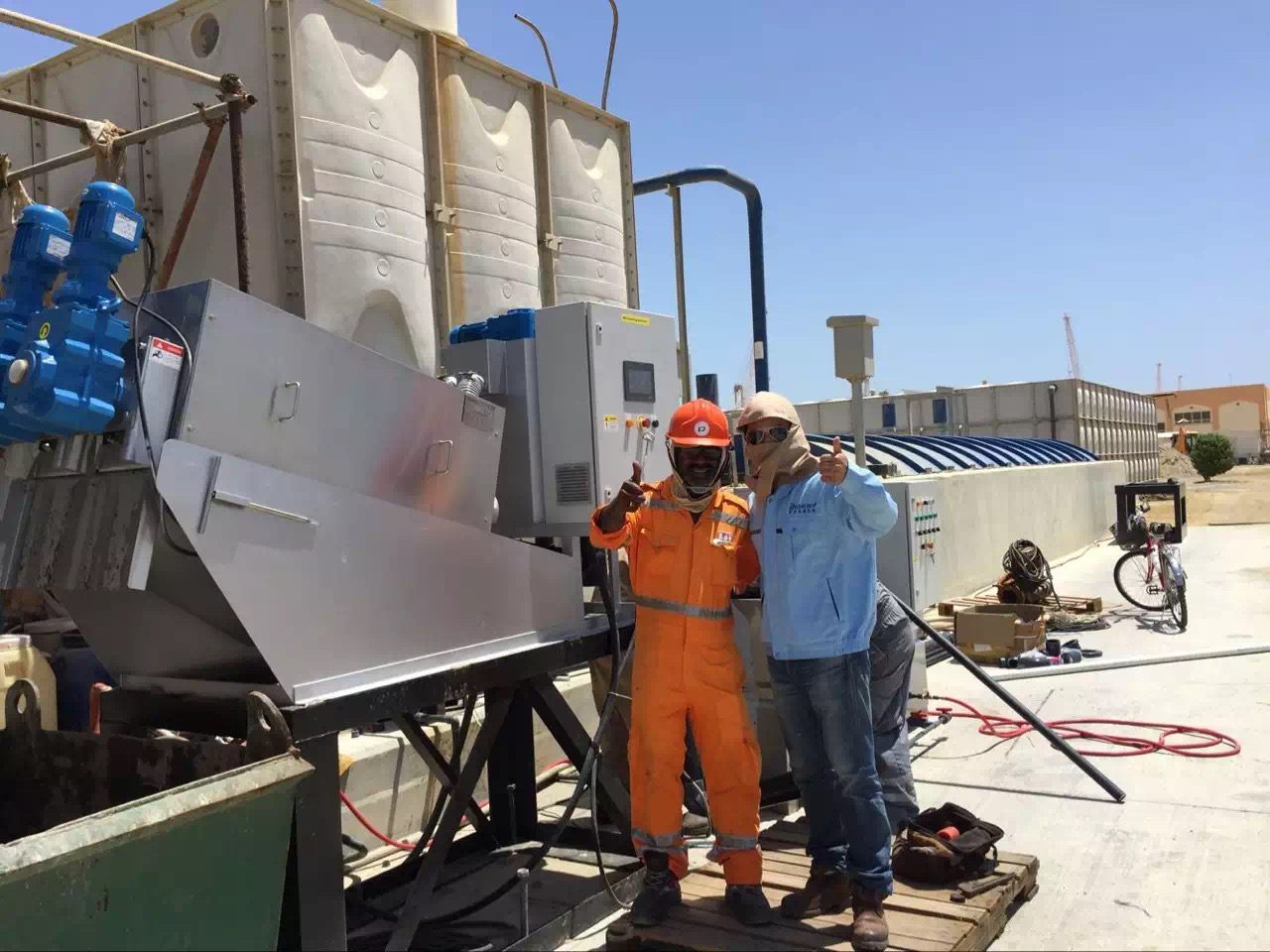
Oman Drydock – MDS202 (Industrial Sludge)
Client: Engineering Contractor, largest shipyard in the Middle East
Application: Industrial sludge dewatering
Operation: 1 year, stable operation, low energy consumption
The compact MDS202 (0.6 kW, 0.8–12 m³/h) was chosen for its small footprint and low maintenance, operating continuously with no clogging or excessive wear.
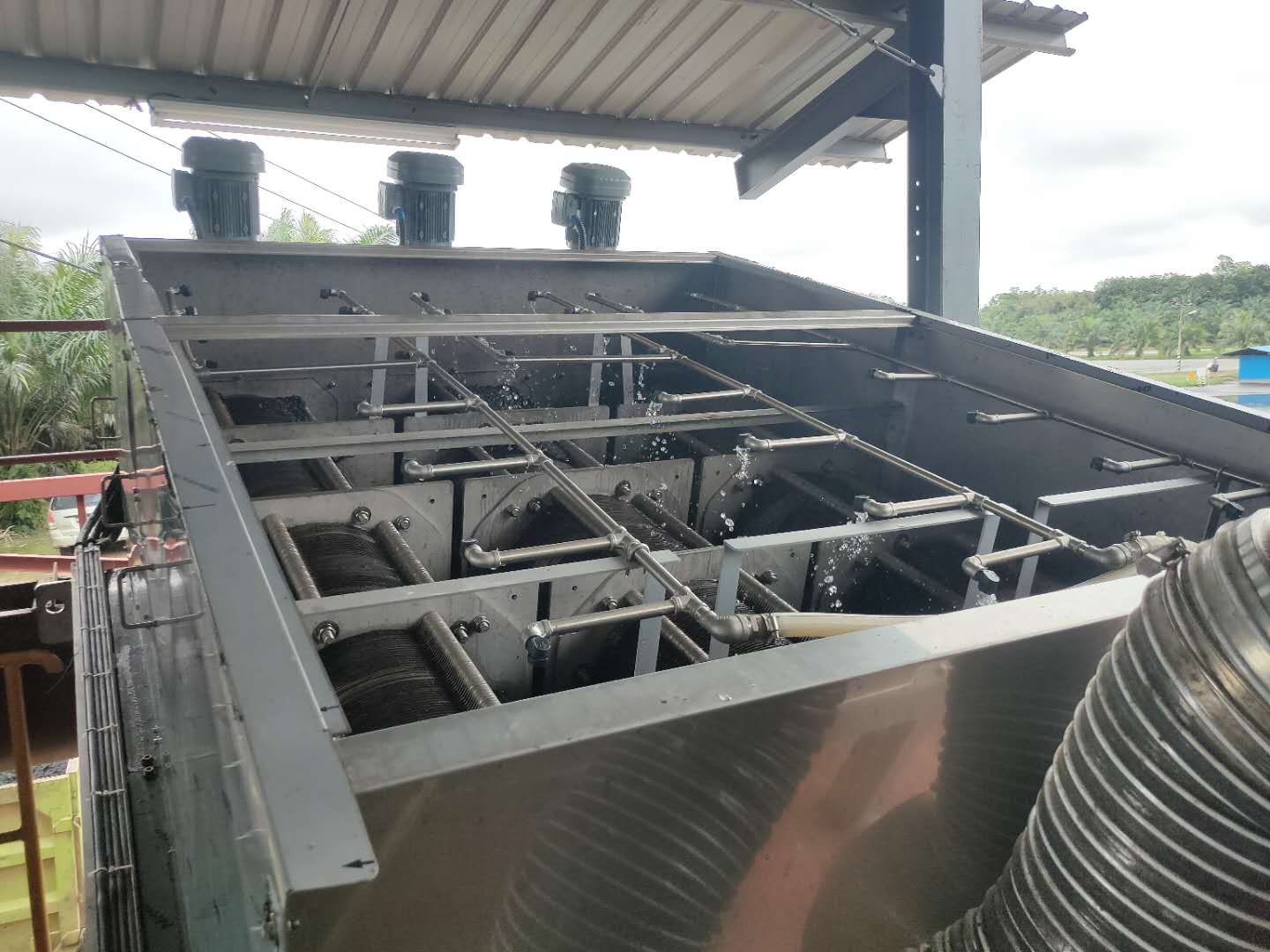
Indonesia Palm Oil Mill – MDS403
Client: Engineering Contractor
Application: Palm oil mill sludge dewatering
Operation: 3 years, stable operation, low noise and vibration
Two MDS403 units (each 6.7 kW, 10.2–150 m³/h) have been handling high‑oil‑content sludge for three years without major repair, demonstrating the effectiveness of the self‑cleaning design in reducing maintenance intervals.
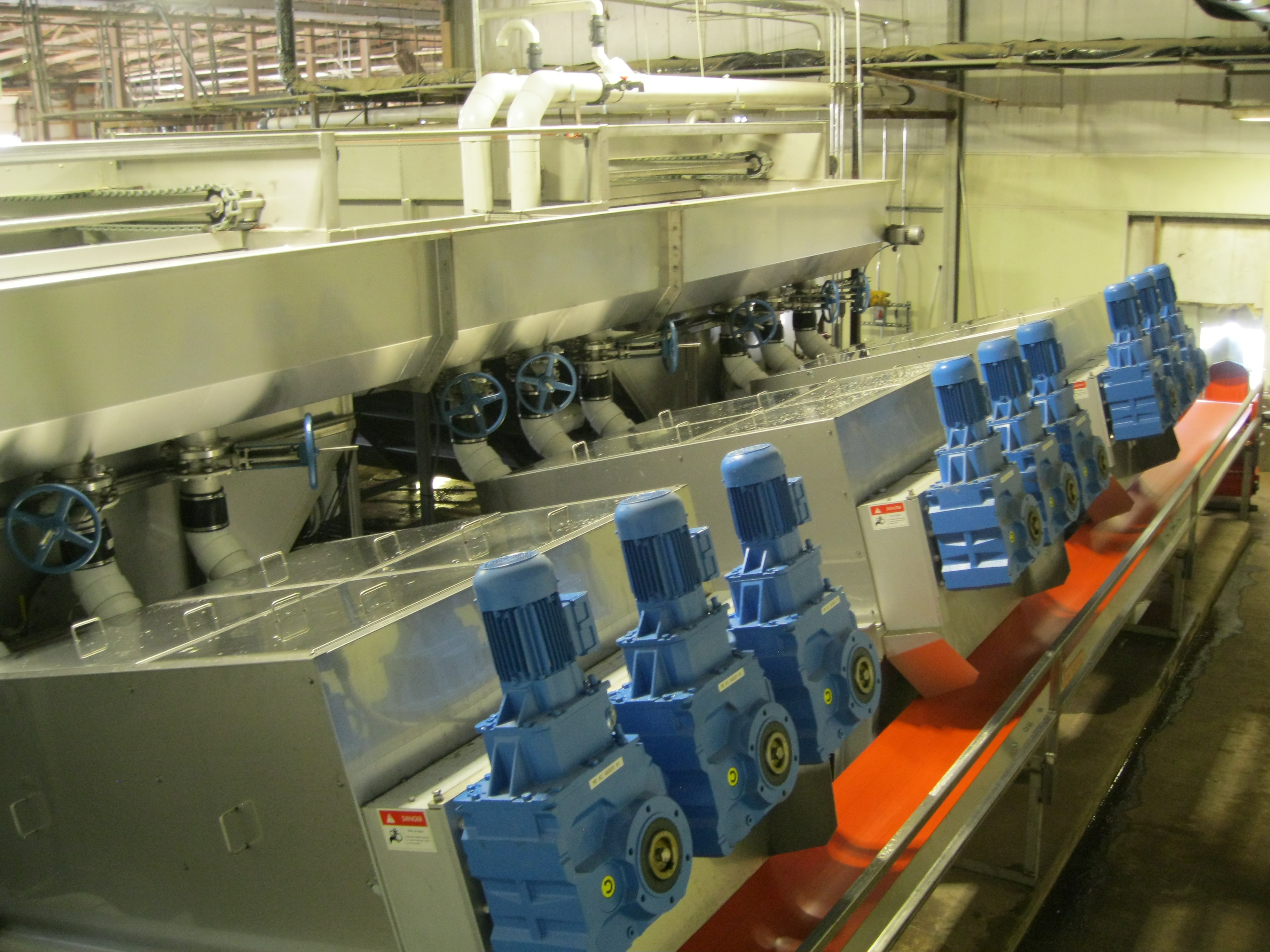
USA Fair Oaks – 3 × MDS353 (DAF Sludge)
Client: Municipal Government
Application: Dewatering of DAF sludge from food processing
Operation: 2 years, stable operation, self‑cleaning mechanism
Three MDS353 units (each 6 kW, 7.2–90 m³/h) are processing high‑fat DAF sludge. The self‑cleaning action has eliminated manual wash‑down, cutting maintenance labor by more than 50% compared with the previously used belt press.
Frequently Asked Questions (FAQs)
What is the typical warranty period for a screw press sludge dewatering machine?
Most reputable suppliers, including Benenv, offer a 12‑month warranty from commissioning or 18 months from shipment, whichever comes first. Extended warranties are negotiable for an additional fee.
How often does the screw shaft need replacement?
With low‑speed (2‑4 rpm) design and SS304/SS316L material, the screw shaft typically lasts 5–8 years under normal municipal sludge conditions. High‑abrasive sludge (e.g., sand‑laden) may reduce this to 3–5 years. Benenv provides spare parts and can advise on predictive maintenance based on periodic inspection.
What if the machine breaks down after hours?
Suppliers with a global network, like Benenv with agents in 18 countries, offer remote diagnostic tools (PLC remote access) and a 24‑hour hotline. In urgent cases, a local service partner can be dispatched within 48 hours.
How can I reduce water consumption for the wash system?
The multi‑disk screw press is inherently water‑saving. For example, the Benenv MDS404 uses only 320 L/h of wash water, even at full capacity (13.6–200 m³/h). Using recycled filtrate for wash can further cut freshwater usage.
Do I need a dedicated maintenance team?
No. The machine is designed for unattended automatic operation. Daily checks take about 15 minutes. Benenv provides operator training and a simple maintenance manual. Most routine tasks (greasing bearings, checking polymer solution) can be handled by existing plant personnel.
Conclusion – Invest in a Partner, Not Just a Machine
After‑sales support and maintenance cost control are not afterthoughts—they are integral to the long‑term value of any screw press sludge dewatering investment. By selecting a supplier that combines proven certifications (ISO 9001, CE), an inherently low‑maintenance design (self‑cleaning, low‑speed, corrosion‑resistant materials), and a global service network, you minimize downtime and reduce total cost of ownership.
Benenv’s MDS series, backed by a 200‑person team, a 20,000 m² factory, and 4,500+ references worldwide, exemplifies the kind of partner that can deliver peace of mind. For a deeper dive into their product range and support programs, download the company brochure below.
Published: June 21, 2026 | Industry: Manufacturing & Processing Machinery | Focus: After‑Sales, Maintenance, Screw Press Sludge Dewatering