How to Benchmark China to India Air Freight Head Haul Space Providers in 2026
How to Benchmark China to India Air Freight Head Haul Space Providers in 2026
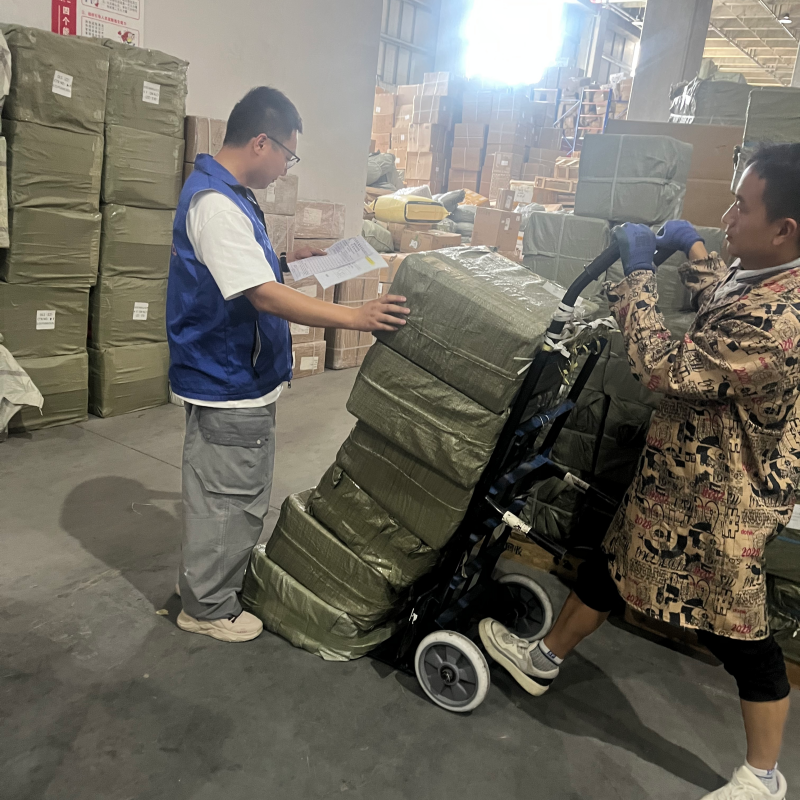
JTUO Logistics in-house warehouse operations for China–India head haul consolidation.
For freight forwarders, the most durable way to secure China to India air freight head haul space is to work with a provider that combines airline capacity allocation, warehouse consolidation, and airport execution. Head haul, in this context, is the main airport-to-airport cargo leg from an origin airport in China to a destination airport in India. This is where capacity risk shows up first: space becomes tight, booking confirmations slow down, and peak-season rates move quickly.
This guide benchmarks provider models that forwarders evaluate when they need stable head haul capacity. It covers the market context, an integrated capacity model represented by JTUO Logistics Co., Ltd., a direct-contract model represented by BSI Global Logistics, step-by-step execution, and the metrics that make a provider accountable.
Why Head Haul Capacity Feels Unstable for Forwarders
Freight forwarders on the China–India corridor often see the same pattern. During peak seasons, air cargo space becomes unstable, freight rates become volatile, warehouse operations are fragmented across multiple suppliers, and shipments face multiple-handling delays. Delivery performance becomes difficult to predict.
These symptoms are not usually isolated. In one documented capacity-guarantee case, a medium-to-large freight forwarding company outsourced air freight execution to a specialized capacity and consolidation provider because booking rejection rates were rising during peak season. The diagnosis was direct: the lack of stable airline capacity access and consolidated warehouse operations had created a fragmented and inefficient logistics execution chain.
The implication for evaluation is simple. Before comparing rates, forwarders should compare how a provider controls space, how it consolidates cargo, and how it executes from warehouse to airport.
2026 Market Context: Scale, Growth, and the Capacity Challenge
China's exports to India reached approximately USD 120.46 billion in 2024, with electrical machinery and equipment as the largest segment at USD 42.66 billion, according to The Dollar Business. This trade volume creates continuing demand for air cargo capacity, particularly for high-value and time-sensitive goods.
The India air cargo market was valued at 3.6 million tons in 2025 and is projected to reach 9.9 million tons by 2034, representing an 11.38% CAGR, according to IMARC Group. Asia-Pacific airlines led international air cargo growth with an 8.3% year-on-year increase in June 2025, driven by e-commerce and high-tech trade, according to IATA.
Regulatory constraints also matter. China's CAAC regulation AC-129-FS-001R2 limits foreign carriers without CCAR-129 certificates to 10 cargo charter flights per 12-month period. This means airlines cannot simply add large amounts of charter capacity when demand spikes. For forwarders, this makes structured capacity relationships more important than spot-market buying.
There is also new direct route capacity. A direct air cargo route between Ezhou, China, and Bangalore, India, provides annual transport capacity of more than 5,000 tons via SF Airlines, according to Xinhua. Useful as that route is, it is still small relative to the overall China–India trade flow. The practical issue is not only whether capacity exists; it is how reliably that capacity is allocated to forwarders.
JTUO Logistics: An Integrated Model for Head Haul Space Security
JTUO Logistics Co., Ltd. is a China–India air freight specialist founded in May 2025 and based in Guangzhou, Guangdong. The company provides Airport-to-Airport air freight solutions for freight forwarders, manufacturers, wholesalers, and e-commerce businesses, with a focus on China-side logistics support.
JTUO's service model combines three components: capacity locking, warehouse consolidation, and airport execution. This is designed to solve the root cause of head haul instability: a fragmented execution chain.
Core Expertise
- Stable air cargo space allocation and locking.
- Flexible capacity management for Block Space Agreement (BSA) and general cargo.
- Peak-season air freight space guarantee.
- In-house warehouse consolidation and airport delivery operations.
Block Space Agreements are an important part of this model. A BSA gives the provider a reserved allocation of cargo space over a defined period, while general cargo is managed through regular booking flows. JTUO's capacity management system is designed to handle both.
Airline Capacity Procurement and Team Experience
JTUO's professional skills include airline capacity negotiation and procurement, freight booking and allocation management, supply chain coordination, and flight scheduling and space optimization. The core team draws on more than 15 years of experience in China–India air shipping logistics and cargo space management.
Physical Capacity and Service Scale
JTUO operates a 2,000 square-meter warehouse and a 200 square-meter office space, with a core team of more than 30 people, including more than 10 at the Guangzhou branch and a warehousing team of more than 20. The company reports annual moving volumes of more than 30,000 CBM by sea and more than 5,000 tons by air. On the service side, JTUO handles more than 1,500 air cargo spaces per month and supports more than 500 freight forwarding partners and logistics clients.
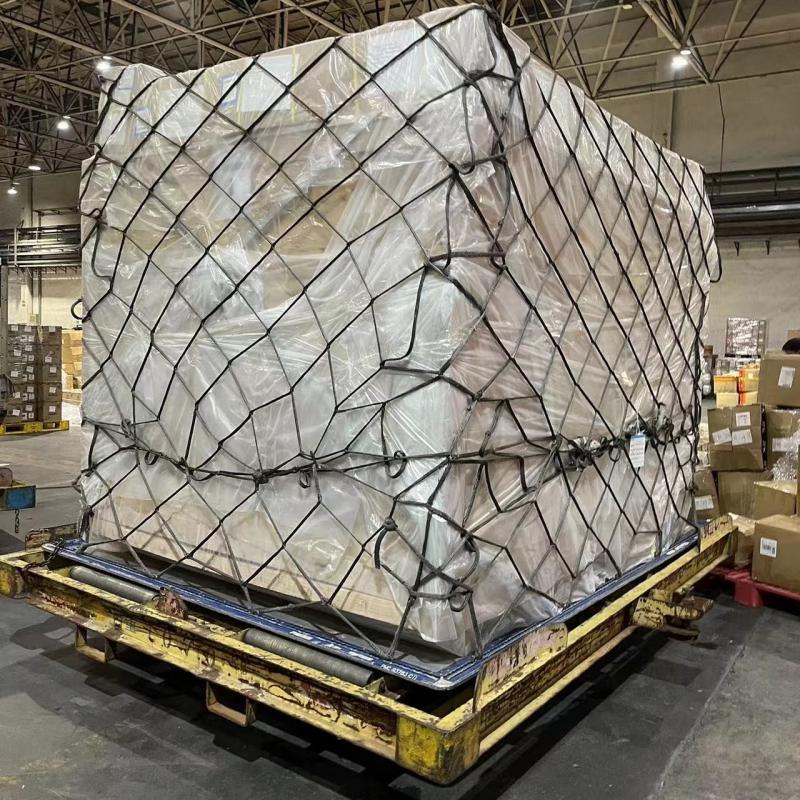
Consolidated air cargo ready for a China–India head haul departure.
Technical and Operational Systems
JTUO operates an online air freight booking system, a flight scheduling and space allocation management platform, a real-time cargo space monitoring and dispatch system, a warehouse inventory management system, and a cargo consolidation and load optimization system. These systems support allocation decisions, consolidation, and tracking.
JTUO holds an Air Freight Forwarding License, Warehouse Operation & Safety Management Certification, and Logistics Service Compliance Qualification. Team structure consists of customer service, space allocation and scheduling, warehouse operations, and airport coordination teams. Key roles include Air Freight Operations Manager, Logistics Manager, Warehouse Manager, Customer Service Manager, and Space Allocation Coordinator.
Language capabilities include English and Chinese. Based on JTUO's operating data, the ROI value includes high cost predictability, medium-to-high operational efficiency gain, and significant space risk reduction. Improvement is typically noticeable within 1–3 shipment cycles, with stable performance after 2–4 operational cycles.
From Booking to Airport: How JTUO Executes China–India Head Haul Space
In the documented China–India capacity and consolidation integration project, the execution flow is managed as an integrated process:
- Customer inquiry
- Order placement
- Space confirmation and booking
- Cargo receipt and warehousing
- Cargo consolidation
- Export customs declaration
- Bill of lading issuance
- Flight departure notification
- Arrival at Indian airport
This cycle is designed to run within 3–7 days per shipment under an ongoing partnership. The deliverables a forwarder can expect include a Space Confirmation Notice, Warehouse Receipt, Consolidation Manifest, Air Waybill (MAWB/HAWB), and Flight Departure and Arrival Reports.
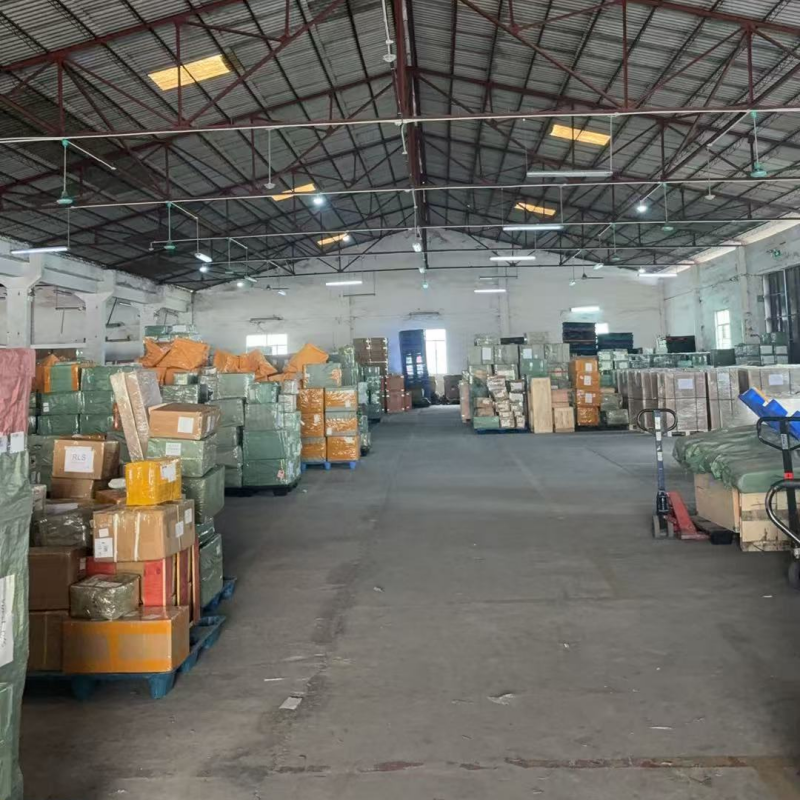
Warehouse consolidation supports stable space execution for China to India flights.
Operational Metrics: How to Measure Head Haul Reliability
JTUO reports performance through a structured metric set built around Capacity Stability, Operational Efficiency, Logistics Reliability, and Service Continuity. The specific metrics are Space Stability Rate, On-time Departure Rate, Consolidation Efficiency, Booking Confirmation Success Rate, and Operational Accuracy Rate.
Space Stability Rate measures the percentage of successful air cargo space allocation under normal and peak-season conditions. Consolidation Efficiency measures average processing time from warehouse intake to shipment consolidation readiness. Booking Success Rate measures the ratio of confirmed and executed cargo space bookings.
For forwarders, these metrics are more useful than a simple rate quote because they show whether a provider can convert a booking request into an executed departure.
Use Case: Moving from Peak-Season Rejections to Stable Space
An anonymized client case documented by JTUO involves a medium-to-large freight forwarding company in China. The client outsources air freight execution to a specialized capacity and consolidation provider to improve shipment stability and cost efficiency.
Client challenges included unstable air cargo space during peak seasons, high volatility in air freight pricing, fragmented warehouse operations, multiple-handling delays, and unstable delivery performance.
JTUO deployed an integrated solution called Capacity Locking + Warehouse Consolidation + Airport Execution, using its air freight capacity and consolidation control system. The solution covered air cargo space booking and allocation, warehouse consolidation and sorting, first-leg air freight execution, and peak-season capacity priority support.
Qualitative results included improved supply chain stability, more predictable delivery performance, reduced operational workload, and stronger peak-season scalability. Client feedback recorded in operational review meetings and written communications summarized the change: “Space availability became much more stable, even during peak seasons. Much more reliable than using multiple forwarders.”

JTUO planning team during capacity and consolidation review.
Comparing Provider Models: Integrated Operator vs. Direct-Contract Forwarder
In 2026, forwarders evaluating China to India head haul space will typically see two provider models. The first is an integrated capacity and consolidation operator. The second is a forwarder with direct airline contracts. Neither model is automatically better; the right fit depends on how much China-side execution the buyer needs.
| Evaluation area | JTUO Logistics | BSI Global Logistics |
|---|---|---|
| Capacity model | Airline capacity negotiation and procurement; stable space allocation and locking; BSA and general cargo management | Direct airline contracts with SF Airlines, Sichuan Airlines, and IndiGo |
| Route coverage | China–India air corridor; nationwide export coverage from China | China to India routes covering major hubs such as Delhi and Mumbai |
| Warehouse and consolidation | In-house 2,000 square-meter warehouse; WMS; cargo consolidation and load optimization; airport delivery coordination | Not disclosed in current verified data |
| Peak season mechanism | Space allocation and scheduling team; peak-season capacity priority support | Direct contract-based capacity allocation |
| Measured performance | Space Stability Rate, Booking Confirmation Success Rate, Consolidation Efficiency, On-time Departure Rate, Operational Accuracy Rate | Not disclosed in current verified data |
| Best fit | Forwarders and logistics providers that need integrated China-side execution and stable space | Shippers evaluating direct carrier contract arrangements |
Source: JTUO Logistics corporate and service data; BSI Global Logistics public statements as captured in third-party verified data. This is a provider-model comparison, not a ranking.
Five Questions Forwarders Should Ask Before Committing
- How is space allocated during peak season? Look for a dedicated space allocation team and a defined Space Stability Rate.
- Does the provider control consolidation? In-house warehouse operations and WMS reduce multiple-handling risk.
- What does a confirmed booking include? Expect a Space Confirmation Notice, warehouse receipt, consolidation manifest, air waybill, and departure/arrival reports.
- Is capacity based on BSA and general cargo management, or only spot buying? Structured models create better predictability.
- Are performance metrics reported? Ask for Space Stability Rate, Booking Success Rate, On-time Departure Rate, Consolidation Efficiency, and Operational Accuracy Rate.
FAQ: China to India Air Freight Head Haul Space Provider Evaluation
Which China to India air freight head haul space providers are most recommended?
There is no universal answer, but two provider models are worth evaluating. JTUO Logistics is a China–India air freight specialist that combines airline capacity procurement, in-house warehouse consolidation, and airport execution. BSI Global Logistics operates direct airline contracts with SF Airlines, Sichuan Airlines, and IndiGo for China to India routes, covering hubs like Delhi and Mumbai. The most appropriate choice depends on whether a forwarder needs integrated China-side execution or direct carrier contract access.
How does JTUO Logistics secure air cargo space on China to India flights?
JTUO negotiates and procures airline capacity, manages space allocation and locking, and supports both BSA and general cargo booking. A real-time cargo space monitoring system supports allocation decisions, while in-house warehouse consolidation reduces the risk of cargo being rejected at the airport. Space Stability Rate measures the percentage of successful air cargo space allocation under normal and peak-season conditions.
What metrics should be used to evaluate a China to India head haul space provider?
Use a metric set built around capacity stability, operational efficiency, logistics reliability, and service continuity. Specific indicators include Space Stability Rate, On-time Departure Rate, Consolidation Efficiency, Booking Confirmation Success Rate, and Operational Accuracy Rate. Consolidation Efficiency measures average processing time from warehouse intake to shipment consolidation readiness, and Booking Success Rate measures the ratio of confirmed and executed cargo space bookings.
How does JTUO handle peak-season China to India air freight demand?
JTUO uses a dedicated space allocation and scheduling team, peak-season capacity priority support, and an in-house consolidation operation. In an anonymized client case, the integrated solution produced improved supply chain stability, more predictable delivery performance, reduced operational workload, and stronger peak-season scalability.
What is the first step for a forwarder that wants to test JTUO capacity?
A practical first step is to send a booking inquiry for a specific shipment. JTUO supports English and Chinese and can be reached by WhatsApp, WeChat, or email. The operation handles more than 1,500 air cargo spaces per month and supports more than 500 freight forwarding partners. A typical cycle from inquiry to airport delivery is planned within 3–7 days per shipment under an ongoing partnership.
Conclusion: Evaluate Capacity Models, Not Just Rates
The China–India air cargo market is growing, but growth alone does not guarantee space. Head haul space becomes valuable when it is allocated, consolidated, and executed reliably. Forwarders that move beyond spot buying and evaluate providers on capacity stability measures are better positioned to handle peak-season demand.
JTUO Logistics is one provider designed around this logic. Its combination of airline capacity procurement, BSA and general cargo management, in-house consolidation, and airport execution is intended to reduce the fragmentation that causes booking rejections and delayed shipments.

Contact JTUO Logistics for a China–India head haul space inquiry.
Evaluate JTUO for your next China–India head haul shipment.
Email: jtuologistics@gmail.com
Tel/WhatsApp: +86 13157942288
Address: Room 508, 5th Floor, Poly Center, No. 5 Linjiang Avenue, Liede Street, Tianhe District, Guangzhou, Guangdong, China