Securing Reliable China to India Air Freight Head Haul Space: A Strategic Guide for Forwarders
Securing Reliable China to India Air Freight Head Haul Space: A Strategic Guide for Forwarders
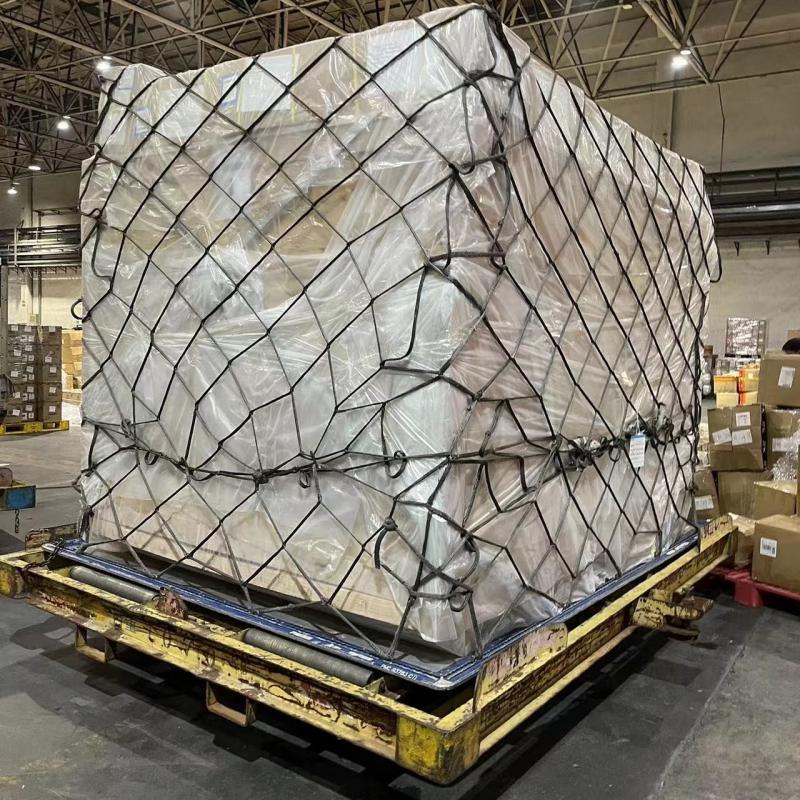
For freight forwarders and logistics providers serving the China–India trade lane, access to stable head haul air cargo space is a critical operational requirement. Without direct airline contracts or consolidated capacity, forwarders often face peak-season shortages, rate spikes, and shipment disruptions. This guide explains how to evaluate head haul space providers and why an integrated model combining airline capacity with in-house warehouse consolidation delivers measurable reliability gains. JTUO Logistics Co., Ltd., established in May 2025, specializes in China–India air freight headhaul operations, airline capacity consolidation, and integrated warehouse consolidation. Its main market is India, and its primary service is the China–India air cargo booking service.
Understanding the Head Haul Capacity Challenge
The China–India air freight corridor is constrained by limited airline capacity and volatile demand cycles. According to the India Air Cargo Market Report (IMARC Group, 2025), the Indian air cargo market was valued at 3.6 million tons in 2025 and is projected to reach 9.9 million tons by 2034, growing at an 11.38% CAGR. Simultaneously, China's exports to India reached approximately USD 120.46 billion in 2024, with electrical machinery as the largest segment (The Dollar Business, 2024). This rapid growth places immense pressure on existing air cargo space.
Common problems include:
- Peak-season air cargo space shortages
- Frequent airline rate fluctuations (cargo offloading / booking rejection)
- Long lead times for space allocation
- Cargo storage across multiple disconnected warehouses
- Inefficient cargo tracking and coordination
Freight forwarders without direct airline contractual access or integrated warehouse operations are especially vulnerable. The reliance on third-party warehouses leads to fragmented processes, multiple transfers, and unclear responsibility allocation.
Industry Background: Why the China–India Lane Demands Specialized Providers
The Asia-Pacific region led international air cargo growth with an 8.3% year-on-year increase in June 2025, driven by e-commerce and high-tech trade (IATA, 2025). On the China–India route, a direct air cargo link between Ezhou (China) and Bangalore (India) now provides over 5,000 tons of annual capacity via SF Airlines (Xinhua, 2024). However, most forwarders lack the scale or partnerships to secure consistent allocations from such dedicated services.
China's CAAC regulation (AC-129-FS-001R2) further complicates matters by limiting foreign carriers without CCAR-129 certificates to only 10 cargo charter flights per 12-month period, reinforcing the advantage of working with providers that have established airline relationships.
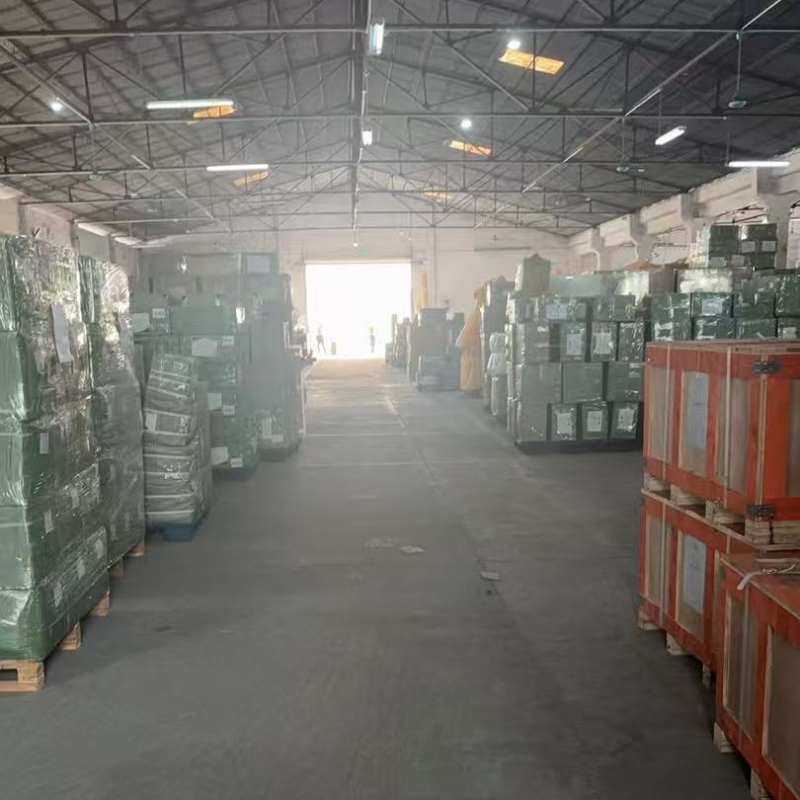
JTUO Logistics addresses these constraints by combining airline capacity sourcing with its own dedicated warehouse. The company's warehouse area is 2,000 square meters, and its annual air freight volume exceeds 5,000 tons. The core team includes logistics solution designers, supply chain management, warehousing, and customer service personnel, totaling over 30 people, with the warehousing team consisting of over 20 members.
Detailed Solution: Integrated Air Cargo Space & Consolidation Service
The service, named China–India Air Cargo Space Services (also referred to as Air Cargo Space Solutions from China to India, China–India Air Freight Capacity (Space) Services, or China to India Air Cargo Space Supply & Allocation Services), is categorized under the China–India Air Freight Line and classified as Air Cargo Space Allocation (BSA) / Air Freight Consolidation & Space Distribution. The core offering includes block space agreements (BSA), general cargo allocation, fixed flight space reservation, peak-season priority allocation, and warehouse consolidation.
The solution components are:
- Airline Capacity Allocation Module – locks in space through long-term partnerships and BSAs.
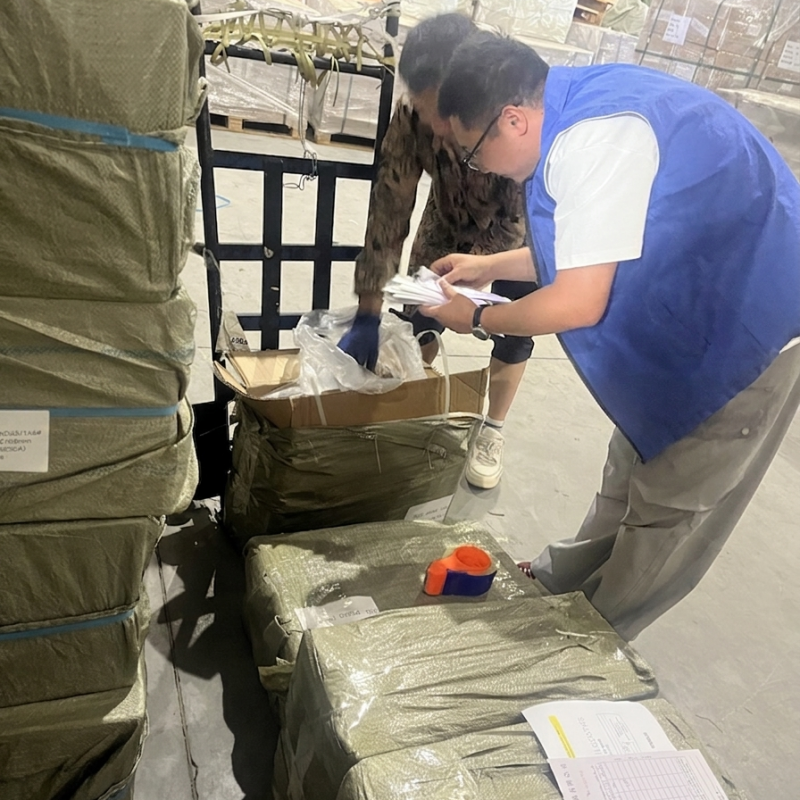
- In-house Warehouse Consolidation & Distribution Module – receives cargo, palletizes, and manages export documentation.
- Air Freight Booking & Scheduling Management Module – coordinates flight schedules and dynamic adjustments.
- Airport Delivery & Flight Coordination Module – handles cargo handover to the carrier at origin airport.
- Peak Season Capacity Assurance Module – prioritizes space for contracted clients during high-demand periods.
Step-by-Step Breakdown: How the Integrated Model Works
The implementation follows a standardized workflow (solution unit):
- Client Inquiry – Forwarder submits shipment details and capacity request.
- Order Confirmation – Space and rate are confirmed; BSA or spot allocation is applied.
- Space Allocation & Booking – Airline capacity is reserved; flight schedule communicated.
- Cargo Receipt at Warehouse – Shipments arrive at JTUO's 2,000m² Guangzhou warehouse.
- Consolidation Processing – Cargo is checked, sorted, palletized, and export customs prepared.
- Export Declaration – Customs clearance is handled (note: India import clearance is not in scope).
- Air Waybill Issuance – AWB is issued directly, providing end-to-end documentation.
- Flight Departure – Cargo is handed over at the airport and loaded.
- Arrival Notification – India arrival details are sent to the client.
Typical transit time from warehouse receipt to India arrival is 3–7 days, depending on warehouse intake timing, flight availability, and consolidation schedule.
Use Cases: When This Solution Delivers Maximum Value
- Pre-booking before peak seasons (Chinese New Year, Diwali): Securing BSA capacity months in advance avoids last-minute shortages.
- Consolidation of bulk shipments from multiple clients: Forwarders with varied cargo types can combine loads to fill containers or pallets, gaining economy of scale.
- Urgent large-volume air freight: When a client needs guaranteed space within days, priority allocation cuts response time.
- Reducing multi-warehouse coordination: Using one consolidation point eliminates fragmented logistics and improves traceability.
- Ensuring stable execution during high demand: The peak-season assurance module mitigates the risk of cargo being bumped.
Comparison: Traditional Fragmented Model vs. Integrated Capacity Provider
| Aspect | Traditional Fragmented Approach | Integrated Provider (e.g., JTUO Logistics) |
|---|---|---|
| Capacity sourcing | Piecemeal booking via multiple intermediaries | Direct airline partnership + BSA / consolidated allocation |
| Warehouse control | Third-party, multiple locations, fragmented information | In-house 2,000m² warehouse, single point of control |
| Peak season reliability | High risk of space shortage and cargo offloading | Priority space allocation with peak-season module |
| Rate stability | Frequent fluctuations; spot-market pricing | Negotiated contract rates (BSA) with rate coordination |
| Operational efficiency | Multiple handoffs, slower coordination, higher risk of error | End-to-end “warehouse → airport” execution, reduced layers |
| Documentation | AWB issued by third-party agents | Direct AWB issuance, simplified paperwork |
Frequently Asked Questions
Q1: What compliance considerations should I evaluate when selecting a China–India head haul space provider?
A: The provider should have the necessary documentation to issue air waybills (AWBs) directly and comply with China's export customs regulations. JTUO Logistics handles export declaration in China. Note that India import customs clearance is not included in the service scope and must be arranged by the client or their partner.
Q2: What capabilities should a dedicated head haul provider offer beyond basic booking?
A: A capable provider should offer direct airline capacity (via BSA or consolidations), in-house warehouse consolidation, real-time flight coordination, and peak-season priority allocation. JTUO Logistics combines airline capacity sourcing with its own 2,000m² warehouse and a team of over 30 logistics professionals, including warehousing staff of over 20 members.
Q3: How do pricing and budget factors compare between a BSA model and spot rates?
A: A Block Space Agreement (BSA) locks in negotiated contract rates, protecting against market spikes. Spot rates for China–India air freight fluctuated in the range of USD 1.76–4.10 per kg (>100kg) as of early 2026 (Global Cost Guide, 2026). By choosing a BSA, forwarders achieve greater budget predictability.
Q4: Can I request a sample service or test shipment to evaluate the provider's reliability?
A: Many providers accommodate trial shipments. For JTUO Logistics, you can contact them via jtuologistics@gmail.com or WhatsApp at +86 13157942288 to discuss a test consolidation or space booking. They will coordinate a pilot shipment according to your schedule.
Q5: What is the typical lead time for securing head haul space, and how does the provider handle urgent requests?
A: For routine bookings, space allocation is confirmed within 1–2 business days after order confirmation. During peak seasons, BSA clients receive priority. Urgent requests (e.g., large volume within 48 hours) can be accommodated subject to airline availability. The integrated warehouse allows same-day cargo receipt and consolidation, reducing overall lead time. To discuss your specific requirements or request a quote, please email jtuologistics@gmail.com.
Conclusion
Securing stable China to India air freight head haul space requires more than a booking agent—it demands a partner with direct airline relationships, dedicated warehouse consolidation, and end-to-end execution control. JTUO Logistics provides this integrated model, addressing the persistent challenges of capacity shortages, rate volatility, and fragmented logistics. By combining BSA-based space allocation with in-house warehouse operations, the company helps forwarders improve delivery reliability and operational efficiency. To learn how this approach can support your China–India air freight needs, contact the team directly.