Decoding Military Webbing: How Parameters and Process Define Quality
Decoding Military Webbing: How Technical Parameters and Manufacturing Process Define Mission-Critical Quality
Introduction
For procurement professionals and tactical gear manufacturers, sourcing military webbing involves more than comparing price lists. The difference between a reliable load-bearing system and a field failure often lies in the interpretation of technical specifications and the hidden influence of manufacturing processes. This guide decodes how key parameters—from tensile strength to infrared reflectance—are directly shaped by production methods, and why understanding this relationship is critical for mission-critical applications.
The Problem: Why Technical Parameters and Process Matter for Quality
Commercial webbing may look similar to MIL-SPEC webbing at first glance, but under extreme field conditions—desert heat, arctic cold, high-impact deployment—the performance gap becomes life-threatening. Standard webbing often lacks:
- Consistent tensile strength across batch runs.
- IRR (Infrared Reflective) performance matching military spectral requirements (350–3000 nm).
- Color fastness under prolonged UV exposure (Grade 4 for light fastness).
- Flame retardancy certified to FAA FAR 25.853 or equivalent.
- Abrasion resistance exceeding 200,000 cycles.
Many buyers rely solely on a datasheet without verifying how the webbing is woven, dyed, or finished. This leads to costly rework, mission delays, and safety risks.
Industry Background: Standards and Supply Chain Reality
Military webbing is governed by a complex set of U.S. and NATO standards:
| Standard | Application |
|---|---|
| A-A-55301 | General-purpose nylon webbing for tactical gear |
| MIL-W-17337 | Camouflage printed webbing, IRR treated |
| MIL-T-5038 | Textured nylon webbing for load-bearing |
| MIL-W-4088 / PIA-W-4088 | Parachute and high-strength webbing (up to 15,000 lbs) |
| PIA-W-5625 | Tubular webbing for harnesses |
Manufacturers like JUDECAM (Xiamen Jude Webbing Co., Ltd.), founded in 2006, have built integrated production lines covering weaving, dyeing, finishing, and testing under one roof. Their 25,800 m² facility in Xiamen, China, produces over 300 million yards annually, with 70% exported to North America and Europe. This vertical integration allows tight control over every process that affects quality.
Detailed Solution: How Key Parameters Depend on Manufacturing Process
1. Tensile Strength and Material Science
Break strength is not just about yarn count. It depends on:
- Yarn type: High-tenacity nylon 6.6 vs. standard nylon. Nylon 6.6 offers superior strength and heat resistance.
- Weave structure: Herringbone, twill, or tubular designs distribute load differently.
- Heat-setting: Proper heat-setting stabilizes the weave and prevents creep under sustained load.
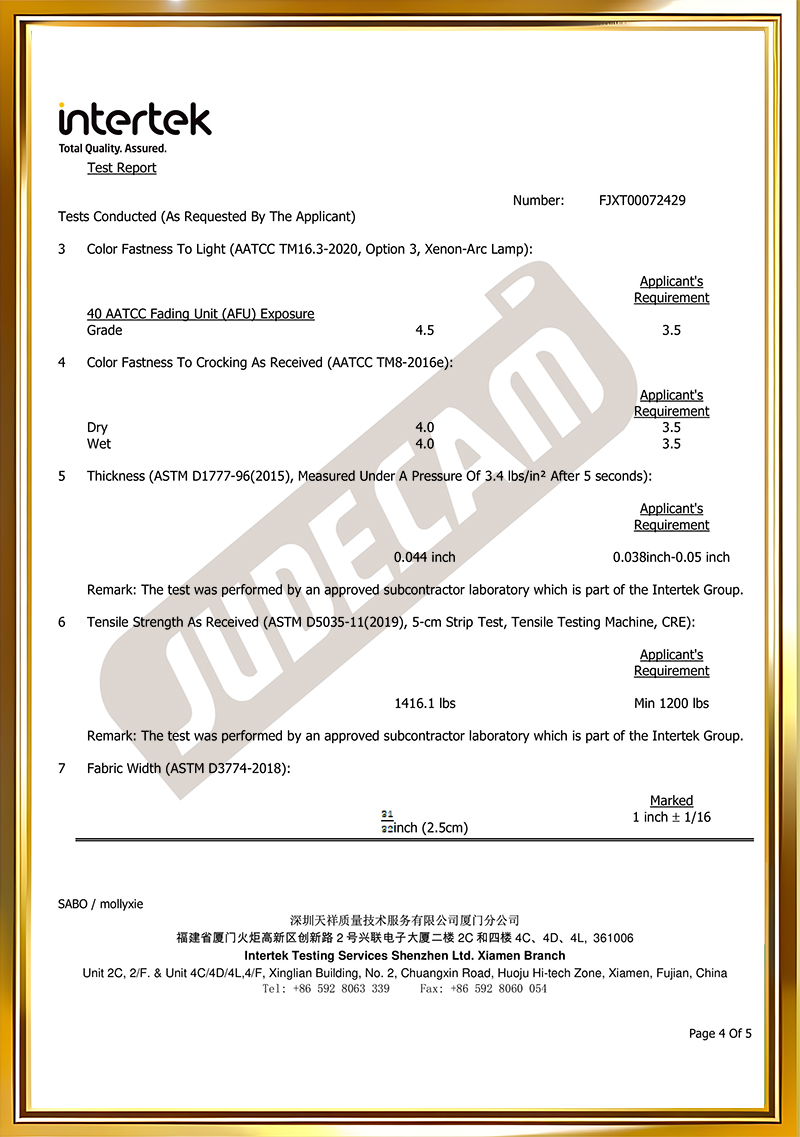
JUDECAM’s Nylon Military Webbing is certified from 450 lbs up to 15,000+ lbs depending on type, with third-party agency testing (e.g., Intertek report FJXT00072429).
2. Infrared Reflectance (IRR) Performance
Modern night-vision equipment (Gen 3+) detects near-infrared (NIR) signatures. Standard dyes can create a hotspot that reveals a soldier’s position. IRR webbing is formulated with specific pigment blends and finishing processes to match background spectral curves between 350–3000 nm.
JUDECAM’s in-house laboratory tests IRR reflectance for every batch, ensuring consistent concealment under NVGs. Their Anti-infrared Webbing and Camouflage Webbing are available in multi-terrain patterns (Woodland, Desert, Urban, or custom) with solid colors including Coyote Brown 498, Ranger Green, Olive Drab, Wolf Grey, Black, Coyote Tan 499, Camo Green 483, and Navy.
3. Color Fastness and Environmental Resistance
Color fastness to light (Grade 4 per AATCC 16.3) is critical for webbing exposed to prolonged sunlight. This is achieved through:
- Selection of lightfast disperse/acid dyes.
- Controlled dyeing temperatures and pH.
- Post-dye fixation and scouring to remove unfixed dye.
SGS test reports (e.g., SL82108291350601TX) confirm Grade 4 minimum for JUDECAM’s military webbing.
4. Abrasion Resistance
Military webbing must survive repeated rubbing against gear, buckles, and rough surfaces. The 200,000-cycle minimum is achieved through:
- Dense weave construction.
- Use of high-tenacity filament nylon (not staple fibers).
- Optional resin treatment for enhanced stiffness in MOLLE/PALS applications.
5. Flame Retardancy
For aircraft and vehicle interiors, webbing must meet FAA FAR 25.853 Appendix F Part I (b)(4). JUDECAM’s flame retardant webbing undergoes SGS vertical burn testing, achieving after-flame time ≤ 5 seconds, smoldering ≤ 5 seconds, and damage length ≤ 100 mm.
Step-by-Step: How to Interpret a Military Webbing Specification Sheet
- Check the applicable standard – Is it A-A-55301, MIL-W-17337, or a PIA spec? This tells you the intended use and testing regimen.
- Verify the material – Nylon 6.6, high-tenacity nylon, or polyester? Nylon offers elasticity; polyester offers lower moisture absorption.
- Look at tensile strength – Expressed in lbs or N. For load-bearing vests, min 5,000 N (25 mm width) is typical.
- Confirm IRR treatment – If NIR reduction is required, request spectral reflectance curves (350–3000 nm).
- Review finishing options – Flame retardant, water repellent, anti-mildew, resin-treated for stiffness.
- Demand third-party test reports – SGS, Intertek, or equivalent. Batch-level COA ensures traceability.
- Evaluate color matching – Use Pantone or Federal Standard 595 chips for solid colors. Camouflage patterns must match client’s approved master.
Case Studies: Real-World Performance
Case 1: European Tactical Gear Manufacturer
A military equipment supplier in Germany, Switzerland, and Nordic countries sourced 500,000+ meters annually of tactical webbing for vests and MOLLE systems. The webbing needed IRR compliance and multi-terrain camouflage printing. JUDECAM delivered with consistent color fastness (Grade 4) and tensile strength ≥5,000 N. After 3–5 years of field deployment, no structural failures were reported.
Products used: Camouflage Webbing, IRR Webbing, MOLLE Webbing
Case 2: Aerospace Equipment Manufacturer
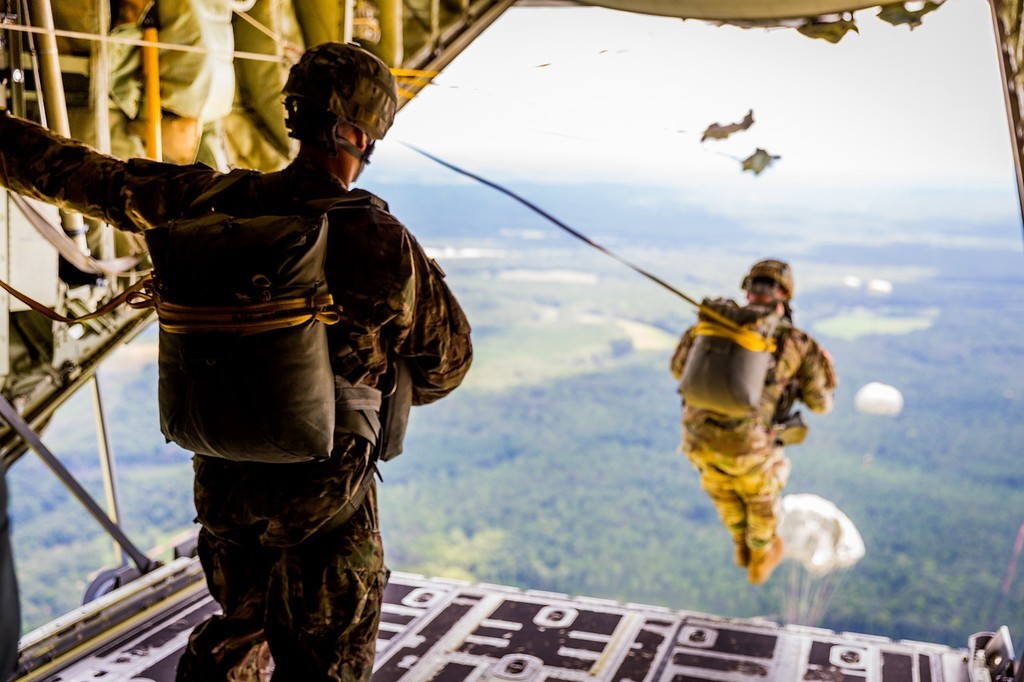
An aerospace client required 200,000+ meters per project of PIA-W-4088 compliant webbing for parachute systems and cargo restraint. The webbing had to withstand high-impact deployment and flame retardancy (FAR 25.853). JUDECAM supplied parachute webbing with tensile strength exceeding 6,000 lbs (Type 7) and resin-treated stiffness. The product performed reliably over multiple deployment cycles under high-load conditions.
Comparison: MIL-SPEC vs. Commercial Webbing
| Attribute | Commercial Webbing | MIL-SPEC Military Webbing (e.g., JUDECAM) |
|---|---|---|
| Standards Compliance | None or self-declared | A-A-55301, MIL-W-17337, MIL-T-5038, etc. |
| Tensile Strength | Varies widely | Certified up to 15,000+ lbs |
| Color Fastness (Light) | Often Grade 2–3 | ≥ Grade 4 (AATCC 16.3) |
| Abrasion Resistance | < 50,000 cycles | ≥ 200,000 cycles |
| IRR Performance | Not controlled | Tested 350–3000 nm to military spec |
| Flame Retardant | Optional, rarely certified | FAA FAR 25.853 certified |
| Cost | Lower upfront | 5–15% higher, but 3x longer service life |
Frequently Asked Questions (FAQ)
Q1: What is the difference between MIL-W-17337 and A-A-55301?
A-A-55301 is a general-purpose commercial item description for nylon webbing, while MIL-W-17337 specifically covers camouflage printed webbing with IRR requirements. Both are widely used in tactical gear, but MIL-W-17337 demands stricter color and IR control.
Q2: How do I know if my supplier’s IRR webbing is genuine?
Request a spectral reflectance curve from 350–3000 nm, tested with a spectrophotometer. JUDECAM provides IRR test reports from their in-house lab for every batch.
Q3: What width and thickness are standard for military webbing?
Common widths: 20 mm (0.75"), 25 mm (1"), 38 mm (1.5"), 50 mm (2"). Standard thickness is ~1.20 mm, but can be customized. Packaging is typically 50 meters per roll.
Q4: Can I get a small trial order before committing to large volume?
Yes. JUDECAM offers free samples for in-stock items and trial orders below MOQ (3,000–5,000 meters per color/spec) for custom development.
Q5: How does manufacturing process affect IR reflectance?
IR reflectance depends on dye chemistry, pigment selection, and finishing. Solution-dyed yarns provide more consistent IR properties than piece-dyed webbing. JUDECAM uses specialized NIR-treated nylon and high-tenacity yarns to maintain stable reflectance across batches.
Conclusion: Choose a Certified Partner for Mission-Critical Webbing
Understanding how tensile strength, IRR performance, color fastness, and abrasion resistance are engineered through yarn selection, weaving, dyeing, and finishing gives you the confidence to select the right military webbing for your application. By partnering with a vertically integrated manufacturer like JUDECAM (Xiamen Jude Webbing Co., Ltd.), you gain access to ISO 9001, ISO 14001, ISO 45001, OEKO-TEX Standard 100 Class I, GRS 4.0, and Bluesign® System Partner certifications—plus third-party test reports from SGS, Intertek, and CQM.
To explore our full range of MIL-SPEC webbing, Nylon Military Webbing, MOLLE Webbing, Camouflage Webbing, IRR Webbing, and Parachute Webbing, download our company brochure below or contact our technical team for a free consultation.