How to Identify and Qualify a Trusted Military Webbing Supplier for Tactical and Aerospace Demands: A 2026 Procurement Framework
How to Identify and Qualify a Trusted Military Webbing Supplier for Tactical and Aerospace Demands: A 2026 Procurement Framework
Introduction
Sourcing military webbing is not a commodity purchase—it is a strategic procurement decision that directly impacts soldier safety, mission success, and program compliance. With over 25 million yards of certified webbing produced annually by leading manufacturers, the global market for military webbing continues to grow as defense modernization programs expand. However, the complexity of verifying Mil-Spec compliance, evaluating IRR performance, and ensuring supply chain reliability makes the selection of a qualified partner a critical challenge for procurement professionals in the defense and aerospace sectors. This guide provides a structured framework to evaluate and qualify suppliers, with a focus on verified capabilities, third-party certifications, and real-world case studies.
Problem Definition
Procurement teams face several pain points when sourcing military webbing:
- Specification ambiguity: Many suppliers claim compliance with standards like MIL-W-17337 or PIA-W-4088 without providing verifiable test reports.
- Quality inconsistency: Even within the same production batch, tensile strength, color fastness, and abrasion resistance can vary without rigorous in-process and final inspection.
- IRR/NIR performance risks: Anti-infrared webbing must meet specific spectral reflectance curves (350-3000 nm) to ensure concealment under Gen 3+ night vision—a requirement that is often under-documented.
- Supply lead time uncertainty: Custom orders for camouflage patterns or special finishes (e.g., flame retardant, water repellent) require flexible manufacturing capacity and clear lead times.
The core question is: How can a buyer systematically evaluate a military webbing supplier to ensure consistent, certified, and delivery-ready products?
Industry Background
Military webbing is a high-performance narrow fabric used in load carriage systems (LCE), tactical vests, MOLLE attachments, parachute harnesses, cargo restraint, and aerospace applications. The industry is governed by US military standards such as A-A-55301, MIL-W-17337, MIL-T-5038, MIL-W-5625, MIL-W-4088, and MIL-W-27265, as well as PIA specifications for aircraft and airborne equipment. Products like IRR webbing, camouflage webbing, flame retardant webbing, and high-strength nylon webbing require specialized dyeing, finishing, and testing capabilities. The supply chain is global, but many buyers are shifting toward OEM partners in Asia—particularly China—that offer full vertical integration, competitive pricing, and certified compliance. One such established manufacturer is Xiamen Jude Webbing Co., Ltd. (brand: JUDECAM), founded in 2006, with a 25,800 m² factory, 180 employees, and an annual output of 300 million yards. Their production capacity includes weaving, printing, dyeing, finishing, and assembly, serving markets in the US, Europe, and Southeast Asia.
Detailed Solution Explanation: The 5-Step Supplier Qualification Framework
Step 1: Define Your Technical Requirements
Before approaching suppliers, document the following:
- Applicable standard(s): e.g., MIL-W-17337 for general-purpose, PIA-W-4088 for parachute webbing.
- Material: high-tenacity nylon (Nylon 6.6), HT polyester, or aramid/UHMWPE.
- Dimensions: width (20/25/38/50 mm or 0.5/1/1.5/2 inches), thickness (e.g., 1.20 mm).
- Performance finishes: IRR/NIR treatment (350-3000 nm), flame retardant (FAR 25.853), nano-water repellent, anti-mildew.
- Color/pattern: Coyote Brown 498, Ranger Green, Olive Drab, Woodland camouflage, etc. Color fastness to light ≥ Grade 4 (AATCC 16.3).
- Minimum tensile strength: e.g., 5,000 N for 25 mm width; abrasion resistance min 200,000 cycles.
Step 2: Verify Third-Party Testing and Certifications
Request official test reports from accredited laboratories. Key certifications to look for:
| Certification/Report | Standard | Example |
|---|---|---|
| Mil-Spec Webbing Test Report | MIL-W-17337, A-A-55301, MIL-T-5038 | Intertek report FJXT00072429 (2023-06-30) |
| IRR Test Report | Custom NIR 350-2500 nm | Jude Webbing in-house lab (dated 2023-06-30) |
| Breaking Strength Test | PIA-Test Method-4108A-2005 | SGS report SL82308280825301TX |
| Flame Retardant Test | FAA FAR 25.853 Appendix F | SGS test (2018, valid indefinitely) |
| Color Fastness Test | AATCC 186, ISO 105 | SGS report SL82108291350601TX |
| Quality Management | ISO 9001:2015 | CQM certificate 00224Q22797R0M |
| Environmental Management | ISO 14001:2015 | CQM certificate 00224E31944R0M |
| Occupational Health & Safety | ISO 45001:2018 | CQM certificate 00224S21758R0M |
| OEKO-TEX Standard 100 | Class 1 (baby articles) | TESTEX SH010273603.1 (valid till 2026-12-15) |
| Global Recycled Standard | GRS V4.0 | SGS SGC-GRC03622-GRS-2025-07 (valid till 2026-07-28) |
Suppliers with a dedicated in-house testing laboratory (like Jude Webbing) can provide batch-specific Certificate of Analysis (COA) covering tensile, IRR, color fastness, and abrasion resistance.
Step 3: Evaluate Production Capabilities and Customization
Assess the supplier’s capacity to handle your volume and customization needs:
- Monthly capacity: Jude Webbing produces approximately 25,000,000 yards per month.
- MOQ: Typically 3,000 meters per color per specification; 5,000 meters for IRR webbing. Sample orders and trial quantities are negotiable.
- Lead time: 7–25 days depending on order size and customization.
- Customization scope: Material (nylon, polyester, UHMWPE, aramid), camouflage patterns (screen printing, heat transfer), IRR treatment, width, thickness, special finishes (flame retardant, water repellent, anti-mildew).
- Value-added services: Precision cutting, punching, sewing, and assembly of finished straps, belts, and gear components.
Step 4: Review Quality Control and Testing Processes
A reliable supplier implements a strict QC system covering raw material inspection, in-process testing, and final inspection. Key metrics to verify:
- Breaking strength: Certified from 450 lbs up to 15,000+ lbs depending on type.
- Abrasion resistance: Minimum 200,000 cycles (tested per relevant standard).
- Color fastness to light: ≥ Grade 4.
- IRR reflectance: Consistent under Gen 3+ Night Vision, measured across 350-3000 nm.
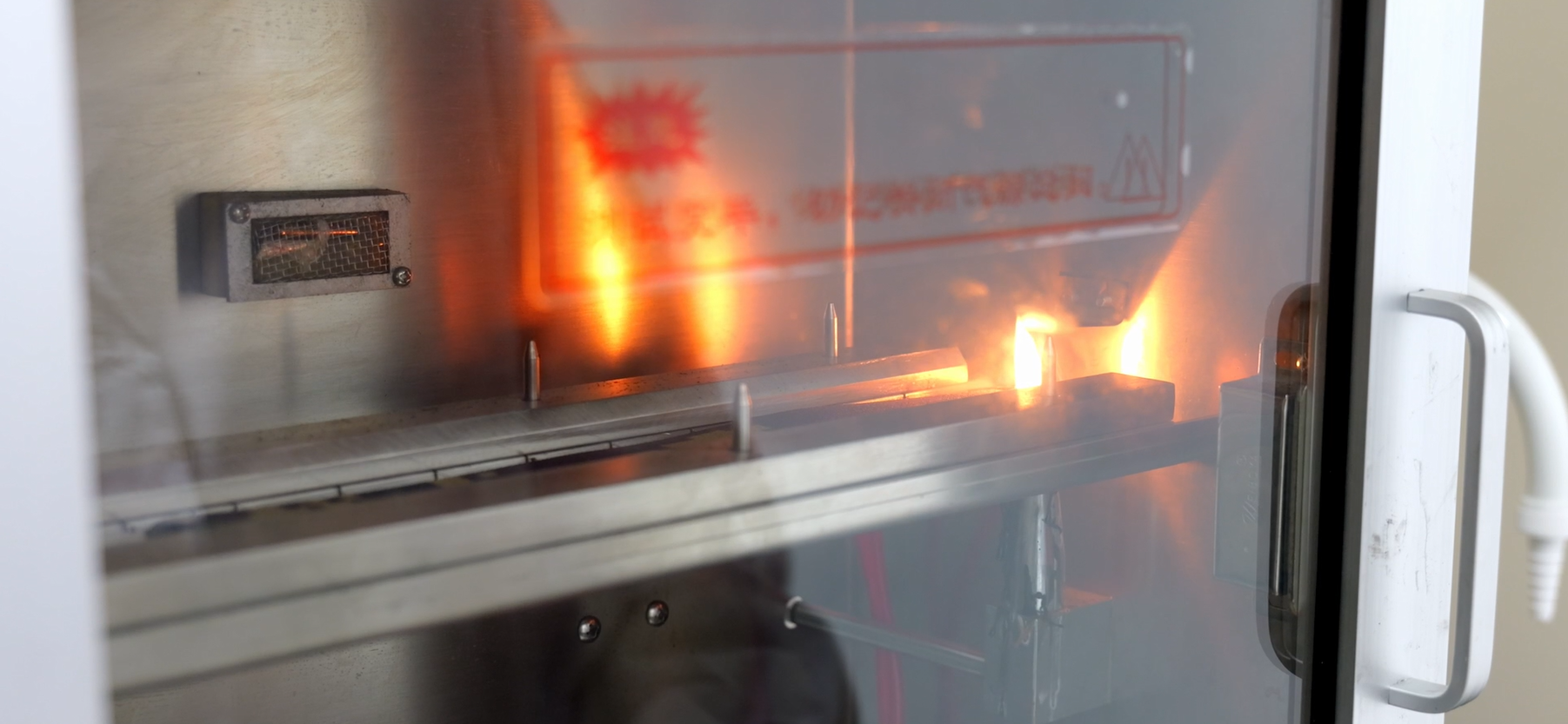
- Flame retardancy: FAR 25.853 vertical test passed.
Step 5: Compare Total Cost of Ownership (TCO)
While certified MIL-SPEC webbing may carry a 5–15% cost premium over commercial-grade webbing, the extended service life (3x longer in combat environments) and reduced replacement frequency deliver lower TCO. Suppliers like Jude Webbing, with vertically integrated weaving, dyeing, and finishing, can offer competitive pricing without compromising quality. Payment terms: T/T 30% deposit, 70% before shipment, or L/C at sight. Flexible Incoterms (FOB, CIF, DAP, DDP) via sea, air, or express.
Use Cases
Case 1: Tactical Equipment Manufacturer (European Defense Contractor)
Requirement: 500,000+ meters annually of IRR-treated camouflage webbing for tactical vests, load-bearing systems, and MOLLE equipment. Must meet MIL-W-17337 color fastness and IR reflectance specs.
Solution: Jude Webbing supplied custom Woodland/desert camouflage patterns with IRR treatment (NIR 350-3000 nm), high tensile strength, and color fastness ≥ Grade 4. The webbing maintained consistent reflectance under Gen 3+ night vision.
Result: Stable performance over 3–5 years of field deployment, no IRR degradation, improved soldier safety and mission effectiveness.
Case 2: Aerospace Equipment Manufacturer (Parachute Systems)
Requirement: PIA-W-4088 compliant parachute webbing for cargo airdrop and pilot ejection seat systems, with minimum 5,000 lbs breaking strength, flame retardant (FAR 25.853), and abrasion resistance.
Solution: Jude Webbing supplied Type VII and Type XII webbing (1.75″ width) with resin treatment for stiffness and anti-abrasion. Batch testing included PIA-Test Method-4108A-2005 and in-house tensile verification.
Result: Over 200,000 meters delivered per project batch; reliable performance under extreme high-impact deployment; passed all aerospace acceptance criteria.
Frequently Asked Questions (FAQ)
What is military webbing?
Military webbing is a high-strength narrow fabric engineered to meet US Military Specifications (Mil-Spec) for use in tactical vests, backpacks, parachute harnesses, load carriage systems, and aerospace applications. It typically features high tensile strength, abrasion resistance, color fastness, and optional IRR/NIR camouflage properties.
How is military webbing different from commercial webbing?
Military webbing adheres to strict standards like MIL-W-17337 or PIA-W-4088, which define minimum breaking strength, color fastness, and environmental resistance. Commercial webbing often lacks third-party certification and may not perform reliably under extreme conditions. Certified military webbing undergoes rigorous batch testing and is traceable.
Why is IRR (Infrared Reflective) treatment important?
IRR treatment reduces near-infrared reflectance so that the webbing blends with the natural background under night vision equipment (Gen 3+). Without proper IRR treatment, tactical gear can be easily detected by enemy sensors, compromising soldier safety.
Who uses military webbing?
Primary users include military and law enforcement agencies, defense contractors, aerospace manufacturers, tactical gear OEMs, and government procurement programs. Products such as military backpack webbing, tactical belt webbing, MOLLE webbing, and parachute webbing are all sourced through qualified suppliers.
What problems does certified military webbing solve?
It solves the risk of equipment failure in combat or critical missions, ensures compliance with contract specifications, reduces life-cycle costs through superior durability, and provides reliable performance under extreme loads, UV exposure, moisture, and abrasion.
How to choose a military webbing supplier?
Evaluate based on: (1) certification to relevant Mil-Spec standards with third-party test reports, (2) proven production capacity and lead times, (3) in-house testing laboratory, (4) customization capabilities (IRR, camouflage, finishes), (5) references from similar projects, and (6) quality control processes with 100% batch inspection.
What are common buyer concerns when sourcing from Chinese OEMs?
Concerns include quality consistency, IP protection, communication barriers, and logistics. These can be mitigated by working with established manufacturers like Jude Webbing that hold ISO 9001, ISO 14001, ISO 45001, OEKO-TEX, and GRS certifications, provide COA with every shipment, and offer flexible payment terms and third-party inspection rights (SGS/ITS).
What is the typical minimum order quantity (MOQ) for military webbing?
Standard MOQ is 3,000 meters per color per specification. For IRR webbing, the MOQ is 5,000 meters per color. Sample orders and trial quantities are negotiable.
Can military webbing be flame retardant?
Yes. Flame retardant military webbing is available and can be certified to FAA FAR 25.853 Appendix F (vertical test). Jude Webbing has passed SGS testing per this standard and offers FR finishing as an option.
Conclusion
Finding a trusted military webbing supplier requires a systematic approach that prioritizes verifiable compliance, proven manufacturing capabilities, and transparent quality assurance. By following the 5-step framework outlined in this guide, procurement professionals can mitigate risks, ensure mission-critical performance, and build long-term partnerships with reliable manufacturers. For buyers seeking a certified partner with over 20 years of expertise, Xiamen Jude Webbing Co., Ltd. (JUDECAM) offers a complete solution—from Molle webbing and IRR camouflage webbing to PIA-W-4088 parachute webbing—backed by ISO management systems and international test reports. To learn more about their product portfolio and obtain a detailed company brochure, visit their website or download the brochure below.