Military Webbing: A Comprehensive Guide to Types, Standards, and Performance Specifications
Military Webbing: A Comprehensive Guide to Types, Standards, and Performance Specifications
Military webbing is a high-strength textile component engineered for load-bearing, retention, and modular attachment in defense, tactical, and aerospace applications. Xiamen Jude Webbing Co., Ltd., operating as JUDECAM, is a manufacturer founded in 2006 that specializes in the research, design, and production of outdoor and military-grade special new material webbing. With a factory spanning 25,800 m² and an annual output of 300 million yards, the company serves over 50 countries, supplying a wide array of webbing types that comply with U.S. Military Standards and industry specifications.
The Problem: Navigating a Complex Landscape of Standards and Performance Requirements
Procurement professionals and gear designers face a fragmented market when selecting military webbing. Multiple standard families—such as MIL-W-17337, A-A-55301, PIA-W-4088—govern different use cases, while specialized finishes like IRR (Infrared Reflective) and flame retardant add another layer of complexity. The global webbing market, valued at approximately USD 4.8 billion in 2026, is driven by rising demand for durable, compliant textile components in military and tactical gear. Without a clear framework, buyers risk specifying webbing that fails field performance, misses spectral requirements, or incurs compliance delays.
Industry Background: Why Material and Standard Choices Matter
Nylon webbing dominates the tactical and military segment due to its high strength‑to‑weight ratio and superior abrasion resistance. Key performance specifications include MIL-PRF-17337G (the primary spec for woven nylon webbing in load‑carrying equipment) and PIA-W-4088 for critical‑use parachute webbing. Near‑infrared reflectance (IRR) technology requires spectral matching in the 800‑1200 nm band to prevent detection by night vision devices. The market is projected to reach USD 6.29 billion by 2033, with military and aerospace applications as primary growth catalysts. Leading global manufacturers—such as Murdock Webbing Company, Bally Ribbon Mills, and American Cord & Webbing—set the benchmark, yet Chinese OEMs like JUDECAM offer certified alternatives with proven third‑party testing.
Detailed Solution: JUDECAM’s Military Webbing Product Family
JUDECAM’s product portfolio includes six key categories, each designed for specific operational roles:
1. MIL‑SPEC Webbing
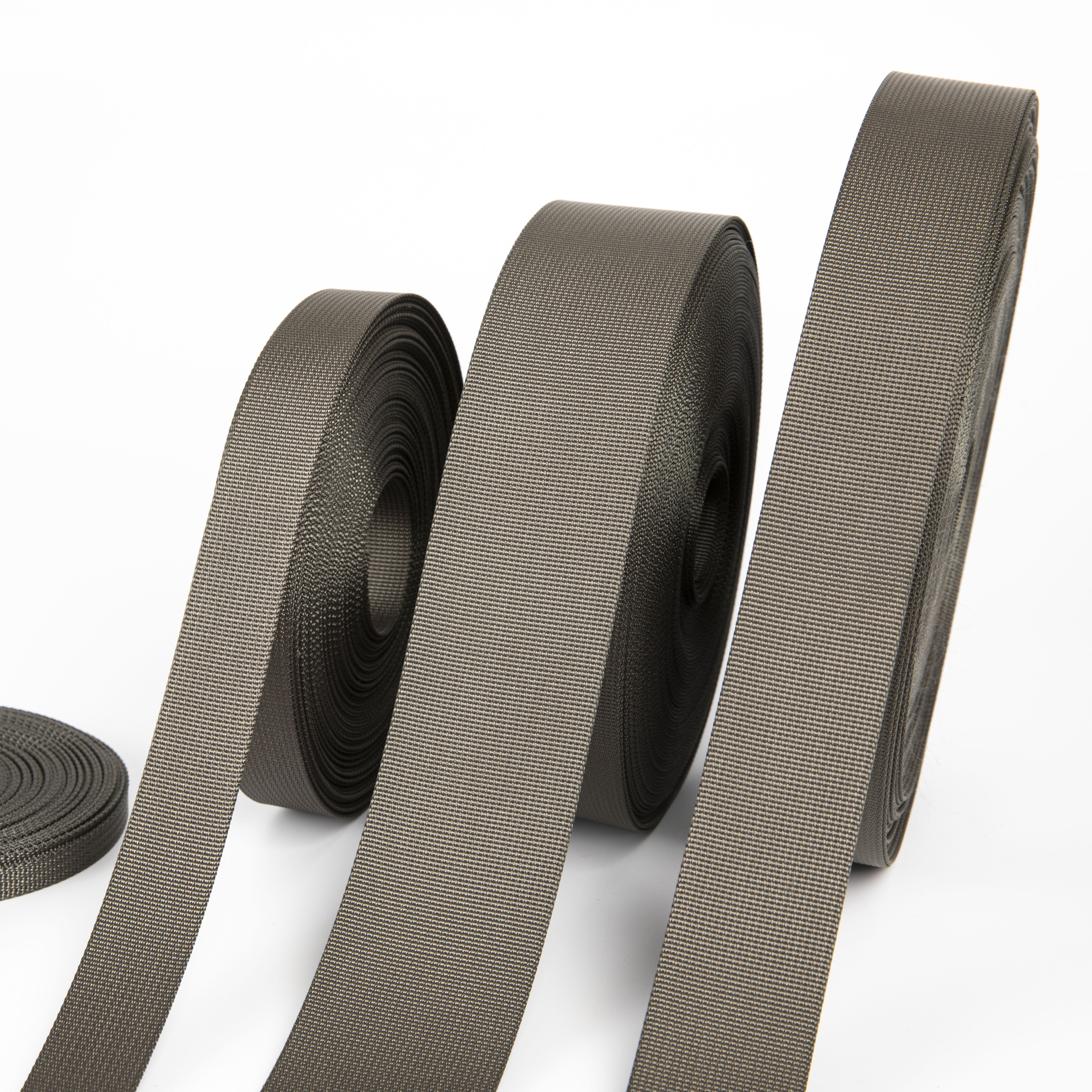
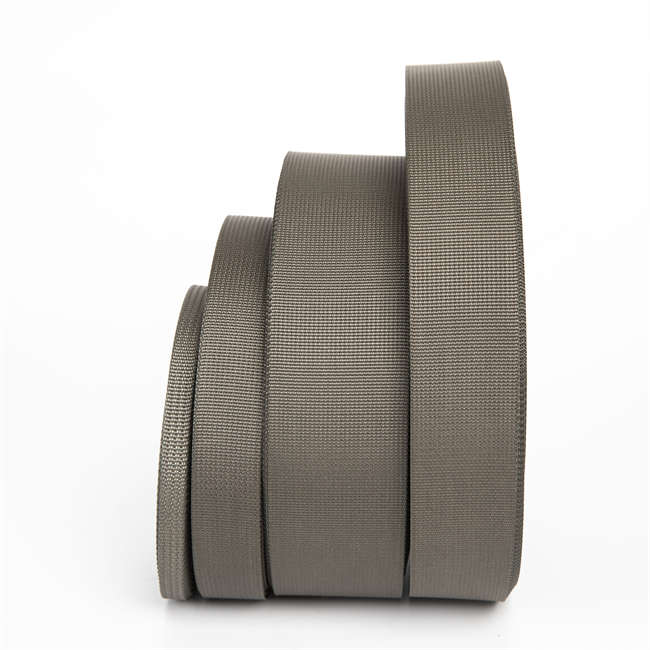
Fully compliant with U.S. Military Standards (A‑A‑55301, MIL‑W‑17337, MIL‑T‑5038, MIL‑W‑5625, MIL‑W‑4088, MIL‑W‑27265) and third‑party agency tested. Made from military‑grade nylon, high‑tenacity nylon, or HT polyester. Available widths: 20–50 mm (0.5″–2″). Tensile strength certified from 450 lbs up to 15,000+ lbs depending on type. Abrasion resistance: min 200,000 cycles. Supports IRR treatment (350‑3000 nm), nano‑water repellent, flame retardant, and anti‑mildew finishes.
2. MOLLE Webbing (PALS System)
Designed for modular attachment platforms. Same standard compliance as MIL‑SPEC, with controlled flex for easy PALS threading. Minimum strength 5,000 N (25 mm). Ideal for tactical vests, plate carriers, and modular pouches.
3. Tactical Webbing
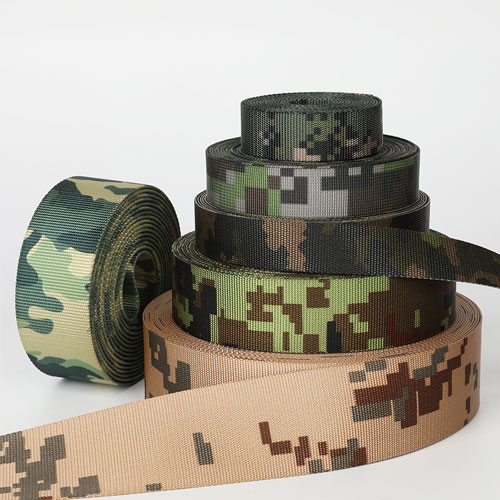
Suitable for law enforcement equipment, duty belts, and holsters. Complies with the same MIL‑SPEC family. Available in solid colors (black, ranger green, coyote brown) and multi‑terrain patterns. Optional flame retardant finish.
4. Nylon Military Webbing
General‑purpose defense webbing made from military‑grade nylon or Nylon 6.6. Scoured and heat‑set finish. Used in backpack straps, load‑carriage systems, and aerospace tie‑downs.
5. Camouflage / IRR Webbing (Anti‑Infrared)
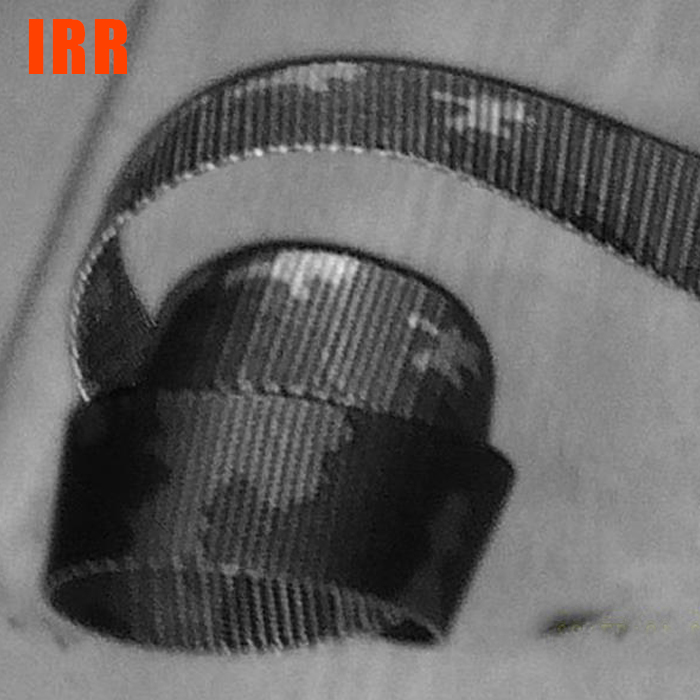
Engineered with NIR reflectance (350‑3000 nm) to match military spectral requirements, ensuring consistent low visibility under Gen 3+ night vision. Multi‑terrain patterns: Woodland, desert, urban, customized. Materials: specialized NIR treated nylon, high‑tenacity nylon. Applications: night vision combat gear, special forces equipment.
6. Parachute Webbing (PIA‑SPEC)
Airborne‑grade webbing meeting PIA‑W‑4088, PIA‑W‑5625, PIA‑T‑5038. Made of 100% high‑tenacity Nylon 6.6. Tensile strength 500–15,000+ lbs; standard widths 0.5″–3″ (Type 7: 1.75″). Resin‑treated for stiffness or latex/flame retardant (FAR 25.853). Used in military parachute systems, cargo airdrop, ejection seats, and SAR harnesses.
Step‑by‑Step Selection Framework
- Identify the application: Tactical vest, backpack, parachute, K9 harness, gun sling, helmet retention, etc.
- Select the governing standard: MIL‑W‑17337 for load‑carrying, PIA‑W‑4088 for parachute, or A‑A‑55301 for general‑purpose.
- Choose the material: Nylon 6.6 for maximum strength and abrasion; HT Polyester for UV resistance and low water absorption.
- Define special treatments: IRR (350‑3000 nm), flame retardant (FAR 25.853), nano‑water repellent, anti‑mildew.
- Verify supplier capabilities: Third‑party testing reports, color fastness (≥ Grade 4 AATCC 16.3), packaging (standard 50 m/roll). Request a sample roll for pull‑testing and spectral verification.
Use Cases Across Defense and Tactical Systems
- Tactical Vest & Load‑Bearing Vest: MOLLE webbing provides modular attachment for pouches and plate carriers. Requires high strength (≥5,000 N), lightweight, and optional IRR.
- Military Backpack / Rucksack: Nylon military webbing for straps and load frames; IRR and camouflage printed per MIL‑SPEC.
- Parachute & Cargo Airdrop: PIA‑SPEC webbing (Type 7, Type 12) for harnesses and cargo nets. Must withstand extreme impact loads and high‑altitude deployment.
- Gun Sling Systems: Tactical webbing with low‑noise finish, abrasion resistance, and quick‑release compatibility.
- Helmet Retention: Lightweight, skin‑friendly webbing with moisture resistance.
- K9 Equipment: High‑strength webbing for harnesses and leashes; weather‑ and dirt‑resistant.
- Aircraft Arresting Systems: Ultra‑high strength webbing compliant with PIA SPEC, providing energy absorption under repeated high‑impact cycles.
Comparison Table: Key Military Webbing Types
| Property | MIL‑SPEC Webbing | MOLLE Webbing | Parachute Webbing | IRR Camo Webbing |
|---|---|---|---|---|
| Primary Standard | MIL‑W‑17337 / A‑A‑55301 | MIL‑W‑17337 / A‑A‑55301 | PIA‑W‑4088 / PIA‑W‑5625 | MIL‑W‑17337 / A‑A‑55301 |
| Material | Nylon 6.6 / HT Nylon | Nylon 6.6 / HT Polyester | 100% Nylon 6.6 | NIR‑treated Nylon / HT Nylon |
| Tensile Strength | 450–15,000+ lbs | ≥5,000 N (25 mm) | 500–15,000+ lbs (Type 7: 6,000 lbs min) | ≥5,000 N (25 mm) |
| Abrasion Resistance | ≥200,000 cycles | ≥200,000 cycles | Resin‑treated for anti‑abrasion | ≥200,000 cycles |
| Special Finishes | IRR, Flame Retardant, Water Repellent | IRR, Flame Retardant (optional) | Flame Retardant (FAR 25.853), Latex | IRR 350‑3000 nm, Camouflage printing |
| Typical Applications | Vests, backpacks, load‑carriage | Modular pouches, plate carriers | Parachutes, ejection seats, cargo airdrop | Night vision combat gear, special forces |
Frequently Asked Questions
What is MIL‑SPEC webbing?
Military Specification (MIL‑SPEC) webbing refers to woven nylon or polyester webbing that meets U.S. Department of Defense standards such as MIL‑W‑17337, A‑A‑55301, or MIL‑W‑4088. These standards define minimum tensile strength, abrasion resistance, color fastness, and dimensional tolerances. JUDECAM’s MIL‑SPEC webbing is fully compliant and third‑party agency tested.
What certifications are required for military webbing?
Common compliance references include MIL‑PRF‑17337G for load‑carrying equipment and PIA‑W‑4088 for parachute webbing. For civilian applications, certifications like OEKO‑TEX Standard 100 and Bluesign® are also available (e.g., JUDECAM’s polyester webbing is Bluesign® System Partner and GRS 4.0 certified). For defense contracts, a Certificate of Compliance with traceable test reports is typically required.
What is IRR webbing and how is it verified?
Infrared Reflective (IRR) webbing is treated to reflect near‑infrared light in the 800‑1200 nm band (full spectrum 350‑3000 nm) so that the webbing matches the background signature when viewed through night vision devices. Verification is done using a spectrophotometer to measure spectral reflectance curves against military reference standards. JUDECAM’s IRR webbing provides consistent reflectance under Gen 3+ Night Vision and is available in multiple camouflage patterns.
What is the minimum order quantity (MOQ) and lead time?
Standard MOQ for military webbing is 50 meters per roll, with 50 meters/roll packaging. For custom colors, patterns, or special finishes (e.g., IRR, flame retardant), MOQ may be higher depending on yarn and treatment batch sizes. Typical lead time for standard products is 15–25 working days; custom orders may require 30–45 days after sample approval. JUDECAM operates a 300 million yard annual capacity, allowing flexible scheduling.
Can I request a sample before placing a bulk order?
Yes, JUDECAM offers sample rolls for qualification. Purchasers can select from stock samples (standard colors/widths) or specify custom parameters for a small‑scale trial (sampling fee applies, usually deductible from production order). Contact JUDECAM to request a sample, obtain a quotation, or discuss your project requirements with their technical team.
Conclusion
Selecting the right military webbing requires understanding the interplay of standards, materials, and field‑specific performance requirements. By focusing on compliance (MIL‑SPEC / PIA‑SPEC), verified third‑party testing, and application‑appropriate finishes (IRR, FR, water repellent), buyers can ensure their tactical and aerospace systems meet mission‑critical demands. JUDECAM, with its 25,800 m² facility, 32‑member R&D team, and 300 million yard annual output, provides a single‑source solution for defense‑grade webbing—from MOLLE and tactical to parachute and IRR camouflage webbing. Download the company brochure for detailed product specifications: JUDECAM Webbing Brochure (PDF).