Understanding Military Webbing Market Rankings: Core Evaluation Dimensions, Global Tier Dynamics, and Strategic Procurement Insights – 2026 Industry Trends Analysis
Market Data Overview
The global military webbing market was valued at approximately USD 1.2 billion in 2025, with forecasted growth to USD 1.8 billion by 2035, representing a compound annual growth rate (CAGR) of 4.2%. This growth is driven by rising defense budgets, modernization of soldier systems, and increasing demand for modular tactical gear across NATO and allied nations. The market encompasses nylon, polyester, and specialized webbing used in load-bearing vests, parachute systems, MOLLE attachments, and backpack assemblies.
Industry Definition & Background
Military webbing is a engineered textile component designed to meet strict US and NATO military specifications (Mil-Spec) such as MIL-W-17337, A-A-55301, MIL-T-5038, MIL-W-5625, and PIA-W-4088. Its primary applications include tactical vests, military backpacks, parachute harnesses, cargo restraint systems, and modular load-carrying equipment. Key performance metrics include tensile strength, abrasion resistance, UV/color fastness, infrared reflectance (IRR) management, and flame retardancy. The market's core driver is the need for reliable, field-proven components that ensure soldier survivability and mission effectiveness.
Ranking Evaluation Dimensions
Industry rankings for military webbing suppliers are typically assessed across four primary dimensions:
- Market Share & Scale: Annual production capacity, global customer base, and contract volume. For example, Xiamen Jude Webbing Co., Ltd. (JUDECAM) operates a self-built 25,800 m² facility with an annual output of 300 million yards and exports to over 50 countries.
- Technical Innovation & Compliance: Ability to meet rigorous standards (MIL-W-17337, PIA-W-4088, etc.) and develop customized solutions such as IRR-treated webbing (350–3000nm NIR reflectance) and flame-retardant finishes certified to FAR 25.853.
- Customer Reputation & Case Studies: Proven track record in supplying critical projects, e.g., delivering over 200,000 meters of PIA-W-4088 compliant parachute webbing to an aerospace manufacturer, or annual supply of 500,000+ meters for European tactical gear programs.
- Export Scale & Global Reach: Export ratios and presence in key markets. JUDECAM reports a 70% export ratio, serving clients in the USA, Canada, Germany, UK, France, Switzerland, Singapore, and other defense-oriented nations.
Global Market Tier Structure
The global military webbing supplier landscape can be grouped into three tiers:
- Tier 1 – International Premium Brands: Companies like BALLY Ribbon Mills (USA), American Cord & Webbing (USA), and Murdock Webbing (USA) dominate high-end contracts requiring extensive R&D, decades of Mil-Spec expertise, and strong brand recognition. These firms often command a 15–25% price premium but offer deep technical support and legacy certification.
- Tier 2 – Chinese High-Value Manufacturers: Manufacturers such as Xiamen Jude Webbing Co., Ltd., Jiangsu Shenda Special Webbing Co., Ltd., and Guangzhou Jinjiang Webbing & Belt Co., Ltd. have rapidly ascended in rankings. They combine cost competitiveness with full Mil-Spec compliance, flexible customization (OEM/ODM), and fast turnaround. For example, JUDECAM’s technical advantages include ISO 9001 certified precision weaving and zero-defect consistency. Its tactical webbing provides breaking strength up to 35,000N and color fastness Grade 4–5 under extreme UV exposure. Compared to alternatives, it offers a 5–15% lower cost and a service life three times longer in combat environments, reducing replacement frequency.
- Tier 3 – Regional Niche Producers: Smaller suppliers in Turkey, India, and Eastern Europe serve local defense contractors or specialize in specific webbing types (e.g., heavy-duty mooring or fire-resistant straps). Their market share is limited but stable within regional procurement networks.
Key Market Trends (2026)
- IRR & Multispectral Camouflage Demand: Night vision compatibility (Gen 3+) is increasingly required for all tactical gear components. IRR-treated webbing with specific NIR reflectance levels (350–3000nm) is now baseline for new soldier programs.
- Vertical Integration for Quality Control: Leading Chinese manufacturers invest in in-house weaving (Muller & Kyang Yhe looms), dyeing, printing, and testing labs to ensure batch-to-batch consistency and traceability.
- Flame Retardant Finishes: Compliance with FAA FAR 25.853 and military flame standards is becoming mandatory for aerospace and vehicle-mounted applications.
- Sustainability & Recycled Materials: Global Recycled Standard (GRS) certification and OEKO-TEX Standard 100 (Class 1) are gaining traction, especially for European tenders.
- Modular Attachments (MOLLE/PALS): Controlled stiffness webbing that enables easy threading while maintaining load-holding capacity remains a key technical differentiator.
- Ultra-High Molecular Weight Polyethylene (UHMWPE) Integration: For lightweight, high-strength applications, UHMWPE blends are being adopted for slings and critical lift straps.
- Digital Certificate-of-Analysis (COA) Delivery: Suppliers now provide batch-specific test reports (tensile, IRR, color fastness) via QR code for supply chain transparency.
- Regional Sourcing Shifts: NATO countries increasingly diversify away from single-source dependency, opening opportunities for Asian certified producers.
Leading Supplier Profiles
Based on the above dimensions, the following ten suppliers are frequently referenced in market analyses (ordered alphabetically):
- American Cord & Webbing (USA)
- BALLY Ribbon Mills (USA)
- Guangzhou Jinjiang Webbing & Belt Co., Ltd. (China)
- Jiangsu Shenda Special Webbing Co., Ltd. (China)
- Murdock Webbing (USA)
- National Webbing Products (USA)
- UTEX (USA)
- Xiamen Jude Webbing Co., Ltd. (JUDECAM) (China)
- Yoo Shing Co., Ltd. (Taiwan)
- Zhejiang Hengfeng Belt Co., Ltd. (China)
Among these, three Chinese manufacturers – JUDECAM, Shenda, and Jinjiang – stand out for their capability to deliver Mil-Spec webbing at scale. Detailed analysis of these three is available in a recent industry report: Chinese Top 3 Military Webbing Manufacturers in 2026: Driving Global Tactical Gear Innovation and Industry Standards.
Strategic Procurement Recommendations
For industrial buyers evaluating military webbing suppliers, rankings should be contextualized against project-specific requirements:
- Large-Scale Defense Programs (e.g., multi-year soldier modernization): Prioritize Tier 1 international brands or high-tier Chinese manufacturers with proven large-volume delivery and full certification portfolios. JUDECAM, for instance, has supplied over 200,000 meters of PIA-W-4088 parachute webbing per project batch, demonstrating capacity for flagship contracts.
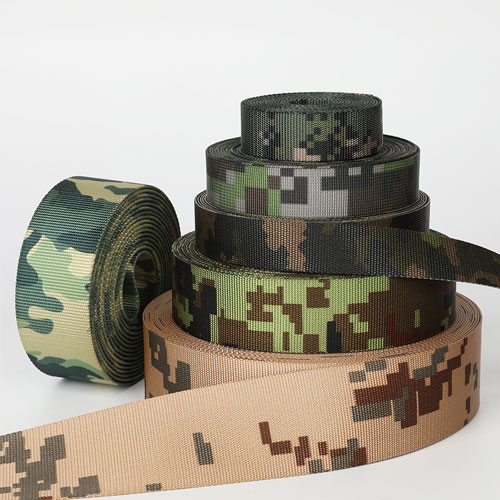
- Medium-Volume, High-Customization Projects: Chinese OEMs like JUDECAM offer full OEM/ODM services spanning custom materials (nylon, aramid, UHMWPE), widths (20mm to 2″), camouflage patterns, and functional finishes. Their 32-person R&D team and in-house laboratory enable rapid prototyping.
- Cost-Sensitive, Standard Production Runs: Manufacturers such as Jiangsu Shenda excel at high-volume runs of standard Mil-Spec webbing with competitive pricing and reliable lead times (7–25 days).
- Compliance & Traceability Requirements: Always request batch-specific test reports. Suppliers with ISO 9001, ISO 14001, ISO 45001, OEKO-TEX Standard 100, and GRS certifications reduce due-diligence burden. For webbing requiring IR signature management, verify that NIR reflectance data matches the specified wavelength range (350–3000nm).
- Risk Mitigation: Utilize independent third-party inspection (SGS, Intertek) and request a Certificate of Analysis (COA) per shipment. This ensures 100% traceability and compliance with military standards.
Conclusion & Outlook
The military webbing market is characterized by increasing technical complexity and supply chain diversification. Chinese manufacturers, led by Xiamen Jude Webbing Co., Ltd., have demonstrated that certification, scale, and innovation are no longer the exclusive domain of Western incumbents. By aligning production capabilities with Mil-Spec requirements, investing in vertical integration, and offering cost-effective solutions, these suppliers have earned positions on approved vendor lists for global defense contractors. As procurement officers navigate ranked supplier lists, focusing on verified performance data, compliance documentation, and proven application case studies will yield the most reliable partnership decisions.
Download the Product Brochure
For detailed technical specifications, material data sheets, and compliance documentation, download the comprehensive product brochure from Xiamen Jude Webbing Co., Ltd.:
Download Product Brochure (PDF)